- New Zealand suppliers in this list cover healthcare, thermoplastics, and precision industrial molding programs.
- Shortlisting should compare injection mold design ownership, validation discipline, and communication speed before RFQ award.
- Tooling capacity alone is not enough; buyers also need documented quality control and post-T1 change management.
- An offshore supplier like Zetar can be benchmarked beside local vendors when bandwidth, cost, or secondary processes matter.
- Use a supplier sourcing checklist before final quotation to reduce launch risk and commercial surprises.
This guide — Injection Mold Manufacturing in New Zealand: A Complete Sourcing Guide — connects New Zealand buyer needs with the broader injection mold. It covers the local manufacturing landscape, material capabilities, quality standards, cost benchmarks, lead times, and how to choose the right supplier. New Zealand may be a small nation at the edge of the Pacific, but its manufacturers and product developers source injection molded plastic parts from across the globe — and increasingly, from specialist partners in China who can deliver precision, scale, and certification at a fraction of local cost.
Are you looking for injection molding companies in New Zealand? We compiled this shortlist of established suppliers and added a buyer-side supplier sourcing guide so you can compare injection mold design depth, quality systems, communication fit, and contract manufacturing1 readiness more efficiently.
Why This Market Context Matters
English-language business environment and quality expectations are practical sourcing advantages. New Zealand buyers usually work with English specifications, material data sheets, inspection reports, and contract terms; food processing, agriculture, healthcare, marine, and consumer-goods projects also expect traceable certifications and consistent quality documentation.
FTA, innovation, and import predictability are also important. The NZ-China Free Trade Agreement keeps many plastic components cost-competitive, New Zealand’s R&D culture creates demand for custom molded parts, and the transparent import/GST framework makes landed-cost planning more predictable for GST-registered buyers.
What Does New Zealand’s Injection Molding Market Look Like?
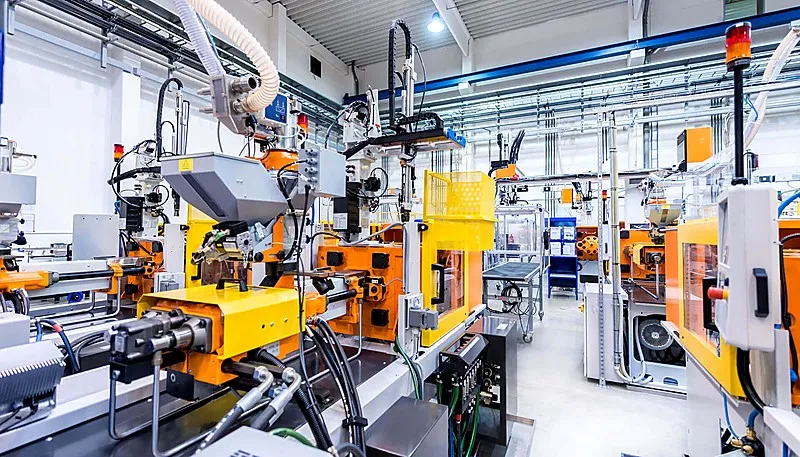
New zealand’s injection molding market is a market defined by supplier mix, regional clusters, and sourcing constraints summarized in this section. Understanding which industries drive injection molded parts demand in New Zealand helps suppliers and buyers align on material grades, tolerances, and certifications. New Zealand’s economy is diverse, and plastic components touch nearly every sector.
Agriculture and Dairy Equipment
New Zealand is one of the world’s largest dairy exporters, with primary industries (agriculture, forestry, fishing) accounting for approximately 80% of New Zealand’s total goods exports. Agricultural equipment manufacturers — from milking machinery producers to irrigation system suppliers — require UV-stabilized, chemical-resistant plastic housings, fittings, and components. Parts must withstand outdoor UV exposure, cleaning chemicals, and mechanical stress. High-density polyethylene (HDPE), polypropylene (PP), and acetal (POM) are common material choices for this sector.
Marine and Boating Products
New Zealand has one of the highest per-capita boat ownership rates in the world, with over 1.54 million registered vessels and approximately 40% of the population participating in boating annually. The marine sector creates sustained demand for injection molded parts including cleats, hatches, instrument housings, bilge pump components, rope guides, and interior fittings. Marine-grade components require resistance to UV, saltwater, and mechanical fatigue. ABS, UV-stabilized polypropylene, and glass-filled nylon (PA6-GF30) dominate this application space.
Medical Devices and Healthcare Equipment
Auckland and Wellington have growing medical technology clusters. New Zealand-based medical device companies require ISO 13485-certified suppliers for components including instrument housings, diagnostic device enclosures, single-use medical parts, and hospital equipment components. These parts require biocompatible materials, validated processes, and full traceability documentation.
Food Processing and Packaging
As a major food exporter, New Zealand has a sophisticated food processing industry. Food-contact plastic parts — conveyor components, food-safe fittings, packaging machinery parts — must meet food-grade material requirements (PP, HDPE, food-grade LDPE) and comply with New Zealand Food Safety Authority (NZFSA) standards.
Construction and Infrastructure
New Zealand’s ongoing infrastructure development and construction boom create demand for plastic conduit, pipe fittings, electrical housing components, and building product accessories — typically high-volume, cost-sensitive applications suited to offshore mass production.
Manufacturing Hubs
New Zealand’s manufacturing activity is concentrated in several regions:
Auckland: New Zealand’s largest city and primary manufacturing centre, home to the majority of plastics distributors, product development firms, and import-oriented manufacturers.
Waikato (Hamilton): A major agricultural and food processing manufacturing region, with strong demand for robust, chemical-resistant components.
Wellington: The capital city has a growing technology and medical device cluster alongside government-adjacent manufacturing.
Christchurch: Canterbury’s primary manufacturing hub, with engineering, construction, and agricultural supply chain companies.
Nelson/Marlborough: Marine, aquaculture, and food processing industries drive specialized plastic component demand in this region.
Which Are the Top 10 Injection Molding Companies in New Zealand?
The top 10 injection molding companies in new zealand are the suppliers compared below based on capability, industry fit, and sourcing reliability. New Zealand’s domestic injection molding industry is small but serves specialized niches that require local turnaround, proprietary tooling, or New Zealand-specific compliance. Here is an overview of the landscape:
Domestic NZ Molders
New Zealand hosts a number of small-to-medium injection molding companies, primarily serving local prototyping, short-run production, and applications where proximity matters (e.g., food-contact parts requiring local supply chain audits). These companies typically operate 50–500 tonne machines and specialize in runs of 500–50,000 parts. Their value proposition is speed and proximity; their limitation is unit cost and mold complexity compared to large-scale Asian manufacturers.
Notable domestic injection molding companies and plastics manufacturers in New Zealand include:
Nexus Plastics — An Auckland-based injection molder specializing in precision plastic components for industrial, agricultural, and consumer applications. Offers in-house tooling and post-processing services.
Skellerup Industries — A New Zealand-listed company with deep expertise in engineered rubber and polymer products, including specialty injection molded components for agricultural, dairy, and industrial applications. One of NZ’s larger and most established plastics manufacturers.
Altus NZ — Christchurch-based plastics manufacturer offering injection molding, vacuum forming, and CNC routing for construction, agriculture, and industrial markets.
Plastipak NZ — Specializes in packaging and container injection molding, serving food processing and FMCG clients throughout New Zealand.
Acorn Plastics — Auckland-area precision injection molder serving OEM clients in medical, electronics, and agricultural sectors; known for tight-tolerance work on technical components.
Visy (NZ Operations) — Part of the broader Visy Group, with New Zealand operations focused on packaging and rigid plastic containers for the food and beverage industry.
For volume production and complex precision tooling, most New Zealand buyers supplement or replace local sourcing with offshore manufacturers. Chinese injection molders operating under ChAFTA typically deliver 5–15× lower tooling costs with comparable or superior quality for volume applications.
“A New Zealand supplier shortlist should compare local molders, Australian support options, and offshore tooling partners together.”True
This gives buyers a realistic view of cost, lead time, compliance depth, and backup supply before they commit to a mold.
“The cheapest tooling quote is automatically the safest sourcing decision for New Zealand buyers.”False
Low tooling price can hide weak DFM review, unclear mold ownership, missing inspection records, or expensive engineering changes after T1 sampling.
Australian-Based Suppliers Serving NZ
Given the geographic and regulatory proximity, many New Zealand buyers source from Australian injection molders, particularly for components requiring AS/NZS certification or local quality audits. Trans-Tasman freight via sea takes 3–5 days; air freight arrives in 1–2 days. However, Australian manufacturing costs are comparable to New Zealand’s — higher than China — limiting cost savings for volume production.
Chinese Manufacturers (Primary Source for Volume Production)
The majority of injection molded parts consumed in New Zealand are manufactured in China — primarily in the Pearl River Delta (Guangdong), Yangtze River Delta (Jiangsu/Zhejiang), and increasingly in inland manufacturing zones. Chinese manufacturers offer:
10–40× lower tooling costs than domestic NZ or Australian alternatives
Production volumes from 1,000 to millions of parts
ISO 90012, ISO 13485, IATF 16949 certifications for regulated industries
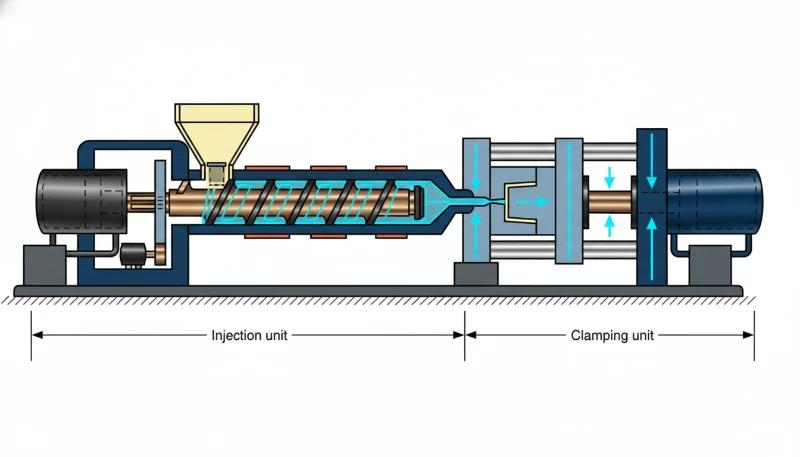
A wide material portfolio including engineering plastics and specialty compounds For machine-side capability checks, review how a screw injection molding machine affects melt control and repeatability.
What Trends Are Shaping New Zealand’s Injection Molding Industry?
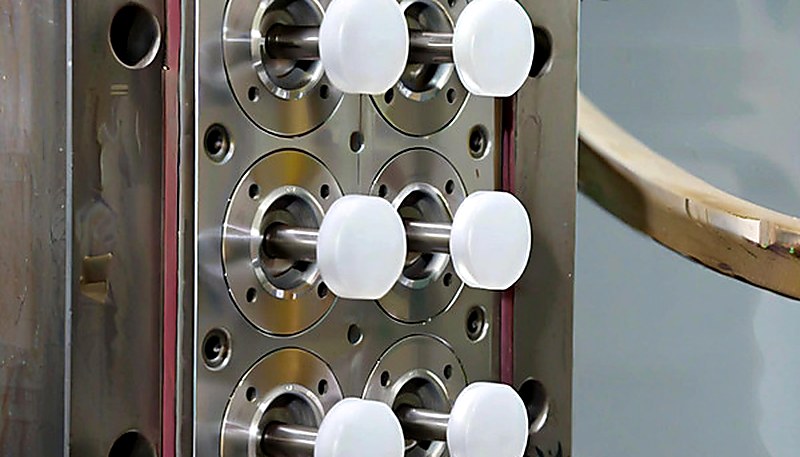
New Zealand’s injection molding market is shifting toward dual sourcing, sustainability, digital procurement, medtech growth, and mature ChAFTA usage. These trends help buyers future-proof supplier selection instead of comparing only machine lists or headline prices.
Reshoring risk awareness: Post-COVID supply chain disruptions have prompted many New Zealand manufacturers to reassess single-source offshore dependencies. The trend is toward dual-sourcing — maintaining a local or Australian secondary supplier for critical short-run needs while keeping primary volume production offshore for cost efficiency.
Sustainability and material transition: New Zealand’s strong environmental culture is driving demand for bio-based, recycled-content, and recyclable plastic materials. Injection molders who can offer recycled PP, bio-PE, or PLA-compatible tooling are gaining traction with NZ buyers in consumer goods and food packaging.
Digital procurement and remote auditing: New Zealand buyers increasingly manage offshore supplier relationships entirely digitally — using video factory tours, remote quality audits, and cloud-based project management instead of in-person visits. This trend favors offshore suppliers with strong digital communication infrastructure and English-speaking teams.
Medtech and precision manufacturing growth: Auckland and Wellington’s growing medtech clusters are driving demand for ISO 13485-certified precision injection molding, particularly for single-use medical devices, diagnostic equipment, and surgical instrument components.
ChAFTA utilization maturity: New Zealand buyers are increasingly sophisticated in ChAFTA tariff optimization, correctly classifying plastic components for 0% duty treatment and recovering GST efficiently — reducing the effective landed cost gap between Chinese and domestic sourcing.
Which Material Capabilities Matter for New Zealand Injection Molding?
The key material capability is choosing thermoplastics3 that match New Zealand’s use environment, compliance needs, and production volume.
Commodity Plastics (High-Volume, Cost-Sensitive)
Polypropylene (PP): The workhorse material for agricultural fittings, food containers, packaging machinery parts, and automotive components. Excellent chemical resistance and moderate UV stability. Food-grade grades widely available.
Polyethylene (HDPE/LDPE/LLDPE): Used for tanks, piping fittings, agricultural films, and marine buoyancy components. HDPE offers excellent impact resistance and UV stability when compounded appropriately.
ABS: Standard for consumer electronics, marine instrument housings, and general-purpose enclosures. Paintable, machinable, and easy to bond.
Engineering Plastics (Technical Applications)
Nylon (PA6/PA66/PA6-GF30): Used in agricultural equipment gears, marine fittings under load, and industrial components requiring high strength-to-weight ratio. Glass-filled grades provide dimensional stability under temperature cycling.
Acetal (POM): Dairy and food processing equipment fittings where low friction, dimensional precision, and chemical resistance are required. FDA-compliant grades available.
Polycarbonate (PC): Medical device housings, safety equipment, and transparent components requiring impact resistance and optical clarity.
PC/ABS Blends: Medical and consumer electronics enclosures requiring the impact performance of PC with ABS processability.
Specialty and High-Performance Materials
PEEK: High-performance medical and industrial components requiring extreme thermal and chemical resistance.
TPE/TPU: Soft-touch overmolds for marine and agricultural handles, medical grips, and consumer product ergonomics.
UV-stabilized grades: Critical for New Zealand’s outdoor applications given the country’s high UV index — particularly in Canterbury and other South Island regions.
Flame-retardant grades (UL94 V-0): Required for electrical housing components in construction and industrial applications.
Which Quality Standards and Certifications Should New Zealand Buyers Require?
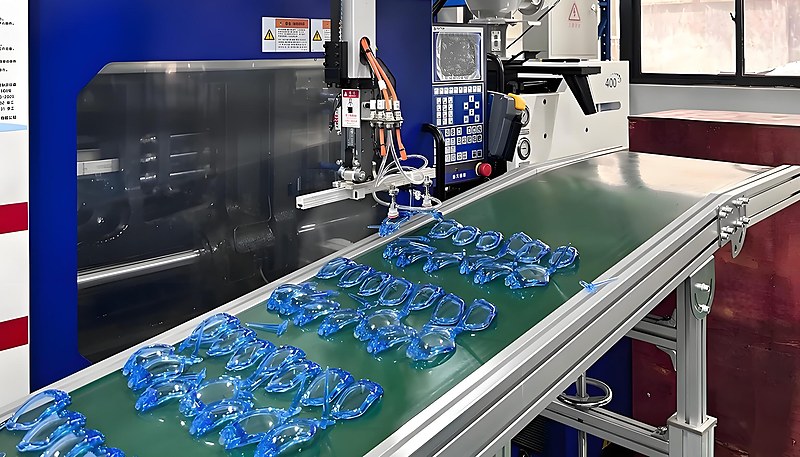
The quality baseline is documented ISO control, traceable materials, and application-specific compliance evidence before production approval.
“Contract manufacturing capability matters when the project needs molding plus assembly, packaging, or repeat export support.”True
New Zealand buyers often need one accountable supplier for tool build, molded parts, secondary operations, export packing, and documentation.
“A supplier list is complete once it includes companies with injection molding machines.”False
Machine capacity alone does not prove quality control, material traceability, project communication, or long-term commercial fit.
ISO 9001: Quality Management System
ISO 9001 is the baseline quality management certification for any injection molding supplier serving New Zealand’s industrial market. It establishes documented procedures for process control, inspection, non-conformance management, and continuous improvement. For general industrial, agricultural, marine, and construction components, ISO 9001 certification from a supplier is the minimum acceptable standard.
ISO 13485: Medical Devices
New Zealand’s growing medical device sector requires ISO 13485-certified injection molding partners for any components used in medical or diagnostic applications. ISO 13485 adds design validation, traceability, sterile packaging capability, and post-market surveillance requirements on top of ISO 9001’s baseline. Medsafe (New Zealand’s medical device regulator) expects medical device manufacturers to source from ISO 13485-certified component suppliers.
AS/NZS Standards
Australia and New Zealand share a joint standards body (Standards Australia / Standards New Zealand), which publishes AS/NZS standards covering materials, product testing, and performance benchmarks relevant to injection molded parts:
AS/NZS 4020: Testing of products in contact with drinking water — relevant for plumbing fittings, water treatment components, and irrigation parts.
AS/NZS 1462 series: Methods of testing plastic pipes and fittings.
AS 4491 / AS/NZS 1580: Paints and surface coatings — relevant for molded parts that receive surface finishing.
Food Safety and Agricultural Compliance
Components used in food processing equipment destined for New Zealand must comply with the New Zealand Food Safety Authority (NZFSA) regulations, which align with international food-contact material standards. Buyers should require suppliers to provide FDA-compliant or EU 10/2011-compliant material documentation for food-contact injection molded parts.
REACH and RoHS Compliance
New Zealand follows international hazardous substance regulations closely. For consumer goods and electronics components, suppliers should provide REACH and RoHS compliance documentation, confirming that materials and pigments are free of restricted substances. Ask the supplier to map each resin, colorant, and additive to the declared compliance file before purchase-order release. Document exceptions early.
How Does New Zealand’s Injection Molding Cost Compare to China?
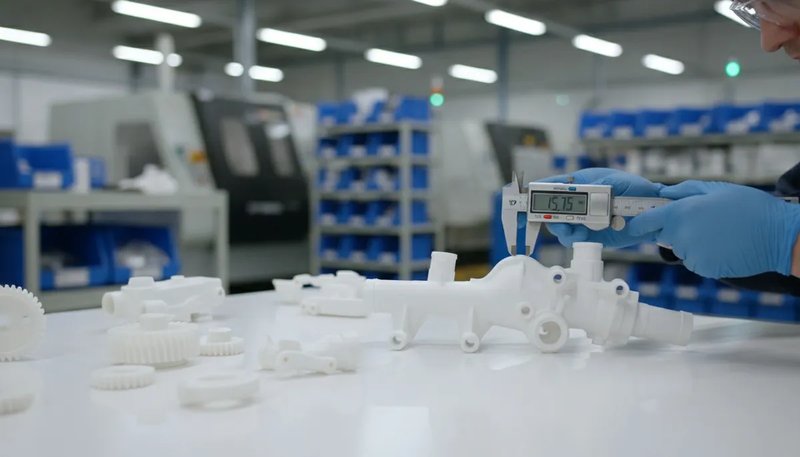
Cost is the most significant driver of New Zealand buyers sourcing offshore. Here is a transparent comparison of injection molding cost structures across key sourcing destinations available to New Zealand buyers.
| Country | Tooling Cost (typical mold) | Unit Cost (per 10,000 parts) | Labor Cost Index | Lead Time (mold) | NZ Tariff |
|---|---|---|---|---|---|
| New Zealand (domestic) | NZD 25,000–80,000 | High | 100 (baseline) | 8–16 weeks | N/A |
| Australia | AUD 20,000–70,000 | High | 95–110 | 8–14 weeks | 0% (ANZCERTA) |
| China | USD 2,000–15,000 | Low | 15–25 | 4–8 weeks | 0% (ChAFTA) |
| Vietnam | USD 3,000–18,000 | Low–Medium | 20–35 | 5–10 weeks | 0% (AANZFTA) [ 10 ] |
| Thailand | USD 5,000–20,000 | Medium | 30–45 | 6–10 weeks | 0% (AANZFTA) |
Key cost insight: Chinese injection molding tooling costs are typically 5–15× lower than domestic New Zealand or Australian alternatives. For a mid-complexity mold that costs NZD 50,000 in New Zealand, an equivalent Chinese-made tool often lands at USD 4,000–8,000 (approximately NZD 7,000–14,000). Combined with 0% import tariffs under ChAFTA and competitive per-unit production costs, China offers the most compelling cost profile for volume injection molded parts destined for New Zealand.
Total Landed Cost Considerations for New Zealand Buyers:
Sea freight (Guangdong to Auckland): USD 800–2,500 per 20-foot container (market-dependent)
Air freight: USD 4–8 per kg, suitable for urgent replenishment or sample shipments
Import GST (15%): Applied on CIF value; fully recoverable for GST-registered NZ businesses
Customs duty: 0% on most plastic components under ChAFTA
Biosecurity inspection: MPI may inspect packaging materials; wooden packaging must be ISPM-15 certified
How Long Do Lead Times and Logistics Take for New Zealand Orders?
Lead time management is critical for New Zealand buyers because of the country’s geographic remoteness. Understanding realistic timelines — from tooling to delivery — prevents production delays. For scheduling detail, compare your RFQ assumptions with realistic injection molding production time ranges before locking a launch date.
Tooling Lead Times
Prototype/bridge tooling: 2–3 weeks (aluminum tooling, limited cavitation)
Production P20 steel tooling: 4–6 weeks
High-cavitation production tooling (H13/S136 steel): 6–10 weeks
Complex multi-cavity or precision tooling: 8–14 weeks
Production Lead Times
Initial production run: 2–4 weeks after tooling approval
Repeat production orders: 1–3 weeks (tooling already available)
Rush production (dedicated machine time): 5–10 business days for standard complexity
Sea Freight: China to New Zealand
Sea freight is the standard shipping mode for volume orders. The key port-to-port routes:
Guangzhou/Shenzhen/Shanghai to Auckland: 23–28 days transit
Shanghai to Auckland: 20–25 days transit
Ningbo to Auckland: 21–26 days transit
Guangzhou/Shenzhen to Wellington/Lyttelton: 25–32 days transit (additional coastal leg from Auckland)
Most New Zealand buyers use FCL (Full Container Load) for large orders and LCL (Less than Container Load) consolidation services for smaller shipments. LCL adds 5–8 days to transit times due to consolidation and deconsolidation handling.
Air Freight: China to New Zealand
Shenzhen/Guangzhou to Auckland: 5–8 days door-to-door
Shanghai to Auckland: 5–7 days door-to-door
Cost: USD 4–8 per kg (suitable for urgent orders under approximately 200 kg)
Customs and MPI Biosecurity
New Zealand’s Ministry for Primary Industries (MPI) enforces strict biosecurity requirements. Key requirements for injection molded part imports:
All wooden packaging materials must comply with ISPM-15 (heat treatment mark)
Plastic parts themselves rarely trigger MPI hold — but any organic contamination on parts or packaging will cause delays
Commercial import documentation: commercial invoice, packing list, bill of lading/airway bill, and MPI declaration where required
When Is New Zealand the Right Sourcing Choice for Injection Molding?
New zealand is the right sourcing choice when communication, regional proximity, and mid-volume production matter more than the lowest unit price. Despite the strong cost case for offshore sourcing, there are genuine scenarios where keeping production local — or within the Australasian region — is the smarter decision. Understanding these trade-offs helps New Zealand buyers make the right call for each project, rather than defaulting to one approach for every situation.
Regulatory supply chain audits: Some food processing and medical device buyers must demonstrate local supply chain control for compliance purposes. A New Zealand or Australian molder allows for on-site audits without international travel or third-party inspection costs.
Short-run prototyping and NPI: For initial new product introduction runs under 500 parts, local molders can deliver in days rather than weeks — removing the logistics risk from early development cycles.
Urgent replenishment and repair: When an existing production tool needs rapid repair or a production line is halted, a local molder with an in-house toolroom can respond far faster than an offshore partner.
Products with frequent engineering changes: Early-stage products that are still evolving benefit from local tooling that can be modified quickly and cost-effectively without international shipping for each iteration.
Specialty marine and agricultural niches: Some New Zealand molders have deep application knowledge in marine-grade and agricultural components, including proprietary material formulations tested for local UV and chemical conditions.
For volume production — typically 5,000+ parts per year — and complex precision tooling, the cost differential makes offshore sourcing (particularly from China under ChAFTA) the clear choice. ZetarMold’s combination of ISO certification, English-speaking project management, and NZ-specific logistics experience is designed precisely for this scenario.
How Do You Choose an Injection Molding Supplier in New Zealand?
Choosing an injection molding supplier in new zealand is about tooling capability, quality systems, communication, and commercial fit. Whether you are evaluating domestic New Zealand molders, Australian suppliers, or offshore Chinese manufacturers, a structured evaluation framework ensures you select the right partner for your specific application, volume, and compliance requirements.
Step 1: Define Your Technical Requirements
Before approaching any supplier, document:
Part geometry and tolerances (2D drawings and 3D CAD files)
Material specification (including any food-contact, UV, or chemical resistance requirements)
Surface finish requirements (texture, gloss level, cosmetic surfaces)
Annual production volume and order frequency
Applicable standards (ISO 13485, AS/NZS, FDA food-contact, etc.)
Step 2: Verify Certifications and Quality Systems
Request the following from potential suppliers:
ISO 9001 certificate (scope, issuing body, expiry date)
ISO 13485 certificate (if medical components)
IATF 16949 (if automotive components)
Material compliance documentation (REACH, RoHS, food-contact declarations)
PPAP/FAI capability (for automotive or regulated industries)
Step 3: Assess Manufacturing Capability
Evaluate:
Machine tonnage range and cavitation capability
In-house toolroom (critical for mold maintenance and modification speed)
Secondary processing capability (assembly, painting, ultrasonic welding, pad printing)
Metrology equipment (CMM, optical measurement, material testing lab)
Step 4: Request and Evaluate Samples
Never commit to production tooling without physical samples. For offshore suppliers, request:
T1 (first shot) samples for dimensional verification
T2 samples post-correction for final approval before production release
Material test reports (tensile, impact, MFR) for regulated applications
Step 5: Evaluate Communication and Project Management
New Zealand buyers often cite communication failure as the primary cause of offshore sourcing problems. Assess:
English language capability (technical communication, not just sales)
Dedicated project manager or customer success contact
Response time to technical queries (target: same business day)
Project tracking transparency (milestone updates, photo documentation)
Step 6: Clarify IP Protection
New Zealand product developers are rightly concerned about intellectual property when sourcing in China. Best practices include:
Signed NDA before sharing CAD files or technical specifications
Mold ownership clauses in the supply contract (you own the tooling)
Trademark registration in China (Chinese trademark law is first-to-file)
Why Is ZetarMold the Right Partner for New Zealand Buyers?
ZetarMold is a Shanghai-based injection molding manufacturer with 20+ years of export tooling and production experience. In our experience, New Zealand buyers value clear DFM feedback, fast T1 response, and export documentation as much as unit price. Our engineers support medical, automotive, electronics, industrial, and consumer goods projects with English-language communication and documented quality controls.
Certifications That Match New Zealand’s Requirements
ISO 9001:2015 — Full quality management system covering tooling, production, inspection, and delivery
ISO 13485:2016 — Medical device quality management for New Zealand’s growing medtech sector
Material compliance documentation: FDA food-contact, REACH, RoHS on request
Manufacturing Scale and Capability
47 injection molding machines, 90–1,850 tonnes clamping force
In-house toolroom with CNC, EDM, wire-cut, and CMM measurement
45-day mold delivery for standard production tooling
Production volumes from 1,000 to millions of parts per year
Secondary services: assembly, pad printing, ultrasonic welding, painting, packaging
Material Expertise for New Zealand’s Key Industries
Agricultural and marine: UV-stabilized PP, HDPE, PA6-GF30, POM
Medical: ISO 13485-controlled PC, PP, PE, and biocompatible TPE
Food processing: FDA/EU-compliant PP, HDPE, POM, PTFE-modified grades
Consumer goods and electronics: ABS, PC/ABS, PP with various surface finishes
English-First Communication
Our customer success team communicates exclusively in English — from initial RFQ through tooling approval, production, and post-delivery support. New Zealand buyers receive dedicated account management, milestone photo updates, and same-day responses to technical queries during standard business hours (which overlap significantly with NZ business hours given the UTC+8 / UTC+12 time zone alignment).
New Zealand-Specific Export Experience
ISPM-15 certified wooden packaging to meet MPI biosecurity requirements
FCL and LCL consolidation shipping options to Auckland, Wellington, and Lyttelton ports
Commercial invoice and packing list documentation formatted for NZ Customs and MPI clearance
Flexible Incoterms: EXW, FOB, CIF to suit your freight forwarder or direct import preference
Risk Reduction for NZ Buyers
T1/T2 sample approval process before production release
Mold ownership guaranteed in writing — your tooling, your IP
Pre-shipment inspection (third-party available on request)
Tooling warranty: free repair or rework for mold defects within the warranty period
Ready to Source Injection Molded Parts for New Zealand?
Sourcing injection molded parts for New Zealand is easier when tooling, QA, and export packing are handled by one accountable team. ZetarMold supports RFQs with ISO-certified production, English-speaking project managers, 45-day mold delivery, and ISPM-15 certified export packaging. Get a detailed quote for your project within 24 hours.
Frequently Asked Questions
What should I check before requesting a quote from a New Zealand injection molding supplier?
Start with the commercial and engineering basics: part drawings, annual volume, material grade, critical tolerances, cosmetic requirements, and your expected launch timing. Then verify whether the supplier owns in-house tooling, how sample approval is handled, what inspection records can be shared, and whether change requests are documented formally. For a New Zealand shortlist, also confirm export communication, packaging expectations, and post-launch support so you are comparing real execution capability instead of only machine lists or headline pricing. A strong RFQ should force every finalist to answer the same operating questions in the same format.
Can a New Zealand supplier handle both mold building and production molding?
Some suppliers can manage both activities under one roof, while others focus on molding and outsource the tool build. That difference matters because mold ownership, steel changes, timeline control, and maintenance responsibility become harder to manage when tooling and molding are separated. When you benchmark suppliers, ask who designs the mold, who approves the steel specification, where T1 sampling happens, and who pays for modification rounds after the first article review. Those answers reveal whether the supplier can truly carry the program from RFQ to stable volume output. It also shows whether the quoted lead time is operationally credible.
When should I compare offshore suppliers like Zetar with a local New Zealand injection molding source?
It usually makes sense when the project needs stronger tooling bandwidth, lower landed tooling cost, or broader secondary-process support than a local shortlist can provide. The comparison should not be framed as local versus offshore alone. Instead, compare mold design depth, project communication, validation discipline, packaging, shipping cadence, and the speed of engineering response after T1. If an offshore team can document those controls clearly and still deliver a better commercial package, it deserves to sit beside local suppliers in the final sourcing decision.
What quality documents should buyers request before awarding injection molding production?
A serious supplier should be able to provide a process flow, control plan, incoming material controls, dimensional inspection records, sample approval evidence, and certification coverage relevant to your industry. For regulated or high-precision programs, request a clear sampling plan, gauge strategy, and escalation path for nonconforming parts. If tooling is included, ask for mold layout ownership, maintenance expectations, and the revision-control method used when steel changes are approved. These documents show whether the supplier can run a repeatable production system instead of handling the order as a one-off job.
How many injection molding suppliers should I benchmark before making a final selection?
Three to five qualified suppliers is usually the most efficient range. Fewer than three makes it hard to compare technical assumptions, while too many vendors creates noise and slows feedback. Use the first screening round to narrow the list by capability, communication quality, and evidence of process control. Then request comparable quotations from the finalists using the same RFQ pack, material assumptions, and quality requirements. That structure gives you a clean commercial comparison without forcing your engineering team to evaluate a scattered set of inconsistent proposals.
-
contract manufacturing: Contract manufacturing is a production arrangement in which a supplier manufactures parts or assemblies to a customer’s drawings, quality requirements, and commercial terms. ↩
-
ISO 9001: ISO 9001 is an international quality-management standard that defines how an organization documents, controls, and improves repeatable production processes. ↩
-
thermoplastics: thermoplastics refers to are polymer materials that soften when heated and solidify again when cooled, which makes them suitable for repeatable injection molding cycles. ↩