 Skip to content

– Injection mold productivity is a measure of high-quality parts produced per unit of time, and optimizing it is crucial for reducing cost-per-part and maintaining a competitive edge.
– Cycle time reduction, particularly the cooling phase which often accounts for over 50% of the cycle, offers the most significant opportunity for productivity gains.
– Advanced mold designs, including conformal cooling channels and hot runner systems, directly translate to faster cycles, better part quality, and less material waste.
– A holistic approach combining proactive mold maintenance, precise process parameter control (Scientific Molding), and strategic automation is essential for maximizing long-term productivity.
What is injection mold productivity and why does it matter?
Here at ZetarMold, when our engineers talk about productivity, we’re not just talking about speed. Injection mold productivity is a critical factory metric that goes beyond simple parts-per-hour. We define it as the rate of producing dimensionally correct, cosmetically acceptable parts per unit of time and resource. It’s a holistic measure that encompasses cycle time1, uptime, scrap rate, and labor efficiency. A highly productive mold isn’t just fast; it’s reliable, consistent, and profitable.
Why does this matter so much? In the competitive world of manufacturing, every second and every gram of plastic counts. Improving mold productivity has a direct and powerful impact on the bottom line. It lowers the cost per part, allowing us to offer more competitive pricing to our clients. It increases factory throughput, meaning we can fulfill larger orders on tighter deadlines without compromising quality. High productivity also reduces energy consumption per part, contributing to more sustainable manufacturing practices. Ultimately, a productive mold is the heart of a successful and scalable injection molding operation, turning raw material into value with maximum efficiency.
Consider two molds producing the same part. Mold A runs a 30-second cycle with a 2% scrap rate. Mold B runs a 25-second cycle but has a 10% scrap rate due to quality issues. While Mold B appears faster on paper, its effective productivity is significantly lower because a tenth of its output is unusable. This is why our focus is always on net good parts. In our factory, every project begins with a deep dive into how we can design and operate the tooling for maximum, sustainable productivity from the very first shot.
How does optimizing cycle time boost injection mold productivity?
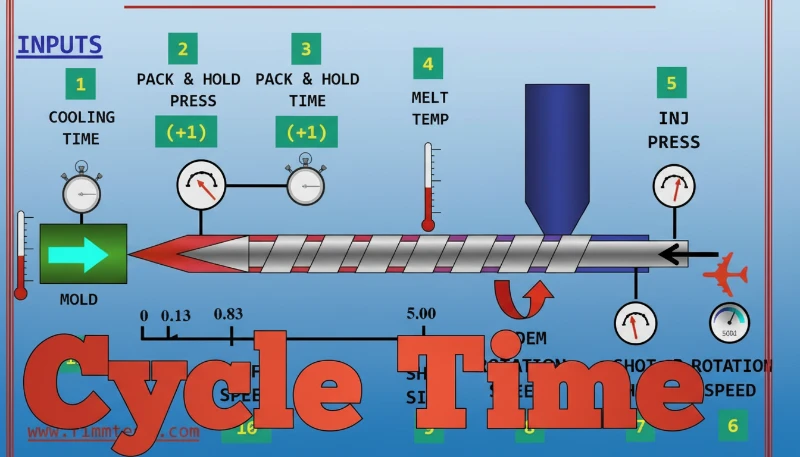
The single most influential factor in injection mold productivity is the cycle time. Every second shaved off the cycle of a high-volume mold can translate to thousands of dollars in savings and hundreds of extra hours of production capacity over the life of a project. The injection molding cycle consists of several stages: closing the mold, filling with molten plastic, packing and holding to compensate for shrinkage, cooling the part until it’s solid, opening the mold, and ejecting the part. Our process engineers analyze each of these phases to find opportunities for optimization.
While filling and packing are critical for part quality, the cooling phase typically consumes the most time—often 50-80% of the entire cycle. This is where the part transitions from a molten state to a solid, stable shape that can be ejected without warping. The faster we can remove heat from the plastic, the shorter the cycle time can be. Therefore, a significant portion of our productivity enhancement efforts are laser-focused on optimizing the cooling process. This can involve everything from adjusting coolant temperature and flow rate to fundamentally redesigning the mold’s cooling system, which we’ll explore next.
Beyond cooling, we also scrutinize other parts of the cycle. Can the mold open and close faster? Can the robot or operator remove the part more swiftly? We’ve found that even seemingly minor adjustments, like optimizing the ejector stroke or fine-tuning the robot’s path, add up. When a mold is running millions of cycles, a half-second saved is a monumental achievement. It’s a game of inches, or rather, tenths of a second, and our team is relentlessly driven to win it.
What role does mold cooling system design play in productivity?
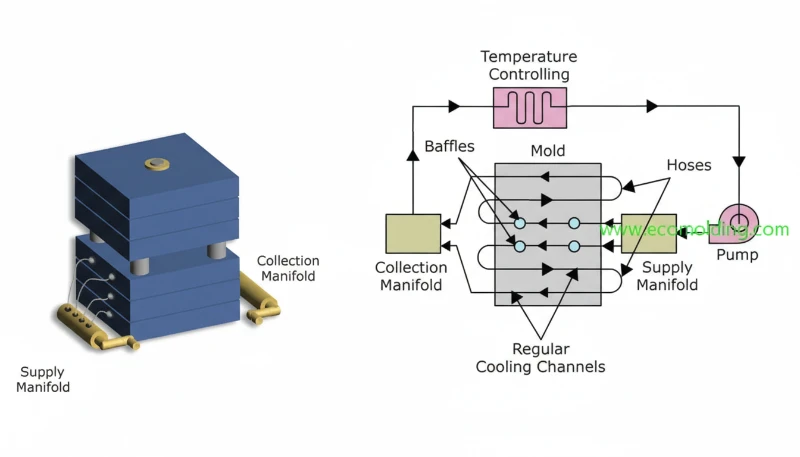
If cycle time is the king of productivity, then the cooling system is the kingmaker. The ability of a mold to efficiently and uniformly extract heat from the molten plastic dictates not only the cycle time but also the final quality of the part. A poorly designed cooling system leads to long cycles, warping, sink marks, and internal stresses. In our experience, investing in advanced cooling design upfront pays for itself many times over in increased productivity and reduced scrap rates.
The traditional method involves drilling straight-line cooling channels into the mold base. While simple and cost-effective to create, these channels often can’t provide optimal cooling, especially for parts with complex geometries. They may be too far from critical hot spots or unable to cool different sections of the part at a consistent rate. This is where a more advanced approach, conformal cooling2,② becomes a game-changer. Using technologies like 3D metal printing (DMLS), we can create cooling channels that follow the exact contours of the part, like a jacket. This ensures incredibly uniform and rapid heat removal, even in hard-to-reach areas.
The results are dramatic. We’ve implemented conformal cooling on projects and seen cycle time reductions of 30-50% while simultaneously improving part straightness and dimensional stability. The key is to ensure turbulent flow within the channels, as it’s far more effective at transferring heat than laminar (smooth) flow. Our engineers use advanced fluid dynamics simulation software to design and validate cooling circuits, optimizing channel diameter, path, and coolant flow rate to achieve maximum turbulent flow and thermal efficiency. The design of the cooling system is one of the most powerful levers we can pull to supercharge a mold’s productivity.
“Conformal cooling channels can reduce cycle times by over 30% in complex parts.”True
This is true. By following the part’s geometry, conformal cooling channels provide more uniform and efficient heat extraction compared to conventional straight-drilled lines. This leads to significantly faster solidification, shorter cooling times, and as a result, reduced overall cycle times, often exceeding a 30% improvement.
“Using cold tap water for mold cooling is always the most cost-effective and efficient method.”False
This is false. While seemingly cheap, tap water contains minerals that cause limescale buildup inside cooling channels. This scale acts as an insulator, drastically reducing cooling efficiency, increasing cycle times, and requiring costly and frequent descaling. We use closed-loop systems with treated, chilled water to ensure consistent temperature and prevent buildup, which is far more effective and economical in the long run.
The impact of mold productivity optimization extends beyond just faster cycle times. When injection molds operate at peak efficiency, manufacturers benefit from reduced scrap rates, lower energy consumption per part, and more predictable maintenance schedules. A well-maintained, properly designed injection mold consistently outperforms a neglected one — often producing 20–40% more parts per shift with the same machine investment.

How does regular mold maintenance prevent downtime and improve output?
An injection mold is a high-precision piece of equipment that operates under immense pressure and temperature. Thinking you can run it for millions of cycles without regular care is a direct path to catastrophic failure and costly downtime. At ZetarMold, we treat mold maintenance not as a chore, but as a core productivity strategy. A well-maintained mold runs more reliably, produces higher-quality parts, and lasts significantly longer. Proactive maintenance is always cheaper than reactive repair.
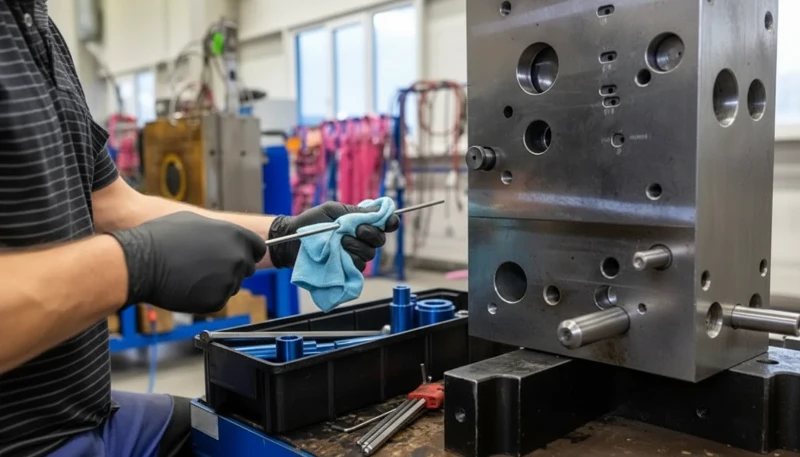
Our maintenance program is tiered based on the number of cycles a mold has run. After a set number of shots, a mold is pulled for Level 1 maintenance. This involves a thorough cleaning of the parting line surfaces, vents, and cavities by our skilled toolmakers. They inspect for any signs of wear, damage, or residue buildup (outgassing) that could cause flash or cosmetic defects. Ejector pins, slides, and other moving components are cleaned and re-lubricated. This simple procedure, performed regularly, prevents a host of common molding problems and ensures the mold is ready to run at peak efficiency.
For more extensive Level 2 or Level 3 maintenance, the mold is completely disassembled. Every single component is inspected, measured against its original specifications, and cleaned. Any worn or damaged parts—like gate inserts, leader pins, or ejector sleeves—are replaced with new ones from our spare parts inventory, which we establish at the beginning of every project. This preventative approach ensures that a worn-out pin doesn’t break mid-production, which could cause major damage to the mold cavity and lead to days or even weeks of unplanned downtime. For our clients, this commitment to maintenance translates directly to reliability and on-time delivery.
What material and process parameter adjustments enhance mold efficiency?
Beyond the physical mold and machine, the materials and process parameters are the dynamic variables we can adjust to unlock further productivity. The choice of plastic resin itself has a significant impact. Some materials, like high-flow polypropylene or ABS, are formulated to fill the mold more easily and at lower pressures. Using these materials can sometimes allow for faster injection speeds and shorter fill times. However, material selection is almost always dictated by the part’s end-use requirements, so our primary focus is on optimizing the process for the specified material.
This is where the principles of Scientific Molding3③ come into play. Instead of relying on guesswork or “tribal knowledge,” our process engineers use a data-driven approach to establish a robust and efficient process window. We systematically decouple and optimize each phase of the process. For example, we conduct rheology studies to determine the ideal melt temperature and injection speed to fill the part without causing degradation or shear stress. We perform pressure-loss studies to understand how much pressure is needed to move the plastic through the nozzle, runner, gate, and cavity.
Once the mold is filled, we optimize the packing phase. By carefully controlling pack pressure and time, we ensure enough material is forced into the cavity to compensate for shrinkage as the part cools, preventing sinks and voids without creating flash or internal stress. We fine-tune back pressure during screw recovery to ensure a homogenous melt without adding excessive time to the cycle. This methodical, scientific approach results in a highly stable, repeatable process that maximizes the production of good parts while minimizing scrap and cycle time. It transforms molding from an art into a science, which is essential for peak productivity.
How does automation technology improve injection molding productivity?
In a modern injection molding facility, automation is not a luxury; it’s a fundamental component of a productive and competitive operation. The most common form of automation is the use of robots, or “pickers,” to remove parts from the mold. This alone provides a huge productivity boost over manual operation. A robot moves with perfect consistency every single time, enabling a more stable and often shorter cycle. It also eliminates the risk of damage to the mold that can occur during manual part removal and improves operator safety.
However, the impact of automation extends far beyond simple part removal. We leverage “downstream” automation to perform tasks that would otherwise require manual labor, increasing throughput and consistency. For example, a six-axis robot can take a part from the mold and present it to a vision system for automated quality inspection. It can then move the part to a station for gate trimming, place it in an assembly, or even stack it directly into its final packaging. This integration of post-molding operations creates a seamless, efficient production cell, reducing labor costs, minimizing handling damage, and freeing up our skilled technicians to focus on more complex tasks.
“Six-axis robots offer greater flexibility than three-axis robots for complex post-molding operations.”True
This is correct. While a three-axis (Cartesian) robot is excellent for simple pick-and-place tasks, a six-axis (articulated) robot can mimic the motion of a human arm. This allows it to perform intricate tasks like rotating a part for inspection, precise trimming, inserting it into an assembly at an angle, or complex palletizing, offering far greater value in a fully automated cell.
“Automating a poorly optimized injection molding process will automatically fix its inefficiencies.”False
This is a common misconception. Automation simply executes a process faster and more consistently. If the underlying process is inefficient—for example, if it produces a high scrap rate—automation will just produce bad parts at a faster rate. The process must be optimized first using principles of Scientific Molding, then automation can be applied to lock in and amplify those efficiencies.
Another powerful application is in-mold automation. Techniques like in-mold labeling (IML) or in-mold decorating (IMD) use a robot to place a decorative film or label into the mold before injection. The plastic is then shot over the label, permanently fusing it to the part. This eliminates an entire secondary operation, saving time and labor while producing a more durable and high-quality finish. By strategically implementing automation, we transform the injection molding machine from a standalone unit into the heart of a highly productive, integrated manufacturing system.
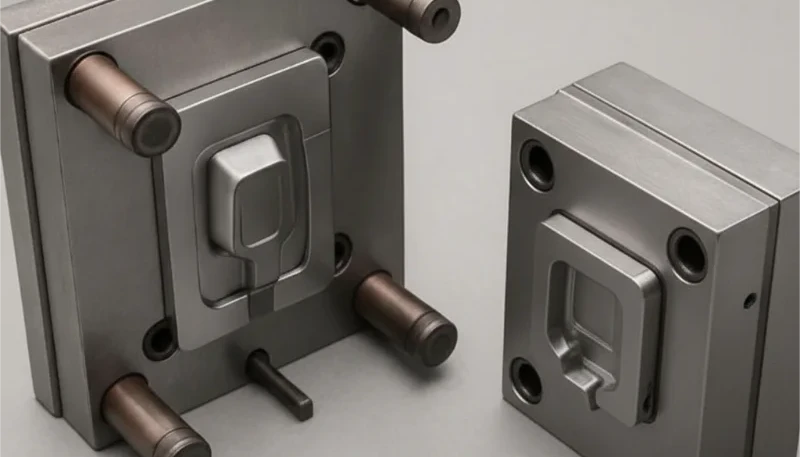
What design improvements can increase mold lifespan and output?
The productivity of an injection mold is fundamentally determined at the design stage. Long before the first piece of steel is cut, our engineers and tool designers collaborate with clients to optimize the mold design for maximum output and longevity. A robust design not only runs faster but also requires less maintenance and is less prone to failure over millions of cycles. This process, often called Design for Manufacturability (DFM), is critical.
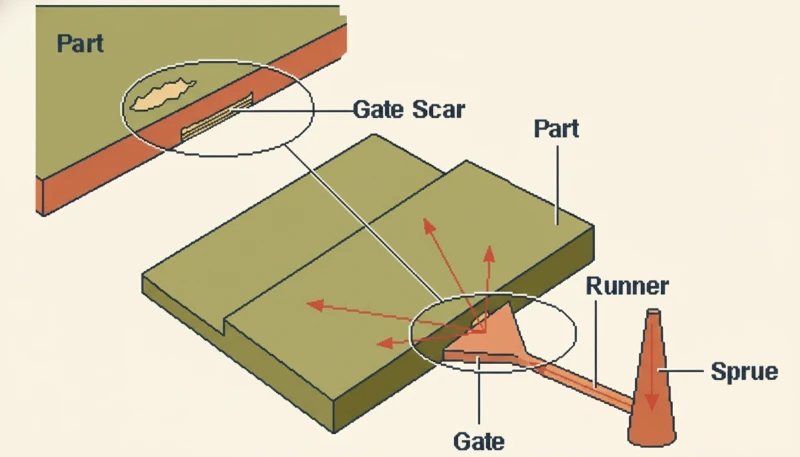
One of the most significant design choices affecting productivity is the use of a hot runner4 system④ versus a conventional cold runner. A cold runner is a channel in the mold that delivers plastic to the cavities; this runner solidifies with the parts and is ejected as waste (which is then reground and recycled). A hot runner system, on the other hand, is an internally heated manifold that keeps the plastic molten all the way to the gate. This eliminates the runner entirely, saving material, avoiding a secondary regrinding step, and often enabling faster cycle times because there’s no bulky runner to cool. While the initial cost is higher, for high-volume production, a hot runner system is almost always the more productive and economical choice.
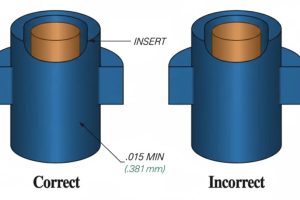
Other design elements we focus on include the number of cavities, the ejection system, and the materials used for the mold itself. A multi-cavity mold increases output per cycle, but it’s crucial to ensure all cavities fill and cool uniformly, a challenge we solve with advanced flow simulation software. The ejection system must be robust enough to push parts out reliably for millions of cycles without sticking or causing damage. We also strategically use different steel types and coatings. For high-wear areas like gates or shut-offs, we use hardened tool steels. For high-thermal-load areas, we might use inserts made from highly conductive beryllium-copper alloy to pull heat out faster. These design-level decisions are the foundation of a truly productive mold.
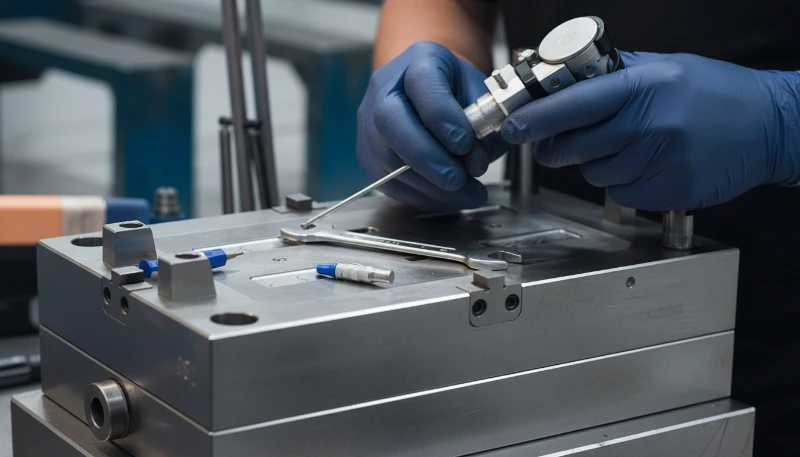
How can real-time monitoring and data analysis optimize injection mold performance?
In the age of Industry 4.0, we no longer have to guess how a mold is performing—we can measure it. Real-time monitoring and data analysis are powerful tools that allow our team to see inside the process and make data-driven decisions to optimize productivity. Modern injection molding machines and auxiliary equipment are equipped with a vast array of sensors that generate a constant stream of data on temperatures, pressures, speeds, and times.
Our strategy is to capture this data and turn it into actionable intelligence. We use specialized Manufacturing Execution Systems (MES) to monitor the performance of every machine in our factory in real-time. This system tracks key metrics like cycle time, uptime, downtime, and scrap rate. If a machine’s cycle time deviates from the established standard by even a fraction of a second, an alert is triggered, allowing a process technician to investigate immediately. This prevents small issues from escalating into major problems that could cause hours of downtime or a batch of bad parts.
We take this a step further by using in-mold sensors. By placing pressure and temperature sensors directly inside the mold cavity, we can see exactly what the plastic is experiencing during the fill, pack, and cool phases. This data is invaluable for process optimization and quality control. For example, if the cavity pressure curve for a part is identical to the curve of a “golden part” that we know is good, we can be extremely confident that the part meets all quality specifications without even needing to measure it. This allows for real-time quality assurance and enables predictive maintenance. By analyzing trends in the data, we can predict when a vent might be starting to clog or a component is wearing out, and schedule maintenance before it causes a failure. This data-driven approach is the future of maximizing injection mold productivity.
Frequently Asked Questions
What is the single biggest factor affecting injection mold productivity?
While many factors are important, the most significant is almost always the cycle time. The cooling portion of the cycle typically offers the greatest opportunity for improvement. Every second saved on the cycle time for a high-volume part has a massive cumulative effect on total output and cost-per-part.
How often should a high-volume injection mold be maintained?
This depends on the mold’s complexity, the material being run (some are more abrasive or corrosive), and the total number of cycles. As a general rule, we perform a basic in-press cleaning and inspection (Level 1) every 8-24 hours of runtime. A more thorough preventative maintenance (Level 2), where the mold is pulled from the press, is typically scheduled every 25,000 to 100,000 cycles. A complete disassembly and overhaul (Level 3) might occur every 250,000 to 1,000,000 cycles.
Is a hot runner system always more productive than a cold runner?
For high-volume production, a hot runner system is almost always the more productive choice. It eliminates material waste from the runner, avoids the need for regrinding, and often allows for faster cycles because there isn’t a solid runner that needs to be cooled and ejected. However, for low-volume production, prototyping, or certain temperature-sensitive materials, the simplicity and lower initial cost of a cold runner system might be more appropriate.
Can a family mold (molding different parts in the same mold) increase productivity?
Yes, a family mold can increase productivity by producing a complete set of related parts in a single cycle. However, it presents significant design challenges. The parts must be of similar size and volume, and the runner system must be carefully balanced to ensure all cavities fill at the same rate and pressure. If not balanced correctly, it can lead to quality issues like shorts, flash, or warping in some of the parts, which would negate any productivity gains.
What is the difference between productivity and efficiency in injection molding?
While often used interchangeably, they have distinct meanings in our factory. Productivity is a measure of output over time (e.g., good parts per hour). Efficiency is a ratio of output to input (e.g., good parts per kilowatt-hour of energy or gram of material). Our goal is to maximize both: we want to make as many high-quality parts as possible (productivity) while using the minimum amount of resources to do so (efficiency).
Summary
Improving the productivity of injection molds is not about a single magic bullet, but rather a continuous, holistic effort that integrates design, tooling, processing, and maintenance. From the initial DFM analysis to the final implementation of real-time data monitoring, every step presents an opportunity for optimization. As we’ve seen in our own factory, focusing on core areas like cycle time reduction through advanced cooling design, establishing rigorous preventative maintenance schedules, and leveraging data-driven Scientific Molding principles are foundational. When these are combined with modern advancements like hot runner systems, strategic automation, and data analytics, the potential for increased throughput, reduced costs, and enhanced quality is immense. Ultimately, a productive mold is the result of a partnership between an experienced manufacturing team and a well-designed tool, working in harmony to achieve maximum value.
-
Cycle time in injection molding refers to the total time elapsed for one complete manufacturing sequence, from mold close to mold close for the next part. It is a critical metric for production planning and cost calculation. ↩
-
Conformal cooling is an advanced mold design technique where cooling channels follow the shape or “conform” to the part’s geometry, providing highly efficient and uniform cooling compared to conventional drilled lines. This is often achieved using metal 3D printing. ↩
-
Scientific Molding (also known as Decoupled Molding) is a data-driven methodology for developing a stable and repeatable injection molding process. It involves optimizing each stage of the process independently to create a wide processing window and consistent part quality. ↩
-
A hot runner system is a heated manifold assembly used in injection molds that conveys molten plastic from the machine nozzle to the cavities. Unlike a cold runner, it keeps the plastic in a molten state, eliminating runner waste and often reducing cycle times. ↩




 EN
EN  ES
ES  FR
FR  DE
DE  PT
PT  AR
AR  RU
RU  JA
JA  KO
KO  IT
IT  NL
NL  TR
TR  PL
PL 