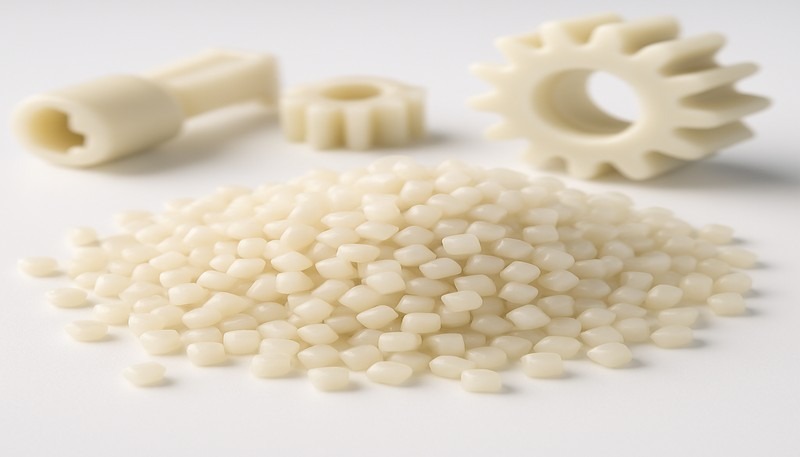
- PEEK requires melt temperatures of 350–400°C and mold temperatures of 160–200°C — far outside standard injection molding machine capabilities.
- Crystallinity control is the defining challenge: mold temperature below 143°C (Tg) produces amorphous, brittle parts; above 160°C yields semi-crystalline parts with maximum mechanical performance.
- Material drying is mandatory: 3–4 hours at 150–160°C, targeting moisture content below 0.02% — moisture above this threshold degrades polymer chains and causes splay marks.
- PEEK raw resin costs 50–100x more than ABS, making defect prevention at the process level a financial imperative, not just a quality one.
- Conformal cooling channels are strongly recommended for PEEK molds — uniform mold temperature to within ±3°C is required to prevent differential shrinkage and warpage on precision parts.
- Post-mold annealing (140–200°C, 1–4 hours) is required for tight-tolerance applications to relieve internal stress and stabilize crystallinity.
What Is PEEK Injection Molding?
PEEK injection molding is a high-temperature manufacturing process that melts Polyetheretherketone resin at 350–400°C, injects it into a heated mold at 160–200°C, and produces semi-crystalline parts with tensile strength up to 100 MPa, continuous service temperature of 260°C, and near-complete chemical inertness. No other melt-processable polymer offers this combination at comparable part complexity.
PEEK belongs to the polyaryletherketone (PAEK) family — a semi-crystalline, high-performance engineering polymer with a glass transition temperature of 143°C and a melting point of approximately 343°C. That melting point is why standard injection molding machines (rated to 300°C) cannot process it. You need barrel heater bands rated to at least 430°C, corrosion-resistant bimetallic or nickel-alloy screws, and oil-circuit or high-pressure water mold temperature controllers that can hold 160–200°C. If your machine cannot hit those numbers, PEEK cannot run on it — full stop.
At ZetarMold, we dedicate specific high-temperature presses from our fleet of 47 machines exclusively to PEEK and other PAEK-family resins. Every PEEK project starts with a material qualification shot on the dedicated press before any production tooling is committed. In 20 years of running PEEK, the single most common root cause of first-shot failures we see is not the mold design — it is attempting PEEK on a machine that lacks the thermal capacity to hold stable barrel temperatures through the entire injection cycle.
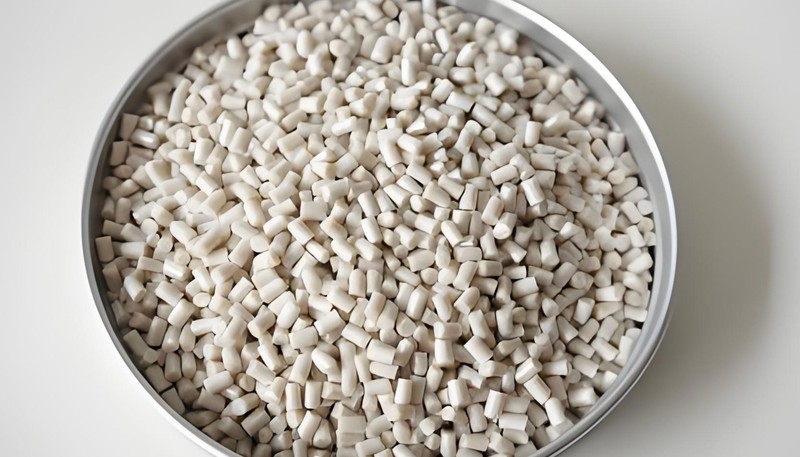
“PEEK mold temperature must exceed 160°C to achieve a semi-crystalline structure with useful mechanical properties.”True
PEEK’s glass transition temperature is 143°C. If the mold temperature falls below this threshold, the polymer solidifies in an amorphous state — dimensionally less stable, significantly more brittle, and with reduced chemical resistance compared to the semi-crystalline form. Mold temperatures of 160–200°C allow the polymer chains time to organize into ordered crystalline regions before the part is ejected, producing the mechanical performance that justifies the material’s cost.
“A standard injection molding machine rated to 300°C barrel temperature can process PEEK with minor adjustments.”False
PEEK requires barrel temperatures of 350–400°C across all heating zones — 50–100°C above what standard machines provide. Operating a standard machine near its rated maximum creates severe thermal instability: temperature overshoot during plasticization, uneven melt, and accelerated barrel wear from thermal stress. The corrosive nature of PEEK melt at process temperatures also degrades standard bimetallic screws within hundreds of shots. A dedicated high-temperature machine is not a preference; it is a prerequisite.
Understanding these physical constraints upfront saves significant project cost. We have seen programs where a client specified PEEK assuming the part could run on existing molding equipment at their contract manufacturer — only to discover at T1 that the molder’s machines could not maintain 380°C barrel temperature under continuous production conditions. The resulting part brittleness was not visible to the naked eye but showed up as catastrophic failure in application testing. Specifying PEEK means committing to a dedicated high-temperature production cell, and every quote and timeline should be built around that reality from the first design review. The material choice and the machine requirement are inseparable.
What Are the Critical Processing Parameters for PEEK?
PEEK processing requires six non-negotiable parameters: barrel temperature 350–400°C, mold temperature 160–200°C, injection pressure 100–150 MPa, back pressure 5–10 MPa, screw speed 40–80 RPM, and moisture content below 0.02% before processing. Deviation from any one of these outside the stated window produces parts with compromised crystallinity1, mechanical failure, or visible defects — and with PEEK’s material cost, each failed shot represents a significant direct loss.
Mold temperature is the most consequential single parameter. At 160°C mold temperature, unfilled PEEK achieves roughly 25–30% crystallinity — sufficient for most structural applications. At 200°C, crystallinity rises to 35–40%, delivering maximum chemical resistance and fatigue life. The trade-off is cycle time: the higher the mold temperature, the longer the part must remain in the mold before it is dimensionally stable enough to eject. In practice, we target 180°C as our starting mold temperature for unfilled grades and adjust based on part geometry and customer specifications.
| Parameter | Recommended Range | Engineering Notes |
|---|---|---|
| Drying Temperature | 150–160°C for 3–4 hours | Verify moisture <0.02% with analyzer before processing |
| Barrel Temperature (Rear) | 330–360°C | Progressive rise from rear to front; do not jump zones |
| Barrel Temperature (Front/Nozzle) | 370–400°C | Nozzle must match; a cold nozzle causes freeze-off and short shots |
| Mold Temperature | 160–200°C | Below 143°C (Tg) = amorphous, brittle parts; target 180°C for most grades |
| Injection Pressure | 100–150 MPa | PEEK is viscous; high pressure required for complete fill |
| Back Pressure | 5–10 MPa | Removes volatiles; above 10 MPa causes shear degradation |
| Screw Speed | 40–80 RPM | Lower speed minimizes shear heat; critical with filled grades |
| Venting Depth | 0.02–0.025 mm | PEEK’s low melt viscosity demands tight vents to prevent flash |
Back pressure is routinely set too high on PEEK programs. Engineers accustomed to amorphous resins like ABS or PC often apply 15–20 MPa back pressure to ensure melt homogeneity. On PEEK, back pressure above 10 MPa generates excessive shear heat that darkens the melt, degrades molecular weight, and produces parts with noticeably reduced impact strength. We set back pressure at 5–7 MPa as our default and verify shot consistency by monitoring melt temperature at the nozzle with a pyrometer on every new program startup.
At ZetarMold, we run a mandatory melt temperature verification on every PEEK program startup using a pyrometer at the nozzle tip. The target is within ±5°C of the set barrel temperature. If the measured melt temperature deviates beyond this band, we pause production and investigate barrel zone calibration before any production parts are shot. This single check has prevented three batch rejections in the past year on PEEK medical device programs where dimensional drift traced directly to barrel temperature instability.
How Does PEEK Injection Molding Work Step by Step?
PEEK injection molding follows four sequential stages — material preparation, melting and injection, packing and cooling, ejection and post-processing — each with critical PEEK-specific constraints that differ substantially from standard engineering resin processing. Skipping or shortcutting any stage produces defects that are expensive or impossible to remediate given PEEK’s material cost.
Stage 1 — Material Preparation (Drying): PEEK is 2 and absorbs atmospheric moisture that converts to steam at barrel temperatures, causing hydrolytic degradation of the polymer chains. The result is silver streaks, splay marks on the part surface, and a measurable reduction in molecular weight. Drying protocol: 150–160°C in a desiccant dryer for 3–4 hours. After drying, moisture content must be below 0.02% — verify with a moisture analyzer before releasing material to the press. Do not rely on timer alone; poorly maintained desiccant cartridges can fail to achieve target moisture levels.
Stage 2 — Melting and Injection: Dried pellets feed into the specialized barrel where four progressive temperature zones melt and homogenize the PEEK at 350–400°C. The screw plasticizes the melt and injects it into the mold cavity at 100–150 MPa injection pressure. Fill speed must be controlled carefully: too slow causes premature freeze-off in thin walls; too fast generates excessive shear heat that darkens the melt. A fill time of 1–3 seconds is the typical target range for most PEEK parts under 150 grams.
Stage 3 — Packing, Holding, and Controlled Cooling: Once the cavity is filled, holding pressure (typically 70–100% of injection pressure) compensates for volumetric shrinkage during cooling. This is the critical crystallinity-control phase. The mold, held at 160–200°C by an oil-circuit temperature controller, allows the polymer chains to organize into ordered crystalline structures. Cooling time is far longer than for amorphous resins at comparable wall thickness — a 3 mm PEEK wall requires 60–90 seconds of controlled cooling versus 25–35 seconds for ABS at the same thickness — because the crystallization process itself generates latent heat that must be extracted.
Stage 4 — Ejection and Post-Processing (3): The part is ejected at a temperature where it is dimensionally stable but not fully stress-relieved. For precision components — medical implants, aerospace brackets, semiconductor fixtures — post-mold annealing is required: heat the part to 140–200°C (below Tg for amorphous zones but above room temperature), hold for 1–4 hours depending on wall thickness, then cool at a controlled rate of 2–5°C per minute. Annealing relieves residual molding stresses, improves crystallinity uniformity across the part cross-section, and stabilizes dimensions to within ±0.05 mm on critical features.
What Are the Advantages and Disadvantages of PEEK Injection Molding?
PEEK injection molding delivers unmatched performance in thermal, mechanical, and chemical resistance — including 260°C continuous service temperature, 90–100 MPa tensile strength, and biocompatibility for implant-grade applications — at a material cost 50–100x higher than commodity resins and with processing complexity that demands specialized equipment and process expertise. The decision to use PEEK is a business calculation, not just an engineering one.
In our experience, most engineers who inquire about PEEK for a new program have been sent there by a failure mode — a part that cracked at 180°C, corroded in hydraulic fluid, or failed sterilization. PEEK is the correct answer when the application genuinely hits the performance ceiling of materials like PEI or PPS. For applications where either of those resins would succeed, they are almost always the better economic choice. The comparison table below is how we frame this conversation internally before quoting a PEEK program.
| Property | PEEK | PEI (Ultem 1010) | PPS |
|---|---|---|---|
| Max Continuous Use Temp. | 260°C | 170°C | 220°C |
| Tensile Strength (Unfilled) | 90–100 MPa | ~105 MPa | ~80 MPa |
| Mold Temperature Required | 160–200°C | 140–175°C | 130–160°C |
| Chemical Resistance | Excellent (all except conc. H₂SO₄) | Good (limited vs. chlorinated solvents) | Excellent (best in class for specific chemicals) |
| Relative Material Cost | Baseline (100%) | ~50–60% | ~25–35% |
| Biocompatibility | ISO 10993 grades available | ISO 10993 grades available | Limited |
| ZetarMold Recommendation | Medical implants, aerospace, HTHP downhole — failure not an option | High-temp electrical, reusable medical trays, cost-constrained aerospace | Chemical pumps, valves, automotive fuel systems |

“PEEK’s mold shrinkage can reach 2.4%, making warpage management more complex than for most engineering resins.”True
Unfilled PEEK has a mold shrinkage rate of 1.2–2.4% — substantially higher than amorphous resins like PC (0.5–0.7%) or ABS (0.4–0.7%). The high shrinkage derives from the volume change associated with crystallization: as polymer chains pack into ordered structures during cooling, the bulk volume decreases. Non-uniform crystallinity across the part — caused by temperature gradients in the mold — produces differential shrinkage that manifests as warpage. Glass-filled grades (e.g., PEEK GF30) reduce shrinkage to 0.3–0.7% by disrupting crystalline ordering, making them the preferred choice when dimensional stability is the primary specification.
“PEEK and PEI offer equivalent performance, making PEI the obviously better choice at its lower cost.”False
PEI (Ultem) is an excellent high-performance amorphous resin with a continuous service temperature of 170°C — adequate for many demanding applications. But PEEK’s semi-crystalline structure provides a different performance class: 260°C continuous service temperature, significantly better fatigue resistance, superior chemical resistance (including to hydrolysis under steam sterilization), and implant-grade biocompatibility options. For applications genuinely operating above 200°C, requiring repeated steam sterilization, or demanding maximum load-bearing in vivo, PEI is not a viable substitute for PEEK. Choosing PEI ‘to save cost’ in those applications results in field failures, not savings.
What Defects Occur in PEEK Molding and How Do You Prevent Them?
The five most common PEEK molding defects are warpage from non-uniform crystallinity, splay marks from moisture contamination, internal voids from insufficient packing, burn marks from material degradation, and short shots from premature freeze-off. Each traces to a distinct process failure, and each costs substantially more per occurrence than in standard resin processing — because the part material alone may represent $50–$500 in raw material before any manufacturing labor is added.
Warpage in PEEK is fundamentally a crystallinity management problem, not just a cooling problem. When mold temperature varies by more than ±5°C across the cavity — from hot spots near thick sections to cooler zones near ejector pins — different areas of the part reach different crystallinity levels during solidification. The higher-crystallinity zones shrink more than the lower-crystallinity zones, generating internal bending stresses that distort the part after ejection. The fix requires both uniform mold temperature (confirmed by mold surface thermometry) and adequate packing pressure to minimize the void fraction that amplifies differential shrinkage.
| Defect | Primary Root Cause | Correction |
|---|---|---|
| Warpage / Distortion | Non-uniform mold temperature; differential crystallinity | Uniform mold temp ±3°C; conformal cooling; optimize part wall uniformity |
| Splay / Silver Streaks | Moisture above 0.02%; hydrolytic degradation | Strict drying protocol 150–160°C / 3–4h; verify with moisture analyzer |
| Internal Voids / Sink Marks | Insufficient packing pressure; thick-wall sections | Increase holding pressure; add bubblers at thick bosses; core out thick sections |
| Burn Marks / Dark Discoloration | Thermal degradation from excessive residence time or shear | Reduce barrel temperature; lower screw speed; purge barrel if idle >15 min |
| Short Shots / Incomplete Fill | Premature freeze-off; insufficient pressure or velocity | Increase injection speed; raise mold temp; verify gate size ≥1.5mm for filled grades |
| Brittleness / Low Impact Strength | Amorphous structure from mold temp below 143°C | Raise mold temp to ≥160°C; confirm with DSC measurement of crystallinity |
Splay marks are the most frequently misdiagnosed PEEK defect. Most engineers assume splay means inadequate drying, but in our factory, splay on a properly dried PEEK shot almost always traces to a partially blocked nozzle tip or a cold nozzle zone that shears the melt on entry. We diagnose splay by weighing the moisture content first (quick test, 15 minutes), then pulling and inspecting the nozzle tip for carbon deposits if moisture passes. Carbon deposits on the nozzle form within hours of PEEK being held in the barrel above 380°C without cycling — the result of thermal degradation that solidifies on the nozzle interior surface.
Running mold flow analysis4 before cutting steel on PEEK programs is one of the highest-value investments in the development budget. The simulation identifies hot spots from non-uniform channel placement, predicts temperature gradients across the cavity at packing completion, and flags gate locations that will generate excessive shear stress on the PEEK melt. On a $40,000–$80,000 PEEK production mold, a 2-day simulation that costs $1,500–$2,500 is the cheapest insurance available against the $10,000–$30,000 cost of a mold modification needed after a failed T1 shot.
Where Is PEEK Injection Molding Used? Key Application Sectors
PEEK injection molding is deployed in four primary sectors — medical, aerospace, automotive, and oil and gas — wherever the combination of 260°C service temperature, biocompatibility, and chemical inertness cannot be matched by any lower-cost resin. The common thread across all four sectors is that component failure is not a recoverable event: it causes patient injury, aircraft incident, vehicle failure, or well loss.
| Industry | Example Parts | Critical PEEK Property |
|---|---|---|
| Medical / Implantable | Spinal fusion cages, trauma fixation screws, dental implants, surgical tool handles | ISO 10993 biocompatibility; radiolucency; steam/gamma sterilization resistance |
| Aerospace & Defense | Bracket bearings, electrical connector bodies, thermal isolation pads, radomes | 260°C service temperature; low smoke/toxicity UL94 V-0; chemical resistance to jet fuel |
| Automotive | Thrust washers, transmission seal rings, ABS sensor housings, EV motor insulation | Continuous-use temp >200°C; wear and friction properties; oil resistance |
| Oil & Gas | Downhole seals, valve seats, compressor piston rings, subsea electrical connectors | HTHP performance (up to 200°C / 150 MPa); sour gas resistance; hydrolysis resistance |
| Semiconductor / Electronics | Wafer handling fixtures, CMP carrier rings, high-frequency insulators | High purity; dimensional stability; resistance to harsh cleaning chemicals at temperature |
Medical is the fastest-growing segment we see at ZetarMold. Spinal implant manufacturers specifically require PEEK because it is the only polymer that is simultaneously load-bearing, radiolucent (visible as transparent on CT/MRI, unlike titanium), biocompatible for long-term implant use, and manufacturable to the complex interlocked geometries required for lordotic correction cages. Titanium remains the primary competing material, but PEEK’s lower modulus of elasticity — closer to cortical bone — reduces stress shielding and promotes bone ingrowth in spinal fusion applications. That biomechanical advantage is why PEEK now accounts for approximately 80% of posterior lumbar interbody fusion device materials globally.

In the semiconductor segment, PEEK wafer handling fixtures are a growing area for us. Fab processes require hardware that can withstand repeated exposure to hot sulfuric acid, hydrogen peroxide piranha solutions, and high-temperature dry etching environments that destroy virtually every other polymer within days. PEEK survives these conditions indefinitely, holds dimensional stability to the tight tolerances required for 300mm wafer alignment, and can be molded to the complex interlocked features required for wafer cassettes and CMP carrier rings. Machined PEEK alternatives exist but cost 3–5x more per unit at volumes above 500 parts per year — the crossover point at which injection tooling investment recovers within a single production run.
How Do You Select the Right Gate, Runner, and Mold Steel for PEEK?
PEEK mold design requires three critical departures from standard engineering resin molds: gate minimum diameter of 1.5 mm for unfilled grades and 2.0 mm for glass or carbon-filled grades (to prevent fiber breakage and excessive shear), full-round runners with diameters of 6–10 mm (no trapezoidal or half-round profiles that create surface freeze), and mold steel selected for sustained service at 160–200°C — H13 or equivalent hot-work tool steel, never P20 or other pre-hardened grades that soften above 150°C.
Gate design is the most critical single element after mold temperature control. PEEK is viscous and shear-sensitive. Undersized gates create excessive shear stress that degrades the polymer melt before it enters the cavity — producing dark discoloration and reduced impact strength in parts that appear cosmetically acceptable. The minimum gate land length should be 0.5–1.0 mm to minimize pressure drop; longer lands increase shear exposure without adding fill benefit. Direct gates (sprue gates) are preferred for single-cavity tools; edge gates and fan gates for multi-cavity layouts where uniform fill is the priority.
Mold steel selection is non-negotiable for PEEK. P20 — the industry-standard prehardened tool steel for most injection molds — has a tempering temperature of approximately 150–165°C and will lose hardness and begin to deform under repeated injection pressures if the mold is held at 200°C over a production run. H13 hot-work steel (tempering temperature 540–595°C) is the correct choice for PEEK molds. For medical implant tooling where surface finish Ra 0.4 μm or better is required, we use stainless tool steel (420SS or equivalent) hardened to 50–52 HRC. The surface can withstand mirror polishing without the risk of rust from coolant contact at elevated operating temperatures.
For high-volume PEEK programs above 100,000 parts per year, conformal cooling inserts manufactured by DMLS additive manufacturing are worth the $15,000–$30,000 premium per mold half. PEEK’s requirement for ±3°C temperature uniformity across the cavity surface is extremely difficult to achieve with conventional straight-drilled channels in complex geometries. Conformal channels — which follow the cavity contour at a constant 15–20 mm offset — are the only reliable way to hold this tolerance on parts with compound curvature, while also reducing cycle time by 20–35% compared to conventional cooling.
How Much Does PEEK Injection Molding Cost?
PEEK injection molding costs are driven by three factors in descending order of magnitude: raw material cost ($60–$120/kg for unfilled grades, $80–$200/kg for glass or carbon-filled), tooling cost (20–40% premium over standard P20 molds due to H13 steel, oil-circuit cooling, and DMLS conformal inserts when specified), and per-cycle machine cost (25–50% higher than comparable PP or ABS programs due to longer cycle times from controlled crystallization cooling).
A typical production part in unfilled PEEK at 15 grams shot weight costs $0.90–$1.80 in material alone — versus $0.08–$0.15 for the same part in ABS. Add the extended cycle time premium and a per-part machine cost that is 2–3x the ABS equivalent, and the total production cost differential is typically 8–15x. This is why PEEK is reserved for applications where the performance delta justifies the cost delta — and why switching to PEEK on a part that a lower-cost material could handle is almost never the right decision.
Tooling cost amortization on PEEK programs has a different profile than standard resin molds. A $60,000 PEEK production mold in H13 steel costs roughly $50,000 more than an equivalent ABS mold in P20 — but that same mold will run 2–3 million cycles without significant wear, versus 500,000–1,000,000 cycles for a P20 mold running glass-filled grades. The tool lifetime premium partially offsets the upfront cost differential for high-volume programs. For prototype and low-volume programs below 5,000 parts, machined PEEK components from bar stock often deliver better economics than injection tooling investment, particularly when part geometry can be produced by 5-axis CNC machining without secondary assembly.
Waste and regrind economics further differentiate PEEK from standard resin programs. PEEK regrind — from sprue, runners, and rejected parts — retains acceptable properties at up to 20% blend with virgin material if properly dried and re-processed at appropriate conditions. At $80–$120/kg, recovering and qualifying regrind for non-critical applications can recover $15–$25 per kilogram that would otherwise be disposed of as hazardous polymer waste. We track regrind inventory separately on all PEEK programs and qualify it for runner recycling as standard practice.

The calculation changes when PEEK replaces metal machining. A machined stainless steel component at $85/part that can be injection molded in PEEK at $12/part (high-volume) represents a 7x cost reduction that covers PEEK’s premium over other polymers many times over. The tooling investment — typically $30,000–$80,000 for a production PEEK mold — amortizes rapidly at volumes above 20,000 parts per year. DFM review before tool authorization is especially important on PEEK programs: wall thickness violations and sharp internal corners that are correctable before steel cutting become expensive weld-and-re-machine operations on H13 tooling, where each revision cycle runs $3,000–$8,000 and 2–4 weeks.
Frequently Asked Questions About PEEK Injection Molding?
What temperature is required for PEEK injection molding?
PEEK injection molding requires barrel temperatures of 350–400°C across all zones and a mold temperature of 160–200°C. The mold must be held above 143°C — PEEK’s glass transition temperature — for the part to solidify with a semi-crystalline structure that delivers full mechanical and chemical performance. Below this threshold, parts solidify amorphous and brittle, with significantly lower impact strength and chemical resistance. Standard injection molding machines rated to 300°C cannot process PEEK; dedicated high-temperature equipment with ceramic heater bands, bimetallic screws, and oil-circuit mold temperature control is required.
Why does PEEK injection molding cost so much?
PEEK raw material costs $60–$120/kg for unfilled grades — 50–100x more than ABS at $1.50–$3.00/kg. On top of material cost, PEEK requires specialized high-temperature machinery with extended cycle times that are 25–50% longer than standard resins due to controlled crystallization cooling. Tooling in H13 hot-work steel costs 20–40% more than standard P20 molds. Combined, total per-part production costs run 8–15x the equivalent ABS part. PEEK is justified when no lower-cost resin can meet the application’s thermal, chemical, or biocompatibility requirements.
How must PEEK be dried before injection molding?
PEEK must be dried for 3–4 hours at 150–160°C in a desiccant dryer, with the target moisture content below 0.02% by weight. Moisture above this threshold causes hydrolytic degradation of polymer chains at barrel temperatures — producing splay marks, silver streaks on part surfaces, and measurable reduction in molecular weight and impact strength. A correctly set drying timer does not guarantee achieving target moisture levels if desiccant cartridges are saturated. Always verify moisture content with a moisture analyzer before releasing material to the press on any PEEK program.
Is post-mold annealing required for PEEK parts?
Annealing is required for tight-tolerance applications — any part with dimensional tolerances tighter than ±0.1 mm, load-bearing applications, or components subject to thermal cycling in service. The protocol is 140–200°C for 1–4 hours scaled to wall thickness, followed by controlled cooling at 2–5°C per minute. Annealing relieves internal molding stresses and improves crystallinity uniformity across the part cross-section, stabilizing final dimensions and preventing stress-cracking during field service. Parts that appear dimensionally acceptable immediately post-mold can still warp by 0.2–0.5 mm under first thermal cycle without annealing treatment.
What grade of PEEK should I use for injection molding?
Unfilled PEEK, such as Victrex 450G, is the baseline for applications requiring maximum ductility, biocompatibility, and radiolucency. PEEK GF30 (30% glass fiber) reduces shrinkage from 1.2–2.4% down to 0.3–0.7% and increases stiffness — preferred for structural parts with tight dimensional tolerances. PEEK CF30 (30% carbon fiber) adds electrical conductivity and higher stiffness, used in semiconductor and ESD-sensitive applications. PEEK Bearing Grade contains PTFE and carbon fiber for wear-optimized bushings and seals with self-lubricating properties, suitable for dry-running bearing surfaces where external lubrication is impractical.
What mold steel is required for PEEK injection molding?
H13 hot-work tool steel, hardened to 48–52 HRC, is required for PEEK production molds. P20 prehardened steel — the standard for most injection molds — has a tempering temperature of 150–165°C and will soften under sustained PEEK processing at 160–200°C mold temperature, causing progressive dimensional loss in the cavity and ultimately requiring mold rebuild. For medical implant tooling requiring mirror-polished surfaces at Ra 0.4 μm or finer, stainless tool steel at 50–52 HRC is the correct specification. Using P20 on a PEEK production mold is a common and expensive mistake.
-
crystallinity: Crystallinity is a measure of the degree of structural order in a polymer, defined as the fraction of polymer chains arranged in ordered, repeating lattice structures versus amorphous regions. ↩
-
hygroscopic: Hygroscopic refers to a material’s tendency to absorb moisture from the surrounding atmosphere, measured by the equilibrium moisture content at standard temperature and humidity conditions. ↩
-
annealing: Annealing is a thermal post-processing step where molded parts are heated below the resin’s melting point and held at temperature, then slowly cooled to relieve internal stresses locked in during solidification. ↩
-
mold flow analysis: Mold flow analysis is a computer simulation method that models polymer filling, packing, cooling, and warpage inside a mold cavity to predict and eliminate defects before tooling is manufactured. ↩