 Ir al contenido

When you request a quote from an injection molding supplier, the number you get back is rarely the full story. Behind that precio unitario1 sits tooling amortization, material markups, setup fees, design-change charges, and a dozen other line items that can push your true cost 30–50% higher than the initial quote. After 20+ years of running injection molding projects—first as a toolmaker, then as a production partner—we have seen every cost structure, every hidden fee, and every negotiation tactic. This article breaks down every cost component so you can compare supplier quotes accurately, negotiate from a position of knowledge, and avoid budget surprises.
- Tooling is your biggest upfront cost — molds range from $3,000 to $100,000+ depending on cavitation and complexity
- Unit price depends heavily on volume — at 100,000+ units, tooling amortization becomes negligible
- Material selection can swing part cost by 300–500% — commodity resins vs. engineering plastics
- Hidden fees like design changes, shipping, and storage can add 15–30% to quoted price
- Always request an itemized cost breakdown, not just a bottom-line unit price
What Are the Main Cost Components of Injection Molding?
The main cost components of injection molding are tooling, materials, processing, and ancillary fees. Tooling covers the mold fabrication. Materials are the plastic resin pellets. Processing includes machine time, labor, and energy. Ancillary costs cover shipping, quality control, packaging, and hidden fees.
Here is a typical cost distribution for a mid-volume production run (10,000 to 50,000 units). Tooling (mold fabrication) accounts for 20 to 40 percent of total cost, typically ranging from 3,000 to over 100,000 dollars. Raw material (resin) represents 15 to 35 percent, at 1 to 15 dollars per pound depending on grade. Processing (machine time and labor) takes 15 to 30 percent, at 0.10 to 5.00 dollars per part. Secondary operations and quality control account for 5 to 15 percent, at 0.05 to 2.00 dollars per part. Shipping and packaging make up 3 to 10 percent, variable by destination.
For a broader overview of the process itself, see our guía de moldeo por inyección.

How Much Does Injection Molding Tooling Cost?
Tooling is the elephant in every injection molding quote. A single-cavity aluminum mold for prototyping might cost 3,000 to 8,000 dollars, while a production-grade steel mold with multiple cavities, slides, and lifters can easily exceed 80,000 dollars. The price depends on five factors: cavity count, mold complexity such as undercuts, threads, and side-actions, surface finish requirements, steel grade whether P20, H13, or S136, and expected tool life measured in total shots. Understanding these five variables helps you evaluate whether a quoted tooling price is fair and competitive for your specific part geometry and production volume requirements.
Here is what you should expect for different production tiers and mold configurations. These cost ranges reflect typical manufacturing prices for standard steel molds with moderate geometric complexity and standard polished surface finishes. A prototype aluminum mold with 1 cavity costs 3,000 to 8,000 dollars and lasts 1,000 to 5,000 shots. A low-volume production steel mold with 1 to 2 cavities costs 8,000 to 25,000 dollars and lasts 50,000 to 100,000 shots. A mid-volume production mold with 2 to 4 cavities costs 25,000 to 50,000 dollars and lasts 200,000 to 500,000 shots. A high-volume production mold with 4 to 16 or more cavities costs 50,000 to over 100,000 dollars and lasts 500,000 to over 1,000,000 shots.
Having in-house tooling and molding capabilities under one roof eliminates the common finger-pointing that occurs when your mold shop blames the molder and vice versa for quality issues during production. If a tool needs adjustment during a production run, qualified engineers can modify and retest it within hours rather than waiting weeks for an external mold shop to respond. This integrated approach means mold maintenance, repair, and process optimization all happen on the same production floor, reducing lead times and improving overall part consistency across every production run.
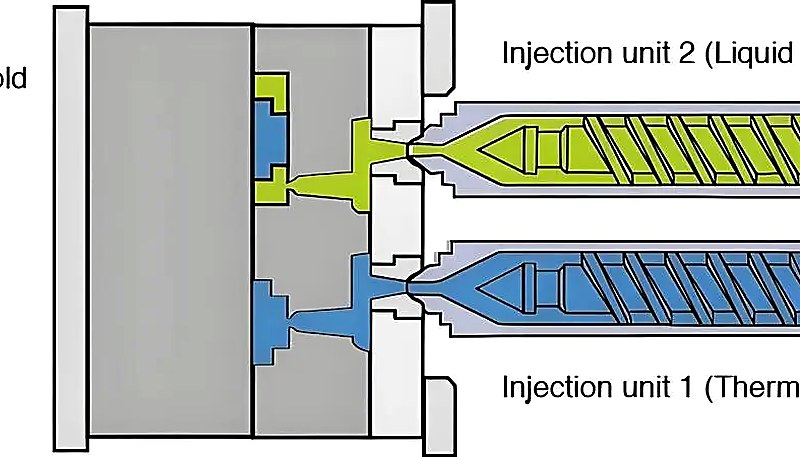
Having tooling and molding under one roof eliminates the finger-pointing that happens when your mold shop blames the molder and vice versa. If a tool needs adjustment, our engineers can modify it and test within hours—not weeks.
What Affects Unit Price in Injection Molding?
Unit price is where most buyers focus—and where most surprises hide. The part price you see on a quote is the result of several variables: cycle time, machine tonnage, labor rate, overhead allocation, and the suppliers markup. Cycle time is the biggest lever: a part that cycles in 15 seconds costs roughly half as much per unit as one that takes 30 seconds, assuming the same press and material. Volume dramatically shifts unit economics.
Here is a simplified example for a 50-gram ABS housing. At 1,000 units, the mold cost amortized per part is 8.00 dollars, costo del material2 is 0.15 dollars, processing is 0.80 dollars, yielding a typical unit price of 9.00 to 12.00 dollars. At 10,000 units, amortized mold cost drops to 0.80 dollars per part, material stays at 0.15 dollars, processing falls to 0.50 dollars, for a unit price of 1.80 to 2.50 dollars. At 100,000 units, amortized mold cost is only 0.08 dollars per part, material is 0.12 dollars, processing is 0.30 dollars, for a unit price of 0.60 to 0.90 dollars.
At 1,000,000 or more units, amortized mold cost becomes negligible at 0.01 dollars, material is 0.10 dollars, processing is 0.20 dollars, for a unit price of 0.35 to 0.50 dollars. Notice how the unit price drops by 10 to 20x as you move from 1,000 to 100,000 units.
That is not because the supplier is giving you a volume discount on labor—it is because tooling amortization goes from dominant to negligible. For guidance on finding the right supplier partnership, see our sourcing guide.
With 8 senior engineers and 30+ English-speaking project managers, we help clients optimize the volume-cost curve by recommending the right cavitation strategy early in the design phase.
How Do Material Costs Impact Your Total Budget?
Material cost is the most volatile component in your injection molding budget. Commodity resins like polypropylene (PP) or high-density polyethylene (HDPE) might cost 0.80 to 1.50 dollars per pound, while engineering-grade materials like PEEK or PEI (Ultem) can run 20 to 60 dollars per pound. For most projects, material represents 15 to 35 percent of total cost—but for specialty applications (medical, aerospace, automotive under-hood), it can exceed 50 percent.
Here is a cost comparison of commonly molded materials. PP costs 0.80 to 1.20 dollars per pound and is used for packaging and consumer goods, offering chemical resistance and lightweight properties. ABS costs 1.20 to 2.00 dollars per pound for housings and automotive interiors, providing impact resistance and easy moldability. PC costs 2.50 to 4.00 dollars per pound for lenses and electronic housings, with transparency and high heat resistance. Nylon 6/6 costs 2.50 to 4.50 dollars per pound for gears and structural parts, offering strength and wear resistance. POM (Acetal) costs 2.00 to 3.50 dollars per pound for precision gears and valves, with low friction and dimensional stability.
PEEK costs 25 to 60 dollars per pound for aerospace and medical implants, providing extreme temperature and chemical resistance.
One common mistake buyers make is specifying an engineering-grade material when a commodity resin with the right additives would perform equally well at a fraction of the cost. Start with functional requirements, not the most expensive catalog option.
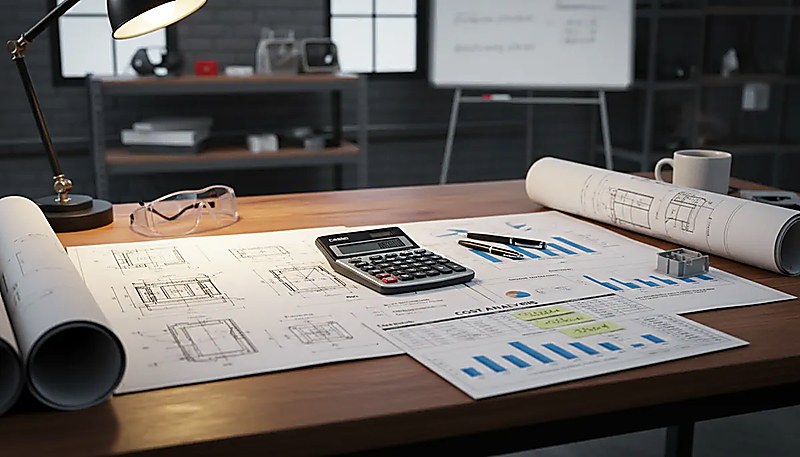
Over 20+ years in injection molding, we have processed 400+ materials—from commodity polyolefins to high-temperature PEEK and LCP.
This is the section most suppliers would rather you did not read. Hidden fees are not necessarily dishonest—many are legitimate costs that simply do not appear on a standard quote. But if you do not ask about them, you will not know they exist until they show up on an invoice. The most common hidden fees include:
1. Design change charges (500 to 5,000 dollars per revision): Any modification to an approved mold design triggers engineering time, steel cutting, and requalification. Even a 0.5mm wall thickness change can require recutting a cavity.
2. Overrun tolerance (typically 5 to 10 percent): Most suppliers produce slightly more parts than ordered to account for QC rejects. You may be billed for these overruns.
Clarify this upfront.
3. Setup fees (200 to 1,500 dollars per run): If you order in multiple batches rather than a single run, each batch incurs a setup charge for press time, material loading, and first-article inspection.
4. Storage fees (0.50 to 5.00 dollars per cubic foot/month): If your parts sit in the suppliers warehouse awaiting shipment, storage charges accrue—often buried in shipping line items.
5. Inspection and documentation (100 to 500 dollars per lot): Dimensional reports, material certifications, and PPAP documentation are frequently billed separately.
6. Rush surcharges (15 to 50 percent): Expedited timelines almost always carry a premium. The single best defense against hidden fees is a transparent, itemized quote.
We have found that clients who understand their cost structure come back for the next project. A transparent, itemized quote is the foundation of that trust.
Our team of 120+ production staff operates under ISO 9001, ISO 13485, ISO 14001, and ISO 45001 systems, which means documentation and traceability are built into our standard process—not billed as extras.
How Can You Reduce Injection Molding Costs?
The most effective ways to reduce costs are DFM optimization, cavitation right-sizing, material substitution, and shipment consolidation. Each strategy compounds savings across your entire production run.
If your annual volume is 5,000 to 20,000 units, a single-cavity mold amortized over three years is often more economical than a four-cavity mold that sits idle half the year. Conversely, if you are running millions of parts annually, investing in a high-cavitation mold pays for itself within months. For mold design fundamentals that support cost-effective production, see our injection mold guide.
Negotiate tooling ownership: Some suppliers include tooling cost3 in the unit price, which sounds attractive but locks you in. Owning your tool gives you the freedom to move production if needed—and that leverage keeps your supplier competitive on pricing.
“Commodity resins like PP and HDPE can replace engineering plastics in many applications with the right additives.”Verdadero
In many structural and consumer applications, filled polypropylene or glass-reinforced nylon delivers performance comparable to engineering-grade materials at 30 to 70 percent lower material cost.
“A steel production mold always costs more than 50,000 dollars.”Falso
Steel molds range from 8,000 dollars for simple single-cavity tools to over 100,000 dollars for complex multi-cavity molds. Many production-grade steel molds fall in the 15,000 to 40,000 dollars range.
Understanding these common misconceptions is essential for accurate budgeting and effective supplier negotiations. Many buyers enter the quoting process with assumptions about mold pricing, volume discounts, and material costs that do not match reality. The claims below address additional cost assumptions that frequently lead to surprise charges on supplier invoices, particularly around volume economics and post-tooling modification costs. Testing your knowledge on these topics can help you avoid costly mistakes when evaluating your next injection molding quote.
“Design changes after mold fabrication typically cost over 1,000 dollars per revision.”Verdadero
Post-fabrication design changes range from 500 to over 5,000 dollars per revision. Even minor dimensional adjustments require steel cutting, re-polishing, and requalification. The best approach is to finalize designs through prototyping before committing to production tooling.
“Unit price decreases linearly as order volume increases.”Falso
The decrease is logarithmic, not linear. The biggest per-unit savings happen between 1,000 and 50,000 units driven by tooling amortization. Beyond 100,000 units, further reductions are marginal.
Preguntas frecuentes
Preguntas frecuentes
¿Cuánto cuesta un molde de inyección típico?
A typical injection mold costs between 3,000 and 100,000 dollars depending on complexity, cavitation, and expected tool life. Prototype aluminum molds start around 3,000 dollars for simple single-cavity tools used for short runs, while production-grade steel molds with multiple cavities, slides, and lifters range from 15,000 to 80,000 dollars. The key cost drivers are cavity count, surface finish requirements, mold complexity features such as undercuts and side-actions, and the specific steel grade selected for the expected production volume and part geometry requirements.
What is the average cost per unit for injection molding?
The average cost per unit ranges from 0.50 to 15.00 dollars depending on part size, material selection, and production volume. At 100,000 units of a mid-size ABS part, expect 0.60 to 1.50 dollars per unit. At 1,000 units, the same part might cost 8.00 to 12.00 dollars because tooling amortization dominates the per-unit cost calculation. Requesting an itemized breakdown from your supplier helps you understand each individual cost component and identify the best opportunities for cost optimization across your production run.
How does material choice affect injection molding cost?
Material choice can swing your part cost by 300 to 500 percent or more. Commodity resins like PP cost 0.80 to 1.50 dollars per pound, while engineering-grade materials like PEEK cost 25 to 60 dollars per pound. For most applications, selecting the lowest-cost material that meets your functional requirements rather than defaulting to the most expensive option is the most effective cost optimization strategy. Glass-filled nylon, for example, offers many structural properties of PEEK at roughly one-tenth the material cost.
Are injection molding suppliers in China cheaper?
Chinese suppliers typically offer 30 to 60 percent lower unit prices than Western counterparts, primarily due to lower labor and overhead costs in the region. However, total landed cost must account for international shipping fees, import duties, communication overhead, and quality assurance requirements. Working with a supplier that holds current ISO certifications including 9001 and 13485, employs English-speaking project managers, and maintains in-house tooling capabilities minimizes the operational risks that can erode those initial savings and ensures consistent quality throughout your production program.
What hidden costs should I ask about when getting a quote?
Ask specifically about design change fees which range from 500 to 5,000 dollars per revision, overrun tolerances typically set at 5 to 10 percent above order quantity, setup charges for batch production runs at 200 to 1,500 dollars each, warehouse storage fees, inspection and documentation costs, and rush order surcharges of 15 to 50 percent. These items can collectively add 15 to 30 percent to your quoted unit price. A transparent supplier will provide an itemized breakdown upfront rather than bundling everything into a single number.
How can I reduce my injection molding costs?
The most effective strategies for cost reduction are Design for Manufacturing optimization, right-sizing mold cavitation to your actual production volume, material substitution with lower-cost alternatives, and consolidating shipments to reduce logistics costs. DFM alone can reduce tooling cost by 20 to 40 percent and cycle time by 15 to 30 percent. Early collaboration with your suppliers engineering team during the design phase is critical, because the majority of total production cost is determined by decisions made before the mold is even cut.
What is the minimum order quantity for injection molding?
There is no technical minimum order quantity for injection molding, but the economics change drastically below 1,000 units. At very low volumes, consider 3D printing or vacuum casting as alternative manufacturing methods. For injection molding, 1,000 to 5,000 units is typically the break-even point where per-unit tooling cost becomes reasonable relative to other manufacturing methods. Some suppliers offer prototype molding programs specifically designed for low-volume production needs, using aluminum molds that cost significantly less than production steel tooling while still delivering production-quality parts.
How long does an injection mold last?
A properly maintained steel production mold typically lasts 200,000 to over 1,000,000 cycles depending on the steel grade selected, part complexity, and the specific material being molded during production. P20 steel molds generally last 200,000 to 500,000 shots, while harder steel grades like H13 or S136 can exceed 1,000,000 shots under optimal conditions. Regular maintenance including cavity cleaning, surface polishing, and timely replacement of worn components extends mold life significantly and protects your long-term tooling investment over the entire production lifecycle.
-
precio unitario: Unit price economics refers to the logarithmic relationship between volume and cost, where per-unit price drops 10 to 20 times as volume increases from 1,000 to 100,000 units. ↩
-
costo del material: Material cost variance refers to the 300 to 500 percent price difference between commodity resins at 0.80 to 1.50 dollars per pound and engineering plastics at 25 to 60 dollars per pound. ↩
-
tooling cost: Tooling cost refers to the range of 3,000 to over 100,000 dollars for injection molds depending on complexity, cavitation, and expected tool life. ↩




 EN
EN  ES
ES  FR
FR  DE
DE  PT
PT  AR
AR  RU
RU  JA
JA  KO
KO  IT
IT  NL
NL  TR
TR  PL
PL 