 Ir al contenido

Submitting an moldeo por inyección1 RFQ that gets accurate quotes back — on time and without costly surprises — is a skill most engineers learn the hard way. After reviewing thousands of RFQs from buyers worldwide, the pattern is clear: vague requests produce vague quotes, and missing details invite assumptions that inflate your price. This guide breaks down exactly what to include, what to avoid, and how to structure your RFQ so suppliers can quote competitively and accurately.
- A complete RFQ includes part geometry, material, tolerances, surface finish, volume, and timeline.
- Missing or ambiguous specs force suppliers to guess — and they always guess conservatively (higher cost).
- Always provide 3D CAD files (STEP/IGES) alongside 2D drawings with GD&T callouts.
- Specify cosmetic and functional surfaces separately to avoid over-engineering non-critical areas.
- BUY-intent RFQs should target 3–5 qualified suppliers for meaningful comparison.
What Is an Injection Molding RFQ and Why Does It Matter?
An injection molding RFQ (Request for Quotation) is a formal document you send to potential suppliers asking them to price your molding project. Think of it as the blueprint for your business relationship — the more precise it is, the more accurate and comparable the quotes you receive.
““Including your target price range in the RFQ helps suppliers propose the right solution.””Verdadero
Sharing a target range allows suppliers to suggest alternatives — different materials, cavity counts, or adjusted tolerances — to meet your budget, rather than quoting conservatively with maximum safety margins.
““A STEP file alone is sufficient for an injection molding RFQ — no 2D drawing is needed.””Falso
While STEP files provide 3D geometry, 2D drawings with GD&T callouts capture tolerances, surface finish symbols, and critical dimensions that the 3D model alone does not convey. Both are needed for an accurate quote.
In practice, an RFQ is not just a price request. It is a technical specification package that tells the supplier everything they need to know to engineer the right mold, select the right machine, and plan the right process for your parts. The moldeo por inyección process involves dozens of variables — from clamp tonnage to gate type to cooling channel layout — and each one affects cost and quality. Your RFQ locks down the ones you care about.
Why does this matter? Because a poorly written RFQ creates a cascade of problems. The supplier quotes high to cover their risk. You accept a high quote because you have no better option. Production starts, and the part does not match your expectations because the supplier assumed something you forgot to specify. Now you are paying for mold modifications — often $2,000–$10,000 per change — that could have been avoided with a better RFQ.
The best RFQs we see come from experienced procurement engineers who have been burned before. They know that an extra hour spent on the RFQ saves weeks of back-and-forth later. Whether you are sourcing a simple polypropylene clip or a multi-cavity precision medical housing, the fundamentals are the same: be specific, be complete, and be honest about your priorities.
What Information Must You Include in an Injection Molding RFQ?
An injection molding RFQ is a specification package that must include part geometry, material, tolerances, surface finish, volume, and timeline. Let us walk through each one: part design files, material specification, tolerance requirements, surface finish and cosmetic criteria, production volume and schedule, quality and compliance requirements, and any special processes (assembly, overmolding, insert molding, etc.).
““SPI surface finish grades affect both the appearance of the part and the cost of the mold.””Verdadero
Higher SPI grades (A-1 to A-3) require diamond polishing of the mold steel, which is significantly more expensive than stone (C-grade) or blasted (D-grade) finishes. Specifying A-grade only on cosmetic surfaces saves considerable tooling cost.
““Specifying tighter tolerances on every dimension ensures higher quality parts.””Falso
Over-specifying tolerances drives up cost significantly because every tight dimension requires more precise mold machining, stricter process control, and more frequent inspection. Apply tight tolerances only where function demands them.
Let us walk through each one.
Part Design Files. Always include 3D CAD files in STEP or IGES format, plus 2D drawings with GD&T callouts. A 3D model alone is not enough — the 2D drawing captures tolerances, surface finish symbols, and critical dimensions that the 3D file may not convey clearly. If you have DFM feedback from a previous supplier, include that too. It shows you have already thought about manufacturability.
Material Specification. Do not just say “ABS.” Specify the exact grade (e.g., “ChiMei PA-747”), or at minimum the performance requirements (impact strength, heat deflection temperature, UL94 rating) so the supplier can recommend the right grade. If you need FDA-compliant, medical-grade, or RoHS-certified material, say so upfront.

Tolerance Requirements. Specify general tolerances and any tight-tolerance dimensions individually. A blanket “±0.1mm” on everything is expensive — only apply tight tolerances where function demands it.
Surface Finish and Color. Use SPI finish standards (A-1 through D-3) or VDI standards. Specify color via Pantone or RAL code. If certain surfaces are cosmetic (visible to the end user) and others are purely functional, mark them clearly on the drawing.
Production Volume. Give both the initial order quantity and the expected annual volume. This determines whether the supplier recommends a single-cavity prototype mold, a multi-cavity production mold, or something in between.
How Do You Specify Part Geometry and Design Requirements?
Part geometry is the foundation of your RFQ. The supplier needs to understand not just what the part looks like, but how it functions, what loads it bears, and what features are critical versus cosmetic.
““Mold ownership terms should be specified in the RFQ rather than left for later negotiation.””Verdadero
Clarifying mold ownership, storage location, and transfer terms upfront prevents disputes later. These commercial terms directly affect your total project cost and supply chain flexibility.
““The number of cavities in a mold is always determined by the supplier without buyer input.””Falso
While suppliers can recommend cavity count based on your volume, you should understand the trade-off: more cavities mean higher mold cost but lower per-part price. For volumes under 50,000 annually, single-cavity molds are often most economical.
Start with your 3D CAD file in STEP format — this is the universal standard that every mold designer can open and work from. IGES is acceptable but less reliable for complex geometries because it can lose surface integrity during translation. STL files are useful for rapid prototyping but never for production molding quotes because they do not contain the precise surface data needed for CNC programming.
Alongside the 3D model, provide a 2D drawing that clearly indicates:
Critical dimensions with GD&T callouts (position, flatness, concentricity)
Datum references that define how the part is measured and fixtured
Wall thickness requirements (nominal and minimum acceptable)
Draft angle requirements (typically 1–3° depending on texture depth)
Undercuts and side-action requirements
Gate location preferences or restrictions
If your part includes overmolding or insert molding features, call them out separately with specific material pairing requirements and bonding expectations. These features significantly impact mold complexity and cost.
One common mistake we see: engineers send only the finished part drawing without showing how it assembles with mating parts. If your supplier understands the assembly context, they can often suggest design improvements that reduce mold cost, improve cycle time, or both. An experienced molde de inyección2 designer will catch issues like insufficient draft, impossible undercuts, or unrealistic wall thickness variations that cause sink marks.
Why Do Tolerance and Dimension Specifications Matter?
Tolerance specifications are where most RFQs either succeed or fail. Too loose, and the part does not function. Too tight everywhere, and you pay for precision you do not need. The key is to be strategic — apply tight tolerances only where the part’s function demands them.
Here is a practical framework for specifying tolerances in your RFQ:
| Feature Type | Typical Tolerance | When to Tighten |
|---|---|---|
| Non-critical dimensions | ±0.25 mm (±0.010″) | Never — this is cost-effective default |
| Functional fits (snap-fits, bosses) | ±0.10 mm (±0.004″) | When assembly clearance is tight |
| Mating surfaces, sealing | ±0.05 mm (±0.002″) | For fluid seals or optical alignment |
| High-precision features | ±0.025 mm (±0.001″) | Medical devices, precision gears only |
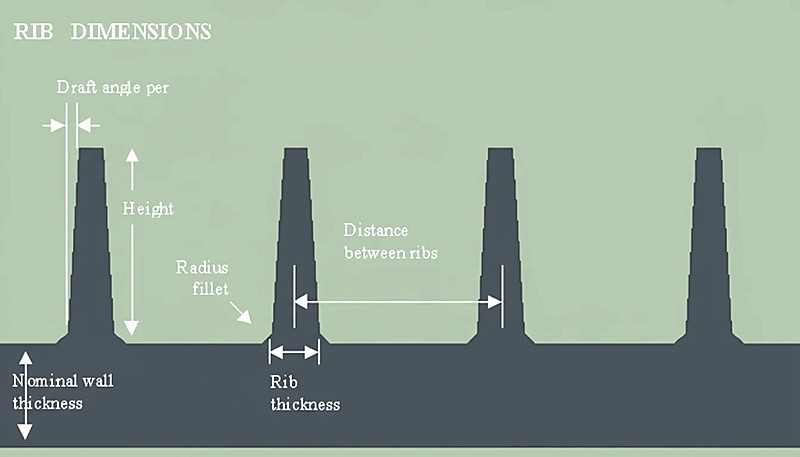
A critical distinction to understand: injection molding tolerances and CNC machining tolerances are fundamentally different beasts. Injection molding involves material shrinkage (typically 0.5–2.5% depending on the resin), thermal expansion, and process variation that CNC does not. If you specify CNC-grade tolerances on a molded part, expect the quote to reflect either a very expensive mold with extensive process control, or a secondary machining operation added after molding.
Our advice: specify what you actually need, not what sounds impressive. A well-crafted RFQ with strategic tolerances will always get you a better price than one that demands ±0.01mm on every dimension.
How Should You Define Material Requirements in Your RFQ?
Material specification is deceptively important. Simply writing “nylon” or “ABS” in your RFQ is like ordering “a car” — you might get a compact sedan or a luxury SUV, and the price difference is enormous.
Here is what a thorough material specification looks like:
Resin family and grade — e.g., “PA66 GF30” (Nylon 66 with 30% glass fiber) or “SABIC Cycoloy C1200HF” (PC/ABS blend). Specifying the grade eliminates guesswork.
Performance requirements — if you do not know the exact grade, specify what the part needs: tensile strength, impact resistance, HDT (Heat Deflection Temperature), chemical resistance, UV stability, etc.
Regulatory requirements — FDA, USP Class VI, ISO 10993, UL94 V-0, RoHS, REACH. These are non-negotiable filter criteria for material selection.
Color and appearance — natural/color-matched, Pantone or RAL reference, masterbatch or pre-colored resin.
Recycled content — if you require post-consumer recycled (PCR) content, specify the percentage. This affects both material availability and cost.
One thing most first-time buyers overlook: material drying requirements. Hygroscopic resins like nylon, polycarbonate, and PET must be dried before processing — typically 2–6 hours at 80–120°C depending on the material. If your supplier skips or shortens this step, you get splay marks, reduced mechanical properties, and dimensional instability. A good RFQ should acknowledge that you understand the proceso de moldeo por inyección requirements for your chosen material.
What Surface Finish and Cosmetic Details Should You Specify?
Surface finish is where art meets engineering in injection molding. The finish affects not just how the part looks, but how the mold is built, what steel is used, how much polishing is required, and ultimately what you pay.
Use the SPI (Society of the Plastics Industry) surface finish standards:
| SPI Grade | Finish Type | Aplicación típica |
|---|---|---|
| A-1 to A-3 | Alto brillo (pulido diamante) | Cubiertas de lentes, electrónica de consumo |
| B-1 a B-3 | Semi-brillante (pulido de papel) | Carcasas de electrodomésticos, molduras automotrices |
| C-1 a C-3 | Mate (acabado piedra) | Carcasas industriales, piezas estructurales |
| D-1 a D-3 | Texturizado (arenado) | Herramientas manuales, productos de consumo, superficies de agarre |
El consejo práctico: separar superficies cosméticas de las funcionales. Si solo una cara de su pieza es visible para el usuario final, solo esa cara necesita un acabado de grado A. El resto puede ser de grado D, que cuesta dramáticamente menos en herramienta. Marque las superficies cosméticas claramente en su dibujo 2D — nuestros diseñadores de moldes aprecian esta distinción porque les indica dónde invertir tiempo de pulido.
También especifica si las líneas de unión, marcas de entrada o marcas de expulsión son aceptables en superficies cosméticas —y, de ser así, dónde pueden ubicarse. La mayoría de los proveedores colocarán las entradas en superficies no críticas por defecto, pero solo si la solicitud de cotización les dice qué superficies importan.
How to Communicate Volume, Timeline, and Budget Expectations?
La sección de volumen de tu solicitud de cotización es clave para la clase de molde y selección de máquina adecuadas —declara tus cantidades e hitos claramente. La información de volumen y cronograma impulsa casi todas las decisiones importantes del proveedor: selección de material del molde (acero P20 vs. H13 templado), número de cavidades, nivel de automatización e incluso qué máquina se asigna a tu proyecto.
Sé específico sobre estas tres cosas:
Cantidad inicial de pedido (primera serie de artículo) — “500 piezas para validación” le indica al proveedor que es una fase de prototipo. “50,000 piezas en el primer mes” señala la preparación para producción.
Volumen anual esperado — Esto determina la clase de molde (Clase SPI 103 para menos de 100K piezas vs. Clase 101 para millones). Un molde Clase 101 en acero endurecido podría costar 3–5× más que un molde Clase 103 en P20, pero dura 10× más.
Cronograma de entrega — “T1 muestras en 6 semanas, inicio de producción en 10 semanas” le da al proveedor un cronograma concreto para planificar. Evite lenguaje ambiguo como “ASAP” — no ayuda a nadie.
La transparencia en el presupuesto juega a tu favor. No necesitas revelar tu precio máximo, pero compartir un rango objetivo ayuda al proveedor a proponer la solución correcta. Por ejemplo, si tu objetivo es $0,50/pieza pero la propuesta inicial del proveedor es $1,20, pueden sugerir alternativas —material diferente, menos cavidades, tolerancias ajustadas— para cerrar la brecha. Sin un objetivo, cotizan de manera conservadora.
Para proyectos de bajo volumen (menos de 10,000 piezas), considere mencionar opciones de moldeo por inyección de bajo volumen como moldes de aluminio o buscar un proveedor especializado en series cortas. Para un enfoque estructurado para encontrar el partner adecuado, vea nuestro injection molding supplier sourcing guide3. La herramientería de acero de grado de producción puede no estar justificada económicamente para cantidades inferiores a 5.000.
What Common Mistakes Cause RFQ Rejections or Overpriced Quotes?
Los errores más comunes en las solicitudes de cotización son la falta de archivos CAD, tolerancias omitidas, especificaciones de materiales vagas, propiedad de herramientas poco clara y contactar a demasiados proveedores. Aquí está por qué cada uno perjudica —y todos conducen al mismo resultado: cotizaciones más altas, plazos de entrega más largos o rechazo total.
Error 1: Enviar solo una captura de pantalla o renderizado en PDF. Una imagen no es una especificación técnica. Sin datos CAD 3D, el proveedor no puede generar un diseño de moldes, ejecutar análisis de flujo de molde o calcular la fuerza de cierre. La cotización volverá con una prima de riesgo masiva o no volverá en absoluto.
Error 2: Omitir especificaciones de tolerancia. Cuando no se especifican tolerancias, los proveedores recurren a su estándar de taller (a menudo ±0,25 mm). Si tu pieza requiere mayor precisión, solo lo descubrirás tras recibir las muestras, seguido de un costoso retrabajo del molde. Si ±0,25 mm te funciona, dilo explícitamente. Señala que comprendes el proceso y ayuda al proveedor a cotizar con precisión.
Error 3: No especificar el grado del material. “ABS” abarca cientos de grados con propiedades y precios enormemente diferentes. Algunos cuestan $1.50/kg, otros $6.00/kg. Sin un grado o especificación de rendimiento, el proveedor cotiza la opción más barata (esperando ganar por precio) o la más segura (cotizando alto para cubrir la incertidumbre). Ninguna te beneficia.
Error 4: Ignorar los términos de mantenimiento y propiedad de la herramienta. ¿Quién es el dueño del molde? ¿Dónde se almacena? ¿Qué pasa con él si cambias de proveedor? Estos son términos comerciales que deben estar en la solicitud de cotización, no como una idea tardía descubierta durante la negociación del contrato. Acláralo desde el principio.
Error 5: Solicitar cotizaciones a demasiados proveedores. Enviar tu solicitud de cotización a 20 fábricas parece una buena práctica competitiva, pero los proveedores experimentados saben cuándo son uno de muchos. O ignoran la solicitud o invierten un esfuerzo mínimo en la cotización. Apunta a 3–5 proveedores de nuestra supplier sourcing guide y dé a cada uno una oportunidad justa de ganar su negocio.
How to Evaluate and Compare Quotes from Injection Molding Suppliers?
Compara las cotizaciones según el costo total de llegada, la coincidencia de capacidad técnica, el plazo de entrega, la madurez del sistema de calidad y los términos comerciales —no solo el precio por pieza. Una vez que lleguen las cotizaciones, comienza el trabajo real. Comparar cotizaciones de moldeo por inyección no es tan simple como elegir el número más bajo —necesitas normalizar los datos para hacer una comparación justa.
Verifica estos elementos en cada cotización:
Desglose del coste del molde — ¿Incluye la cotización diseño de molde, muestreo y revisiones? ¿Cuántas iteraciones de diseño se incluyen? ¿Qué pasa si las muestras T1 fallan —quién paga el retrabajo?
Supuestos de precio de pieza — ¿En qué volumen se basó el precio de la pieza? ¿Incluye embalaje, transporte e inspección? ¿Cuál es la cantidad mínima de pedido (MOQ)?
Obtención de material — ¿El proveedor está cotizando su grado estándar o tu grado especificado? ¿Están usando material virgen o reciclado?
Compromisos de plazo de entrega — ¿El cronograma incluye revisión del diseño del molde, o comienza después de la aprobación del diseño? ¿Se incluye el tiempo de envío?
Aseguramiento de la calidad — What inspection reports are included? FAI (First Article Inspection)? PPAP? In-process inspection frequency?
Here is a comparison framework we recommend:
| Evaluation Criteria | Peso | Why It Matters |
|---|---|---|
| Total landed cost (mold + part) | 30% | True project economics over 12 months |
| Technical capability match | 25% | Right machines, materials, experience |
| Lead time and responsiveness | 20% | Speed to market and communication quality |
| Quality system maturity | 15% | ISO certifications, inspection capability |
| Commercial terms flexibility | 10% | Payment, mold ownership, warranty |
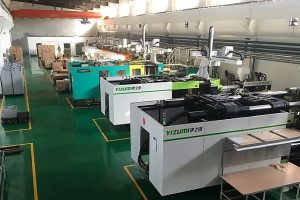
In our RFQ reviews at ZetarMold, we match each package against press capacity, mold complexity, inspection needs, and launch volume before quoting. With 47 injection molding machines ranging from 90T to 1850T, in-house mold manufacturing, and 8 senior engineers averaging 10+ years of experience, our team can handle most projects from prototype through high-volume production. But the right fit depends on your specific needs — which is exactly why a thorough RFQ matters.
What Are the Most Frequently Asked Questions About Injection Molding RFQs?
What Files Should I Include in My Injection Molding RFQ?
Include a 3D CAD file (STEP format preferred), a 2D drawing with GD&T callouts and critical dimensions, and any reference samples or photos. If you have existing mold design files from a previous supplier, include those as well. The more complete your data package, the faster and more accurate the quote.
How Long Does It Take to Get a Quote Back?
Most qualified suppliers respond within 3–7 business days for standard parts. Complex multi-cavity molds or parts requiring specialized materials may take 1–2 weeks. If you need a faster turnaround, indicate your deadline in the RFQ — many suppliers offer expedited quoting for an additional fee or with a commitment to proceed.
What Is a Reasonable Mold Cost for Injection Molding?
Mold costs range from $3,000 for a simple single-cavity aluminum prototype mold to $80,000+ for a multi-cavity hardened steel production mold with complex side actions. For a typical mid-complexity production mold (2–4 cavities, P20 steel), expect $8,000–$25,000. The cost depends on part complexity, number of cavities, surface finish requirements, and mold life expectation.
Do I Need to Specify the Number of Cavities in My RFQ?
Not necessarily. You can specify your production volume and let the supplier recommend the optimal cavity count. A good supplier balances mold cost against per-part price — more cavities mean higher mold cost but lower part price. For annual volumes under 50,000 parts, single-cavity molds are usually the most economical choice.
What Quality Documentation Should I Request?
At minimum, request a First Article Inspection (FAI) report, dimensional inspection data for T1 samples, and material certification (CoA). For automotive or medical applications, request PPAP documentation. In-process inspection plans and outgoing inspection reports should also be specified for ongoing production orders.
Can I Use the Same RFQ for Domestic and Overseas Suppliers?
The core technical content is the same, but overseas RFQs should additionally specify shipping terms (FOB, CIF, DDP), communication language expectations, time zone availability for meetings, and intellectual property protections (NDA requirements). International shipping timelines and customs duties should be factored into your total cost comparison.
How Do I Protect My Intellectual Property When Sending RFQs?
Have a signed NDA (Non-Disclosure Agreement) in place before sharing detailed CAD files. Use a non-disclosure agreement that covers both the part design and any proprietary manufacturing processes. Most reputable suppliers have standard NDA templates and will sign without hesitation. For highly sensitive designs, consider using a sourcing agent as an intermediary.
What Happens After I Award the Project to a Supplier?
The typical post-award process includes: mold design review (1–2 weeks), mold fabrication (4–8 weeks), T1 sampling with dimensional inspection, design revisions if needed (1–2 weeks), and production approval. A clear RFQ sets expectations upfront so this process runs smoothly. Your supplier should provide a detailed project timeline within the first week after award.
Ready to Submit Your RFQ?
ZetarMold’s engineering team reviews every RFQ with detailed feedback — including DFM suggestions, material alternatives, and cost optimization ideas. With 47 injection molding machines (90T–1850T), in-house mold manufacturing, 8 senior engineers, and 30+ English-speaking project managers, we handle projects from 500 to 5 million+ parts.
Get a Free Quote
-
moldeo por inyección: is a manufacturing process that injects molten resin into a mold cavity to produce repeatable plastic parts at scale. ↩
-
molde de inyección: injection mold refers to is the production tool that shapes molten plastic into the final part geometry, including cavity, core, cooling, and ejection systems. ↩
-
injection molding supplier sourcing guide: injection molding supplier sourcing guide refers to explains how buyers compare factories, evaluate RFQ quality, assess lead time risk, and negotiate commercial terms before awarding an injection molding project. ↩





 EN
EN  ES
ES  FR
FR  DE
DE  PT
PT  AR
AR  RU
RU  JA
JA  KO
KO  IT
IT  NL
NL  TR
TR  PL
PL 