 Skip to content

- Austria suppliers in this list cover healthcare, thermoplastics, and precision industrial molding programs.
- Shortlisting should compare injection mold design ownership, validation discipline, and communication speed before RFQ award.
- Tooling capacity alone is not enough; buyers also need documented quality control and post-T1 change management.
- An offshore supplier like Zetar can be benchmarked beside local vendors when bandwidth, cost, or secondary processes matter.
- Use a supplier sourcing checklist before final quotation to reduce launch risk and commercial surprises.
Austria can be a useful sourcing market when a buyer needs regional project support, stable communication, and suppliers familiar with export documentation for injection molding programs. Whether you need dedicated contract manufacturing1 or a hybrid supplier model, the real question is not whether a company is located in Austria, but whether it can reliably control tooling decisions, sampling, quality evidence, and engineering changes after launch.
For injection molded thermoplastics2 parts, a shortlist should compare injection mold design ownership, material experience, inspection discipline, secondary-process support, and response speed. A local supplier may be the right fit for urgent regional support, while an offshore supplier can be useful when tooling bandwidth, cost control, or broader production capacity becomes the bottleneck.
Are you looking for injection molding companies in Austria? We compiled this shortlist of established suppliers and added a buyer-side sourcing guide checklist so you can compare injection mold design depth, quality certifications, and production flexibility side by side.
“Austria is home to ENGEL, the world’s largest injection molding machine manufacturer by revenue.”True
ENGEL Austria GmbH, headquartered in Schwertberg, produces over 2,500 machines annually and holds the top global market share for injection molding machinery, making Austria a critical node in the worldwide supply chain for molding equipment.
“Austrian injection molding is always more expensive than Chinese molding on a landed-cost basis.”False
For low-volume programs under 10,000 units per year shipping to the DACH region, Austria can actually be cheaper on a landed-cost basis because you eliminate ocean freight (4-6 weeks), import duties (~6.5%), and the working-capital cost of inventory in transit. The crossover point depends on part complexity, material, and volume.
What Does Austria’s Injection Molding Market Look Like?
Austria’s injection molding market is a EUR 8 billion industry with 250+ companies concentrated in Upper Austria, Styria, and the Vienna corridor. Global machinery OEMs like ENGEL and Wittmann Battenfeld anchor the supply chain, while mid-size contract molders and precision tooling shops fill out the production capacity.
Industry distribution among Austrian molders breaks down roughly as follows: automotive accounts for 35-40% of output, packaging 20-25%, medical and life sciences 10-15%, electronics 10%, and the rest split across construction, consumer goods, and industrial applications. Austria’s position inside the EU gives local molders frictionless access to DACH buyers, while proximity to Germany’s automotive OEMs (BMW, Volkswagen, Mercedes-Benz plants across the border) keeps demand for precision mold-making and tight-tolerance molding consistently high.
What Trends Are Shaping Austria’s Injection Molding Industry?
Four trends stand out when you look at where Austria’s injection molding sector is heading, and each one affects sourcing decisions differently.
1. Circular-economy regulations are forcing material innovation. The EU’s Packaging and Packaging Waste Regulation (PPWR), effective 2025, mandates minimum recycled-content targets for plastic packaging. Austrian molders — especially those in food packaging around Upper Austria — are investing in processing equipment that can handle post-consumer recycled (PCR) resins without degrading dimensional stability. For buyers, qualifying a molder on PCR processing capability is becoming a baseline requirement.
2. All-electric machine adoption is accelerating. ENGEL’s e-mac and e-cap series, developed and manufactured in Schwertberg, are replacing hydraulic presses across Austrian job shops. The driver is energy cost — Austrian industrial electricity rates have risen to €0.18–0.22/kWh — and all-electric machines consume 50–70% less energy per cycle. For precision parts with tight tolerances (±0.02 mm), the absence of hydraulic oil temperature drift is an additional quality benefit.
3. Medical and cleanroom molding capacity is expanding. Several Austrian molders have added ISO Class 7 or Class 8 cleanroom cells in the past three years, driven by medical-device reshoring within the EU. Starlim in Marchtrenk, for example, operates a 650 m² cleanroom for silicone and thermoplastic medical components. This expansion gives buyers a European alternative to Asian medical molding at comparable quality, though at a higher unit price.
4. Industry 4.0 and process monitoring are standard, not optional. Wittmann’s 4.0 ecosystem — which connects injection molding machines, robots, dryers, and temperature controllers into a single data network — was developed in Austria and is now widely adopted among domestic molders. Real-time cycle-data logging, statistical process control (SPC), and automated quality inspection are table stakes for mid-size Austrian suppliers.
How Do You Choose an Injection Molding Supplier in Austria?
The best Austrian supplier is the one that excels in mold ownership, material breadth, inspection rigor, and lead-time transparency. Skip any of these and you risk cost overruns or quality escapes down the line.
Certifications and quality systems. At minimum, expect ISO 90013. For automotive parts, IATF 16949 is non-negotiable. For medical, ISO 13485 plus cleanroom certification. If a supplier claims automotive or medical capability but cannot show the current certificate, walk away — the audit trail matters as much as the molding process itself. Cross-check that their injection molding process documentation includes incoming material inspection, in-process SPC, and final dimensional reports.
Tooling depth. Ask whether the supplier builds molds in-house or outsources to a tool shop. In-house tooling gives you faster iteration (T1 samples in 4–6 weeks versus 8–12) and better control over injection mold maintenance. Austrian molders with in-house toolmaking include Perzi, ARVAI-PLASTICS, and Camo. If tooling is outsourced, ask for the tool shop’s name and visit it if the program is critical.
“An Austrian supplier with in-house tooling will always deliver lower total tooling cost than one that outsources mold building.”True
Not always — in-house tooling can carry a higher upfront quote because the supplier maintains a dedicated mold shop, but the total cost of ownership is often lower since iteration cycles and steel changes happen without cross-company delays. In our Shanghai facility, we have tracked total tooling cost across dozens of programs — in-house tooling saves 15-25% when you factor in modification rounds.
“An Austrian supplier with in-house tooling will always deliver lower total tooling cost than one that outsources mold building.”False
Not always — in-house tooling can carry a higher upfront quote because the supplier maintains a dedicated mold shop, but total cost of ownership is often lower since iteration cycles and steel changes happen without cross-company delays.
Machine tonnage and part envelope. Match the supplier’s press range to your part size. Austria has a full range from micro-molding machines (15–30 T) at Starlim up to large-tonnage presses (2,000+ T) at Greiner Assistec. A supplier whose largest press barely covers your shot weight will struggle with fill consistency. We see this regularly in our Shanghai factory — when a part sits near the top of a press capacity range, packing pressure becomes unpredictable and cycle-to-cycle variation increases. Running 47 machines from 90 T to 1,850 T gives us enough headroom to match each job to the right tonnage without cutting corners.
Communication and project management. Most Austrian molders operate in German and English. Confirm who your day-to-day contact will be, how often you will receive progress updates, and whether technical discussions happen directly with engineers or through a sales layer. A supplier that cannot provide DFM feedback within 48 hours during quoting is unlikely to be responsive during production.
Commercial terms and logistics. Clarify payment terms, tool ownership, mold storage, and minimum order quantities (MOQs). Austrian suppliers typically require 30–50% tooling payment upfront, with the balance on T1 approval. MOQs for production runs are often 1,000–5,000 pieces, which is higher than what you might find in China. If you are importing parts outside the EU, factor in customs duties (average 6.5% for plastic articles under HS 3926) and freight costs from Vienna or Linz.
Who Are the Top Injection Molding Companies in Austria?
Below are ten Austrian companies with verified injection molding capabilities. The list includes machine manufacturers that also offer production solutions, custom molders serving specific industries, and specialized toolmakers. Each entry covers location, founding year, employee range, primary industries, and core capabilities.
1. ENGEL Austria GmbH
Location: Schwertberg, Upper Austria | Founded: 1945 | Employees: 6,000+ (global) | Primary industries: Automotive, packaging, medical, electronics | Core capabilities: Injection molding machine manufacturing, automation systems, production process consulting
ENGEL is the world’s largest manufacturer of injection molding machines, with headquarters and main production in Schwertberg. The company designs and builds hydraulic, electric, and toggle machines from 25 T to 5,500 T. ENGEL also operates application-specific technical centers where buyers can run pilot production before committing to a machine purchase. For sourcing purposes, ENGEL is not a custom molder — but their tech centers and process-engineering teams can connect you with qualified Austrian molders running ENGEL equipment, which is a practical sourcing shortcut.
2. Wittmann Battenfeld GmbH
Location: Kottingbrunn, Lower Austria | Founded: 1878 (Wittmann Group), Battenfeld division 1982 | Employees: 300–399 (Kottingbrunn site) | Primary industries: Automotive, packaging, medical, technical molding | Core capabilities: Injection molding machines, automation, robots, material handling, temperature control
Wittmann Battenfeld produces a full range of injection molding machines — from compact PowerScout series up to large-tonnage hydraulic presses. The company’s real differentiator is the WITTMANN 4.0 ecosystem, which networks machines, robots, dryers, and temperature controllers into a unified data platform. Eight production facilities across five countries and 32 global subsidiaries give Wittmann extensive reach. Like ENGEL, Wittmann is a machine builder, but their application engineers work closely with Austrian job shops and can facilitate introductions.
3. Greiner Assistec (Greiner Packaging)
Location: Kremsmünster, Upper Austria | Founded: 1960 (packaging division) | Employees: 5,000+ (Greiner Packaging total) | Primary industries: Packaging, automotive, consumer goods, medical | Core capabilities: Injection molding, thermoforming, extrusion blow molding, IML, multi-component molding
Greiner Assistec is the technical-parts business unit of Greiner Packaging, one of Europe’s largest plastic packaging processors. The Kremsmünster facility operates injection molding machines from 50 T to 2,000+ T, covering everything from thin-wall packaging to large automotive components. Greiner’s scale means they can handle high-volume programs (millions of units) with automated in-mold labeling (IML) and multi-cavity tooling. Their sustainability initiative — incorporating recycled PET and PP into food-contact packaging — is among the most advanced in Europe.
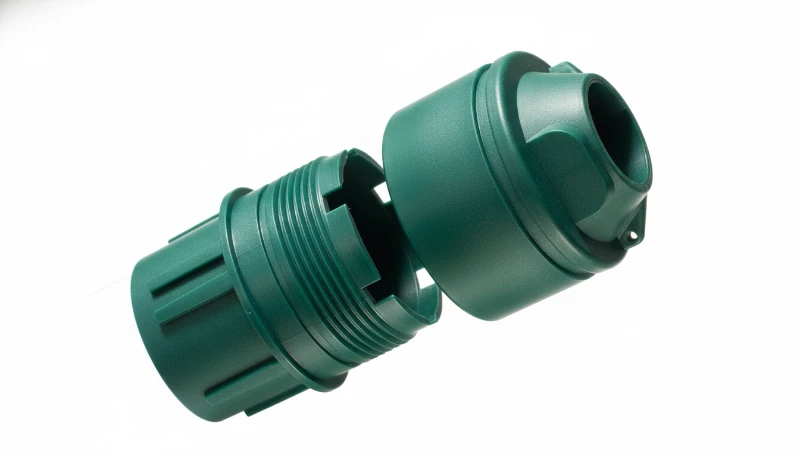
4. Starlim Spritzguss GmbH (starlim sterner)
Location: Marchtrenk, Upper Austria | Founded: 1993 | Employees: 300+ | Primary industries: Medical, electronics, automotive, watchmaking | Core capabilities: Micro injection molding, silicone injection molding, cleanroom molding, multi-component
Starlim is the global market leader in silicone injection molding and one of Austria’s most specialized precision molders. The company operates a 650 m² ISO Class 7 cleanroom for medical and electronics components, with part weights as low as a few milligrams. Their micro-molding capability — producing gear wheels for watches and micro housings with tolerances in the micrometer range — is unusual in the European market. For buyers needing medical-grade silicone or micro-thermoplastic parts, Starlim should be on any Austrian shortlist.
5. ARVAI-PLASTICS GmbH
Location: Neumarkt am Wallersee, Salzburg | Founded: 1976 | Employees: 200–299 | Primary industries: Automotive, sporting goods, industrial | Core capabilities: Custom injection molding, tool and mold making, surface finishing, assembly
ARVAI-PLASTICS is a family-owned custom molder with deep automotive experience. The Neumarkt facility runs injection molding presses from 25 T to 1,300 T, serving international OEMs in automotive, sporting goods, and industrial applications. Their in-house toolmaking department handles mold design through maintenance, which gives buyers direct control over tool iterations. The Arvai family’s hands-on management style means technical decisions flow quickly — a practical advantage during launch phases.
6. Perzi Kunststoff GmbH
Location: Lustenau, Vorarlberg | Founded: 1986 | Employees: 200–299 | Primary industries: Automotive, electronics, medical, consumer | Core capabilities: Injection molding, mold construction, material selection consulting, surface treatment
Perzi has grown from a craft shop into a mid-size industrial partner over five decades. The Lustenau facility combines injection molding with in-house mold construction, giving buyers a single-source path from design optimization through serial production. Perzi’s strength is in certified quality processes — their team emphasizes material selection advice, mold flow analysis, and step-by-step optimization from first sketch to end product.
7. Robust Plastics GmbH
Location: Vienna (Hosnedlgasse) | Founded: 1874 (parent EWF Invest Group) | Employees: 200–299 | Primary industries: Automotive, technical parts, industrial packaging | Core capabilities: Custom injection molding, product development, tool design, JIT delivery
Robust Plastics is a member of the EWF Invest Group and specializes in high-quality custom injection molding for automotive and industrial applications. The company offers a full-service chain — from product development and tool design through just-in-time delivery. Their focus on sophisticated, custom-molded products (rather than commodity packaging) positions them as a technical molder for buyers who need engineering-grade resins, tight tolerances, and documented quality processes.
8. Camo GmbH
Location: Schwanenstadt, Upper Austria | Founded: 1988 | Employees: 100–199 | Primary industries: Automotive, electronics, household/construction, medical | Core capabilities: System supplier — development, mold making, injection molding, assembly, insert molding
Camo operates as a full system supplier, managing the entire value chain from product development through mold making, injection molding, and assembly. Their insert molding and multi-component capabilities are particularly relevant for buyers needing overmolded connectors, threaded inserts, or hybrid metal-plastic assemblies. The Schwanenstadt facility serves automotive, electronics, and medical sectors with a consulting approach that covers planning, construction, and optimization upfront.
9. Haidlmair GmbH
Location: Nußbach, Upper Austria | Founded: 1979 | Employees: 300+ | Primary industries: Packaging, logistics, automotive, consumer | Core capabilities: Injection mold design and manufacturing, large-part molds, beverage crate molds, pallet molds
Haidlmair is Austria’s most prominent mold-making specialist. While they do not mold parts directly, their injection molds are used by major European packaging and logistics companies producing beverage crates, pallets, and large technical parts. For buyers who need high-cavitation molds or large-part molds (shot weights above 5 kg), Haidlmair’s engineering team can design, build, and maintain production tooling. They recently opened a US subsidiary, indicating global demand for their mold-building expertise.
10. BOIDA Kunststofftechnik GmbH
Location: Austria (multiple sites) | Founded: 1988 | Employees: 100–199 | Primary industries: Automotive, electronics, medical, consumer goods | Core capabilities: Multi-component injection molding, insert molding, cleanroom production, SPC process control
BOIDA operates fully electric injection molding machines alongside turntable and multi-component systems, targeting buyers who need precision multi-material parts. Their statistical process control (SPC) procedures are integrated into manufacturing — dimensional and functional checks are documented at each production step. This level of process documentation is essential for automotive and medical buyers who need full traceability. BOIDA’s focus on electric machines also aligns with Austria’s broader shift toward energy-efficient production.
If you need more options beyond these ten, consider expanding your search to southern Germany (Bavaria) or northern Italy — both regions have dense clusters of precision molders within a few hours’ drive of the Austrian border. You can also benchmark Austrian quotes against a China-based manufacturer like ZetarMold to understand the full cost-quality spectrum before committing.
How Does Austria’s Injection Molding Cost Compare to China?
Cost differences between Austria and China for injection molding are significant, but the full picture requires looking beyond unit price. Here is a practical comparison based on current market rates for a mid-complexity automotive part (100 mm × 80 mm × 40 mm, PA6-GF30, Class A surface, ±0.05 mm tolerance).
| Cost Factor | Austria (EUR) | China / ZetarMold (USD) |
|---|---|---|
| Mold tooling (single cavity, hardened steel) | €25,000–45,000 | $8,000–15,000 |
| Unit price (10K annual volume) | €1.80–3.50 | $0.60–1.20 |
| T1 sample lead time | 4–6 weeks | 3–5 weeks |
| Production lead time (per batch) | 2–3 weeks | 3–4 weeks (add 1–2 weeks freight) |
| MOQ | 1,000–5,000 pcs | 500–2,000 pcs |
| Mold maintenance (included?) | Usually extra | Often included in tooling |
| Import duty (HS 3926, into EU) | N/A (domestic) | ~6.5% |
| Freight to Central Europe | Included or minimal | $0.08–0.15/piece (sea) |
The sourcing guide framework is useful here: when you add import duty, freight, insurance, and the time cost of ocean shipping (typically 4–6 weeks door-to-door), the real landed cost of Chinese-molded parts narrows the gap with Austria. For volumes below 10,000 units per year, Austria may actually be cheaper on a landed-cost basis because you eliminate freight and duty entirely. For volumes above 100,000 units, China’s unit-price advantage usually dominates.
Hidden costs to watch: Austrian molders often charge separately for mold storage, maintenance, and sampling rounds beyond T3. Chinese suppliers may bundle these into the tooling price. Currency risk also matters — if you are paying in EUR for Austrian parts and your revenue is in USD, exchange-rate fluctuations of 5–10% can erase the lead-time advantage. From our experience handling over 100 dual-source mold programs for European OEMs, we recommend asking for a total-cost-of-ownership spreadsheet upfront that includes tooling amortization, per-piece pricing at three volume tiers, sampling fees, mold storage charges, and freight — because the cheapest unit price rarely wins once you account for the full commercial picture.
“Starlim in Marchtrenk operates the largest silicone injection molding cleanroom in Austria for medical and electronics components.”True
Starlim’s 650 m2 ISO Class 7 cleanroom processes medical-grade silicone and thermoplastic parts with tolerances in the micrometer range, making it one of the few Austrian facilities capable of both silicone and thermoplastic micro-molding in a controlled environment.
“All Austrian injection molders can handle multi-component and overmolding projects.”False
Only a subset of Austrian molders have invested in multi-component machines (rotary or index-platen). Camo, BOIDA, Greiner Assistec, and Starlim offer verified multi-component capability. Many smaller molders focus on single-material production and would need to outsource the overmolding step to a partner.
When Is Austria the Right Sourcing Choice for Injection Molding?
Austria is the right choice for high-precision, EU-certified tooling with tight tolerances and short in-Europe logistics. For high-volume, cost-sensitive parts, China often wins on unit price.
Choose Austria when: Your end market is the DACH region (Germany, Austria, Switzerland) and you need short lead times (under 2 weeks). Your parts require medical-grade cleanroom molding (ISO 13485). Your program is low-volume (under 10,000 units/year) and the tooling amortization favors a local supplier. You need native German-language engineering communication without time-zone friction. Your compliance requirements (REACH, RoHS, EU food contact) favor a supplier already operating inside the EU regulatory framework.
Choose China when: Your annual volumes exceed 50,000 units and unit-price savings of 40–60% justify the logistics overhead. Your part geometry is complex and you need multi-cavity, high-cavitation tooling that costs 50–70% less to build. Your program requires engineering-grade resins in large quantities and you want access to a broader material supply chain. You are building a new platform and need to iterate quickly through multiple design revisions — Chinese tool shops often offer faster and cheaper mold modifications.
The practical answer for many buyers is not either/or — it is both. Run a dual-source strategy: Austria for initial launch and European fulfillment, China for volume scale-up. In our experience working with European OEMs, the most effective approach starts with a low-volume bridge tool in Austria (injection molding for 500–5,000 units) while we build a production-class mold in Shanghai. Our team has delivered over 100 dual-source mold programs where the per-unit savings from China production funded the entire tooling investment within the first production run.
What Questions Should Buyers Ask Before Choosing an Austrian Injection Molding Supplier?
Frequently Asked Questions
What should I check before requesting a quote from an Austrian injection molding supplier?
Start with the commercial and engineering basics: part drawings, annual volume, material grade, critical tolerances, cosmetic requirements, and your expected launch timing. Then verify whether the supplier owns in-house tooling, how sample approval is handled, what inspection records can be shared, and whether change requests are documented formally. For an Austrian shortlist, also confirm export communication, packaging expectations, and post-launch support so you are comparing real execution capability instead of only machine lists or headline pricing. A strong RFQ should force every finalist to answer the same operating questions in the same format.
Can an Austrian supplier handle both mold building and production molding?
Some suppliers can manage both activities under one roof, while others focus on molding and outsource the tool build. That difference matters because mold ownership, steel changes, timeline control, and maintenance responsibility become harder to manage when tooling and molding are separated. When you benchmark suppliers, ask who designs the mold, who approves the steel specification, where T1 sampling happens, and who pays for modification rounds after the first article review. Those answers reveal whether the supplier can truly carry the program from RFQ to stable volume output. It also shows whether the quoted lead time is operationally credible.
When should I compare offshore suppliers like Zetar with a local Austria injection molding source?
It usually makes sense when the project needs stronger tooling bandwidth, lower landed tooling cost, or broader secondary-process support than a local shortlist can provide. The comparison should not be framed as local versus offshore alone. Instead, compare mold design depth, project communication, validation discipline, packaging, shipping cadence, and the speed of engineering response after T1. If an offshore team can document those controls clearly and still deliver a better commercial package, it deserves to sit beside local suppliers in the final sourcing decision.
What quality documents should buyers request before awarding injection molding production?
A serious supplier should be able to provide a process flow, control plan, incoming material controls, dimensional inspection records, sample approval evidence, and certification coverage relevant to your industry. For regulated or high-precision programs, request a clear sampling plan, gauge strategy, and escalation path for nonconforming parts. If tooling is included, ask for mold layout ownership, maintenance expectations, and the revision-control method used when steel changes are approved. These documents show whether the supplier can run a repeatable production system instead of handling the order as a one-off job.
How many injection molding suppliers should I benchmark before making a final selection?
Three to five qualified suppliers is usually the most efficient range. Fewer than three makes it hard to compare technical assumptions, while too many vendors creates noise and slows feedback. Use the first screening round to narrow the list by capability, communication quality, and evidence of process control. Then request comparable quotations from the finalists using the same RFQ pack, material assumptions, and quality requirements. That structure gives you a clean commercial comparison without forcing your engineering team to evaluate a scattered set of inconsistent proposals.
Why Is ZetarMold the Right Partner for Austria Buyers?
If you are evaluating Austria against China for injection molding, ZetarMold offers a direct comparison point. Our Shanghai factory operates 47 injection molding machines from 90 T to 1,850 T under ISO 9001, ISO 13485, ISO 14001, and ISO 45001 systems. We have 20+ years of tooling experience, 400+ validated materials, and 30+ English-speaking project managers who handle documentation, sampling, and shipment coordination — the same disciplines Austrian buyers already expect from a qualified supplier. With in-house mold manufacturing supporting 100+ mold sets per month and 8 senior engineers running designs through UG, SOLIDWORKS, and MOLDFLOW, we can deliver production-ready tooling on timelines that compete with European shops while keeping unit costs significantly lower.
In our Shanghai factory, we run 47 injection molding machines from 90T to 1850T under ISO 9001, ISO 13485, ISO 14001, and ISO 45001 systems, so Austria-related RFQs can be compared against a documented production baseline.
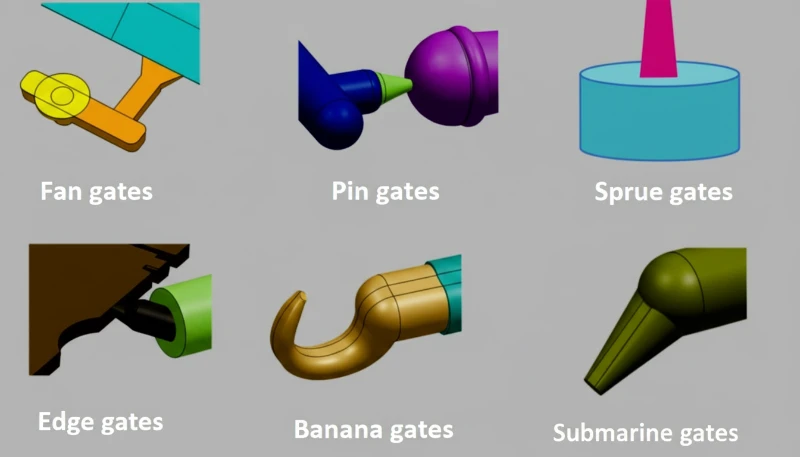
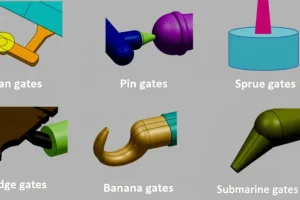
Our engineering team returns DFM feedback within 24 hours for active RFQs, reviewing gate layout, shut-offs, and tolerance risk before steel is cut. With 20+ years of tooling experience and 400+ plastic materials in our processing history, we can quote the same part geometry in the same resin so your cost comparison is apples-to-apples.
For Austrian companies sourcing from China, the practical advantages are clear: tooling costs 50–70% less, unit prices are typically 40–60% lower at volume, and our English-speaking engineering team (30+ fluent English speakers) eliminates the communication gap. Whether you need a single-cavity prototype mold or a 32-cavity production tool with automated degating, we can provide a detailed quote within 48 hours.
Get a Free Quote → Send your 3D files, material specification, and annual volume estimate to ZetarMold’s engineering team. You will receive a detailed cost breakdown — including tooling, unit price, and lead time — so you can make a data-driven sourcing decision. See our Supplier Sourcing Guide for a comprehensive framework.
-
contract manufacturing: Contract manufacturing is a production arrangement in which a supplier manufactures parts or assemblies to a customer’s drawings, quality requirements, and commercial terms. ↩
-
thermoplastics: Thermoplastics refers to polymer materials that soften when heated and solidify again when cooled, which makes them suitable for repeatable injection molding cycles. ↩
-
ISO 9001: ISO 9001 is an international quality-management standard that defines how an organization documents, controls, and improves repeatable production processes. ↩




 EN
EN  ES
ES  FR
FR  DE
DE  PT
PT  AR
AR  RU
RU  JA
JA  KO
KO  IT
IT  NL
NL  TR
TR  PL
PL 