

Finding the right enjeksiyon kalıplama supplier in China can feel like navigating a minefield. You have seen the glossy websites, the polished sales decks, and the promises of “world-class quality at unbeatable prices.” But when your mold arrives with flash on every part, dimensions 0.3 mm off spec, and a project manager who stops replying after payment — you realize the website told you nothing about what actually happens on the factory floor.\n\nThis checklist is built from real factory visits, real audits, and real lessons learned the hard way. It is the same evaluation framework we would want if we were the buyer — because in many cases, we have been on both sides of the table.
Whether you are sourcing your first enjeksiyon kalıbı from China or switching suppliers after a bad experience, this guide gives you a structured, step-by-step audit framework you can actually use.
- Verify ISO 9001/13485 certs with actual audit reports, not just certificates on the wall.
- Inspect machine tonnage range, age, and maintenance logs to confirm production capability.
- Evaluate in-house tooling — mold design, machining, and tryout under one roof cuts 30-50% overhead.
- Test English communication with actual project managers, not just the sales team.
- Walk the QC floor: incoming material inspection, in-process controls, CMM equipment, and final sampling plans.
What Should You Prepare Before Auditing a China Injection Molding Supplier?
Before your audit, gather company documentation, prepare a technical questionnaire, verify business licenses, and create a standardized scorecard. The suppliers who look best on paper are not always the ones who deliver.
Request the supplier’s company profile, equipment list, and client references up front. Cross-check their claimed machine tonnage and brand names against their website and any trade show records. If they say they have 40 machines from 100T to 1600T, ask for the serial numbers or at least a dated photo of the machine nameplates.
Prepare a technical questionnaire covering your specific part requirements: material grade, tolerances (general and critical), surface finish standards (SPI/SPE), expected annual volume, and any regulatory requirements (FDA, UL, RoHS). Send it before the visit so the supplier can prepare relevant samples and data — and so you can gauge how seriously they take technical communication.
Check their business license, export license, and registration with local authorities. In China, a legitimate manufacturing company will have a unified social credit code (USCC) that you can verify through government databases under the China Manufacturing Registration system. Trading companies sometimes list themselves as manufacturers — a critical distinction when you need direct control over production. Finally, prepare your own audit scorecard. Bring a standardized form so you can compare multiple suppliers objectively rather than relying on gut feeling after a polished factory tour.
How Do You Verify Factory Certifications and Quality Systems?
Certifications are the first thing every supplier mentions — and the first thing you should verify independently. An ISO 9001 certificate on the wall means nothing if the last surveillance audit found three major nonconformances that were never closed.
Start with the basics: ISO 9001 is the minimum. For medical device components, ISO 13485 is non-negotiable. Environmental management (ISO 14001) and occupational health (ISO 45001) signal a mature operation that invests in infrastructure beyond the production line. According to the ISO Survey 20231, over one million companies worldwide now hold ISO 9001 certification — but the quality of implementation varies enormously. Ask for the full audit report from the certification body, not just the certificate itself.
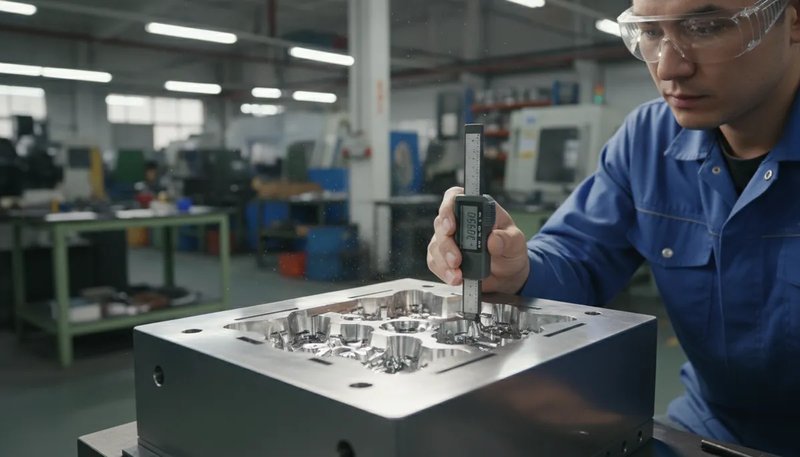
Ask to see the internal quality manual and procedure documents. Do they have documented incoming material inspection procedures? In-process inspection checkpoints? Final inspection sampling plans based on AQL2 standards? A factory that cannot produce these documents on demand is running on experience alone — which works until it does not.
Check calibration records for measuring equipment. CMMs, calipers, micrometers, and go/no-go gauges should all have current calibration certificates traceable to national standards. Outdated calibration means your dimensional data is unreliable. Review their corrective and preventive action (CAPA) log. How do they handle customer complaints? What was the last major quality issue, and what did they do about it? A supplier who claims they have never had a quality problem is either new or dishonest. A supplier who can walk you through their CAPA process with specific examples is one worth partnering with.
What Equipment and Production Capacity Should You Inspect?
The key areas to inspect are machine tonnage, maintenance records, auxiliary equipment, and production planning systems. These determine production reliability.
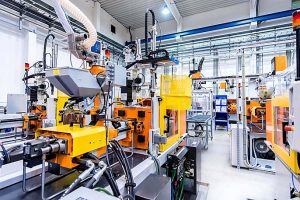
Match the machine tonnage range to your part requirements. If your mold needs a 1200T press and the factory’s largest machine is 650T, no amount of engineering creativity will make that work. Conversely, running a small 50T mold on a 1000T machine wastes energy and may cause overpacking. A factory with machines spanning from 90T to 1850T can handle everything from micro-molding to large automotive panels — and that range flexibility matters when your product line expands.
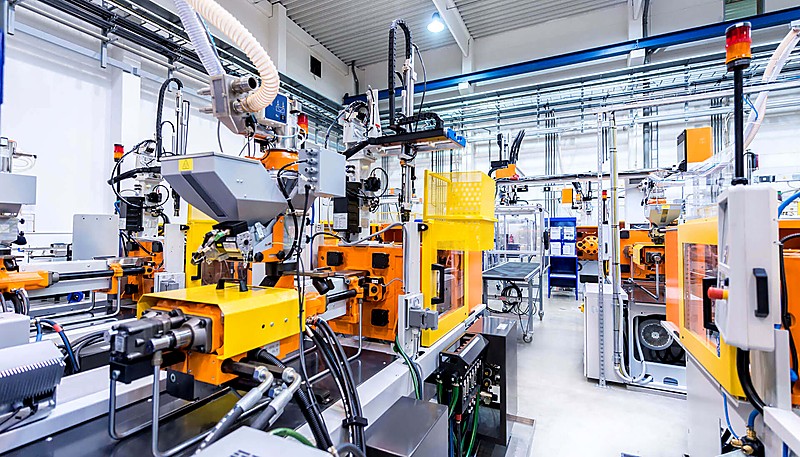
When you inspect equipment, the tonnage range tells a story. Our factory runs 47 injection molding machines spanning 90T to 1850T — meaning we can produce everything from micro medical components to large automotive panels without outsourcing. Ask any supplier you audit for their actual machine list with tonnage and brand.
Look at the machine brands and age. Haitian, Engel, Arburg, and JSW are reputable brands. Machines older than 15 years are not automatically disqualifying, but they should have documented maintenance records. Ask to see the preventive maintenance schedule and the last overhaul dates. In our experience auditing injection molding factories, a documented maintenance program is one of the clearest signals of a professionally run operation.
Check for auxiliary equipment: dryers, loaders, chillers, temperature controllers, and robots. These are not optional extras — they are essential for consistent production. A factory with manual material loading and no dehumidifying dryers for hygroscopic materials like nylon or PC is going to give you brittle, silver-streaked parts. Verify the production planning system too. Do they use ERP or MES software? Can they show you a real-time production dashboard? Factories still running on whiteboards and WeChat messages are counting on luck, not process control.
How Do You Evaluate Mold Design and Tooling Capabilities?
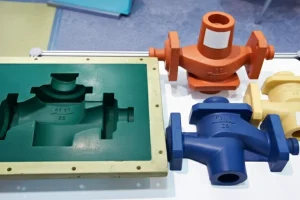
The mold is where 70% of your injection molding quality is determined. A supplier without in-house tooling capability has to outsource mold design and fabrication — adding a layer of communication, cost, and timeline risk that you cannot control. An integrated manufacturer with in-house mold manufacturing can iterate faster, maintain tighter tolerances, and respond to design changes without waiting on a third-party tool shop.
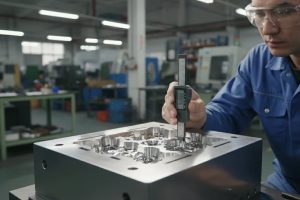
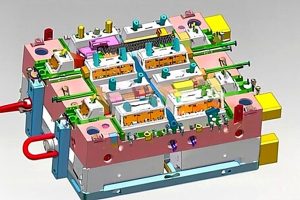
Ask to see their mold design software (UG/NX, Pro/E, SolidWorks, Moldflow for simulation) and talk to the actual mold designers, not just the sales engineer. Can they walk you through a recent mold design for a complex part — one with undercuts, lifters, or a hot runner system? The depth of their technical answer tells you more than any brochure. Inspect the tool room equipment: CNC machining centers, EDM machines (sinker and wire), grinding machines, and CMMs for mold inspection.

Our in-house mold manufacturing facility produces 100+ mold sets per month with 8 senior engineers overseeing every project from design through qualification. During your audit, ask to see the tool room and meet the mold designers — the depth of their technical answers will tell you more about tooling quality than any certificate can.
Review sample inspection reports from T1 (first trial) through T3 or T4 (final approval). Do they measure critical dimensions systematically? Do they photograph steel conditions and report wear after each trial? A systematic approach to tooling qualification separates professional mold builders from job shops. Ask about mold maintenance programs too — what is their standard maintenance interval? Do they track shot counts and warn you before the mold reaches its expected service life limit? A supplier who proactively manages mold life is protecting your long-term investment.
Why Does Communication Infrastructure Matter for Overseas Projects?
Technical excellence means nothing if you cannot get a straight answer about your project status. Communication breakdown is the number one reason overseas buyers switch suppliers — ahead of price, ahead of quality issues, and ahead of lead time problems.
Test this during the audit. Ask to meet the project manager who would handle your account — not the sales representative who is fluent in English and has been doing this for ten years. Ask the project manager to explain a recent production issue they resolved and how they communicated it to the customer. You are looking for clarity, honesty, and a structured communication process.
Communication infrastructure is something we invested in early. Since 2013, we have built a team of 30+ fluent English speakers dedicated to international project management. During your audit, ask to meet the actual project manager — not just the sales team — because that is the person you will work with daily.
Ask about their communication tools and reporting cadence. Do they send weekly progress reports with photos? Can they share real-time production data? How do they handle time zone differences? A factory that only responds during Chinese business hours and takes 48 hours to answer a technical question is going to be a bottleneck in your development timeline. Check their sample approval workflow too. How many rounds of samples are included? How do they document dimensional reports? Can they provide video of the molding trial?
“An in-house mold manufacturing facility reduces lead times by 30-50% compared to outsourced tooling.”Doğru
When mold design, machining, and tryout happen under one roof, communication loops collapse from days to hours. No shipping molds between shops, no waiting for the tool shop to fit your project into their schedule, and direct access to the mold designer during trial runs.
“ISO 9001 certification guarantees consistent product quality.”Yanlış
ISO 9001 certifies that a company has a documented kali̇te yöneti̇m si̇stemi̇3 — it does not guarantee that every part meets your specifications. You still need to verify inspection procedures, calibration records, and actual defect rates during your audit.
What Material Traceability and QC Processes Are Essential?
Material traceability is your insurance policy against batch failures, regulatory non-compliance, and warranty claims. If a supplier cannot tell you which lot of raw material went into a specific production run, they cannot contain a defect — they can only recall everything.
Walk the incoming material warehouse. Are materials stored in a climate-controlled area? Are containers labeled with lot numbers, material grades, and dates? Is there a first-in-first-out (FIFO) system? A factory with experience processing 400+ plastic materials understands that each resin has specific storage and drying requirements — and that mixing up lots can mean the difference between a good part and a costly recall.
Ask to see the incoming material inspection (IQC) records. Do they test melt flow index (MFI), moisture content, and material identification (via DSC or FTIR) for each incoming lot? Or do they just check the packaging label and log it in? The latter is common but insufficient for regulated industries. Review in-process quality control (IPQC) checkpoints. How often do they measure critical dimensions during a run — every 50 shots, every 100 shots, or only at the start? Are SPC charts maintained?
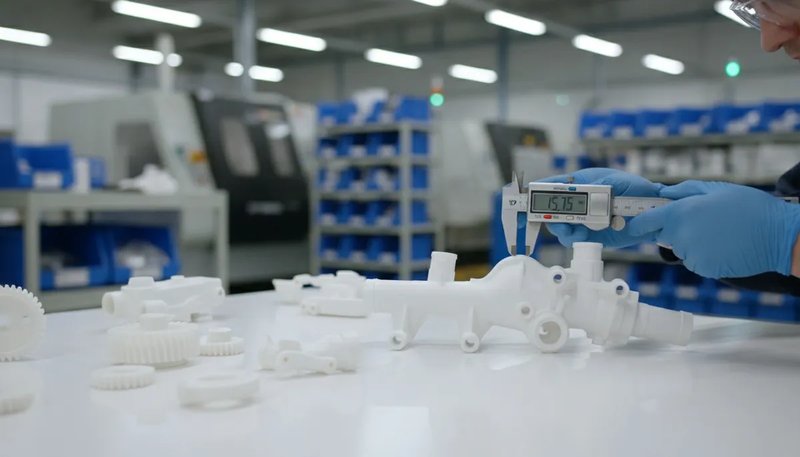
With experience processing 400+ plastic materials and a team of 10+ QC specialists, our incoming material inspection goes well beyond checking labels. Each lot is tested for melt flow index, moisture content, and material identification before release to production.
Inspect the final inspection area. Ask about their AQL Sampling plan (typically AQL 1.0 for critical defects, AQL 1.5 for major, AQL 4.0 for minor). Can they show you a recent inspection report with actual data? Do they have CMM equipment, optical comparators, or gauges specific to your part geometry?
Beyond the technical checklist items above, there is a qualitative dimension to supplier evaluation that experienced buyers develop over time. It is the feeling you get when you walk through a factory and notice whether the aisles are clear, whether workers are wearing proper safety equipment, and whether the break room looks like people actually use it. These observations are not on any standard audit form, but they tell you more about the daily management culture than any certificate can.
What Red Flags Should Make You Walk Away from a Supplier?
Some warning signs are obvious. Others are subtle — and easy to overlook when a factory tour is going smoothly and the sales team is attentive. Here are the red flags that should make you reconsider, regardless of how attractive the price quote looks.
They refuse to show you the actual production floor. Factory tours limited to the showroom, the conference room, and a quick peek through a window are not audits. If a supplier has a legitimate reason to restrict access, they should accommodate your visit to relevant areas with appropriate NDA protections. The factory on the business license does not match the factory you are visiting — this happens more often than most buyers expect. You audit one facility, but production happens at an unnamed subcontractor.
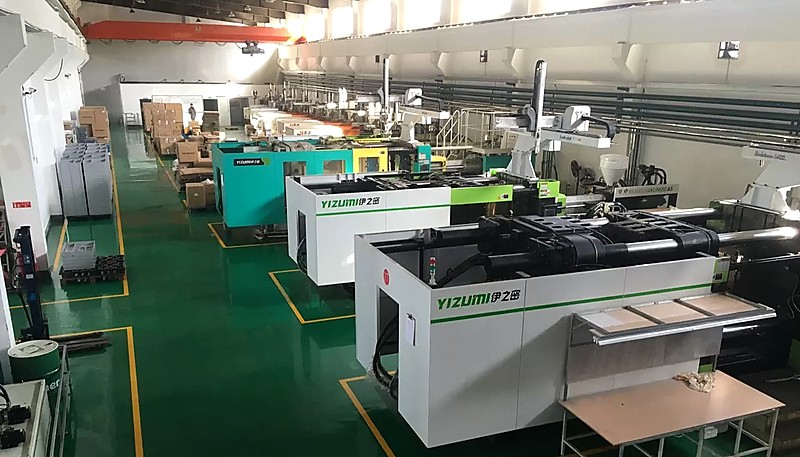
No documented quality system. If the quality manager cannot produce their inspection procedures, control plans, or corrective action records within a reasonable time, they do not have a functioning quality system. We have walked into factories where the quality manager pulled out a three-ring binder that looked like it was printed the night before — that is a red flag, not a quality system.
No references from customers in your industry or region. Every supplier has happy customers — ask specifically for references from companies similar to yours in size, industry, and geography. If they cannot provide any, ask yourself why. A supplier with genuine experience in your market should have at least two or three references willing to speak with you. The absence of references often means they have either not served international clients before or have had relationships that ended poorly.
Price quotes that are 30 to 50 percent below market average without a clear cost structure explanation. Either they are cutting corners you will discover later, or they plan to increase the price after you are committed. A reputable sourcing guide helps you benchmark realistic pricing. High employee turnover visible during the visit is another signal. If the factory floor is understaffed, or if key people you met on the first visit are gone by the second, that instability will affect your project.
“You should ask to meet the actual project manager during a factory audit, not just the sales team.”Doğru
Sales teams are trained to present the best image. The project manager is the person who will handle your daily communication, production scheduling, and problem resolution. Meeting them during the audit reveals the actual communication quality you will experience.
“A lower unit price always means a better deal for injection molding.”Yanlış
A quote well below market average often signals hidden costs: cheaper tool steel that wears out faster, skipped design validation steps, or a factory that plans to raise prices once you are committed. Total cost of ownership including quality, lead time, and communication overhead determines the real deal.
Sıkça Sorulan Sorular
Sıkça Sorulan Sorular
How long does a typical China injection molding factory audit take?
A thorough factory audit requires at least one full day on-site, plus half a day for preparation and follow-up documentation. Rushing through a facility in two hours means you will miss the details that actually matter — like checking calibration dates on measuring equipment, reviewing real production records, or observing how operators handle material transitions during a shift change. For suppliers you are seriously considering as long-term partners, plan for a full-day visit followed by a video call to address any outstanding questions and verify corrective actions.
Can I audit a Chinese injection molding supplier remotely?
Yes, a remote audit is possible but has significant limitations that you should understand before relying on it. You can request live video walkthroughs, equipment photos with date stamps, copies of certification documents, and recent sample inspection reports. However, you cannot verify actual machine running conditions, observe worker practices in real time, or assess the general cleanliness and organization of the facility through a camera lens. A remote audit works well as an initial screening tool but should always be followed by an on-site visit before committing to any large production order or expensive tooling project.
What certifications should a China injection molding supplier have?
At minimum, ISO 9001 for quality management systems. For medical device components, ISO 13485 is non-negotiable because it addresses regulatory requirements specific to medical manufacturing. Environmental management (ISO 14001) and occupational health and safety (ISO 45001) certifications indicate a mature, well-managed operation that invests in continuous improvement beyond the production line. Industry-specific certifications like IATF 16949 for automotive supply chains are necessary if you serve those markets. Always verify the certificate with the issuing accreditation body and request the full surveillance audit report — not just the framed certificate on the lobby wall.
How do I know if a Chinese factory is a manufacturer or a trading company?
Check the business license — it will list the company type and registered business scope. Manufacturers will have a manufacturing license, while trading companies have a general trade license. During the factory visit, ask detailed technical questions about production processes, machine parameters, and quality control procedures. Observe whether the person answering has genuine hands-on knowledge or gives vague answers and defers to a partner factory. Trading companies often cannot arrange visits to their actual production facility, which is a clear warning sign.
What is the minimum order quantity I should expect from a Chinese injection molder?
MOQs vary widely based on part size, material, and complexity. For simple parts in standard materials, MOQs of one thousand to five thousand units are common. For complex or precision parts requiring specialized tooling, MOQs may be lower because the setup cost per part is already significant. The more important question is whether the factory can scale with your growth. A supplier capable of producing one hundred or more mold sets per month has the infrastructure to handle increasing volumes without compromising quality or lead times.
How much does an injection mold cost from a Chinese supplier?
Mold costs range from approximately fifteen hundred dollars for simple single-cavity molds in standard steel to over fifty thousand dollars for complex multi-cavity molds with hot runner systems, complex side actions, and high-polish surface finishes. The final price depends on part geometry complexity, required surface finish, dimensional tolerance tightness, steel type (P20, H13, S136, or hardened grades), expected mold service life, and total cavity count. Be cautious of quotes significantly below market rates for production molds — the tooling investment usually reflects the quality of steel selected, precision of machining, and thoroughness of the mold design validation process.
Ready to Audit Your Next Injection Molding Supplier?
You now have a structured audit framework covering certifications, equipment, tooling, communication, material traceability, and red flags. But reading about an audit checklist and executing one are very different things. If you want to see what a supplier who passes every item on this checklist looks like, we are happy to show you.
Our Shanghai factory runs 47 injection molding machines from 90T to 1850T, with in-house mold manufacturing supporting 100+ mold sets per month. Eight senior engineers oversee tooling projects, and 30+ English-speaking project managers ensure that communication never becomes your bottleneck. We hold ISO 9001, ISO 13485, ISO 14001, and ISO 45001 certifications — and we will show you the actual audit reports, not just the framed certificates on the wall. With 20+ years of experience and 400+ materials processed, we have earned the trust of overseas buyers who did their homework before choosing a partner.
Get a free quote and let us prove it on your next project.
-
ISO Survey 2023: ISO Survey 2023 refers to international Organization for Standardization, ISO Survey of Management System Certifications 2023 ↩
-
AQL: ISO 2859-1 refers to sampling procedures for inspection by attributes, defining acceptable quality levels ↩
-
kali̇te yöneti̇m si̇stemi̇: quality management system refers to iSO 9001:2015 Quality management systems requirements, documentation and records requirements ↩


 EN
EN  ES
ES  FR
FR  DE
DE  PT
PT  AR
AR  RU
RU  JA
JA  KO
KO  IT
IT  NL
NL  TR
TR  PL
PL 