Your boss just forwarded three supplier profiles and wants your recommendation by Friday. One has a slick website with drone footage of their factory. Another sent a two-page capabilities PDF from 2019. The third is a referral from a colleague who swears they are reliable but cannot explain why. You need a systematic way to cut through the marketing and figure out which поставщик литья под давлением1 will actually deliver on their promises.
This is the second part of our manufacturer evaluation series. While Part 1 covered the foundational 12-point evaluation framework, this guide focuses on the deep-dive questions and verification methods you need during the selection process — the ones that separate a good supplier pitch from a genuinely capable manufacturing partner.
- Request and verify actual production data, not brochure claims.
- Test supplier response quality during quoting, not after signing.
- Mold ownership terms and IP protection must be in the contract.
- On-site or video audits reveal what certifications cannot.
- Pilot runs before volume commitment save more than they cost.
| Priority | What to Verify | Why It Matters |
|---|---|---|
| 1 — Critical | Production capability & quality system | Determines if they can actually make your parts |
| 2 — Legal | Mold ownership & IP protection | Protects your investment and designs |
| 3 — Validation | Pilot run performance | Proves capability with real parts, not documents |
| 4 — Ongoing | Problem resolution process | Determines how crises are handled after launch |
How Do You Verify a Manufacturer’s Real Production Capabilities?
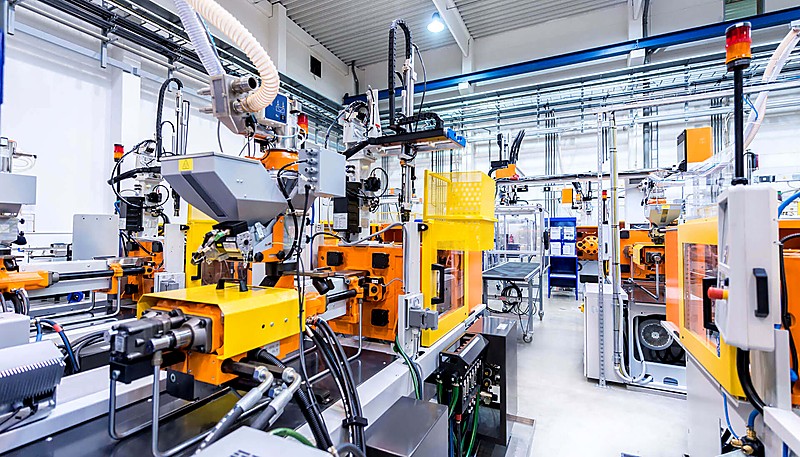
Every supplier claims they can handle complex parts. The proof is in their actual production floor2, not their website gallery. Start by asking for their current machine utilization rate — a manufacturer running at 95 percent capacity has no room for your urgent orders. Then request their tonnage distribution chart: how many machines at each tonnage range, and what percentage of those machines are dedicated versus available.
At ZetarMold, we maintain machines from 90T to 1850T across 45 presses because the gap between a 15-gram medical connector and a 4-kilogram automotive panel demands entirely different equipment. When a supplier tells you they have 50 machines but cannot show you the tonnage breakdown, they are either disorganized or hiding something. Also ask about their maximum shot weight capacity — this determines whether they can physically fill your part.
The right questions expose risks that suppliers will not volunteer. Ask these during your first technical call: What was your worst project last year and what went wrong? How many engineering change orders did your average project require? What percentage of molds need rework after T1 sampling? Can you share a reference from a project that had problems and how you resolved them?
A supplier who answers these honestly — even when the answers are not flattering — is worth more than one who claims perfection. We have had projects where T1 samples showed unexpected warpage on a glass-filled nylon housing. The right response was not to blame the design but to run mold flow analysis, identify the uneven cooling, add a baffle to the cooling circuit, and resample in five days. That transparency is what you are screening for.
How Should You Evaluate a Supplier’s Quality Control System?
Quality control is not just about having a CMM machine in a climate-controlled room. It is about whether they use it consistently and whether the data drives corrective action. Ask for their inspection workflow: Do they perform incoming material inspection (IQC)? Do they check in-process samples at defined intervals? Do they conduct final quality control (FQC) and outgoing quality control (OQC) before shipment? Can they show you a recent FAIR — first article inspection report — with actual measurement data?
A robust quality system follows a six-step process: incoming material verification, in-process sampling, process inspection at critical stages, packaging and assembly verification, final inspection, and outgoing inspection. If your supplier cannot describe their process beyond we check the parts before shipping, they do not have a system. They have a person with a caliper and a hope.
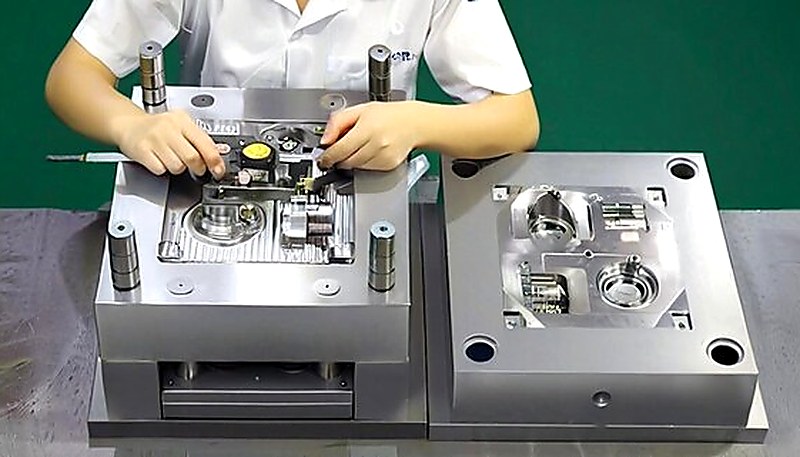
“A manufacturer who provides detailed FAIR data with CMM measurements for every critical dimension is more likely to maintain consistent quality throughout production.”Правда
Detailed first article reports demonstrate that the supplier has the equipment, the procedures, and the discipline to measure and document quality. This systematic approach carries through to volume production, reducing the risk of dimensional drift that goes unnoticed until assembly failures occur.
“ISO 9001 certification guarantees consistent part quality across all production runs.”Ложь
ISO 9001 certifies that a company has documented quality processes — it does not guarantee those processes produce good results. A supplier can have perfect documentation while running outdated parameters on worn molds. Certifications establish a baseline; actual measurement data from ongoing production is the real quality indicator.
Why Must You Clarify Mold Ownership Before Signing?
Clarify mold ownership before signing because the default legal assumption in many jurisdictions favors the manufacturer, not the buyer who paid for the tooling. Mold ownership disputes destroy supplier relationships and delay projects by months. If you pay $25,000 for a mold, you own it — right? Not necessarily. Some suppliers include a clause that they retain ownership of the mold for a specified period or until a production volume threshold is met. Others claim ownership of the mold design even if you paid for the tooling.
Before signing any agreement, clarify these terms in writing: Who holds legal title to the mold? Where is the mold stored when not in production? What are the transfer procedures if you move production to another supplier? Who pays for mold maintenance and repair? Can the supplier use your mold to produce parts for other customers? Get all of this in a signed agreement, not in an email chain.
“If you paid for the mold, you automatically own it regardless of what the contract says.”Ложь
Mold ownership is governed by contract terms, not payment alone. Without explicit written ownership clauses, manufacturers in many jurisdictions can claim rights to the tooling, especially if they contributed to the mold design. A clearly drafted mold ownership agreement specifying title transfer timing, storage responsibilities, and transfer procedures is the only reliable protection.
See our mold design and ownership guide for the complete framework on supplier agreements.
How Do You Protect Your Intellectual Property?
Protect your IP by using bilingual NDAs, registering design patents with CNIPA before sharing files, and limiting the technical information you disclose during the quoting phase. Sending your CAD files to a manufacturer on another continent requires trust and legal protection. At minimum, you need a signed NDA before sharing any design files. For China-based suppliers, a bilingual NDA (English and Chinese) with specific penalty clauses is essential — generic English-only NDAs have limited enforceability in Chinese courts.
For critical designs, register your design patents with CNIPA (China National Intellectual Property Administration) before sharing files with any supplier. This gives you legal recourse if your design appears on the market from an unknown source. Also consider whether your design includes any trade secrets that cannot be protected by patents — in those cases, limit the information you share to what is necessary for quoting, and withhold full manufacturing details until a contract is signed.

What Should a Pilot Run Prove?
A pilot run5 of 100 to 500 parts tells you more about a manufacturer than any document or audit. It tests their actual production capability, not their marketing. During the pilot run, evaluate dimensional consistency across the batch (not just the first three parts), surface quality and cosmetic consistency, packaging and labeling attention to detail, and their communication during any issues that arise.
Measure 10 to 20 parts spread across the production run — first, middle, and last. If dimensions drift from start to finish, the process is not stable. If the supplier flags the drift themselves and adjusts before you notice, you have found a keeper. The cost of a pilot run is trivial compared to discovering quality problems after committing to a 50,000-piece order.

How Do You Handle Problems After Production Starts?
Handle production problems by establishing a written escalation process with defined response times, root cause analysis requirements, and corrective action timelines before your first production run begins. Problems will arise. The question is how the supplier handles them. Before you commit, establish a clear escalation process: who is the first point of contact for quality issues, what is the expected response time for critical versus non-critical problems, how are root cause analyses conducted and documented, and what is the corrective action timeline?
A supplier with 8 senior engineers and 10 or more QC specialists has the depth to investigate problems properly rather than guessing. At ZetarMold, our engineering team runs a formal 8D problem-solving process for any critical quality escape. If your prospective supplier cannot describe their problem-solving methodology, they are improvising when things go wrong — and things always go wrong.
When Should You Walk Away From a Supplier?
Walk away from a supplier if they refuse NDAs or mold ownership agreements, cannot provide verifiable references, quote prices 40 percent below competitors without explanation, or pressure you to skip due diligence steps. Some red flags mean walk away immediately, regardless of price: they refuse to sign an NDA or mold ownership agreement, they cannot provide references from similar projects, their quoted prices are 40 percent or more below the next lowest bidder without a clear explanation, they pressure you to skip DFM analysis or pilot runs, or they cannot describe their quality control process in detail.
The cheapest supplier is rarely the least expensive. Engineering change orders, rejected shipments, delayed launches, and emergency retooling cost five to ten times what you saved on the initial quote. Choose the supplier who tells you what you need to hear, not what you want to hear.
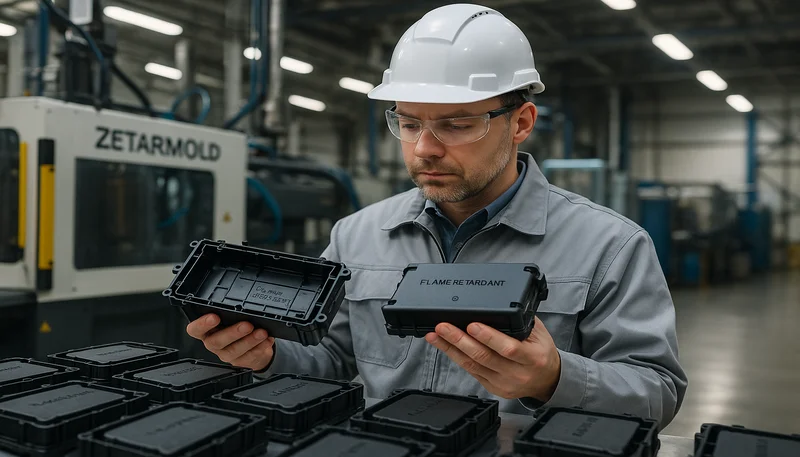
“A supplier who identifies a design problem during DFM review and recommends a change before tooling starts has saved you thousands of dollars in rework.”Правда
Design changes before steel is cut cost nothing in terms of rework. The same change after T1 sampling requires welding and re-machining the mold, typically costing $2,000 to $8,000 per change and adding one to three weeks to the timeline. A supplier who invests effort in thorough DFM analysis is protecting your budget, not slowing you down.
“If a supplier passes your initial evaluation, you can stop monitoring quality and focus on logistics.”Ложь
Initial evaluation is a snapshot, not a guarantee. Manufacturing conditions change over time — machines wear, operators rotate, material batches vary, and tooling degrades. Continuous monitoring through incoming inspection of each shipment, periodic dimensional audits, and tracking reject rates over time is essential to maintaining quality throughout the production relationship.
Ready to Evaluate Your Next Injection Molding Partner?
If you are looking for a manufacturer that welcomes your audits, provides transparent production data, and has the engineering depth to solve problems rather than hide them, we should talk. ZetarMold operates 45 injection molding machines from 90T to 1850T in our Shanghai facility, with 8 senior engineers and 30 English-speaking project managers ready to support your project from DFM review through volume production. Request a quote and see the difference a systematic approach to manufacturing makes.
What Are the Most Frequently Asked Questions About Evaluating Injection Molding Manufacturers?
How many suppliers should I evaluate before making a decision?
Evaluate three to five suppliers in depth. Start with a broader list of eight to ten based on online research, then narrow down to three to five for detailed quoting and DFM review. Requesting quotes from more than five suppliers creates noise and delays your decision without improving the final outcome. Focus your evaluation depth on the top three candidates rather than spreading your engineering resources thin across ten separate evaluations. Each serious evaluation takes two to four hours of engineering time when done properly with DFM review and reference checks.
What is a reasonable tooling payment structure?
The standard payment structure for injection molding tooling is 50 percent upfront with the purchase order and 50 percent after successful T1 sampling and dimensional approval. Some manufacturers accept 30-70 or 40-60 splits for larger projects. Never pay 100 percent upfront because you lose all leverage if the mold does not perform to specification. Also clarify in writing what the tooling payment includes: how many sampling iterations are covered, what dimensional inspection reports are provided at each stage, and whether minor design modifications during the sampling phase are included or billed as separate engineering changes.
How do I verify a Chinese manufacturer’s certifications are legitimate?
Request the certificate number and issuing body, then verify directly with the certification authority online. Most major registrars including SGS, Bureau Veritas, and TUV maintain searchable online databases where you can look up companies by name or certificate number. Check the certificate validity dates and scope carefully, because some suppliers hold ISO 9001 certification for a different facility or business unit than the one that will actually be producing your parts. Also request the most recent surveillance audit report, which reveals actual audit findings and corrective actions taken.
“A supplier who proactively shares surveillance audit findings and corrective actions demonstrates a quality culture that goes beyond checkbox compliance.”Правда
Suppliers who willingly disclose audit findings show confidence in their quality systems and a commitment to continuous improvement. This transparency is more valuable than a certificate on the wall, because it proves the quality system is actively used and improved, not just maintained for show.
Should I choose a manufacturer closer to my location for faster communication?
Geographic proximity helps with time zone overlap and shipping speed, but it is not the primary factor for project success. Communication quality depends far more on whether the supplier has dedicated English-speaking project managers and engineering staff who understand your technical requirements. A manufacturer in Shanghai with 30 English-speaking project managers and a guaranteed 24-hour response commitment will communicate more reliably than a domestic shop where your project is one of two hundred handled by an overloaded sales representative who cannot discuss draft angles or gate locations.
| Evaluation Area | What to Check | Red Flag |
|---|---|---|
| Machine Capability | Tonnage range, shot weight, utilization rate | Cannot show tonnage breakdown |
| Quality System | IQC, in-process, FQC, OQC workflow | “We check before shipping” |
| Mold Ownership | Written title, storage, transfer terms | Verbal agreement only |
| IP Protection | Bilingual NDA, CNIPA patents | Refuses NDA |
| Pilot Run | 100–500 parts, measure 10–20 across batch | Skips pilot run |
What documentation should I request before approving tooling?
Before approving tooling fabrication, request a complete DFM report with annotated CAD screenshots showing draft angle verification, wall thickness analysis, undercut assessment with proposed solutions, and расположение ворот4 rationale with flow simulation results. Also request the full mold design layout showing cavity placement, cooling channel routing, ejection system design, and the specific steel grade selected for cavity and core inserts. For complex parts with tight tolerances or critical cosmetic surfaces, a thermal analysis or mold flow simulation provides additional confidence that the mold will perform as expected during the initial sampling runs.
How often should I audit my injection molding supplier after production starts?
For standard ongoing production, conduct a comprehensive quality audit annually and a focused process audit semi-annually. If you produce medical devices or automotive components, your industry quality standards such as ISO 13485 or IATF 16949 may mandate more frequent formal audits. Between scheduled audits, track key performance metrics on a monthly basis including on-time delivery rate, first-pass yield percentage, reject rate trends, and average response time to quality notifications. A supplier whose quality metrics show a consistent downward trend over two or three consecutive months requires an immediate review rather than waiting for the next scheduled audit cycle.
Ссылки
-
injection molding supplier: An injection molding supplier is a manufacturing company that provides plastic injection molding services, including mold design, tooling fabrication, production molding, and secondary operations such as assembly and surface finishing. ↩
-
mold life: Mold life refers to the total number of production cycles a mold can reliably produce before requiring significant repair or replacement, typically ranging from 100,000 shots for aluminum molds to over 1,000,000 shots for hardened steel production molds. ↩
-
gate seal: Gate seal refers to the point during the injection molding holding phase when the gate or entry point into the cavity freezes solid, preventing backflow of molten material and determining the final part weight and packing density. ↩
-
first article inspection: First article inspection is a comprehensive dimensional and visual measurement of the initial production samples from a new mold, comparing every critical dimension against the part drawing to verify that the mold produces parts within specification. ↩ For more information, see our complete guide to injection mold.



 EN
EN  ES
ES  FR
FR  DE
DE  PT
PT  AR
AR  RU
RU  JA
JA  KO
KO  IT
IT  NL
NL  TR
TR  PL
PL