 Перейти к содержанию

– Polypropylene (PP) is the most versatile commodity resin, ideal for chemical resistance and living hinges.
– Acrylonitrile Butadiene Styrene (ABS) offers the best balance of impact strength, surface finish, and cost for consumer goods.
– Polyamide (PA), or Nylon, is the standard engineering thermoplastic for high-load, high-temperature structural applications.
– Polycarbonate (PC) provides unmatched impact resistance and optical clarity but requires strict processing controls.
– Polyethylene (PE) is one of the most widely used thermoplastics, known for its excellent chemical resistance, flexibility, and low moisture absorption, making it ideal for applications requiring durability, corrosion resistance, and lightweight performance.
How Do Manufacturers Select the Right Polymer?
Выбор материала является краеугольным камнем успешного литьевая формаинжиниринга. Он определяет не только эксплуатационные характеристики детали — прочность на растяжение, термостойкость, химическую совместимость — но и параметры производства, такие как усадка при формовании, температура плавления и время цикла.
Thermoplastics are generally categorized into two families based on their molecular structure:
- Amorphous Resins (e.g., ABS, PC): Random molecular orientation; typically transparent, lower shrinkage, and better dimensional stability.
- Semi-Crystalline Resins (e.g., PP, PA, PE): Ordered molecular structure; opaque, higher chemical resistance, sharp melting points, and higher shrinkage rates.
The "Top 5" materials listed below dominate the industry due to their availability, processability, and balanced property profiles defined by standards such as ASTM D2000 и ISO 1043.
Amorphous materials like Polycarbonate (PC) generally shrink less than semi-crystalline materials like Polypropylene (PP).Правда
The random molecular structure of amorphous chains results in less volume change during cooling, leading to tighter tolerances.
The material with the highest tensile strength is always the best choice for every application.Ложь
High-strength materials often come with higher costs, difficult processing windows, or brittleness. Material selection must balance strength with flexibility, cost, and environmental resistance.
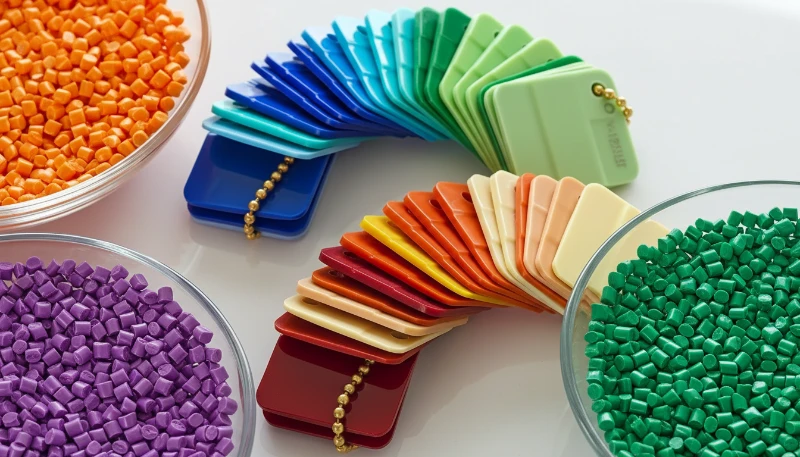
1. Полипропилен (PP)
Category: Semi-Crystalline | Общие классы: Homopolymer, Copolymer
Polypropylene (PP) is widely regarded as the "steel of the plastics industry" due to its immense versatility. It is highly resistant to chemical solvents, bases, and acids. Its low density (0.90 g/cm³) makes it lightweight, and it possesses high fatigue resistance, making it the only choice for "living hinges" (thin sections that bend repeatedly without breaking).
- Key Use: Automotive interiors, packaging, living hinges.
2. Acrylonitrile Butadiene Styrene (ABS)
Category: Amorphous | Общие классы: General Purpose, Flame Retardant, Platable
Acrylonitrile Butadiene Styrene (ABS) is a terpolymer that combines the properties of three monomers: Acrylonitrile (chemical resistance), Butadiene (impact toughness), and Styrene (gloss and rigidity). It is easy to machine, paint, glue, and plate, making it the premier choice for aesthetic housings.
- Key Use: Consumer electronics housings, LEGO bricks, automotive trim.
3. Polyamide (PA / Nylon)
Category: Semi-Crystalline | Общие классы: PA6, PA66, Glass-Filled (GF)
Polyamide (PA), commonly known as Nylon, is an engineering thermoplastic known for high mechanical strength, stiffness, and heat resistance. It has a low coefficient of friction, making it ideal for gears and bearings. However, PA is hygroscopic (absorbs moisture), which significantly affects its dimensions and mechanical properties; it must be dried properly before molding.
- Key Use: Under-the-hood automotive parts, gears, zip ties, power tool casings.
4. Polycarbonate (PC)
Category: Amorphous | Общие классы: Optical, UV Stabilized
Polycarbonate (PC) is a transparent engineering thermoplastic with extreme impact resistance (virtually unbreakable) and high heat resistance. It rivals glass in optical clarity but is significantly lighter and stronger. It is sensitive to hydrolysis and stress cracking, requiring precise mold temperature control.
- Key Use: Safety goggles, medical devices, automotive headlamp lenses.
5. Polyethylene (PE)
Category: Semi-Crystalline | Общие классы: LDPE (Low Density), HDPE (High Density)
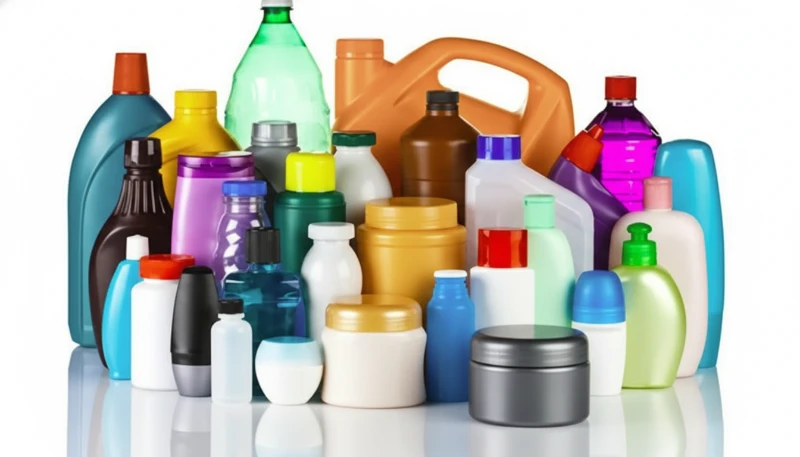
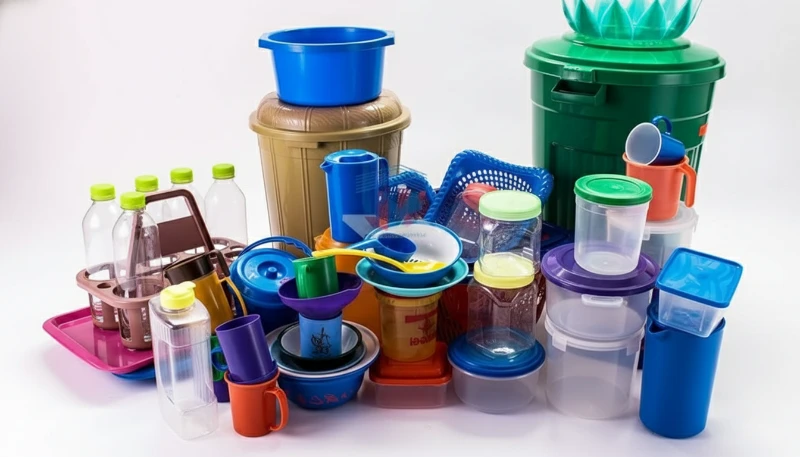
Polyethylene (PE) is the most common plastic in the world. High Density Polyethylene (HDPE) offers a high strength-to-density ratio and excellent moisture barrier properties. Low Density Polyethylene (LDPE) is softer and more flexible. Both are chemically inert and very low cost.
- Key Use: Bottles, containers, toys, outdoor furniture.
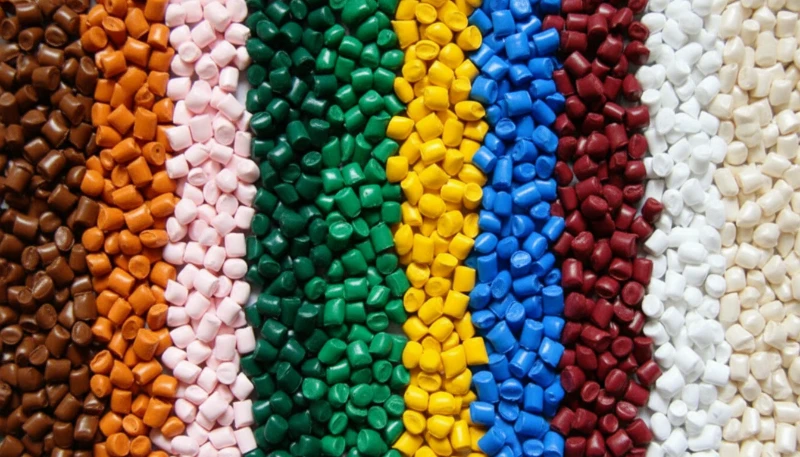
What Are the Technical Parameter Comparisons?
The following table compares critical processing and physical parameters for the top 5 materials. Values are indicative ranges for unfilled grades.
| Параметр | Полипропилен (PP) | ABS | Polyamide 66 (PA66) | Поликарбонат (PC) | Polyethylene (HDPE) |
|---|---|---|---|---|---|
| Structure | Semi-Crystalline | Нужно ли это | Semi-Crystalline | Нужно ли это | Semi-Crystalline |
| Скорость усадки | 1.0% – 2.5% | 0.4% – 0.7% | 1.0% – 2.0% | 0.5% – 0.7% | 1.5% – 3.0% |
| Melt Temp (°C) | 200 – 280 | 200 – 260 | 260 – 290 | 280 – 320 | 180 – 260 |
| Mold Temp (°C) | 20 – 80 | 40 – 80 | 60 – 100 | 80 - 120 | 20 – 60 |
| Плотность (г/см³) | 0.90 | 1.04 | 1.14 | 1.20 | 0.95 |
| Drying Required | Нет | Yes (Partial) | Yes (Critical) | Yes (Critical) | Нет |
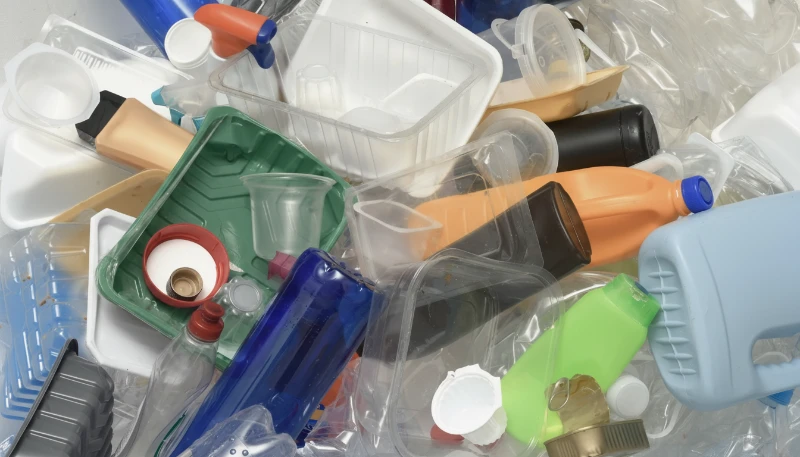
What Are the Advantages and Disadvantages?
| Материал | Преимущества | Недостатки |
|---|---|---|
| PP | Low cost, chemical resistance, moisture resistance, fatigue strength. | High shrinkage (warpage), difficult to bond/paint, UV sensitive. |
| ABS | High impact strength, excellent surface finish, easy to paint/plate. | Poor solvent resistance, low UV resistance (yellows), lower continuous heat use. |
| PA (нейлон) | High strength, high temp resistance, low friction, wear resistance. | High moisture absorption (changes dimensions), high shrinkage, requires drying. |
| ПК | High impact, optical clarity, high heat resistance. | Susceptible to stress cracking, high processing temps, sensitive to moisture. |
| PE | Low cost, impact resistant, ductility, moisture barrier. | High shrinkage, poor heat resistance, waxy surface (hard to print on). |
Hygroscopic materials like Nylon (PA) and Polycarbonate (PC) must be dried to a specific moisture content before molding.Правда
Excess moisture turns into steam during the melt phase, causing splay marks (silver streaks) and hydrolytic degradation, which destroys the part's structural integrity.
Adding glass fibers to Nylon lowers the tensile strength of the part.Ложь
Glass fibers significantly increase tensile strength and stiffness. However, they reduce ductility and can cause anisotropic shrinkage (warpage).
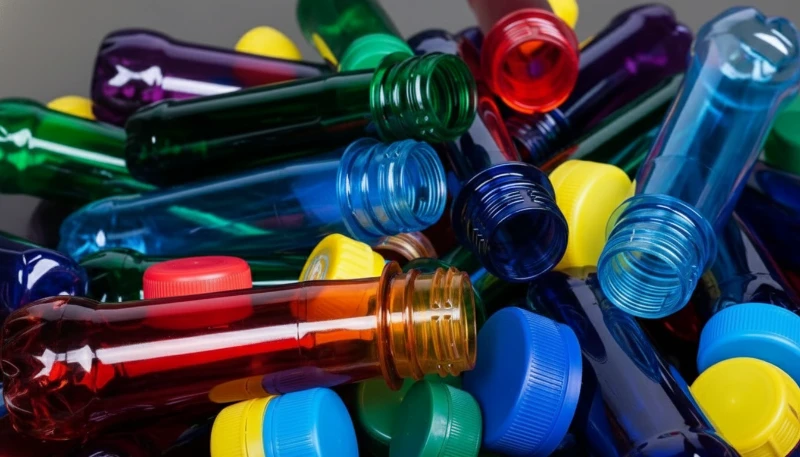
In Which Scenarios Are These Materials Applied?
-
Automotive Engine Bay (High Heat/Stress):
- Материал: Polyamide 66 (PA66) + 30% Glass Fiber.
- Причина: Withstands temperatures >150°C and resists oils/greases. Replaces metal intake manifolds.
-
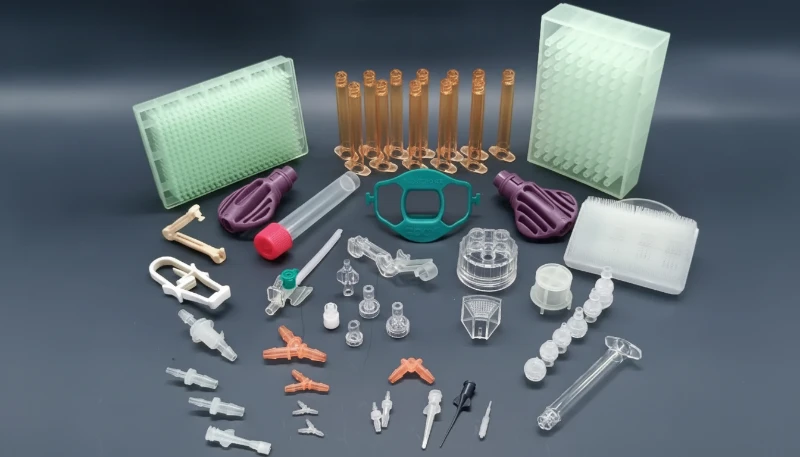
Medical Syringes and Vials:
- Материал: Polypropylene (PP) or Polycarbonate (PC).
- Причина: PP is used for disposable items due to cost and chemical inertness. PC is used for devices requiring clarity and sterilization resistance.
-
Electronic Housings (Wi-Fi Routers, Remote Controls):
- Материал: ABS or PC/ABS Blend.
- Причина: Provides a high-gloss "Apple-like" finish, high impact resistance for drops, and meets UL94 flammability ratings.
-
Outdoor Playground Equipment:
- Материал: High Density Polyethylene (HDPE) with UV stabilizers.
- Причина: Toughness prevents cracking in cold weather; UV additives prevent degradation from sunlight.
How to Select the Right Material (Step-by-Step)
Follow this hierarchy to narrow down the correct resin for your application:
-
Define Environmental Constraints:
- What is the operating temperature? (Continuous vs. Peak)
- Is there chemical exposure? (Acids, fuel, cleaning agents)
- Пример: If chemical resistance is needed, choose PP or PE over ABS.
-
Determine Mechanical Load:
- Is the part structural? Does it bear weight or impact?
- Пример: For high structural load, choose PA (Nylon) or PC.
-
Assess Cosmetic Requirements:
- Does it need to be transparent? (Choose PC)
- Does it need a high gloss or painted finish? (Choose ABS)
-
Check Regulatory Compliance:
- Does it need Выбор подходящего полимера для успешного литья под давлением1 for food contact? (PP, PE)
- Does it need a UL Flammability rating (V-0)? (PC, ABS, PA).
-
Calculate Cost vs. Volume:
- Compare price per pound vs. specific gravity. (PP is cheaper per volume than PC due to lower density).
Часто задаваемые вопросы (FAQ)
Q1: What is the difference between PP and PE?
A: While both are polyolefins, Polypropylene (PP) is generally stiffer, has a higher melting point, and can withstand autoclaving. Polyethylene (PE) is more ductile, has better low-temperature impact strength, and is generally softer.
Q2: Why is drying Nylon (PA) so critical?
A: Nylon is hygroscopic, meaning it absorbs moisture from the air. If molded wet, the water turns to steam, causing cosmetic defects (splay) and breaking the molecular chains (hydrolysis), which can reduce mechanical strength by up to 50%.
Q3: Can ABS be used for outdoor applications?
A: Standard ABS has poor UV resistance and will yellow and become brittle when exposed to sunlight. For outdoor use, it requires UV stabilizers or painting, or it should be replaced with ASA (Acrylonitrile Styrene Acrylate).
Q4: What does "Glass-Filled" mean?
A: Glass fibers are added to the resin (typically 10% to 50%) to increase tensile strength and stiffness. However, this increases machine wear and reduces the surface finish quality of the part.
Q5: Is Polycarbonate (PC) better than Acrylic (PMMA)?
A: PC is significantly stronger and more impact-resistant (bullet-resistant glass is often PC). Acrylic is more brittle but offers superior optical clarity and UV stability over time compared to standard PC.
Резюме
Selecting the correct material from the top 5—PP, ABS, PA, PC, and PE—requires balancing mechanical performance, environmental exposure, and cost. Полипропилен leads in versatility and cost, while Нейлон и Поликарбонат dominate engineering applications requiring heat and impact resistance. Utilizing resources like MatWeb2 или UL Prospector3 позволяет инженерам сравнивать специфические листы данных по маркам, чтобы убедиться, что выбранная смола соответствует всем требованиям проекта. Смотрите наш Injection Molding Complete Guide for a comprehensive overview. See our Injection Molding Complete Guide for a comprehensive overview.
Need a Quote for Your Injection Molding Project?
Get competitive pricing, DFM feedback, and production timeline from ZetarMold’s engineering team.



 EN
EN  ES
ES  FR
FR  DE
DE  PT
PT  AR
AR  RU
RU  JA
JA  KO
KO  IT
IT  NL
NL  TR
TR  PL
PL 