
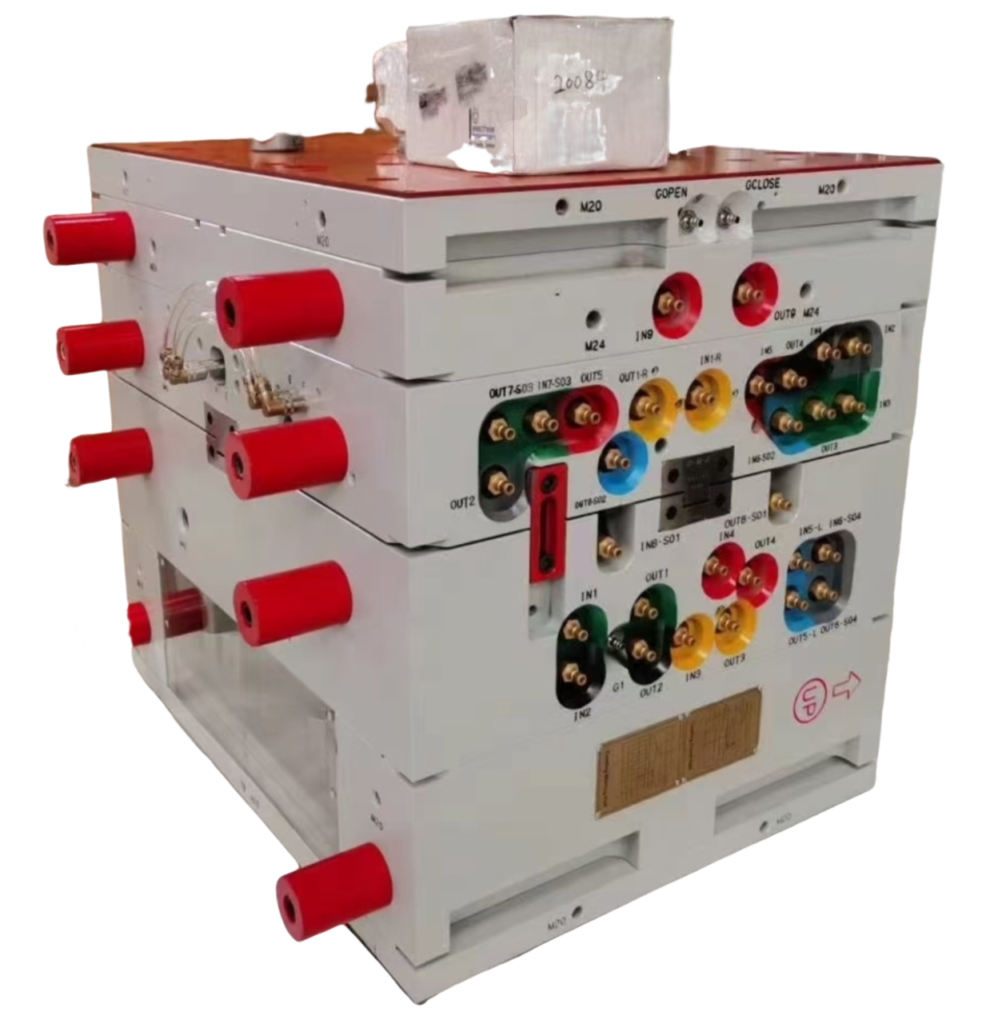
Mieszanka PC/ABS
– Material selection requires balancing mechanical performance (tensile strength, impact) with environmental constraints (temperature, chemical exposure).
– Engineering resins like Polycarbonate (PC) and Polyamide (PA) offer a middle ground between cost and high heat resistance.
– High-performance thermoplastics like PEEK provide metal-replacement capabilities but come with high processing costs.
– Medical applications require specific regulatory compliance, such as USP Class VI or ISO 10993 standards.
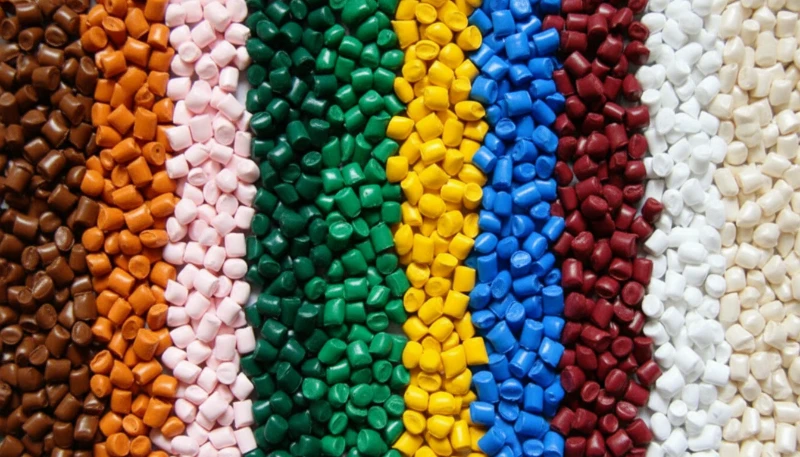
What are the Key Parameters for a Plastic Material Selection Guide?
A robust plastic material selection guide1 categorizes resins based on their polymer morphology (amorphous vs. semi-crystalline) and their performance tier. The selection matrix generally filters materials through four primary lenses: Thermal Performance, Mechanical Strength, Chemical Resistance, and Cost.
The Polymer Pyramid Hierarchy
| Tier | Material Family | Examples | Cost Factor | Key Characteristic |
|---|---|---|---|---|
| Commodity | General Purpose | Polypropylene (PP), Polyethylene (PE) | $ | Low cost, easy processing, low load-bearing. |
| Engineering | Structural/Technical | ABS, Polycarbonate (PC), Polyamide (PA6, PA66) | $$ – $$$ | Good balance of strength, temperature, and dimension. |
| High-Performance | Extreme Environment | PEEK, Polyetherimide (PEI), PPS | $$$$ | High heat (>150°C), chemical inertness, metal replacement. |
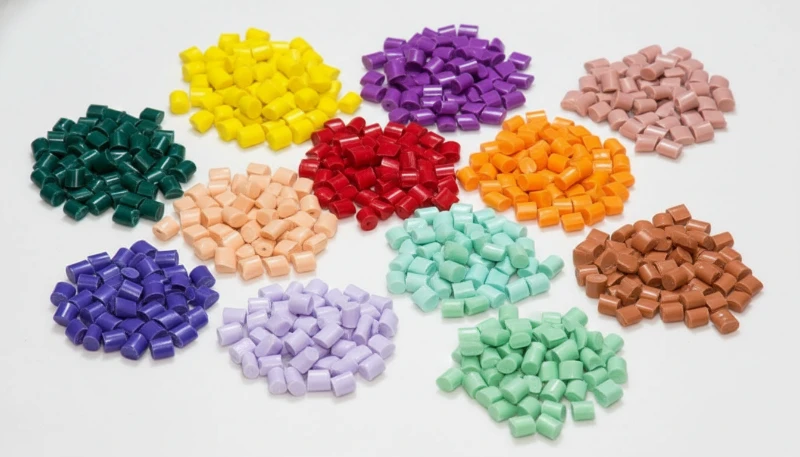
How Do ABS and Polycarbonate Properties Compare?
When designing enclosures, consumer electronics, or automotive interiors, the debate often settles on ABS vs Polycarbonate properties2.
Akrylonitryl-butadien-styren (ABS) is an amorphous polymer known for its toughness, ease of machining, and excellent surface finish.
Poliwęglan (PC) is a transparent amorphous thermoplastic known for extreme impact resistance and higher heat deflection.
Comparative Data: ABS vs. PC
| Własność | Akrylonitryl-butadien-styren (ABS) | Poliwęglan (PC) |
|---|---|---|
| Wytrzymałość na rozciąganie | 30 – 50 MPa | 55 – 75 MPa |
| Impact Strength (Izod) | 200 – 400 J/m | 600 – 900 J/m |
| Heat Deflection Temp (HDT @ 0.45 MPa) | 85°C – 100°C | 135°C – 145°C |
| Przejrzystość | Opaque | Optical Clarity |
| Współczynnik skurczu | 0.4% – 0.7% | 0.5% – 0.7% |
| Common Application | Keyboards, Housings, LEGO bricks | Safety goggles, Medical devices, Automotive lenses |
Uwaga: For applications requiring the processability of ABS and the strength of PC, a PC/ABS blend Globalny standard oceny biologicznej wyrobów medycznych.
Polycarbonate offers significantly higher impact resistance and optical clarity compared to ABS.Prawda
PC is virtually unbreakable and transparent, whereas ABS is opaque and, while tough, has lower impact values than PC.
ABS is the best choice for high-heat applications above 120°C.Fałsz
ABS typically softens around 90-100°C. For temperatures above 120°C, Polycarbonate or Nylon are required.
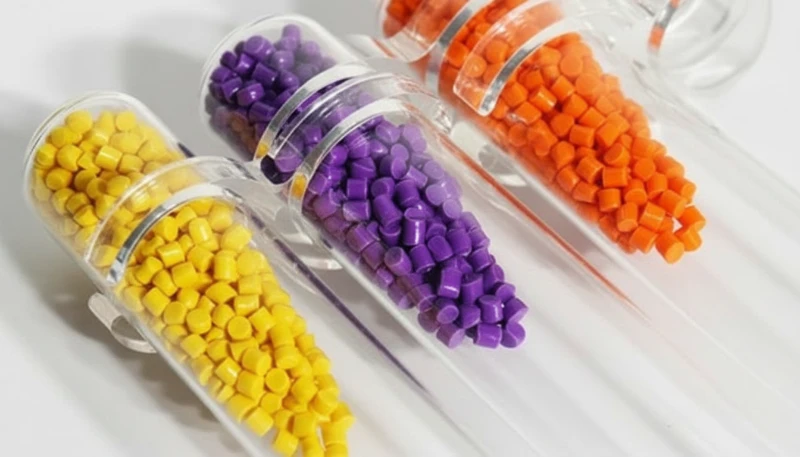
What Are High-Performance Thermoplastics and When Should They Be Used?
High-performance thermoplastics3 are defined by their ability to maintain mechanical properties at elevated temperatures (continuous use >150°C) and resist harsh chemicals.
Polyamide (PA/Nylon) vs. Polyether Ether Ketone (PEEK)
- Polyamide 66 (PA66): A semi-crystalline engineering plastic. When reinforced with glass fibers (GF), PA66 rivals metals in structural rigidity. However, it is hygroscopic (absorbs moisture), which affects dimensional stability.
- Polyether Ether Ketone (PEEK): The apex of the polymer pyramid. It offers exceptional chemical resistance, hydrolysis resistance (steam), and high-temperature performance.
Performance Data Matrix
| Parametr | Polyamide 66 (30% GF) | PEEK (Unfilled) |
|---|---|---|
| Temperatura topnienia | ~260°C | ~343°C |
| Continuous Use Temp | 120°C | 250°C |
| Odporność chemiczna | Good (Oils/Greases), Weak against Acids | Excellent (Resists almost all organic/inorganic chemicals) |
| Cost Ratio (approx.) | 1.5x – 2x vs Commodity | 20x – 50x vs Commodity |
PEEK is capable of withstanding continuous operating temperatures up to 250°C.Prawda
PEEK is a semi-crystalline high-performance thermoplastic designed for extreme thermal environments.
High-performance thermoplastics like PEEK are easy to mold and require standard equipment.Fałsz
PEEK requires high mold temperatures (160°C+) and barrel temperatures (~400°C), often requiring specialized high-temp molding machines.
How to Interpret an Injection Molding Resin Chart?
An injection molding resin chart4 provides technical data points that dictate processability. To use these charts effectively, follow this stepwise selection process:
- Identify Thermal Constraints: Look at the Heat Deflection Temperature (HDT). The material must withstand the application’s maximum temperature without warping.
- Determine Mechanical Load: Check Tensile Modulus (stiffness) and Yield Strength. If the part bears weight, prioritize glass-filled variants.
- Assess Environmental Exposure: Consult chemical resistance charts. Amorphous resins (PC, ABS) are generally prone to stress cracking from solvents; Semi-crystalline resins (Nylon, PEEK, PP) offer better resistance.
- Review Shrinkage Rates: High shrinkage materials (like PEEK or POM) require precise mold design considerations compared to low shrinkage materials (ABS, PC).
What are the Considerations for Medical Grade Plastics?
Selecting medical grade plastics5 introduces regulatory and sterilization variables beyond standard mechanical properties.
Key Regulatory Standards
- USP Class VI: The strictest testing tier for biocompatibility under US Pharmacopeia.
- ISO 10993: The global standard for biological evaluation of medical devices.
służy jako wszechstronny, estetyczny wybór dla ogólnego budownictwa mieszkaniowego;
| Materiał | Autoclave (Steam) | Gamma Radiation | Ethylene Oxide (EtO) |
|---|---|---|---|
| Poliwęglan (PC) | Poor (Hazes/Degrades) | Good (Some yellowing) | Doskonały |
| Polypropylene (Medical Grade PP) | Dobry | Poor (Becomes brittle) | Doskonały |
| PEEK | Doskonały | Doskonały | Doskonały |
| Polisulfon (PSU) | Doskonały | Dobry | Doskonały |
Medical grade plastics must pass USP Class VI or ISO 10993 biocompatibility testing.Prawda
These standards ensure the material does not induce toxicity or adverse reactions when in contact with the human body.
Any food-safe plastic is automatically suitable for medical implants.Fałsz
Food safety (FDA CFR 21) does not guarantee biocompatibility for internal use or resistance to medical sterilization methods.
What are the Practical Pros and Cons of Common Thermoplastics?
| Materiał | Zalety | Wady |
|---|---|---|
| ABS | High impact strength, excellent surface finish, easy to plate/paint, low cost. | Poor solvent resistance, low UV resistance (yellows), moderate heat limits. |
| Poliwęglan (PC) | High transparency, superior impact resistance, high dimensional stability. | Susceptible to stress cracking, sensitive to notches, requires drying before molding. |
| Nylon (PA6/66) | High mechanical strength, wear resistance, low friction, chemical resistance. | High moisture absorption (hygroscopic), dimensional changes with humidity. |
| PEEK | Highest thermal/chemical resistance, inherent flame retardancy, biocompatible. | Extremely high material cost, difficult to process, limited color options. |
What are the Typical Application Scenarios?
- Motoryzacja:
- Interiors: ABS, PC/ABS (Dashboards, buttons).
- Under-the-hood: PA66 GF30 (Engine covers, air intake manifolds).
- Elektronika użytkowa:
- Housings: PC, PC/ABS (Laptops, phone cases).
- Złącza: LCP (Liquid Crystal Polymer) or PBT.
- Urządzenia medyczne:
- Disposables: PP, PS (Syringes, petri dishes).
- Narzędzia chirurgiczne: PEEK, PPSU (Handles, retractors).
- Industrial/Aerospace:
- Gears/Bearings: POM (Acetal), Nylon.
- Wsporniki konstrukcyjne: PEEK, PEI (Ultem).
FAQ: Material Selection
1. How does moisture affect Nylon (PA) during injection molding?
Nylon is hygroscopic. If not dried to <0.2% moisture content before molding, the water turns to steam, causing splay marks (silver streaks) and significantly reducing the mechanical strength of the part.
2. Can ABS be used for outdoor applications?
Standard ABS has poor UV resistance and will degrade/discolor in sunlight. For outdoor use, ABS requires UV stabilizers or should be replaced with ASA (Acrylonitrile Styrene Acrylate), which has similar properties but superior UV stability.
3. Why is PEEK considered a metal replacement?
PEEK offers a unique combination of high strength-to-weight ratio, chemical inertness, and the ability to hold tight tolerances at high temperatures, allowing it to replace aluminum or steel in aerospace and medical components.
4. What is the difference between amorphous and semi-crystalline plastics?
Amorphous plastics (ABS, PC) have a random molecular structure, shrinking less and offering better transparency. Semi-crystalline plastics (Nylon, PEEK, PP) have ordered structures, offering better chemical and wear resistance but higher shrinkage rates.
5. When should I use glass-filled (GF) materials?
Use glass-filled resins (e.g., PA66 30% GF) when the application requires increased tensile strength, stiffness, and heat resistance. Note that glass fibers can make the material more brittle and abrasive to the mold.
Podsumowanie
Choosing the right thermoplastic involves navigating a matrix of trade-offs. ABS serves as a versatile, aesthetic choice for general housing; Poliwęglan (PC) Plastiki klasy medycznej wymagają ścisłego przestrzegania przepisów (USP Class VI) i zgodności z metodami sterylizacji, takimi jak autoklawowanie. Nylon (PA) provides structural integrity for mechanical parts; and PEEK delivers unrivaled performance in extreme environments. Engineers must align these material properties with the specific regulatory, thermal, and mechanical demands of the final application to ensure product success.
-
A plastic material selection guide helps engineers navigate the thousands of available resin options by categorizing them by performance and cost. ↩
-
Comparisons of ABS vs Polycarbonate properties are critical for enclosure design, balancing impact strength against cost and processability. ↩
-
High-performance thermoplastics like PEEK are specialized for extreme heat and chemical environments, often replacing metals. ↩
-
An injection molding resin chart provides the specific processing parameters (temperatures, shrinkage) required for manufacturing. ↩
-
Medical grade plastics involve strict regulatory compliance (USP Class VI) and compatibility with sterilization methods like autoclaving. ↩




 PL
PL  EN
EN  ES
ES  FR
FR  DE
DE  PT
PT  AR
AR  RU
RU  JA
JA  KO
KO  IT
IT  NL
NL  TR
TR