 Skip to content

- Luminous (phosphorescent) powder in injection molding creates glow-in-the-dark plastic products by absorbing light energy and re-emitting it over extended periods.
- Strontium aluminate-based luminous powders offer the brightest and longest-lasting afterglow (8–12 hours), replacing older zinc sulfide formulations.
- The optimal luminous powder loading ratio is typically 5–15% by weight of the base resin, balancing glow intensity against material flowability and mechanical properties.
- Low processing temperatures and gentle screw speeds are essential to prevent thermal degradation of luminous particles during injection molding.
- Translucent or light-colored base resins (natural, white, or light yellow) maximize luminous effect — dark or opaque colors block the glow.
- Proper particle size selection (15–60 microns for injection molding) ensures both adequate glow performance and good surface finish quality.
What Is Luminous Powder and How Does It Work in Plastic Products?
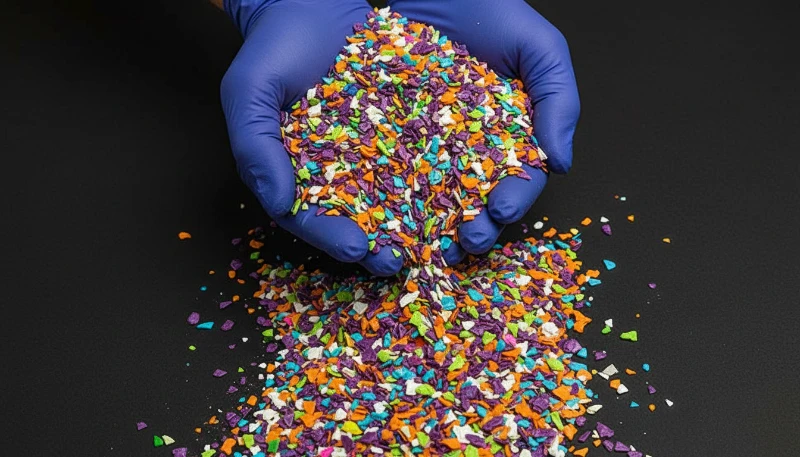
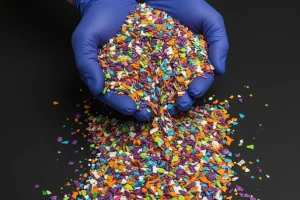
Luminous powder, also known as phosphorescent pigment or glow-in-the-dark powder, is an inorganic compound that absorbs light energy (from sunlight, UV light, or artificial lighting) and then slowly re-emits that energy as visible light over an extended period after the light source is removed. When incorporated into injection molded1 plastic products, it creates the distinctive glow-in-the-dark effect that has applications ranging from safety signage to consumer novelty items.
At Zetar, we have worked with luminous powder formulations across multiple product categories and can share practical insights from our production experience. The science behind phosphorescence involves electrons in the luminous compound being excited to higher energy states by incoming photons. Unlike fluorescence (which stops immediately when the light source is removed), phosphorescent materials release this stored energy gradually, producing visible afterglow for minutes to hours.
The two main families of luminous powder used in plastics are:
- Zinc sulfide (ZnS) based: The older generation of luminous pigments. They offer lower cost but shorter afterglow duration (typically 30–90 minutes) and lower brightness. ZnS-based powders are still used in low-cost applications where extended glow is not critical.
- Strontium aluminate (SrAl₂O₄) based: The current industry standard for high-performance luminous applications. These rare-earth activated pigments provide 10× brighter afterglow with 8–12 hour duration. They are more expensive but offer vastly superior performance and are now preferred for most commercial applications.
Which Base Resins Are Compatible with Luminous Powder?
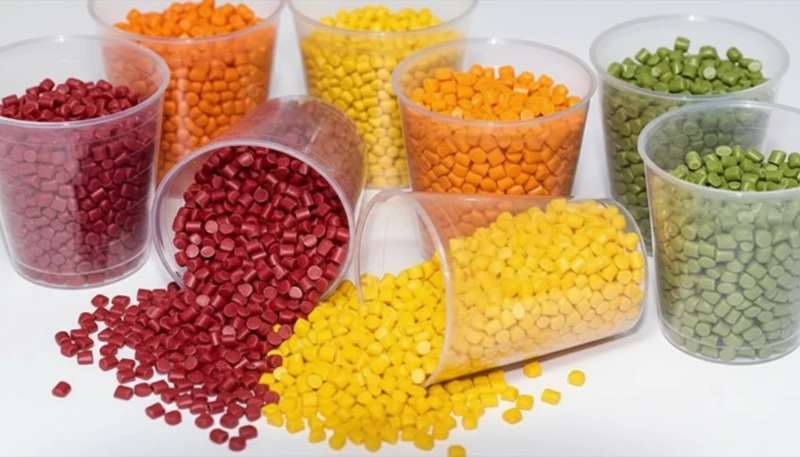
Not all plastic resins work equally well with luminous powder. The choice of base resin affects both the processing conditions and the final glow performance of the product. The key requirements are low processing temperature (to prevent thermal degradation of the luminous particles), good translucency (to allow light to reach and escape from the luminous particles), and adequate flowability at the chosen loading ratio.
Here is a compatibility guide based on our production experience at Zetar:
| Base Resin | Compatibility | Processing Temp Range | Glow Performance | Notes |
|---|---|---|---|---|
| PP (Polypropylene) | Excellent | 190–230°C | Very Good | Low melt temp preserves luminous particles; good translucency in natural color |
| PE (Polyethylene) | Excellent | 170–220°C | Very Good | Lowest processing temps; ideal for maximizing glow life |
| PS (Polystyrene) | Good | 190–240°C | Good | Clear grades work well; high-impact PS is slightly less effective |
| ABS | Good | 210–250°C | Moderate | Higher processing temp may slightly reduce glow; natural ABS works best |
| PA (Nylon) | Fair | 240–280°C | Moderate | High temps risk degradation; moisture sensitivity adds complexity |
| PC (Polycarbonate) | Poor | 280–310°C | Low | Very high processing temps damage luminous particles; not recommended |
| TPE/TPU | Good | 170–220°C | Good | Flexible glow products; low processing temps are favorable |
| Silicone | Good | 150–200°C (LSR) | Good | Works well for soft-touch glow products; requires special dosing equipment |
The general rule is clear: lower processing temperatures preserve luminous powder performance better. Resins that require melt temperatures above 260°C will cause noticeable degradation of strontium aluminate luminous particles, reducing both initial brightness and afterglow duration.
What Is the Correct Mixing Ratio and Preparation Process?
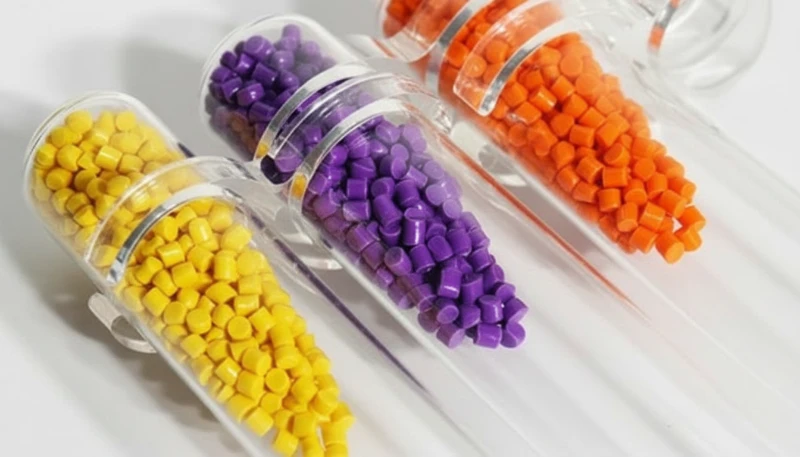
Getting the luminous powder loading ratio right is critical for balancing glow performance against processability, surface quality, and mechanical properties. Too little powder produces a weak glow; too much creates processing difficulties and compromises the structural integrity of the part.
Based on our extensive testing and production experience at Zetar, here are the recommended loading ratios:
- Standard glow effect: 5–8% luminous powder by weight of base resin
- Enhanced glow effect: 8–12% luminous powder by weight
- Maximum glow intensity: 12–15% luminous powder by weight (beyond this, diminishing returns and processing difficulties occur)
Mixing Process (Critical Steps):
- Pre-dry the base resin: Follow standard drying recommendations for your specific resin to prevent moisture-related defects.
- Pre-blend at room temperature: Mix the luminous powder with resin pellets in a tumble blender or ribbon blender for 10–15 minutes to achieve uniform distribution. Do not use high-speed mixers, as the mechanical impact can fracture luminous particles and reduce glow performance.
- Add a coupling agent (optional but recommended): A small amount (0.5–1%) of silane coupling agent improves the bond between inorganic luminous particles and the polymer matrix, enhancing mechanical properties and surface finish.
- Use a masterbatch approach for consistent results: For production volumes exceeding 1,000 parts, we recommend creating a luminous masterbatch at 30–50% concentration, then let-down blending with virgin resin to the target concentration. This provides more consistent luminous distribution than direct dry blending.
Important: Luminous powder particles are abrasive. At loading ratios above 10%, they accelerate wear on screws, barrels, check rings, and mold cavity surfaces. We recommend using bimetallic barrels and hardened screws for production runs with high luminous powder content.
“Adding more luminous powder always makes the glow brighter — the more you add, the better the result.”False
Beyond 15% loading ratio, additional luminous powder provides diminishing returns in brightness while significantly degrading material flowability, mechanical strength, and surface finish quality. The particles also increase abrasive wear on injection molding equipment. The optimal balance between glow performance and part quality typically falls in the 8–12% range.
“The optimal luminous powder concentration of 8–12% delivers the best balance between glow intensity, part quality, and equipment longevity.”True
Testing consistently shows that 8–12% loading provides strong glow performance while maintaining acceptable material flow, surface finish, and mechanical properties. Using a masterbatch approach at this concentration range ensures the most uniform luminous distribution throughout the molded part.
How Should You Adjust Injection Molding Parameters for Luminous Materials?
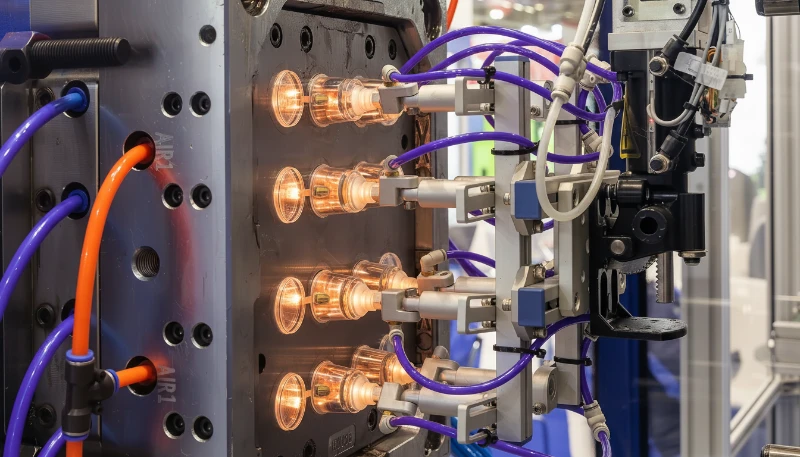
Processing luminous powder-loaded resins requires specific adjustments to standard injection molding parameters. The goal is to achieve good part fill and surface quality while minimizing thermal and mechanical stress on the luminous particles.
At Zetar, we have developed optimized process parameters through extensive trial work. Here are the key adjustments:
Melt Temperature: Use the lower end of the resin’s recommended processing range. For PP with luminous powder, we target 195–210°C rather than the typical 210–230°C for standard PP. Lower temperatures preserve luminous particle integrity and glow performance.
Screw Speed: Reduce screw rotation speed by 20–30% compared to standard processing. Lower RPM reduces shear heating and mechanical damage to luminous particles. Typical target: 30–60 RPM for most resins with luminous powder.
Back Pressure: Minimize back pressure to reduce shear on the luminous particles during plasticization. We typically run 3–5 bar back pressure for luminous materials, compared to 5–10 bar for standard processing.
Injection Speed: Use moderate injection speeds. Excessively fast injection creates high shear at the gate, which can fracture luminous particles and create visible streaks. Moderate speeds also reduce the risk of jetting and flow marks that are especially noticeable on glow-in-the-dark parts.
Mold Temperature: Standard mold temperatures for the base resin are generally appropriate. Slightly elevated mold temperatures (5–10°C above standard) can improve surface quality by allowing better replication of the luminous particle texture.
| Parameter | Standard PP Processing | PP + Luminous Powder Processing | Why the Adjustment |
|---|---|---|---|
| Melt Temperature | 210–230°C | 195–210°C | Prevent thermal degradation of luminous particles |
| Screw Speed | 60–100 RPM | 30–60 RPM | Reduce mechanical shear damage to particles |
| Back Pressure | 5–10 bar | 3–5 bar | Minimize particle fracture during plasticization |
| Injection Speed | Fast | Moderate | Prevent gate shear and flow streaking |
| Holding Pressure | 60–80% of injection | 50–70% of injection | Avoid excessive packing stress on filled material |
| Cooling Time | Standard | Standard + 5–10% | Filled material may need slightly longer cooling |
What Design Considerations Maximize Glow Performance in Molded Parts?
Part design and mold design3 decisions significantly affect the final glow performance of luminous injection molded products. Several factors deserve careful consideration during the design phase:
Wall Thickness: Thicker walls contain more luminous particles and absorb more excitation light, producing a brighter and longer-lasting glow. However, walls thicker than 4–5 mm provide diminishing returns because light cannot penetrate deep enough to excite particles in the center. The optimal wall thickness for luminous parts is typically 2–4 mm.
Surface Area: Larger exposed surface areas absorb more light and emit a brighter glow. Design features like ribs, texture, and contoured surfaces increase the effective light-absorbing area.
Color Selection: This is critically important. The base resin color must be translucent or light-colored (natural, white, light yellow, or light green) to allow light to pass through to the luminous particles. Dark colors (black, dark blue, dark red) absorb the emitted light and virtually eliminate the glow effect. If color is needed, use very pale shades at low concentrations.
Surface Finish: Smooth, glossy surfaces emit light more efficiently than rough or textured surfaces. For maximum glow effect, specify SPI A2 or A3 surface finish on the mold cavity. Textured surfaces scatter the emitted light, reducing perceived brightness.
Gate Location: Position gates to ensure uniform flow and avoid weld lines on visible glow surfaces. Weld lines appear as darker streaks on luminous parts because the luminous particles orient differently at the flow front meeting point.
Part Geometry Considerations:
- Avoid very thin sections (< 1 mm) — they will glow noticeably less than surrounding thicker areas
- Design uniform wall thickness to prevent uneven glow patterns
- Consider that corners and edges will appear darker than flat surfaces due to light emission geometry
“You can add luminous powder to any color of plastic and still get a visible glow-in-the-dark effect.”False
Dark-colored resins (black, dark blue, dark brown, etc.) absorb the light emitted by luminous particles, effectively blocking the glow effect. Only translucent, natural, or very light-colored base resins allow sufficient light transmission for the luminous particles to charge and emit their glow visibly.
“Translucent or light-colored base resins with 2–4 mm wall thickness and smooth surface finish produce the brightest and longest-lasting luminous injection molded products.”True
Translucent materials allow maximum light penetration to charge the luminous particles and maximum light emission to create visible glow. The 2–4 mm wall thickness range optimizes the balance between particle volume and light penetration depth. Smooth surfaces emit light more efficiently than textured ones.
What Quality Control Tests Should You Perform on Luminous Molded Products?
Quality control for luminous injection molded products requires standard injection molding QC procedures plus additional tests specific to the luminous performance. At Zetar, we apply a comprehensive testing protocol to ensure our luminous products meet both structural and glow performance specifications.
Luminous Performance Tests:
- Initial brightness measurement: Using a photometer or luminance meter, measure the initial afterglow brightness (in mcd/m²) at specific time intervals (2 min, 10 min, 30 min, 60 min) after standardized light exposure. Strontium aluminate products should measure > 150 mcd/m² at 10 minutes.
- Afterglow duration test: Measure the time until brightness falls below the human eye perception threshold (approximately 0.32 mcd/m²). Premium strontium aluminate formulations should achieve > 8 hours.
- Color consistency: Visual and instrumental verification that the glow color is uniform across the part and matches the approved reference sample.
- Charge/discharge cycling: Test that repeated light exposure and dark cycles do not degrade glow performance over time.
Standard Part Quality Tests:
- Dimensional inspection per drawing specifications
- Visual inspection for surface defects (flow marks, sink marks, streaks)
- Mechanical testing (tensile strength, impact resistance) — note that luminous filler typically reduces mechanical properties by 10–20% at standard loading ratios
- Weight consistency check (to verify uniform luminous powder distribution)
Environmental and Safety Tests (application-dependent):
- UV aging test for outdoor applications
- RoHS/REACH compliance testing for European markets
- EN 67510 or DIN 67510 testing for safety signage applications
- Food contact safety testing if applicable (some luminous pigments contain trace heavy metals)

What Are the Most Common Applications for Luminous Injection Molded Products?
The market for glow-in-the-dark injection molded products spans a surprisingly broad range of applications, from critical safety equipment to consumer novelty items. Understanding these application categories helps guide material selection, design optimization, and quality requirements.
Safety and Emergency Equipment:
- Exit signs and emergency pathway markers (must meet EN 67510 photoluminescent standards)
- Fire extinguisher location markers
- Stairway nosing strips and handrail markers
- Emergency equipment identification tags
Consumer Products:
- Novelty items and toys (glow stars, figurines, phone cases)
- Watch components and clock faces
- Fishing lures and sporting equipment
- Light switch covers and wall plates
Industrial and Architectural:
- Pipe and valve identification markers
- Safety zone boundary indicators
- Architectural feature lighting elements
- Cable identification sleeves
Automotive and Transportation7:
- Dashboard and control indicator markings
- Door handle and lock identification
- Safety signage within vehicles and aircraft
- Bicycle and personal mobility device components
At Zetar, the majority of our luminous product inquiries come from safety equipment manufacturers and consumer product companies. Each application has specific requirements for glow duration, brightness standards, environmental resistance, and regulatory compliance that influence the material formulation and process parameters.
Frequently Asked Questions (FAQ)
Is luminous powder safe for use in consumer products and toys?
Strontium aluminate-based luminous powders are generally considered non-toxic and non-radioactive, making them safe for consumer products. However, some formulations may contain trace amounts of europium or other activators that require verification against specific safety standards. For toys, compliance with EN 71 (EU), ASTM F963 (US), and RoHS requirements should be verified. At Zetar, we always source luminous powders with complete safety data sheets and compliance documentation.
How long does the glow effect last in luminous injection molded products?
With premium strontium aluminate-based luminous powder at 8–12% loading, the glow effect typically lasts 8–12 hours after a 15–30 minute exposure to bright light. The brightest glow occurs in the first 30–60 minutes, then gradually diminishes. Older zinc sulfide formulations last only 30–90 minutes. The glow capability does not diminish over the product’s lifetime — it will continue to charge and glow for 15–20+ years.
Can you achieve different glow colors with luminous powder?
The most common and brightest glow color is yellow-green, which is the natural emission color of strontium aluminate activated with europium. Blue, aqua, and violet glow colors are available but are generally 30–60% dimmer and shorter in duration than yellow-green. Red and orange glow powders exist but offer significantly shorter afterglow. For the brightest results, we recommend yellow-green luminous powder in most applications.
Does luminous powder affect the recyclability of injection molded parts?
Luminous powder acts as an inorganic filler in the plastic matrix and remains in the recycled material if the parts are reground and reprocessed. The luminous particles will still glow in recycled material, though uniformity may decrease with each reprocessing cycle. For applications where recyclability is important, the luminous content should be considered in the end-of-life material stream assessment.
What particle size of luminous powder works best for injection molding?
For injection molding, luminous powder particle sizes of 15–60 microns provide the best balance between glow performance and surface finish quality. Larger particles (60–100+ microns) produce brighter glow but create rough surface textures and can clog small gates. Smaller particles (< 15 microns) give smoother surfaces but reduced glow intensity. At Zetar, we typically recommend 25–45 micron median particle size for most injection molding applications as the optimal compromise.
Summary
Adding luminous powder to plastic injection molding is a well-established process that creates valuable glow-in-the-dark products for safety, consumer, industrial, and automotive applications. Success requires careful attention to several interconnected factors: selecting the right luminous powder type (strontium aluminate for premium performance), choosing compatible base resins with low processing temperatures, optimizing the loading ratio (8–12% for best results), adjusting injection molding parameters to protect luminous particle integrity, and designing parts that maximize glow performance through proper wall thickness, color selection, and surface finish.
At Zetar, our experience with luminous injection molding spans multiple product categories and material formulations. We provide complete support from material selection and DFM review through process optimization and quality verification, ensuring your luminous products achieve the desired glow performance while meeting all structural and regulatory requirements.
Ready to develop your glow-in-the-dark injection molded product? Contact our engineering team for a free consultation and luminous molding feasibility assessment.
-
Injection Molding: A manufacturing process in which molten plastic is injected under high pressure into a steel mold cavity, cooled to solidify, and ejected as a finished part. It is the most cost-effective method for mass-producing complex plastic components. ↩
-
Mold Design: The engineering process of designing injection mold tools, including cavity geometry, gate placement, cooling channels, and ejection systems. For luminous parts, gate location and surface finish specifications require special consideration. ↩
-
Automotive and Transportation Applications: The use of injection molded plastic components in vehicles, aircraft, and personal mobility devices. These applications often require specific safety certifications and glow performance standards for luminous components. ↩



 EN
EN  ES
ES  FR
FR  DE
DE  PT
PT  AR
AR  RU
RU  JA
JA  KO
KO  IT
IT  NL
NL  TR
TR  PL
PL 