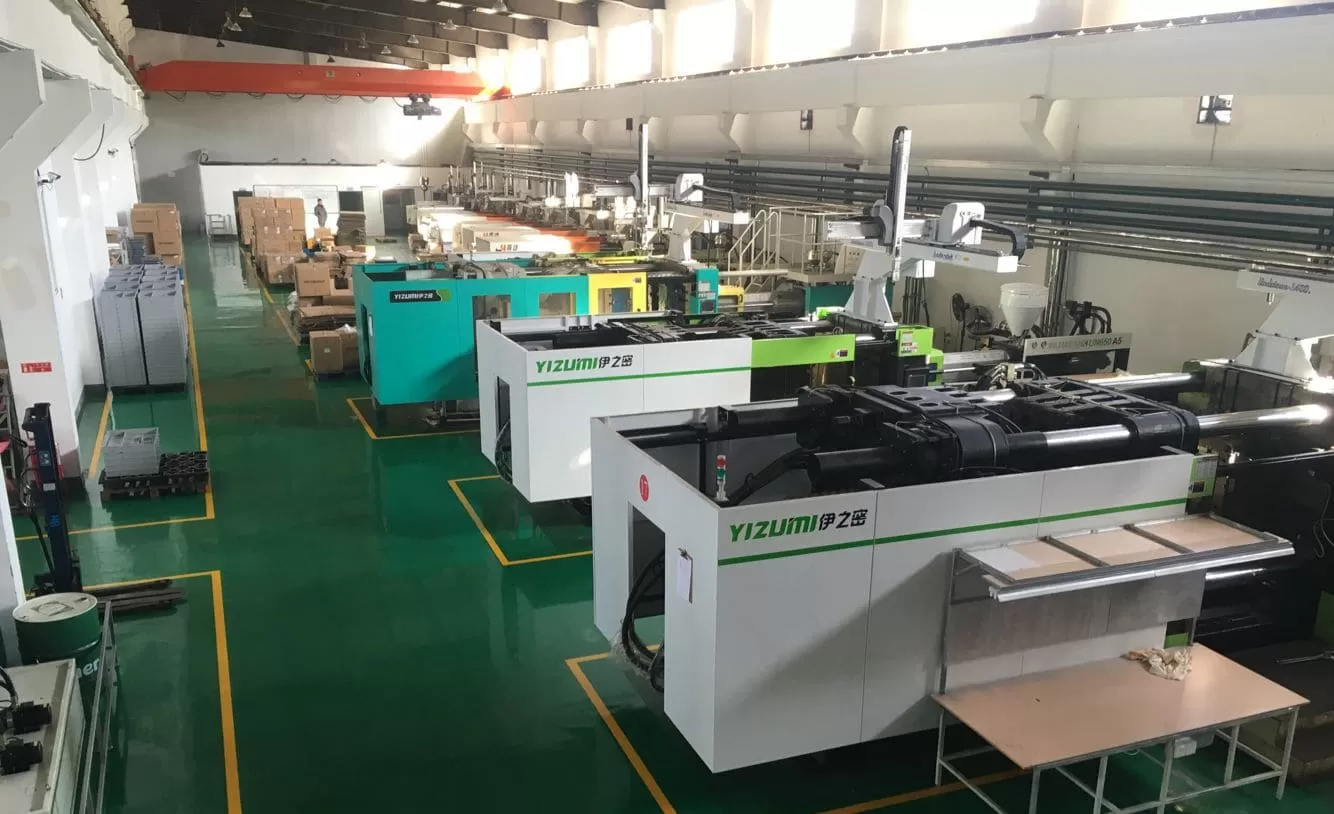
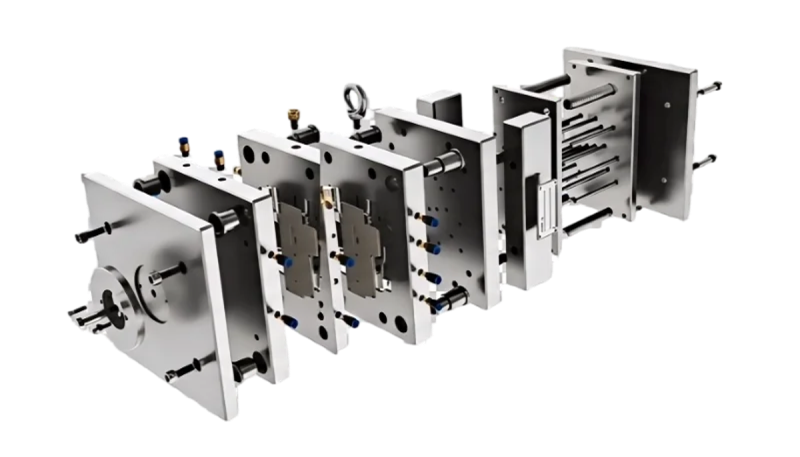
- Injection molding produces over 30% of all plastic automotive components, from bumpers and dashboards to under-hood parts, with cycle times as low as 15–45 seconds per part.
- Common automotive-grade plastics include ABS, polypropylene (PP), polycarbonate (PC), and glass-filled nylon (PA6-GF30), each chosen for specific mechanical and thermal requirements.
- Multi-cavity molds and automated production lines enable per-part costs under $0.50 at volumes above 100,000 units, making injection molding the most cost-effective method for mass-produced car parts.
- Quality standards like IATF 16949 and dimensional tolerances of ±0.05 mm are standard requirements in automotive injection molding projects we handle at our factory.
What Is Injection Molding for Automotive Parts and Why Does It Dominate?
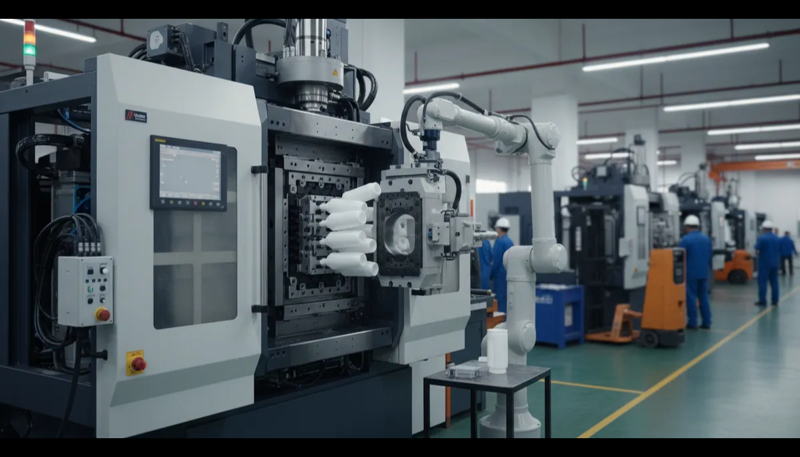
Injection molding for automotive parts and why does it dominate is defined by the function, constraints, and tradeoffs explained in this section. Injection molding for automotive parts is a manufacturing process where molten polymer is injected under high pressure (typically 500–1,500 bar) into a precision steel mold to produce plastic components used in vehicles. It dominates automotive plastics production because it delivers unmatched repeatability, tight tolerances, and scalability for volumes ranging from 10,000 to millions of parts per year.
In our factory at ZetarMold, we’ve seen the automotive sector grow to represent nearly 40% of our injection molding projects. The reason is straightforward: no other process matches the combination of speed, precision, and material versatility that injection molding offers for car parts.
The global automotive plastics market reached $52.2 billion in 2024 and is projected to exceed $73 billion by 2030. A modern car contains approximately 100–150 kg of plastic, with injection molded components making up the largest share. From lightweight interior trim to structurally critical engine covers, this process has become indispensable.
““Injection molding can produce automotive parts with tolerances as tight as ±0.05 mm.””True
With precision mold design and controlled process parameters, injection molding routinely achieves ±0.05 mm tolerances required for automotive connectors, sensor housings, and assembly-critical components. In our experience, maintaining these tolerances requires careful control of melt temperature, holding pressure, and cooling time.
““Injection molding is only suitable for simple, flat automotive parts.””False
Modern injection molding produces highly complex automotive components with undercuts, living hinges, and multi-material sections. Technologies like insert molding and overmolding allow integration of metal fasteners, rubber seals, and multiple polymers in a single part.
Which Automotive Parts Are Made by Injection Molding?
Bumpers, dashboards, door panels, intake manifolds, and lighting lenses are the most common injection molded automotive parts. Over 30% of all plastic automotive components are manufactured this way, and the diversity continues to grow as automakers replace metal with engineered plastics for weight and cost savings.
Here is a breakdown of the most common injection molded automotive parts by vehicle area:
| Vehicle Area | Common Injection Molded Parts | Typical Materials |
|---|---|---|
| Interior | Dashboard panels, door handles, glove boxes, air vents, center consoles, cup holders | ABS, PP, PC/ABS blend |
| Exterior | Bumpers, fenders, grilles, mirror housings, light covers, splash guards | PP, ABS, PC, TPO |
| Under-Hood | Engine covers, intake manifolds, coolant reservoirs, oil pans, battery trays | PA6-GF30, PBT, PPS |
| Electrical | Connector housings, fuse boxes, sensor brackets, wire harness clips | PA66, PBT-GF, LCP |
| Structural | Seat belt components, airbag containers, door modules, pillar trim | PA6-GF, PP-GF, ABS |
We’ve noticed that the shift toward electric vehicles (EVs) has accelerated demand for injection molded battery housings, charging port covers, and lightweight structural brackets. One EV project we completed last year required 23 different injection molded components per vehicle.
What Materials Work Best for Automotive Injection Molding?
This section is about materials work best for automotive injection molding and its impact on cost, quality, timing, or sourcing risk. PP, ABS, polycarbonate (PC), and glass-filled nylon (PA6-GF30) are the best materials for automotive injection molding, each chosen for specific thermal, mechanical, and cost requirements. Polypropylene accounts for roughly 40% of all automotive plastics due to its low cost, chemical resistance, and versatility, while engineering plastics like polycarbonate and nylon handle higher thermal and mechanical loads. In our factory, we work with over 15 different polymer families for automotive projects.
In our factory, we work with over 15 different polymer families for automotive projects. Here are the most commonly specified materials and their properties:
| Material | Tensile Strength (MPa) | Heat Deflection (°C) | Key Properties | Typical Applications |
|---|---|---|---|---|
| Polypropylene (PP) | 25–40 | 100–110 | Chemical resistant, low cost, recyclable | Bumpers, interior trim, battery cases |
| ABS | 40–55 | 88–110 | Impact resistant, good surface finish | Dashboard, grilles, mirror housings |
| Polycarbonate (PC) | 55–75 | 130–140 | Transparent, high impact strength | Headlamp lenses, instrument panels |
| PA6-GF30 (Nylon + 30% Glass) | 130–180 | 240–250 | High strength, heat resistant | Engine covers, intake manifolds |
| PBT-GF | 85–130 | 200–220 | Dimensional stability, electrical properties | Connectors, sensor housings |
| TPO/TPE | 8–25 | 80–100 | Flexible, weather resistant | Seals, gaskets, soft-touch surfaces |
We’ve found that material selection often requires balancing multiple factors. For example, a client wanted ABS for an exterior mirror housing, but after UV exposure testing, we recommended an ASA blend that offers 5× better weatherability with similar mechanical properties.
How Does the Automotive Injection Molding Process Work Step by Step?
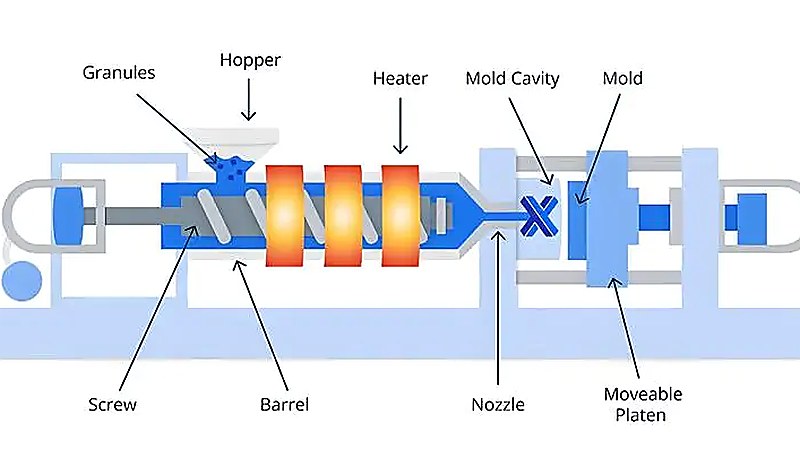
The automotive injection molding process is a five-step cycle: clamping, injection, packing, cooling, and ejection. Each cycle takes 15–60 seconds depending on part size and material. Every phase—clamp force, injection speed, packing pressure, cooling time, and ejection speed—is precisely tuned to the part geometry and polymer.
Here’s how we run a typical automotive part through our production line:
Step 1: Material Preparation — Plastic pellets are dried (PA6 requires 80°C for 4 hours to reach <0.2% moisture) and blended with any colorants or additives.
Step 2: Melt and Inject — The injection molding machine heats pellets to 200–320°C (depending on resin) and injects molten plastic into the mold cavity at 500–1,500 bar pressure.
Step 3: Pack and Hold — After filling, holding pressure1 is maintained at 40–80% of injection pressure to compensate for shrinkage as the material cools.
Step 4: Cool — Cooling channels in the mold circulate water at 10–80°C. Cooling typically accounts for 60–80% of total cycle time. For a PP bumper with 3 mm wall thickness, we target 25–35 seconds of cooling.
Step 5: Eject and Inspect — Ejector pins push the solidified part out. Automated vision systems check for defects like short shots, flash, or sink marks before parts move to secondary operations.
““mold flow analysis2 can predict and prevent most automotive injection molding defects before production begins.””True
Mold flow analysis 2 software like Moldflow and Moldex3D simulates fill patterns, weld line locations, air traps, and warpage before cutting steel. In our practice, running flow analysis has eliminated 80–90% of first-shot defects on automotive molds.
““Thicker walls in automotive parts always result in stronger, better-quality molded components.””False
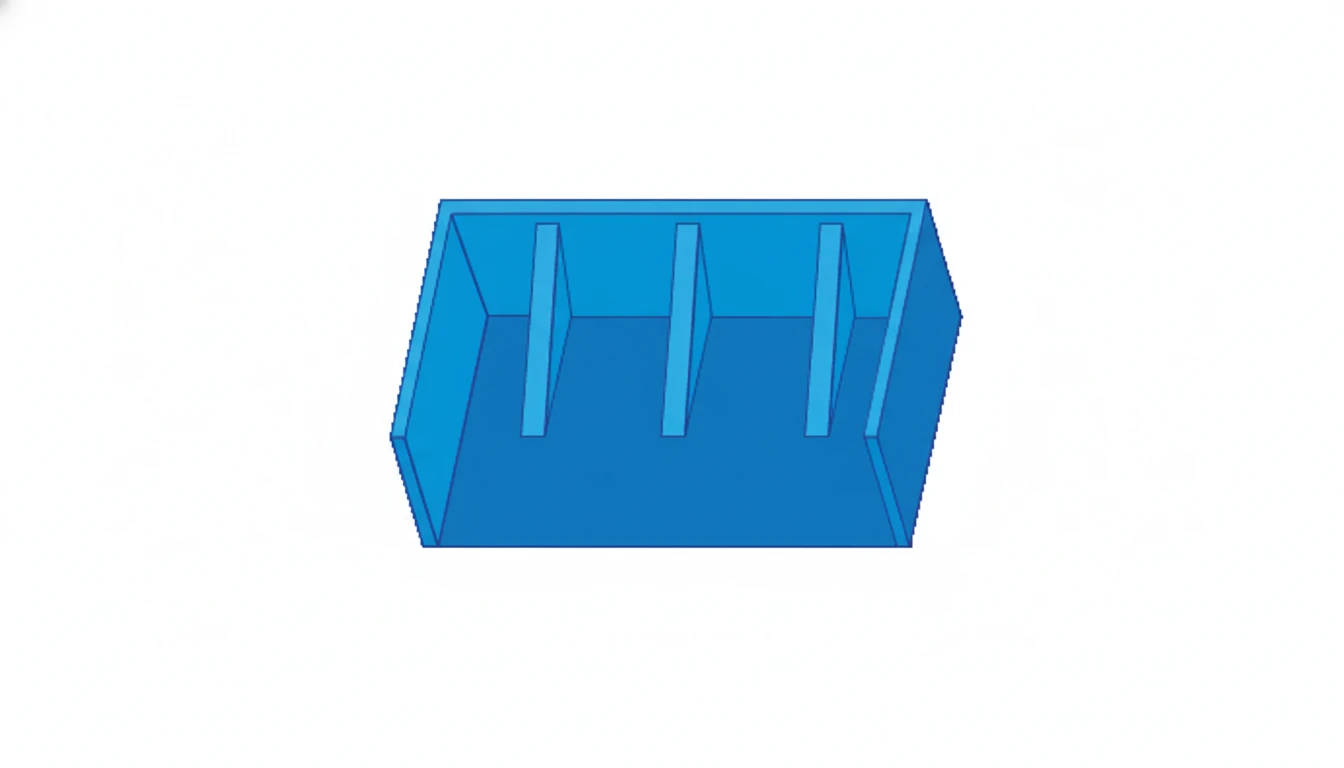
Thicker walls increase cycle time and risk of sink marks, voids, and warpage. Automotive part design follows a uniform wall thickness principle (typically 2–4 mm), using ribs for structural reinforcement rather than adding wall thickness. We’ve had projects where reducing wall thickness from 4 mm to 2.5 mm actually improved part quality while cutting cycle time by 30%.
What Quality Standards Apply to Automotive Injection Molding?
This section is about quality standards apply to automotive injection molding and its impact on cost, quality, timing, or sourcing risk. IATF 16949, ISO 9001, and OEM-specific requirements are the primary quality standards for automotive injection molding, covering raw material traceability, dimensional verification, and process capability. These standards require Cpk ≥ 1.67 for critical dimensions and full PPAP documentation. In our factory, we maintain IATF 16949 certification and follow the APQP (Advanced Product Quality Planning) framework for every automotive project from mold design through serial production.
In our factory, we maintain IATF 16949 certification and follow the APQP (Advanced Product Quality Planning) process for every automotive project. Here are the key quality frameworks:
| Standard/Tool | Purpose | Key Requirements |
|---|---|---|
| IATF 16949 | Quality management system | Process documentation, risk analysis, continuous improvement |
| PPAP (Production Part Approval Process) | Part approval before mass production | Dimensional reports, material certs, capability studies |
| FMEA (Failure Mode and Effects Analysis) | Risk identification | Severity/occurrence/detection scoring for each potential failure |
| SPC (Statistical Process Control) | Process monitoring | Control charts, Cpk ≥ 1.33 (≥ 1.67 for critical dimensions) |
| ISO 10993 (if medical-adjacent) | Biocompatibility | Material safety for vehicle interior air quality (VOC limits) |
The most common defects in automotive injection molding include warpage, sink marks, weld lines, short shots, and flash. Each defect has specific root causes related to injection mold design, process parameters, or material selection, and experienced molders can prevent most of them through proper DFM3 (Design for Manufacturability) analysis before tooling begins.
What Are the Common Defects in Automotive Injection Molding and How Do You Prevent Them?
The common defects in automotive injection molding and how do you prevent them are the main categories or options explained in this section. The most common defects in automotive injection molding are warpage, sink marks, short shots, flash, weld lines, and voids—each caused by specific process or tooling issues and each preventable through proper parameter control and mold design. Warpage alone accounts for roughly 30% of all rejected parts in automotive molding, typically caused by uneven cooling or excessive injection speed. Below is a breakdown of each defect, its root cause, and the proven solution we apply in our production line.
| Defect | Root Cause | Prevention Strategy | Detection Method |
|---|---|---|---|
| Warpage | Uneven cooling, differential shrinkage | Conformal cooling channels, uniform wall thickness | CMM measurement, fixture check |
| Sink Marks | Thick sections, insufficient packing | Rib thickness ≤60% of wall, optimize holding pressure | Visual inspection, profilometer |
| Weld Lines | Multiple flow fronts meeting | Relocate gate, increase melt temperature | Visual inspection under angled light |
| Short Shot | Insufficient material or pressure | Increase shot size, check venting | Weight check, visual inspection |
| Flash | Excessive pressure, mold wear | Reduce clamp pressure, maintain parting line | Visual, touch inspection |
In one automotive dashboard project, we faced persistent warpage exceeding the 0.3 mm flatness tolerance. By switching from conventional straight-drilled cooling to conformal cooling channels (3D-printed inserts) and adjusting the gate location based on flow analysis, we reduced warpage to 0.12 mm — well within specification.
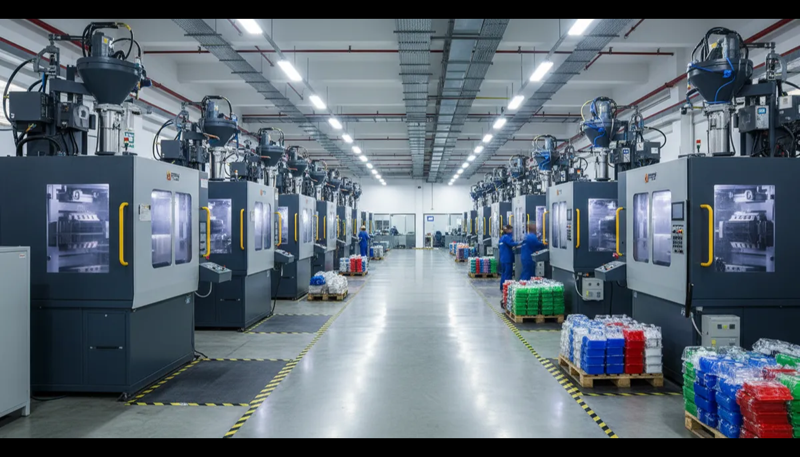
At our Shanghai factory, we operate 47 injection molding machines ranging from 90T to 1850T, supported by 8 senior engineers and a 120+ production workers team. Our 30+ English-speaking project managers ensure seamless communication with international automotive clients throughout the defect-prevention process.
How Much Does Automotive Injection Molding Cost?
Automotive injection molding cost is split between tooling ($15,000–$100,000+ per mold) and per-part production ($0.10–$5.00). The total cost decreases dramatically with volume, making it most economical above 10,000 units. Multi-cavity molds and automated production lines further drive per-part costs down to pennies for high-volume interior clips.
Here’s a cost breakdown we typically share with our automotive clients:
| Cost Factor | Range | Key Drivers |
|---|---|---|
| Single-cavity mold | $15,000–$50,000 | Part size, complexity, steel grade (P20 vs H13) |
| Multi-cavity mold (4–16 cavities) | $50,000–$150,000 | Number of cavities, hot runner system |
| Per-part cost (PP bumper) | $0.80–$3.00 | Material weight, cycle time, secondary operations |
| Per-part cost (small connector) | $0.05–$0.30 | Multi-cavity efficiency, material cost |
| Mold maintenance (annual) | 3–5% of mold cost | Production volume, material abrasiveness |
We’ve found that clients from the automotive sector often underestimate tooling costs, particularly for multi-cavity molds with hot runner systems. A well-maintained production mold can produce over 500,000 shots, and amortizing the initial tooling investment across this volume brings the mold cost per part to well under one dollar for most automotive applications. Requesting a detailed cost breakdown early in the project helps avoid budget surprises.
How Is Injection Molding Evolving for Automotive Manufacturing?
This section is about injection molding evolving for automotive manufacturing and its impact on cost, quality, timing, or sourcing risk. Injection molding for automotive manufacturing is evolving through lightweighting initiatives, EV-specific component demands, sustainable materials, and Industry 4.0 integration. The push toward electric vehicles has created entirely new categories of injection molded parts — battery enclosures, charging components, and thermal management systems — while sustainability targets are driving adoption of recycled and bio-based polymers.
Key trends we’re seeing in our automotive projects:
1. Lightweighting through Material Substitution — Metal-to-plastic conversion continues to accelerate. We recently replaced a die-cast aluminum bracket with a PA6-GF50 injection molded version, achieving 45% weight reduction while meeting the same load requirements.
2. Micro-Cellular Foaming (MuCell) — This process injects nitrogen gas into the melt to create a foamed core structure, reducing part weight by 10–15% and eliminating sink marks. Several Tier 1 suppliers we work with now specify MuCell for interior panels.
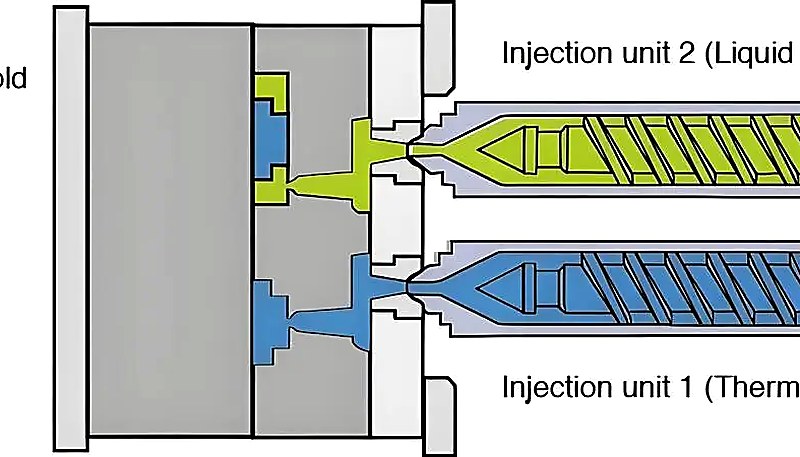
3. Overmolding and Insert Molding — Multi-material parts that combine rigid substrates with soft-touch surfaces or integrate metal inserts are increasingly common. We produce door handle assemblies that combine PC/ABS structure with TPE overmold in a single two-shot process.
4. Recycled Content Requirements — EU regulations now push for 25% recycled plastic content in new vehicles by 2030. We’ve validated recycled PP (rPP) for several non-critical interior applications with less than 5% property reduction versus virgin material.
5. Smart Manufacturing — Our newer presses integrate cavity pressure sensors and real-time process monitoring. When parameters drift outside control limits, the system automatically adjusts or flags parts for inspection — reducing scrap rates below 0.5%.
Frequently Asked Questions
What is the most common plastic used in automotive injection molding?
Polypropylene (PP) is the most widely used plastic in automotive injection molding, accounting for approximately 40 percent of all automotive plastics by volume. Its low density of 0.9 grams per cubic centimeter, excellent chemical resistance to engine oils and coolants, and outstanding cost-to-performance ratio make it the default choice for bumpers, interior trim panels, battery cases, and fluid reservoirs. PP also accepts talc and glass-fiber fillers for enhanced stiffness, and its recyclability aligns with growing automotive sustainability targets across global markets.
How tight are the tolerances achievable in automotive injection molding?
Standard automotive injection molding achieves tolerances of plus or minus 0.1 to 0.2 millimeters on most parts, while precision molding for critical components like electrical connectors and sensor housings can reach plus or minus 0.02 to 0.05 millimeters. Achieving these tight tolerances requires high-quality mold steel such as H13 or S136, precise temperature-controlled mold circuits with independent zones, and consistent process parameters monitored by statistical process control ensuring Cpk values of 1.67 or higher for all critical dimensions throughout the entire production run.
How does injection molding compare to 3D printing for automotive parts?
Injection molding is far superior for production volumes above 500 to 1000 parts, offering significantly lower per-part cost, better mechanical properties, and a much wider material selection that meets actual automotive specifications. 3D printing remains useful for prototyping and geometry validation at low quantities of 1 to 50 parts maximum. For full-scale automotive production, injection molding delivers 10 to 100 times faster throughput with engineering-grade materials that consistently pass OEM qualification requirements for heat resistance, flame retardancy, and long-term durability.
What is the typical lead time for an automotive injection mold?
A standard automotive injection mold takes 6 to 12 weeks from final design approval through first article inspection. Complex multi-cavity molds with hot runner systems, lifters, or side actions may require 12 to 16 weeks of lead time for completion. For faster design validation cycles, rapid aluminum tooling can deliver prototype molds in just 2 to 4 weeks, allowing functional testing and design iteration before committing to production steel tooling that will reliably run millions of parts over the vehicle lifecycle.
Can injection molding produce structural automotive parts that replace metal?
Yes, modern engineering plastics like glass-filled nylon from PA6-GF30 through PA6-GF50 and carbon-fiber-reinforced polymers can reliably produce structural automotive parts such as engine mounting brackets, pedal assemblies, seat structures, and door modules that meet or exceed metal performance requirements. These injection molded alternatives typically achieve 40 to 60 percent weight reduction compared to stamped or die-cast metal equivalents, while maintaining the required mechanical strength, fatigue resistance, and thermal stability needed for automotive safety-critical applications approved by major global OEM engineering teams.
What surface finishes are available for injection molded automotive parts?
Automotive injection molded parts can achieve a full range of surface finishes, from SPI A-1 mirror polish with surface roughness Ra below 0.012 micrometers to VDI 3400 and Mold-Tech textured patterns commonly used on interior components. Interior components typically use textured finishes in the MT-11010 to MT-11570 range to hide fingerprints and reduce driver glare, while exterior body panels require Class A surfaces that are completely defect-free and ready for e-coating, priming, and final painting in the vehicle assembly plant.
How do you ensure color consistency across large automotive production runs?
Color consistency in large automotive production runs requires using masterbatch or pre-colored resin from a single production lot, maintaining documented color standards measured with calibrated spectrophotometers to a Delta E value below 1.0, and keeping all process parameters including melt temperature, injection speed, and cooling time constant throughout the entire production run. In our factory, we run color verification samples every 2 hours during production and maintain retained samples for the full production run for complete traceability and quality assurance documentation.
What Makes Injection Molding the Best Choice for Automotive Parts?
This section is about makes injection molding the best choice for automotive parts and its impact on cost, quality, timing, or sourcing risk. Injection molding remains the backbone of automotive plastics manufacturing, producing everything from high-volume interior clips at $0.08 per part to complex under-hood components that withstand 150°C continuous operation. The process offers unmatched scalability, material versatility, and precision for the automotive industry’s demanding requirements.
At our factory, we have completed over 200 automotive injection molding projects spanning interior, exterior, under-hood, and electrical components. Whether you are developing a new EV component or optimizing an existing part for cost reduction, the key to success lies in early DFM collaboration, proper material selection, and rigorous quality systems aligned with IATF 16949. For help evaluating potential partners, see our injection molding supplier sourcing guide.
As the automotive industry shifts toward electrification and sustainability, injection molding continues to evolve — incorporating recycled materials, advanced simulation tools, and smart manufacturing technologies that make it more capable and efficient than ever before. See our Injection Molding Complete Guide for a comprehensive overview.
-
holding pressure: Holding pressure is a sustained secondary pressure applied to molten plastic inside the mold cavity after the initial injection fill is complete. It is typically set at 40–80% of the peak injection pressure and held until the gate freezes off, preventing volumetric shrinkage defects such as sink marks and voids. ↩
-
mold flow analysis: Mold flow analysis (also called injection molding simulation) is a CAE technique that models how molten polymer fills, packs, and cools within a mold cavity. It predicts weld lines, air traps, warpage, and shrinkage before steel is cut, reducing tooling iterations by 80–90%. ↩
-
DFM: DFM (Design for Manufacturability) is a concurrent engineering methodology that adapts part geometry to the constraints of the manufacturing process — in injection molding, this means uniform wall thickness, adequate draft angles (1–3°), and rib proportions at 50–60% of the nominal wall. ↩