

You’ve got a new product ready for mass production, and your domestic mold quote just came back at $45,000 with a 14-week lead time. Sound familiar? That’s the moment most engineers start Googling “plastic injection molding manufacturer China.” But here’s the problem: half the results are trading companies pretending to be factories, and the other half are real factories that can’t communicate in English or hold tolerances tighter than ±0.1mm. This article will help you separate the two — and give you a practical checklist for vetting a Chinese injection molding partner that actually delivers.
- Always verify factory ownership — not trading company claims
- Machine tonnage range (90T–1850T) determines what parts they can actually mold
- ISO 9001 alone is not enough — check for ISO 13485 if medical is involved
- English-speaking project managers cut defect rates by reducing miscommunication
- Request a DFM review before signing any tooling contract
What Should You Look for in a Chinese Injection Molding Manufacturer?
Three criteria are non-negotiable: in-house mold building, ISO 90011, and 10+ years of export experience. A solid ISO 9001 foundation is the minimum.
Let me be specific about why these three matter. An 사출 성형 factory that outsources its tooling has zero control over mold quality and revision speed. We’ve seen projects where the “factory” was actually a trading company that sent the mold to three different shops — and each shop interpreted the tolerances differently. The result? Three sets of samples, none of which matched the drawing, and a six-week delay.
A documented QMS isn’t just a certificate on the wall. When we run our six-step quality process (IQC → In-Process → FQC → OQC), every inspection point generates a record. If something goes wrong at final assembly, we can trace it back to the exact machine, operator, and material lot. That traceability is what separates a real factory from a workshop with a website.
Export experience matters because it correlates with communication reliability. A factory that has been shipping to the US and EU since 2013 has already learned the hard lessons about documentation, packaging standards, and lead time discipline. They know that “the cargo ship left” is not an acceptable tracking update.
How Do You Verify a Factory’s Real Capabilities?
A live video walkthrough is the fastest verification method — most legitimate factories agree within 24 hours of your request.
Here’s a practical checklist for the video call:
| What to Verify | How to Check | Red Flag |
|---|---|---|
| Machine count and tonnage | Ask to see the machine nameplates | They show the same machine twice |
| Mold shop in-house | Request a walk to the EDM/CNC area | “That building is across town” |
| QC equipment | Ask to see a CMM report from last week | “Our QC person is off today” |
| Current production | Look at the parts on the machines | Floor is empty or machines are covered |
| Material storage | Check for labeled, sealed material racks | Open bags, no labels, no drying ovens |
If you can’t visit in person, hire a third-party inspection company like QIMA or SGS to do a factory audit. It costs $300–$500 and saves you from a $50,000 mistake. The audit report will confirm machine inventory, organizational chart, and whether the factory actually owns the equipment or is renting it for show.

What Injection Molding Technologies and Equipment Matter Most?
A factory’s tonnage range determines 90% of what they can produce — a plant with only 100T–300T machines cannot mold a 1.5 kg automotive housing, regardless of what their website claims. An 사출 금형 설계 that matches the machine’s 클램핑 력2 range is essential.
Ask for the complete machine list with tonnage. Here’s what different tonnage ranges are good for:
| Tonnage Range | 일반적인 애플리케이션 | Part Weight Range |
|---|---|---|
| 90T–200T | Precision electronics, medical devices | 0.5g–50g |
| 200T–500T | Consumer products, automotive interiors | 50g–500g |
| 500T–1000T | Appliance housings, large automotive parts | 500g–2000g |
| 1000T–1850T | Bumpers, pallets, industrial containers | 2000g–10,000g |
Beyond tonnage, ask about specific capabilities: two-shot molding (our 3 two-shot presses handle soft-touch overmolding daily), cleanroom molding (6 cleanroom machines for medical and food-contact parts), and gas-assist molding. A factory that invested in a 1850T machine and three two-shot presses in 2024 — like our Shanghai facility did — is signaling long-term commitment, not just chasing the cheapest jobs.
그리고 사출 금형 design capability is equally important. A factory with in-house mold design (CAD, mold flow analysis) can catch 80% of tooling problems before steel is cut. Without it, you’re relying on the toolmaker’s interpretation of your 3D model — and the revision loop adds weeks and thousands of dollars.
How Does Quality Control Work at a Chinese Injection Molding Factory?
A mature QC process is a minimum four-stage system: IQC, in-process checks, FQC, and OQC — “we check everything at the end” is not real QC. A proper IQC process catches problems at the source.
Let me walk through what each stage actually involves at a well-run factory:
Incoming Quality Control (IQC): In our factory, every batch of resin gets checked for material certification, moisture content (critical for hygroscopic materials like nylon and polycarbonate), and visual inspection for contamination. If the material certificate doesn’t match the purchase order, it goes into quarantine. Period.
In-Process Quality: This is where most factories cut corners. Proper in-process QC means pulling samples at set intervals (every 50–100 shots, depending on the part), measuring critical dimensions, and logging the data. If dimensional drift exceeds 0.05mm from nominal, the machine gets stopped and the mold is inspected before production resumes.
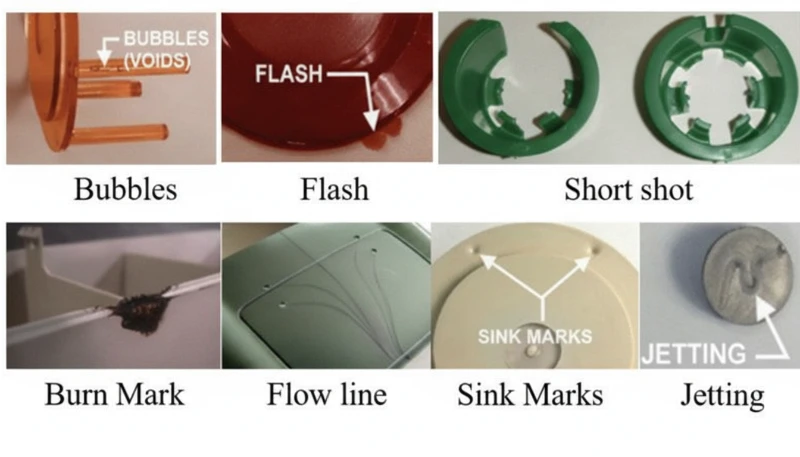
Final Quality Control (FQC): After molding is complete, parts undergo a full dimensional inspection against the drawing, cosmetic inspection under controlled lighting, and functional testing if applicable. This is where you catch the batch-level issues — sink marks that appeared halfway through the run, color variation between cavities, or flash that developed as the mold wore in.
Outgoing Quality Control (OQC): Before anything goes on the truck, packaging integrity, labeling accuracy, and a final visual sample check confirm the parts that arrive at your dock match the samples you approved.
What Materials Can a Chinese Injection Molding Manufacturer Handle?
200+ engineering materials is the minimum a top-tier manufacturer handles — PP, PE, ABS, PC, PA, POM, PBT, PEEK, PPS, and PEI.
Material handling capability isn’t just about “can we buy this resin.” It’s about knowing the drying requirements (PA66 needs 80°C for 4–6 hours before molding; PBT needs 120°C for 2–4 hours), the processing window (polycarbonate melts at 280–320°C and is extremely sensitive to moisture), and the post-processing behavior (glass-filled nylon shrinks differently than unfilled). In our factory, we’ve processed over 400 materials across 45 machines — and the drying requirement mistakes we’ve caught during IQC have saved countless production runs from moisture-related defects.
In our experience running 400+ materials, we’ve learned that if your project involves regulated materials (food-contact, medical-grade, UL-rated), ask for specific experience with those certifications. Running medical-grade PC is different from running commercial-grade PC — the documentation trail, lot traceability, and validation requirements are completely different.
How Much Does Injection Molding Cost in China vs. Other Countries?
Tooling in China is 40–60% cheaper than the US for injection molds.
In our Shanghai factory, we’ve tracked that a typical 4-cavity mold for an ABS enclosure runs about $8,500 with a 30-day lead time — the same mold quoted at $22,000 from a US toolmaker. But cost alone is misleading. Here’s a more honest comparison:
| 요인 | China | US / Western Europe |
|---|---|---|
| Mold cost (single cavity, simple) | $3,000–$8,000 | $8,000–$20,000 |
| Mold cost (multi-cavity, complex) | $15,000–$50,000 | $40,000–$120,000 |
| Unit price (10K volume, ABS) | $0.15–$0.40 | $0.50–$1.20 |
| Typical mold lead time | 25–45 days | 40–80 days |
| Shipping cost (per kg, air) | $3–$6 | Included |
| Shipping cost (per kg, sea) | $0.30–$0.80 | Included |
| Communication barrier risk | 중간-높음 | None |
| Intellectual property risk | Medium | 낮음 |
The real cost question isn’t “is China cheaper?” — it almost always is. The question is whether the total landed cost, including shipping, duties, communication overhead, and quality risk, remains favorable. For high-volume parts (10K+ units), the answer is almost always yes. For low-volume, high-mix production, the communication overhead can eat into the savings.
우리의 injection molding sourcing guide covers this cost analysis in more detail, including landed cost calculators and duty rate tables.
What Certifications Should Your Injection Molding Supplier Have?
ISO 9001 is the absolute minimum — without it, disqualify immediately; for medical add ISO 13485, for automotive add IATF 16949.
Here’s the problem with certification fraud: it exists. Some factories display certificates that have expired, or that belong to a different company in their group. Always verify the certificate number directly on the issuing body’s website (BSI, TÜV, SGS, Bureau Veritas). The verification takes five minutes and eliminates a surprising number of fraudulent claims.
Beyond ISO, ask about material-specific certifications if they matter for your industry: UL94 for flame retardancy, FDA compliance for food-contact materials, USP Class VI for medical biocompatibility. A factory that proactively mentions these is probably one that has been through a real customer audit before.
““ISO 9001 certification alone does not guarantee consistent part quality — it guarantees a documented process exists.””True
ISO 9001 certifies that a factory has documented procedures and follows them. It does not certify that those procedures are good enough for your specific part. Always request sample inspection reports and first article inspection (FAI) data to verify actual output quality.
““A factory with ISO 13485 automatically meets all medical device manufacturing requirements.””False
ISO 13485 covers the quality management system for medical devices, but individual products still require specific validation (biocompatibility testing, sterilization validation, etc.). Think of ISO 13485 as the foundation — the product-specific testing is still your responsibility.
How Do You Manage Communication and Project Delivery with a China Manufacturer?
A dedicated English-speaking project manager is the single biggest predictor of success — factories with 30+ PMs typically respond within 24 hours.
Here’s what good communication looks like in practice:
DFM3 feedback within 3–5 business days of receiving your 3D model, with specific recommendations (not just “we can make it”)
주간 진행 사진 금형 제작 과정에서 강철 절단, EDM 및 조립 단계를 보여줍니다
""금형 절삭 전 DFM 검토를 요청하는 것은 전체 사출 성형 공정에서 가장 높은 투자 대비 수익률을 보이는 단계입니다.""True
DFM 검토는 강철이 절단되기 전에 설계 문제(언더컷, 얇은 벽체, 부적절한 드래프트)를 발견합니다. CAD 파일에서 벽체 두께 문제를 수정하는 데는 30분이 소요됩니다. 금형이 제작된 후 수정하는 데는 2–4주와 $2,000–$10,000의 수정 비용이 발생합니다.
""모든 중국 사출 성형 공장은 비슷한 의사소통 능력과 영어 실력을 가지고 있습니다.""False
의사소통 품질은 크게 다릅니다. 국내 판매에 집중하는 공장은 영어를 구사하는 직원이 전혀 없을 수 있는 반면, 수출 지향 공장은 전담 국제 비즈니스 팀에 투자합니다. 두 공장 간 프로젝트 결과의 차이는 상당합니다.
T1 샘플 보고서 부품 사진뿐만 아니라 치수 데이터와 함께
명확한 개정 추적 — 모든 금형 수정 사항을 수정 전/후 치수와 함께 문서화
그리고 나쁜 의사소통은 다음과 같습니다: 치수 문제에 대해 이메일을 보내면, 3일 후 "귀하께서, 저희가 확인하고 곧 답변 드리겠습니다"라는 답변을 받고, 그 후 일주일 동안 소식이 없습니다. 그런 패턴은 일반적으로 무역 회사가 귀하의 메시지를 실제 공장에 전달하고, 공장이 기술적 문제를 이해하지 못하며, 아무도 그것을 인정하려 하지 않는다는 것을 의미합니다.
FAQ: Plastic Injection Molding Manufacturer China
중국에서 사출 성형의 최소 주문량(MOQ)은 어떻게 되나요?
중국에서 사출 성형의 MOQ는 일반적으로 부품 복잡성과 재료에 따라 1,000–10,000개 범위입니다. 일부 제조업체는 100개까지의 프로토타입 생산을 제공하지만, 설정 및 재료 최소량 때문에 1,000개 미만 단위에서는 단가가 크게 증가합니다.
중국에서 사출 금형 제작에는 얼마나 걸리나요?
중국의 표준 사출 금형 리드 타임은 단일 캐비티 금형의 경우 25~45일, 다중 캐비티 또는 복잡한 금형의 경우 40~60일입니다. 15~20일의 긴급 금형 제작도 가능하지만 일반적으로 시험 주기 수가 줄어들어 초기 생산 불량 위험이 증가합니다.
주문 전에 중국 사출 성형 공장을 방문할 수 있을까요?
네, 대부분의 합법적인 공장은 현장 방문을 환영하며 2~3일 전 통지로 공장 견학을 준비할 수 있습니다. 부품 도면과 재료 사양을 가져오세요 — 좋은 공장은 방문 중 제조 가능성에 대한 즉각적인 피드백을 제공할 것입니다.
중국에서 제조할 때 지적 재산권을 어떻게 보호하나요?
기술 데이터를 공유하기 전에 중국에서 설계 특허를 등록하고, NNN(비공개, 비사용, 비우회) 계약을 체결하며, 서양 OEM과 확립된 수출 기록을 가진 공장과 협력하세요. ISO 인증을 받고 수출 중심 제조업체와 함께하면 IP 위험이 크게 감소합니다.
중국 사출 성형 공장은 어떤 결제 조건을 수락하나요?
표준 결제 조건은 금형 제작에 대해 30~50%의 선금이 필요하며, 잔금은 T1 샘플 승인 후 지급됩니다. 생산 주문은 일반적으로 30% 선금과 출하 전 70% 지불이 필요합니다. 확립된 거래 관계에서는 6~12개월간 꾸준한 주문 후 net-30 또는 net-60 조건을 적용받을 수 있습니다.
중국 사출 성형 공장은 DFM 지원을 제공하나요?
네, 대부분의 중견 및 대형 중국 사출 금형 업체는 금형 견적 프로세스의 일환으로 DFM 피드백을 제공합니다. 사내 금형 설계 팀을 보유한 공장은 일반적으로 금형 제작을 외부에 의뢰하는 공장보다 실행 가능한 피드백을 더 많이 제공합니다.
중국에서 사출 성형된 부품의 일반적인 결함률은 어떻게 되나요?
잘 운영되는 중국 사출 성형 공장의 초회 양품률은 92~98%로 서구 제조업체와 비슷합니다. 그러나 공정 관리가 미흡하거나 건조 장비가 부족하거나 원자재 조달이 일관되지 않은 공장에서는 불량률이 5~15%까지 치솟을 수 있습니다. 높은 초회 양품률은 공정 관리의 가장 명확한 지표입니다.
Final Word
간단한 규칙: 중국의 사출 성형 공장이 (1) 귀하의 부품에 적합한 토너 범위의 기계, (2) 실제 EDM 및 CNC 장비를 갖춘 사내 금형 제작, (3) 최소 ISO 9001 인증, (4) 귀하의 DFM 피드백을 논의할 수 있는 영어를 구사하는 엔지니어를 보여줄 수 있다면, 그들은 진지한 대화를 나눌 가치가 있습니다. 이 네 가지 중 하나라도 부족하다면 계속 찾아보세요.
ZetarMold는 2005년부터 상하이에서 사출 성형을 운영해 왔습니다. 90톤부터 1850톤까지 45대의 기계를 갖추고 있으며, 내부에서 금형을 제작합니다(월 100+ 세트). 30명 이상의 영어를 구사하는 프로젝트 관리자가 명확한 커뮤니케이션을 유지합니다. 단일 캐비티 프로토타입 금형부터 의료용 PC를 사용하는 16 캐비티 생산 도구까지 — 우리는 이전에 수행했으며, 검사 보고서를 제공할 수 있습니다.





 EN
EN  ES
ES  FR
FR  DE
DE  PT
PT  AR
AR  RU
RU  JA
JA  KO
KO  IT
IT  NL
NL  TR
TR  PL
PL 