

You submitted a CAD file for quotation on Monday. By Wednesday you have the quote, but the lead time reads “25–30 working days for tooling, 15–20 working days for first production run.” Your product launch is in eight weeks. Is that timeline realistic? Where does each week go? And which parts can you compress if you negotiate the right terms?
This article breaks down every phase of the injection molding lead time — from DFM review through mold manufacturing, sampling, and production — with specific time ranges for each step. I will also explain which phases are fixed (physics and machining time) and which are negotiable (scheduling priority, overtime, parallel processing). The goal is to give you enough detail to plan your project timeline with confidence, and to push back when a supplier quotes lead times that are longer than necessary.
- Total injection molding lead time ranges from 4 to 12 weeks
- Mold manufacturing consumes 60–70% of the total lead time
- Aluminum tooling cuts mold build time by 40–50%
- Sampling and approval typically adds 5–10 working days
- Parallel processing can save 2–3 weeks on urgent projects
What Is the Typical Lead Time for Injection Molding?
A standard injection molding project — from approved CAD to first production shipment — takes 6–10 weeks for a single-cavity steel mold, and 4–7 weeks for a single-cavity aluminum mold. Multi-cavity molds, overmolding tools, and molds with complex side actions add 2–4 weeks to the tooling phase. Production lead time after mold approval runs 2–4 weeks depending on order quantity, material availability, and machine scheduling.
These ranges assume the buyer responds to DFM review comments and sample approval requests within 24–48 hours. Every day of delayed feedback adds a day to the schedule. In our experience, the single biggest cause of missed deadlines is not mold manufacturing delays — it is the back-and-forth between buyer and supplier during DFM review and sample approval.
What Are the Phases of Injection Mold Manufacturing?
Mold manufacturing breaks into seven distinct phases, each with a predictable time range. Understanding these phases helps you identify where your supplier can compress the schedule and where they cannot.
| Phase | Duration | Compressible? |
|---|---|---|
| DFM Review & Mold Design | 3–7 days | Yes (fast buyer feedback) |
| 자재 조달 | 3–10 days | Partially (standard steel in stock) |
| CNC Roughing & Finishing | 7–15 days | Limited (machining time) |
| EDM & Wire Cutting | 3–7 days | Limited |
| Polishing & Assembly | 3–5 days | Partially |
| Mold Trial (T1 Sampling) | 1–3 days | No (requires machine time) |
| Dimensional Inspection | 1–2 days | 아니요 |
The longest single phase is CNC machining, which cannot be compressed much beyond running overtime shifts. The DFM review phase is where most time is wasted — not because the supplier is slow, but because the buyer takes days to respond to design change requests. A DFM review that should take 3 days can easily stretch to 10 days if the buyer’s engineering team reviews changes in weekly meetings instead of in real time.
How Long Does Each Mold Type Take to Build?
Mold type and complexity directly determine the build timeline. A single-cavity, open-and-shut aluminum mold can be sampled in 7–10 business days. A single-cavity steel mold with the same geometry takes 15–20 days. Add side-action slides and you add 5–10 days. Add a second cavity (family mold or multi-cavity) and you add another 5–7 days per additional cavity.
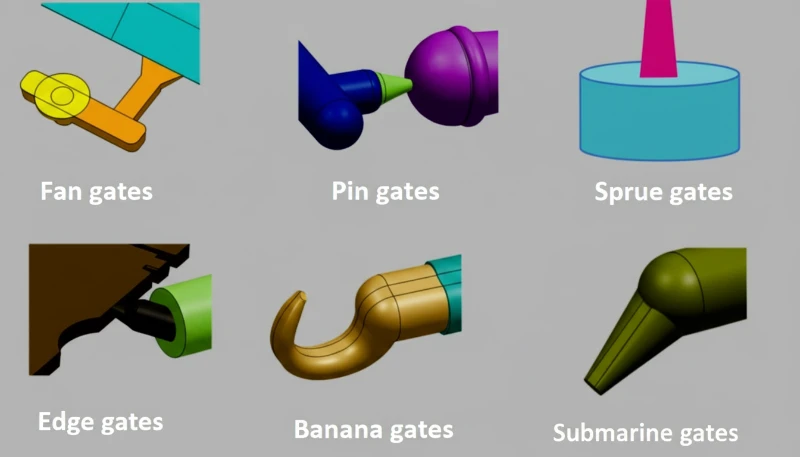
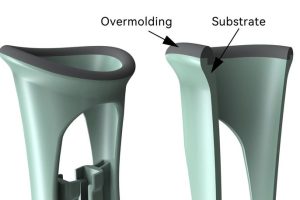
Overmolding tools take 30–45 days because they require two cavity sets (or a rotary mechanism) and must be tested in two stages — first the substrate shot, then the overmold shot. At our Shanghai facility, we build 100+ molds per month and dedicate specific production lines to overmolding tools to maintain throughput despite the added complexity.
“Choosing aluminum tooling instead of steel can reduce mold build time by 40–50%.”True
Aluminum machines 3–5x faster than hardened steel, requires no heat treatment, and polishes faster. A single-cavity aluminum mold that takes 7 days to cut would need 15–20 days in P20 steel and 20–25 days in hardened H13. The trade-off is shot life: aluminum is best for 1,000–10,000 shots versus 500,000+ for hardened steel.
“A supplier that promises 7-day mold delivery for a complex multi-cavity steel mold is being realistic.”False
A multi-cavity steel mold with side actions physically cannot be machined, EDM’d, polished, assembled, and sampled in 7 days. That timeline is achievable only for single-cavity aluminum molds with no side actions. Suppliers who quote unrealistically fast steel mold timelines are either cutting corners on quality or planning to deliver late.
How Does Sampling and Approval Affect the Timeline?
After the mold is built, sampling (also called T1 — first trial) adds 3–7 working days to the timeline. The mold is mounted on a press, parameters are set, and 50–200 sample shots are run. These parts are then measured against the CAD model using CMM equipment, and dimensional data is reported to the buyer for approval.
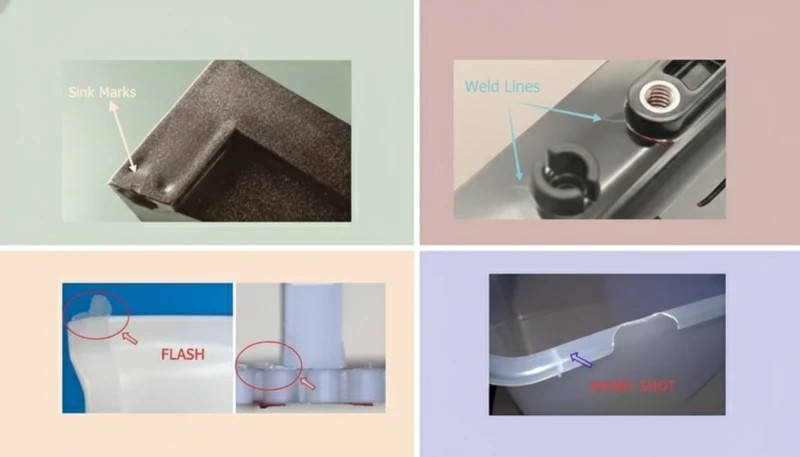
In practice, about 60% of first trials require at least one mold modification before the parts pass dimensional inspection. The most common modifications are: steel safe adjustments (adding or removing material from cavity dimensions), gate size changes, and vent additions. Each modification cycle adds 3–5 working days — and there is usually only one modification cycle, because experienced mold makers build in steel-safe margins on the first cut.
The key to fast sample approval is clear acceptance criteria defined before the mold is built. If you specify “full dimensional report required before approval” at the quotation stage, the supplier can schedule CMM time in advance and deliver the report within 24 hours of the trial. If you leave the criteria vague, the back-and-forth over what constitutes an acceptable part adds days or weeks.
What Determines Production Lead Time After Mold Approval?
Once the mold is approved (T1 samples pass, or buyer signs off), production lead time depends on four factors: order quantity, material lead time, machine scheduling, and post-processing requirements (assembly, painting, plating).
For standard engineering resins (ABS, PP, PC, PA6) in natural color, material is usually in stock and production can start within 3–5 days of approval. For specialty grades (flame-retardant, glass-filled, medical-grade, custom colors), material procurement adds 7–14 days. Always confirm material availability before quoting your customer a delivery date.

Machine scheduling is the next variable. A factory running 45 machines has more scheduling flexibility than one running 10. At ZetarMold, our tonnage range (90T–1850T) covers most part sizes, which means your mold does not sit in a queue waiting for the one machine that fits — there are usually 3–5 candidate machines available within the required tonnage band. For urgent orders, we run overtime shifts on dedicated machines to compress the production window.
“Defining clear acceptance criteria before mold build begins can save 1–2 weeks of back-and-forth during sample approval.”True
When both parties agree on what constitutes a conforming part (dimensional tolerances, surface finish standards, material certifications) before cutting steel, the sample review becomes a binary pass/fail check rather than a negotiation. Suppliers can schedule inspection resources in advance, and the buyer’s engineering team knows exactly what data they will receive.
“Production lead time is the same regardless of order quantity.”False
A 500-piece order might run in a single shift (8–12 hours of machine time plus setup). A 100,000-piece order requires continuous production over multiple days or weeks, consuming machine capacity that could otherwise serve other customers. Large orders often require dedicated machine scheduling, and the supplier needs to fit them into the production calendar alongside existing commitments.
How Can You Reduce Injection Molding Lead Time?
The most effective lead time reduction strategies target the phases that are compressible: DFM review, material procurement, and scheduling. Here are the tactics that work in practice, ranked by impact.
1. Respond to DFM feedback within 24 hours. This alone can save 5–10 days on a typical project. Assign a single decision-maker who can approve design changes without waiting for committee meetings.
2. Use aluminum tooling for parts under 10,000 units. Aluminum cuts 40–50% off the mold build time and provides perfectly functional parts for bridge production or low-volume runs.
3. Pre-order materials during mold design. Do not wait for the mold to be finished before ordering resin. Place the material order when the mold design is approved — materials arrive while the mold is being cut, eliminating the procurement gap.
4. Run DFM review and mold design in parallel with material procurement. These two streams are independent and should not be sequential.
5. Choose a supplier with in-house tooling and production under one roof. Shipping a mold between a tooling shop and a molding factory adds 3–5 days of logistics. When the mold maker and the molder are the same company, the mold goes from the tooling bench to the press in hours, not days.
What Is a Realistic End-to-End Timeline Example?
Let me walk through a real project timeline for a single-cavity steel mold producing 5,000 parts in glass-filled nylon (PA6-GF30). This is a typical medium-complexity industrial component — roughly 120mm × 80mm × 40mm with two side-action slides, a brass threaded insert, and a polished A-surface.

Week 1: DFM review and 금형 설계1. The engineering team reviews the CAD file, identifies draft angle issues on two features, and proposes a gate location. Buyer approves the design with one modification. Material order for PA6-GF30 is placed simultaneously.
Weeks 2–3: CNC machining, EDM for the slide pockets, and wire cutting for the insert pockets. Steel blocks are roughed on CNC, finished on precision grinders, and the slide mechanism is fitted. The mold base is assembled and aligned.
Week 4: Polishing (SPI A-2 on the A-surface, EDM finish on B-surface), final assembly, and mounting on a 200T press for T1 sampling. First shots are run, 50 samples pulled, and CMM measurement begins.
Week 5: Dimensional report reviewed by buyer. One steel-safe adjustment needed (cavity depth +0.05mm). Mold is pulled, modified, re-polished, and re-sampled (T2) within 4 working days. T2 samples pass. Buyer approves.
Week 6: Production run. 5,000 parts molded, 100% visual inspection, random dimensional checks per AQL sampling plan. Parts packed and shipped FOB Shanghai.
Total: 6 weeks from CAD approval to shipment. With aluminum tooling and a simpler part (no slides), this compresses to 3–4 weeks.
With 8 senior engineers and an in-house 사출 성형2 mold manufacturing facility producing 100+ mold sets per month, ZetarMold handles the entire process — DFM, mold build, sampling, production, QC, and shipping — from our Shanghai factory. For projects that need it, our 30+ English-speaking project managers provide daily progress updates so you always know exactly where your mold stands in the schedule.
Frequently Asked Questions About Injection Molding Lead Time
How Long Does It Take to Make an Injection Mold?
A single-cavity steel mold takes 15–25 business days to build. A single-cavity aluminum mold takes 7–10 days. Multi-cavity molds, molds with side actions, or overmolding tools add 5–15 days depending on complexity. The CNC machining phase is the longest single step and cannot be compressed significantly.

Can Injection Molding Lead Time Be Reduced to Under 2 Weeks?
Only for simple parts with aluminum tooling. A single-cavity aluminum mold without side actions can be built and sampled in 7–10 business days, with production parts following in 3–5 days. For anything more complex, 3 weeks is the realistic minimum.
What Causes Injection Molding Delays?
The three most common causes are: slow buyer feedback on DFM changes or sample approvals, material procurement delays for specialty resins, and factory scheduling conflicts during peak season (typically Q3 and Q4). Internal miscommunication between the buyer’s purchasing and engineering teams also contributes significantly.
How Does Mold Complexity Affect Lead Time?
Each side-action slide adds approximately 5–7 days to the mold build. Lifters add 3–5 days. Threaded inserts (unscrewing mechanisms) add 7–10 days. Multi-cavity molds add 3–5 days per additional cavity. A mold with two slides and a lifter will take roughly twice as long as an open-and-shut mold of the same size.
What Is the Difference Between T1 and T2 Sampling?
T1 (first trial) is the initial mold test run. T2 is the second trial after any modifications identified during T1. About 60% of molds require at least one modification cycle. Each trial adds 3–5 working days to the schedule. Experienced mold makers build in steel-safe margins to minimize the number of modification cycles.
Does Order Quantity Affect Production Lead Time?
Yes. A 500-piece order might run in a single shift (same-day completion after setup). A 50,000-piece order requires scheduling across multiple days or weeks of production time, which must be coordinated with other orders on the machine. Production lead time scales roughly linearly with quantity above 5,000 pieces.
How Fast Can You Get a Quote for Injection Molding?
Most suppliers provide initial quotations within 24–72 hours of receiving a 3D CAD file and specification sheet. Detailed quotations including 소량 사출 성형3 options and timeline commitments typically take 3–5 business days because they require DFM analysis and mold design feasibility assessment.
-
금형 설계 refers to the engineering process of creating the cavity, core, cooling channels, and ejection system for an injection mold, directly affecting part quality and production efficiency. ↩
-
사출 성형 is a manufacturing process in which molten thermoplastic resin is injected under pressure into a metal mold cavity, cooled to solidify, and ejected as a finished part. ↩
-
소량 사출 성형 is a production approach using simplified or aluminum tooling to manufacture small batches of parts, typically 50 to 10,000 units, without the cost of full production steel molds. ↩


 EN
EN  ES
ES  FR
FR  DE
DE  PT
PT  AR
AR  RU
RU  JA
JA  KO
KO  IT
IT  NL
NL  TR
TR  PL
PL 