 コンテンツへスキップ

What Is the SPI Surface Finish Standard?
について SPI1 Surface Finish Standard is a four-grade system (A through D) that defines mold cavity surface quality.
See our supplier sourcing guide for RFQ prep and vendor qualification.
For a broader look at 射出成形金型設計, our pillar guide covers tooling structure, thermal control, and manufacturability tradeoffs.
The SPI Surface Finish Standard is a classification system used across 射出成形 projects to define cosmetic and tactile finish requirements on molded plastic parts. For buyers, it gives a shared language for quotation, mold polishing2, inspection samples, and final part approval.
- SPI surface finish is both a cosmetic requirement and a tooling-cost decision, not just a drawing note.
- Choose the finish together with resin, draft angle, steel grade, ejection layout, paint or texture needs, and inspection method.
- Lock the target finish during DFM so polishing, sampling, and final approval do not become late-stage cost or lead-time surprises.
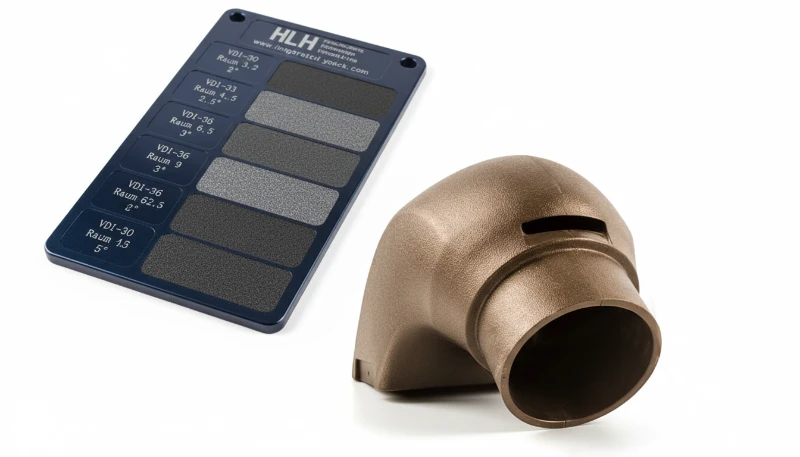
These standards provide a common language between industrial designers, engineers, mold makers, project managers, and quality teams. When everyone references the same SPI grade, it eliminates ambiguity about what a surface should look like, how much polishing effort is required, and what cost and lead time to expect. The SPI system also helps bridge communication gaps between OEMs and overseas mold shops, where different terminology or regional standards like VDI 3400 might otherwise create confusion.
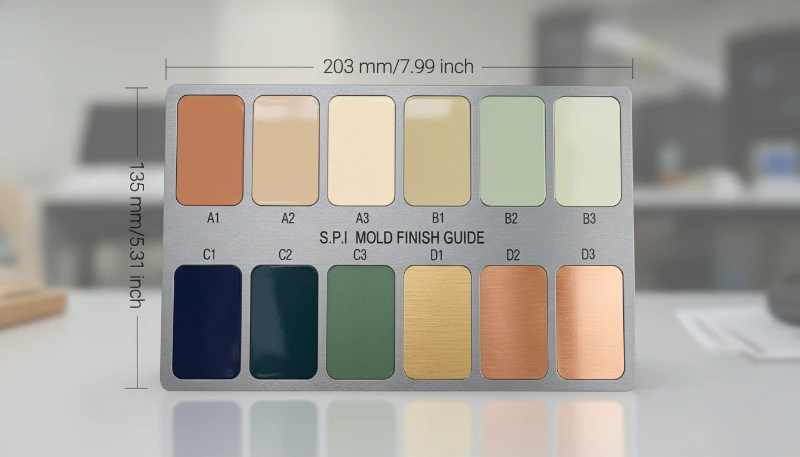
The standards are categorized into four primary grades, and each grade should be tied to a clear cosmetic target, inspection method, resin choice, and tooling budget before the mold quote is finalized:
Grade A (Gloss/Diamond Polish): Mirror-like finish for optical, transparent, or premium cosmetic parts where scratches and sink marks are highly visible.
Grade B (Semi-Gloss/Paper): Smooth finish without high reflection.
Grade C (Matte/Stone): Non-reflective, standard industrial finish.
Grade D (Textured/Blast): Rough finish created via dry blasting or Electrical Discharge Machining (EDM).
What Are the Technical Parameters of SPI Finishes?
The technical parameters for SPI finishes are surface roughness (Ra), polishing method, and minimum draft angle per grade.
To ensure manufacturability, engineers must adhere to specific roughness averages (Ra) and draft angle requirements. The following table details the twelve primary SPI designations.
| SPI Grade | Finish Description | Method of Application | Typical Ra (µm) | Typical Ra (µin) | Min. Draft Angle | Primary Use Case |
|---|---|---|---|---|---|---|
| A-1 | Super High Gloss | Grade #3 Diamond Buff | 0.012 – 0.025 | 0 – 1 | 1° | Lenses, mirrors, visors |
| A-2 | High Gloss | Grade #6 Diamond Buff | 0.025 – 0.05 | 1 – 2 | 1° | Cosmetic cases, electronics |
| A-3 | Normal Gloss | Grade #15 Diamond Buff | 0.05 – 0.10 | 2 – 4 | 2° | Household goods, opaque parts |
| B-1 | Smooth / Semi-Gloss | 600 Grit Paper | 0.05 – 0.10 | 2 – 3 | 1° | Medium polish parts |
| B-2 | Smooth / Medium | Dグレード | 0.10 – 0.15 | 4 – 5 | 1° | General molding, paintable parts |
| B-3 | Smooth / Low Gloss | 320 Grit Paper | 0.28 – 0.32 | 9 – 10 | 2° | Economy molding |
| C-1 | Matte / Fine | 600 Grit Stone | 0.35 – 0.40 | 10 – 12 | 1.5° | Die cast look, internal parts |
| C-2 | Matte / Medium | 400 Grit Stone | 0.80 – 0.95 | 25 – 28 | 1.5° | Structural parts, easy release |
| C-3 | Matte / Rough | 320 Grit Stone | 0.95 – 1.10 | 38 – 42 | 2° | Heavy utility parts |
| D-1 | Textured / Satin | Dry Blast (Glass Bead) | Varies | Varies | 2.5°+ | Satin finish handles |
| D-2 | Textured / Dull | Dry Blast (Alum. Oxide) | Varies | Varies | 3°+ | Industrial housing, grip |
| D-3 | Textured / Rough | Dry Blast (#24 Oxide) | Varies | Varies | 3°+ | Heavy texture, defect hiding |
注: Ra (Roughness Average)3 values are approximate and depend on the steel type and measuring equipment.
How Is the Polishing Process Executed Step-by-Step?
Achieving a specific SPI finish is a subtractive manufacturing process applied to the mold cavity steel.
Rough Machining: The mold core and cavity are CNC machined to the approximate shape. The surface is rough, often showing tool marks.
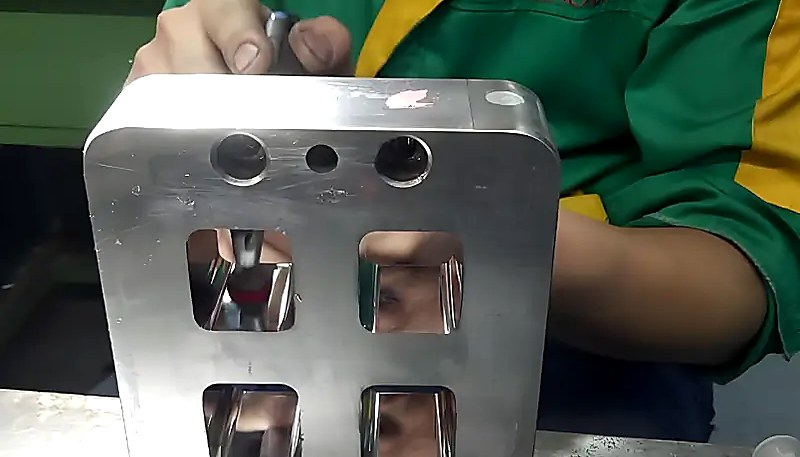
Stoning (Leveling): Toolmakers use abrasive stones to remove CNC tool marks and level the surface. This is the baseline for C-Grades.
Paper Polishing: If a smoother finish is required, the surface is sanded with progressively finer grit sandpaper (from 320 to 600 grit). This achieves B-Grades.
Factory Insight: In our Shanghai mold shop, our team checks SPI finish together with resin choice, draft angle, ejector layout, and inspection lighting. Our engineers compare finish targets against 400+ plastic material options and 47 injection molding machines before quoting. We also ask whether the surface will be painted, laser marked, touched by users, cleaned with chemicals, or approved under strong light, because those details decide whether mirror polishing adds value or just cost.
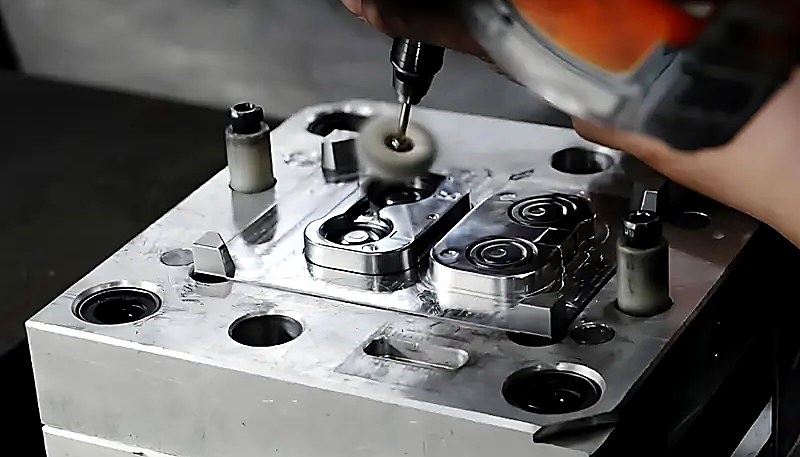
Diamond Buffing (Optional): について A-Grades, a diamond paste is applied to a rotary buffing tool. The steel is polished until it reaches optical reflectivity.
What Are the Pros and Cons of Each Grade Category?
The pros and cons of SPI grades are defined by the tradeoff between surface polish level, tooling cost, and defect visibility.
| SPI Category | メリット | デメリット |
|---|---|---|
| Grade A (Gloss) | Highest aesthetic appeal; optical clarity for transparent parts; perceived high value. | Highest tooling cost; prone to “vacuum seal” sticking; highlights surface defects (scratches, fingerprints, sink marks. |
| Grade B (Semi-Gloss) | Good balance of cost and aesthetics; suitable for painting or plating; removes machining marks. | Can still show some molding defects; requires manual polishing labor. |
| Grade C (Matte) | Low tooling cost (fastest to machine); excellent for part release; hides minor tool marks. | Can look “unfinished” or industrial; not suitable for high-end consumer facing surfaces. |
| Grade D (Textured) | Excellent for hiding sink marks and flow lines; improves grip; durable surface appearance. | Hardest to clean (fingerprint traps); requires significant draft angles for textured surfaces; difficult to repair if the mold is damaged. |
“Textured finishes (SPI D-series) generally require larger taper per unit of texture depth than polished finishes to prevent part sticking.”真
Textures create undercuts at a microscopic level; a general rule is 1.5 degrees of taper for every 0.001 inch of texture depth to prevent drag marks.
“A higher SPI finish grade (like A-1) always improves part ejection.”偽
Mirror finishes can actually create a vacuum seal effect between the part and the mold steel, causing parts to stick. This often requires air poppets or vacuum breakers to eject the part without deformation.
What Practical Tips Help Optimize Surface Finish Selection?
素材の互換性: Not every resin can reproduce every SPI grade. PC, PMMA, and ABS usually hold high-gloss A-grade finishes well, while PP, POM, and nylon can show different texture across flow direction. Glass-filled grades are hardest because fiber read-through appears above C-1. If you specify a Class A surface on 30% glass-filled nylon, budget for S136 or H13 steel, extra polishing, and realistic sample approval.
The Sink Mark Strategy: Sink marks are most visible on glossy A-grade surfaces, where even a 0.05 mm depression can stand out under inspection lighting. On matte C-grade or textured D-grade surfaces, the same sink is far less obvious. Use A-grade only on buyer-facing surfaces, then use C or D on hidden sides with ribs, bosses, or wall variation. This split-grade approach can reduce polishing cost by 30% to 50% while preserving perceived quality.
コスト管理: Polishing labor is a major variable cost in mold manufacturing. Moving from C-1 to A-1 can add 15% to 30% to mold cost because diamond buffing is slow skilled work. Deep ribs, undercuts, and complex parting lines increase that multiplier. Grade-map the part: A-grade on the primary cosmetic face, B-grade on secondary surfaces, and C or D on hidden faces. This keeps the mold competitive and reduces maintenance risk during production.
What Are Common Application Scenarios?
Common SPI application scenarios are matched to the product type: optical lenses use A-1, consumer housings use B-1, and tool grips use D-2.
SPI A-1 (Diamond #1): Automotive headlight lenses, optical prisms, medical pipettes, and premium cosmetic packaging where flawless clarity is the primary selling point. Any surface defect, micro-scratch, or flow line becomes immediately visible under direct light, so only the highest-grade steel polishing and meticulous process control can achieve this finish consistently. A-1 is also specified for medical device windows and fluid-path components where surface roughness could trap contaminants or affect fluid dynamics.
SPI A-2 (Diamond #2): Smartphone screens, high-end cosmetic compacts, automotive interior trim, and premium consumer product enclosures where visual appeal directly influences perceived product quality. A-2 delivers near-mirror reflectivity with slightly more tolerance for tool marks than A-1, making it a practical choice for visible surfaces that still demand a polished, professional appearance in competitive retail environments. Consumer electronics manufacturers frequently choose A-2 for display bezels and control panels that must look premium without incurring A-1 tooling costs.
When to Use Textured and Industrial Finishes
SPI B-1 (Paper #1): Keyboard keys, housings intended for painting, consumer electronics casings, and appliance covers. B-grade finishes provide enough smoothness for post-molding operations like painting, printing, or applying texture coatings without requiring the expense of diamond polishing. In our experience, B-1 is the most cost-effective grade when the part will receive secondary surface treatment after molding. This grade is also widely used for internal structural brackets and hidden components that still require a clean, consistent surface for assembly fit.
SPI C-3 and D Grades: Power tool handles, steering column covers, ruggedized laptop cases, outdoor equipment enclosures, and any application where a combination of grip, durability, and visual concealment of processing artifacts is more important than gloss. Textured D-grade finishes are particularly effective at hiding sink marks, weld lines, and flow marks that would be glaring on a polished surface, which is why they are the default choice for structural and industrial components.
How Do You Choose the Right SPI Finish Step by Step?
Choosing the right SPI finish is a five-step process: define function, check the polymer, review taper, set budget, then consult your molder.
Define Functionality: Does the part need to be transparent? (Choose A). Does it need grip or a tactile surface? (Choose D). Does it need to release easily from the mold with minimal draft? (Choose C). Start every SPI selection by writing down the functional requirement — not the appearance preference. In many cases, the cosmetic target conflicts with the functional need, and the earlier you surface that tension, the faster you resolve it with your tooling partner.
Check the Polymer: Is the material unfilled or glass-filled? If glass-filled, cap your expectations at B-3 or C-1 because the fiber orientation at the surface creates visible streaks that no amount of polishing can eliminate. Record resin grade, filler percentage, color, gloss target, and sample swatches in your SPI specification document so there is no ambiguity between buyer and molder.
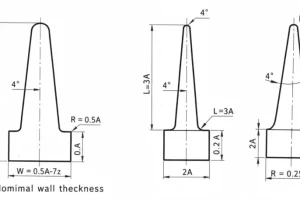
Review Taper Requirements: Check your CAD model. If you have 0 degrees or 0.5 degrees taper on vertical walls, you cannot use a texture (D-grade) because the rough surface increases friction during ejection and will cause the part to stick or warp. You must add at least 1 to 3 degrees of draft for textured finishes, or switch to a polished finish that allows lower draft angles.
Determine Budget: If cost is the primary driver, specify SPI C-1. It is the standard machined finish that requires minimal post-processing and is achievable on standard P20 tool steel. Upgrading from C-1 to A-2 can add 20% to 40% to the mold cost because of the additional polishing hours. Always get a tooling quote with the exact SPI grade specified, not just a default finish level.
Consult the Molder: 最終決定前に、選択した仕上げがH13対P20などの特定の金型鋼材を必要とするかどうかを射出成形業者に確認してください。これはリードタイムとコストに影響する可能性があります。経験豊富な成形業者は、その仕上げが選択した樹脂と良好に相互作用するか、エジェクターピン痕が目標仕上げレベルで目立つか、および塗装やテクスチャリングオーバーレイなどの二次加工がベースのSPIグレードと互換性があるかについてもアドバイスできます。
「SPI仕上げの選択は、最終的な金型鋼材の研磨前に確認する必要があります。」真
仕上げの後期変更には、特にマットから高光沢表面への変更の場合、再研磨、再テクスチャリング、抜き勾配の再レビュー、および追加のサンプリング時間が必要となる場合があります。
「すべてのSPI表面仕上げは、同じ離型テーパーとエジェクション設定を必要とします。」偽
光沢、マット、およびテクスチャ仕上げは離型時の挙動が異なるため、テーパー、研磨方向、樹脂収縮、およびエジェクション力は一緒にレビューする必要があります。
What SPI Finish FAQs Do Buyers Ask?
SPIとVDI 3400規格の違いは何ですか?
SPIは北米の射出成形プロジェクトで一般的に使用され、VDI 3400はヨーロッパの金型コミュニケーションで広く使用されています。どちらも表面性状を記述しますが、測定方法とテクスチャファミリーが異なるため完全には対応していません。図面に一つの規格が記載され、サプライヤーが別の規格を使用している場合は、換算表、テクスチャプレート、または承認済みサンプルを要求してください。これにより、デザイナー、金型メーカー、最終検査員、および買い手が生産承認時に同じ表面を異なる解釈をする状況を回避できます。
金型製作後に表面仕上げを変更できますか?
場合によっては可能ですが、変更の方向性は非常に重要です。研磨面からより粗いテクスチャへの変更は、工具を研磨後にブラスト処理、エッチング、またはテクスチャ加工できるため、多くの場合可能です。粗面またはEDM面から高光沢仕上げへの変更は、鋼材を除去して再研磨する必要があり、重要な寸法を変更する可能性があるため、はるかに困難です。深いリブ、シャットオフ、およびテクスチャ加工された垂直壁は、追加の抜き勾配レビューとサンプリングを必要とする場合もあります。そのため、コストのかかる手直しと遅延を避けるために、最終的な仕上げの意図は、初回サンプリング後ではなく、DFM中に確定させるべきです。
表面仕上げはサイクルタイムに影響しますか?
はい。高光沢仕上げは、引っかき傷や外観上のストレスを避けるため、より慎重な冷却、より遅いエジェクション、およびより良いベンティングを必要とする場合があります。テクスチャ仕上げは、抜き勾配が小さすぎると部品の粘着を増加させ、エジェクションを遅くしたり、スカッフィングを引き起こしたりする可能性があります。表面仕上げは、光沢部品では外観不良がより見やすくなるため、検査基準にも影響します。生産計画において、エンジニアはサンプリング前に、仕上げ、樹脂、抜き勾配角、エジェクション配置、許容欠陥基準、想定される取扱い痕、およびサイクルタイム目標を総合的にレビューする必要があります。
塗装プラスチック部品に最適なSPI仕上げはどれですか?
SPI B-1またはB-2は、塗装プラスチック部品の実用的な出発点となることが多く、表面は塗料の密着性に十分な滑らかさを持ちながら、ミラーグレードA仕上げほど高価ではありません。正確な選択は、塗料システム、樹脂タイプ、プライマー適合性、期待される光沢レベル、および塗装前に部品が研磨されるかどうかに依存します。非常に粗い表面は塗料を通してテクスチャを伝達する可能性があり、一方で過度に光沢のある表面はプライマーの密着性を低下させる可能性があります。特に多層塗装やメタリック仕上げの場合、量産に着手する前に、サンプル部品で塗装プロセスを必ず確認してください。
金型鋼材は最終的なSPI仕上げに影響しますか?
もちろんです。すべての鋼材グレードで全ての仕上げを実現することはできません。ミラー仕上げには通常、H13やS136などの高品質工具鋼と丁寧な研磨が必要ですが、柔らかい材料やアルミニウム工具では達成可能な表面品質が制限される場合があります。鋼材の硬度、清浊性、熱処理の均一性、溶接修復、EDM再凝固層はすべて最終的な外観に影響を与える可能性があります。重要な外観部品の場合、金型見積もりには、鋼材タイプ、仕上げ目標、検査方法、および金型が生産にリリースされる前に承認が必要なテクスチャや光沢サンプルを指定する必要があります。
SPI仕上げグレードは射出成形コストにどのような影響を与えますか?
SPI仕上げグレードは、金型コストに直接的かつ重要な影響を与えます。Cグレードのストーン仕上げからAグレードのダイヤモンド研磨に移行すると、金型製造時間が15〜30パーセント増加する可能性があります。なぜなら、各ステップアップには段階的に多くの手作業による研磨労力が必要となるからです。Aグレード仕上げには、より高品質の工具鋼、追加のサンプリングラウンド、および生産中のより厳格な外観検査基準も必要となる場合があります。予算に敏感なプロジェクトでは、エンジニアはしばしば、外観と総工具投資のバランスを取るために、可視面にはAグレード仕上げのみを指定し、非可視面または内部面にはCまたはDグレードを使用します。
What Is the Bottom Line on SPI Surface Finish Standards?
SPI表面仕上げ基準の結論は、このセクションで説明されている機能、制約、トレードオフによって定義されます。正しい SPI Surface Finish は単なる美的選択ではなく、金型鋼材、クリーンな離型に必要なテーパー、および金型の最終コストを決定します。一方、 SPI A-Grades offer premium, optical-quality looks, they come with higher maintenance and manufacturing costs. SPI C and D Grades プロジェクト? Injection Mold Complete Guide for a comprehensive overview.
Need a Quote for Your Injection Molding Project?
ZetarMoldのエンジニアリングチームから競争力のある価格、DFMフィードバック、生産タイムラインを入手してください。調達の背景については、当社の射出成形サプライヤー調達ガイドをご覧ください。
Request a Free Quote →




 EN
EN  ES
ES  FR
FR  DE
DE  PT
PT  AR
AR  RU
RU  JA
JA  KO
KO  IT
IT  NL
NL  TR
TR  PL
PL 