ゲートでの速度を低下させることで、せん断応力を最小限に抑え、溶融樹脂が乱流的に開口部を突き抜けるのを防ぎます。これは速度に基づく欠陥修正の中で最も効果的な方法の一つです。 射出成形 machine. Get it right, and you get shiny, dimensionally stable parts cycle after cycle. Get it wrong, and you’ll be chasing flash, short shots, sink marks, and warpage until the end of time. In our Shanghai factory, we’ve spent 20+ years dialing in speed profiles across machines from 90T to 1850T, and this guide distills what actually matters.
- Injection speed directly controls melt flow rate, cavity pressure, and part quality
- Multi-stage speed profiles outperform single-speed filling for most parts
- Thin-walled parts demand faster speeds; thick-walled parts need slow-fast-slow curves
- Speed adjustment can solve flash, short shots, jetting, and burn marks
- Material viscosity and gate design dictate your starting speed range
What Is Injection Speed in Injection Molding?
Injection speed in injection molding is defined by the function, constraints, and tradeoffs explained in this section. If you are comparing vendors or planning procurement, our injection molding supplier sourcing guide covers RFQ prep, qualification, and commercial risk checks.
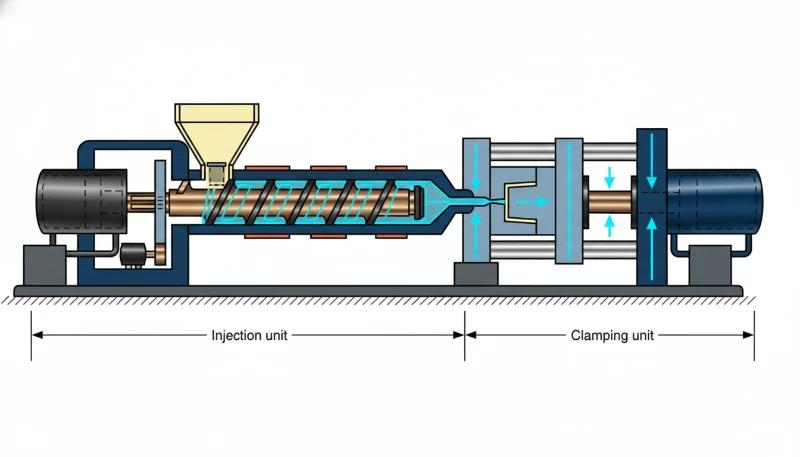
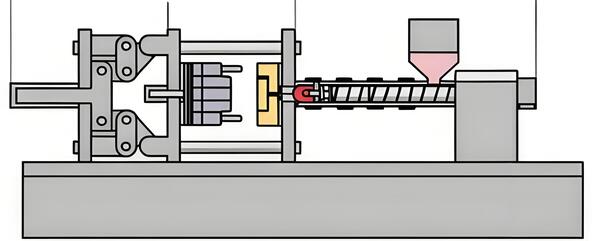
Injection speed measures how fast the screw moves forward during the filling phase, expressed in millimeters per second (mm/s) or cubic centimeters per second (cm³/s). It determines how quickly molten polymer fills the mold cavity before the material begins to solidify. On a hydraulic machine, the injection speed is controlled by the flow rate of hydraulic oil to the injection cylinder. On an all-electric machine, a servo motor drives the screw, and speed is set directly as a digital parameter.
The relationship between speed and part quality is not linear. Below a certain threshold, the melt cools too much during filling, creating weak weld lines, flow marks, and uneven density. Above another threshold, the melt enters the cavity turbulently, trapping air, causing jetting, and generating excessive shear heat that can degrade the polymer. The sweet spot — and it is different for every mold and material — is where the melt front advances steadily, fills uniformly, and packs out completely.
In practice, injection speed interacts with injection pressure, melt temperature, and mold temperature. You cannot optimize speed in isolation. But speed is usually the first parameter to tune after you have set barrel temperatures and clamp force, because its effects on surface appearance and dimensional consistency are immediate and obvious.
In our Shanghai factory, we run 47 injection molding machines ranging from 90T to 1850T. Across thousands of production runs, we have found that injection speed is the single most impactful parameter to get right during initial process setup — more so than holding pressure or cooling time for most parts.
Why Does Injection Speed Matter for Part Quality?
Speed controls three critical outcomes: how the melt flows, how pressure transmits through the cavity, and how the part solidifies. When the melt enters too slowly, the polymer begins cooling before the cavity is full. This causes cold slugs and flow lines near the gate, weak knit lines where flow fronts meet, uneven density with the area near the gate packed and the far end underfilled, and higher residual stress from non-uniform cooling.
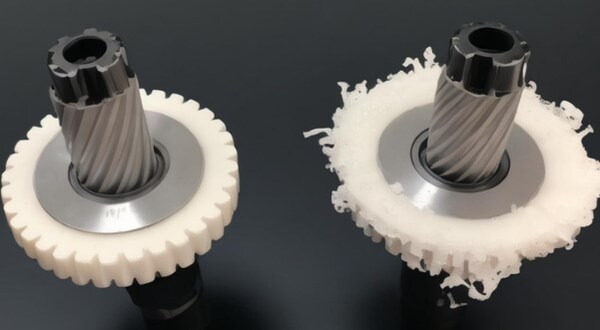
When the melt enters too fast, you get a different set of problems: jetting where the melt shoots through the gate like a fire hose instead of spreading in a smooth front, air traps from turbulent flow which cause burns and voids, flash at the parting line from the sudden pressure spike, and surface blemishes like silver streaks from moisture or gas.
The ideal speed keeps the melt front velocity constant throughout filling. Since the cross-sectional area of the cavity changes along the flow path, the screw speed needs to change too — which is exactly why multi-stage profiling1 exists. Each phase of filling demands a different speed to keep the melt front advancing at a consistent rate.

“Thin-walled parts generally require higher injection speeds than thick-walled parts.”真
Thin walls solidify in milliseconds. The melt must fill the entire cavity before the flow channel freezes off, requiring faster injection speeds — often 200 mm/s or higher for wall thicknesses under 0.5 mm.
“Injection speed and injection pressure are completely independent parameters.”偽
While machine settings are separate, increasing injection speed typically raises cavity pressure due to higher volumetric flow rate and increased shear heating.
What Factors Affect Injection Speed?
Several variables determine the optimal injection speed for a given part. Material viscosity is the first factor to consider. Low-viscosity materials like PP and PA flow easily and can be injected at moderate speeds. High-viscosity materials like PC and PMMA need higher injection pressure and often slower speeds to avoid excessive shear at the gate. Adding glass fiber increases viscosity further and makes the material more sensitive to speed-induced fiber orientation.
Wall thickness plays a decisive role. Thin-walled parts under 1 mm require high speed to fill before freeze-off. Thick-walled parts over 3 mm benefit from a slow-fast-slow profile to minimize sink marks and voids while still achieving reasonable cycle times. Gate type and size also matter — a pinpoint gate creates high shear at the entrance, so speed through the gate needs to be controlled, while a large edge gate can tolerate higher speeds.
Flow length is another key factor. Long flow paths require higher speed to maintain melt temperature. If the polymer cools mid-fill, you get short shots. A general rule: for every 100 mm of flow length, expect to increase speed by 10 to 20 mm/s to compensate for heat loss. Mold temperature also plays a role — a hotter mold allows slower speeds because the melt stays fluid longer.
Finally, machine capability sets the upper bound. The maximum injection speed depends on the machine hydraulic flow rate or servo motor RPM. A machine rated for 300 mm/s maximum may only deliver stable speed control between 20 and 250 mm/s. Understanding these factors together is essential for selecting the right injection speed definition2 for your specific application.
How Do You Control Injection Speed?
Modern injection molding machines offer three primary control methods. Proportional valve control uses electronically controlled hydraulic valves to regulate oil flow to the injection cylinder. The valve opening determines the screw speed. This method is common on mid-range hydraulic machines and provides good repeatability for most applications, with typical response time of 20 to 50 milliseconds.
Closed-loop servo control uses a high-resolution encoder on the screw to measure actual position and speed in real time. The controller adjusts the servo motor or proportional valve to match the setpoint. This gives plus or minus 0.1 percent speed accuracy and is essential for precision molding — especially medical, optical, and electronic parts where shot-to-shot consistency directly affects part quality.
Servo-electric direct drive eliminates hydraulics entirely. A ball-screw driven by a servo motor moves the injection unit. Speed control is inherently digital, with response times under 10 ms. These machines offer the most consistent shot-to-shot speed and the cleanest speed transitions between stages.
At the process level, most modern controllers let you program 5 to 10 speed stages. Each stage specifies a screw position and a target speed. The machine transitions between stages automatically as the screw advances, allowing you to slow down at the gate, speed up through the cavity, and slow down again at the end of fill — all in a single shot.
Across our 47 machines from 90T to 1850T, we use closed-loop speed control on every press. The difference between open-loop and closed-loop speed control is most visible on tight-tolerance parts — we have seen dimensional variation drop by 40 to 60 percent simply by switching to closed-loop injection speed profiling.
What Is Multi-Stage Injection Speed Profiling?
Multi-stage profiling is the practice of changing injection speed at specific points during the filling phase. Instead of running the screw at one constant speed, you program a speed curve that adapts to what is happening inside the mold. A typical 5-stage profile breaks the filling process into distinct phases, each with its own speed target.
Stage 1 is runner fill at high speed, typically 80 to 100 percent of maximum. The runner has no cosmetic or structural requirements, so speed is prioritized to minimize heat loss. Stage 2 is gate entry at slow speed, dropping to 20 to 40 percent as the melt passes through the gate. This prevents jetting, reduces shear stress, and avoids gate blush. For pinpoint gates on cosmetic parts, this stage is critical.
Stage 3 is cavity fill at fast speed, ramping back up to 60 to 90 percent once the melt has passed the gate and is spreading through the cavity. This stage typically fills to 70 to 85 percent of the part by volume. Stage 4 is the transition phase at medium speed, reducing to 30 to 50 percent as the cavity approaches full, creating a smooth transition to the packing phase and preventing overpacking near the gate.
Stage 5 is end of fill at slow speed, dropping to 10 to 20 percent for the final filling. This prevents flash, allows trapped air to escape through vents, and creates a clean transition to holding pressure. The exact speed percentages and position switchover points depend on the mold and material. Finding the optimal profile is part of the scientific molding methodology3 where you run short shots at different speeds, measure the fill pattern, and iterate.

“Slowing injection speed near the gate can help reduce jetting and gate blush defects.”真
Reducing speed at the gate minimizes shear stress and prevents the melt from shooting through the opening turbulently. This is one of the most effective speed-based defect fixes.
射出速度の定義:偽
Multi-stage speed profiling consistently outperforms single-speed filling. Constant speed causes jetting at the gate, flash at end of fill, or both — depending on the chosen speed.
What Problems Can Speed Adjustment Solve?
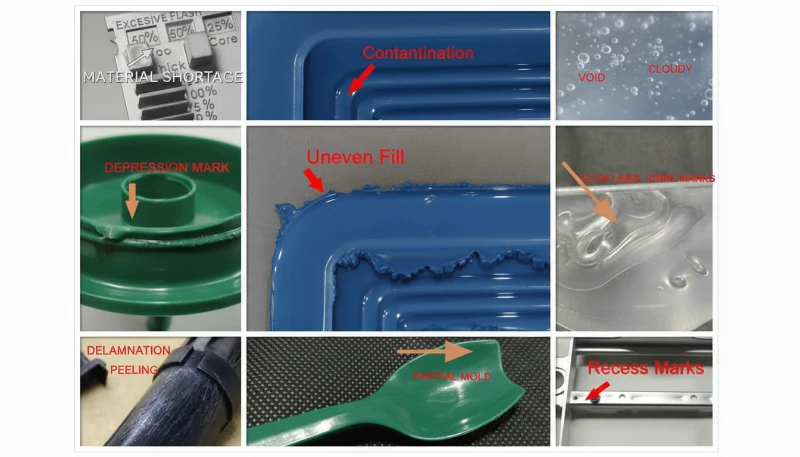
Injection speed is often the first parameter to adjust when troubleshooting defects. Flash is one of the most common issues — when the melt overflows the parting line, it is usually because the cavity was overpacked at the end of fill. The solution is to reduce speed in the final stage, allowing the machine to transition smoothly to holding pressure without a pressure spike.
Short shots occur when the part is not filling completely because the melt is freezing before it reaches the end of the cavity. The solution is to increase speed during the cavity fill stage, which keeps the melt hotter and flowing further. Jetting produces worm-like lines on the part surface near the gate when the melt shoots through the gate in a narrow stream instead of spreading in a fan pattern. Slowing down at the gate entry gives the melt time to establish a proper flow front.
Burn marks appear as dark streaks or charred areas, usually near the end of fill or at blind pockets, caused by compressed superheated air. The solution is to slow down the end-of-fill speed to give air time to escape through vents before the cavity seals. Sink marks are localized depressions on the part surface above thick sections or ribs, and while sink is primarily a packing issue, faster injection speed helps by delivering hotter material to thick sections.
Flow lines are visible ripples or waviness on the part surface caused by inconsistent melt front velocity. The solution is to adjust the speed profile to maintain a steady melt front speed, typically by increasing speed as the flow path widens. Understanding material viscosity curves helps predict which speeds will produce the cleanest flow for each polymer type.
How Do You Optimize Injection Speed for Different Materials?
Every polymer has a viscosity curve that dictates how it responds to injection speed. The table below provides a practical reference for common materials, showing typical speed ranges and the key considerations for each one. Use these ranges as starting points and refine through short shot analysis during process setup.
| 素材 | Typical Speed Range | 稼働中のプラスチック射出成形機が部品を生産中 |
|---|---|---|
| PP(ポリプロピレン) | 50-150 mm/s | Low viscosity; fast fill, moderate shear |
| PE(ポリエチレン) | 50-120 mm/s | Similar to PP; watch for warpage in thin walls |
| PA6/PA66 (Nylon) | 60-180 mm/s | Needs fast fill to prevent premature freeze |
| ABS | 40-120 mm/s | Medium viscosity; speed affects gloss uniformity |
| PC(ポリカーボネート) | 30-100 mm/s | High viscosity; shear-sensitive; avoid spikes at gate |
| PMMA (Acrylic) | 30-80 mm/s | Very high viscosity; optical clarity demands steady flow |
| POM (Acetal) | 50-150 mm/s | Fast crystallization; needs quick fill |
| PBT | 60-140 mm/s | Crystalline; speed affects crystallinity and shrinkage |
| Glass-filled (PA+GF) | 80-200 mm/s | High speed needed; watch fiber orientation |
| TPU | 30-80 mm/s | Low shear tolerance; slow speeds prevent degradation |
For glass-filled materials, higher injection speeds help maintain fiber length and improve mechanical properties. However, excessive speed causes fiber breakage at the gate, reducing the strengthening effect. The sweet spot is typically 100 to 150 mm/s for 30 percent glass-filled nylon. For heat-sensitive materials like PC and POM, the multi-stage approach is especially important — a sudden speed spike at the gate can generate enough shear heat to degrade the polymer.

What Are the Best Practices for Injection Speed Settings?
Based on two decades of production experience, here are the rules we follow. First, start with a decoupled molding approach — fill the cavity to 95 to 99 percent by volume using velocity control, then switch to pressure control via holding pressure. Do not try to fill and pack at the same time. Second, always profile multi-stage speed. Even for simple parts, use at minimum a 3-stage profile. The improvement in consistency is worth the setup time.
Third, use short shot analysis to find your profile. Set the machine to fill only part of the cavity, then gradually increase fill percentage while watching the flow pattern. Fourth, monitor cavity pressure, not just screw speed. What matters inside the 射出成形金型 is melt pressure and flow velocity — cavity pressure sensors give you the real picture.
Fifth, document your speed profiles. Every mold should have a documented speed curve as part of its process parameters. When you move a mold to a different machine, you will need to adjust speeds to match the new machine response characteristics. Sixth, re-validate after material lot changes — different lots of the same grade can have slightly different viscosity, and a 5 to 10 percent speed adjustment is often enough to compensate.
よくある質問
What is the typical injection speed range for injection molding?
Most injection molding applications use screw speeds between 20 and 300 mm/s, depending on part geometry, material viscosity, and wall thickness. Thin-wall packaging parts may run at 300 to 500 mm/s because the melt must fill the cavity before the thin sections solidify completely. Thick-wall structural parts typically use 30 to 80 mm/s, since the larger cross-section gives more time for the melt to flow before freezing. The exact range for a given part is determined through short shot analysis during process setup, where you gradually increase speed until the part fills completely without defects like flash or jetting.
How does injection speed affect injection pressure?
Faster injection speed requires higher injection pressure to maintain the volumetric flow rate through the nozzle, runner, and gate system. The relationship is approximately proportional — doubling the speed roughly doubles the pressure required, though shear thinning in the melt can reduce this effect at very high speeds. This is why monitoring both parameters during process setup is critical. If the machine hits its pressure limit before reaching the target speed, you will see a speed drop-off during filling that causes inconsistent part weight and dimensions. Using a machine with adequate pressure capacity for your target speed prevents this issue.
Can injection speed be too fast?
Yes, excessive speed causes several problems. Jetting through gates produces worm-like surface defects when the melt shoots through the opening instead of spreading in a controlled fan pattern. Trapped air from turbulent flow causes burn marks and voids near the end of fill or in blind pockets. Flash at the parting line results from the sudden pressure spike when the cavity fills too quickly. Shear degradation of the polymer from excessive friction at the gate can cause discoloration, splay, and reduced mechanical properties. The transition from filling to packing also becomes less stable, leading to inconsistent part weight and dimensions across production runs.
What is the difference between injection speed and injection rate?
Injection speed refers to the linear velocity of the screw measured in millimeters per second (mm/s), while injection rate is the volumetric flow rate measured in cubic centimeters per second (cm³/s). They are related by the screw cross-sectional area: injection rate equals speed multiplied by screw area. Engineers often use the terms interchangeably in casual conversation, but rate is more directly related to cavity filling dynamics because it accounts for the actual volume of material being delivered per unit time. When comparing processes across machines with different screw diameters, injection rate is the more meaningful metric.
How do you measure injection speed during production?
Modern machines measure screw position with a linear encoder and calculate speed in real time as the derivative of position. The machine controller displays actual speed alongside the setpoint, allowing operators to verify that the machine is hitting its target speeds during each shot. For process validation, cavity pressure sensors provide indirect confirmation that the melt front is advancing at the expected velocity — a sharp pressure rise indicates rapid filling, while a gradual rise indicates slower filling. Short shot analysis during setup provides visual confirmation of fill patterns and helps correlate speed settings with actual cavity filling behavior.
Does injection speed affect cycle time?
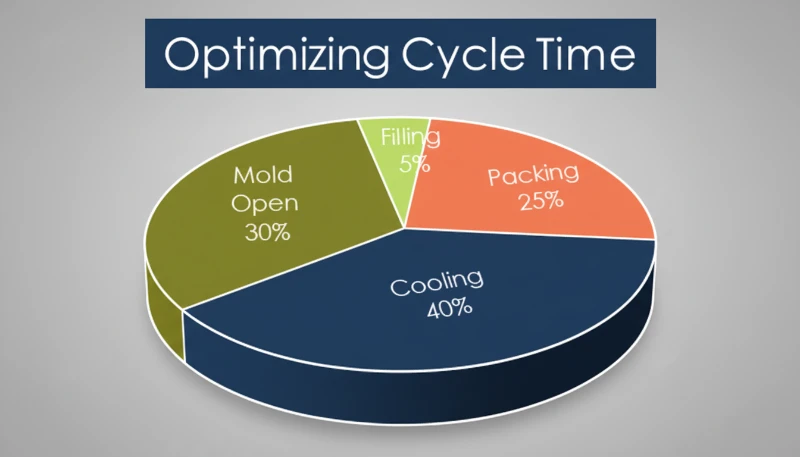
Yes, but the effect is usually smaller than people expect. The filling phase typically accounts for only 5 to 15 percent of total cycle time, with cooling time being the dominant factor at 50 to 70 percent for most parts. For standard-thickness parts, even a significant change in injection speed may only save or add a fraction of a second to the overall cycle. However, for thin-wall parts where filling time approaches 1 to 2 seconds, speed optimization can meaningfully reduce cycle time. In high-volume packaging production, shaving 0.5 seconds off cycle time through faster filling translates to significant cost savings over millions of cycles.
Need expert process optimization for your injection molding project? ZetarMold’s engineering team has 20+ years of experience across 47 machines and 400+ materials. Get DFM feedback, process recommendations, and competitive pricing — request a free quote.
-
multi-stage profiling: multi-stage profiling refers to multi-stage injection speed profiling is described in detail in Beaumont’s Runner and Gating Design Handbook as a key technique for controlling weld line quality and part consistency ↩
-
injection speed definition: マイクロ成形部品 精密射出成形 クローズアップ ↩
-
scientific molding methodology: scientific molding methodology refers to the scientific molding approach, developed by John Bozzelli, uses decoupled molding with systematic injection speed optimization and cavity pressure monitoring ↩