 コンテンツへスキップ

What Exactly Is a Multiple Cavity Injection Mold?
- 多キャビティ射出成形金型は、1ショットで複数の同一部品を生産し、単位当たりコストとサイクルタイムを劇的に削減します
- キャビティ数は2から128以上まであり、年間生産量、部品サイズ、およびプレストンネージに基づいて選択されます
- バランスの取れたランナー設計と均一な冷却は、すべてのキャビティで一貫した部品品質を実現するための2つの最大の要因です
- 初期の金型コストは単一キャビティ金型よりも高くなりますが、ROI(投資回収)は最初の生産ロット内で回収されることが多いです
- ZetarMoldは、キャビティ間重量バラツキが1%未満の最大128キャビティまでの多キャビティ金型を製造します
比較検討中の読者向けに、 射出成形2 選択肢について、本記事は 射出成形金型, プラスチック3 材料の挙動、サプライヤー評価、および品質管理の判断は、プロジェクトが設計から繰り返し可能な生産に移行できるかどうかを決定します。
For broader context, compare this topic with 射出成形金型設計、およびサプライヤー調達ガイド。
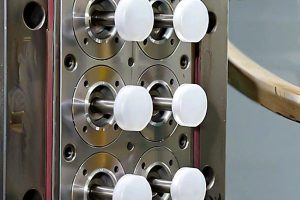
A multiple cavity injection mold is a tool that contains two or more identical cavities machined into the same mold base, allowing the press to produce multiple parts with every cycle. Instead of one shot yielding one part, a 16-cavity mold delivers 16 parts per shot—same resin, same cycle time, fraction of the cost per piece.
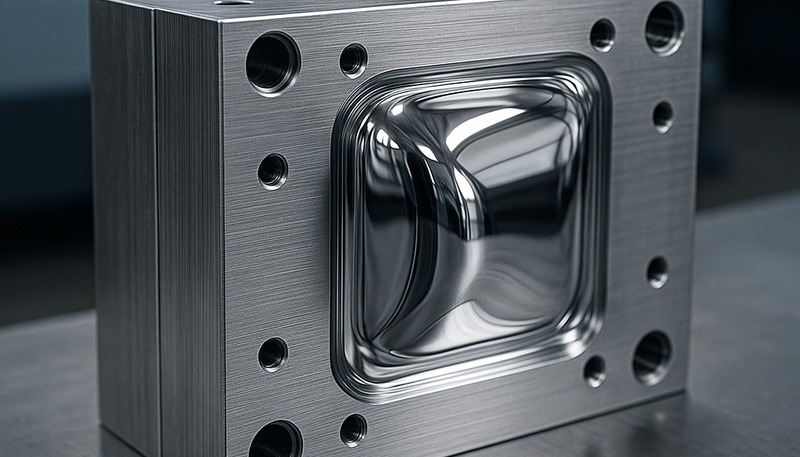
ZetarMoldの当社工場では、金型をキャビティ数で分類しています:単一キャビティ(1)、低多キャビティ(2〜8)、中多キャビティ(16〜32)、高多キャビティ(64〜128+)。適切なカテゴリーは、年間生産目標、プラスチック精密射出成形金型の設計、および利用可能なプレスサイズによって決まります。
The concept is straightforward, but the engineering behind it is anything but simple. Every cavity must fill at the same time, cool at the same rate, and eject without interference. When done right, a multi-cavity mold is the single most effective way to scale injection molding output without buying more machines.
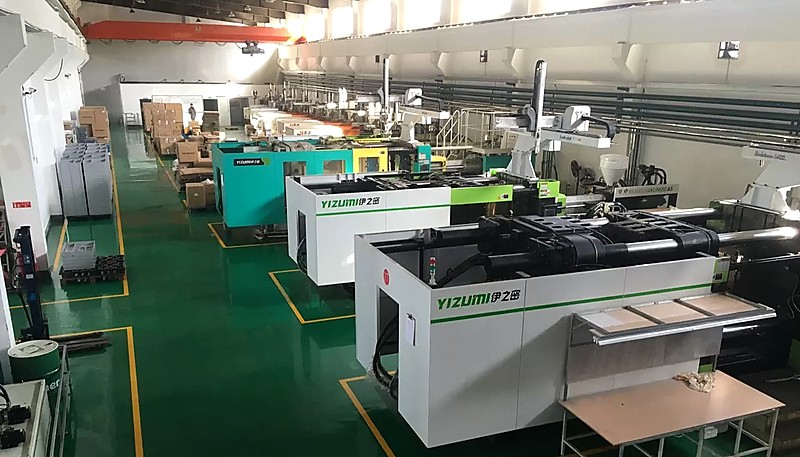
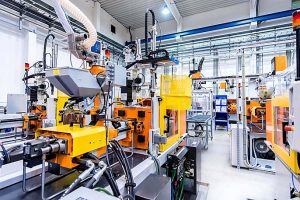
当社の上海工場では、90トンから1850トンまでの射出成形機47台を稼働しています。20年以上の経験と自社金型製造施設を活かし、各キャビティで一貫した部品品質を実現する多キャビティ金型を製造しています。
What Are the Key Design Parameters of a Multi-Cavity Mold?
多キャビティ金型の主要設計パラメータは、このセクションで説明する主なカテゴリーまたはオプションです。重要な設計パラメータには、キャビティレイアウト、ランナーバランス、冷却チャンネル配置、ベンティング、およびエジェクション戦略が含まれます。これらのいずれかが間違っていると、ショートショット、フラッシュ、またはキャビティ間の寸法ばらつきが発生します。
We’ve found that runner balance is the single most debated topic in multi-cavity mold design. There are two main approaches:
Naturally balanced (geometrically symmetric) runners – every cavity sits the same flow distance from the sprue. This is the gold standard for consistency but requires more mold real estate.
Artificially balanced runners – cavity positions are asymmetric, and balance is achieved by varying runner diameters or gate sizes. This saves mold space but is harder to fine-tune.
| Design Parameter | Typical Range / Value | Why It Matters |
|---|---|---|
| Cavity count | 2, 4, 8, 16, 32, 64, 128 | Directly sets output per cycle |
| Runner type | Cold runner / Hot runner | Hot runners reduce waste and improve balance |
| Cavity spacing | Minimum 2× wall thickness between cavities | Prevents thermal crosstalk and structural weakness |
| Cooling channel diameter | 6–12 mm | Controls cycle time and warpage |
| Gate type | Sub-gate, pin gate, valve gate | Affects vestige, balance, and automation |
| Cavity-to-cavity weight variation | < 1–2% | Key quality metric for multi-cavity tools |
| Mold steel | P20, H13, S136 | Determines mold life and polish capability |
ZetarMoldでは、多キャビティプロジェクトごとに鋼材加工前に金型流動解析を実施しています。シミュレーションにより、充填バランスの不均一、溶着線の位置、冷却スポットなどの問題を把握でき、画面上で修正する方が金属上で修正するよりもはるかに低コストで済みます。
「多キャビティ金型設計では、すべてのキャビティでバランスの取れた充填を確保するために、金型流動シミュレーションが不可欠です。」真
Simulation reveals fill-time differences, pressure drops, and thermal imbalances between cavities before any steel is cut, allowing engineers to optimize runner sizes and gate locations for uniform filling.
「単一キャビティ金型のレイアウトを単純にコピーして複製することで、多キャビティ金型を作成できます。」偽
A multi-cavity mold requires a completely re-engineered runner system, cooling layout, and ejection scheme. Simply duplicating cavities without rebalancing the feed system leads to fill imbalance, dimensional variation, and quality defects.
Why Does a Multi-Cavity Mold Matter for Production Efficiency?
A multi-cavity mold matters because it multiplies output without multiplying machine time, labor, or floor space. If your single-cavity mold runs a 20-second cycle, switching to an 8-cavity tool gives you 8× the parts in the same 20 seconds (cycle time may increase slightly—typically 5–15%—due to larger shot size and cooling demands, but the net throughput gain is enormous).
In our experience at ZetarMold, the advantages break down like this:
Lower per-part cost – Machine hourly rate is divided across more parts. A 16-cavity mold can cut piece price by 60–80% versus a single-cavity tool.
Reduced labor per part – One operator runs one press regardless of cavity count.
Faster time to volume – High-volume launches meet demand sooner without needing multiple molds or presses.
Consistent quality – All parts come from the same process conditions in the same shot, reducing lot-to-lot variation.
We’ve seen customers cut their total program cost by 40% simply by moving from a 4-cavity to a 16-cavity mold on a bottle cap project producing 50 million units per year.
What Are the Common Challenges and How Do You Solve Them?
The most common challenges are fill imbalance, uneven cooling, higher upfront tooling cost, and more complex maintenance. Each has proven solutions that experienced mold makers apply routinely.
Fill imbalance が最大の問題です。幾何学的にバランスの取れたランナーであっても、せん断誘起不平衡と呼ばれる現象により、内側と外側のキャビティで充填状態が異なる場合があります。当社はMeltFlipper®技術、またはシミュレーションとショートショット試験で検証された人工的に調整されたランナー径でこの問題を解決します。
Uneven cooling happens when cavities in the center of the mold run hotter than those on the edges. We address this with conformal cooling channels in critical zones and independent cooling circuits per cavity row, monitored by thermocouples during trial runs.
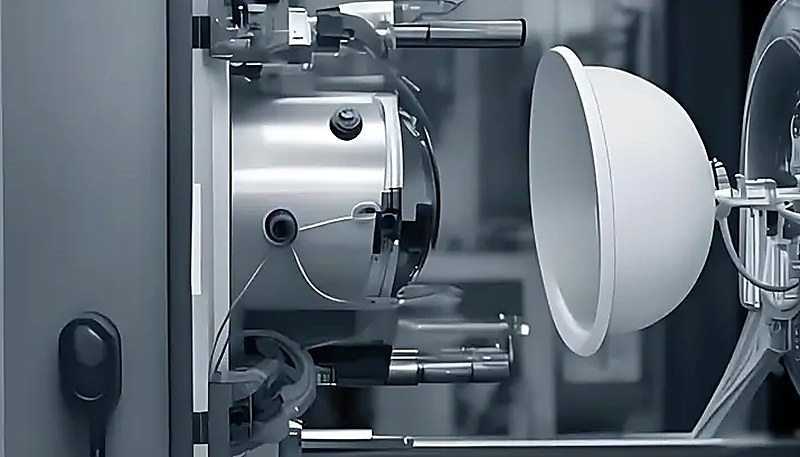
Higher tooling cost is real—a 16-cavity mold might cost 3–5× more than a single-cavity version. But when amortized over hundreds of thousands or millions of parts, the per-piece tooling amortization drops well below the single-cavity alternative. We help customers run ROI calculations before committing to a cavity count.
Maintenance complexity increases with cavity count. More cavities mean more core pins, more ejector pins, more cooling lines to inspect. At ZetarMold, we design modular cavity inserts so individual cavities can be pulled for repair without disassembling the entire mold.
Which Industries and Applications Use Multi-Cavity Molds?
Multi-cavity molds are used wherever high volumes of identical small-to-medium parts are needed—packaging, medical devices, consumer electronics, automotive, and household goods are the top five sectors.
Here’s what we build most often at ZetarMold:
パッケージング – Bottle caps (32–128 cavities), thin-wall containers, closures
メディカル – Syringe barrels, pipette tips, diagnostic cartridge housings (16–64 cavities, often in cleanroom-grade steel)
「最適なキャビティ数を決定する主な要因は、金型投資とバランスをとった年間生産量です。」真
Cavity count is an economic optimization: more cavities lower per-part cost but raise upfront tooling expense. The breakeven point depends on annual volume, part price target, and available press capacity.
「多キャビティ金型は、シンプルで平坦な部品にのみ適しています。」偽
Modern multi-cavity molds handle complex geometries including undercuts (via lifters and slides), textured surfaces, and tight tolerances. The key constraint is part size relative to available press platen area, not geometric complexity.
エレクトロニクス – Connector housings, LED lens arrays, switch covers (8–32 cavities)
自動車 – Small clips, fasteners, sensor housings (4–16 cavities)
Consumer goods – Toothbrush heads, razor cartridge components, toy parts
The common thread is annual volume. As a rule of thumb, if you’re producing fewer than 50,000 parts per year, a single or 2-cavity mold is usually sufficient. Above 500,000 parts per year, multi-cavity tooling almost always makes economic sense.
What Does the Design and Manufacturing Process Look Like?
The process follows a structured sequence: DFM review, cavity count optimization, mold flow simulation, detailed mold design, steel cutting, assembly, trial, and qualification. At ZetarMold, the entire cycle from design kick-off to T1 samples typically takes 4–8 weeks depending on complexity.
Here’s how we approach it:
DFM review – We analyze the part design for moldability, draft angles, wall thickness uniformity, and gate location options.
Cavity count study せん断誘発不均衡は、マルチキャビティランナーシステムにおける流動現象であり、溶融流のせん断加熱された外層がランナー分岐点で不均一に分布し、一部のキャビティがより高温(低粘度)の材料を受け取り、他のキャビティよりも速く充填される原因となります。
金型流動シミュレーション – 充填、保圧、冷却、およびそり解析により、ランナーバランス、冷却性能、および予想される収縮挙動が確認されます。
Detailed design – Full 3D mold design in NX/UG or SOLIDWORKS, including runner system, cooling circuits, ejection layout, and mold base selection.
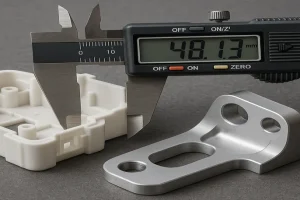
Steel machining – CNC milling, EDM, wire EDM, and grinding to tolerances of ±0.005 mm on critical cavity dimensions.
Assembly and spotting – All components are assembled, parting line fit is verified by blue-spotting, and cooling circuits are pressure-tested.
Mold trial (T1) – First shots are run, parts are measured against drawings, and process parameters are documented.
Optimization (T2/T3 if needed) – Fine-tuning runner sizes, cooling times, or gate dimensions until all cavities meet spec.
How Does Cavity Count Affect Part Quality and Total Cost?
Cavity count affects quality through its influence on fill balance and cooling uniformity, and it affects total cost through the trade-off between higher tooling investment and lower per-part production cost. The sweet spot is the cavity count where total program cost (tooling + production) is minimized while maintaining required quality standards.
We’ve compiled data from recent ZetarMold projects to illustrate the economics:
| Cavity Count | Relative Mold Cost | Cycle Time (sec) | Parts/Hour | Per-Part Cost Index |
|---|---|---|---|---|
| 1 | 1.0× | 18 | 200 | 1.00 |
| 4 | 2.2× | 20 | 720 | 0.38 |
| 8 | 3.0× | 22 | 1,309 | 0.22 |
| 16 | 4.5× | 24 | 2,400 | 0.15 |
| 32 | 7.0× | 26 | 4,431 | 0.11 |
表が示す通り、キャビティ数を倍増させても金型コストは倍増しません—金型ベース、ホットランナーシステム、設計作業において規模の経済が働きます。一方、部品単価は急激に低下します。年間50万個以上を生産するプログラムでは、追加の金型投資は通常、サイクルタイムの短縮と部品単価の低下により3〜6ヶ月以内に回収されます。ただし、損益分岐点は部品形状、材料選択、および金型にサイドアクションやリフターが必要かどうかに大きく依存します。
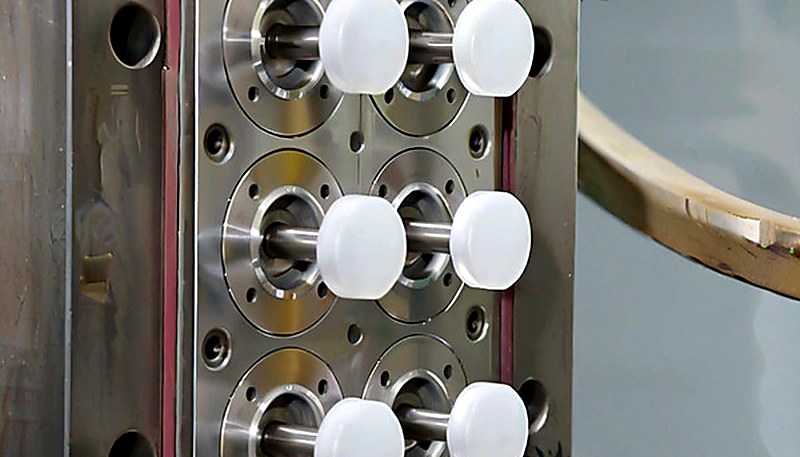
品質面では、キャビティ数が多いほど厳密な工程管理が求められます。当社は各生産ロットでキャビティ間の重量バラツキを監視しており、いずれかのキャビティが平均値から2%以上乖離した場合は生産を停止し調査を行います。一般的な原因には、摩耗したゲートインサート、冷却回路の閉塞、広いマニホールド全体での溶融温度の不均一などがあります。デカップリング成形や型内圧力センサーといった科学的成形の原則は、全てのキャビティでショット間の一貫性を維持するのに役立ちます。重要な医療用や自動車部品については、キャビティごとのトレーサビリティを追加し、各製品が金型内の正確な位置まで追跡可能にしています。
よくある質問
What is the difference between a multi-cavity mold and a family mold?
多キャビティ金型は、1ショットごとに同じ部品の複数のコピーを生産します。つまり、すべてのキャビティは同一です。一方、ファミリー金型は、同じ金型内で異なる部品を生産します。例えば、左側と右側のハウジング、またはキャップとそれに合うベースなどです。ファミリー金型は、異なる部品形状が異なる流動抵抗、冷却時間、収縮率を持つため、バランスを取ることがより困難です。実際には、多キャビティ金型は単一部品の高ボリューム生産に適しており、ファミリー金型は互いに正確に一致する必要があるいくつかの関連部品が必要な場合に使用されます。
How do I decide the right cavity count for my project?
はい。キャビティ数が多いほど、総ショット容量が大きくなり、パーティングライン上の投影面積も大きくなります。これらはどちらもより大きなクランプトンネージとショット容量を必要とします。16キャビティ金型は通常、同じ部品の単一キャビティ版よりも3〜4倍大きなプレスを必要とします。必要なクランプ力は、総投影キャビティ面積にほぼ比例するため、キャビティ数を倍増させると必要なトンネージもほぼ倍増します。キャビティ数を決定する前に、成型業者が予想されるショット容量とプラテンサイズに対応できる十分な大きさのプレスを所有していることを確認してください。
Do multi-cavity molds require larger injection molding machines?
はい。キャビティ数が多いほど、総ショット容量が大きくなり、パーティングライン上の投影面積も大きくなります。これらはどちらもより大きなクランプトンネージとショット容量を必要とします。16キャビティ金型は通常、同じ部品の単一キャビティ版よりも3〜4倍大きなプレスを必要とします。必要なクランプ力は、総投影キャビティ面積にほぼ比例するため、キャビティ数を倍増させると必要なトンネージもほぼ倍増します。キャビティ数を決定する前に、成型業者が予想されるショット容量とプラテンサイズに対応できる十分な大きさのプレスを所有していることを確認してください。
Can I start with fewer cavities and add more later?
金型ベースが最初から拡張用に設計されていれば可能です。これは、スケーラブルまたは拡張可能金型ベースと呼ばれることがあります。金型設計者は、追加のインサートを後で追加できるように、予めドリル加工された冷却チャンネルとエジェクタピンホールを備えた空白のキャビティ位置を残します。ただし、元々そのための設計ではない金型にキャビティを後付けするのは、通常、非現実的でコストがかかります。初期の金型投資を管理するためにキャビティインサートを段階的に追加する場合でも、最終的なキャビティ数は事前に計画することをお勧めします。
How long does a multi-cavity mold last?
金型寿命は鋼材グレード、部品材料、メンテナンス品質に依存します。硬化H13またはS136鋼で適切に製造された多キャビティ金型は、通常50万ショットから200万ショット以上の寿命を持ちます。P20のような軟質鋼では、大規模な改修が必要になる前に30万から50万ショットに達する場合があります。冷却チャネルの清掃、摩耗したエジェクタピンの交換、キャビティ表面の研磨などの定期的なメンテナンスは、金型寿命を大幅に延ばします。ZetarMoldでは、プロジェクト範囲で指定されたSPI金型クラスに基づいて金型寿命を保証し、全ての生産用金型に対して予防保守スケジュールを提供しています。
なぜ多キャビティ金型がスケーラブルな生産の鍵となるのか?
A multiple cavity injection mold is the workhorse behind high-volume plastic part production. By producing multiple identical parts per cycle, it slashes per-unit cost, maximizes press utilization, and delivers consistent quality across every cavity. The trade-off is higher upfront tooling investment and greater engineering complexity—but for programs above 100,000 parts per year, the economics almost always favor multi-cavity tooling.
ZetarMoldでは、包装、医療、自動車、民生電子機器アプリケーション向けに、2から128キャビティまでの数百の多キャビティ金型を製作してきました。当社のアプローチは、金型流動シミュレーション、±0.005 mmの精密CNC加工、および厳格な試作プロトコルを組み合わせ、すべてのキャビティが同一に作動することを保証します。高ボリュームプログラムを計画中で多キャビティ金型を検討したい場合は、当社のエンジニアリングチームに連絡し、無料のDFMレビューとキャビティ数推奨を受けてください。
Need a Quote for Your Injection Molding Project?
Get competitive pricing, DFM feedback, and production timeline from ZetarMold’s engineering team.
Request a Free Quote →
-
injection mold: injection mold refers to an injection mold is the precision tool that defines part geometry, cooling behavior, ejection, gating, surface finish, and repeatability. ↩
-
injection molding: injection molding refers to is the production process that melts plastic, injects it into a mold cavity, cools the part, and repeats the cycle for stable volume manufacturing. ↩
-
plastic: Plastic is a material family whose flow, shrinkage, strength, heat resistance, cosmetic quality, cycle time, and long-term performance shape molding decisions. ↩




 EN
EN  ES
ES  FR
FR  DE
DE  PT
PT  AR
AR  RU
RU  JA
JA  KO
KO  IT
IT  NL
NL  TR
TR  PL
PL 