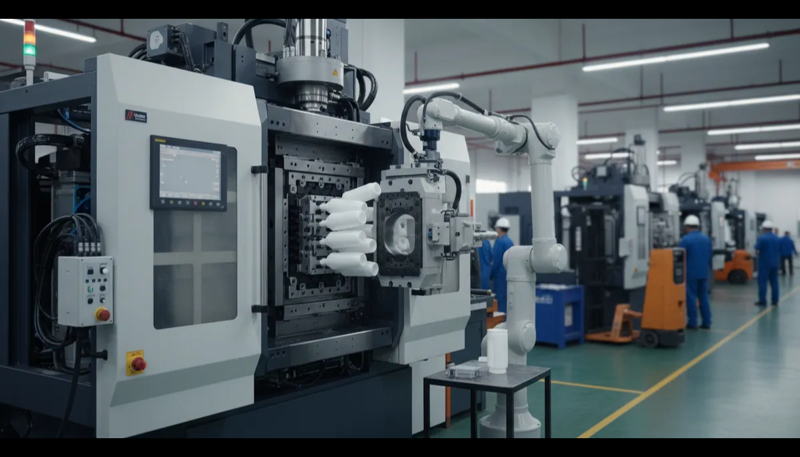
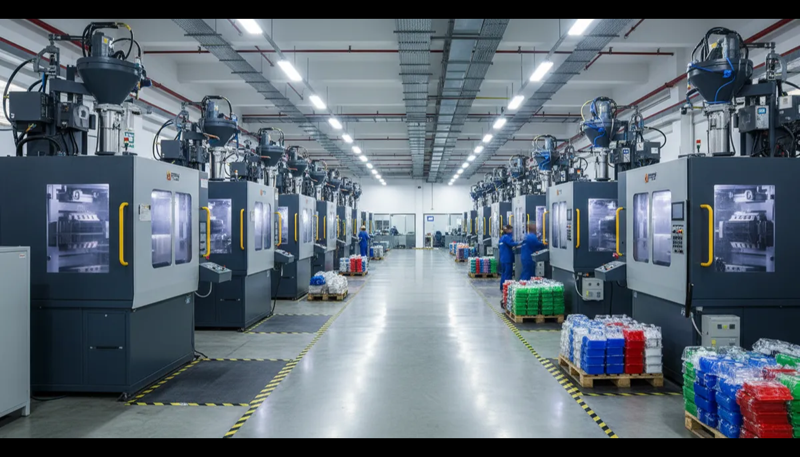
When you source injection molded parts, the raw molded component is rarely the finished product. Secondary operations — painting, assembly, insert molding1, and packaging — transform basic plastic parts into ready-to-use products. Choosing a supplier that handles these operations in-house saves time, reduces logistics costs, and eliminates the quality risks that come from managing multiple vendors. In our 20+ years of injection molding2 experience, we have seen how the right secondary operation strategy can make or break a project.
- Secondary operations add value beyond raw molding
- In-house painting, assembly, and inserts reduce lead time by 20–40%
- Packaging protects quality during shipping and storage
- A full-service supplier lowers total cost of ownership
- Quality checks at every stage ensure consistency
What Are Secondary Operations in Injection Molding?
Secondary operations are any post-molding processes that transform a raw plastic part into its final form. These include surface treatments like painting and plating, mechanical assembly steps, the integration of metal or threaded inserts, and protective packaging for shipping. For buyers evaluating an injection molding supplier, secondary operation capability is a key differentiator that directly impacts lead time, cost, and quality.
For a broader view, our injection molding complete guide covers process fundamentals, material behavior, and production decisions.
A supplier who can handle these steps in-house eliminates the need to coordinate with third-party vendors, reducing lead times by 20–40% and lowering the risk of quality defects introduced during transport between facilities. In practice, we have found that projects requiring painting, insert placement, and final assembly can take 3–5 weeks longer when these operations are outsourced versus handled under one roof. This is why we integrated all secondary operations into our Shanghai facility — so our customers deal with one team, one quality system, and one delivery schedule.
How Does Painting and Surface Finishing Enhance Molded Parts?
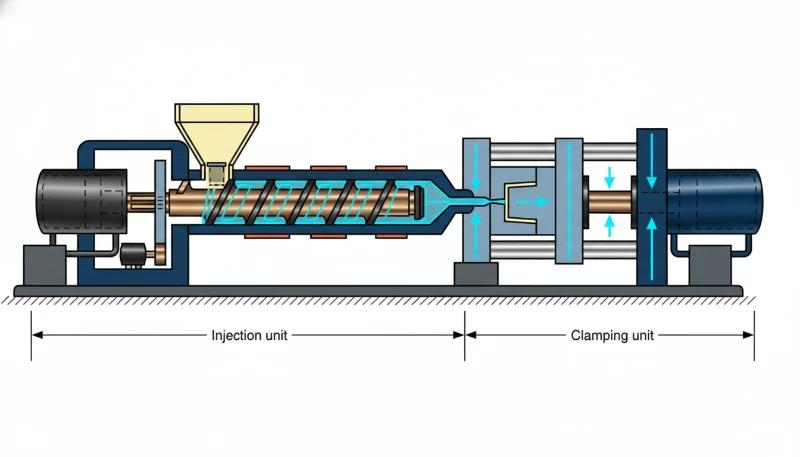
Painting is a surface treatment that enhances molded parts by adding color, texture, and functional coatings the base polymer cannot provide. Spray painting achieves brand-specific Pantone colors and UV-resistant coatings for outdoor use. Pad printing applies logos and text onto curved surfaces. Silk screening handles flat graphics with high precision. Chrome plating creates metallic finishes for decorative or EMI shielding purposes.
When specifying paint for injection molded parts, consider both the application environment and the expected product lifespan. Consumer electronics may only need a cosmetic topcoat with 2-3 years of UV stability, while outdoor HVAC components require UV-resistant formulations rated for 10+ years of sun exposure. Medical device housings face additional requirements for chemical resistance to hospital-grade disinfectants. These environmental factors should be documented in your paint specification sheet before production begins.
Surface preparation is the most commonly overlooked step in painting injection molded parts, and it directly determines whether the paint will last for years or peel off within weeks. Mold release agents, finger oils, and static-accumulated dust must be completely removed before any coating is applied. For engineering plastics like nylon and polycarbonate, a primer coat improves adhesion by 40-60% compared to direct painting. Parts should be painted within 48 hours of molding to minimize surface contamination during storage. These preparation requirements are why painting is best performed at the molding facility rather than shipped to a separate paint shop.
In our Shanghai factory, we regularly specify painting processes for HVAC components that require specific RAL color matching, and for medical device housings where surface cleanliness standards demand controlled-environment painting booths. The key consideration is that painted parts require dedicated drying time — typically 4–8 hours for solvent-based paints — which must be factored into production schedules. Surface preparation is equally critical: parts must be free of mold release agents, and low-surface-energy materials like polypropylene require flame or plasma treatment before paint will adhere properly.
What Role Does Assembly Play in Injection Molded Products?
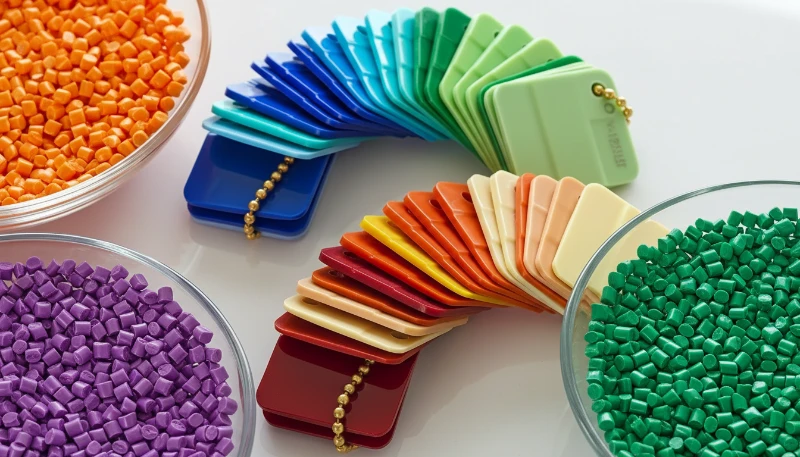
Assembly is the process of joining individual molded components into functional finished products using snap-fits, welding, adhesives, and fasteners. Having your supplier handle assembly eliminates an entire vendor coordination layer. Sub-assembly operations such as mounting PCBs into housings or installing gaskets reduce the work your team does after receiving parts. Full assembly delivers a product ready for your end user.
The advantage of supplier-side assembly is quality control at each step. When we assemble products in our facility, every joint, clip, and alignment is checked against the approved sample before the part moves to the next station. This catches defects early — before they become expensive field failures. For projects involving multiple molded components that fit together, we recommend discussing assembly tolerance stack-up with your supplier during the design phase. Our 8 senior engineers regularly review assembly sequences with customers to optimize for both quality and cost.
The assembly method you choose affects both the per-part cost and the long-term reliability of the product. ultrasonic welding3 creates a permanent molecular bond ideal for sealed enclosures, but it limits future disassembly for repair. Snap-fit designs allow field service access but require tighter molding tolerances to maintain engagement force over thermal cycling. In our experience with HVAC manufacturers, we often see hybrid approaches: ultrasonic welding for permanent seams combined with snap-fit access panels for filter changes and maintenance. Discussing these trade-offs early with your supplier ensures the part design supports the chosen assembly method without expensive tool modifications later.
For buyers managing global supply chains, supplier-side assembly also reduces your incoming inspection burden. When parts arrive pre-assembled and tested, your receiving team checks one finished product instead of inspecting individual components, verifying paint quality, testing insert torque, and then assembling — all steps your supplier has already completed. This is particularly valuable for companies that operate lean manufacturing lines where incoming parts go directly to production without a quarantine hold.
How Are Metal Inserts Integrated During Molding?
Inserts are integrated by loading them into the injection mold before injection, where molten plastic forms a permanent bond. Threaded brass inserts, stainless steel bushings, and electrical contacts are the most common types. Over-molding during the injection cycle produces the strongest bond because the plastic shrinks around the insert during cooling. Post-molding ultrasonic or press-in installation is faster but creates a weaker connection.
Over-molding produces the strongest bond because the molten plastic flows around the insert, shrinking around it as it cools to create a mechanical interlock. In our tooling facility, we design molds with dedicated insert loading features — locator pins, magnetic holders, and robotic loading arms for high-volume production. With 47 injection molding machines ranging from 90T to 1850T clamping force, we handle insert molding projects from small electronic connectors to large structural components. Critical considerations include insert material compatibility, thermal expansion differences between metal and plastic, and the torque specification for threaded inserts.
The choice between over-molding and post-molding insertion affects both cost and production speed. Over-molding requires the mold to pause during each cycle while the insert is loaded, which adds 5 to 15 seconds per cycle but produces a superior bond. Post-molding ultrasonic insertion is faster for high-volume runs but requires dedicated equipment and careful amplitude control to avoid cracking the parent material. For most production volumes above 10,000 units, the per-part cost difference between the two methods is negligible, and the stronger bond of over-molding makes it the preferred choice.
What Packaging Solutions Protect Finished Components?
Packaging is the last manufacturing step but often the first thing your customer sees. Proper packaging prevents scratches, contamination, static damage, and deformation during transit. Common options include bulk bags for low-value parts, custom-molded trays for delicate components, anti-static bags for electronic housings, VCI packaging for metal-insert parts, and individual bubble-wrap or foam inserts for high-value components. For international shipping, packaging must also account for humidity, temperature changes, and extended transit times of 4 to 6 weeks by sea.
We specify packaging requirements during the quoting process — not as an afterthought. For medical and automotive customers, we use clean-room packaging with traceability labels and certificate of conformance documentation inside each box. Our 10+ QC specialists verify that every shipment meets the agreed packaging specification before it leaves our facility. Getting packaging right from the start prevents the costly scenario of parts arriving damaged after a month-long ocean shipment.
Process capability studies complement inspection by tracking whether each secondary operation stays within specification over time. We monitor CpK values for critical dimensions after assembly, paint thickness readings after surface finishing, and insert pull-out forces across production lots. When any metric trends toward the control limit, we adjust the process before defects occur rather than relying on end-of-line inspection to catch problems. This proactive approach is what separates a quality-focused supplier from one that merely inspects and sorts.
How Does Quality Control Validate Secondary Operations?
Quality control is the process of validating every secondary operation through specific, measurable tests for each process type. Painting requires spectrophotometer color matching and cross-hatch adhesion testing. Assembly demands dimensional verification and torque checks on fasteners. Insert molding calls for pull-out force testing and positional accuracy measurement. Packaging is verified against the packing specification for correct quantity, labeling, and protective materials.
Our facility operates under ISO 9001, ISO 13485, ISO 14001, and ISO 45001 certified management systems. First Article Inspection reports are standard for every new project, and in-process checks catch defects at defined intervals throughout production. When a painted part fails a color match check, or an insert is 0.1mm off position, we catch the defect at the station — not after the customer unpacks the shipment. This is the real value of having secondary operations and quality control under one roof.
Why Choose a Full-Service Supplier for Secondary Operations?
A full-service supplier is one that handles tooling, molding, secondary operations, and packaging under a single comprehensive quality system. This vertical integration eliminates handoff delays and creates single-point accountability for quality across every production step. Bundling secondary operations with molding typically saves 15 to 25 percent compared to sourcing each step from separate vendors, because you eliminate intermediate shipping costs, redundant quality checks between facilities, and vendor margin stacking.
A full-service supplier is one that handles tooling, molding, secondary operations, and packaging under a single comprehensive quality system. This vertical integration eliminates handoff delays and creates single-point accountability for quality across every production step. When a defect appears in a painted part or an insert is out of position, the root cause is identified and corrected within hours — not weeks of back-and-forth between separate vendors. Bundling secondary operations with molding typically saves 15 to 25 percent compared to sourcing each step from separate vendors.
In our Shanghai factory, we provide integrated secondary operations including spray painting, pad printing, ultrasonic welding, insert molding, sub-assembly, and custom packaging — all supported by 8 senior engineers and our ISO 9001 certified quality system. With 20+ years of experience and 47 injection molding machines from 90T to 1850T, we deliver finished parts ready for your production line.
"Insert molding produces a stronger bond than post-molding insert installation."True
True. During over-molding, molten plastic flows around the insert and shrinks as it cools, creating a mechanical interlock that surpasses press-fit or ultrasonic post-installation in pull-out force tests.
"Secondary operations should always be outsourced to specialized vendors for better quality."False
False. In-house secondary operations reduce lead time by 20-40%, lower defect rates from inter-vendor transport, and create single-point accountability. A full-service supplier can address quality issues immediately without waiting for third-party resolution.
When evaluating a potential injection molding partner, ask specifically about their in-house secondary operation capabilities and the quality checkpoints they maintain at each stage. A supplier who can walk you through their painting booth, assembly line, insert loading process, and packaging station — with documented inspection criteria at each point — is far more likely to deliver consistent results than one who coordinates these steps through external vendors. The difference becomes especially apparent when you need to make rapid design changes or respond to quality feedback during an active production run, where every day of delay impacts your delivery schedule.
"Packaging specifications should be discussed during the quoting phase, not after production."True
True. Proper packaging prevents transit damage that can scrap an entire production run. Specifying packaging requirements early ensures correct materials and costs are included in the initial quote, avoiding surprise expenses.
"Painting adds no functional value — it is purely cosmetic."False
False. Functional coatings provide UV resistance for outdoor parts, chemical resistance for industrial housings, EMI shielding for electronics, and improved surface hardness. Aesthetic finish is only one of several purposes.
Frequently Asked Questions About Injection Molding Secondary Operations
Frequently Asked Questions
What secondary operations are commonly available from injection molding suppliers?
x Common secondary operations include spray painting, pad printing, silk screening, chrome plating, ultrasonic welding, adhesive bonding, insert molding, sub-assembly, and custom packaging. Full-service suppliers like ZetarMold offer these under one roof to reduce lead times and maintain consistent quality control across every step of production. The specific operations your project needs depend on part geometry complexity, end-use environment, regulatory requirements such as FDA or automotive standards, and whether your product is destined for consumer, medical, automotive, or industrial markets.
How much does painting add to injection molding costs?
x Painting typically adds 10 to 30 percent to the per-part cost, depending on the paint type, number of colors, surface preparation required, and masking complexity. UV-cured paints offer faster processing but carry higher material costs than solvent-based options. Two-tone or multi-color painting requires additional masking steps that increase both cost and cycle time. Requesting a detailed quote that breaks out painting costs separately helps you evaluate whether the aesthetic or functional benefit justifies the expense for your application and end-user requirements.
Can all plastics be painted after injection molding?
x Not all plastics accept paint equally. Polypropylene and polyethylene have low surface energy and require flame treatment or plasma etching before any paint will adhere properly. ABS, polycarbonate, and nylon accept paint readily with standard surface preparation including cleaning, degreasing, and primer application. Nylon parts benefit from a moisture bake before painting to prevent outgassing that causes blistering. Your supplier should advise on material-specific surface treatment requirements during the design phase to avoid adhesion failures that only appear after weeks in the field.
What is the difference between insert molding and overmolding?
x Insert molding places a pre-made component — usually a metal threaded insert, bushing, or electrical contact — into the mold cavity before plastic injection begins. The plastic then flows around the insert, locking it permanently in place as it cools. Overmolding is a related two-shot process where a second plastic material is molded over a previously molded substrate to add soft-grip surfaces, color accents, or sealing properties. Both techniques create strong material bonds, but insert molding specifically adds metal functionality like threaded mounting points, while overmolding enhances ergonomics with additional polymer layers.
How are inserts held in place during the molding process?
x Inserts are positioned and held by locator pins, magnetic fixtures, or robotic loading arms within the mold cavity before each injection cycle begins. The molten plastic then flows around the insert and shrinks during cooling to create a mechanical interlock that resists both axial and rotational forces. For high-volume production runs, robotic insert loading ensures consistent placement accuracy within 0.05mm and reduces cycle time compared to manual loading by operators. Core pulls and lifters in the mold design may also be used to create undercuts that further anchor the insert in position against pull-out loads.
What packaging is recommended for parts with metal inserts?
x Parts with metal inserts require packaging that addresses both physical protection and corrosion prevention. VCI volatile corrosion inhibitor bags or films prevent rust on brass and steel inserts during ocean shipments that take four to six weeks. Anti-static packaging is essential when inserts are electrical contacts or connectors that static discharge could damage. Custom-molded PET or pulp trays with individual compartments prevent parts from contacting each other and scratching painted surfaces. Your supplier should recommend specific packaging based on the insert material, shipping distance, expected storage duration, and any industry-specific clean-room requirements.
Should I choose a supplier with in-house secondary operations?
x If your project requires any post-molding processing — whether painting, assembly, inserts, or custom packaging — a supplier with in-house secondary operations will almost always offer shorter lead times, lower total landed costs, and better quality control compared to coordinating multiple separate vendors. Managing three or four vendors for molding, painting, assembly, and packaging creates communication overhead, shipping delays between facilities, and finger-pointing when quality issues arise. A single full-service supplier provides one point of contact, one quality system, and consolidated shipping that reduces both cost and complexity for international buyers.
insert molding: insert molding refers to a process where a pre-formed component is placed into a mold and encapsulated by injected plastic material. ↩
injection molding: injection molding refers to a manufacturing process for producing parts by injecting molten material into a mold cavity. ↩
ultrasonic welding: ultrasonic welding refers to an industrial technique using high-frequency ultrasonic acoustic vibrations to create a solid-state weld between parts. ↩