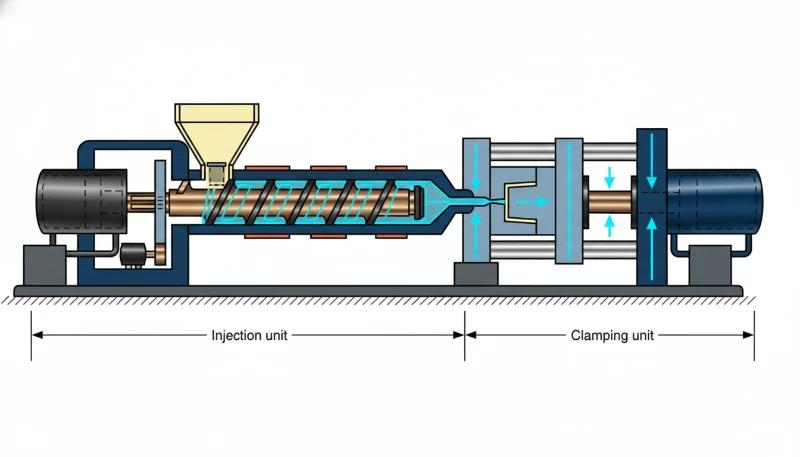
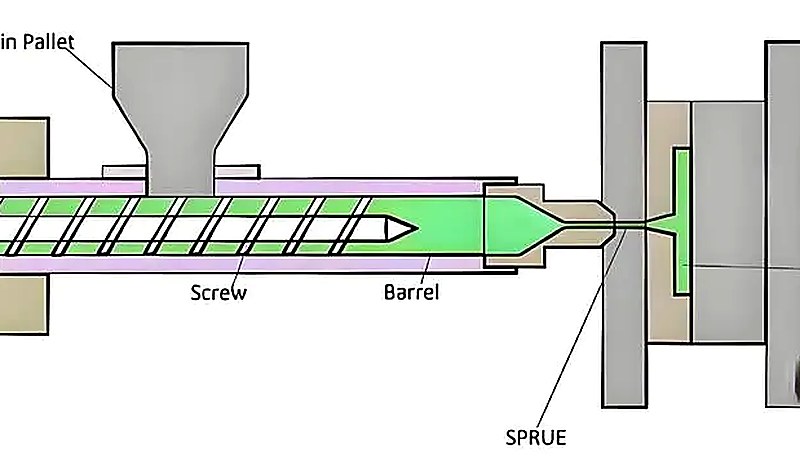
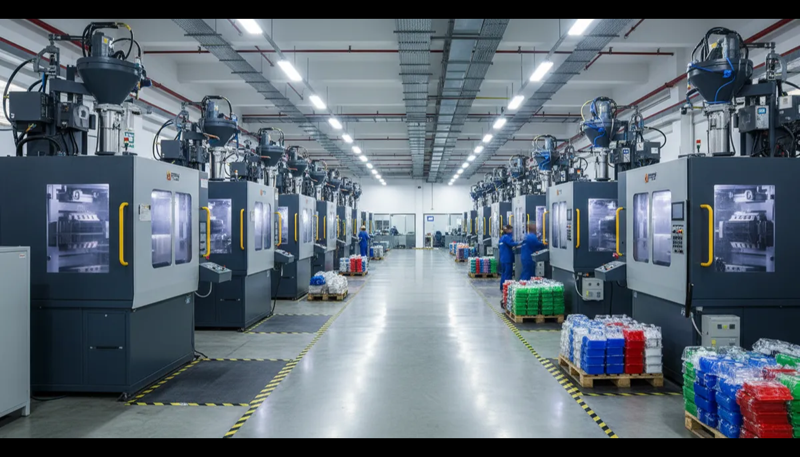
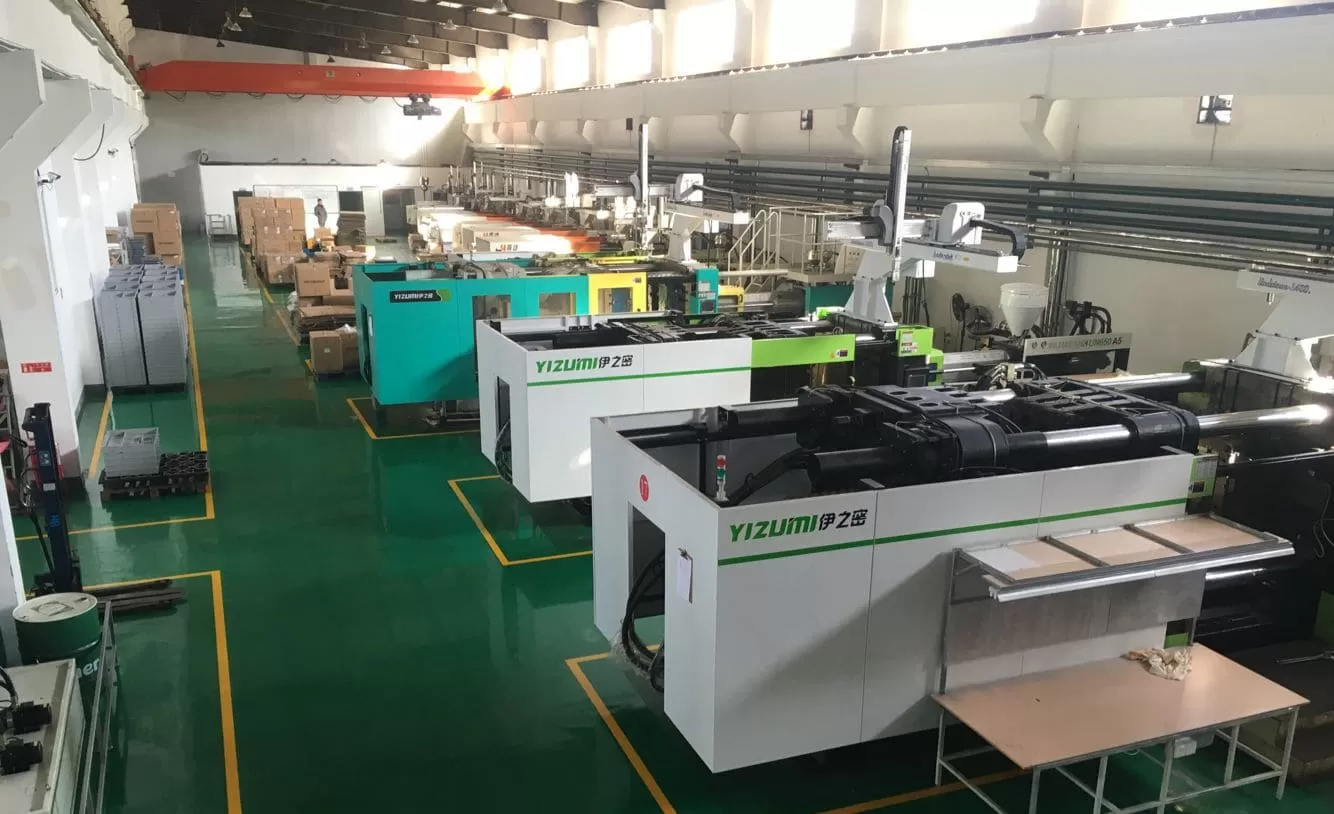
You’re about to spend six figures on an injection molding project, and your supplier just handed you a quote that looks… reasonable. But how do you know they actually control their costs — and aren’t just absorbing margin until change orders eat your budget alive? After 20+ years of running injection molding projects at our Shanghai factory, we’ve seen every trick in the book. Some suppliers lowball tooling to win the job, then nickel-and-dime you on material surcharges, rework fees, and “unexpected” design changes. Others are legitimately efficient — and they can prove it with data. This article lays out the specific cost control evidence you should request from any injection molding supplier before you sign.
Not vague promises — real documents, real metrics, and real audit trails that separate the professionals from the opportunists.
- Request itemized tooling cost breakdowns with cavity count, steel grade, and expected tool life
- Ask for historical material cost tracking — not just spot prices — to verify supplier transparency
- Audit cycle time [1] data, scrap rates, and OEE metrics before committing to production volumes
- Require documented change-order pricing and a defined escalation clause in your supply agreement
- Verify quality-to-cost ratio using defect rate per million parts, not just unit price comparisons
Why Should You Ask Suppliers for Cost Control Evidence?
The short answer: because a quote is not a capability statement. A price tells you what a supplier wants to charge you today. Cost control evidence tells you whether they can keep that price stable — or whether you’ll be negotiating change orders every three months.\n\nIn our experience running 47 injection molding machines from 90T to 1850T, we’ve watched buyers get burned by suppliers who quoted aggressively but couldn’t sustain the economics. The supplier absorbs the loss for the first run, then gradually introduces price increases — raw material surcharges they ‘didn’t anticipate,’ tooling modifications they ‘didn’t foresee,’ and shipping arrangements that ‘cost more than expected.’\n\nThe real cost of injection molding isn’t in the initial quote.
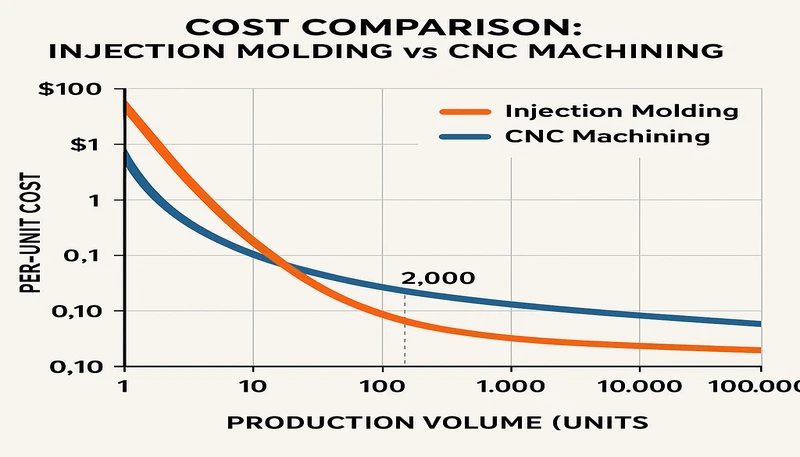
It’s in the total cost of ownership over 12–24 months: tooling amortization, material price variance, scrap and rework rates, logistics optimization, and the opportunity cost of production delays. A supplier who can document their cost structure — and show you how they manage each of these variables — is fundamentally different from one who just gives you a number.
What Documents Prove a Supplier Controls Their Costs?
The most important document you can request is an itemized tooling cost breakdown. Not a single line that says Tooling: twenty-eight thousand — a real breakdown that shows mold base cost, cavity machining, electrode wear, surface finish treatment, and the steel grade being used. This matters because tooling typically represents 30 to 50 percent of your first-year project cost, and a supplier who will not show you the components is either hiding markup or does not track it themselves.
Here is what a credible cost control document package should include: Tooling breakdown — Steel, machining, and finishing costs. Red flag if missing: the supplier may be reselling a third-party mold. Material cost history — Resin price variance tracking over time. Red flag if missing: every price spike gets passed directly to you. cycle time1 report — Production efficiency data from actual runs. Red flag if missing: the supplier is estimating, not measuring. Scrap rate log — Quality consistency data across production runs. Red flag if missing: hidden defect costs are baked into your unit price. Change order schedule — Defined modification pricing and lead times. Red flag if missing: every change becomes a negotiation.
If a supplier can produce all five documents without hesitation, you are dealing with a professional operation. If they cannot, that is a risk flag — not necessarily a dealbreaker, but worth investigating further before committing your budget.
How Do Tooling Cost Breakdowns Reveal Supplier Transparency?
A tooling breakdown is the single most revealing cost document a supplier can provide.
A single-cavity mold might cost less upfront, while a multi-cavity mold costs more but produces parts at a fraction of the cycle time per part — dropping your unit cost significantly at volume. A supplier who quotes a single cavity without discussing multi-cavity options may be optimizing for their own simplicity, not your cost efficiency.
In our Shanghai factory, we run 47 injection molding machines ranging from 90T to 1850T, backed by 20+ years of tooling and production experience. When we provide a tooling breakdown, we specify the exact steel grade, expected tool life in cycles, and cavity strategy — because the buyer deserves to see the math, not just the bottom line.
What Production Metrics Should You Audit Before Signing?
Cost control is not just about tooling. Once production starts, the metrics that matter are cycle time, scrap rate, overall equipment effectiveness (OEE2), and on-time delivery rate. Any supplier worth working with tracks these numbers — and you should ask to see them before you commit. Cycle time is particularly important because it drives your per-part cost more than almost any other variable. A 15-second cycle versus a 20-second cycle on a million-part run is the difference between roughly 4,200 hours and 5,600 hours of machine time. At a typical machine hour rate, that is a significant cost gap. Ask your supplier for their cycle time analysis — a real report, not an estimate.
Key production benchmarks to request from your supplier: Cycle time variance — Good: less than 5% deviation across runs. Warning: over 10% indicates an unstable process. Scrap rate — Good: under 2% for production runs. Warning: over 5% means hidden costs are baked into your unit price. OEE — Good: above 85%. Warning: below 70% signals equipment or scheduling issues. On-time delivery — Good: above 95%. Warning: below 85% indicates capacity or planning problems.
They should be able to show you injection pressure curves, cooling time calculations, and ejection timing for a part geometry similar to yours.
A supplier quoting a competitive unit price but running 8 percent scrap is charging you for parts you never receive. They absorb the material waste but build it into the unit cost — so your price per good part is actually higher than the quoted price per shot. Ask for scrap rate data from the last three production runs of a similar part.

How Can Material Cost Transparency Save Your Project?
Material cost transparency is tracking resin pricing data to help buyers manage budget risk.
Between 2020 and 2023, commodity resins like PP and PE saw price swings of 30 to 60 percent. Engineering resins like PC and nylon moved even more. A transparent supplier will show you their material cost tracking over the past 12 months, tied to actual purchase orders. They will explain their resin sourcing strategy — whether they buy on the spot market, use contracts, or maintain strategic inventory. And they will have a defined material escalation clause in their supply agreement that specifies exactly when and how price changes are passed through.
Neither is ideal. With experience processing over 400 materials at our facility, we have learned that material transparency is not just about price — it is about risk management. Knowing your supplier has a stable resin supply chain protects your delivery schedule and your budget.
What Hidden Costs Do Less-Reputable Suppliers Hide?
This is the section most suppliers do not want you to read. But after two decades in this industry, we have seen enough hidden cost structures to know what to look for — and we think buyers deserve to know. The most common hidden cost is rework and repair charges that should have been caught in the sampling process. A supplier quotes you a unit price based on first-pass yield of 98 percent, but their actual process only delivers 90 percent. The difference shows up as rework charges on your invoice that were never discussed during quoting. Ask your supplier for their first-pass yield data — specifically, what percentage of parts pass inspection without any secondary operation.
The second is tooling maintenance costs that get pushed to the buyer prematurely. A well-maintained mold in H13 steel should last 500K to 1M cycles before major maintenance is needed. If your supplier is quoting maintenance costs at 100K cycles, they are either using inferior steel like P20 [4] or running the tool outside its design parameters. Ask for their standard maintenance schedule and the expected tool life for the steel grade they quoted. The third is logistics padding. Some suppliers quote competitive part prices but add 15 to 25 percent markups on packaging and shipping. Others use freight forwarders who quote low initially but add surcharges for customs, warehousing, and documentation.
Ask your supplier for a landed cost estimate that includes door-to-door delivery — not just FOB pricing. Finally, watch for the change order trap. Some suppliers operate on a model where the initial quote is lean, knowing that most projects will require at least one design revision. They make their real margin on change orders, charging premium rates for modifications that should cost a fraction of the price. A supplier with a published change order pricing schedule is signaling that they expect a fair, transparent relationship.

"A supplier who provides a 12-month material cost history is demonstrating genuine cost control transparency, not just good salesmanship."True
True. Material cost tracking over 12 months requires actual purchase order data and ERP integration. Suppliers who maintain and share this data have invested in cost management infrastructure, which is a strong signal they can sustain their pricing.
"If a supplier's unit price is the lowest among three quotes, their cost control must be the best."False
False. The lowest price often reflects cost cutting, not cost control. A supplier with higher unit pricing but lower scrap rates, longer tool life, and stable material costs will almost always deliver a lower total cost of ownership over the production run.
How Do You Evaluate a Supplier’s Quality-to-Cost Ratio?
The cheapest part is not the best part — and the most expensive is not necessarily the highest quality. What you want is the best quality-to-cost ratio, and that requires looking at the relationship between defect rates, consistency, and price over time. Start by asking for defect rate data expressed as defects per million opportunities (DPMO). This is a standard quality metric that normalizes defect rates across different part complexities and production volumes. A supplier quoting 500 DPMO [5] is operating at a very different quality level than one at 5,000 DPMO — and the downstream cost of those defects (returns, warranty claims, assembly line stoppages) often exceeds the per-part savings from the lower-quality supplier.
Next, ask for process capability indices — specifically Cpk3 [3] values for critical dimensions on similar parts. A Cpk of 1.33 means the process is capable and centered, with a defect rate of roughly 63 per million. A Cpk below 1.0 means the process is not capable of consistently meeting specifications, regardless of what the initial sample parts looked like. Then evaluate their consistency over time. Request quality data from three different production runs of a similar part, spaced at least 30 days apart.
If the defect rate jumps from 0.5 percent to 3 percent between runs, their process is not stable — and process instability is a cost that will eventually show up on your invoice, one way or another.
Working under ISO 9001, ISO 13485, ISO 14001, and ISO 45001 systems means we have the measurement infrastructure to provide this data. Our 8 senior engineers and 120+ production workers operate within a system that tracks every critical dimension, every scrap event, and every cycle time deviation — because you cannot control what you do not measure.
Operating under ISO 9001, ISO 13485, ISO 14001, and ISO 45001 with a team of 120+ production staff means quality data is not an afterthought — it is built into every production run. When you ask for Cpk or DPMO data, we pull it from the same system our engineers use daily.

"Requesting Cpk data from your supplier is more useful than inspecting sample parts, because Cpk measures long-term process capability rather than a single batch outcome."True
True. Sample parts only represent one moment in production. Cpk [3] values, calculated from ongoing statistical process control data, tell you whether the supplier can sustain quality across thousands of runs — which is what actually drives your total cost.
"A supplier who is ISO 9001 certified automatically has better cost control than one who is not."False
False. ISO 9001 certification means a supplier has a documented quality management system — but it does not guarantee cost control effectiveness. The certificate tells you the system exists; the data (scrap rates, cycle times, DPMO) tells you how well it works.
When Should You Walk Away From a Supplier’s Cost Proposal?
Knowing when to walk away is as important as knowing when to sign. After auditing hundreds of supplier proposals, here are the clear red flags that should make you reconsider: First, the supplier refuses to provide any cost breakdown beyond a total price. This is not about confidentiality — it is about transparency. Every legitimate supplier knows their own cost structure. If they will not share it, the reason is either that their costs are uncompetitive or that they plan to shift costs later. Second, the proposal includes vague or missing terms around material escalation.
If the contract says “prices subject to change based on material costs” without defining the threshold, formula, or notification period, you are signing a blank check. A fair escalation clause specifies the index used, the percentage threshold that triggers a change, and a minimum notice period. Third, there is no reference customer you can speak to. Every established supplier has customers willing to vouch for them. If they cannot provide a single reference — or if every reference is a tiny, unverifiable project — that tells you something about their track record. Fourth, the price seems too good. In injection molding, there is a real floor below which a supplier cannot deliver quality parts.
If one quote is 30 to 40 percent below the others, they are cutting something — steel grade, cavity count, quality process, or all three. That discount will cost you later. With 30+ English-speaking project managers coordinating international projects, and an complete injection mold guide facility capable of delivering 100+ mold sets per month, we structure our proposals to be transparent from the start. If our price is not the lowest, we can show you exactly why — and what the lower-priced alternative is likely costing you in hidden risk.
With 30+ English-speaking project managers, an complete injection mold guide facility, and capacity for 100+ mold sets per month, we build transparency into every proposal — because sustainable business relationships are built on shared data, not hidden margins.
Frequently Asked Questions
What cost documents should I request from an injection molding supplier ?
Request five critical documents from any injection molding supplier before signing: an itemized tooling breakdown showing steel grade and cavity count, a 12-month material cost history with actual purchase order data, cycle time analysis reports for comparable part geometries, scrap rate logs from recent production runs, and a published change order pricing schedule. Together these documents reveal whether the supplier genuinely controls their cost structure or is quoting aggressively to win the job and planning to recoup margin through hidden charges later in the project lifecycle.
How do I verify a supplier cycle time claim?
Ask for a cycle time analysis report with injection pressure curves, cooling time calculations, and ejection timing for a part geometry similar to yours. Measured data from actual production runs is far more reliable than estimates. Compare their claimed cycle time against industry benchmarks for the material and part complexity. A supplier who can only provide theoretical estimates rather than measured production data may not have the process control they claim, which puts your delivery schedule and per-part cost at risk.
What is a fair scrap rate for injection molding production?
For production runs of engineered parts, a scrap rate under 2 percent is considered good, while anything above 5 percent signals process instability. Remember that scrap rate directly affects your effective per-part cost — a supplier quoting a lower unit price but running 8 percent scrap may actually cost you more per good part than one with a higher quoted price and 1 percent scrap. Always request scrap data from the last three production runs of a similar part to verify consistency.
How should material cost escalation be handled in a supply agreement?
A fair escalation clause specifies the price index or benchmark used for tracking material costs, the percentage threshold that triggers a price adjustment (typically 3 to 5 percent movement), a minimum notice period of 30 days before any change takes effect, and a clear formula for calculating the adjustment amount. Avoid agreements that simply state prices are subject to change without defining these parameters, as they give the supplier unlimited pricing power and expose your budget to unpredictable cost increases.
What does OEE tell me about a supplier cost control?
OEE (Overall Equipment Effectiveness) is a comprehensive production metric that measures the percentage of planned manufacturing time that is truly productive. It combines three separate factors into one number: equipment availability (uptime), performance speed (actual versus theoretical cycle time), and first-pass quality rate (good parts versus total parts produced). An OEE above 85 percent indicates a well-managed operation with minimal downtime and consistent output. Below 70 percent signals equipment issues, slow cycles, or quality problems that will increase your costs.
Can I trust a supplier who is ISO certified but will not share cost data?
ISO certification confirms that a documented quality management system exists at the facility, but it does not guarantee cost transparency or cost control effectiveness by itself. A supplier can hold valid ISO 9001 certification and still operate with poor cost management practices or opaque pricing structures that hide margin. Always verify cost control claims with actual operational data — tooling breakdowns, material cost histories, scrap rates, and cycle time reports. Think of the ISO certificate as the minimum entry requirement for evaluation, not the conclusion of your due diligence process.
What hidden costs should I watch for in injection molding quotes?
Watch for four common hidden costs in injection molding quotes: rework charges from poor first-pass yield rates that should have been caught during sampling, premature tooling maintenance costs that indicate inferior steel grades were used, logistics markups on packaging and freight that inflate your actual landed cost significantly, and change order premiums designed to recoup margin lost on the initial low quote. Protect yourself by requesting landed cost estimates, first-pass yield data, expected tool life specifications, and a published change order schedule.
How many suppliers should I compare before choosing one?
Compare at least three qualified suppliers, but focus on total cost of ownership rather than unit price alone. Evaluate tooling cost per expected cycle life to understand amortization, effective unit cost after adjusting for scrap rates, material escalation terms and their impact over 12 to 24 months, and change order pricing that reflects real project dynamics. The cheapest initial quote rarely delivers the lowest total cost over a sustained production relationship — transparent suppliers with slightly higher upfront pricing often save you more in the long run.
Ready to work with a supplier who shows you the math? At ZetarMold, we provide detailed tooling breakdowns, material cost histories, cycle time analysis, and quality metrics — because transparent partnerships produce better results. Get a free quote and see the difference that documented cost control makes for your next injection molding project.

cycle time: Cycle time refers to the total time from mold close to mold open for one injection shot, including injection, packing, cooling, and ejection. ↩
OEE: OEE is a metric that measures productive manufacturing time as Availability times Performance times Quality. ↩
Cpk: Cpk is defined as the process capability index that measures how consistently a process stays within specification limits. ↩