 Skip to content

- Vietnam’s injection molding market is expanding fast, driven by FDI, low labor costs, and trade diversification away from China.
- The top 10 local suppliers range from precision mold makers in Hanoi to high-volume contract manufacturers near Ho Chi Minh City.
- Tooling cost in Vietnam is typically 20–35% lower than in China, but mold life and engineering communication vary widely by supplier.
- Vietnam makes the most sense for low-to-mid volume consumer, electronics, and medical parts where lead time tolerance is flexible.
- Always compare at least three qualified suppliers using the same RFQ pack before awarding production.
Vietnam has become one of the fastest-growing injection molding1 hubs in Southeast Asia. Foreign direct investment reached record levels in 2024, and a growing share of that capital is flowing into plastics and precision manufacturing.
But more factories does not automatically mean better sourcing outcomes. Whether you source parts domestically or abroad, reviewing a complete guide to injection molding helps you evaluate suppliers more effectively. Supplier quality in Vietnam still varies widely by tooling depth, engineering communication, and export documentation discipline. Buyers who shortlist only on price or geography often discover gaps after the first T1 sampling round.
This guide breaks down Vietnam’s injection molding market2, compares ten established suppliers, benchmarks costs against China, and gives you a structured checklist so your RFQ comparison is based on real capability instead of marketing language.
What Does Vietnam’s Injection Molding Market Look Like?
Vietnam’s injection molding market is worth roughly USD 25 billion in annual output and growing fast as multinational OEMs expand into the country. Major investment zones around Ho Chi Minh City, Binh Duong, Dong Nai, and Hanoi host dozens of molding facilities serving automotive, electronics, and medical OEMs. The government has actively supported manufacturing through tax incentives, industrial park development, and free-trade agreements with the EU, Japan, and South Korea. Most injection molding capacity falls into three categories: OEM captive shops (Samsung, LG, Pegatron), joint-venture molders with Japanese or Taiwanese partners, and independent Vietnamese-owned factories that have grown from domestic consumer-goods production into export-grade operations.
The government has actively supported manufacturing through tax incentives, industrial zone development, and free trade agreements including CPTPP, EVFTA, and RCEP. These agreements give Vietnamese exporters preferential tariff access to key markets. Combined with strong foreign direct investment (FDI3) inflows, the policy environment is driving rapid expansion of the country’s precision manufacturing base.
Most injection molding capacity in Vietnam falls into three categories: OEM captive plants built by multinational electronics and consumer brands; joint-venture mold makers originally established with Japanese, Korean, or Singaporean partners; and independent Vietnamese contract manufacturers that serve both domestic and export programs.
What Trends Are Shaping Vietnam’s Injection Molding Industry?
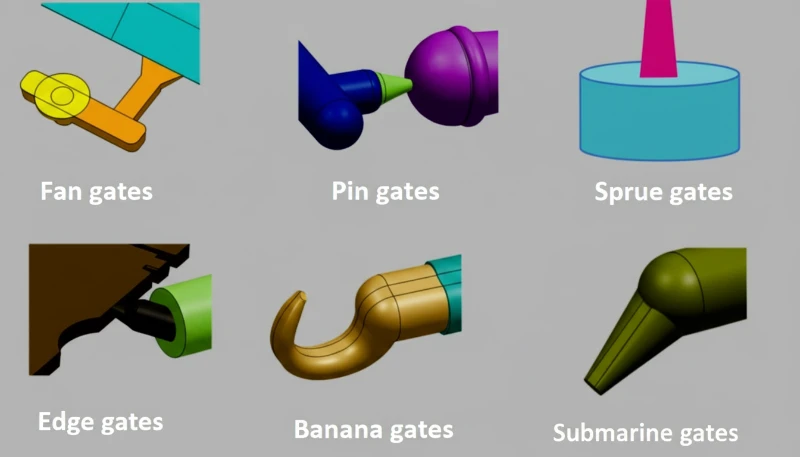
Several shifts are changing how buyers should evaluate Vietnamese injection molding suppliers. Understanding these trends helps you separate suppliers who are investing in capability from those who are competing on price alone.
Supply Chain Diversification Away from China
The China+1 strategy is no longer theoretical. Companies across electronics, consumer goods, and medical devices have actively moved a portion of their injection molding volume to Vietnam since 2019. Apple suppliers like Foxconn and Pegatron have expanded Vietnamese production lines, creating downstream demand for precision plastic components. This shift is pulling mold-making and molding capability upward as suppliers upgrade to meet tighter tolerances and documentation requirements.
Automation and Industry 4.0 Adoption
Leading Vietnamese molders are investing in robotic part removal, automated quality inspection, and real-time process monitoring. Suppliers like HTMP and MIDA have implemented closed-loop production cells with fanuc robots and vision systems. This trend matters because it directly affects consistency: a molder running automated cells can hold tighter CpK values than one relying on manual sorting.
Medical and Cleanroom Molding Growth
ISO 13485-certified molding capacity is expanding in Vietnam as medical device OEMs relocate final assembly. East West Manufacturing’s Vietnam complex already holds ISO 13485, and several smaller molders are pursuing certification. For buyers sourcing medical or diagnostics housings, this means Vietnam is becoming a viable shortlist option where it was not five years ago.
Sustainable and Recycled Material Handling
EU and North American brands are pushing suppliers to use recycled resins and bio-based plastics. Vietnamese molders who can document material traceability and process post-consumer recycled (PCR) content without degrading dimensional quality will have a competitive edge as sustainability requirements tighten in export markets.
How Do You Choose an Injection Molding Supplier in Vietnam?
Choosing a Vietnam injection molding supplier requires more than comparing machine lists. The following framework helps you evaluate real execution capability before you commit tooling budget.
“A structured RFQ comparison should cover tooling ownership, validation discipline, export communication, and inspection evidence before final supplier selection.”True
Buyers who evaluate these four dimensions together reduce the risk of post-award surprises. A supplier can look strong on a website yet still struggle with mold maintenance, engineering change control, or multilingual project follow-up.
“If a Vietnam molder has modern machines, you can safely skip reviewing mold ownership, sampling plans, and change-control responsibility.”False
Machine count alone does not tell you who controls the tool design, who pays for steel modifications, or how process drift is documented after T1. Those commercial and engineering controls determine whether an RFQ becomes a stable production program or a costly recovery effort.
Tooling Depth and Mold Ownership
Ask whether the supplier designs and builds molds in-house or outsources tooling to a third party. In-house tooling gives you faster iteration, clearer responsibility for steel changes, and better control over mold maintenance. If tooling is outsourced, clarify who owns the mold design data and who bears the cost of modifications after T1 sampling.
Quality System Maturity
ISO 9001 is a baseline, not a differentiator. For higher-value programs, look for ISO 13485 (medical), IATF 16949 (automotive), or documented PPAP capability. Request a sample control plan and dimensional report from a current production program. The quality of those documents tells you more about operational maturity than any certificate on the wall.
Communication and Engineering Response Speed
Time zone and language barriers become expensive when they delay DFM feedback, sample approval, or engineering change orders. During your evaluation, test response speed: send a technical question and measure how long it takes to get a substantive answer, not just an acknowledgment. Suppliers who can discuss gate design, draft angles, and material alternatives in clear written English will save you rounds of miscommunication during launch.
Export Experience and Logistics Capability
Verify that the supplier has experience shipping to the European Union, the United States, or Japan, and can provide correct packing lists, certificates of origin, and material declarations. A molder who has never exported outside ASEAN may struggle with customs paperwork, Incoterms compliance, or customer-specific logistics requirements.
Which Are the Top 10 Injection Molding Companies in Vietnam?
The following list covers ten established injection molding and mold-making companies in Vietnam. Each entry includes location, founding year, core capabilities, and differentiating strengths. Use this as a starting shortlist, then validate each supplier against your specific project requirements.
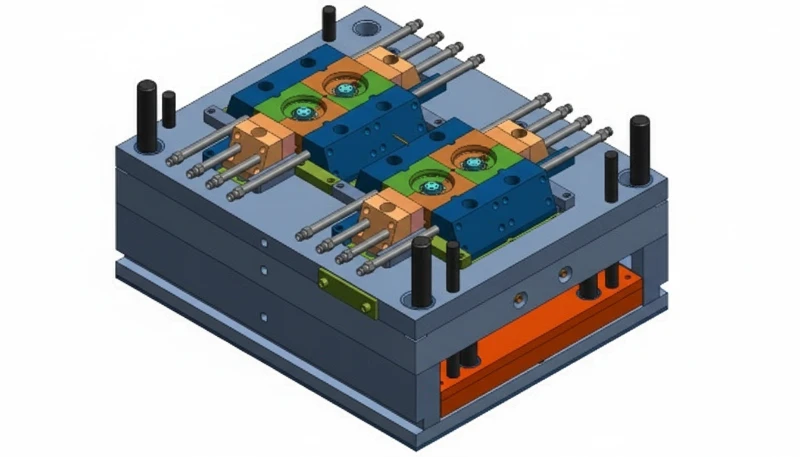
1. HTMP (Hanoi)
Founded: 2006 | Employees: 200–299 | Location: Hanoi
HTMP is one of Vietnam’s most technically capable mold makers. The company specializes in precision plastic injection molds, aluminum die casting, magnesium die casting, and two-color injection molding. Their equipment range spans 50T to 1300T machines. HTMP holds ISO 9001:2015, ISO 14001:2015, and IATF 16949 certifications, making them suitable for automotive and precision industrial programs. Their closed-loop production system and automated manufacturing cells set them apart from smaller Vietnamese tool shops.
2. East West Manufacturing (Ho Chi Minh City)
Founded: 2001 | Employees: 200–299 | Location: Ho Chi Minh City
East West Manufacturing operates a five-factory complex in Vietnam — their largest global operation. They specialize in high-volume, low-mix production and offer New Product Introduction (NPI), complete box builds, and full production runs. Their facility is ISO 9001, ISO 13485, and ISO 14001 certified, with a 4,500 sq ft tool shop capable of building everything from single-cavity to complex multi-cavity molds with slides and lifters. Their electronics manufacturing services (EMS) division adds SMT capability for buyers who need integrated plastic-and-electronics assembly.
3. VMF (Hanoi)
Founded: 2001 | Employees: 200–299 | Location: Hanoi
VMF positions itself as a supply chain platform connecting international buyers with Vietnamese factories. Their core capabilities include injection molding, precision engineering, and ammo can manufacturing. With a global sales office in Singapore, VMF offers one-stop sourcing, project management, logistics management, and supply chain coordination. Their cross-border communication structure and Singapore-based commercial interface make them a good option for buyers who want local manufacturing with international-grade account management.
4. Zion Precision Moulds (Hanoi)
Founded: 2002 | Employees: 200+ | Location: Hanoi
Originally established as a Singapore-Japan joint venture (Sin-Hanel), Zion is now a subsidiary of Kim Tam Joint-stock Company. They operate a 6,000 m² factory in Hanoi with design capabilities in Siemens NX and AutoCAD. Their engineering team speaks English, French, Chinese, and Spanish, which significantly reduces communication risk on export projects. Zion uses CNC, EDM, and wire-cut equipment for mold making, and recently added 3D scanning capability for reverse engineering and mold verification.
Zion provides injection molding services by combining professional mold design with export-grade production capability.
5. DK MOULD (Binh Duong)
Founded: 2013 | Employees: 200–299 | Location: Binh Duong
DK MOULD was established to serve injection molding, blow molding, and stamping industries with European and Japanese quality standards at Vietnamese cost levels. They operate as a joint venture with an American manufacturing company, which gives them direct access to ISO 9001 and ISO 13485 certified systems. Their specialization in injection mold design, blow molds, and punching molds makes them versatile for buyers who need multiple tool types from one supplier.
6. MIDA Precision Mold (Long An)
Founded: 2005 | Employees: 200–299 | Location: Long An
MIDA specializes in injection molds, plastic molding, and precision plastics for medical, electronic, cosmetic, and technical applications. They have invested in equipment from Makino, Mazak, Charmilles, Mitutoyo, and Fanuc, along with full-auto arm robots from Yushin for part removal. Their end-to-end capability from product and mold design through decorating and packaging makes them a strong candidate for buyers who want a single-source supplier for complete plastic part programs.
7. Y Chi Viet (Dong Nai)
Founded: 1993 | Employees: 200–299 | Location: Dong Nai Province
Y Chi Viet (formerly Watson Co., Ltd.) is a joint venture between Vietnam’s Union of Plastics and Watson E.P. Singapore, established in 1993. They bring unique plating and coating capabilities including automatic UV coating with controlled thickness and adhesion trusted by Japanese customers. They are the exclusive Vietnam agent for Lubrizol USA’s CORZAN industrial pipes and FlowGuard houseware pipes. Their injection molding production meets RoHS standards, and they maintain advanced wastewater treatment systems.
8. INT Plastic (Quang Nam)
Founded: 2002 | Employees: 200–299 | Location: Quang Nam
INT Plastic is located in the Dien Nam-Dien Ngoc Industrial Zone and specializes in household, industrial, and technical plastic injection processing. They focus on delivering competitive pricing and reliable delivery times for both domestic and overseas customers. Their straightforward business model — process plastic parts to customer specifications — makes them a practical option for buyers who already have tooling and need stable volume production without complex engineering involvement.
“Vietnam’s best injection molding suppliers combine in-house tooling with export communication capability and documented quality systems.”True
Suppliers who design, build, and maintain molds internally while maintaining clear engineering communication in English can handle the full program lifecycle from RFQ to stable production. This combination is still relatively rare in Vietnam, which is why shortlisting carefully matters.
“The cheapest tool quote from a Vietnam supplier will always produce the lowest total program cost.”False
Low tooling price can hide weaker steel selection, slower communication, incomplete validation, or higher scrap rates during launch. Total landed cost depends on mold life, process stability, logistics, and how quickly the supplier resolves technical issues after T1 sampling.
9. CNCPS Joint Stock Company (Binh Duong)
Founded: 2008 | Employees: 200–299 | Location: Binh Duong
CNCPS JSC has expanded from precision machining into injection molds, plastic parts, stamping, and aluminum die casting. They export to Japan, Germany, and the United States, which demonstrates familiarity with stringent quality expectations across multiple regulated markets. Their focus on high precision and high quality across all production lines makes them suitable for buyers who need tight tolerances and documented process control.
10. Duy Tan Precision Mold (Ho Chi Minh City)
Founded: 2017 | Employees: 180+ | Location: Ho Chi Minh City
Duy Tan Precision Mold was spun off from the Mold-Mechanical Department of Duytan Plastic Group, bringing over 25 years of accumulated mold industry experience into an independent company. Their 8,250 m² facility specializes in plastic injection molds for food and beverage, cosmetic, and medical equipment industries. Their motto — Precision In Every Detail — reflects a focus on high-speed, durable mold systems with scheduled delivery performance.
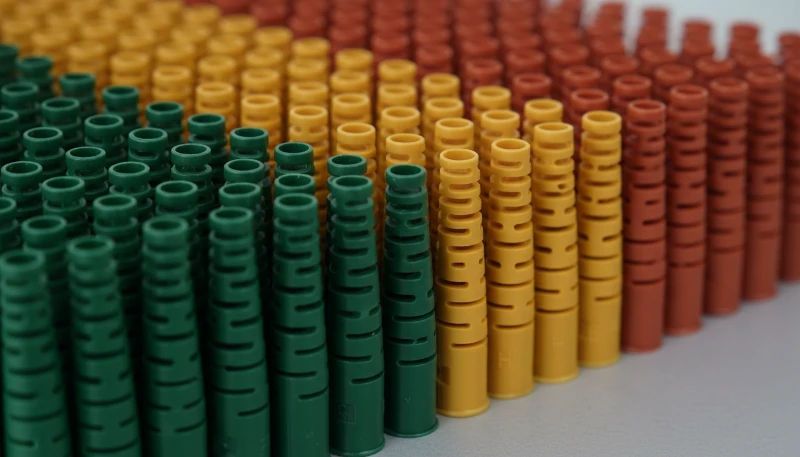
How Does Vietnam’s Injection Molding Cost Compare to China?
Cost is usually the first question buyers ask when comparing Vietnam to China. The answer depends on what you are measuring: tooling, piece price, or total landed cost. Here is a practical benchmark.
Injection mold tooling in Vietnam typically costs 20–35% less than equivalent tooling in China for simple to moderate complexity molds. This gap exists because Vietnamese labor rates for mold makers are still lower, and overhead costs in Vietnamese industrial zones remain competitive. However, the price advantage narrows significantly for high-cavitation, tight-tolerance, or multi-slide molds where material and equipment costs dominate.
Piece price for molded parts can be comparable or slightly lower in Vietnam for standard engineering resins. But the advantage disappears for specialized materials: many high-performance resins (PEEK, PPS, LCP) are not warehoused locally in Vietnam, which means longer lead times and potentially higher material costs due to import logistics.
Total landed cost is where the real comparison matters. For shipments to the EU, Vietnam benefits from EVFTA tariff preferences (most plastic articles at 0% duty), while Chinese-origin goods face standard WTO tariffs. For shipments to the US, both countries face similar tariff treatment under normal conditions, though current trade policy can shift this calculation. Factor in freight, insurance, communication overhead, and the cost of extra sampling rounds when a supplier is still learning your quality expectations.
When Is Vietnam the Right Sourcing Choice for Injection Molding?
Vietnam is the right sourcing choice when you need low-to-mid volume production, tariff advantages for EU shipments, or a China+1 diversification plan. The country’s manufacturing base does well in these scenarios, but it is not a universal replacement for China. Here is a clear breakdown.
When Vietnam Is the Better Choice
Choose Vietnam when you need low-to-mid volume production (1,000–500,000 units/year) of consumer, electronics, or medical housings where EVFTA or CPTPP tariff advantages matter, when your program can tolerate 2–4 week lead times for mold building, or when you are deliberately diversifying supply chain risk away from a single-country dependency.
When China Is the Better Choice
Choose China when you need high-cavitation production molds (16+ cavities), tight-tolerance engineering parts, a deep material selection including high-performance resins, or fast-turnaround prototyping-to-production timelines. China’s supply chain density — mold steel suppliers, hot runner vendors, resin distributors, secondary process shops — is still years ahead of Vietnam. For complex programs where mold design iteration speed and material availability are critical, China remains the stronger option.
Frequently Asked Questions About Injection Molding in Vietnam
Frequently Asked Questions
What is the average tooling cost for an injection mold in Vietnam?
A single-cavity injection mold in Vietnam typically costs between USD 3,000 and USD 8,000 depending on part complexity, surface finish requirements, and steel selection. Multi-cavity molds range from USD 10,000 to USD 30,000 or more for complex tooling with side actions, lifters, or hot runner systems. This pricing is generally 20 to 35 percent less than equivalent Chinese tooling for similar complexity levels. Always request a detailed tooling breakdown that specifies steel type, number of cavities, surface treatment, and expected mold life so you can compare quotes on equal engineering terms rather than headline price alone.
How long does it take to build an injection mold in Vietnam?
Standard lead time for a single-cavity mold in Vietnam is four to six weeks from design approval to T1 sampling. Multi-cavity molds or complex tooling with side actions, lifters, or unscrewing cores typically take eight to twelve weeks. You should add one to two weeks for T1 sampling, full dimensional inspection, and first article approval before production release. Suppliers with in-house tooling capacity like HTMP or Zion can usually deliver faster than those who outsource mold building to third-party tool shops, so ask about tooling location early in your evaluation.
Can Vietnam injection molding suppliers handle medical-grade production?
Several Vietnam suppliers hold ISO 13485 certification for medical device manufacturing, including East West Manufacturing and DK MOULD through their joint venture structure. However, dedicated cleanroom molding capability is still limited compared to more mature manufacturing hubs like China. If your program requires ISO Class 7 or Class 8 cleanroom production with documented material traceability and biocompatibility testing, verify cleanroom certification status directly and ask for a sample device history record before awarding the program. This extra verification step reduces the risk of compliance gaps surfacing during your quality audit.
What is the minimum order quantity (MOQ) for injection molding in Vietnam?
MOQ varies by supplier but typically ranges from 1,000 to 10,000 pieces per production run for standard injection molding. Some suppliers will accommodate lower volumes if you accept a higher unit price to cover setup costs. For prototyping and bridge production, ask whether the supplier offers low-volume molding services using aluminum or soft steel tooling that can produce 100 to 500 parts for design validation before you commit to full production tooling. This approach lets you test part function and supplier communication quality without a large upfront tooling investment.
Are Vietnam injection molding suppliers competitive for automotive parts?
Vietnam suppliers with IATF 16949 certification like HTMP can serve automotive programs, particularly for interior trim components, under-hood covers, and other non-safety-critical plastic parts. For safety-critical components that require PPAP Level 3 documentation, validated process capability studies, and full material traceability to the heat-lot level, China’s more mature automotive supply base currently holds a clear advantage in both experience and supporting infrastructure. Always match your automotive program’s documentation requirements against the supplier’s demonstrated track record rather than their stated certification ambitions.
What payment terms do Vietnam injection molding suppliers typically offer?
Standard payment terms are 30 to 50 percent deposit on tooling with the balance due after T1 sample approval, plus net 30 to 60 days on production orders. Some established suppliers with export experience will negotiate milestone-based tooling payments tied to design review, steel cutting, and first sampling. Letters of credit are common for first-time export transactions and provide protection for both parties. Always confirm payment terms, settlement currency, and banking details in writing before placing a purchase order, and verify that the supplier’s bank can handle international transfers efficiently.
How do I verify the quality of a Vietnam injection molding supplier before committing?
Request a process flow diagram, control plan, and a recent dimensional inspection report from an active production program. Ask for copies of ISO certificates and verify them directly through the issuing certification body. If travel is not practical, arrange a live video factory tour or commission a third-party audit through a firm like QIMA or SGS. The quality of a supplier’s documentation response tells you as much as the documents themselves. A supplier who sends clear, complete records in one round will be easier to work with throughout the program than one who needs multiple follow-ups for basic information.
Why Is ZetarMold the Right Partner for Vietnam Buyers?
ZetarMold is the right partner for Vietnam buyers who need reliable tooling, clear engineering communication, and export-ready documentation. Our Shanghai factory combines in-house mold manufacturing with integrated injection molding under one roof.
In our Shanghai factory, we run 47 injection molding machines from 90T to 1850T, and our in-house mold manufacturing facility supports 100+ mold sets per month with experience across 400+ plastic materials. In our experience, our engineers can help Vietnam buyers benchmark tooling risk, resin choice, and export documentation before they commit budget.
ZetarMold works under ISO 9001, ISO 13485, ISO 14001, and ISO 45001 systems, which means buyers evaluating medical, automotive, or industrial programs can compare our quality management baseline against any Vietnam finalist. Our engineering team reviews gate layout, shut-offs, resin risk, and tolerance assumptions before steel is cut, reducing the number of sampling rounds needed to reach production approval.
For buyers weighing Vietnam against China, we offer a straightforward comparison: send your part drawings and we will return a detailed DFM review, competitive tooling quote, and production timeline within one business day. No generic proposals — just specific engineering feedback you can put beside any Vietnam quotation.
Ready to compare? See our supplier sourcing guide for a comprehensive evaluation framework, or request a free quote directly.
-
injection molding: Injection molding is a manufacturing process in which thermoplastic or thermoset material is injected into a mold cavity to produce repeatable parts. ↩
-
injection molding market: injection molding market refers to vietnam’s plastics and injection molding sector has grown as multivariate manufacturers diversify supply chains beyond China, supported by FDI incentives and low labor costs. ↩
-
FDI: Foreign Direct Investment (FDI) refers to an investment made by a firm or individual in one country into business interests located in another country. ↩




 EN
EN  ES
ES  FR
FR  DE
DE  PT
PT  AR
AR  RU
RU  JA
JA  KO
KO  IT
IT  NL
NL  TR
TR  PL
PL 