- Indonesia's plastics market exceeded USD 7 billion in 2021 and is growing at over 6% CAGR through 2027.
- Top 10 Indonesian injection molding companies span automotive, packaging, consumer goods, and medical sectors.
- Tooling costs in Indonesia are 20–40% lower than in Europe but 10–30% higher than in China for comparable quality.
- Buyers should verify ISO certifications, mold ownership terms, and export communication capability before awarding RFQs.
- An offshore partner like ZetarMold can complement local Indonesian sourcing when broader tonnage range or faster DFM turnaround is needed.
Indonesia’s plastics market was valued at over USD 7 billion in 2021, with a projected CAGR1 above 6% through 2027. The country’s manufacturing sector benefits from a young workforce, competitive labor costs, and a strategic position within Southeast Asian supply chains. Injection molding in particular serves packaging, automotive, electronics, and consumer goods — the four pillars of Indonesian industrial demand.
This guide walks through the market landscape, key industry trends, a structured supplier-selection framework, detailed profiles of the top 10 injection molding companies in Indonesia, cost comparisons with China, and clear guidance on when Indonesia is the right sourcing choice. Whether you are evaluating local suppliers or comparing them against an offshore option like ZetarMold, the goal is to help you make a faster, more informed sourcing decision.
What Does Indonesia’s Injection Molding Market Look Like?
Indonesia is the largest economy in Southeast Asia and one of the fastest-growing plastics markets in the region. The domestic demand for plastic products is driven by a population of over 270 million, rapid urbanization, and expanding middle-class consumption. The packaging sector alone accounts for roughly 40% of total plastics consumption, followed by automotive components at around 20% and electronics at approximately 15%.
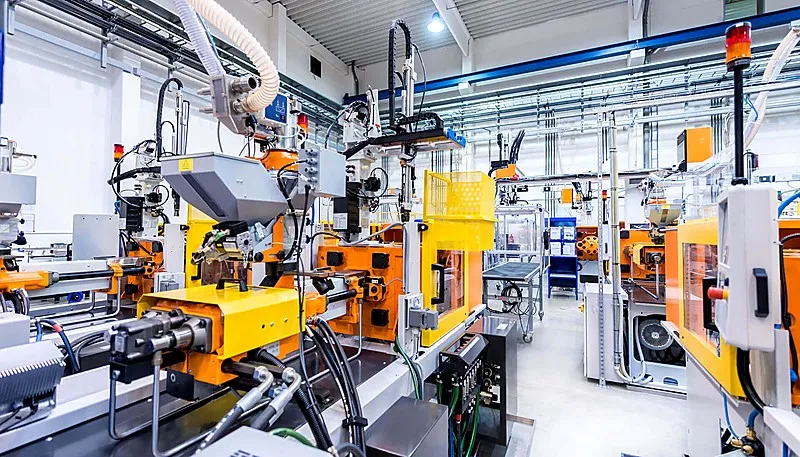
The country hosts over 1,200 registered plastics manufacturers, ranging from small job shops to large integrated operations with ISO-certified production lines. Most injection molding capacity is concentrated on Java — particularly in the industrial corridors around Jakarta, Bekasi, Cikarang, and Surabaya — where infrastructure, logistics, and access to ports support export-oriented production.
Indonesian molders generally serve two tiers of demand: high-volume commodity packaging (bottles, caps, containers) and mid-to-high-precision industrial components (automotive interior/exterior parts, electrical housings, medical devices). The precision segment has grown steadily as Japanese, Korean, and European OEMs have expanded local procurement from their Indonesian supply bases.
Raw material supply remains a structural constraint — Indonesia imports roughly 60% of its resin needs — which means lead times and material costs can fluctuate with global petrochemical markets. Buyers should factor this into total cost calculations when comparing Indonesian suppliers against Chinese alternatives with deeper upstream integration.
What Trends Are Shaping Indonesia’s Injection Molding Industry?
The main trends shaping Indonesia’s injection molding industry are automation, local-content sourcing, and recycled-material capability. Understanding these shifts helps buyers anticipate lead-time, quality, and capability risks before they shortlist suppliers.
Automation and Industry 4.0 Adoption
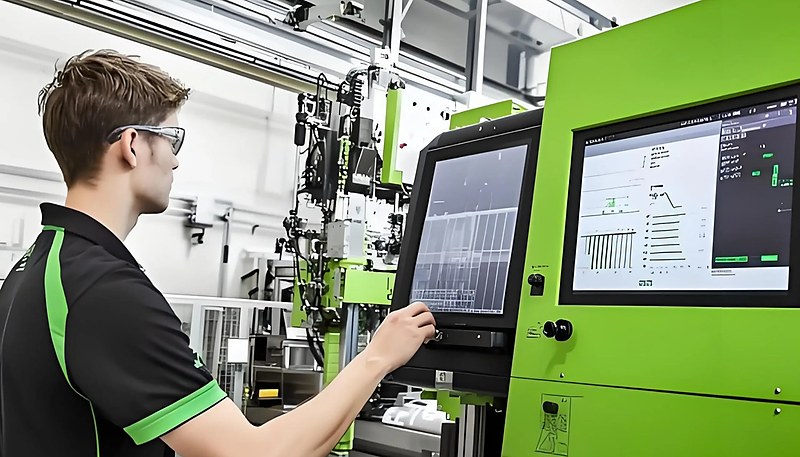
Leading Indonesian molders — especially those serving automotive OEMs — are investing in robotic part removal, inline quality inspection, and real-time process monitoring. Companies like PT. FLN and PT Padma Soode Indonesia have adopted IATF 169492-compliant systems that require documented process control and statistical evidence of capability. This trend pushes the industry toward tighter tolerances and more consistent batch-to-batch quality.
Automotive Localization Requirements
Indonesia’s local-content rules (TKDN3) require a minimum percentage of domestically manufactured components in vehicles sold locally. This policy drives Japanese and Korean automakers to source injection molded interior and exterior parts from Indonesian suppliers rather than importing them. The result: more investment in larger-tonnage machines (500T–1000T), in-mold assembly capability, and surface-finish expertise.
Sustainable Materials and Circular Economy
Indonesia’s government has introduced stricter regulations on single-use plastics, and major consumer-goods brands are shifting toward recycled-content resins and bio-based polymers. Injection molders that can process rPET, bio-PE, and recycled PP are gaining preferential access to packaging contracts. PT. Tunggal Jaya Plastic, for example, has integrated recycled HDPE into its product range. Buyers comparing injection molding production time should verify tooling, sampling, and packaging lead times separately.
Export-Oriented Expansion
Indonesian molders are increasingly targeting regional export markets — Malaysia, Thailand, the Philippines, and Australia — rather than relying solely on domestic volume. This shift requires stronger English-language communication, better documentation practices, and compliance with international quality standards like ISO 9001, ISO 14001, and IATF 16949.
How Do You Choose an Injection Molding Supplier in Indonesia?
Selecting the right injection mold supplier in Indonesia requires more than comparing machine lists. Here is a practical five-dimension framework:
1. Certifications and Quality Systems
At minimum, verify ISO 9001 certification. For automotive or medical applications, require IATF 16949 or ISO 13485 respectively. Ask for audit reports, corrective-action records, and recent customer quality scorecards — not just the certificate itself.
2. Mold Design Ownership and Tooling Depth
Clarify who designs the injection mold, who selects the steel grade, and who pays for modifications after T1 sampling. Some Indonesian suppliers outsource tool building, which can complicate timeline control and warranty enforcement.
3. Machine Tonnage and Capacity Match
Match your part size and volume to the supplier’s press range. Indonesia has strong capacity in the 100T–500T range but fewer options above 1000T. If your project requires large automotive or industrial housings, confirm that the supplier has both the tonnage and the envelope size to run your tool.
4. Export Communication and Documentation
If you are sourcing from outside Indonesia, evaluate English-language capability, response speed, and willingness to provide inspection reports, dimensional data, and process documentation in a format your engineering team can use. This is where smaller Indonesian shops often fall short.
5. Total Landed Cost, Not Just Unit Price
Factor in mold cost, sampling iterations, material surcharges (resin imports), inland freight to port, ocean freight, customs duties, and currency risk. A lower unit price at the factory gate may not translate to lower total cost once logistics and quality-rejection risk are included.
Which Are the Top 10 Injection Molding Companies in Indonesia?
The top 10 injection molding companies in indonesia are the suppliers compared below based on capability, industry fit, and sourcing reliability. Below are ten established Indonesian injection molding companies, selected based on operational history, industry certifications, and documented production capabilities. Each profile includes location, founding year, workforce size, core capabilities, and key differentiators.
1. PT. Tunggal Jaya Plastic
Location: Gunung Putri, West Java | Founded: 1974 | Employees: 300–399 | Industries: Packaging, pharmaceuticals, food & beverage, cosmetics
PT. Tunggal Jaya Plastic is one of Indonesia’s most experienced rigid-plastic packaging manufacturers, with over 50 years of operating history. The company operates integrated injection molding and blow molding lines, producing bottles, containers, pharmaceutical packaging, and closures from a range of resins including PC, PE, PP, PVC, PS, ABS, and PET.
Their in-house mold-making capability allows faster design iteration for custom packaging. Key strength: deep experience in FDA- and BPOM-compliant (Indonesia’s food and drug authority) packaging for pharmaceutical and food-contact applications.
2. PT. FLN
Location: Jawa Barat | Founded: 2000 | Employees: 300–399 | Industries: Automotive, exterior/interior accessories
PT. FLN specializes in plastic extrusion blow molding, vacuum forming, acrylic compression molding, and polyurethane injection molding. Their manufacturing process is IATF 16949-certified, making them a qualified supplier for automotive OEM programs.
FLN has earned OEM contracts with major Asian automakers for spoilers, bumper guards, side body moldings, over fenders, and console boxes. Their integrated design-to-production service covers most exterior and interior accessories. Key strength: automotive-grade quality system with proven OEM track record.
3. PT. JAEIL INDONESIA
Location: Cikarang, West Java | Founded: 1999 | Employees: 200–299 | Industries: Automotive interior components
PT. JAEIL INDONESIA operates two manufacturing plants totaling 4,100 m² in Cikarang, focused on precision injection molded automotive interior parts: mirror housings, garnish panels, airbag covers, radiator bases, and meter covers. Since transitioning to full local ownership in 2014, the company has invested in newer machinery and tighter process controls.
Key strength: specialized focus on automotive interior components with a lean, locally owned operation that understands domestic OEM expectations.
4. PT. KIRANA JAYA MULTI (KJM)
Location: Lippo Cikarang, West Java | Founded: 2014 | Employees: 100–199 | Industries: Automotive exterior accessories
PT. KIRANA JAYA MULTI produces injection molded and blow molded automotive accessories: rear roof spoilers, front and rear bumper spoilers, side skirts, backdoor moldings, and bumper guards. Their process capabilities include injection molding, blow molding, sanding, and finishing under one roof.
Key strength: integrated molding and finishing for automotive exterior trim, with a quality-first operating philosophy.
5. PT Pandawa Cipta Mandiri (PCM)
Location: Cikarang area, West Java | Founded: 1999 | Employees: 100–199 | Industries: Mold making, CNC machining, precision parts
PCM began as a mold maker and CNC machining center, and has since expanded into plastic injection molding production. They offer integrated mold design, tool fabrication, and molding — an advantage for buyers who want tooling and production under one commercial umbrella.
Key strength: strong mold-making foundation with CNC and jig/fixture capability, suited for precision programs where tool maintenance responsiveness matters.
6. PT Cosmo Makmur Indonesia
Location: Cileungsi, Bogor | Founded: 2002 | Employees: 100–199 | Industries: Food-grade packaging, household products
PT. Cosmo Makmur Indonesia specializes in injection blow molding of food-grade plastic packaging: bottles, gallons, and containers for food & beverage, electronics spare parts, and household applications. Their facility in Cileungsi is designed for scalable production with dedicated food-safety controls.
Key strength: food-grade packaging focus with established domestic distribution across multiple consumer segments.
7. PT. GAYA REMAJA
Location: East Java | Founded: 1999 | Employees: 50–99 | Industries: Houseware, packaging, industrial equipment
PT. Gaya Remaja provides plastic injection and blow molding services for houseware products, packaging, shoes and accessories, industrial equipment components, and extrusion parts. Operating under the Foxstars International group, they combine 25+ years of experience with secondary processing capabilities.
Key strength: diversified product range with secondary processing (extrusion, finishing) and group-level infrastructure.
8. PT Padma Soode Indonesia (PSI)
Location: Bekasi, West Java | Founded: 1989 | Employees: 50–99 | Industries: Automotive, electronics, rubber components
PSI offers integrated services from tooling design and fabrication through metal stamping, precision machining, plastic injection molding, and final assembly — a true one-stop solution. Their facilities hold ISO 9001 and ISO 14001 certifications, and their main site has EPTE (Export Production Facility for Tax Exemption) status.
Key strength: vertically integrated manufacturing with tooling, molding, stamping, and assembly, plus export-zone tax advantages for international buyers.
9. PMM-KAC Group
Location: Banten (25 km west of Jakarta) | Founded: 1978 | Employees: 50–99 | Industries: Precision injection molding, packaging
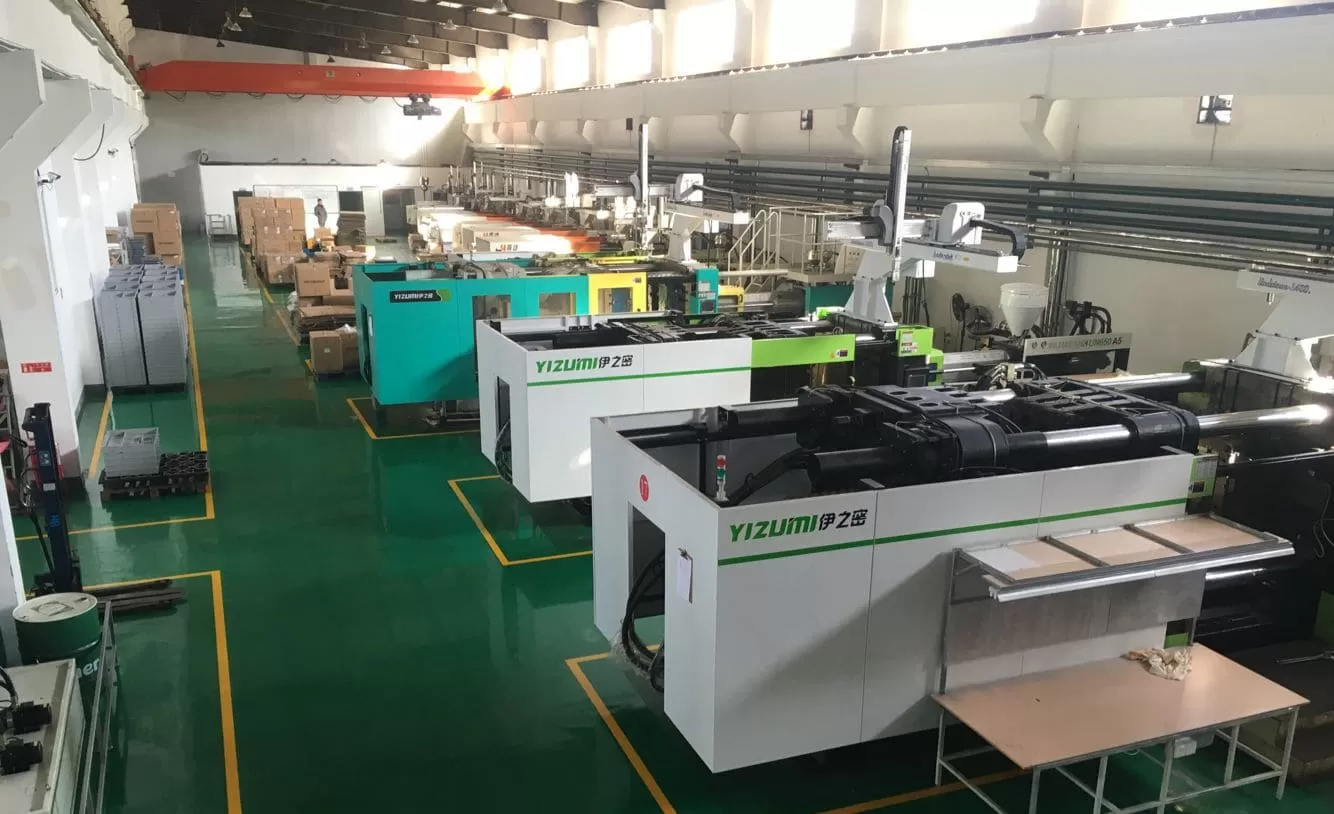
PMM-KAC operates an 8,000 m² facility housing 40 injection molding machines ranging from 100T to 500T, with expansion planned to 850T. They also partner with blow molding and flexible packaging producers to offer turnkey solutions. Their process covers planning, prototyping, production, and logistics.
Key strength: large machine fleet (40 presses) with strong mid-range tonnage coverage, suitable for volume packaging and consumer-product programs.
10. OptiMIM Indonesia
Location: Banten | Founded: 2001 | Employees: 50–99 | Industries: Metal injection molding, precision components
OptiMIM, a Form Technologies company, specializes in metal injection molding (MIM) — producing high-precision small metal components in stainless steel, low-alloy steel, and copper. While not a traditional plastic injection molder, OptiMIM represents the growing precision-manufacturing capability within Indonesia for buyers who need both plastic and metal components sourced regionally.
Key strength: MIM expertise for miniature precision metal parts, relevant for electronics, medical devices, and automotive sensors.
How Does Indonesia’s Injection Molding Cost Compare to China?
Cost is often the deciding factor when buyers evaluate Indonesian versus Chinese injection molding suppliers. Here is a practical comparison across the main cost drivers:
Mold/tooling cost: Indonesian tooling prices are typically 20–40% lower than European or North American quotes, but 10–30% higher than equivalent Chinese tooling. The gap narrows for simpler molds but widens for multi-cavity or high-precision tools where China’s supply-chain density (steel suppliers, hot-runner vendors, EDM shops) drives faster turnaround at lower cost.
Per-part price: Indonesian part prices are competitive for mid-volume runs (10,000–500,000 units/year) in standard resins. For high-volume commodity parts, China’s scale advantages — larger machine fleets, bulk resin purchasing, and automated cells — typically deliver 15–25% lower unit costs.
"A reliable Indonesia supplier shortlist should compare tooling depth, quality-system evidence, and export communication capability — not just machine count."True
A supplier can appear strong on paper yet struggle with mold maintenance, engineering change control, or English-language project management. Buyers reduce risk when they evaluate capability, documentation, and communication together.
"If a molder has modern machines, you can skip reviewing mold ownership, sampling plans, and change-control responsibility."False
Machine count alone does not tell you who controls tool design, who pays for steel modifications, or how process drift is documented after T1 sampling. Those controls determine whether an RFQ becomes a stable program.
Lead time: Tooling lead times in Indonesia average 6–10 weeks for a single-cavity mold, versus 4–8 weeks in China. Production lead times are comparable once the tool is qualified.
Hidden costs: Both countries require attention to logistics, tariffs, and currency risk. Indonesia’s import duty on raw resin (when not locally sourced) can add 5–10% to material cost. Ocean freight from Jakarta is generally comparable to Shanghai for Southeast Asian destinations but 10–20% higher for Europe or North America.
When Is Indonesia the Right Sourcing Choice for Injection Molding?
Indonesia is the right sourcing choice when communication, regional proximity, and mid-volume production matter more than the lowest unit price. Indonesia makes sense as a primary sourcing destination in specific scenarios:
"Indonesia's local-content requirement (TKDN) makes domestic injection molding suppliers essential for automotive programs sold within the country."True
The TKDN policy mandates minimum domestic content percentages for vehicles sold in Indonesia. International automakers must source a portion from certified local suppliers to comply.
"All Indonesian injection molding companies can match Chinese suppliers on price, lead time, and material range."False
Indonesian suppliers are competitive for mid-volume standard-material programs but generally cannot match China's scale on high-volume pricing, complex tooling speed, or 400+ engineering material options.
Choose Indonesia When:
Southeast Asian distribution is your priority. If your end markets are Indonesia, Malaysia, Thailand, or the Philippines, local production reduces freight cost, shortens delivery, and avoids ASEAN-external tariff exposure.
You need automotive local-content compliance. Indonesia’s TKDN requirements mandate domestic content percentages. If you supply into the Indonesian automotive market, you need a local molder regardless of comparative cost.
Your volumes are moderate and quality requirements are mid-range. For packaging, houseware, and standard industrial components in the 10,000–500,000 unit/year range, Indonesian suppliers offer competitive pricing with shorter communication distances for ASEAN-based procurement teams.
Choose China (or a China-Based Partner) When:
You need larger tonnage or broader material capability. China’s supplier base offers machines from 90T to 4000T+ and processes 400+ engineering materials, compared to Indonesia’s more limited range.
Tooling complexity or speed is critical. Chinese mold shops with in-house CNC, EDM, wire-cut, and CMM can deliver complex multi-cavity tools in 4–6 weeks with documented dimensional evidence.
You need integrated mold + molding + assembly under one roof. Companies like ZetarMold offer end-to-end service from DFM review through mold fabrication, production molding, secondary operations, and shipment — with 30+ English-speaking project managers and 24-hour DFM response times.
"Cross-border supplier sourcing is safer when buyers verify ISO coverage, inspection evidence, and response speed before final RFQ comparison."True
A shortlist becomes more reliable when each supplier shows process documentation, corrective-action discipline, and fast engineering feedback — letting buyers compare execution quality rather than relying on sales language.
"The cheapest tool quote normally creates the lowest total landed cost for an injection molded program."False
Low tooling price can hide weaker steel selection, slower communication, incomplete validation, or higher scrap during launch. Total landed cost depends on mold life, process stability, logistics, and issue-resolution speed.
Frequently Asked Questions About Injection Molding in Indonesia
What is the average lead time for an injection mold built in Indonesia?
A single-cavity production mold in Indonesia typically takes 6 to 10 weeks from purchase order to T1 sampling. Multi-cavity or high-precision molds may require 10 to 14 weeks depending on complexity. Lead times depend on mold design complexity, steel grade availability, and the supplier’s in-house tooling depth. Buyers who need faster turnaround should confirm whether the molder builds tools internally or outsources to a third-party tool shop, since outsourced tooling adds coordination overhead and extends the timeline beyond the initial quotation estimate.
Are Indonesian injection molding companies ISO certified?
Many of the larger Indonesian injection molding suppliers hold ISO 9001 certification, and several automotive-focused manufacturers like PT. FLN maintain IATF 16949 accreditation. However, smaller shops may operate without formal certification, relying on customer audits and informal quality practices. For regulated or export-oriented programs, always request current certificates and, when possible, recent third-party audit reports or customer quality performance scorecards. The certificate alone does not guarantee process discipline — documented corrective-action records and consistent inspection evidence are stronger signals of actual quality capability.
Can Indonesian suppliers handle overmolding and insert molding?
Some Indonesian suppliers can handle overmolding and insert molding, including PT. FLN, PT Padma Soode Indonesia, and PT Pandawa Cipta Mandiri, which offer multi-process capability. However, overmolding and insert molding require specific machine configurations such as rotary platens or multi-barrel units, along with proven process expertise in substrate bonding and material compatibility. Before committing, confirm that the supplier has demonstrated tool design ownership for multi-shot tools, can provide bonding test data, and has realistic cycle-time expectations documented from previous production runs.
How does the Indonesian rupiah exchange rate affect injection molding costs?
The Indonesian rupiah has historically been volatile, with periods of 5 to 10 percent fluctuation against the US dollar within a single calendar year. For fixed-price contracts, buyers should negotiate a currency clause or index the quotation to a reference exchange rate with an agreed date. For longer-running production programs, consider splitting material cost — which is often USD-denominated because resins are imported — from conversion cost, which is IDR-denominated. This structure isolates each party from the currency exposure most relevant to their actual cost base.
Is it realistic to source injection molded parts from Indonesia for the US or European market?
Yes, it is realistic for the right programs. Packaging components, automotive sub-assemblies, and consumer-goods parts are commonly exported from Indonesia to both the US and European markets. Buyers should factor in ocean transit time of 4 to 6 weeks to Europe and 5 to 7 weeks to the US West Coast, plus customs clearance and any applicable anti-dumping duties. A thorough total landed cost analysis should compare the full supply chain — including freight, insurance, tariffs, and quality rejection buffer — rather than relying solely on ex-works pricing from the factory.
What is the typical MOQ for injection molding production in Indonesia?
Minimum order quantities vary significantly across Indonesian suppliers. Large packaging molders may require minimum runs of 50,000 or more units per production order, while smaller job shops can accept orders from 1,000 to 5,000 units. For prototyping and low-volume bridge production, some suppliers offer short-run molding using aluminum tools, though this capability is less common in Indonesia than in China. Buyers with smaller volume requirements should explicitly discuss MOQ flexibility during the RFQ stage and confirm whether the supplier can accommodate batch-size adjustments without tooling redesign or setup cost penalties.
How do I verify an Indonesian injection molding supplier’s actual production capability?
The most reliable approach is to commission a factory audit, either by visiting in person or through a reputable third-party inspection firm. During the audit, verify the actual machine inventory including tonnage range, machine age, and brand against what was quoted. Ask to see dimensional inspection records from recent production runs, and confirm that the quality lab has calibrated measurement equipment such as coordinate measuring machines and profile projectors. A supplier that can provide CMM reports, process capability index data, and documented corrective-action examples is demonstrating real operational maturity rather than just sales presentation.
Why Is ZetarMold the Right Partner for Indonesia Buyers?
If your sourcing evaluation extends beyond Indonesia’s borders, ZetarMold offers a complementary offshore option with specific advantages for Indonesian and ASEAN-based buyers:
Broader machine range: ZetarMold’s Shanghai facility operates 45 injection molding machines from 90T to 1850T — covering the full spectrum from micro-parts to large automotive and industrial components up to 10 kg shot weight. This tonnage range exceeds what most Indonesian suppliers can offer in-house.
Integrated mold manufacturing: With an in-house mold shop equipped with CNC machining centers, EDM, wire-cut EDM, precision engravers, and grinders, ZetarMold builds and maintains tools entirely under one roof. This eliminates the tooling-versus-molding coordination risk that complicates projects at suppliers who outsource mold building.
Quality documentation and communication: 30+ English-speaking project managers and 8 senior engineers with 10+ years of experience provide ≤24-hour DFM response. Quality follows a six-step process from IQC through OQC, backed by ISO 9001, ISO 13485, ISO 14001, and ISO 45001 certifications. In our experience, our engineers use 0.02 mm CMM checkpoints, 24.0 hours DFM response targets, and 10,000 parts pilot-run thresholds to separate sourcing risk from normal supplier variation.
Material breadth: ZetarMold processes 400+ materials, including engineering-grade resins (PEEK, PPS, PPSU, PC, PC/ABS) and commodity polymers — enabling a single supplier to cover multiple material requirements across your product portfolio.
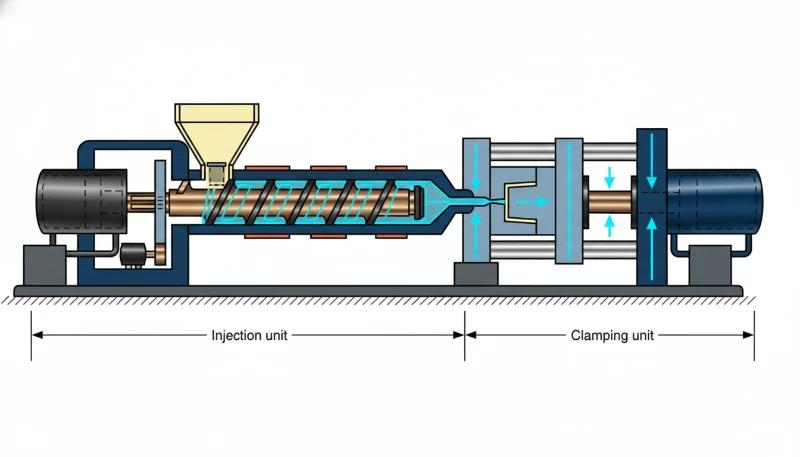
For Indonesian buyers who need larger tonnage, faster tooling turnaround, or broader material capability than local suppliers can provide, ZetarMold offers a proven offshore alternative. Request a Free Quote, and compare tonnage and shot-size constraints with our screw injection molding machine guide before finalizing the RFQ.
CAGR: CAGR refers to compound Annual Growth Rate measures the annualized average rate of return over a specified period, used here to describe the projected growth trajectory of Indonesia's plastics market. ↩
IATF 16949: IATF 16949 refers to is the international quality management system standard for the automotive industry, developed by the International Automotive Task Force. It defines requirements for process control, defect prevention, and continuous improvement in automotive supply chains. ↩
TKDN: TKDN refers to tingkat Komponen Dalam Negeri (TKDN) is Indonesia's local content requirement policy, which mandates a minimum percentage of domestically manufactured components in products sold in certain sectors, including automotive. ↩