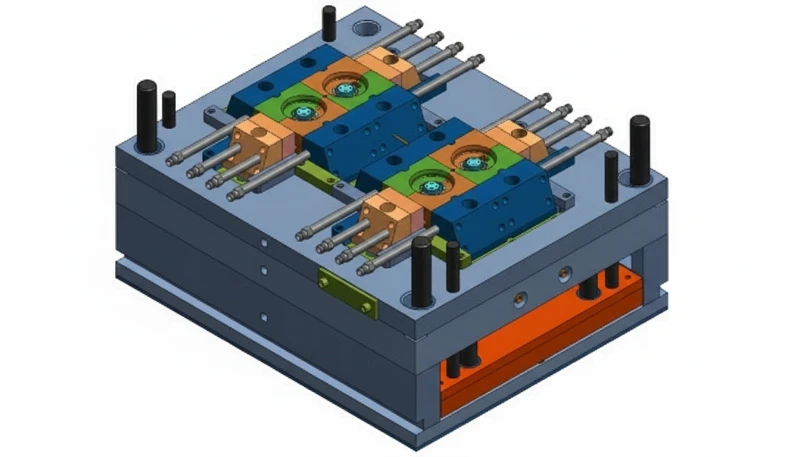
Introduction: Molds are super important in industry today, and the quality1 of your molds directly affects the quality of your products.
The plastic2 injection molding3 molds production process is generally divided into: customer customization, mold design, mold manufacturing, mold inspection and mold trial, mold modification and mold repair, mold maintenance, and the following will explain them one by one.
How Does Customer Customization Shape the Injection Mold Process?
"The quality of an injection mold should be evaluated through process stability, mold design rigor, material behavior, and inspection evidence."True
A reliable production decision needs more than a definition; it needs tooling, resin, process window, and quality-control context.
"A low unit price alone is enough to judge an injection molding project."False
Tool life, scrap risk, dimensional drift, supplier response time, and validation records can outweigh a small quoted price difference.
- DFM review before steel cutting reduces rework cost by 30-50 percent, making early collaboration between buyer and toolmaker the single highest-ROI step in the injection mold manufacturing process
- The mold design phase controls over 80 percent of final mold quality, so investing in experienced designers and thorough cavity layout review pays off across the entire production lifecycle
- CNC machining, EDM, wire cutting, and bench assembly each contribute to dimensional accuracy, meaning that process selection depends on part geometry complexity and the required surface finish tolerance
"Early DFM review reduces mold rework and production surprises."True
Wall thickness, ribs, gates, draft, ejection, cooling, and material selection are cheaper to adjust before steel is cut.
"If a molded part looks acceptable once, the process is automatically production-ready."False
Production readiness requires repeatable cycles, documented inspection, stable material conditions, and clear acceptance criteria.
Customer customization is the process of converting your drawings and specs into a task list that drives every downstream mold decision. This task list dictates mold structure, cavity layout, gate placement, and ejection strategy. The production of plastic molds starts with the customer’s engineering people giving the mold maker product drawings. The mold maker takes the product data, analyzes the feasibility of the product, makes a preliminary design of the mold, and then provides a quotation.
For a broader view, our injection molding complete guide covers process fundamentals, material behavior, and production decisions.
For a broader view, our injection molding complete guide covers process fundamentals, material behavior, and production decisions.
Plastic Parts Production Requirements
You need to understand the technical requirements of the parts, such as whether they can be processed, whether they can be accurately dimensioned, etc.
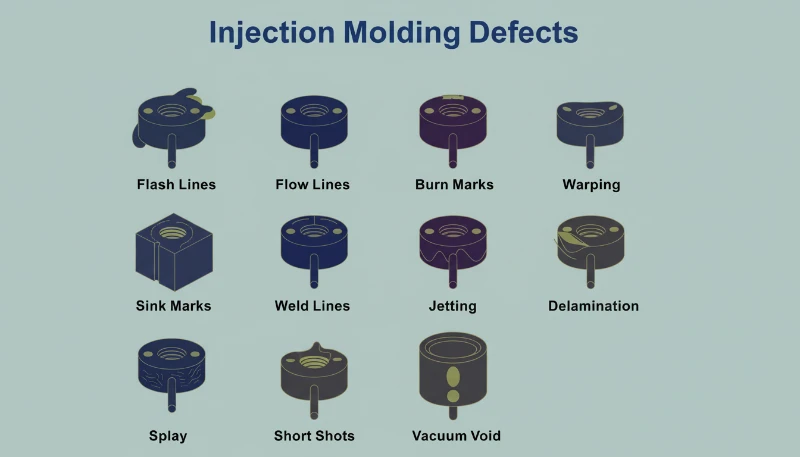
For example, what are the requirements for the appearance shape, color transparency, and performance of plastic parts? Is the geometric structure, slope, insert, etc. of the plastic parts reasonable? What is the allowable degree of molding defects such as weld marks and shrinkage holes, and whether there is post-processing such as painting, electroplating, silk screen printing, and drilling.
Estimate whether narrow dimensional tolerances and if the plastic part can be molded that meets the requirements. Also, you need to know the plasticization and molten plastic process parameters of the plastic.
Process Information
Understand the requirements of the injection mould method, beer machine model, plastic resin performance, mold structure type, etc.
The molding material should be strong enough for the plastic materials part, flow well, be the same all over, be the same in all directions, and not change when it gets hot.
Depending on what the plastic part is for and if it gets worked on later, the molding material should be good for dyeing, metal plating, looking good, being stretchy and bendy enough, see-through or shiny, sticking together (like with sound waves) or getting welded.
Select Molding Equipment
Injection capacity, clamping pressure, injection pressure, injection unit , mold installation size, ejection device and size, nozzle hole diameter and nozzle spherical radius, gate sleeve positioning ring size, maximum and minimum thickness of the mold, template stroke, etc.
Specific Mold Structure Plan
Two-plate mold, three-plate mold. Whether the mold structure is reliable, whether it meets the process technology (such as geometric shape, surface finish and dimensional accuracy, etc.) and production economic requirements of plastic parts (low part cost, high production efficiency, continuous mold operation, long service life, labor saving, etc.).
What Goes Into Injection Mold Structure Design?
Mold structure design controls over 80% of final mold quality and determines cycle-time stability and tool longevity. It balances customer requirements against processing cost, difficulty, and lead time.
A good mold design is: under the premise of meeting the customer’s requirements, the processing cost is low, the processing difficulty is small, and the processing time is short.
To achieve this, you must not only fully understand the customer’s requirements, but also understand the injection moulding machine, mold structure, processing technology, and the processing capabilities of your own mold factory.
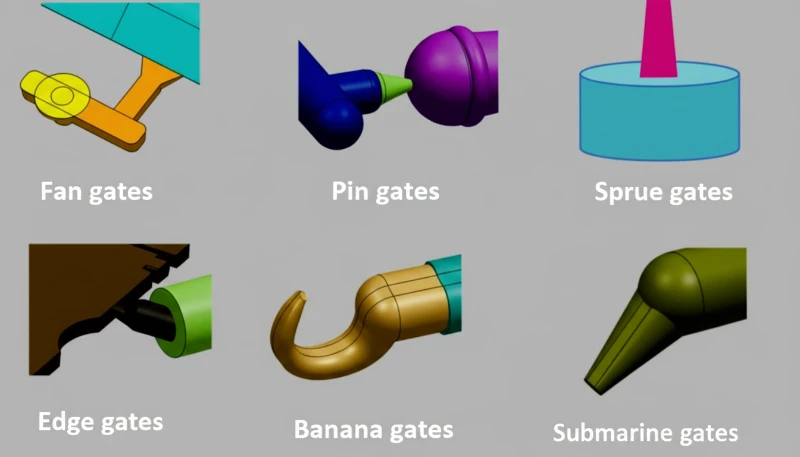
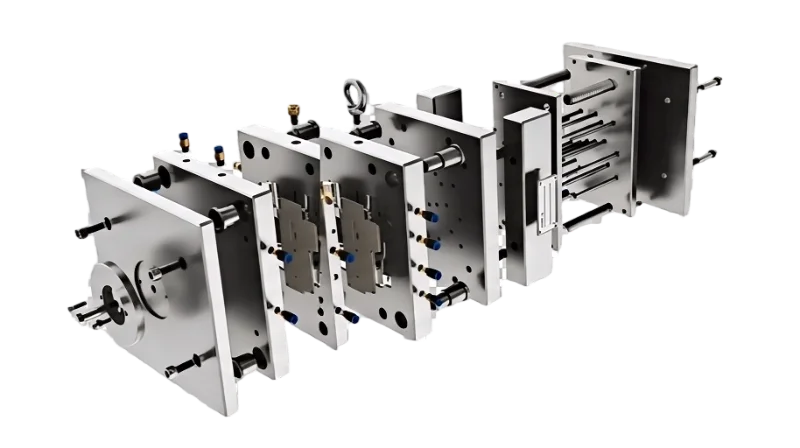
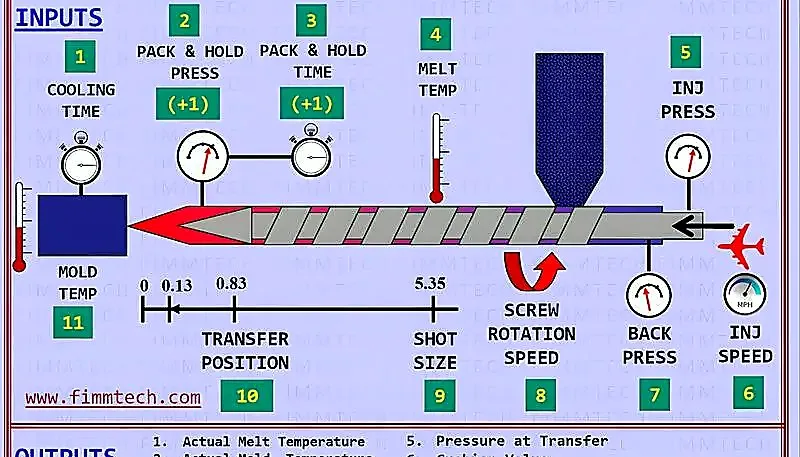
The mold structure is determined by the type of injection molding machine and the characteristics of the plastic parts. When designing, focus on the following aspects: technical specifications of the injection molding machine; process performance of plastics; pouring system, including runners, gates, etc.;
Molding parts; commonly used structural parts; positioning mechanism; ejection mechanism; mold temperature control; exhaust; mold material.When designing a mold, you need to think about a lot of things and pick a good shape that will make the mold work right.
Plastic Parts Ranking
Plastic parts ranking is about putting one or more plastic parts that you need in order, based on how you’re going to make them and what the customer wants.
The ranking of plastic parts complements the mold structure and the plastic processability, and directly affects the subsequent injection moulding process. The corresponding mold structure must be considered during the ranking, and the ranking should be adjusted under the condition of meeting the mold structure.
From the perspective of the injection molding, the following points need to be considered for ranking:
a. Runner length; b. Runner waste; c. Gate position; d. Glue feeding balance; e. Cavity pressure balance.When it comes to mold structure, you need to consider the following points: a. Make sure it meets the requirements of the sealing glue.
b. Make sure the mold structure has enough space: check if there is enough space for the sprue base, runner, parting line, and other necessary spaces; check if the mold structure is strong enough; check if there is any interference between multiple moving parts; and make sure the location of the bushing does not interfere with the ejector pin location.
c. Take screws, cooling water, and ejector device into account: when ranking, consider how screws and ejectors affect cooling water holes.
d. Make sure the length and width ratio of the mold is balanced: the mold should be as compact as possible, with a good length and width ratio, and consider how it will fit on the injection molding machine.
Parting
Choose the correct parting surface, consider the sealing distance, build a reference plane, balance the lateral pressure, flatten the nozzle contact surface, handle the contact and penetration of small holes, avoid sharp steel, and comprehensively consider the appearance of the product.
Parting Verification And Improvement of Mold Strength
Choose the right parting surface, consider the sealing distance, build a reference plane, balance the lateral pressure, flatten the nozzle contact surface, handle the contact and penetration of small holes, avoid sharp steel, and comprehensively consider the appearance of the product.
To make sure the mold can work normally, we need to check not only the overall strength of the mold, but also the strength of the local structure of the mold.Make some Improvements to the specific mechanism to improve the local strength .
Design of Mold Parts
Mold parts can be divided into two types: forming parts and structural parts. Forming parts are the parts that directly participate in the formation of the cavity space, such as the concave mold (cavity), punch (core), insert, slide, etc.
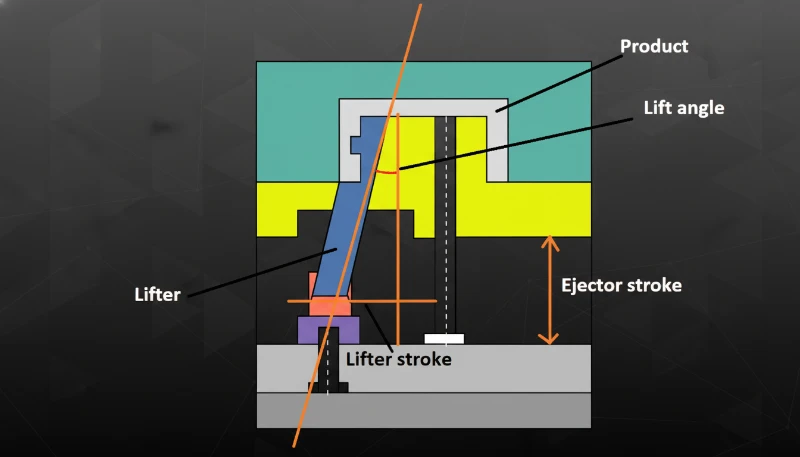
Structural parts are the parts used for installation, positioning, guiding, ejection, and various actions during the forming process, such as positioning rings, nozzles, screws, pull rods, ejectors, sealing rings, fixed distance pull plates, hooks, etc.
When we split the inserts, we mainly consider the following aspects: no sharp steel, thin steel, easy to process, easy to adjust the size and repair, ensure the strength of the molded parts, easy to assemble, no impact on the appearance, and comprehensive consideration of cooling (after the inserts are made, it is difficult to cool locally, and the cooling situation must be considered).
When designing structural parts, the general principle for the layout of ejector pins and cooling channels is to arrange the ejector pins first, then arrange the cooling channels, and then adjust the ejector pins. However, in actual production, mold modification is often taken into account.
After the mold is finished, the cooling channels are not started immediately. They can only be opened after the mold has been modified for a period of time according to the modification situation.
Ejector sleeve arrangement:
Ejector sleeve is generally used for the mold column position. In addition, for the deeper bone position, the ejector pin is easy to be ejected, and the ejector sleeve can also be used to add bone to assist ejection. In general, the wall thickness of the ejector sleeve is >=1mm, and the ejector sleeve and ejector needle are ordered together when ordering.
| Decision area | What to verify |
|---|---|
| Tooling | Confirm mold design decisions: cavity layout, gate placement, cooling, and ejection strategy. |
| Material | Check resin behavior, shrinkage, heat, and cosmetic risks. |
| Quality | Ask for inspection evidence before production approval. |
In the structural design, the height of the column should not be too high, otherwise the sleeve needle is easy to bend and difficult to eject. For the design and selection of other structural parts, such as positioning rings, nozzles, screws, pull rods, sealing rings, fixed distance pull plates, hooks, springs, etc., those who are interested can find some information to understand it by themselves.
Production of Mold Drawings
Mold drawings are important documents that convert design intentions into mold production. Generally, they need to be drawn according to national standards, and they also need to be combined with the customary drawing methods of each factory.
Mold drawings include general assembly structure drawings and their technical requirements, as well as part drawings of all parts including various inserts.
How Is an Injection Mold Manufactured Step by Step?
Programming and Electrode Removal
After mold design is finalized, you create CNC programs and decide whether EDM electrodes are needed based on each part’s geometry.
Machining
The mold’s mechanical processing includes CNC processing, EDM processing, wire cutting processing, deep hole drilling processing, etc. After the mold base and materials are ordered, the mold is only in a rough processing state or only steel material. At this time, a series of mechanical processing must be carried out according to the design intention of the mold to make various parts.
CNC machining, also known as computer numerical control machining, is a machining process that requires various machining operations, tool selection, machining parameters, and other requirements. Those who are interested can find relevant information to learn.
EDM machining, or electrical discharge machining, is a machining process that uses electrical discharge to erode materials to achieve the required size, so it can only process conductive materials. The electrodes used are usually made of copper and graphite.
Bench Assembly
Bench work is a very important part of the mold making process, and it is a process that needs to be carried out throughout the entire mold manufacturing process. Bench work, fitting mold assembly, turning, milling, grinding, and drilling are all skilled.
Mold Saving And Polishing
Mold saving and polishing is the process of using sandpaper, oilstone, diamond paste, and other tools and materials to process mold parts after CNC, EDM, and bench processing and before mold assembly.
In our Shanghai factory, ZetarMold operates a dedicated in-house mold manufacturing facility equipped with 47 injection molding machines from 90T to 1850T. Our team of 8 senior engineers oversees the full mold production lifecycle — from DFM review through CNC, EDM, bench assembly, polishing, and T1 trial — supporting 100+ mold sets per month. This vertical integration means we control every step of the mold manufacturing process under one roof, reducing lead time and ensuring dimensional consistency from design to first article.
How Is Mold Inspection and Quality Verified?
Mold inspection is the verification step before production that confirms cavity dimensions, surface finish, and function match design intent. A good mold must meet appearance, structural, dimensional, and manufacturing-detail acceptance standards.
Appearance Quality
A good mold should look flat and smooth, without obvious scratches, bumps, and deformation. The nameplate of the mold should be clear and complete, with neatly arranged characters and numbers, and should be fixed on the mold foot near the template and reference angle.The content on the nameplate should include important information such as mold model, manufacturer information, and materials used.
Structural Rationality
The mold structure should be reasonable and stable, and all components should be firmly installed without looseness.
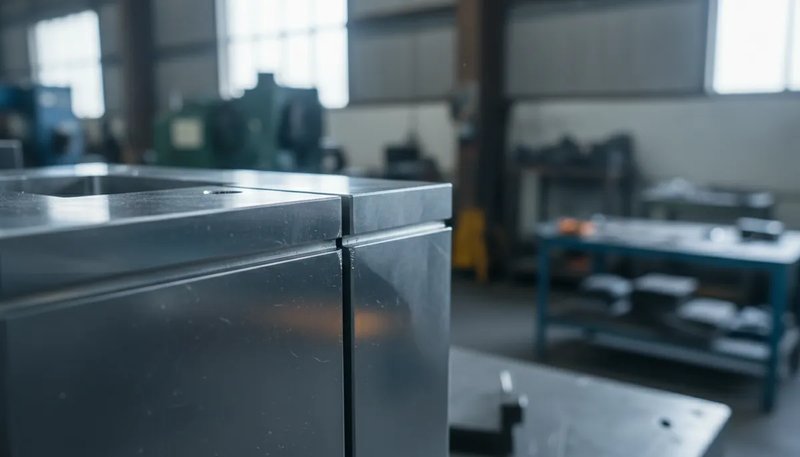
The positioning ring, gate sleeve, ejector sleeve, and other components of the mold should meet the design requirements, be installed in the correct position, and have no obvious damage and deformation. At the same time, the parting surface of the mold should be seamless, and the opening and closing actions should be smooth and without abnormal noise.
Dimensional Accuracy
Checking the dimensional accuracy of the mold is important to make sure the product is accurate. So, when you get the mold, you need to check its dimensional accuracy strictly. The dimensions of the mold template and parts should meet the design requirements.
The position accuracy of the positioning holes, gates, ejector holes, etc. should meet the production requirements. Also, the mold’s closing height and maximum mold opening stroke should meet the requirements of the electric injection molding machines.
Manufacturing Details
A good mold should also be refined in manufacturing details. For example, the ball R of the gate sleeve should be larger than the ball R of the injection molding machine nozzle to ensure smooth molten plastic flows; the inlet diameter of the gate sleeve should be larger than the diameter of the nozzle injection port to prevent injection during injection.
In addition, the cooling system of the mold should be designed reasonably to ensure uniform cooling and reduce the internal stress of the product after molding.
When and How Is a Mold Modified?
Once the mold is tested, the mold is changed according to the mold test situation. Also, after the engineer confirms the plastic part, the structure of the plastic part should be changed accordingly.
Since the mold has been made, all changes are more troublesome, and sometimes even more difficult than redoing. We must find the best way to change according to the specific situation.
Redesign the Mold
To completely solve the problem, you need to redesign the mold. You optimize the mold structure, parting surface, gate position, etc., based on the problems with the original mold. You also need to consider the selection of mold materials and optimize the heat treatment process to improve the mold’s life and durability.
For example, if the parting surface of the mold is uneven and causes insufficient melt filling, you can redesign the parting surface to make the melt filling more even.
Modify Mold Parameters
Changing the mold parameters is a relatively simple and fast method of mold modification. By adjusting parameters such as mold size, precision, and surface roughness, the quality and production efficiency of the product can be improved.
Thus achieving mass production and high volume production . For example, by adjusting the size and position of the gate, the melt filling process can be optimized and the product quality can be improved; by reducing the surface roughness of the mold, the product residue can be reduced and the production efficiency can be improved.
Replace Mold Accessories
Swapping out mold accessories is a popular and relatively cheap way to modify molds. For parts in the mold that are prone to wear and failure, like the cavity, core, gate sleeve, etc., you can choose to replace them with materials or surface treatments that are more resistant to wear and corrosion.
You can also choose more advanced mold components based on your actual production needs to improve production efficiency and product quality. For example, replacing the easily worn cavity with highly wear-resistant materials can effectively increase the mold’s service life.
What Are the Common Mold Repair Techniques?
Argon Arc Welding Repair
The most common mold repair techniques are arc welding, brush plating, and laser surfacing. TIG welding is the most widely used method, applicable to most common steels and specialty alloys, while MIG welding suits stainless steel, aluminum, magnesium, copper, titanium, zirconium, and nickel alloys.
Right now, TIG welding is the most common way to do it and you can use it on most of the big metals, like regular steel and fancy steel. MIG welding is good for stainless steel, aluminum, magnesium, copper, titanium, zirconium, and nickel alloys.
It’s really cheap, so people use it a lot for fixing molds, but it has some problems, like it makes a big heat-affected zone and big welds. People are starting to use lasers to fix molds instead of MIG welding because it’s more precise.
Brush Plating Repair
Brush plating technology uses a special DC power supply. The positive pole of the power supply is connected to the plating pen as the anode during brush plating; the negative pole of the power supply is connected to the workpiece as the cathode during brush plating.
The plating pen usually uses high-purity fine graphite blocks as anode materials. The graphite blocks are wrapped with cotton and wear-resistant polyester cotton sleeves. When you’re working, you adjust the power supply component to a suitable voltage.
Then you fill the plating pen with plating liquid. You move the plating pen back and forth on the surface of the repaired workpiece at a certain relative speed. You maintain a certain pressure until you form a uniform and ideal metal deposition layer.
When the plating pen touches the surface of the repaired workpiece, the metal ions in the plating liquid move to the surface of the workpiece because of the electric field force. They get electrons on the surface and turn into metal atoms. These metal atoms deposit and crystallize to form a plating layer. That’s how you get the uniform deposition layer you want on the working surface of the repaired plastic mold cavity.
Laser Surfacing Repair
Laser welding is a welding method that uses a laser beam focused by a high-power coherent monochromatic photon stream as a heat source. This welding method usually has continuous power laser welding and pulse power laser welding.
The advantage of laser welding is that it does not need to be carried out in a vacuum, but the disadvantage is that its penetration is not as strong as that of electron beam welding.
Laser welding can perform precise energy control, so it can achieve the welding of precision devices. It can be applied to many metals, especially to solve the welding of some difficult-to-weld metals and dissimilar metals. It has been widely used in mold repair.
How Should Injection Molds Be Maintained?
Ensure That the Use Environment of the Mold is Dry And Avoid Moisture
If the environment is humid, the surface of the mold is prone to rust, which will affect the surface quality and service life of the mold. Therefore, when storing the mold, choose a dry and ventilated place, and use moisture-proof materials for protection.
Clean the Mold Surface Regularly
When using the mold, it will be covered with paint, oil and other things, which will affect its use effect. Therefore, the surface of the mold should be cleaned regularly with a detergent to ensure that its surface is smooth and avoid defects that affect quality.
Use the Mold Correctly
The mold is designed and made under certain conditions of use, so special attention should be paid when using it, avoid using excessive amounts during operation, and comply with operating procedures to ensure that the mold will not be damaged or have quality problems during long-term use.
Lubricate And Maintain Frequently
The mold needs the cooperation of the moving parts during use, so the moving parts of the mold should be lubricated frequently to prevent it from getting stuck or jammed due to wear during operation.
Pay Attention to the Storage Method
When you store your mold for a long time, you don’t want it to get all messed up and ruined. So, when you store it, you need to put it on a flat surface and prop it up with something so it doesn’t get all bent out of shape while you’re not using it.
Why Does the Full Mold Manufacturing Lifecycle Matter?
Plastic injection molds are super important in industry today. If you want your final product to be good, you need a good mold. You need to make sure your mold design is good, your mold making is good, and you take care of your mold.
You need to make sure you do a good job with your customer, your mold design, your mold making, your mold trial, your mold modification, and your mold maintenance. If you don’t do a good job with all of these things, your mold won’t be good. So, you need to keep working on your technology and your process to make sure you can make good molds.
Need a Quote for Your Injection Molding Project?
Get competitive pricing, DFM feedback, and production timeline from ZetarMold’s engineering team.
Request a Free Quote → See our Supplier Sourcing Guide for a comprehensive overview.
What Are the Most Common Questions About Injection Mold Manufacturing?
Frequently Asked Questions
What are the main steps in the injection mold manufacturing process?
The injection mold manufacturing process follows a defined sequence: customer customization and DFM review, mold structure design, CNC and EDM machining, bench assembly and polishing, mold inspection, T1 trial sampling, mold modification based on trial results, and ongoing maintenance. Each step builds on the previous one — a mistake in the design phase compounds through machining and inspection. In our production experience, skipping or rushing the DFM review is the single most common cause of costly mold rework later in the process, so investing time upfront consistently saves total project time.
How long does it take to manufacture an injection mold?
A standard single-cavity mold typically takes 4 to 6 weeks from approved design to T1 trial sampling. Multi-cavity or high-precision molds with complex side actions, lifters, or unscrewing mechanisms can take 8 to 12 weeks or longer. The timeline depends on part geometry complexity, required surface finishes, material selection, and whether the mold needs hot runner systems or special surface coatings. Rushing the timeline almost always increases rework risk — a properly sequenced process with adequate design review is consistently faster in total than a compressed schedule with multiple correction rounds.
What is the difference between CNC machining and EDM in mold making?
CNC machining uses rotating cutting tools to remove material and is ideal for larger, relatively straightforward geometries like mold bases and cavity pockets. EDM (electrical discharge machining) uses spark erosion to cut features that cutting tools cannot easily reach — sharp internal corners, deep narrow ribs, and intricate surface textures. In practice, most production molds use both methods: CNC for bulk material removal and EDM for fine detail. Wire EDM is specifically used for cutting through-hole profiles and tight-tolerance slot features that require high precision and minimal post-processing.
How do you inspect an injection mold before production?
Mold inspection covers four critical areas: appearance quality (surface finish, no visible scratches or deformation), structural integrity (all components firmly installed, smooth opening and closing action), dimensional accuracy (cavity dimensions, gate positions, ejector hole locations measured against approved design drawings), and manufacturing details (gate sleeve geometry, cooling system uniformity, surface roughness). CMM (coordinate measuring machine) reports and visual inspection checklists are standard practice. Any deviation found at this stage is far cheaper to correct than after production begins running full volume.
When should a mold be repaired versus replaced?
Mold repair is the right choice when damage is localized — worn ejector pins, eroded gate areas, or surface scratches — and the core cavity geometry is still within tolerance for acceptable part production. Common repair techniques include laser welding for precision buildup, brush plating for surface restoration, and argon arc welding for larger structural repairs. Replacement becomes necessary when the cavity steel is cracked, the mold has exceeded its rated cycle life, or accumulated modifications have compromised structural integrity beyond what any reliable repair method can restore to production quality.
What materials are most commonly used for injection mold tooling?
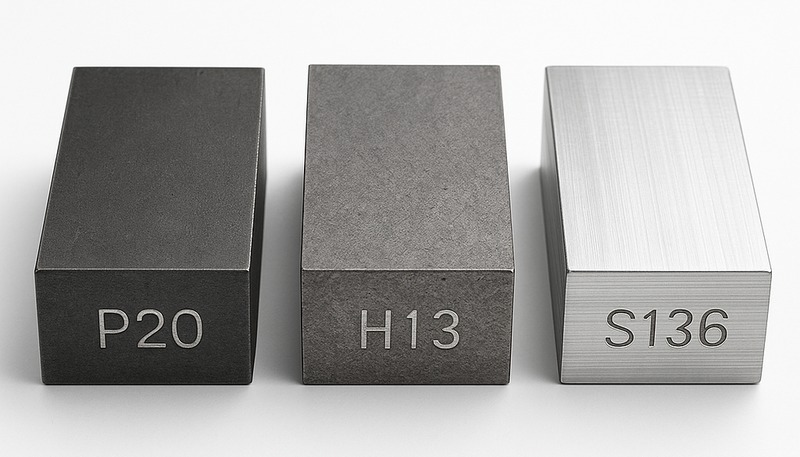
P20 steel is the most common choice for low-to-mid volume molds due to its good machinability and moderate cost. H13 tool steel is preferred for high-volume production and high-temperature resins because of its superior heat resistance and toughness. Stainless steel such as S136 is selected when corrosion resistance is critical, especially for medical and food-contact applications. Hardened tool steels like SKD61 offer excellent wear resistance for glass-filled or abrasive resin formulations. The material selection directly affects mold life, surface finish quality, and total cost of ownership, so matching steel grade to production requirements is a key early design decision.
quality: Quality is a production discipline that connects DFM, mold validation, process windows, inspection plans, and corrective action into repeatable output. ↩
plastic: Plastic is a material family whose flow, shrinkage, strength, heat resistance, cosmetic quality, cycle time, and long-term performance shape molding decisions. ↩
injection molding: injection molding refers to is the production process that melts plastic, injects it into a mold cavity, cools the part, and repeats the cycle for stable volume manufacturing. ↩