

Principales conclusiones
- Plástico moldeo por inyección forces molten plastic into a precision mold cavity under high pressure, then ejects a finished part in seconds to minutes.
- The process consists of four repeating phases: clamping, injection, cooling, and ejection — each one tightly controlled in our factory for consistent quality.
- Tooling costs are high upfront, but per-part costs drop dramatically at volumes above 10,000 units, making it the most cost-efficient choice for mass production.
- Material selection, wall thickness, gate location, and cooling channel design are the four biggest variables that determine part quality and cycle time.
- ZetarMold has delivered injection-molded parts to clients in 20+ countries, from medical-grade components to consumer electronics housings.
Walk through any factory floor and you’ll see it everywhere: the housing on your power drill, the dashboard trim in your car, the cap on your shampoo bottle. All of these parts share one origin — moldeo por inyección1. In our factory at ZetarMold, we run injection molding machines around the clock, and we’ve found it to be the single most reliable method for producing high-quality plastic parts at scale. This guide walks you through everything you need to know — from the basic physics to advanced design considerations — so you can make smarter decisions about your next product.
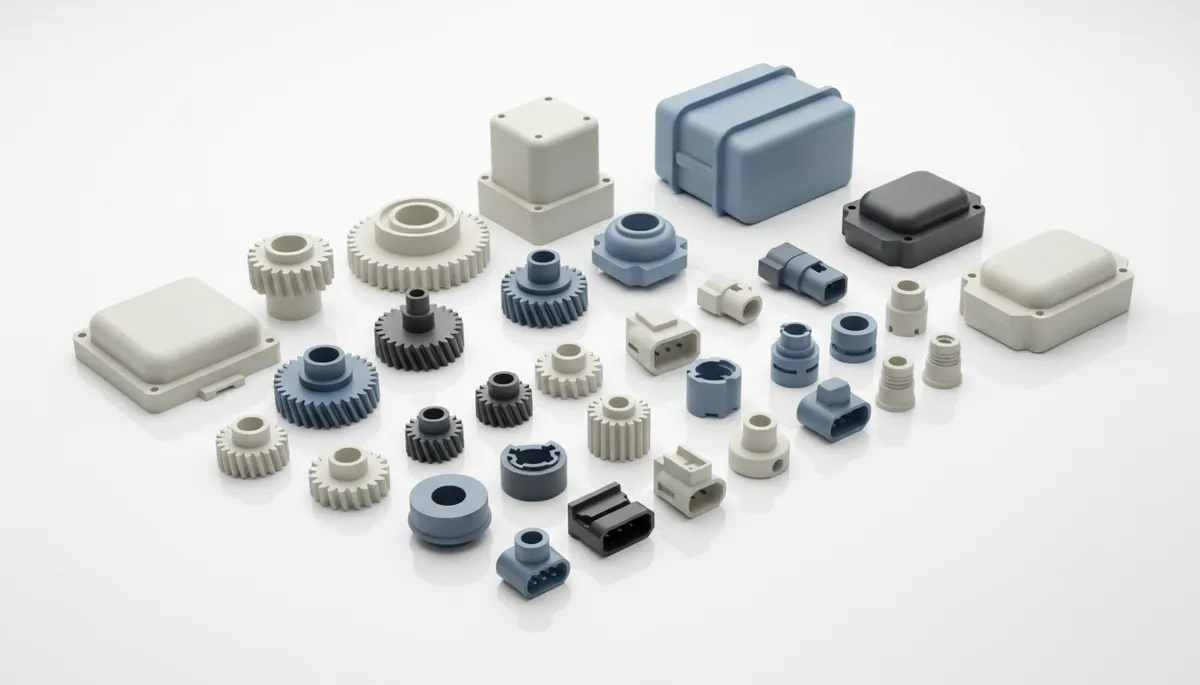
What Exactly Is Plastic Injection Molding?
Plastic injection molding is a manufacturing process in which raw plastic pellets are melted, then forced under high pressure into a steel or aluminum mold cavity. The plastic cools and solidifies to the exact shape of the cavity, after which the mold opens and the finished part is ejected. The mold closes again and the cycle repeats — sometimes as fast as every 8 to 10 seconds for small, thin-walled parts.
In our factory, we describe it simply: you put raw material in, you get a finished product out. The “magic” happens inside a sealed steel tool where pressures can exceed 2,000 bar and temperatures can reach 350°C depending on the material. What makes injection molding so powerful is its repeatability. Once you’ve dialed in the process parameters, every part in a run of one million units is virtually identical to the first.
The process was first patented in 1872 by John Wesley Hyatt, who used it to mold celluloid billiard balls. Today it accounts for roughly one-third of all plastic parts produced globally — an estimated 300 million tons per year.
“Injection molding can produce millions of identical parts with tight tolerances.”Verdadero
Modern injection molding machines maintain dimensional tolerances as tight as ±0.05 mm across production runs of millions of parts. In our factory, we routinely hit ±0.1 mm or better for standard engineering parts, which is why the process is trusted for everything from medical devices to automotive components.
How Does the Injection Molding Cycle Work?
Every injection molding cycle follows the same four-phase sequence. Understanding each phase helps you design parts that run efficiently and come out defect-free.

Phase 1 — Clamping: The two halves of the mold (the core and the cavity) are pressed together by the clamping unit. Clamping force is measured in tons and must be high enough to resist the injection pressure pushing from inside. A typical consumer-product part might need 50–200 tons of clamping force; large automotive panels can require 2,000 tons or more.
Phase 2 — Injection: En termoplástico2 screw moves forward, pushing molten plastic through the sprue, runners, and gates into the mold cavity. Injection speed, pressure, and hold pressure are all programmed precisely. We’ve found that hold pressure — applied after the cavity is filled — is the single parameter that has the biggest effect on part weight and dimensional stability.
Phase 3 — Cooling: This is the longest part of the cycle, typically accounting for 50–70% of total cycle time. Water-cooled channels run through the mold steel, pulling heat away from the plastic. The part must reach a temperature at which it can be ejected without distorting. We use mold-flow simulation to optimize cooling channel placement before cutting any steel.
Phase 4 — Ejection: The mold opens and ejector pins push the part out of the core. The mold then closes and the cycle begins again. On high-volume jobs, robotic arms pick the parts directly off the ejector pins, box them, and load them onto pallets — all without human hands touching a single piece.

What Are the Main Components of an Injection Molding Machine?
An injection molding machine has two main assemblies: the injection unit and the clamping unit. In our factory we run machines ranging from 50 tons to 850 tons of clamping force, and each one follows the same basic architecture.
The Injection Unit consists of a hopper (where raw pellets are loaded), a heated barrel, and a reciprocating screw. The screw rotates to melt and mix the plastic, then slides forward like a plunger to inject the melt into the mold. The nozzle at the end of the barrel connects to the sprue bushing on the mold.
The Clamping Unit holds the two mold halves together during injection. Toggle-clamp designs use mechanical linkages to multiply hydraulic force; straight hydraulic designs use large cylinders directly. Electric servo-driven machines offer the most precise clamp control and are increasingly common in medical and optical applications where repeatability is critical.
The Mold itself is a precision steel tool with polished cavities, cooling channels, a runner system, and ejector pins. Molds for high-volume production are typically made from hardened P20 or H13 tool steel and can last for one to five million shots before requiring maintenance.

What Materials Can Be Used in Injection Molding?
We process over 50 different thermoplastic materials in our factory, and the material choice has a bigger impact on part performance than almost any other variable. Here’s a quick overview of the most common families:
Commodity Plastics — Polypropylene (PP), polyethylene (PE), and ABS3 are the workhorses of the industry. They’re inexpensive, easy to process, and available in virtually every color. PP is used for everything from bottle caps to car bumpers; ABS is the go-to material for consumer electronics enclosures.
Plásticos técnicos — Nylon (PA), polycarbonate (PC), acetal (POM), and PEEK offer higher mechanical strength, heat resistance, or chemical resistance than commodity grades. We use PC for optical lenses and light covers, PA for gear wheels and structural brackets, and POM for sliding components like bushings and snap-fit clips.
High-Performance Plastics — PEEK, PEI (Ultem), and LCP are used in aerospace, medical, and semiconductor applications where conventional plastics can’t survive the operating environment. These materials require barrel temperatures above 350°C and often need pre-dried pellets to avoid hydrolytic degradation.

“Any plastic material can be injection molded using the same machine settings.”FalsoFalso
Different thermoplastics require dramatically different processing conditions. Polypropylene melts around 220°C, while PEEK needs 380°C. Nylon must be pre-dried for 4–8 hours before processing or moisture will cause splay defects. In our factory, we follow strict material-specific setup sheets for every job changeover to avoid rejects from incorrect parameters.
How Does Mold Design Affect Part Quality?
In our experience, about 80% of the defects we see in injection-molded parts can be traced back to mold design decisions made before the tool was ever cut. Getting the mold design right from the start saves enormous amounts of time and money.
Espesor de pared: Uniform wall thickness is the single most important design guideline. Abrupt changes in thickness cause differential cooling rates, which create sink marks, warpage, and internal stress. We recommend keeping walls between 1.5 mm and 4 mm for most engineering plastics, and transitioning between thicknesses over a distance of at least three times the wall thickness.
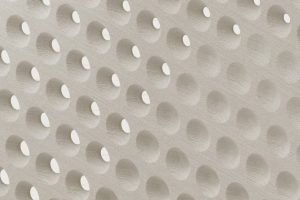
Ángulos de tiro: Every vertical surface needs a draft angle — typically 1° to 3° — so the part can slide off the core without scratching or sticking. Textured surfaces need more draft: we typically add 1° per 0.025 mm of texture depth. Forgetting draft is one of the most common mistakes we see in customer-supplied designs.
Ubicación de la puerta: The gate is where plastic enters the mold cavity. Its location determines the fill pattern, weld-line position, and shrinkage direction. We use mold-flow simulation to test multiple gate locations before deciding on the final design. A poorly placed gate can cause short shots, weld lines in visible areas, or warping that no amount of process tuning can fix.
Sistema de corredores: Hot-runner systems keep plastic molten right up to the gate, eliminating runner scrap and reducing cycle time. Cold-runner systems are simpler and cheaper but generate runner waste that must be reground. For high-volume production, the energy and material savings from a hot-runner system typically pay back the added tooling cost within weeks.
Sistema de refrigeración: Conformal cooling channels — machined by additive manufacturing to follow the cavity contour — can reduce cooling time by 30–50% compared to conventional drilled channels. We’ve invested in conformal-cooling capability for our highest-volume tools because the productivity gain is significant.

What Are the Most Common Injection Molding Defects and How Do We Fix Them?
Every injection molder encounters defects. In our factory, we track defect rates in real time using statistical process control, and our line operators are trained to recognize and address the most common issues before they cause significant scrap.
Marcas de fregadero appear as shallow depressions on the surface of a part, usually opposite a thick rib or boss. They’re caused by the outer skin solidifying before the interior, which then pulls inward as it shrinks. The fix is usually to increase hold pressure, extend hold time, or redesign the rib to be no thicker than 60% of the wall it’s attached to.
Líneas de soldadura form where two flow fronts meet and fuse imperfectly. They look like faint lines on the surface but can significantly reduce strength. We address them by adjusting gate location to move the weld line to a non-critical area, or by increasing melt temperature and injection speed to improve fusion.
Alabeo is dimensional distortion caused by uneven shrinkage. It’s most common in flat parts with non-uniform walls or asymmetric cooling. Solutions include balancing the cooling system, adding ribs to increase stiffness, or adding strategic gate locations to control the shrinkage direction.
Flash is a thin film of plastic that squeezes out between mold parting surfaces. It usually means clamping force is insufficient, the mold faces are worn, or injection pressure is too high. We resolve flash by checking parting-surface wear, adjusting clamp tonnage, and reducing injection speed at the end of fill.
What Industries Use Plastic Injection Molding?
We ship injection-molded parts to customers in more than 20 countries across a wide range of industries. The versatility of the process — combined with the enormous variety of available materials — makes it suitable for almost any application where you need a plastic part produced consistently and at scale.
Automóvil: Interior trim panels, door handles, dashboard components, bumper fascias, fluid reservoirs, and underhood electrical connectors. Automotive applications often require materials with heat resistance above 120°C and precise dimensional control.
Médico: Syringe barrels, blood-collection tube caps, diagnostic device housings, and surgical instrument handles. Medical parts typically require ISO 13485-certified manufacturing, Class 8 clean rooms, and full material traceability — all capabilities we maintain at our factory.
Electrónica de consumo: Phone cases, laptop bezels, keyboard keycaps, router housings, and earphone shells. These applications demand excellent surface finish, tight tolerances for assembly, and often complex undercuts managed by sliding cores or lifters.
Packaging: Bottle caps, closures, thin-wall containers, and food-contact items. Speed is paramount here — cycle times of under 5 seconds are common for simple closure designs, and multi-cavity tools with 96 or more cavities run on large-tonnage machines.
“Injection molding becomes more cost-effective as production volume increases.”Verdadero
The high upfront tooling cost (typically $5,000–$100,000+ for a mold) is amortized across the production run. At volumes of 10,000+ units, per-part costs for injection molding are almost always lower than any other manufacturing method. We’ve seen clients reduce per-part cost by 80% simply by shifting from CNC machining to injection molding at the right production volume.
“Injection molding is only suitable for simple, flat parts.”Falso
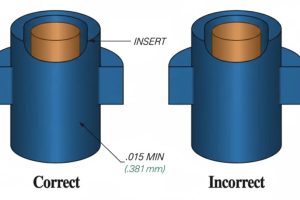
Modern injection molding can produce extremely complex three-dimensional geometries, including undercuts (using slides and lifters), internal threads (using unscrewing cores), overmolded inserts, and multi-material parts (using two-shot or insert molding). In our factory, we regularly mold parts with 15+ action directions in a single tool.
How Much Does Plastic Injection Molding Cost?
Cost is almost always the first question clients ask us. The honest answer is: it depends heavily on part complexity, material, production volume, and mold quality. Here’s how we break it down:
Mold Cost: A simple single-cavity mold for a small consumer part might cost $3,000–$8,000. A complex multi-cavity hot-runner tool for a medical device could exceed $150,000. Most of our clients’ molds fall in the $8,000–$40,000 range. Molds are a capital investment — you own them, they live in our facility, and we maintain them at no extra cost for the life of the tool.
Per-Part Cost: Once the mold is paid for, the per-part cost includes material, machine time, labor (mostly robot-assisted), and overhead. For a typical consumer part in PP, per-part costs at 10,000 units might be $0.80–$2.00; at 100,000 units, that same part might cost $0.20–$0.60.
Total Cost of Ownership: When clients compare injection molding to 3D printing or urethane casting for higher volumes, injection molding wins almost every time on a total-cost basis once you pass 5,000–10,000 units. We’ve built detailed cost-comparison models for dozens of clients to help them make this decision with data, not guesswork.
What Is the Difference Between Injection Molding and Other Plastic Processes?
We get this question frequently from clients who are evaluating their options. Injection molding is one of several plastic manufacturing methods, each with its own strengths and ideal applications.
Injection Molding vs. Blow Molding: Blow molding creates hollow parts (bottles, tanks, containers) by inflating a hot plastic tube inside a mold. It can’t produce the complex solid geometries that injection molding handles. If your part needs to hold liquid or gas and has a hollow interior, blow molding is usually the right choice.
Injection Molding vs. Thermoforming: Thermoforming heats a flat plastic sheet and drapes or vacuums it over a mold. It works well for large, thin-walled shapes like packaging trays and automotive interior liners. Tooling is much cheaper than injection molds, but part geometry options are limited and wall thickness control is less precise.
Injection Molding vs. 3D Printing: Additive manufacturing (3D printing) is ideal for prototypes and very low volumes — typically under 100 units. It produces no tooling cost but is orders of magnitude slower and more expensive per part at any meaningful production volume. We regularly use 3D-printed prototypes to validate designs before committing to injection mold tooling.
Injection Molding vs. Extrusion: Extrusion pushes molten plastic through a shaped die to create continuous profiles — pipes, tubes, window frames, sheet. It can’t produce discrete 3D parts. If your product is a long, uniform cross-section, extrusion is the right process.
Bottom line: Plastic injection molding remains the most versatile and cost-effective manufacturing method for producing high-quality plastic parts at scale. Understanding the process fundamentals helps you make better decisions about material selection, tooling investment, and production planning.
What Are the Most Common Questions About Plastic Injection Molding?
¿Cuánto se tarda en fabricar un molde de inyección?
Lead time for a standard single-cavity mold at our factory is typically 4–6 weeks from approved design to first article. Complex multi-cavity or hot-runner tools can take 8–12 weeks. We offer expedited tooling programs for critical-path projects.
What is the minimum order quantity for injection molding?
There is no technical minimum — you could run a single part from a new mold. However, from a cost-efficiency standpoint, injection molding becomes economically advantageous compared to alternatives at around 1,000–5,000 parts. We’ve run production orders as small as 500 units for specialized applications.
Can injection molded parts be recycled?
Yes — virtually all thermoplastic materials used in injection molding can be melted and reprocessed. In our factory, we regrind and reuse runner and sprue waste at a blend ratio of up to 20% without affecting part properties for most applications. Post-consumer recycling depends on material type and collection infrastructure.
What surface finishes are available for injection molded parts?
Surface finish options range from high-polish (SPI A-1, mirror finish) to matte and textured (SPI D-3, heavy texture). Common textures include leather grain, fine matte, and custom patterns applied by EDM or acid etching. Finish is built into the mold steel — no secondary operations required.
How tight are the tolerances achievable with injection molding?
Standard commercial tolerances are ±0.2 mm. Precision tolerances of ±0.05 mm are achievable with proper mold design, material selection, and process control. For very demanding applications — optical lenses, medical implant components — we run fully controlled environments with statistical process monitoring to maintain tight specs across long production runs.
What are the environmental impacts of injection molding?
Injection molding is relatively efficient compared to other plastic processes — material waste is low (especially with hot-runner systems), and modern servo-electric machines use significantly less energy than hydraulic presses. We’ve invested in energy recovery systems on our largest machines that recapture braking energy during screw deceleration. The environmental impact of the plastic itself depends on material selection and end-of-life strategy.
How do I prepare my design for injection molding?
We recommend starting with a design-for-manufacturing (DFM) review before finalizing any 3D CAD model. Key checkpoints include: draft angles on all vertical surfaces, uniform wall thickness, appropriate gate location, assembly features (snap fits, bosses, ribs), and surface finish requirements. Our engineering team provides free DFM analysis for all new projects — typically delivered within 24 hours of receiving your files.
-
Moldeo por inyección: a manufacturing process for producing parts by injecting molten material into a mold cavity under high pressure. ↩
-
Termoplástico: a type of plastic polymer that becomes pliable or moldable at elevated temperatures and solidifies upon cooling, making it suitable for injection molding and recyclable after processing. ↩
-
ABS: Acrylonitrile Butadiene Styrene, a common engineering thermoplastic known for its toughness, impact resistance, and ease of processing, widely used in consumer electronics and automotive parts. ↩





 EN
EN  ES
ES  FR
FR  DE
DE  PT
PT  AR
AR  RU
RU  JA
JA  KO
KO  IT
IT  NL
NL  TR
TR  PL
PL 