Custom Injection Molded Preforms Manufacturer
OEM/ODM custom PET preforms & injection molding services. We supply precision-engineered, high-transparency bottle preforms with zero-defect wall thickness. Contact China’s top factory for samples!
Core Capabilities
Industry-leading technical expertise and manufacturing infrastructure
Präzisionsfertigung
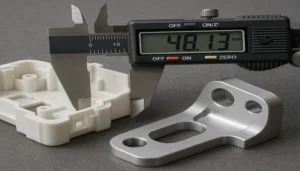
Advanced injection molding with ±0.1mm dimensional tolerance and multi-cavity molds for high-volume production.
Material Vielseitigkeit
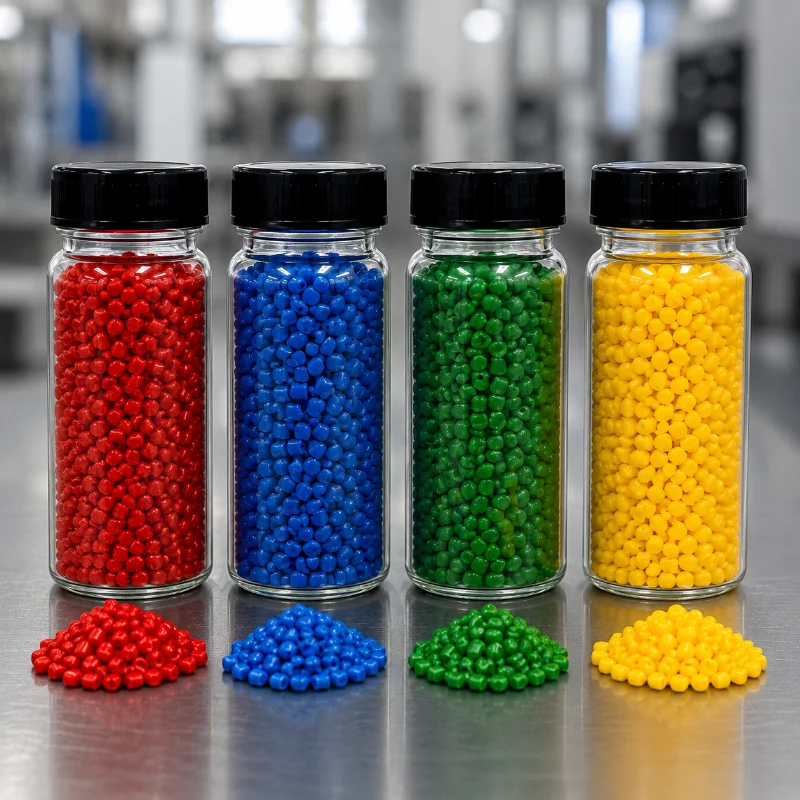
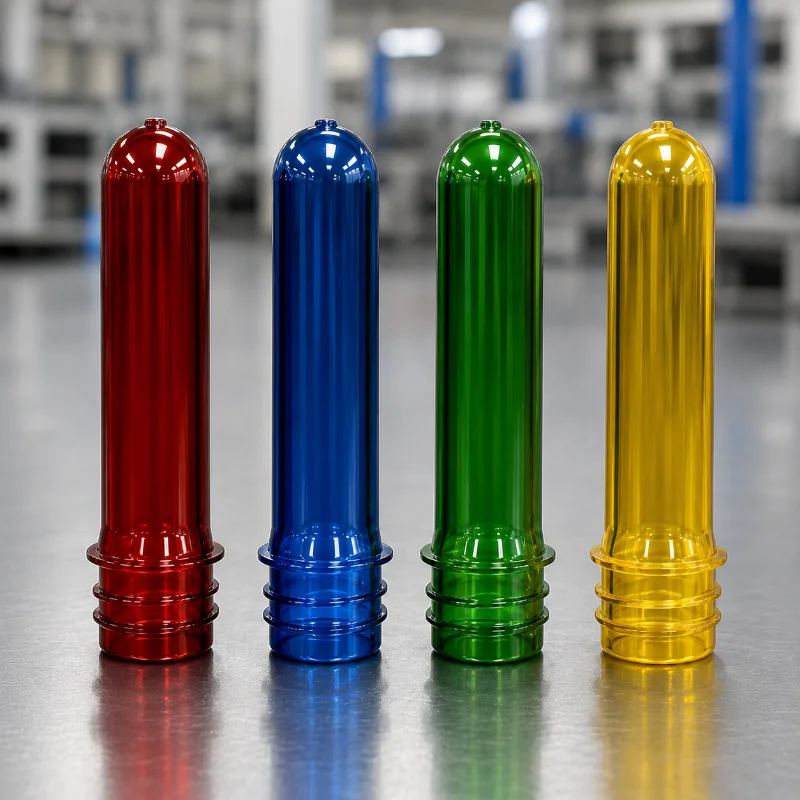
Support for Virgin PET, rPET (recycled), and PP with custom color matching and UV protection additives.
Rapid Delivery
Quick turnaround from design to production: 5-7 days for mold design, 30-45 days for custom tooling.
Qualitätssicherung
ISO 9001 certified with 100% CCD vision inspection, FDA compliance, and FSSC 22000 certification.
Resources for The Complete Guide to Custom Injection Molded Preforms
What Is a PET Preform and How Does the Process Work?
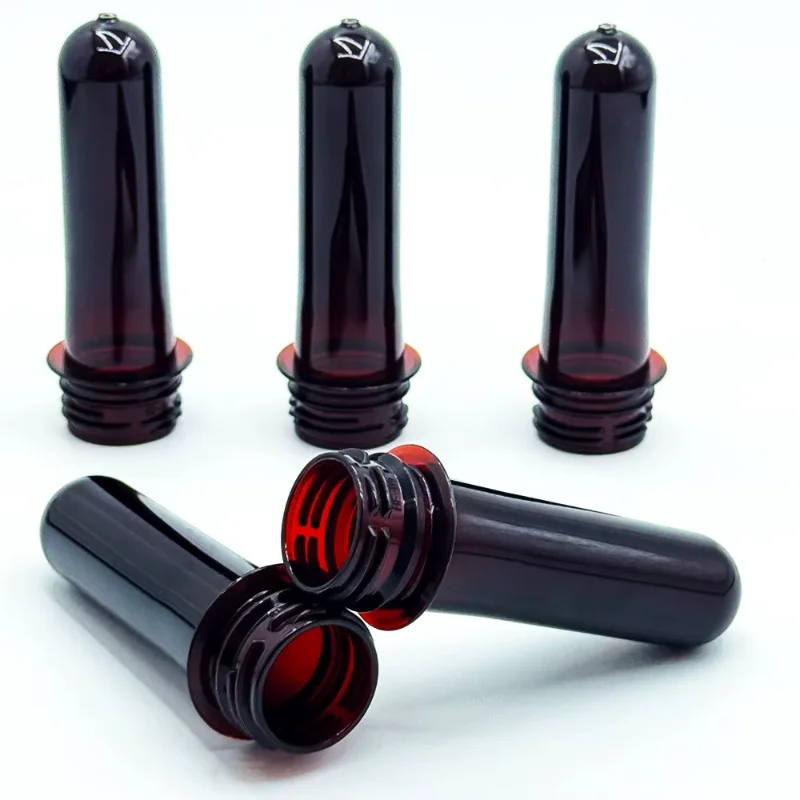
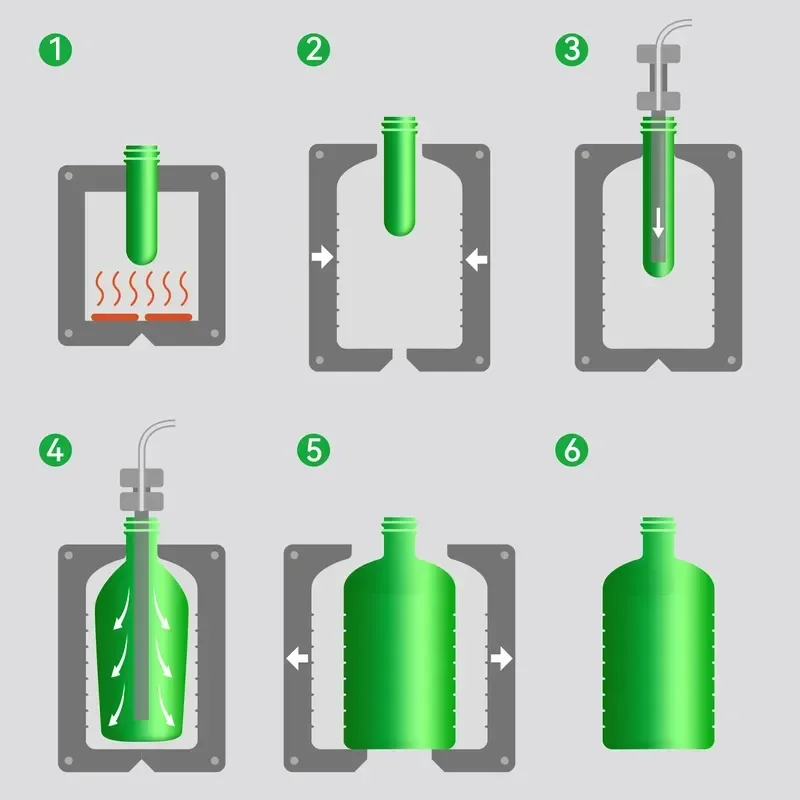
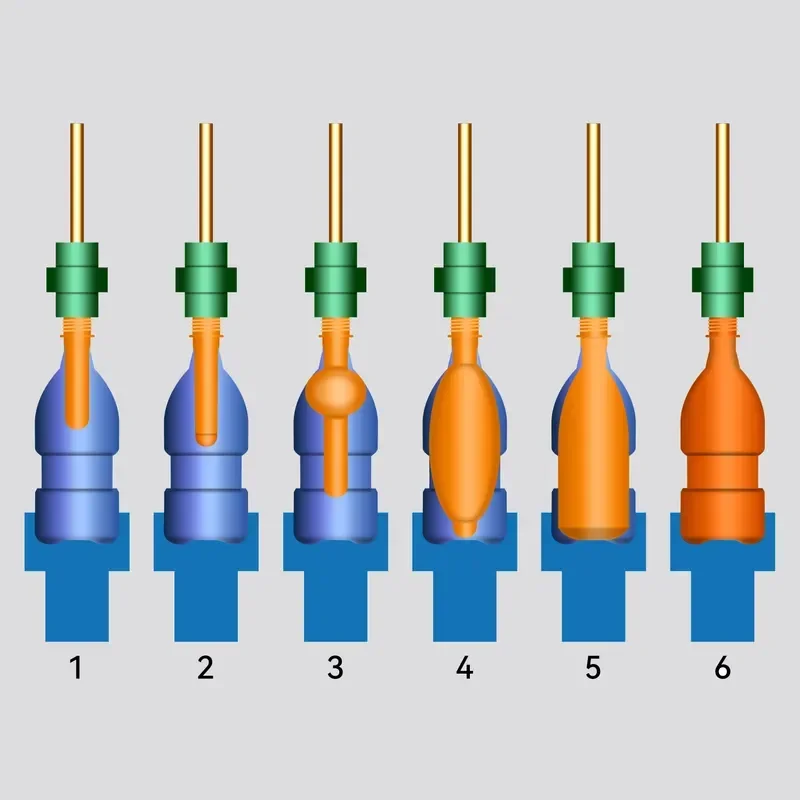
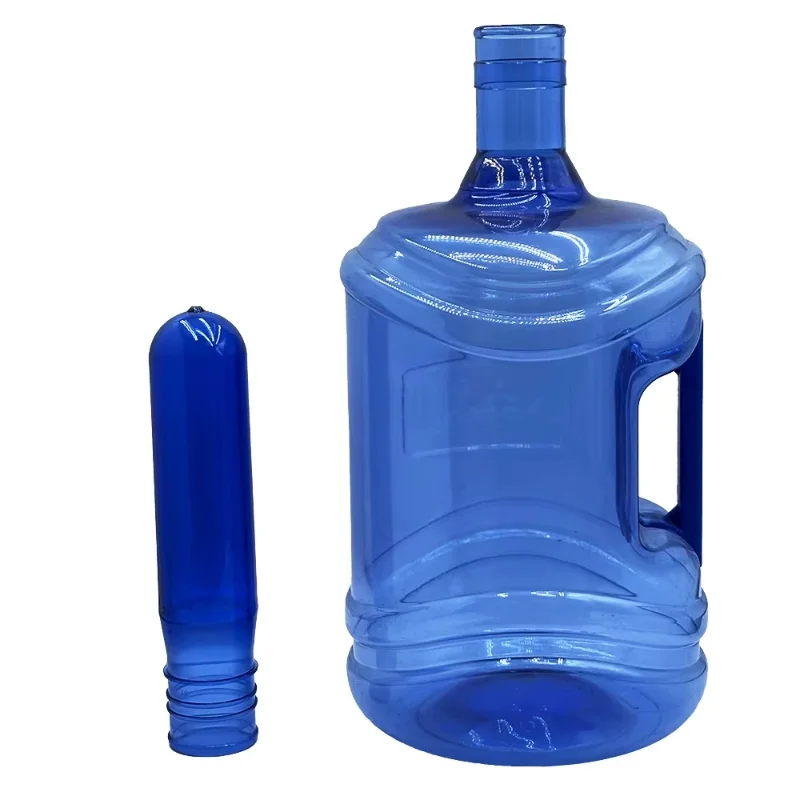
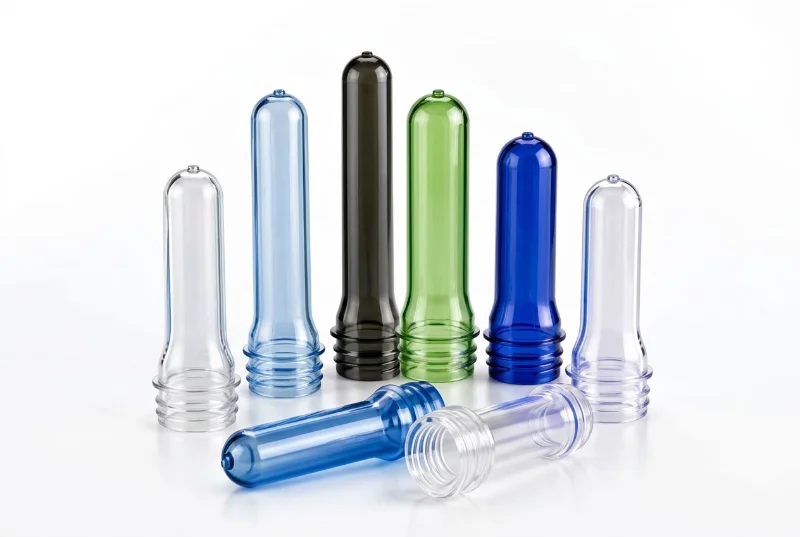
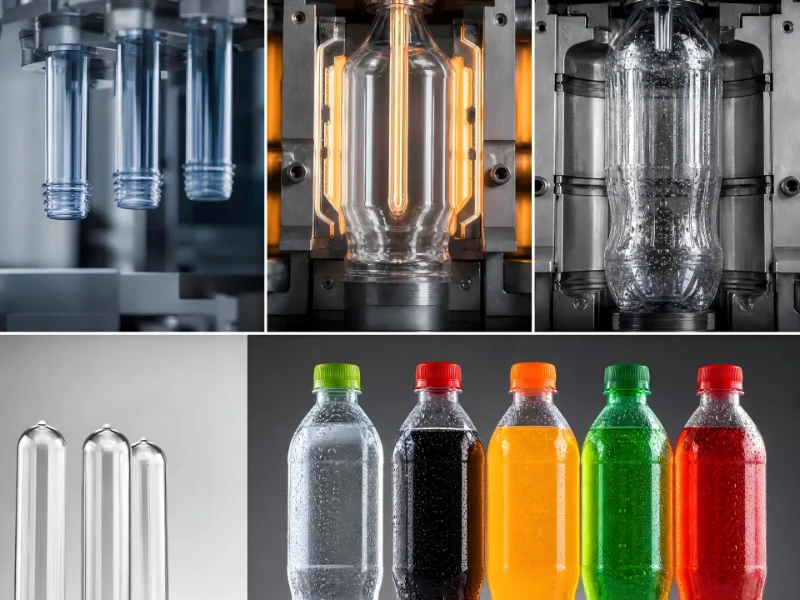
A PET preform is the intermediate test-tube-shaped component that is injection molded and subsequently stretch-blow molded into a final plastic bottle.
Our advanced manufacturing setup utilizes state-of-the-art injection molding systems to convert raw Polyethylene Terephthalate (PET) resin into high-precision preforms through a strictly monitored thermal and mechanical process:
- Resin Dehumidification: PET resin is dried at 160°C to 180°C for 4–6 hours to lower moisture levels below 0.005%, preventing hydrolytic degradation.
- Plasticization & Injection: The dried resin is melted under precise screw speed and back-pressure, then injected at high speed into multi-cavity water-cooled molds.
- Rapid Cooling: Specialized cooling channels inside the core and cavity quickly solidify the melt, minimizing crystallinity to ensure maximum optical clarity for successful downstream blowing.
What Are the Typical Applications of Custom Injection Molded Preforms?
We engineer custom preforms to fit the distinct performance, barrier, and aesthetic requirements of diverse market segments:

1. Beverage Packaging:
High-strength preforms for Carbonated Soft Drinks (CSD) resisting internal pressure, alongside dedicated options for hot-fill juice bottles and 5-gallon water jugs.
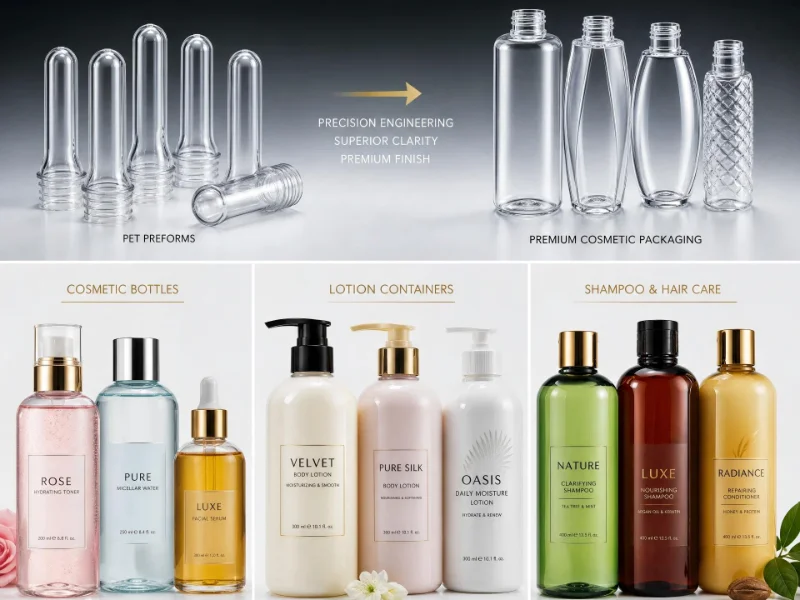
2. Cosmetics & Personal Care:
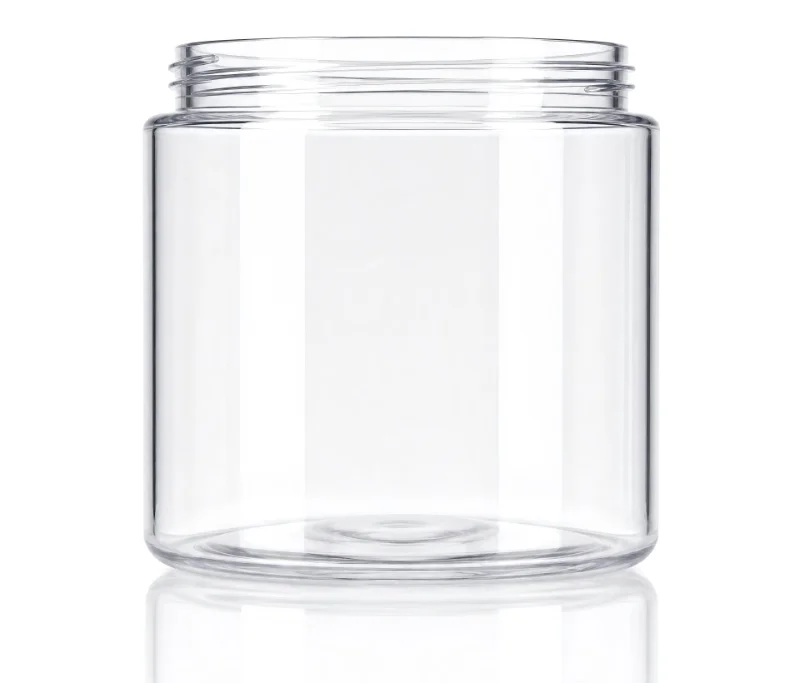
Thick-wall, high-clarity preforms customized for lotion pumps, premium shampoo bottles, and crystal-clear cosmetic jars.
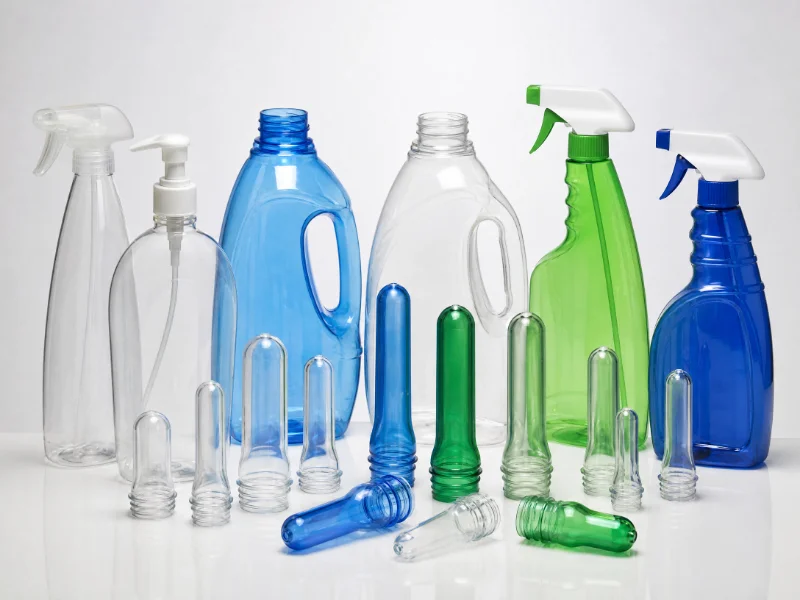
3. Home & Consumer Chemical:
Robust, chemically resistant preforms compatible with aggressive surfactants, trigger sprays, and household cleaners.
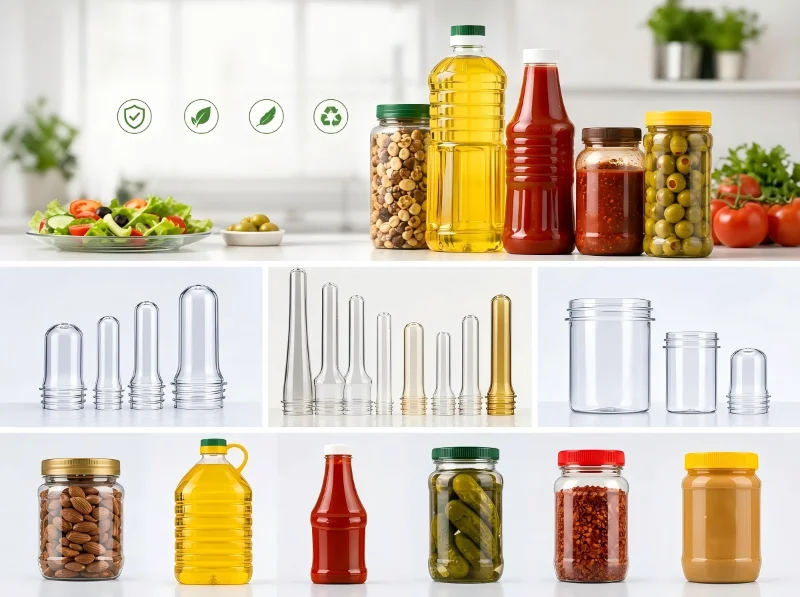
4. Food & Edible Oil:
Wide-mouth preforms tailored for high-volume peanut oil containers, condiment jars, and wide-neck food storage.
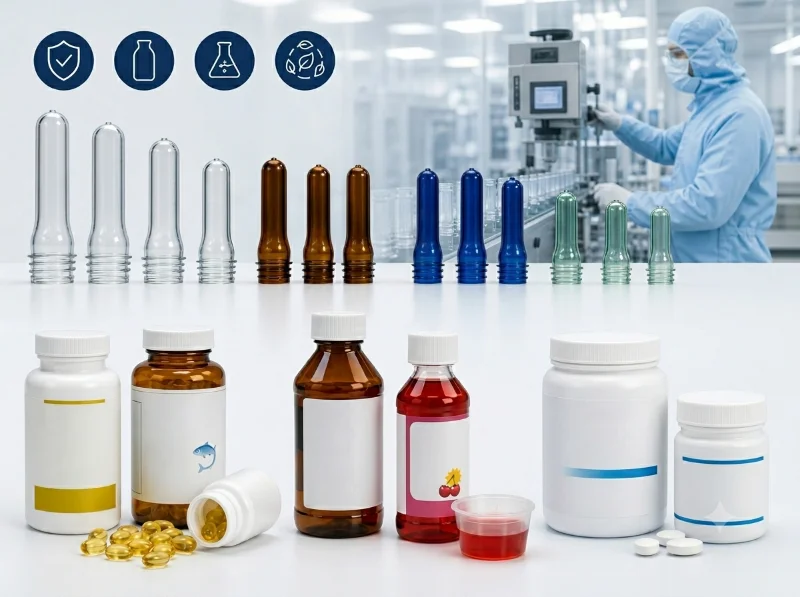
5. Pharmaceutical Packaging:
Produced with medical-grade, compliant resins under strict hygiene protocols for cough syrups, supplement bottles, and wellness packaging.
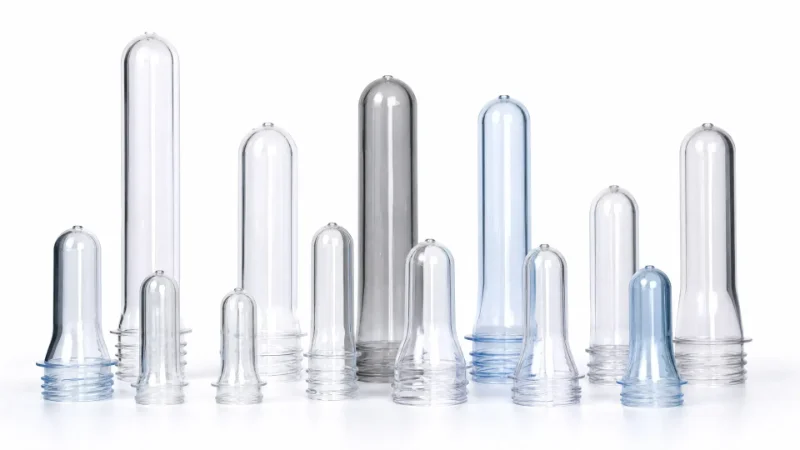
Can You Design Custom Preforms for Specific Bottle Geometries?
Yes. We provide complete end-to-end co-development services, transforming your final bottle blueprint into an optimized preform design.
Our engineering team utilizes advanced CAD/CAE software to run blow-molding simulations. We calculate the exact Axial and Radial Stretch Ratios required for your specific bottle geometry.
- Wall Thickness Optimization: We strategically distribute material into the preform profile to ensure complex bottle contours (like square edges, ergonomic handles, or deep grip lines) maintain excellent top-load strength and uniform wall thickness.
- Prototype Sampling: Before moving to multi-cavity mass production, we offer single-cavity prototyping and 3D-printed mockups to validate your bottle’s structural integrity.
PET vs. rPET vs. PP Preforms: How to Choose the Right Material?
Selecting the correct polymer dictates your product’s shelf life, sustainability footprint, and unit economics. We process a versatile range of materials:
| Eigentum | Virgin PET | rPET (Recycled) | PP (Polypropylen) |
|---|---|---|---|
| Dichte (g/cm³) | 1.38 – 1.40 | 1.35 – 1.38 | 0.90 – 0.91 |
| Zugfestigkeit (MPa) | 55 – 75 | 50 – &0 | 30 – 40 |
| Heat Deflection Temp (°C) | 70 – 80 | 65 – III | 90 – 100 |
| Wiederverwertbarkeit | 100% recycelbar | 100% recycelbar | 100% recycelbar |
| Wesentliche Merkmale & Vorteile | Höchste optische Klarheit, ausgezeichnete CO2 und O2 Barriereeigenschaften, hohe mechanische Festigkeit. | 100% kreislaufwirtschaftskonform, reduziert den CO2-Fußabdruck, verfügbar in lebensmittelgeeigneten PCR-Mischungen (30% bis 100%). | Hervorragende Hitzebeständigkeit (bis zu 120°C), geringere Dichte, ausgezeichnete Feuchtigkeitsbarriere, chemisch inert. |
| Ideale Zielanwendungen | Kohlensäurehaltige Getränke, Mineralwasser, hochautomatisierte Abfüllanlagen. | Umweltbewusste Marken, nachhaltige Getränke- und Kosmetikverpackungen. | Heißabfüllprodukte, Retort-Sterilisation, flexible quetschbare Kosmetikflaschen. |
Virgin PET
Kristallklar
Klarheit:
Außergewöhnliche Klarheit und Glanz
Stärke:
Hohe Schlagfestigkeit
Lebensmittelsicherheit:
Ausgezeichnet | Weitgehend zugelassen
Wiederverwertbarkeit:
100% recycelbar
Hitzebeständigkeit:
Bis zu 60°C / 140°F
Best for:
Premium-Verpackung, Sichtbarkeit entscheidend
rPET (Recyceltes PET)
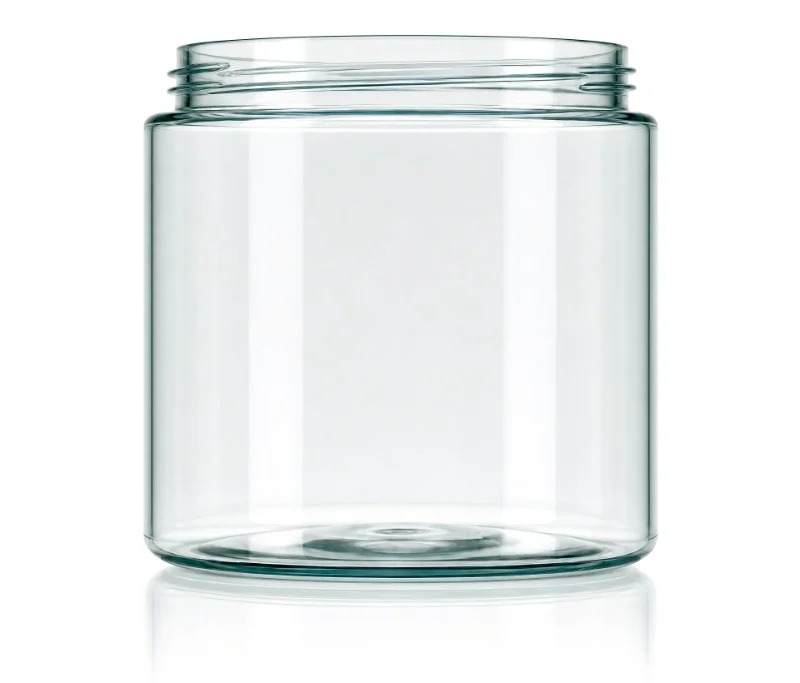
Leicht getönt
Klarheit:
Gute Klarheit mit leichter Tönung
Stärke:
Vergleichbar mit neuem PET
Lebensmittelsicherheit:
Für Lebensmittelkontakt zugelassen
Sustainability:
Hergestellt aus recyceltem Material
Hitzebeständigkeit:
Bis zu 60°C / 140°F
Best for:
Nachhaltige Verpackungslösungen
PP (Polypropylen)
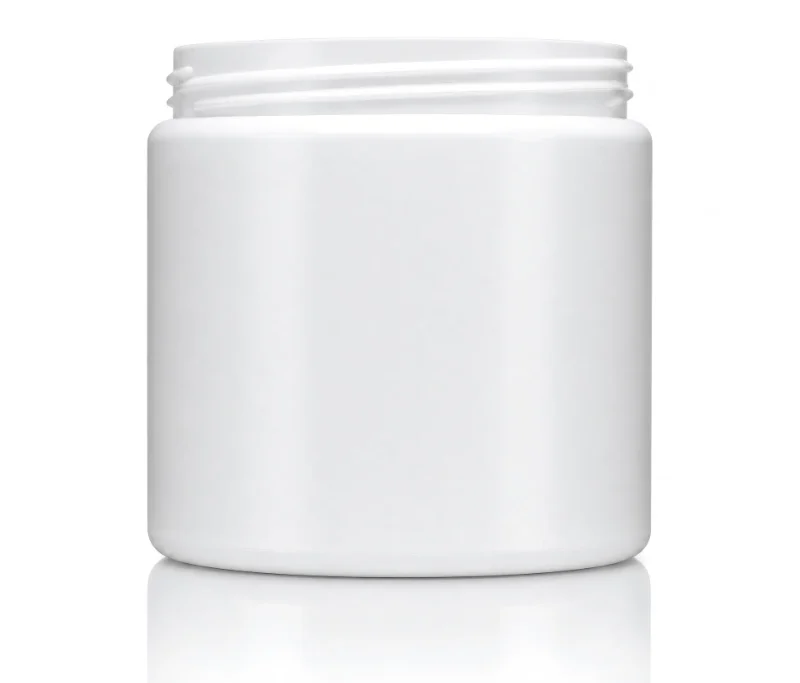
Opaque
Appearance:
Opak mit verschiedenen Farboptionen
Stärke:
Hervorragende Chemikalienbeständigkeit
Lebensmittelsicherheit:
Ausgezeichnet | Weitgehend zugelassen
Wiederverwertbarkeit:
100% recycelbar
Hitzebeständigkeit:
Bis zu 100°C / 212°F
Best for:
Haltbarkeit, Hochtemperaturanwendungen
Can You Manufacture PET Preforms in Custom Colors?
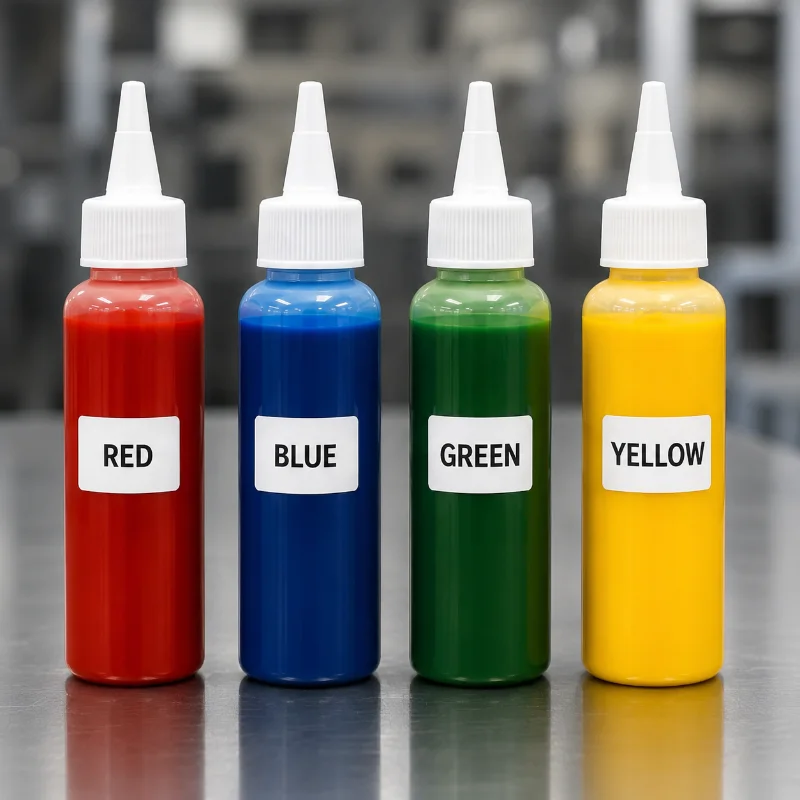
Absolut. Die Markenidentität hängt stark von der Farbkonstanz ab. Wir bieten präzise Farbabgleichdienste durch fortschrittliche Farbmasterbatches und flüssige Farbmittel:
- UV-Schutzadditive: Für lichtempfindliche Produkte (wie Milchprodukte, Säfte oder bestimmte Kosmetika) mischen wir aktive UV-Blocker in die gefärbte Schmelze, um die Haltbarkeit zu verlängern.
- Spektrophotometer-Validierung: Jede Produktionscharge unterzieht sich strengen kolorimetrischen Tests. Wir garantieren eine Farbabweichungstoleranz von ΔE < 1,0 und gewährleisten eine makellose Chargenkonsistenz auf den globalen Einzelhandelsregalen.
What Factors Affect PET Preform Performance During Blow Molding?
Eine Premium-Flasche beginnt mit einem kompromisslosen Preform. Wir minimieren nachgelagerte Blasfehler durch strenge Kontrolle der kritischen chemischen Eigenschaften des Harzes:
Stabilität der intrinsischen Viskosität (IV)
Wir erhalten den IV-Wert des Harzes während der Injektion. Ein IV-Abfall führt zu Wandverdünnung und Flaschenberstung beim Hochdruckblasformen (30–40 bar).
Acetaldehyd (AA)-Gehaltsunterdrückung
Durch optimierte Niedertemperaturprofile und schonende Schneidenscherung minimieren wir die AA-Bildung und verhindern so Geschmacksabweichungen oder Geruchsveränderungen bei empfindlichen Mineralwasserprodukten.
Keine Feuchtigkeitsblasenbildung
Fortgeschrittene Harztrocknung eliminiert innere Mikroblasen und Oberflächen-Silberstreifen, die sonst zu Schwachstellen und kosmetischen Defekten in der Blasflasche würden.
OEM/ODM-Kundenspezifische PET-Vorformlinge & Spritzgussdienstleistungen
Suchen Sie hochwertige, kundenspezifische spritzgegossene Preforms? Als führender PET-Preform-Hersteller in China bieten wir lebensmittelechte, kundenspezifische Flaschenpreforms mit weltweitem Versand an. Holen Sie sich noch heute ein kostenloses Angebot!
Resources for The Complete Guide to Custom Injection Molded Preforms
How Do You Ensure Preform Neck Precision for Leak-Proof Cap and Pump Fitment?
The neck finish is the most critical zone of a preform; it never changes shape during the blowing process. Any deviation leads to fluid leakage or capping line jams.
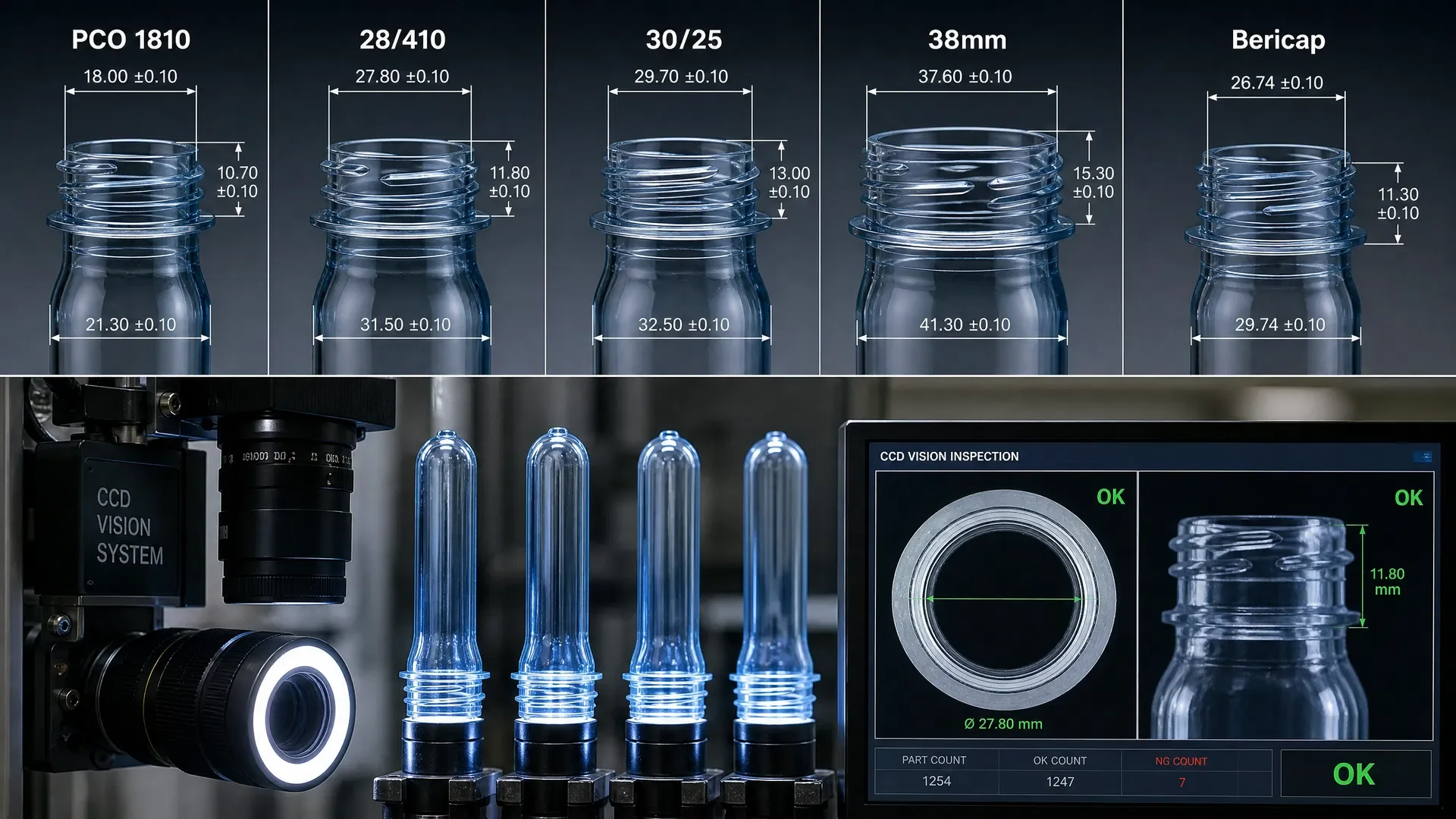
We support all major industry-standard neck finishes—including PCO 1810 / 1881, 28/410, 30/25, 38mm, and Bericap—engineered with micro-level accuracy:
- Dimensional Tolerance: Thread diameters and heights are maintained strictly within ±0.1mm.
- In-Line CCD Vision Inspection: Automated optical sorting systems scan 100% of the production line, catching and ejecting any preform with ovality issues, flashes, or thread defects before packaging.
How Do You Ensure High Cosmetic Quality and Consistent Gate Finish?
For high-end cosmetics and consumer liquids, visual purity is non-negotiable. We maintain a dust-controlled manufacturing environment and enforce strict quality metrics to eliminate typical molding flaws:
Defect Elimination
Our process settings prevent black spots, scuffs, scratches, and material shearing.
Pristine Optical Clarity
Balanced cooling rates prevent thermal crystallization (hazing/whiteness) in the preform body.
Perfect Gate Geometry
We ensure a clean, centered injection gate that guarantees uniform polymer stretching when the stretch rod makes contact during blowing.
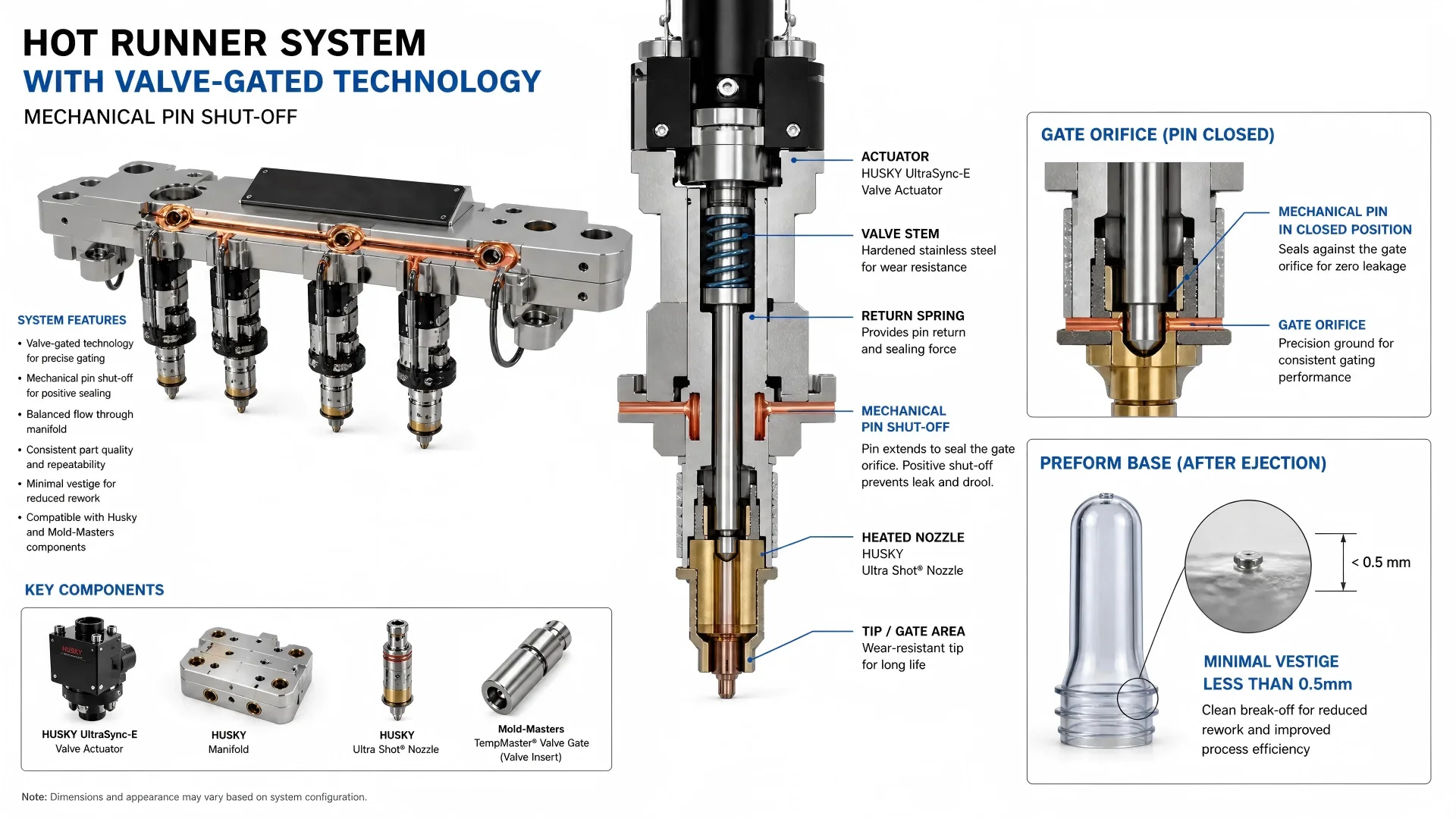
How Do Hot Runner Systems Help Eliminate Preform Gate Vestige?
Older molding setups leave a long plastic nub (gate vestige) at the bottom of the preform, which causes base puncture during blowing and creates uneven standing bases.
We use high-end, Valve-Gated Hot Runner Systems (incorporating world-class components like Husky and Mold-Masters):
- Mechanical Pin Shut-Off: Cylindrical valve pins physically seal the gate orifice at the end of each injection cycle.
- Flawless Gate Flush: This system limits the gate vestige to a height of less than 0.5mm, delivering a perfectly smooth, flat preform base that prevents downstream line tripping and optimizes resin consumption.
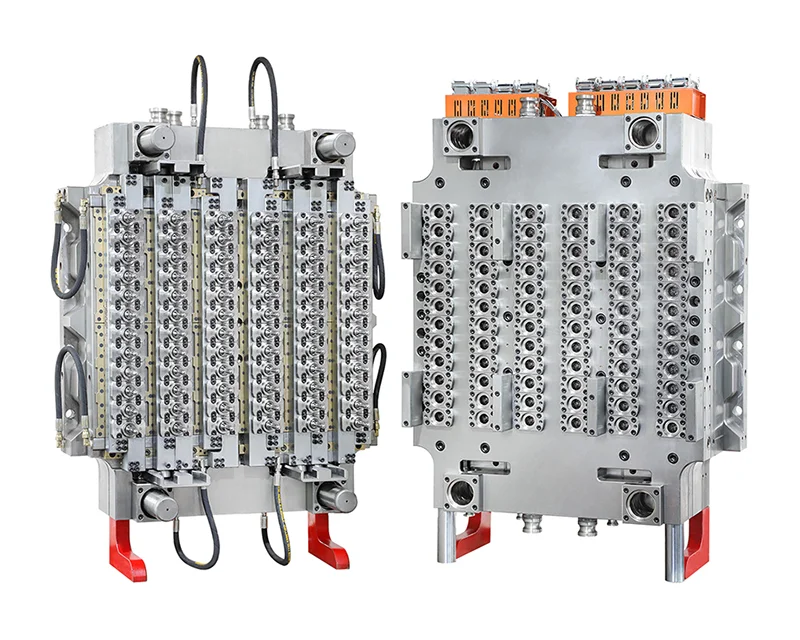
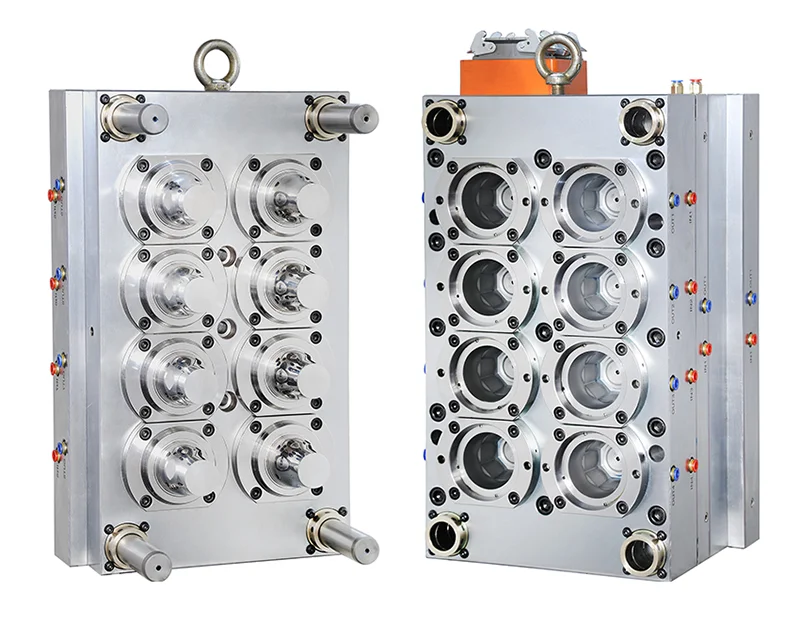
How Does Preform Mold Cavity Count (48 vs. 72 vs. 96-Cavity) Affect Your Unit Price?
Balancing capital expenditure (CapEx) against operational savings is crucial for procurement managers. The selection of mold cavitation directly shapes your final unit economics:
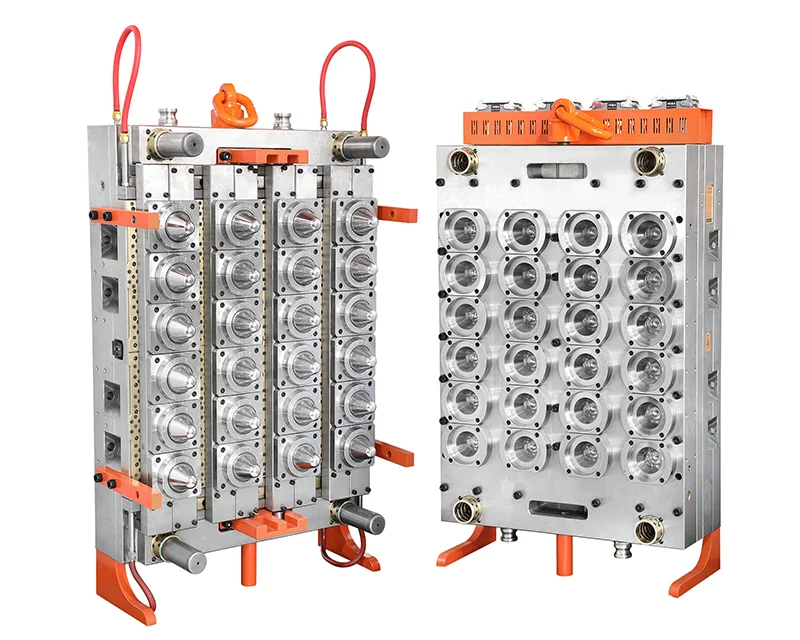
1. High-Cavitation (72 to 96-Cavity):
Designed for multi-million annual contract volumes. High cavitation minimizes cycle times and drastically reduces energy and labor overhead per part, offering the lowest possible unit price.
However, it demands a higher upfront tooling investment and is typically recommended for large-scale PET preform production where stable, long-term demand can justify the initial cost.
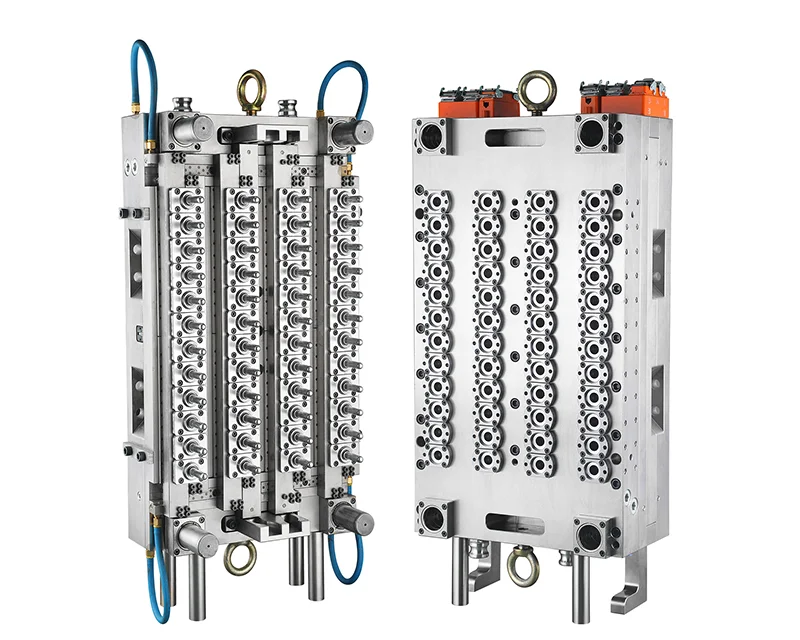
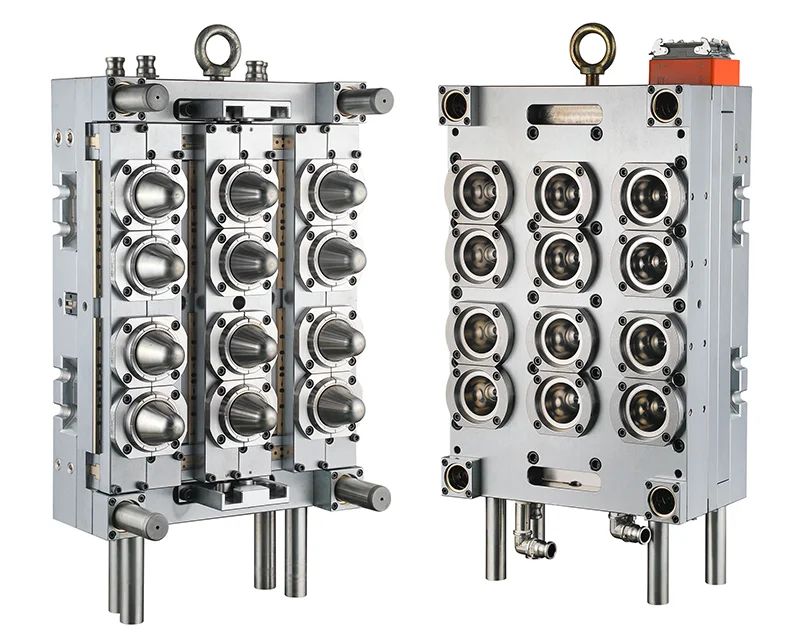
2. Medium-Cavitation (24 to 48-Cavity):
The ideal choice for mid-sized procurement or highly specialized custom shapes. It drastically lowers initial Mold Amortization costs, ensuring a faster ROI for lower-volume production schedules.
This range provides a practical balance between tooling cost, production capacity, and unit price, making it suitable for companies with growing demand or multiple product variations.
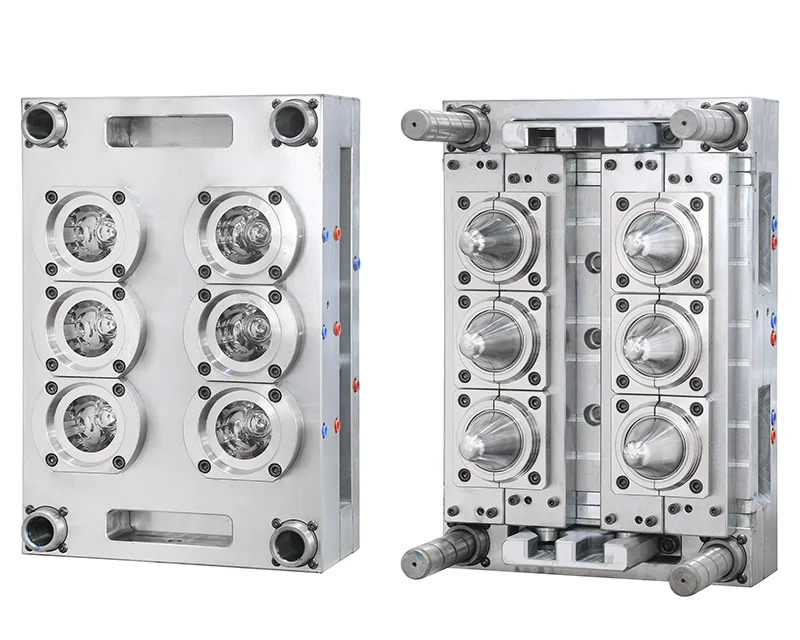
3. Low-Cavitation (1 to 24-Cavity):
For startups, small-batch production, new product launches, or customers with limited initial demand, lower-cavity preform molds provide a more cost-effective entry solution.
Although the output per cycle is lower compared with high-cavitation molds, they require significantly less upfront tooling investment and offer greater flexibility for product testing, market validation, and customized production.
At Zetar Mold, we can provide preform molds with various cavity configurations based on your production requirements — from low-cavity solutions for smaller production volumes to high-cavitation systems for millions of preforms annually. Our engineering team will help evaluate your expected output, investment budget, and future growth plans to recommend the most suitable cavity count.
IBM vs. ISBM: Which Blow Molding Process Is Best for Your Plastic Bottle Project?
Understanding the fabrication route helps align your product specifications with the right factory asset:
ISBM (Injection Stretch Blow Molding)
- 2-Step Process
Preforms are injection-molded, cooled, and later reheated to be blown. Highly recommended for mass-production beverage and high-volume consumer goods.
The two-step mechanical stretching induces biaxial orientation, providing maximum drop-resistance, thin walls, and unbeatable glass-like clarity.
IBM (Injection Blow Molding)
- 1-Step Process
The material transfers directly from the injection station to the blowing station while still hot. Perfect for small-capacity pharmaceutical vials, wide-neck cream jars, and intricate cosmetic packaging requiring zero scuff marks and ultra-precise neck finishes.
Frequently Asked Questions (FAQs)
What information do you need to quote a custom PET preform mold?
To provide an accurate quotation, we usually need your preform drawing, 3D model, neck finish specification, preform weight, material requirements, and expected production volume.
If you do not have a complete design yet, our engineering team can help review your requirements and provide suggestions regarding preform structure, wall thickness, cavity number, and mold configuration.
Can you manufacture PET preform molds with different cavity counts?
Yes. We provide custom PET preform molds with different cavity configurations according to your production requirements.
High-cavitation molds such as 48, 72, and 96 cavities are suitable for high-volume production, while smaller cavity molds are available for startups, new product development, trial production, and lower-volume applications.
Our engineers will recommend the most suitable cavity number based on your annual output, investment budget, and expected return on investment.
Do you manufacture standard or only custom PET preforms?
We specialize in custom PET preform solutions based on customer requirements.
We can manufacture preform molds for different bottle applications, including beverage bottles, water bottles, cosmetic containers, food packaging, and industrial packaging.
Custom solutions can include different neck finishes, weights, dimensions, colors, and performance requirements.
What PET preform mold materials do you use?
We select mold materials according to production requirements, expected lifespan, and customer budget.
Common materials include high-quality hardened steels for mold cavities, cores, and inserts to ensure excellent wear resistance, dimensional stability, and long-term production reliability.
For high-output preform molds, we focus on precision machining, cooling efficiency, and component durability to maintain consistent quality during continuous production.
Can you help optimize my PET preform design before mold manufacturing?
Yes. Our engineering team provides Design for Manufacturing (DFM) analysis before mold production.
We can review critical factors such as:
- Preform wall thickness distribution
- Material flow balance
- Auslegung des Kühlsystems
- Shrinkage control
- Injection performance
- Blow molding compatibility
This helps reduce production issues and avoid costly mold modifications after manufacturing.
What is the typical lead time for a custom PET preform mold?
The lead time depends on mold complexity, cavity number, and project requirements.
Generally, a custom PET preform mold requires several weeks for design, precision machining, assembly, testing, and sample validation.
After receiving your project details, we can evaluate your specific requirements and provide a detailed production schedule.
Can you provide PET preform samples before mass production?
Yes. After mold completion, we can provide trial samples for quality verification.
Sample evaluation can include:
- Dimensions inspection
- Weight verification
- Appearance checking
- Neck finish measurement
- Compatibility testing with your blow molding process
This ensures the preform meets your production requirements before full-scale manufacturing.
Do you only supply PET preform molds or complete production solutions?
We mainly specialize in custom PET preform mold manufacturing.
Depending on your project requirements, we can also support injection molding production, prototype validation, and related plastic manufacturing solutions through our manufacturing capabilities.
What is the minimum order quantity for custom PET preform molds?
There is no fixed minimum quantity for mold projects.
The suitable mold configuration depends on your production goals. Smaller cavity molds can be a practical choice for companies starting a new product line, while high-cavity molds are better suited for large-scale production.
Contact our engineers with your expected output, and we will recommend the most economical solution.
How can I start my custom PET preform mold project?
Simply send us your PET preform drawing, 3D file, or basic product information.
Our engineering team will review your requirements, confirm manufacturability, recommend the appropriate mold solution, and provide a quotation.

Kommunikationsfehler bei Spritzgusslieferanten, die kostspielige Nacharbeit verursachen
Nach zwei Jahrzehnten der Durchführung von Spritzgussprojekten können wir Ihnen Folgendes sagen: Die meiste Nacharbeit resultiert nicht aus schlechten Maschinen oder falschen Materialien. Sie entsteht durch schlechte Kommunikation zwischen Käufer

Risiko bei der Lieferantenlieferzeit beim Spritzgießen: So verhindern Sie verspätete Werkzeugherstellung und verzögerte Lieferungen
Jedes Spritzgussprojekt birgt das Risiko der Werkzeugherstellungszeit1 – die Lücke zwischen dem Zeitpunkt, an dem Sie Bauteile benötigen und dem Zeitpunkt, an dem Ihr Lieferant sie tatsächlich liefert. In über 20 Jahren Erfahrung in der Werkzeugherstellung und dem Spritzguss
Übersee-Spritzguss-Beschaffungsleitfaden für Käufer, die zuverlässige Lieferung benötigen
Nach über 20 Jahren Leitung von Spritzgussbetrieben in Shanghai habe ich unzählige Übersee-Beschaffungsgeschäfte in beide Richtungen erlebt. Einige Käufer sparen 40-60% und bauen dauerhafte Partnerschaften mit zuverlässigen Lieferanten auf.
Angebotene Optimierungslösungen Kostenlos
- Bereitstellung von Design-Feedback und Optimierungslösungen
- Optimieren Sie die Struktur und reduzieren Sie die Formkosten
- Sprechen Sie direkt mit Ingenieuren unter vier Augen