

Die Wahl des richtigen Spritzgießen1 supplier means looking past the sales pitch and verifying what machines they actually run, how many shifts they operate, and whether their Spritzgussform shop can keep up with your tooling timeline. Production capacity is the single biggest factor that separates a supplier who ships on time from one who disappears when your order volume spikes. This guide walks you through the exact questions to ask, the numbers to calculate, and the red flags to watch for when you evaluate a molding partner.
- Verify machine count, tonnage range, and shift patterns — not just a capacity number on paper
- Calculate daily output: cavities × cycles per hour × hours × utilization rate
- On-site tooling capability cuts lead time by 30 to 50 percent vs outsourced mold shops
- ISO 9001 and ISO 13485 are baseline certifications; ask for recent audit reports
- Request a live video walkthrough before committing to any volume order
What Is Production Capacity in Injection Molding?
Production capacity is the maximum parts a supplier can produce in a given period, measured by machine count, mold cavitation2, and operating hours. It depends on three core variables that you can verify with specific numbers. A supplier who claims to handle your volume without breaking down those variables is guessing, not calculating. Total output equals machines times cavities per mold, times cycles per hour, times operating hours, times a utilization factor. Most factories run at 70 to 85 percent utilization, not 100 percent.
Für einen breiteren Überblick deckt unser Spritzgießen Komplettleitfaden behandelt Prozessgrundlagen, Materialverhalten und Produktionsentscheidungen.
When we review capacity plans at our Shanghai facility, we always build in a 15 percent buffer for changeovers and unplanned downtime — because machines need servicing, molds require cleaning, and material lot variations are a reality of production life.
At our Shanghai factory, we run 47 injection molding machines ranging from 90T to 1850T. That tonnage spread means we can mold everything from micro-precision medical components to large automotive housings without subcontracting.
How Do You Calculate Injection Molding Production Output?
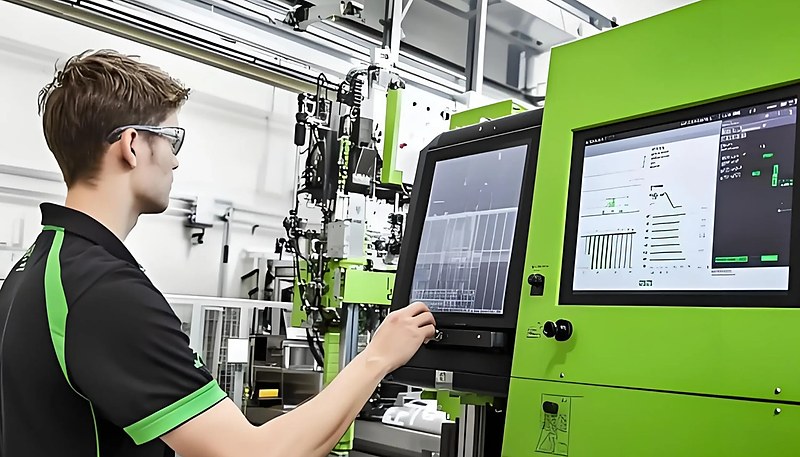
Production output is calculated by multiplying cavities by cycles per hour, operating hours, and the utilization rate3. A single-cavity mold at 30-second cycles running 20 hours at 80 percent utilization produces about 1,920 parts per day. Double the cavities and you get 3,840. Drop the cycle to 20 seconds and it jumps to 5,760. Small changes in any variable create massive output differences, which is why you should never accept a vague capacity claim from a supplier.
A factory running three shifts with automated material handling might hit 85 percent, but a two-shift operation with manual loading typically lands between 65 and 75 percent. Setup time between jobs eats another 5 to 15 percent depending on how many color and material changes happen each week.
| Szenario | Cavities | Cycle Time (s) | Hours/Day | Utilization | Daily Output |
|---|---|---|---|---|---|
| Basic single-cavity | 1 | 30 | 20 | 80% | 1,920 |
| Multi-cavity (4) | 4 | 30 | 20 | 80% | 7,680 |
| Fast cycle (20s) | 4 | 20 | 20 | 80% | 11,520 |
| Optimized production | 8 | 25 | 22 | 85% | 21,573 |
What Machines Should a Qualified Supplier Have?
A qualified supplier is one with machines spanning 90T to 1850T to handle both current parts and future expansion. If a supplier only has machines in one or two tonnage brackets, they will struggle when your product line grows. Look for coverage across small precision work (90T to 200T), medium industrial parts (200T to 500T), and large structural components (500T to 1850T). Machine age matters — presses built within the last 10 years generally offer better repeatability and process monitoring.
That does not mean every press needs to be new — a well-maintained 15-year-old machine with updated controls can outperform a neglected 3-year-old one. The key question is whether the supplier can show you maintenance logs and calibration records, not just a spec sheet.
How to Verify a Supplier’s Actual Machine Availability?
Machine availability is verified by requesting a machine list with tonnage data, then confirming via live walkthrough. Cross-check the list against your requirements: do they have at least two machines in the tonnage range you need? Having a backup press prevents line-down situations when one goes into maintenance. If a supplier claims 95 percent utilization, that is a red flag — no room for your order without delaying others.
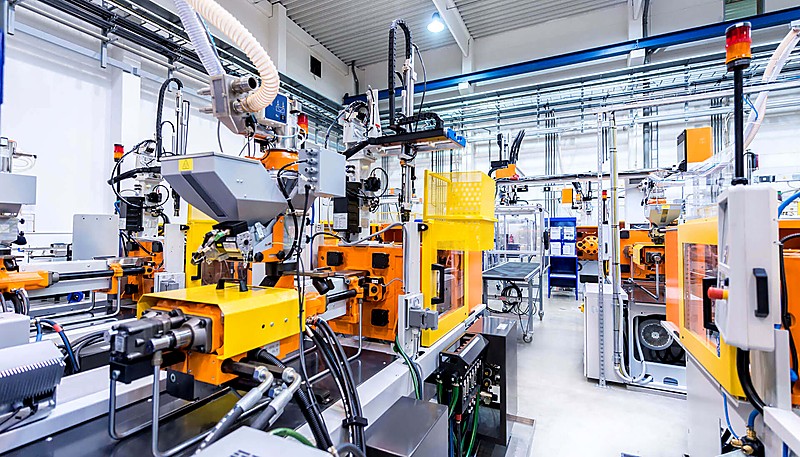
A healthy utilization target for a reliable supplier sits between 70 and 85 percent. Finally, request a live video walkthrough. Not a pre-recorded tour video, not a photo gallery — a live call where you can ask the operator to show you specific machines running. Suppliers who refuse or delay this request are usually hiding something, whether it is fewer machines than claimed or outdated equipment they do not want you to see.
Why Does Tonnage Range Matter for Production Flexibility?
Tonnage range is the primary factor that determines which part sizes a supplier can physically produce on their own equipment. A 90T machine handles small precision parts like medical components, while an 1850T machine is needed for large structural parts like automotive bumpers. If your supplier only has 200T to 400T machines and you need 1200T, they must subcontract — and you lose quality control.
In our experience working with OEMs across HVAC, medical, and robotics sectors at our Shanghai factory, having a wide tonnage spread from 90T to 1850T means we rarely have to turn away a project or outsource it to an unknown third party. This matters because every time your supplier subs out work, you lose visibility into quality, timing, and communication. The broader the tonnage range under one roof, the more flexible your supply chain becomes.
What Quality Certifications Indicate Reliable Capacity?
The certifications that indicate reliable capacity are ISO 9001 at minimum, plus ISO 13485 for medical work. ISO 9001 is the baseline every legitimate supplier should hold. ISO 13485 adds traceability for medical components. ISO 14001 and ISO 45001 show the factory takes systems seriously, which translates to consistent output. Always ask for the most recent audit report, not just the certificate.
But here is the important part: ask to see the most recent audit report, not just the certificate. Certificates can lapse or be suspended. A current audit report confirms the system is actually functioning, not just framed on a wall.
We maintain ISO 9001, ISO 13485, ISO 14001, and ISO 45001 systems across our Shanghai factory — not just as certificates, but as active quality infrastructure that our 120+ production team follows daily.
How to Evaluate Mold Making Capability Alongside Molding?
Mold making capability is the hidden half of production capacity that most buyers overlook. A supplier who can only run molds but not build or repair them depends on external tooling shops, which adds lead time, cost, and communication risk every time you need a new mold or a revision. When your mold needs an adjustment — a gate change, an ejector pin relocation, or a cavity dimension tweak — waiting two weeks for an external tooling shop to fit you into their schedule can shut down your entire production run. Suppliers with in-house mold manufacturing can make these changes in days, sometimes hours. This matters especially during new product introduction when mold iterations are frequent.
In our tooling shop at ZetarMold, we produce over 100 mold sets per month, which means we can design, build, test, and iterate molds without ever leaving the building. That cuts typical tooling lead times by 30 to 50 percent compared to suppliers who outsource mold construction. When evaluating a supplier, always ask: do you build molds in-house, and can I tour the tooling department?

When Should You Audit a Supplier’s Production Facility?
A supplier audit is essential before your first order, before scaling volume, and whenever delivery performance slips. A pre-production audit verifies machine count, tonnage range, tooling capability, quality systems, and workforce size. Walk the shop floor, check machine nameplates, and talk to the production manager — not just the sales team.
If you are evaluating suppliers for a critical project and want guidance on structuring your audit, our injection molding sourcing guide provides a detailed checklist covering every aspect of supplier qualification from machine verification to payment terms.
“A supplier running at 95 percent machine utilization has no room for new orders without delays”Wahr
Correct. Anything above 85 percent utilization leaves almost no buffer for maintenance, setup, or rush orders. A supplier claiming 95 percent is either overstating capacity or running a dangerously thin operation.
“ISO 9001 certification guarantees a supplier has enough machines for high-volume production”Falsch
False. ISO 9001 certifies that a quality management system is in place — not the number of machines, tonnage range, or production capacity. Always verify equipment separately from certifications.
Beyond machine count and certifications, there are several practical indicators that separate a supplier with real capacity from one who is overselling. First, ask about their material handling capabilities. Do they have automated drying, conveying, and blending systems? Manual material handling is a bottleneck that limits throughput regardless of how many machines are on the floor. Second, check their process monitoring infrastructure. Modern injection molding machines generate real-time data on injection pressure, hold time, cooling time, and part weight. Suppliers who actively monitor and record these parameters catch quality issues early and can demonstrate statistical process control — a sign of mature production capability. Third, evaluate their workforce stability.
A factory with 120 or more experienced production workers and a team of senior engineers has deeper operational resilience than one that relies heavily on temporary staff. Staff turnover in Chinese manufacturing averages 20 to 30 percent annually; suppliers who retain their teams do so through better management and working conditions, which translates directly to more consistent output.
“In-house mold manufacturing reduces tooling lead time by 30 to 50 percent compared to outsourced mold shops”Wahr
True. When mold construction, testing, and iteration happen under one roof, communication delays and scheduling conflicts with external tooling shops are eliminated. Our Shanghai facility builds over 100 mold sets per month internally.
“A pre-recorded factory tour video is sufficient evidence of a supplier’s production capacity”Falsch
False. Pre-recorded videos can be staged, edited, or outdated. Only a live video walkthrough where you can ask operators to show specific machines running provides reliable verification of current capacity claims.
Häufig gestellte Fragen
Häufig gestellte Fragen
Wie viele Spritzgussmaschinen sollte ein zuverlässiger Lieferant haben?
A reliable mid-to-large injection molding supplier typically operates 30 or more machines across multiple tonnage ranges to cover different part sizes. Fewer machines may work for niche or low-volume specialists, but for general OEM production, having at least two machines in each required tonnage bracket provides essential backup capacity. If one machine goes down for maintenance, the second prevents production delays. Our Shanghai facility runs 47 machines from 90T to 1850T, ensuring coverage across small precision parts, medium industrial components, and large structural parts without subcontracting.
What utilization rate indicates a healthy supplier?
A utilization rate between 70 and 85 percent indicates a supplier with enough capacity to absorb new orders while maintaining adequate buffer for machine maintenance, mold changes, and setup time. Rates above 90 percent signal the factory is near maximum capacity and will likely struggle with on-time delivery for additional customers. Conversely, rates below 60 percent may indicate underutilization, operational inefficiency, or a lack of orders. Always ask for utilization data specific to the tonnage range your parts require, not an overall factory average.
Can a supplier with only small-tonnage machines handle large parts?
No, a supplier without machines in your required tonnage range cannot produce your parts in-house. Part size and wall thickness determine the minimum clamp force needed, and each machine has a fixed tonnage rating. A supplier lacking the right equipment will subcontract the work, which removes quality control from their direct oversight, adds lead time for transportation between facilities, and introduces communication delays. Always confirm the supplier has at least two machines in your required tonnage range to provide backup capacity.
Why is in-house mold manufacturing important for production capacity?
In-house mold manufacturing is critically important because it eliminates dependency on external tooling shops, reduces overall project lead time by 30 to 50 percent, and provides direct, real-time communication with the engineers who are actually building your molds. Without in-house tooling capability, every single mold modification requires scheduling with an outside vendor, adding days or even weeks of delay and significantly reducing your ability to respond quickly to design changes, production issues, or urgent engineering revisions during new product introductions.
What should I look for during a factory audit?
During a factory audit, you should verify machine nameplates and tonnage ratings against the supplier’s claims, check maintenance logs and calibration records for evidence of regular upkeep, and observe actual production runs to see machines operating in real time. Talk directly to the production manager about shift patterns, changeover procedures, and current capacity utilization across the tonnage ranges your project requires. Also request recent quality audit reports from accredited ISO registrars to confirm their certifications are actively maintained and current.
How do I calculate if a supplier can meet my monthly volume?
Multiply cavities per mold by cycles per hour by operating hours per day by working days per month, then apply a utilization factor of 70 to 85 percent. Compare the result against your monthly demand. For example, a 4-cavity mold running a 25-second cycle on a machine operating 20 hours per day at 80 percent utilization produces about 8,832 parts daily, or roughly 230,000 parts per month. Always confirm the supplier has enough unused capacity in the right tonnage range to absorb your volume.
-
Spritzgießen: Injection molding is a manufacturing process in which molten material is injected into a mold cavity, where it cools and solidifies into the final part shape. ↩
-
cavitation: Cavitation in injection molding refers to the number of identical cavities in a single mold, directly determining how many parts are produced per cycle. ↩
-
utilization rate: utilization rate refers to measures the percentage of available production time actually used for productive output, accounting for setup, maintenance, and downtime. ↩





 EN
EN  ES
ES  FR
FR  DE
DE  PT
PT  AR
AR  RU
RU  JA
JA  KO
KO  IT
IT  NL
NL  TR
TR  PL
PL 