 Zum Inhalt springen

Reduziert Materialkosten und Abkühlzeit; verhindert Einfallstellen.
– Investing in higher-quality tooling (Class 101/102) can lower long-term unit costs through faster cycle times and reduced maintenance.
– Implementing Design for Manufacturing (DFM) analysis early prevents costly mold modifications and quality issues.
– Automating part removal and quality inspection reduces labor costs and variability in high-volume production.
What Factors Influence the Cost of Injection Molding?
Unter Spritzgussforming, die "Kosten pro Teil" sind eine Funktion von Materialverbrauch, Maschinenzykluszeit, Werkzeugabschreibung sowie Arbeits- und Gemeinkosten. Die Reduzierung der Kosten erfordert einen ganzheitlichen Ansatz, der die anfängliche Investition in die Form mit den wiederkehrenden variablen Produktionskosten in Einklang bringt.
The cost structure typically breaks down as follows:
- Material Costs: Often 50–70% of the piece price, determined by the resin type—such as Polypropylene (PP) vs. Polyether Ether Ketone (PEEK)—and part volume.
- Werkzeugkosten: The capital investment for the mold base, machining, and hot runner systems.
- Processing Costs: Calculated by the hourly machine rate (tonnage dependent) divided by the units produced per hour (cycle time).
Optimizing these factors requires adherence to Design for Manufacturing (DFM) principles and strict process control standards such as ISO 9001 und Scientific Molding protocols.
Uniform wall thickness significantly reduces cooling time and prevents warpage, directly lowering cycle time costs.Wahr
Consistent walls ensure even heat dissipation, allowing the part to be ejected sooner without defects.
High-cavitation molds are always the most cost-effective solution regardless of production volume.Falsch
High-cavitation molds have high upfront costs; they are only cost-effective when production volumes are large enough (100k+ units) to amortize the investment.
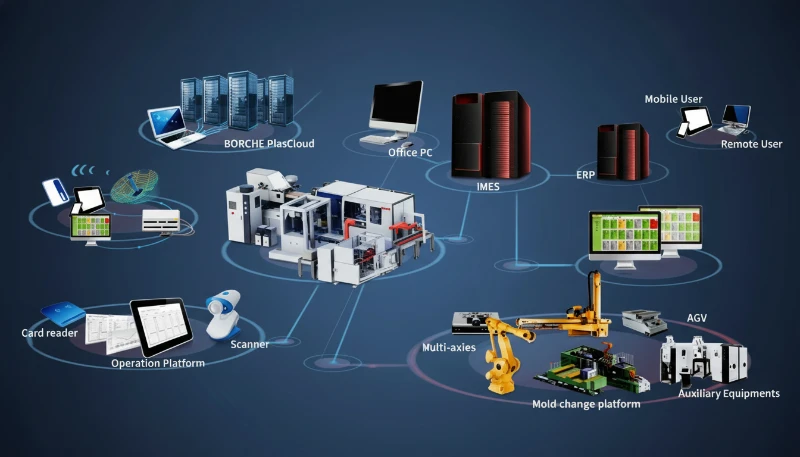
What Are the Key Parameters for Cost Optimization?
The following table outlines critical technical parameters that influence production costs and recommended targets for efficiency.
| Parameter | Definition | Impact on Cost | Optimization Target |
|---|---|---|---|
| Zykluszeit | Total time to complete one molding cycle (fill, pack, cool, eject). | Direct linear relationship to machine rate costs. | Minimize cooling time (typically 50-70% of cycle) via conformal cooling. |
| Klammer Tonnage | The force required to keep the mold closed (tons/sq. inch). | Higher tonnage machines have higher hourly rates. | Design parts to require lower injection pressure; use materials with higher Melt Flow Index (MFI). |
| Wanddicke | The distance between the core and cavity surfaces. | Determines material usage and cooling duration. | Target 2mm–3mm for standard thermoplastics; nominal ±10% variation. |
| Läufersystem | Channel system delivering melt to the cavity. | Cold runners create scrap/regrind; Hot runners eliminate it. | Use Hot Runners for high volume; Cold Runners for low volume/prototyping. |
| Cavitation | Number of parts produced per cycle. | Increases output but raises tooling cost. | Calculate break-even point based on Total Volume. |
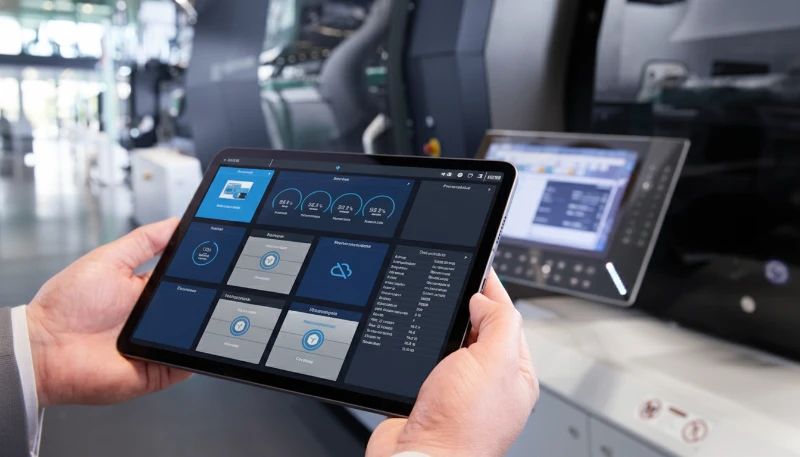
What Are the Strategic Methods for Cost Reduction?
This table compares different cost-reduction strategies, highlighting their advantages and potential drawbacks.
| Strategy | Vorteile | Benachteiligungen | Am besten für |
|---|---|---|---|
| Use of Regrind | Lowers raw material cost by mixing recycled sprues/runners (up to 20-30%) with virgin resin. | Can degrade mechanical properties and color consistency if not monitored. | Non-critical structural parts; dark-colored parts. |
| Core-ing Out | Removes unnecessary material from thick sections, maintaining ribs for strength. | Reduces material cost and cooling time; prevents sink marks. | Sekundäre Operationen minimieren: |
| Familie Schimmelpilze | Mold multiple different parts in the same mold base. | Reduces tooling investment (one mold vs. multiple). | Difficult to balance flow if parts have different volumes; scrap rates can be high. |
| Heißkanalsysteme | Eliminates runners, reducing scrap and cycle time. | Higher initial tooling cost; higher maintenance requirements. | High-volume production (100,000+ parts/year). |
| Gate Location Optimization | Improves flow, reduces pressure requirements, and minimizes cosmetic defects. | May require complex mold actions or restricted design placement. | Aesthetic parts; high-stress components. |
Conformal cooling channels follow the part geometry to reduce cycle time by 20% to 40%.Wahr
3D-printed metal mold inserts allow cooling lines to reach hot spots that drilled lines cannot, drastically shortening cooling cycles.
Selecting the cheapest resin per kilogram guarantees the lowest part cost.Falsch
Cheap resins may have slower cycle times or higher scrap rates. A faster-cycling, slightly more expensive engineering resin often yields a lower total part cost.

In Which Scenarios Are Specific Cost Strategies Applied?
-
High-Volume Consumer Electronics:
- Strategy: Multi-cavity molds (16+ cavities) with hot runner systems.
- Das Ziel: Minimize piece-part price by amortizing expensive tooling over millions of units.
- Focus: Cycle time reduction1 is paramount.
-
Automotive Under-the-Hood Components:
- Strategy: Metal-to-plastic conversion using glass-filled Polyamide (PA66).
- Das Ziel: Weight reduction (fuel efficiency) and elimination of secondary machining operations found in metal casting.
- Focus: Material performance vs. weight cost.
-
Medical Device Prototyping:
- Strategy: Master Unit Die (MUD) inserts or aluminum soft tooling.
- Das Ziel: Minimize upfront tooling risk and cost for low volumes (<5,000 units).
- Focus: Speed to market and design validation.
-
Large Industrial Housings:
- Strategy: Structural foam molding or gas-assist injection molding.
- Das Ziel: Reduce material usage in thick sections and lower clamp tonnage requirements.
- Focus: Material reduction and machine rate savings.
How to Systematically Reduce Production Costs (Step-by-Step)
To achieve measurable cost savings, follow this sequential workflow:
-
Conduct a DFM Review:
- Simplify geometry to allow for "open and shut" molds (avoiding slides and lifters).
- Add draft angles (min 1-2 degrees) to ensure easy ejection.
- Uniform wall thickness to avoid sinks and uneven cooling.
-
Optimize Material Selection:
- Evaluate if a commodity resin (e.g., Acrylonitrile Butadiene Styrene – ABS) can replace an engineering resin (e.g., Polycarbonate – PC) without compromising specs.
- Check for resin availability2 to avoid supply chain premiums.
-
Select the Right Tooling Class:
- Refer to SPI (Society of the Plastics Industry) standards. Use Class 101 for high volume (hardened steel, >1M cycles) and Class 103/104 for lower volumes (pre-hardened steel/aluminum).
-
Process Optimization (Scientific Molding):
- Perform a viscosity curve study to determine optimal injection speed.
- Optimize the "cooling" phase, which is the longest part of the cycle.
- Minimize the "cushion" usage without bottoming out the screw.
-
Minimize Secondary Operations:
- Kostenoptimierungsstrategien für effizientes Spritzgießen
- Mold in threaded inserts or snap fits to avoid manual assembly screws.
Using a Master Unit Die (MUD) system reduces tooling costs by sharing a common mold base.Wahr
You only machine the core and cavity inserts, saving the cost of the mold base and ejection system for each new part.
Increasing injection pressure always fixes short shots and improves part quality.Falsch
Excessive pressure increases internal stress, causes flash, and accelerates mold wear. The root cause is often venting, temperature, or flow path issues.

Häufig gestellte Fragen (FAQ)
Q1: Does wall thickness really impact cost that much?
A: Yes. Wall thickness dictates cooling time, which is usually 50-70% of the total cycle. Doubling the wall thickness can quadruple the cooling time according to conductive heat transfer principles ($t \propto h^2$), drastically increasing machine time costs.
Q2: When should I switch from a cold runner to a hot runner?
A: Consider a hot runner when part volume exceeds 50,000–100,000 units annually, or when the cost of the scrap material (runner) exceeds the amortization cost of the hot runner system.
Q3: What are "Undercuts" and why are they expensive?
A: Undercuts are features that prevent the part from ejecting directly. They require moving mechanisms in the mold (slides, lifters, or collapsible cores). These mechanisms increase tooling design time, machining cost, and maintenance frequency.
Q4: Can I use 100% regrind to save money?
A: Generally, no. Most industry standards (like UL or ASTM) and quality protocols limit regrind to 10–25% by weight. Exceeding this degrades mechanical strength, thermal resistance, and color consistency.
Q5: How does surface finish affect cost?
A: High-gloss finishes (SPI A-1, A-2) require diamond polishing by hand, which is labor-intensive and expensive. Textured finishes can be chemically etched and are often cheaper, plus they hide sink marks and fingerprints, potentially lowering scrap rates.

Zusammenfassung
Reducing costs in injection molding is not about cutting corners but about optimizing efficiency. The most significant savings are realized during the design phase (DFM), where decisions on wall thickness, material selection, and tolerance requirements dictate the life-cycle cost of the part. While high-quality tooling and automation require upfront capital, they minimize the variable costs of cycle time, labor, and poor quality (scrap) in the long run. Manufacturers should utilize scientific molding principles3 to stabilize processes and ensure maximum return on investment. See our Supplier Sourcing Guide for a comprehensive overview.
-
Cycle time reduction strategies directly impact the machine hourly rate contribution to part cost. ↩
-
Material databases assist in finding cost-effective alternatives with similar physical properties. ↩
-
Scientific molding decouples the process from the machine, ensuring consistent quality and reducing scrap rates. ↩
Need a Quote for Your Injection Molding Project?
Get competitive pricing, DFM feedback, and production timeline from ZetarMold’s engineering team.
Request a Free Quote → See our Supplier Sourcing Guide for a comprehensive overview.



 EN
EN  ES
ES  FR
FR  DE
DE  PT
PT  AR
AR  RU
RU  JA
JA  KO
KO  IT
IT  NL
NL  TR
TR  PL
PL 