Skip to content
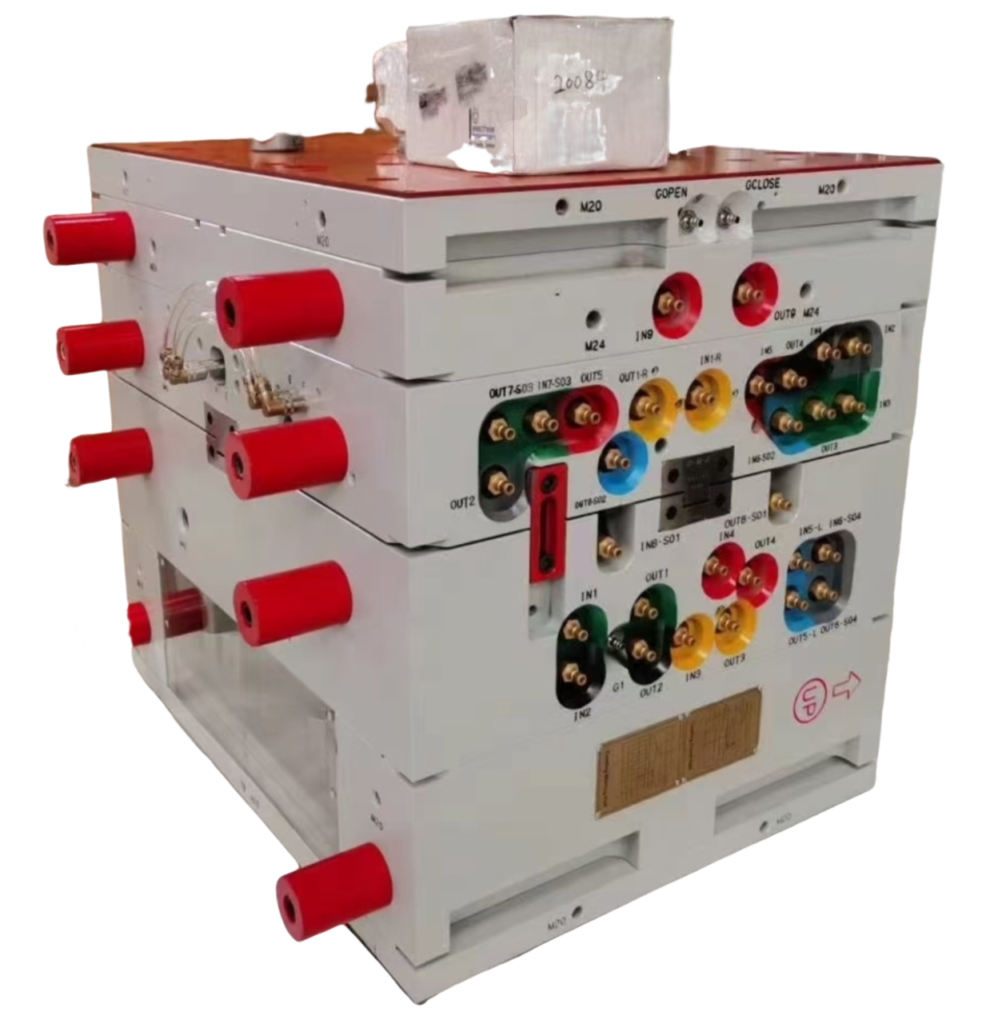
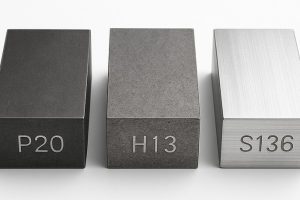
– Pre-hardened steels like P20 are ideal for medium-volume runs (up to 400,000 cycles), while through-hardened steels like H13 are for high-volume production (over 1 million cycles).
– Hardness is critical, with values ranging from 30 HRC for pre-hardened steels to over 52 HRC for high-performance tool steels after heat treatment.
– Specific applications demand specialized steels: S136 stainless steel is used for high-polish optical components and corrosive materials like PVC, while NAK80 is chosen for its superior mirror-finish capabilities.
What Is an Injection Mold Steel Materials Guide?
An Injection Mold Steel Materials Guide is a comprehensive framework for selecting the optimal metal alloy for manufacturing a mold tool — a decision that balances at least four key performance characteristics: hardness, toughness, corrosion resistance, and machinability. This selection process is paramount, as the chosen steel directly determines the mold’s lifespan, which can range from under 100,000 cycles for softer prototype steels to over 1 million cycles for hardened tool steels.
The guide helps engineers and designers navigate the trade-offs between upfront tooling cost and long-term production requirements. In our factory in our facility, we’ve found that a systematic approach to steel selection is the most critical factor in mitigating production risks. With 20 years of experience, we rely on this structured evaluation to ensure the mold can withstand the pressures and temperatures required for a specific plastic resin, from common polypropylenes to abrasive glass-filled nylons. A miscalculation here can lead to premature tool failure, costly repairs, and significant production downtime.
For comprehensive guidance, see our injection molding complete guide1 and our injection mold complete guide2.
“H13 steel is often heat-treated to 48-52 HRC for high-volume production molds.”True
H13 is a versatile chromium-molybdenum hot-work tool steel. It is delivered in a soft, annealed state (around 18-22 HRC) for easier machining and is then heat-treated to achieve a high hardness, making it suitable for long production runs exceeding 500,000 cycles and for molding abrasive materials.
“All injection mold steels require the same level of polishing.”False
Different steels have vastly different polishing capabilities. S136 and NAK80 are renowned for achieving a mirror-like SPI A-1 finish required for lenses and optical parts. In contrast, general-purpose P20 steel is difficult to polish beyond a B-1 or B-2 finish, making it unsuitable for high-gloss applications.
How Does an Injection Mold Steel Materials Guide Work?
An Injection Mold Steel Materials Guide works by systematically evaluating project requirements against steel properties in three key stages: application analysis, material characteristic matching, and cost-benefit evaluation. This structured process ensures the final mold tool is not over-engineered or under-engineered for the task. The first stage, application analysis, involves defining the critical project variables: the total required production volume, the type of plastic resin being molded (e.g., is it abrasive or corrosive?), the required part finish, and the complexity of the part geometry.
For example, a project requiring 2 million cycles with a glass-filled nylon will immediately point towards a high-wear-resistance, through-hardened tool steel. The second stage, characteristic matching, involves cross-referencing these requirements with the known properties of various steel grades. In our facility, we maintain a detailed matrix comparing grades like P20, 718H, NAK80, H13, and S136 across metrics like hardness (HRC), thermal conductivity, corrosion resistance, and polishability.
| Grade | Use When |
|---|---|
| P20 | Low-mid volume, non-aggressive resins |
| H13 | High volume, filled/high-temp resins |
| S136 | Corrosive resins, optical parts |
A high-gloss cosmetic part would necessitate a steel like NAK80 or S136, whereas a simple internal component could use a more economical P20. The final stage is a cost-benefit analysis. While a hardened steel like H13 has a higher upfront cost for both the raw material and the required heat treatment,1 its ability to produce over 1 million parts makes it more cost-effective per part than a P20 mold that might fail after 400,000 cycles, requiring a new tool to be built mid-production.
What Are the Key Processing Parameters?
The key processing parameters for mold steels are the target hardness, heat treatment temperatures, and machining conditions, with final hardness values often reaching up to 60 HRC for specialty steels. These parameters are not universal; they are tailored to each specific grade of steel to optimize its performance and lifespan. For instance, a through-hardening tool steel like H13 requires a precise, multi-stage heat treatment process involving preheating, austenitizing (typically around 1010-1050°C), quenching, and multiple tempering cycles to achieve its target hardness of 48-52 HRC without becoming brittle.
In contrast, a pre-hardened steel like P20 is delivered from the mill at a usable hardness of ~32 HRC and is typically not heat-treated further, simplifying the toolmaking procesour team facility, our toolmakers adjust CNC machining parameters—such as cutting speed and feed rate—based on the steel’s hardness. Machining fully hardened steel is significantly slower and requires more robust cutting tools than machining steel in its softer, annealed state.
| Parameter | Value/Range | Notes |
|---|---|---|
| Hardness (P20) | 28-36 HRC | Pre-hardened. Good for medium-volume runs (up to 400,000 cycles). |
| Hardness (H13) | 48-52 HRC | After heat treatment. Used for high-volume, high-wear applications. |
| Hardness (S136) | 48-52 HRC | Stainless steel, after heat treatment. For corrosive materials and high polish. |
| Hardness (NAK80) | 38-42 HRC | Pre-hardened. Excellent for mirror polishing (SPI A-1). No heat treatment needed. |
| Heat Treatment (H13 Austenitizing) | 1010-1050 °C | Critical step before quenching to achieve full hardness. |
| Mold Lifespan (P20) | < 400,000 cycles | Dependent on material molded and part complexity. |
| Mold Lifespan (H13/S136) | > 1,000,000 cycles | Represents the gold standard for long-term mass production. |
| Corrosion Resistance2 | Low (P20, H13) to High (S136) | S136 is required for molding materials like PVC which release corrosive gases. |
The interplay between these parameters is crucial. For example, improper heat treatment can lead to dimensional instability, warping the mold and causing part defects. It can also create internal stresses that lead to premature cracking. This is why we partner with certified heat treatment specialists who provide documentation for every tool block. Furthermore, the choice of steel dictates subsequent surface treatments. Steels like H13 are often nitrided to create an even harder surface (over 65 HRC) for sliding components or areas prone to high wear, further extending the mold’s operational life.
What Are the Advantages and Disadvantages?
The primary advantage of using a formal steel selection guide is achieving optimal production longevity, with high-end steels enabling mold lifespans of over 1 million cycles. This structured approach ensures that the most cost-effective material is chosen for the specific application, preventing both premature failure from under-specifying and unnecessary expense from over-specifying. On the other hand, a key disadvantage is the complexity and upfront cost associated with high-performance steels.
They require specialized knowledge in machining and heat treatment, and their raw material cost can be several times higher than general-purpose grades. In our facility, we’ve found the benefits of a rigorous selection process far outweigh the drawbacks. A well-chosen steel grade directly translates to higher quality parts with greater dimensional stability, reduced mold maintenance, and less production downtime. This is especially true when working with our 400+ different material formulations, some of which are highly abrasive or corrosive.
| Advantages | Disadvantages |
|---|---|
| Optimized Mold Lifespan: Matches steel to production volume, from <100k to >1M cycles. | Higher Upfront Cost: High-performance steels (e.g., H13, S136) are more expensive than P20. |
| Improved Part Quality: Harder steels resist deformation, ensuring consistent part dimensions. | Complex Processing: Hardened steels require specialized heat treatment and slower CNC machining. |
| Reduced Downtime: Proper steel choice minimizes wear, corrosion, and cracking, reducing need for repairs. | Longer Tooling Lead Time: Heat treatment and hardening processes add days or weeks to the mold build schedule. |
| Application-Specific Performance: Allows for selection based on polishability (NAK80), corrosion resistance (S136), or toughness (H13). | Risk of Improper Treatment: Incorrect heat treatment can ruin an expensive tool block, causing brittleness or warping. |
What Are the Common Defects and How to Prevent Them?
The three most common steel-related defects in injection molds are cracking, corrosion, and premature wear — all of which can be prevented through proper steel selection and processing. These issues compromise the structural integrity of the mold, leading to part quality degradation and potential catastrophic failure. Cracking often results from high internal stresses, which can be caused by improper heat treatment, sharp internal corners in the injection mold design (stress concentrators), or thermal shock from inadequate cooling.
Corrosion, or rust, is a major issue when molding certain resins like PVC, which release corrosive gases. It degrades the surface finish and can seize moving components like ejector pins. Premature wear, seen as erosion or abrasion of the cavity surface, is common when molding glass-filled or mineral-filled plastics with a steel that has insufficient hardness.3 In our facility, our prevention strategy is multi-faceted. We insist on designs with generous radii on all internal corners, mandate certified multi-stage heat treatment protocols for all hardened steels, and select stainless grades like S136 for any application involving corrosive polymers. For abrasive materials, we specify high-hardness tool steels like H13 or apply protective surface coatings like TiN or nitriding.
| Defect | Primary Cause | Prevention Strategy |
|---|---|---|
| Cracking | Improper heat treatment; sharp internal corners in design; thermal shock. | Use a certified heat treatment process with multiple tempers. Design molds with radii on all corners (>0.5mm). Ensure proper mold cooling. |
| Corrosion (Rust) | Molding corrosive polymers (e.g., PVC); improper storage in humid environments. | Select a stainless mold steel like S136. Apply a rust-preventative coating during storage. |
| Premature Wear / Abrasion | Using a soft steel (e.g., P20) with an abrasive, glass-filled plastic. | Select a high-hardness steel (H13, S136) with a hardness of 48-52 HRC. Apply a surface coating (e.g., Nitriding, TiN) for extra protection. |
| Galling / Seizing | Friction between moving mold components of similar hardness without lubrication. | Use dissimilar materials or hardness levels for moving parts. Apply high-pressure lubricants. Ensure proper venting and alignment. |
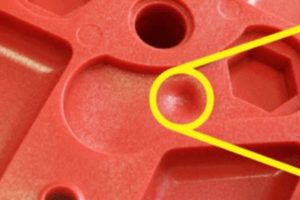
| Indentation / Damage | Low steel hardness; foreign object in mold; mishandling. | Choose a steel with adequate hardness for the clamping force calculator and injection pressure. Implement strict mold cleaning and handling protocols. |
“P20 steel is typically supplied pre-hardened to around 30-36 HRC.”True
This is a key feature of P20 and similar grades like 718H. Being pre-hardened eliminates the need for post-machining heat treatment, which saves time and reduces the risk of warping or dimensional changes. This makes it a cost-effective choice for medium-volume production molds.
“A mold made from P20 steel can always produce over 1 million parts.”False
P20 steel is intended for low-to-medium volume production, typically rated for a lifespan of up to 400,000 cycles. Achieving a lifespan of 1 million or more cycles requires a through-hardened tool steel like H13 or S136, which can be heat-treated to a much higher hardness (48-52 HRC).
Where Is an Injection Mold Steel Materials Guide Used?
An Injection Mold Steel Materials Guide is used across virtually every industry that relies on mass-produced plastic parts, including automotive, medical, consumer electronics, and packaging, where it is applied to over 90% of all high-volume tooling projects. The principles of the guide are fundamental to creating reliable and cost-effective manufacturing processes. Different industries place different demands on mold tools, necessitating a tailored approach to steel selection.
For example, the automotive industry often requires large, complex molds for parts like bumpers and dashboards, using durable H13 steel to withstand millions of cycles. The medical device industry, with its stringent requirements for cleanliness and part precision, frequently specifies high-grade stainless steels like S136 for components like syringes and pipette tips, as it resists corrosion and can be polished to a flawless finish. In our facility, our diverse client base means we apply this guide daily. One of our 45 machines might be running an S136 mold for a clear polycarbonate medical device, while another runs a P20 mold for a PP injection molding storage container.
| Industry | Typical Application | Commonly Selected Steel | Reasoning |
|---|---|---|---|
| Automotive | Interior trim, bumpers, engine components | H13, 1.2738 (718H) | High volume (>1M cycles), good toughness, resistance to thermal fatigue. |
| Medical Devices | Syringes, pipette tips, diagnostic casings | S136, 420SS | High corrosion resistance, excellent polishability, biocompatibility concerns. |
| Consumer Electronics | Phone cases, remote controls, housings | NAK80, S136, P20 | High-gloss surface finish requirements, dimensional stability. |
| Packaging | Bottle caps, thin-wall containers, crates | S136, H13 | Extremely high volume, fast cycle times, corrosion resistance for some caps. |
| Appliances | Housings for kitchen gadgets, vacuum parts | P20, 718H | Medium volume, good balance of cost and performance, good texture fidelity. |
How Does Injection Mold Steel Materials Guide Compare to Alternatives?
When compared to its primary alternative, aluminum tooling, a steel selection guide highlights steel’s superior durability, offering up to 10 times the lifespan. While aluminum molds are a viable option for prototyping and very low-volume production (typically under 10,000 cycles), they cannot withstand the rigors of mass production. The guide-driven selection of steel provides a solution for medium to high-volume manufacturing that aluminum simply cannot match.
The core trade-off is between speed/cost and longevity/quality. Aluminum is softer, allowing it to be machined 3-4 times faster than steel, and it offers better thermal conductivity for potentially faster cycle times. This makes it ideal for rapid prototyping. However, its softness also makes it prone to damage and wear. Steel, guided by a proper selection process, provides a robust solution with far greater hardness and wear resistance.
In our facility, we use both materials, but for different purposes. We might create a 7075 aluminum “soft tool” to validate a design and produce a few thousand parts, but for the production run of 500,000 parts, we will always build a “hard tool” from a carefully selected grade of steel like P20 or H13.
| Feature | Steel Molds (e.g., P20, H13) | Aluminum Molds (e.g., 7075) | Epoxy/3D Printed Molds |
|---|---|---|---|
| Typical Lifespan | 100,000 to 1,000,000+ cycles | 1,000 to 10,000 cycles | 10 to 100 cycles |
| Primary Use Case | Mass production, high-volume runs | Prototyping, bridge tooling, low-volume | Concept validation, fit/form testing |
| Hardness | High (30-55 HRC) | Low (not measured on HRC scale) | Very Low |
| Upfront Cost | High | Medium | Low |
| Lead Time | Long (4-12 weeks) | Short (1-4 weeks) | Very Short (1-5 days) |
| Wear Resistance | Excellent | Poor to Fair | Very Poor |
Factory Insight: Steel Materials Processing at ZetarMold
In our Shanghai facility, we process steel materials processing across 45 machines (90T–1850T) with 20+ years of experience. Our mold steel expertise spans P20, H13, S136, and specialty alloys, with in-house EDM, CNC, and grinding equipment supporting 100+ mold sets per month. Our 8 senior engineers and 120+ production staff have encountered the full range of processing challenges for this material class, and our standard approach is to run qualification programs before production to establish robust process windows.
Frequently Asked Questions
What steel is used for injection molds?
A variety of steels are used for injection molds, chosen based on production volume and plastic type. The most common are P20 (for medium runs up to 400k cycles), H13 (for high-volume runs over 1M cycles and abrasive materials), and S136 (a stainless steel for corrosive plastics like PVC and high-polish applications).
What is the difference between P20 and H13 mold steel?
The main difference is their hardness and intended use. P20 is a pre-hardened steel (around 32 HRC) used for medium-volume molds and doesn’t require heat treatment. H13 is a tool steel delivered soft and then heat-treated to a much higher hardness (48-52 HRC), making it far more durable and suitable for high-volume, long-life molds exceeding 1 million cycles.
What is the best steel for plastic injection molds?
There is no single “best” steel; it depends entirely on the application. For high-volume production (1M+ parts), H13 is often considered the best all-around choice for its toughness and wear resistance. For optical-clarity parts requiring a mirror finish, S136 or NAK80 is best. For cost-effective, medium-volume production, P20 is the best choice.
How hard should injection mold steel be?
The required hardness varies by application. Pre-hardened steels like P20 are typically 28-36 HRC. For high-volume production and abrasive materials, through-hardened tool steels like H13 and S136 are heat-treated to 48-52 HRC. Harder steel provides greater wear resistance and longevity but is more expensive and difficult to machine.
What is S136 stainless steel used for in injection molding?
S136 is a high-purity stainless steel used for two primary purposes: molding corrosive polymers like PVC that would rust other steels, and for applications requiring an extremely high-quality, mirror-polish surface finish (SPI A-1), such as lenses, light pipes, and medical device components. Its high hardness (48-52 HRC after treatment) also gives it a long lifespan of over 1 million cycles.
How long does an injection mold last?
The lifespan of an injection mold depends almost entirely on the steel it’s made from. A prototype aluminum mold might last for 5,000-10,000 cycles. A P20 steel mold can last up to 400,000 cycles. A high-quality mold made from hardened H13 or S136 tool steel is engineered to last for 1 million cycles or more.
What causes injection mold steel to crack?
The primary causes of cracking are high internal stresses and thermal fatigue. These stresses can be introduced by improper heat treatment (e.g., quenching too fast), sharp internal corners in the mold design that act as stress risers, or rapid, repeated temperature cycles during operation (thermal shock). Choosing a tough steel like H13 and ensuring proper design and heat treatment are the best prevention methods.
Choosing the right steel is the foundation of a successful injection molding project. It’s a technical decision that balances performance, longevity, and cost. With 20 years of manufacturing experience at ZetarMold, we’ve honed our expertise in steel selection across our 45 injection molding machines and a portfolio of over 400 plastic materials. This deep knowledge allows us to build robust, reliable molds that meet our clients’ precise specifications for millions of cycles. If you have a demanding project that requires expert material and tooling knowledge, contact our engineering team to ensure your project is built on the right foundation from day one.
1 Heat Treatment: The process of heating and cooling metals under tight control to improve their properties, such as hardness, toughness, and wear resistance. For mold steels like H13, this is a critical, multi-stage process. ↩
2 Corrosion Resistance: A material’s ability to resist degradation caused by chemical reactions with its environment. In molding, this is crucial when using plastics like PVC, which release hydrochloric acid gas at processing temperatures. ↩
3 Hardness (HRC): A measure of a material’s resistance to localized plastic deformation such as scratching or indentation. The Rockwell C scale (HRC) is commonly used for mold steels, with higher numbers indicating harder material. ↩
Contact us or explore our injection molding3 for full-program support from DFM through production.
Bottom line: Steel selection is a one-time decision with long-term consequences. P20 for low-mid volume non-aggressive programs. H13 when you’re running glass-filled, mineral-filled, or high-temperature resins above 500,000 shots. S136 when the resin is corrosive or the part requires optical surface quality. The cost difference between grades is small compared to a mold rebuild from premature wear or corrosion.
-
injection molding: A manufacturing process where molten thermoplastic is injected under pressure into a closed mold cavity, cooled, and ejected as a finished part. Used for high-volume production of complex geometries in commodity and engineering thermoplastics. ↩
-
mold design: The engineering process of creating injection mold tooling, including cavity/core geometry, cooling circuit layout, gating system, and ejection mechanism. Mold design directly determines part quality, cycle time, and tooling cost. ↩
-
term 3: A key concept in injection molding manufacturing and tooling. ↩


 EN
EN  ES
ES  FR
FR  DE
DE  PT
PT  AR
AR  RU
RU  JA
JA  KO
KO  IT
IT  NL
NL  TR
TR  PL
PL