Resources for The Complete Guide to LSR Injection Molding
What is Liquid Silicone Rubber (LSR)?
LSR is a two-component, platinum-cured silicone elastomer widely used for injection molding applications requiring flexibility, chemical resistance, temperature stability, and long service life.
Two-Component System
LSR is supplied as two separate components that are automatically mixed at a precise 1:1 ratio before injection into a heated mold.
- Component A: Silicone polymer and platinum catalyst
- Component B: Cross-linking agent and additives
Thermoset Elastomer
Unlike thermoplastic materials, LSR undergoes a chemical cross-linking reaction inside the heated mold, permanently transforming from liquid to solid.
- This unique curing process enables superior performance characteristics and long-term stability.
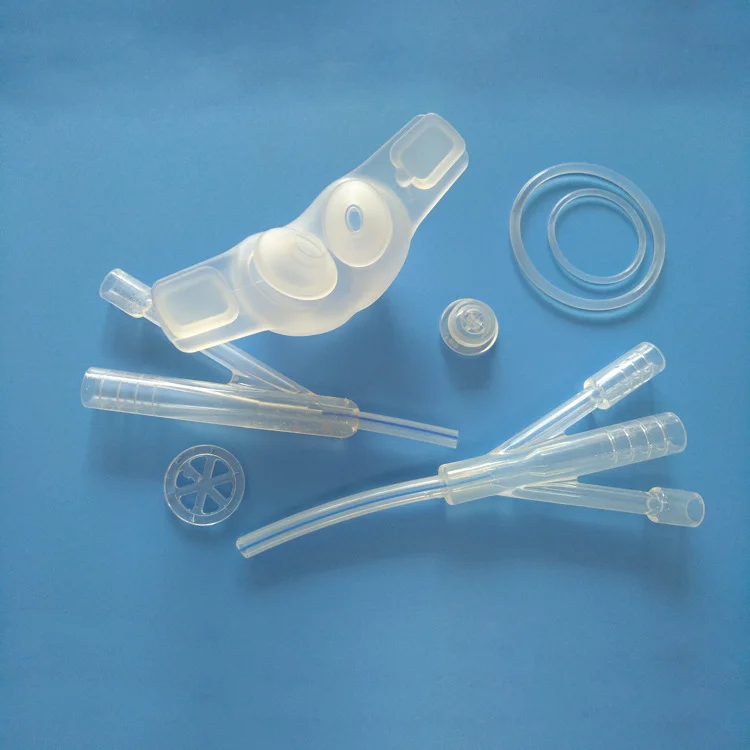
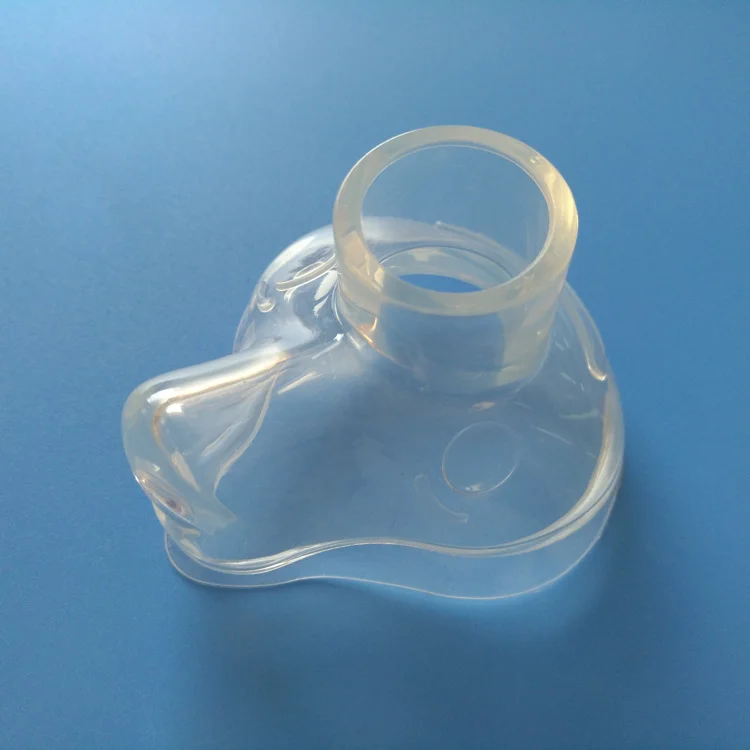
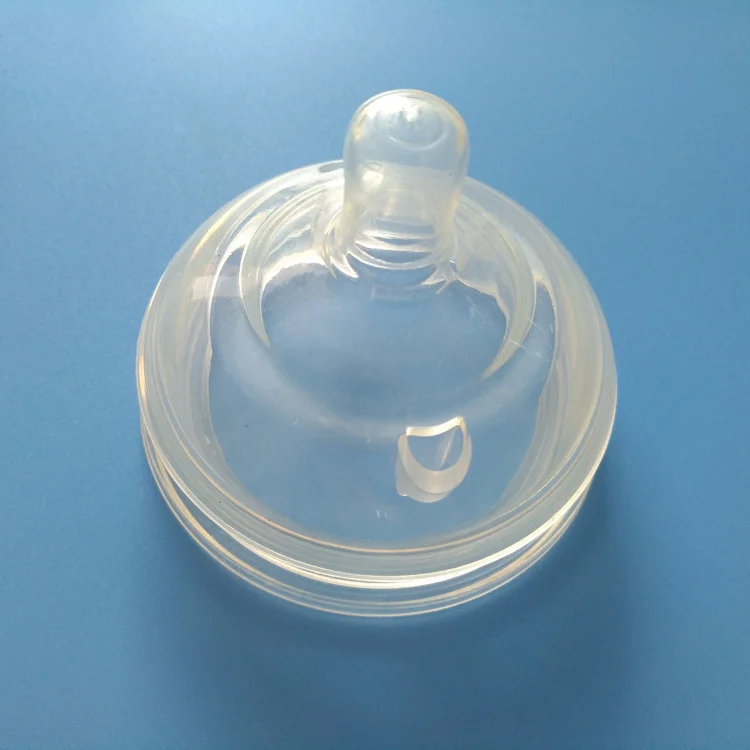
Why LSR is Widely Used?
- Excellent temperature resistance
- Good chemical resistance
- Biocompatibility for medical apps
- High elasticity and flexibility
- Excellent sealing performance
- Long-term durability
What Types of LSR Materials Are There?
Liquid Silicone Rubber is available in different grades and formulations to meet specific application requirements.
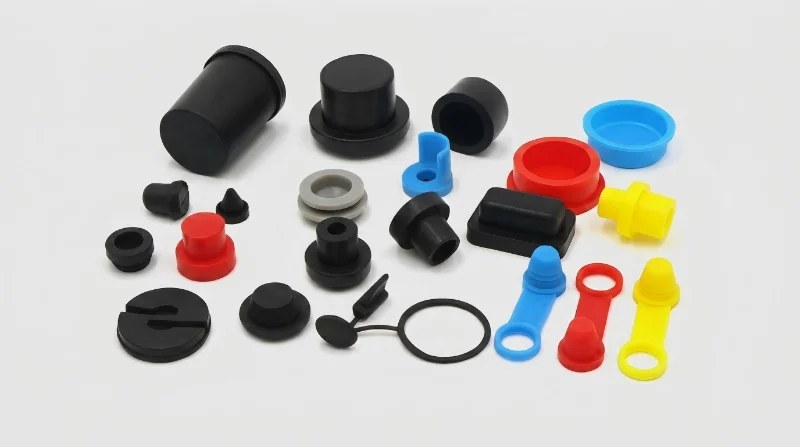
General-Purpose LSR
Balanced mechanical performance and cost efficiency
- Consumer products
- Silicone covers
- Sealing components
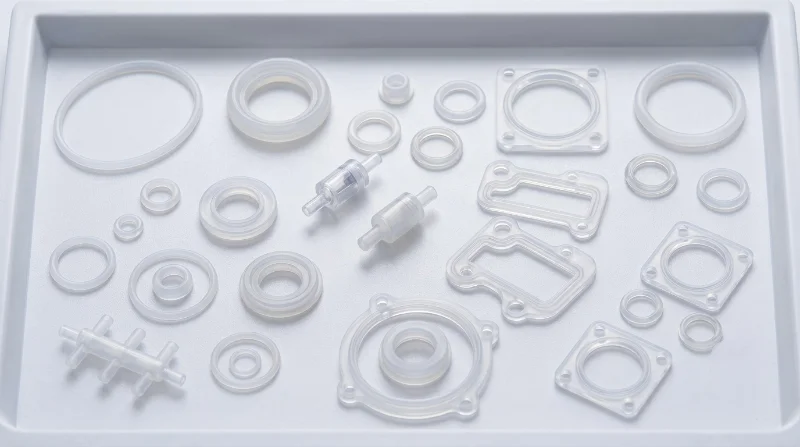
Medical Grade LSR
High purity and biocompatibility for healthcare
- Medical seals
- Respiratory components
- Drug delivery devices
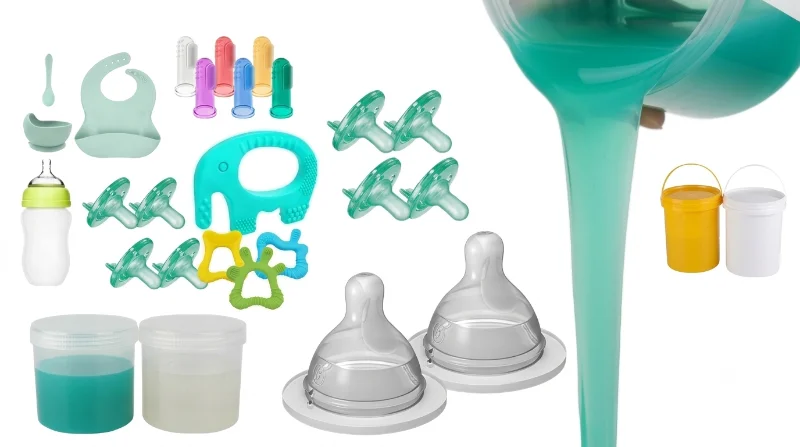
Food Grade LSR
Safe for direct food contact
- Kitchen products
- Baby feeding products
- Food container seals
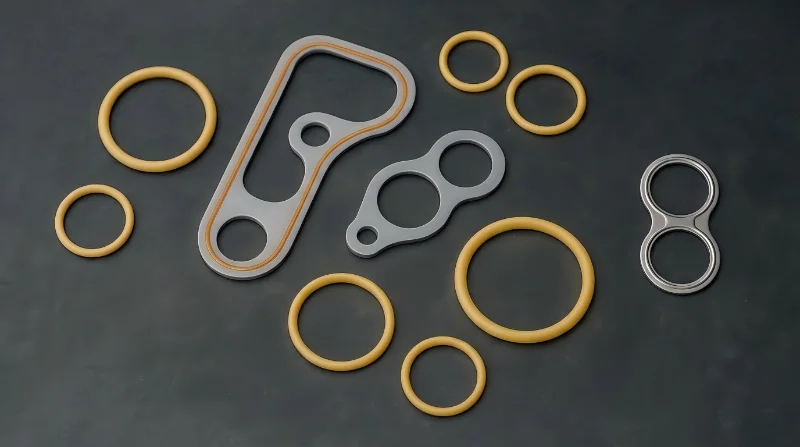
High-Temperature LSR
Continuous exposure to elevated temperatures
- Automotive components
- Industrial seals
- High-temp gaskets
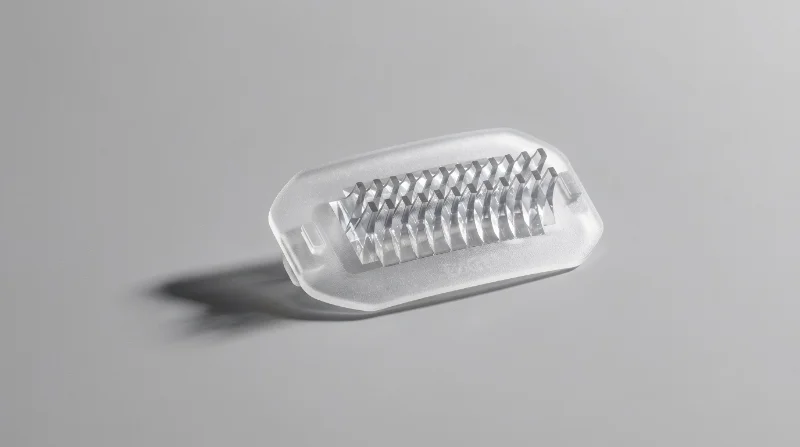
Optical Grade LSR
Excellent transparency and light transmission
- Optical lenses
- LED components
- Optical sensors
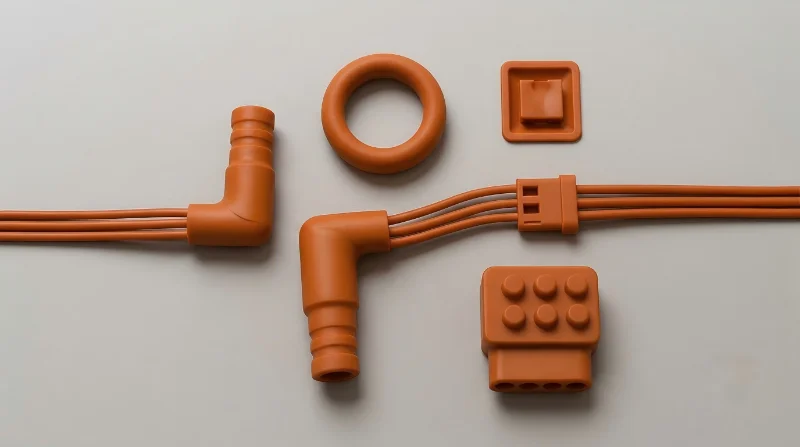
Flame-Retardant LSR
Improved fire resistance for safety
- Electrical components
- Electronic protection
- Industrial equipment
What Are the Properties and Characteristics of LSR?
Liquid Silicone Rubber is known for its unique combination of flexibility, durability, and environmental resistance. These properties make LSR suitable for applications where traditional plastics cannot provide sufficient performance.
| Property | Description |
|---|---|
| Hardness | Typically available from around 10 Shore A to 80 Shore A |
| Temperature Resistance | Can generally withstand approximately -50°C to 250°C depending on grade |
| Elasticity | Excellent flexibility and recovery after deformation |
| Compression Set Resistance | Maintains sealing performance under continuous pressure |
| Chemical Resistance | Resistant to many chemicals, oils, and environmental factors |
| Electrical Insulation | Excellent dielectric properties |
| Weather Resistance | Strong resistance to UV, ozone, and aging |
| Biocompatibility | Available in medical-grade formulations |
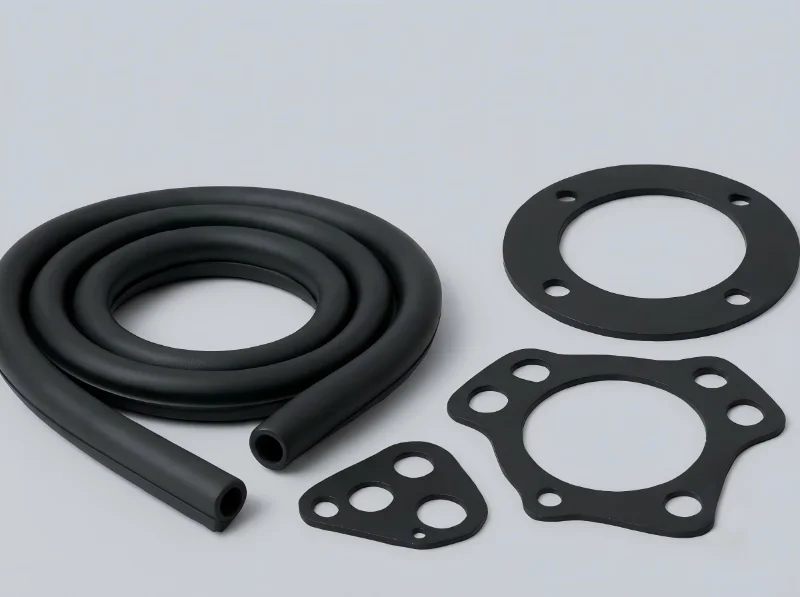
Temperature Resistance
One of the biggest advantages of LSR is its ability to maintain performance across a wide temperature range.
Compared with many thermoplastic elastomers, LSR can withstand:
- High-temperature environments
- Repeated thermal cycling
- Outdoor exposure
This makes it suitable for automotive, medical, and industrial applications.
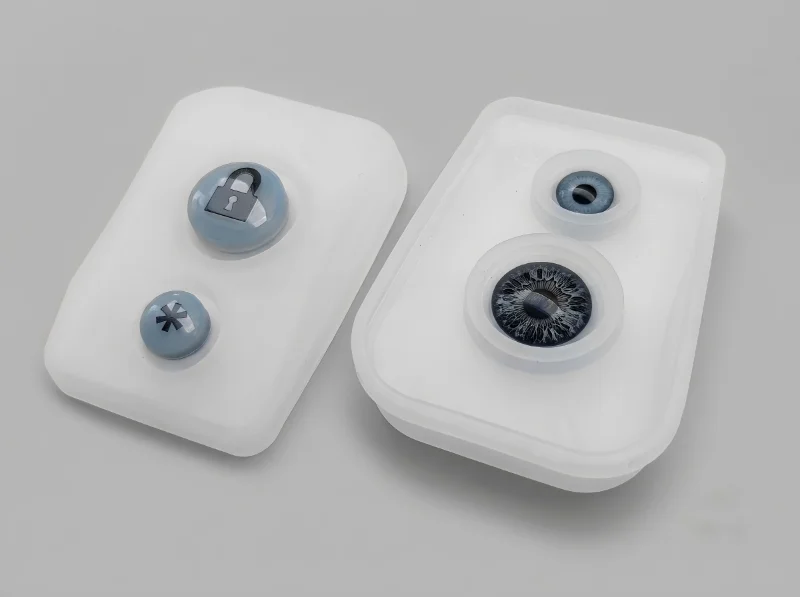
Flexibility and Elastic Recovery
LSR has excellent elasticity, allowing molded parts to repeatedly deform and return to their original shape.
This property is especially important for:
- Seals
- Valves
- Membranes
- Flexible buttons
- Wearable devices
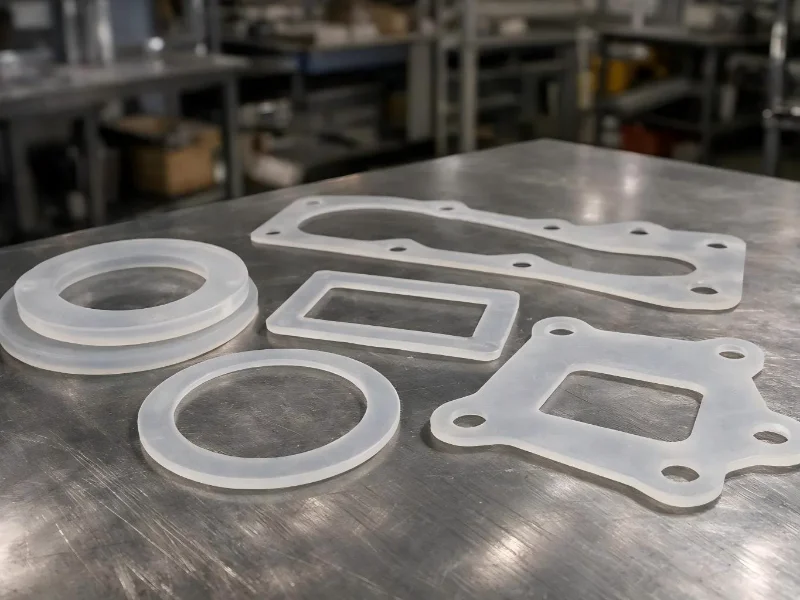
Chemical and Environmental Resistance
LSR provides excellent resistance against:
- Moisture
- UV exposure
- Ozone
- Many chemicals
- Cleaning agents
This makes it suitable for products used in demanding environments.
Biocompatibility
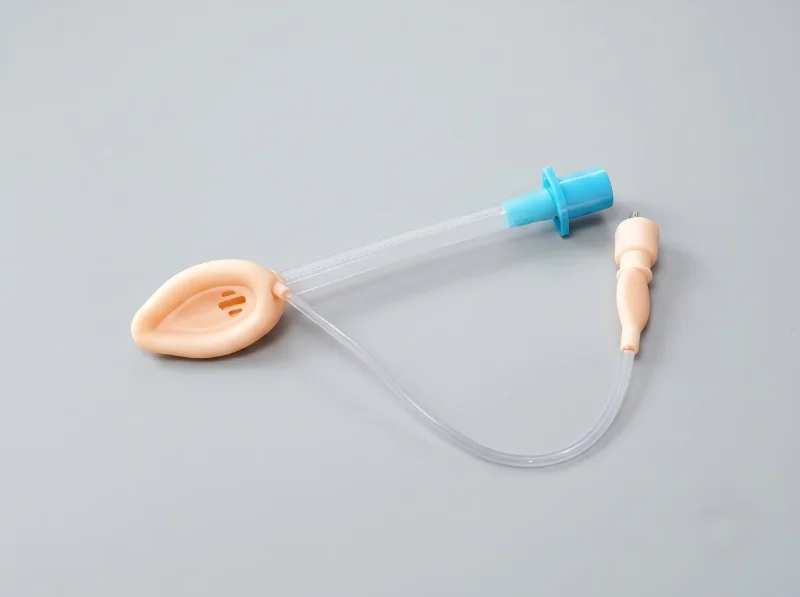
Certain LSR grades are suitable for medical applications due to their:
- Low toxicity
- Skin compatibility
- Sterilization resistance
- Long-term stability
For medical projects, material selection should always consider regulatory requirements and application conditions.
Can Liquid Silicone Rubber (LSR) Be Injection Molded?
Yes, Liquid Silicone Rubber (LSR) can be injection molded, and LSR injection molding is one of the most efficient methods for producing high-quality silicone components at medium and high production volumes.
Unlike traditional compression molding, LSR injection molding uses automated metering, mixing, and injection systems to achieve consistent material distribution and repeatable part quality.
How does LSR injection molding work?
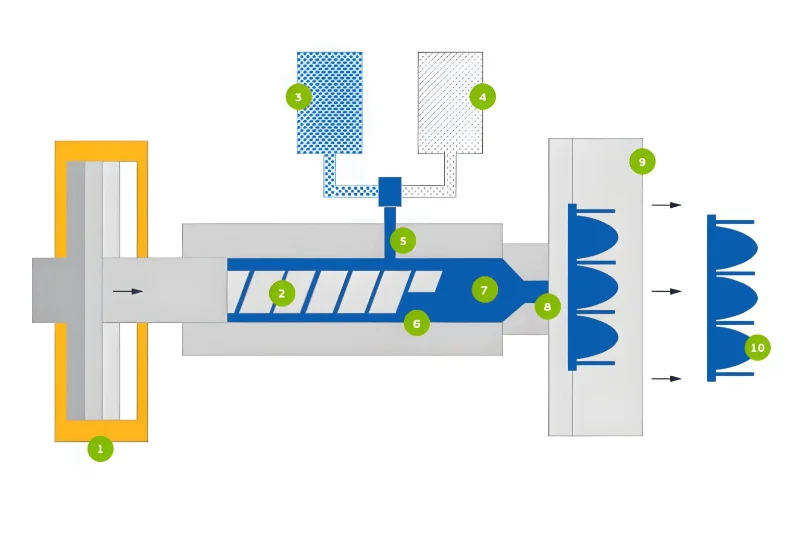
Step 1: Material Mixing
The two LSR components are stored separately and automatically mixed at a precise 1:1 ratio.
Step 2: Injection
The mixed liquid silicone material is injected into a heated mold cavity under controlled pressure.
Step 3: Curing
Inside the mold, heat activates the platinum curing reaction, converting the liquid silicone into a solid elastomer.
Step 4: Demolding
After curing, the finished silicone part is removed from the mold and prepared for inspection or secondary operations.
Why choose injection molding for LSR parts?
LSR injection molding provides several manufacturing advantages:
- High production efficiency
- Consistent part quality
- Ability to produce complex geometries
- Reduced material waste
- Automated production capability
- Suitable for cleanroom manufacturing
For industries requiring thousands or millions of identical silicone parts, LSR injection molding provides a reliable and scalable manufacturing solution.
What Are the Applications of LSR Injection Molding?
Liquid Silicone Rubber (LSR) injection molding is widely used across industries where components require flexibility, durability, sealing performance, and resistance to extreme environments. Due to its excellent material properties, LSR has become a preferred solution for producing precision silicone components in medical, automotive, electronics, consumer products, and industrial applications.
Medical and Healthcare
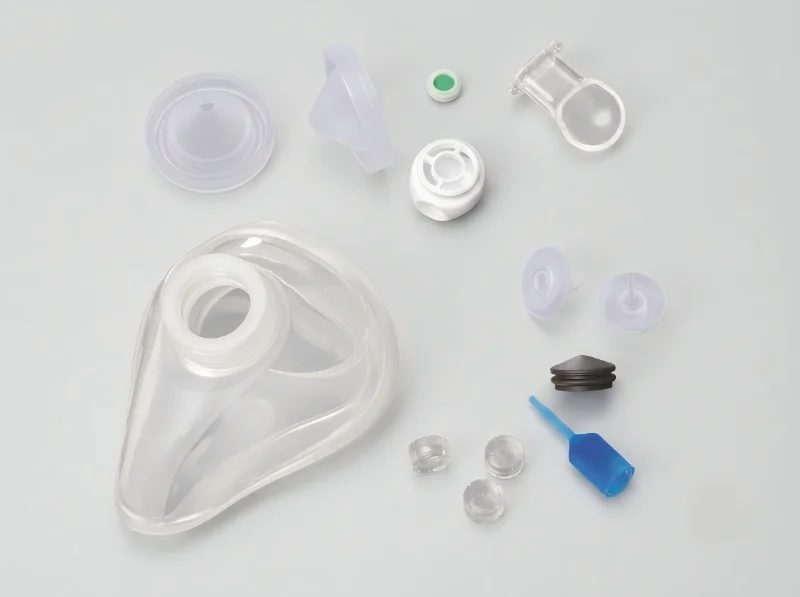
- Medical seals and gaskets
- Respiratory device components
- Surgical instrument components
- Drug delivery system parts
- Wearable medical device components
Automotive
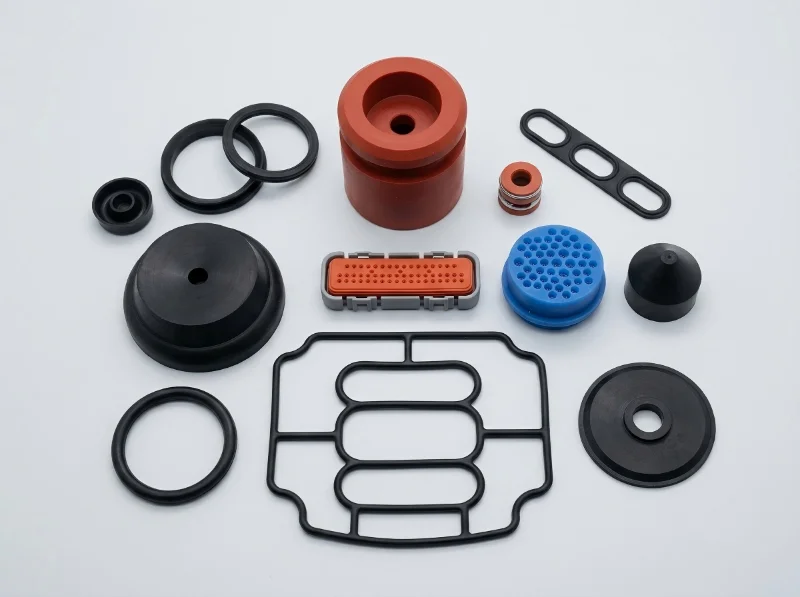
- Engine seals
- Electrical connectors
- Sensor seals
- Valve covers
- Waterproofing components
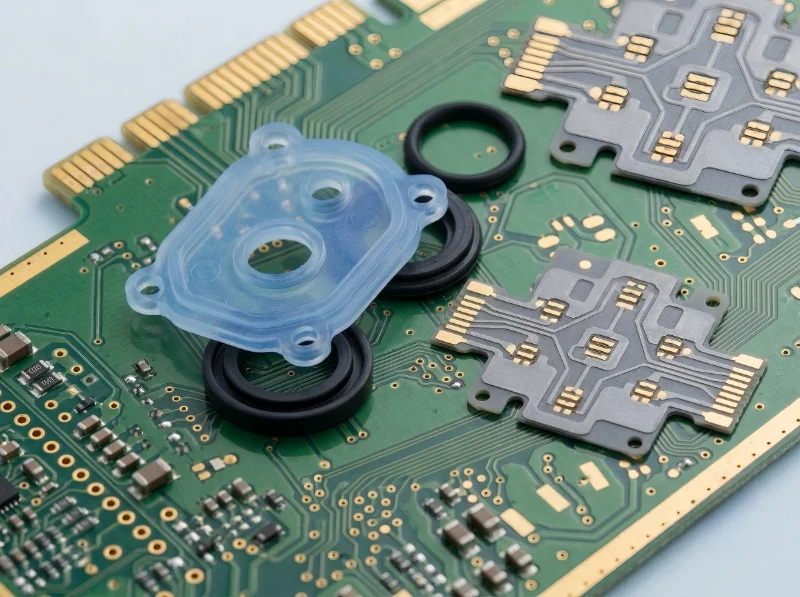
Consumer Electronics
- Waterproof seals
- Protective covers
- Keypads
- Wearable device components
- Earphone accessories
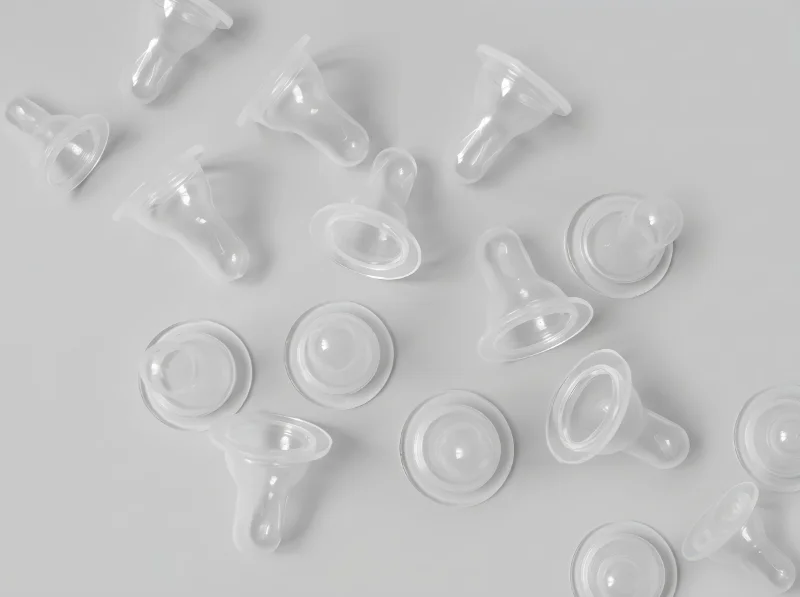
Baby and Consumer Products
- Baby bottle nipples
- Pacifiers
- Kitchen seals
- Silicone containers
- Household accessories
What Are the Key Considerations for LSR Injection Molding?
Successful LSR injection molding requires careful consideration of material selection, mold design, processing parameters, and product requirements. Compared with traditional plastic injection molding, LSR molding has unique challenges related to material behavior, curing, and flash control.
Material Selection
Choosing the correct LSR grade is the first step in a successful project. Important factors include: • Required hardness (Shore A) • Temperature resistance • Chemical exposure • Mechanical requirements • Medical or food certification requirements • Color requirements
Mold Design and Tooling
LSR mold design plays a critical role in achieving stable production. Important considerations include: Cold Runner System Reduces material waste and improves efficiency compared to traditional plastic injection molding. Venting Design Proper venting is essential to prevent short shots, surface defects, and incomplete filling. Flash Control One of the biggest challenges in LSR molding. Requires accurate machining and proper sealing surfaces.
Part Geometry
Product design significantly impacts LSR molding performance: • Maintain uniform wall thickness • Include proper draft angles • Avoid sharp corners • Design ribs and bosses appropriately • Consider undercuts carefully
Production Requirements
Before starting an LSR project, manufacturers should evaluate: • Annual production volume • Required tolerances • Automation requirements • Quality standards • Packaging requirements
LSR Injection Molding Design Guidelines
Proper design is one of the most important factors affecting the quality, cost, and manufacturability of LSR molded parts. A well-designed product combined with an optimized LSR mold can significantly reduce defects and improve production efficiency.
Part Design
Maintain Uniform Wall Thickness
Consider Draft Angles
Avoid Sharp Corners
Design for Undercuts Carefully
Optimize Gate Location
Use Proper Venting
Design for Automatic Demolding
Surface Finish Requirements
Mold Design
Maintain Uniform Wall Thickness
Consider Draft Angles
Avoid Sharp Corners
Design for Undercuts Carefully
Optimize Gate Location
Use Proper Venting
Design for Automatic Demolding
Surface Finish Requirements
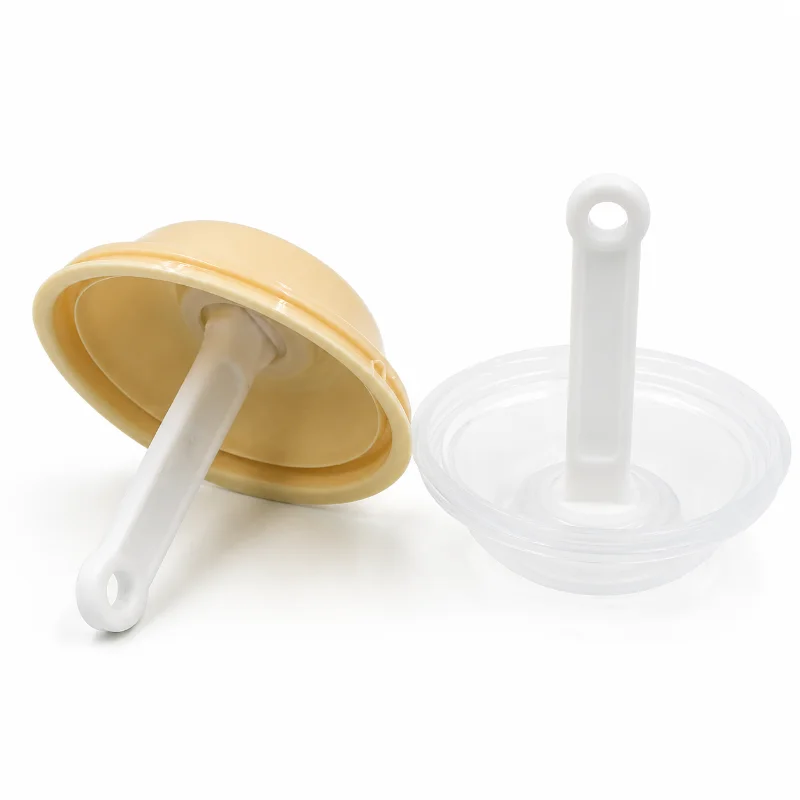
LSR Injection Molding: Complete Guide to Liquid Silicone Rubber Manufacturing
Explore our complete guide to LSR Injection Molding, including Liquid Silicone Rubber materials, design guidelines, molding process, applications, LSR overmolding, and custom silicone part manufacturing solutions.
Resources for The Complete Guide to LSR Injection Molding
LSR Injection Molding Process Step-by-Step
The LSR injection molding process is a highly controlled manufacturing method that combines precise material mixing, automated injection, mold curing, and quality inspection. Compared with traditional silicone molding methods, LSR injection molding provides higher repeatability, better efficiency, and improved production consistency.
The typical LSR injection molding process includes the following steps:
LSR Material Preparation:
Liquid Silicone Rubber is supplied as two separate components (Component A: silicone base, Component B: curing agent). Engineers select the appropriate LSR grade according to product requirements including hardness, temperature resistance, flexibility, chemical resistance, and regulatory requirements.
Metering and Mixing:
The two LSR components are automatically measured and mixed at a precise 1:1 ratio using an LSR metering system. The mixing system ensures accurate material ratio, consistent curing performance, and stable mechanical properties.
Material Injection:
After mixing, the liquid silicone material is injected into a heated mold cavity. LSR injection molding uses a cold material delivery system to prevent curing before the material reaches the mold cavity. Engineers control injection pressure, speed, material flow, and filling time.
Mold Heating and Curing:
After injection, the mold maintains a controlled temperature (typically 150°C to 200°C) to activate the silicone curing reaction. During curing, liquid silicone changes into an elastic solid through cross-linking, developing final mechanical properties.
Part Demolding:
After curing, the finished silicone component is removed from the mold. LSR molds are often designed with automated demolding systems using automatic stripping, robot-assisted removal, or manual removal for lower-volume production.
Inspection and Quality Control:
After molding, LSR parts undergo quality inspection including dimensional measurement, visual inspection, hardness testing, appearance inspection, and functional testing. For medical or high-precision applications, additional validation procedures may be required.
What Is LSR Overmolding?
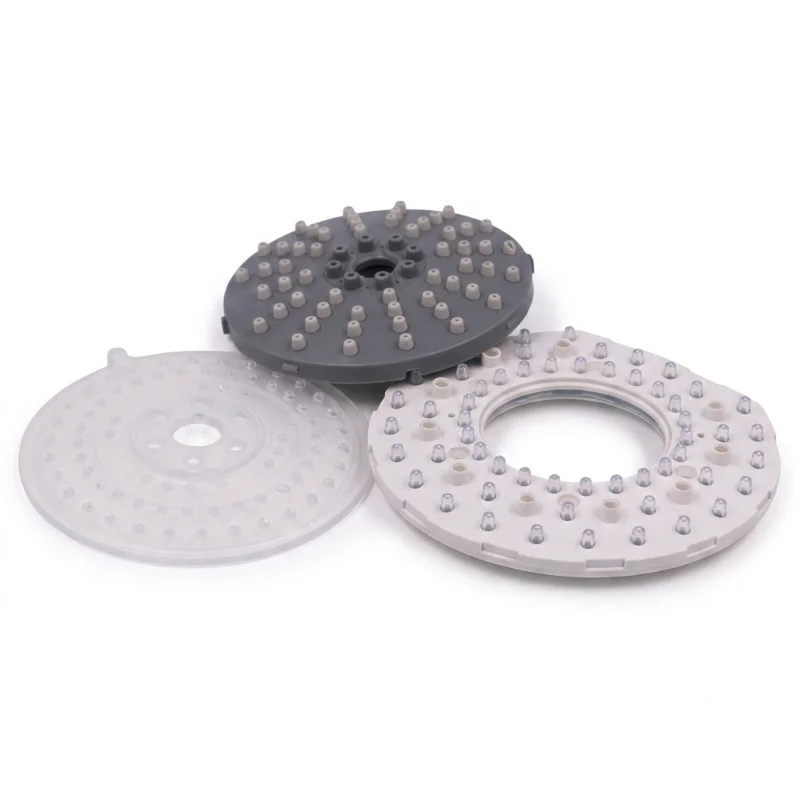
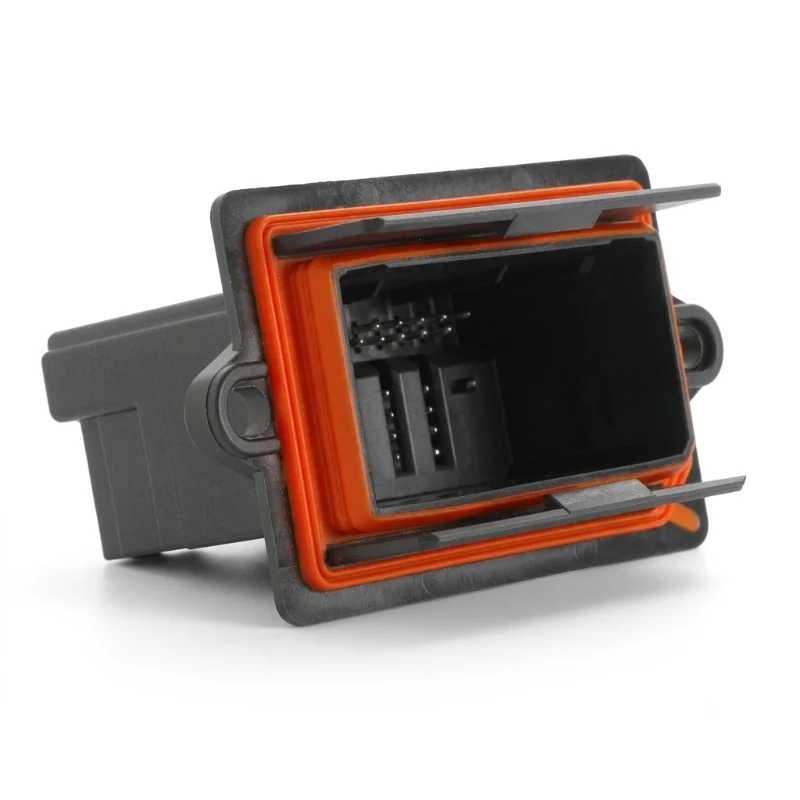
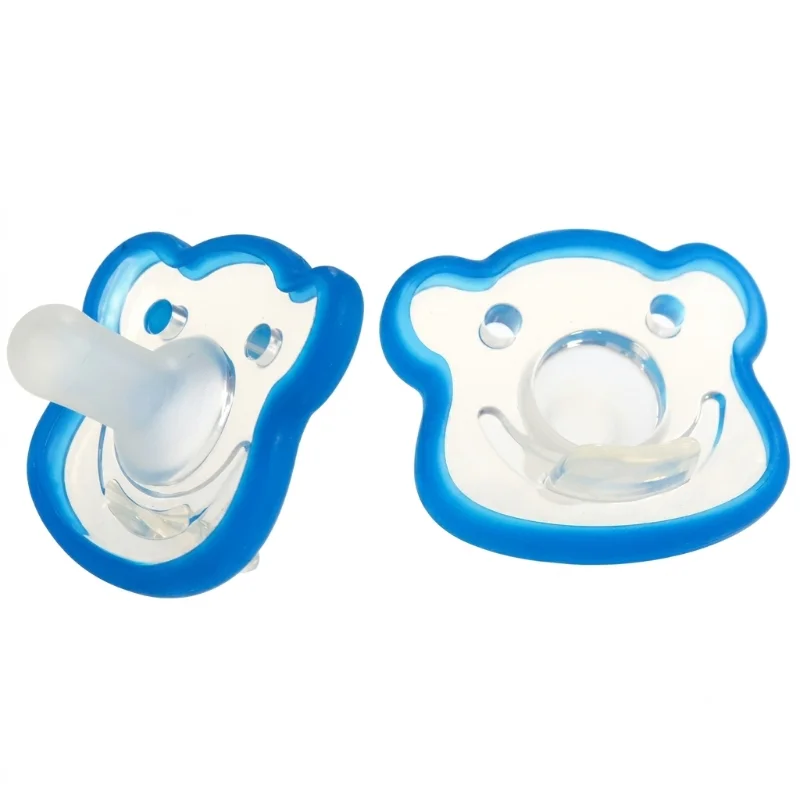
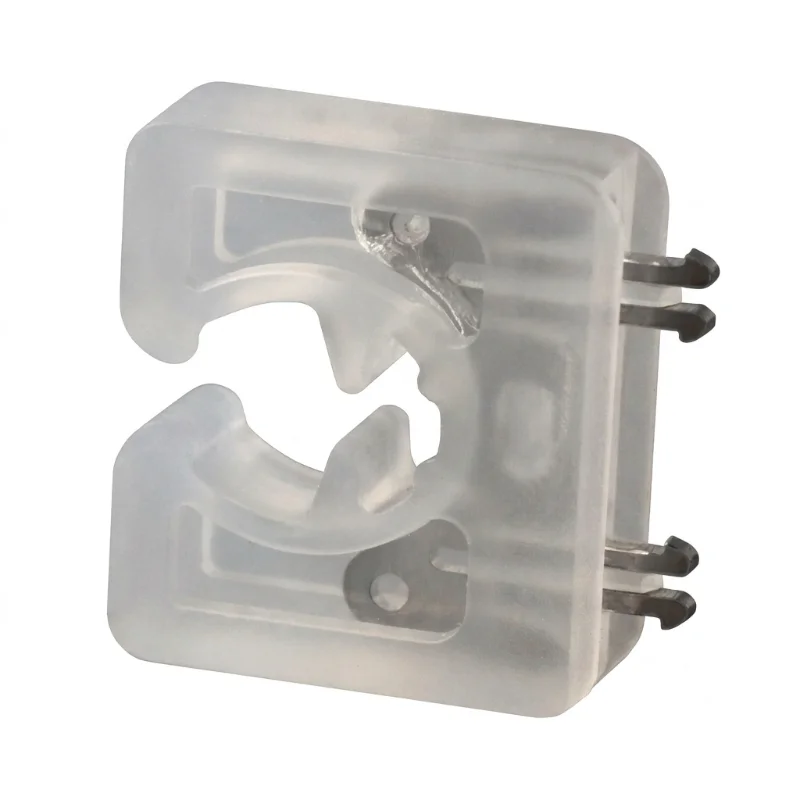
Liquid Silicone Rubber (LSR) overmolding is a manufacturing process that combines silicone rubber with another material, such as plastic or metal, to create a single integrated component with enhanced functionality.
Unlike traditional assembly methods, LSR overmolding creates a strong bond between materials, improving sealing performance, durability, and user experience.
Common LSR Overmolding Combinations
| Base Material | Application |
|---|---|
| PC + LSR | Medical devices, electronic housings |
| PA + LSR | Automotive components |
| ABS + LSR | Consumer products |
| Metal + LSR | Industrial seals |
Advantages of LSR Overmolding
- Improved waterproof performance
- Reduced assembly steps
- Better product durability
- Soft-touch surface
- Enhanced user experience
- Improved sealing reliability
Choose TPE When You Need:
- Medical devices
- Wearable electronics
- Automotive sensors
- Consumer electronics
- Industrial equipment
What Are the Advantages of LSR Injection Molding?
LSR injection molding provides many advantages compared with traditional silicone processing methods and other elastomer manufacturing technologies. Its combination of performance, precision, and production efficiency makes it suitable for demanding applications.
Excellent Temperature Resistance
LSR can typically withstand high-temperature environments, low-temperature conditions, and repeated thermal cycling, making it ideal for automotive, industrial, and electronic applications.
High Flexibility and Elasticity
LSR provides excellent elastic recovery, allowing parts to repeatedly compress, stretch, and return to original shape. Essential for seals, valves, membranes, and soft-touch components.
Excellent Chemical and Environmental Resistance
LSR is resistant to moisture, UV exposure, ozone, many chemicals, and cleaning agents, enabling long-term outdoor and industrial applications.
Superior Sealing Performance
Because of its flexibility and compression set resistance, LSR is widely used for sealing applications including O-rings, gaskets, waterproof seals, and valve components.
High Precision and Complex Geometry
LSR injection molding can produce thin-wall parts, complex shapes, micro features, and multi-cavity components with consistent quality for large-volume projects.
Suitable for Medical Applications
Medical-grade LSR provides biocompatibility, sterilization resistance, long-term stability, and skin-contact compatibility, widely used in healthcare products and medical devices.
Automation and Mass Production Capability
LSR injection molding is ideal for automated manufacturing, reducing labor costs while providing stable cycle times, high repeatability, and consistent quality for high-volume silicone parts.
What Are the Disadvantages of LSR Injection Molding?
Although LSR injection molding offers many advantages, it also has some limitations that should be considered during product development and material selection.
Higher Tooling Cost
- More precise machining required
- Better mold sealing needed
- Advanced runner systems
- Additional venting design
More Complex Mold Design
- Cold runner design expertise
- Flash prevention challenges
- Venting optimization
- Material flow control
Higher Material Cost
- Premium material pricing
- Longer product lifespan
- Better temperature resistance
- Improved performance justifies cost
Limited Recycling Options
- Thermoset material structure
- Scrap recycling difficulty
- Material waste management
- Careful planning required
Common Issues and Solutions in LSR Injection Molding
Although LSR injection molding is a reliable manufacturing process, several defects may occur if material selection, mold design, or process parameters are not properly controlled.
Understanding these common problems helps manufacturers improve product quality and production efficiency.
Flash on Silicone Parts
Problem: Excess silicone material appears along the parting line or edges. Causes: Insufficient mold sealing, excessive injection pressure, poor mold precision, incorrect vent design. Solutions: Improve mold machining accuracy, optimize clamping force, adjust injection parameters, improve parting line design.
Incomplete Filling (Short Shot)
Problem: The silicone material does not completely fill the mold cavity. Causes: Poor venting, incorrect injection settings, material flow restrictions, low injection pressure. Solutions: Optimize gate location, improve venting system, adjust injection parameters, modify part design.
Air Traps
Problem: Air becomes trapped inside the mold cavity, causing defects. Causes: Poor venting design, complex part geometry, incorrect filling sequence. Solutions: Add or optimize vents, change gate location, improve mold flow design.
Incomplete Curing
Problem: The silicone part remains soft or does not reach required mechanical properties. Causes: Incorrect curing temperature, insufficient curing time, incorrect material mixing ratio. Solutions: Verify material mixing system, optimize mold temperature, adjust curing time.
Part Deformation During Demolding
Problem: The molded silicone part changes shape after removal. Causes: Insufficient curing, poor demolding design, excessive undercuts. Solutions: Optimize curing parameters, improve mold release design, modify product geometry.
LSR vs. TPE: Which Material Is Better?
| Feature | LSR (Liquid Silicone Rubber) | TPE (Thermoplastic Elastomer) |
|---|---|---|
| Material Type | Thermoset silicone elastomer | Thermoplastic elastomer |
| Processing Method | Injection molding with curing | Thermoplastic injection molding |
| Temperature Resistance | Excellent, typically up to 200°C+ depending on grade | Moderate, varies by formulation |
| Flexibility | Excellent elasticity and recovery | Good flexibility |
| Compression Set Resistance | Excellent | Generally lower than LSR |
| Chemical Resistance | Excellent | Depends on material type |
| UV and Weather Resistance | Excellent | Usually good, but varies |
| Biocompatibility | Available in medical grades | Available in some medical grades |
| Recycling | Difficult due to thermoset structure | Easier due to thermoplastic nature |
| Material Cost | Higher | Generally lower |
| Tooling Cost | Higher | Usually lower |
| Production Efficiency | Excellent for high-volume automated production | Excellent for high-volume production |
Choose LSR When You Need:
- High temperature resistance
- Medical-grade performance
- Long-term durability
- Excellent sealing
- Extreme environmental resistance
Choose TPE When You Need:
- Lower material cost
- Easier recycling
- Thermoplastic processing
- Soft-touch consumer products
- Faster development cycles
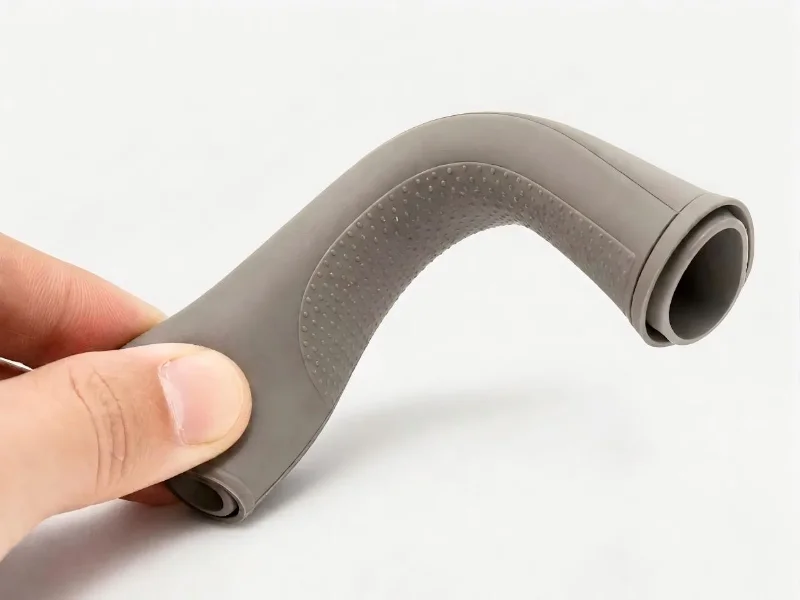
Choose LSR When You Need:
There is no universal answer because the best material depends on application requirements. A professional material evaluation should consider product requirements, production volume, environmental conditions, and regulatory standards before selecting the final material. LSR excels in demanding applications requiring extreme performance, while TPE offers cost-effectiveness for consumer products where extreme performance is not required.
Frequently Asked Questions (FAQs)
What is LSR injection molding?
LSR injection molding is a manufacturing process that uses liquid silicone rubber to produce flexible silicone components through automated mixing, injection, and curing inside a heated mold. This process is commonly used for medical devices, automotive parts, electronics, seals, and consumer products.
What hardness levels are available for LSR?
LSR is available in a wide range of hardness levels, typically measured using Shore A hardness. Common ranges include Soft LSR (approximately 10-30 Shore A), Medium LSR (approximately 30-60 Shore A), and Hard LSR (approximately 60-80 Shore A). The correct hardness depends on application requirements.
Can LSR be overmolded with plastic?
Yes. LSR can be overmolded with certain thermoplastic materials to create multi-material components. Common applications include sealed electronic housings, medical devices, consumer products, and automotive components. Successful LSR overmolding requires proper material compatibility, surface preparation, and mold design.
Is LSR suitable for medical applications?
Yes. Medical-grade LSR is widely used in healthcare applications due to biocompatibility, sterilization resistance, chemical stability, and long-term reliability. Common medical applications include seals, valves, respiratory components, and wearable medical devices.
Is LSR waterproof?
Yes. LSR provides excellent waterproofing performance because of its low water absorption, elastic sealing capability, and environmental resistance. It is commonly used for waterproof seals and protective components.
What tolerances can be achieved with LSR injection molding?
LSR molding tolerances depend on part size, geometry, material characteristics, and mold precision. High-precision LSR molding can achieve tight dimensional control when the mold and process are properly optimized.
Is LSR more expensive than plastic injection molding?
Generally, LSR injection molding has higher initial tooling and material costs compared with standard plastic injection molding. However, LSR can provide better long-term value for applications requiring high durability, temperature resistance, medical compliance, and reliable sealing performance.
Know More Resources for Injection Mold & Injection Molding →
Injection Molding Supplier Cost Control Evidence Buyers Should Request
You're about to spend six figures on an injection molding project, and your supplier just handed you a quote that looks… reasonable. But how do you know they actually control
Mike Tang · September 19, 2026
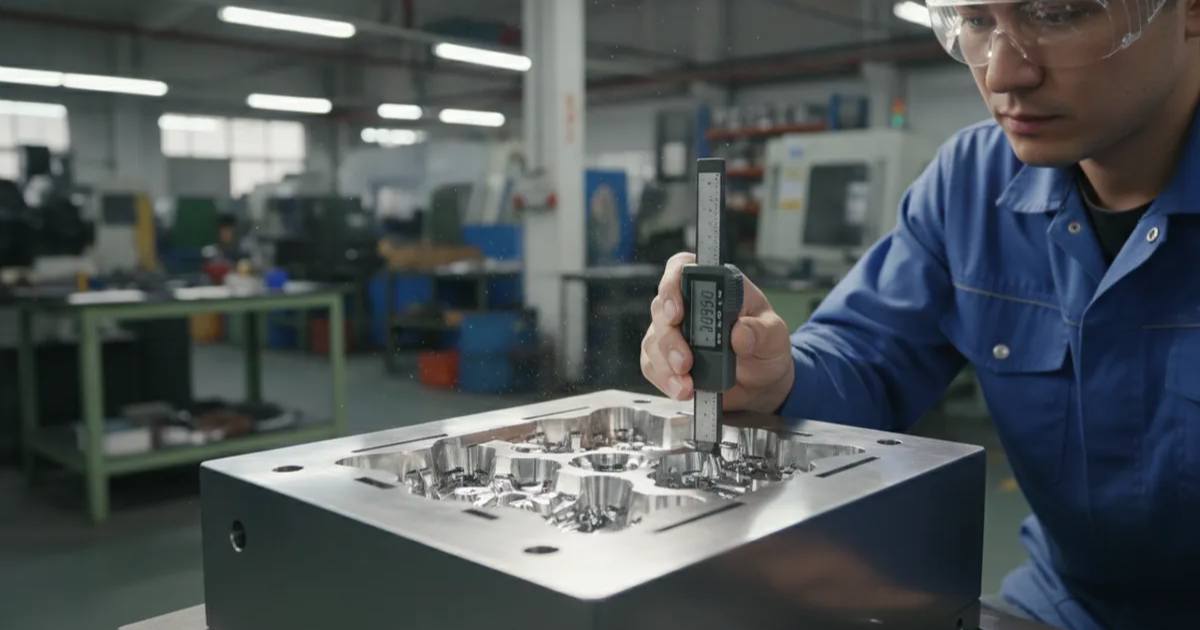
PEEK Injection Moulding Cost: What Drives Price per Part and Tooling
PEEK is one of the most capable thermoplastics available to a design engineer, and one of the most expensive to mold well. When a buyer sends us a PEEK drawing,
Mike Tang · September 19, 2026
Injection Molding Supplier Warranty Terms for Molds, Samples, and Production Parts
Key Takeaways Mold warranties typically cover 100K\u20131M shots, but the fine print on wear items excludes critical components. Sample part warranties are short \u2014 usually 7\u201330 days \u2014 so inspect
Mike Tang · September 18, 2026