

Managing deliveries from an enjeksiyon kalıplama tedarikçisi halfway across the world is not for the faint-hearted. You have language gaps, time zones, shipping routes, customs paperwork, and the eternal question: will my parts arrive on time and to spec? This delivery management checklist comes from two decades of working with overseas buyers — and learning the hard way so you do not have to.
- Verify supplier certifications before signing any contract
- Request a detailed production timeline with milestone gates
- Use FAI and AQL inspection to catch defects before shipping
- Choose Incoterms that match your logistics capability
- Build in a 15-20% buffer for shipping and customs delays
What Is a Supplier Delivery Management Checklist?
A supplier delivery management checklist is your master tracking document from PO to warehouse arrival. It covers production scheduling, quality gates, logistics, and payment milestones in one place.
For a broader look at enjeksiyon kalıp tasarımı, our pillar guide covers tooling structure, thermal control, and manufacturability tradeoffs.
İçinde enjeksiyon kalıplama, where tooling lead times alone can run 4-12 weeks, a checklist prevents the nobody-told-me syndrome that derails projects. It forces both buyer and supplier to agree on what done looks like before money changes hands.
The best checklists are living documents — updated weekly during active production and archived as reference for future orders. If your supplier pushes back on using one, that itself is a red flag.
Why Do Overseas Injection Molding Deliveries Go Wrong?
The biggest risk in overseas delivery is unclear communication between buyer and supplier. After 20+ years of serving international buyers, we have seen five root causes repeatedly: unclear specs, missing checkpoints, single-source dependency, logistics blind spots, and communication gaps.
Unclear specifications. Tolerances, surface finish requirements, and material grades that exist only in email threads — not on drawings. When the supplier interprets polish finish differently from what you expect, you get parts that look nothing like the sample.
No milestone checkpoints. The buyer places an order and disappears until the ship date. By then, any production issues have compounded into a full re-run.
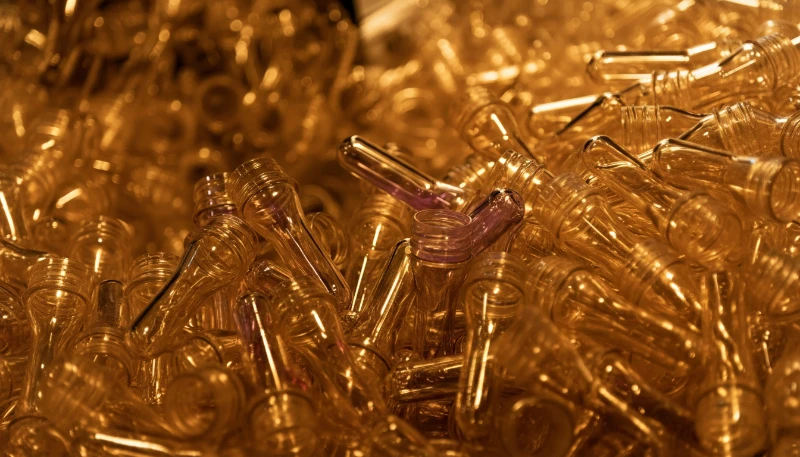
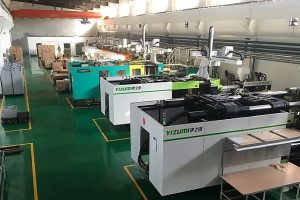
Single-source dependency. One mold, one machine, one operator. When any link breaks, your delivery stops cold. We run 47 injection molding machines precisely to avoid this bottleneck — if one press goes down, we shift production to another immediately. Whether you are manufacturing bottle preforms, precision gears, or custom plastic components, having redundant capacity is the only reliable safeguard against production stoppages that cascade into missed shipping dates.
Logistics blind spots. Booking vessel space during peak season (August-October) without a backup plan. Or using the wrong Incoterm and discovering you are responsible for customs clearance in a country where you have no agent.
Communication gaps. A yes from some suppliers means I heard you, not I agree and will deliver exactly that. This cultural mismatch causes more delivery failures than technical issues.
What Should You Check Before Placing an Order?
This is the phase where you either set up your project for success or lay the groundwork for months of frustration. Too many overseas buyers skip due diligence in their rush to get parts made, only to pay for it later in delays, quality disputes, and cost overruns. Here is our pre-order checklist broken into five essential verification areas that every buyer should work through before signing a purchase order.
1. Certifications and audit history. At minimum, your supplier should hold ISO 9001 certification as evidence of a functioning quality management system. If you are in medical or automotive, ISO 13485 or IATF 16949 are non-negotiable requirements that directly impact patient safety and vehicle reliability. Ask for the most recent audit report — not just the certificate hanging on the wall. A current audit report tells you whether the quality system is actively maintained or just a paper exercise for show.
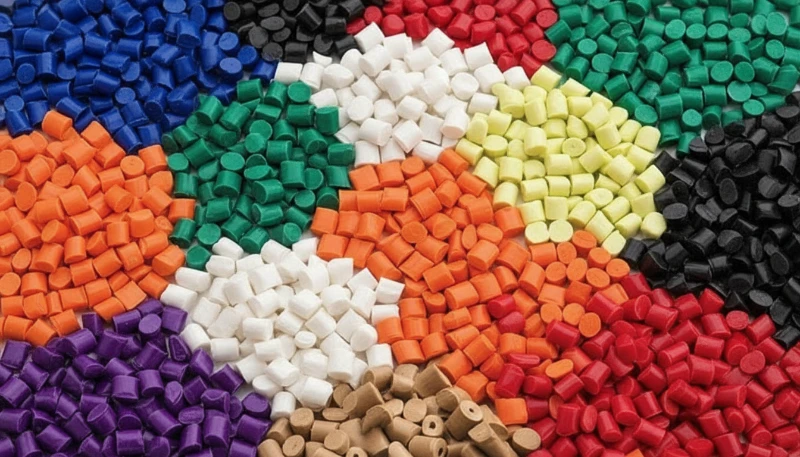
2. Production capacity versus your volume. A supplier running 10 machines will consistently struggle with a 500,000-piece order and cannot absorb schedule changes. Our factory operates 47 presses from 90T to 1850T, which means we can handle everything from micro-parts to large automotive components without lead time penalties. Tour the factory floor if you can — look at the assortment of colorful plastic pellets staged at each machine, and ask whether they run multiple materials simultaneously. Match your order volume to actual demonstrated capacity.
3. Material sourcing capability. Can they source your specified grade, or will they substitute equivalent materials without telling you? This is one of the most common sources of quality disputes between overseas buyers and injection molding suppliers. We work with 400+ materials across commodity, engineering, and high-performance grades, so rare resins are rarely an issue for our production team. But if your supplier only stocks a handful of commodity resins like PP and ABS, you are in for surprises when you need glass-filled nylon or high-temperature PEEK. Ask for a material compatibility list upfront and verify they can source your exact grade from certified distributors.
4. Communication structure. Who is your point of contact? Do they have English-speaking project managers? We staff 30+ fluent English speakers specifically because miscommunication kills delivery schedules faster than machine breakdowns.
5. Sample and prototype process. Before committing to full production, can they run a T1 sample? How fast is the turnaround? A supplier who cannot provide samples in 3-5 business days is either too busy or too slow — both are delivery risks.
How Do You Monitor Production Progress Remotely?
Remote production monitoring is your safety net for catching supplier problems before they become your problems. Use a combination of weekly reports, milestone gates, dashboards, and third-party inspections for full coverage at every production stage.
Weekly progress reports with photos. Insist on structured updates: current production stage, quantity completed, defect rate, and photos of work-in-progress. Not stock photos — real photos of your parts on the machine. If your supplier resists this, ask yourself what they might be hiding.
Milestone gate approvals. Break the production timeline into gates: material arrival, mold trial (T1), first article inspection, production run start, packing, and shipping. Each gate requires your written approval before the supplier proceeds to the next stage.
Real-time production data. Some modern factories provide dashboards showing machine status, cycle times, and output counters. If your supplier offers this, use it. If they do not, weekly reports are the absolute minimum you should accept.
“AQL 0.65 for critical defects means the entire batch is rejected if any critical defect is found in the sample.”Doğru
AQL 0.65 is a very tight acceptance level. For most sample sizes, finding even one critical defect (safety-related or non-functional) results in batch rejection. This is why it is reserved for the most important defect categories in your quality agreement.
“FOB shipping terms mean the supplier handles customs clearance at the destination port.”Yanlış
FOB (Free on Board) means the supplier is responsible only until goods are loaded onto the vessel at the origin port. The buyer handles all shipping, insurance, and customs clearance from that point forward. This is one of the most common misunderstandings we see from first-time overseas buyers.
Third-party inspection at critical points. For high-value orders, hire a local inspection company to visit the factory at the T1 sample stage and again before packing. Companies like SGS, Bureau Veritas, or QIMA can provide unbiased reports for a few hundred dollars — cheap insurance for a five-figure order.
The 72-hour rule. If your supplier misses a scheduled update by more than 72 hours without explanation, escalate immediately. Silence is never good news in manufacturing.
What Quality Checks Should Happen Before Shipping?
Shipping defective parts halfway across the world is the most expensive mistake in overseas sourcing. Here is what needs to happen before anything leaves the factory floor.
First Article Inspection (FAI)1. Every new production run starts with an FAI — a comprehensive dimensional and visual check of the first sample against your drawing. This catches tooling wear, material issues, and process drift before the full run proceeds. The FAI should follow AS9102 or an equivalent standard.
In-process quality checks. During production, operators should check critical dimensions at defined intervals (every 50th part, for example). Our 10+ QC specialists run these checks on every production order — not as a favor, but as standard process.
At our Shanghai factory, 10+ QC specialists run first article inspections, in-process checks, and AQL final inspections on every production order. With 47 presses and 30+ English-speaking project managers, we can provide real-time quality data and milestone reports without the communication lag that delays so many overseas shipments.
AQL final inspection. Before packing, a final inspection per ISO 2859-1 (AQL sampling2) determines if the batch passes. Typical AQL levels are 0.65 for critical defects, 1.0 for major, and 2.5 for minor. If the batch fails, the supplier must sort, rework, or remake — before shipping.
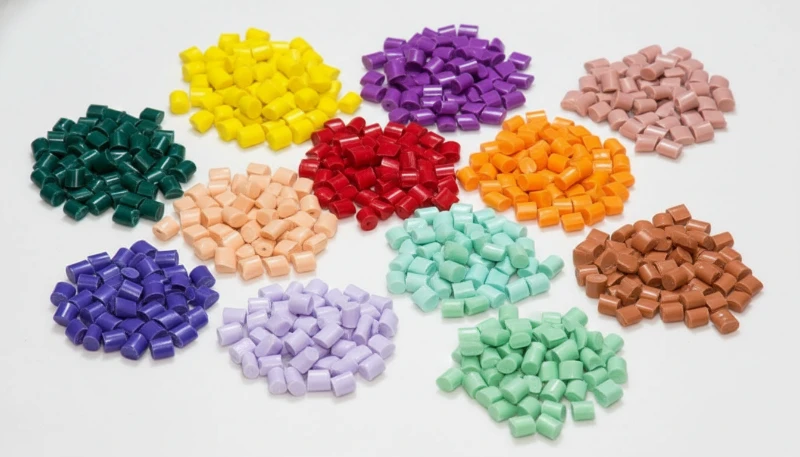
Packaging verification. Check that parts are packed to survive a 6-week ocean voyage. Anti-static bags for electronic components, VCI paper for metal inserts, desiccant packs for moisture-sensitive resins. The plastic pellets used in your production process may absorb moisture during transit if not properly sealed. We have seen too many shipments arrive perfect in quality but destroyed by salt air and condensation because packaging was an afterthought.
Documentation package. Your shipment should include: inspection reports, material certificates (CoA), dimensional data, packing list, and photos of packed goods. If customs or your receiving QC team needs to verify anything, the paper trail must be there.
How Do You Manage Logistics and Customs for Molded Parts?
Logistics is where many first-time buyers get blindsided. The factory did everything right, but the parts sit in a customs warehouse for three weeks because paperwork was wrong. Choosing the right shipping terms and preparing documentation properly can prevent most of these headaches.
Choose the right Incoterm under the Incoterms 20203 rules published by the International Chamber of Commerce. DDP (Delivered Duty Paid) means the supplier handles everything to your door. FOB (Free on Board) means you take over once goods are loaded on the vessel. EXW (Ex Works) means you handle everything from the factory gate. Each has different risk profiles and cost implications for your shipment.
| Incoterm | Who Handles Shipping | Who Handles Customs | Buyer Risk Level |
|---|---|---|---|
| EXW | Buyer | Buyer | Yüksek |
| FOB | Buyer (from port) | Buyer | Orta |
| CIF | Supplier to port | Buyer | Orta |
| DDP | Supplier | Supplier | Low (for buyer) |
Book shipping early. Ocean freight from China to the US takes 14-21 days on the water, but port congestion can add 1-2 weeks. During Q3-Q4 peak season, vessel space is tight. Book 3-4 weeks before your goods are ready.
Customs documentation checklist: commercial invoice (match PO numbers exactly), packing list with weights and dimensions, bill of lading or airway bill, certificate of origin, material safety data sheets (if applicable), and import licenses (for restricted materials).
HS code accuracy matters. Injection molded parts typically fall under HS 3926 (plastic articles) or 8480 (molds). Wrong codes trigger inspections, delays, and sometimes retroactive duties. Your freight forwarder should confirm — but double-check yourself.
“ISO 9001 certification confirms a supplier has documented quality processes, but does not guarantee on-time delivery.”Doğru
ISO 9001 certifies that a supplier has a quality management system in place with documented procedures and audit trails. It is a necessary foundation but not sufficient on its own. Always verify with sample orders, factory visits, and a structured delivery checklist like the one outlined in this article.
“Requesting weekly progress photos from your injection molding supplier is micromanagement and damages the relationship.”Yanlış
Weekly progress photos are standard practice in professional manufacturing relationships. Legitimate suppliers expect and welcome structured reporting — it protects both sides and catches issues early before they compound into delivery failures or quality disputes.
What Payment Terms Protect Both Buyer and Supplier?
Payment terms are a trust mechanism. The buyer wants to pay after receiving good parts; the supplier needs cash to buy materials and run machines. Here is how to find the middle ground that protects both sides.
Standard milestone payments. For tooling: 50% with PO, 50% after T1 sample approval. For production: 30% deposit, 70% before shipping (or after final inspection). This split is common in China-based manufacturing and provides accountability at each stage.
Letter of Credit (L/C). For orders above $50,000, an L/C from your bank protects both sides. The supplier gets paid when they present the correct shipping documents; you get assurance that goods were actually shipped. L/C fees (typically 1-2% of order value) are worth it for large orders.
Trade Assurance platforms. Alibaba Trade Assurance and similar escrow services hold payment until you confirm receipt and quality. Useful for first-time orders with new suppliers where trust has not yet been established.
Never pay 100% upfront. If a supplier demands full payment before starting production, walk away. Legitimate manufacturers with cash flow can work with milestone terms. We have offered milestone payments since our first overseas order in 2013 — it builds trust on both sides.
Currency and transfer fees. Confirm the settlement currency (USD is standard for China exports) and who pays transfer fees. SWIFT transfers from the US to China typically cost $25-45 per wire — plan your payment schedule to minimize the number of transfers.
When Should You Walk Away from a Supplier?
Not every supplier relationship is worth saving. After years of helping overseas buyers evaluate and switch suppliers, we have identified clear exit signals that should prompt you to look elsewhere.
Repeated missed deadlines without root cause analysis. One delay is a problem. Two delays is a pattern. Three delays with no corrective action plan is a relationship that needs to end.
Refusing third-party inspection. If a supplier will not allow SGS, QIMA, or your own auditor on-site, they are hiding something. Full stop.
Material substitution without approval. Switching from PA66-GF30 to PA66-GF25 because it is basically the same is a deal-breaker. Material substitutions require written engineering approval — every time.
Inconsistent quality between orders. If your first order was perfect but the second has 8% defect rate and the third is worse, the supplier’s process control is failing. No amount of price discount justifies unreliable parts.
No corrective action process. When you report a problem, the response should be: root cause analysis, containment action, and preventive measure. If the response is we will do better next time, there is no system behind the promise.
Single point of contact dependency. If your entire relationship runs through one sales rep and that person leaves the company, you are starting from zero. Suppliers with proper account teams and 8 senior engineers backing up the commercial relationship are more resilient to personnel changes.
Sıkça Sorulan Sorular
Sıkça Sorulan Sorular
What documents should an injection molding supplier provide before shipping?
Before shipping, your supplier should provide a commercial invoice, packing list, bill of lading, certificate of origin, material certificates (Certificate of Analysis), dimensional inspection reports, and AQL final inspection results. If your industry requires specific compliance documentation such as RoHS, REACH, or UL certification, include those requirements in your purchase order from the very start. Missing documentation at customs can delay your shipment by weeks and trigger additional inspections or penalties that far exceed the modest cost of proper document preparation.
How long does ocean freight take for injection molded parts from China?
Standard ocean freight from major Chinese ports (Shanghai, Shenzhen, Ningbo) to the US West Coast takes 14-18 days on the water. East Coast routes take 25-35 days via the Panama Canal. Add 5-10 days for port processing, customs clearance, and last-mile delivery to your facility. During Q3-Q4 peak season, total door-to-door time can stretch to 6-8 weeks due to port congestion and vessel shortages. Always plan your order schedule with at least a 2-week buffer, and book vessel space 3-4 weeks before your goods are production-ready.
What is the standard payment structure for overseas injection molding orders?
The most common structure is 50% deposit for tooling with the balance due after T1 sample approval. For production runs, a 30% deposit with the remaining 70% due after final inspection and before shipping is standard practice. For orders above $50,000, a Letter of Credit (L/C) provides mutual protection for both buyer and supplier by tying payment to documented shipping evidence. First-time buyers may also use trade assurance platforms like Alibaba escrow service to mitigate financial risk while building trust with a new supplier.
Should I hire a third-party inspector for my injection molding order?
Yes, for any order above $10,000 or when working with a new supplier for the first time. Third-party inspectors such as SGS, QIMA, or Bureau Veritas typically charge $200-400 per factory visit and provide detailed photographic reports. Schedule inspections at two critical points: after the T1 sample to verify tooling and process setup, and before packing for AQL final inspection. This small upfront investment catches production problems that would cost 10-50x more to fix after the parts have been shipped to your facility.
What AQL level should I specify for injection molded parts?
For general-purpose molded parts, AQL 1.0 for critical defects, 1.5 for major defects, and 2.5 for minor defects is the standard industry baseline that most quality engineers recommend. For medical or automotive components, tighten to AQL 0.65 for critical, 1.0 for major, and 1.5 for minor defects. The key is defining what constitutes each defect category in your quality agreement before production starts. Ambiguous or undefined defect categories are the leading cause of disputes during final inspection and can delay your shipment by weeks.
How do I handle a delivery dispute with an overseas injection molding supplier?
First, document everything including emails, photos, inspection reports, and the original purchase order with agreed specifications. Escalate internally at the supplier by going beyond your sales contact to senior management. If the supplier used a trade assurance platform, open a dispute case within the claim window — these platforms typically give you 30 days after delivery confirmation. For direct contracts, refer to the dispute resolution clause in your agreement, ideally specifying arbitration in a neutral jurisdiction. Prevention through a structured delivery checklist is always cheaper than resolution after problems arise.
Can I visit the factory during production of my injection molded parts?
Absolutely, and most legitimate suppliers welcome factory audits and production visits from their customers. Plan your visit during the T1 sample stage or early production run so you can verify actual manufacturing processes, meet the production team face-to-face, and build the personal relationship that smooths out future communications. A factory visit also lets you verify that the equipment, tooling, and quality systems you were promised actually exist. If a supplier discourages or delays factory visits, treat that as a significant red flag and reconsider the partnership before committing larger orders.
What packaging standards should I require for overseas shipping of molded parts?
Specify anti-static bags for electronic components, VCI (Vapor Corrosion Inhibitor) paper for parts with metal inserts, desiccant packs and moisture barrier bags for hygroscopic materials like nylon, individual cavity packing for high-precision parts, and sturdy export cartons rated for stacking during ocean transit. Request photos of the packed shipment before it leaves the factory so you can verify compliance with your packaging requirements. Poor packaging turns perfectly molded parts into scrap during a 6-week ocean voyage through salt air, humidity, and rough handling at multiple transshipment points.
What Is the Key Takeaway for Managing Injection Molding Deliveries?
The key takeaway is that managing injection molding deliveries from overseas suppliers does not have to be a gamble. With a structured checklist covering pre-order verification, production monitoring, quality gates, logistics planning, and clear payment terms, you turn a risky process into a repeatable system.
The key is starting early — before you place the order — and maintaining visibility throughout production. A supplier who welcomes your checklist is a partner. One who resists it is a risk.
With 20+ years of injection molding experience, ISO 9001 / ISO 13485 / ISO 14001 / ISO 45001 certifications, and 30+ English-speaking project managers, our team at ZetarMold builds delivery management into every order. If you are looking for an enjeksiyon kalıbı supplier that takes your delivery schedule as seriously as you do, get a free quote today.
-
First Article Inspection (FAI): First Article Inspection (FAI) refers to a standardized process verifying the first production sample meets all design requirements, per AS9102. ↩
-
AQL sampling: AQL sampling refers to acceptable Quality Level per ISO 2859-1, a statistical method to determine batch acceptance. ↩
-
Incoterms 2020: Incoterms 2020 refers to iCC-published rules defining buyer and seller responsibilities in international trade. ↩





 EN
EN  ES
ES  FR
FR  DE
DE  PT
PT  AR
AR  RU
RU  JA
JA  KO
KO  IT
IT  NL
NL  TR
TR  PL
PL 