 コンテンツへスキップ

What Defines P20 and H13 in the Context of MUD Inserts?
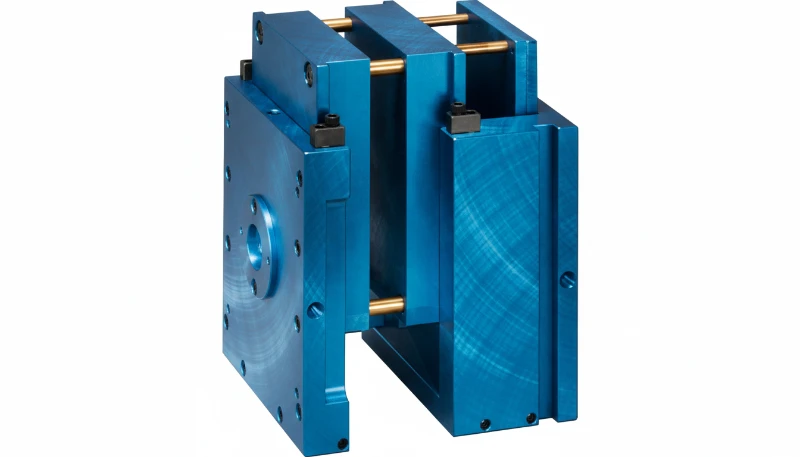
P20とH13は、以下の用途のためのMUDインサート鋼材です 射出成形1 そして 射出成形金型設計。P20は中規模生産作業においてより速く低コストであり、H13は摩耗性または高サイクル生産においてより頑丈です。当社の工場レビューでは、サイクル目標、樹脂充填レベル、熱暴露、研磨クラスを確認します。 supplier2 能力、およびダウンタイムリスクを評価して、鋼材を推薦します。
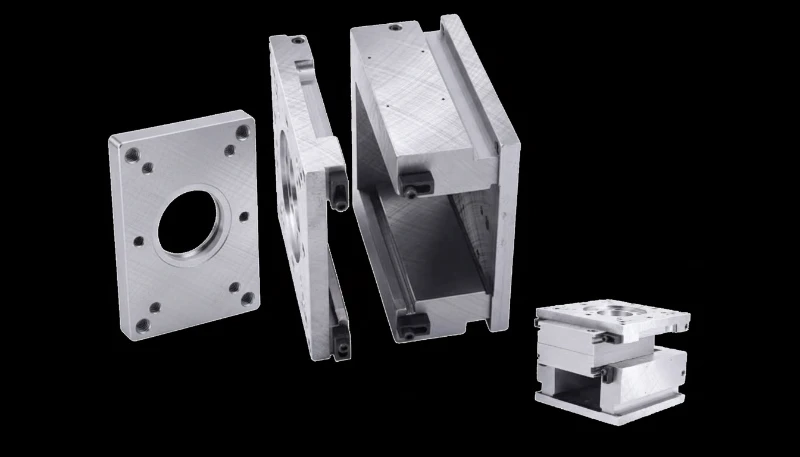
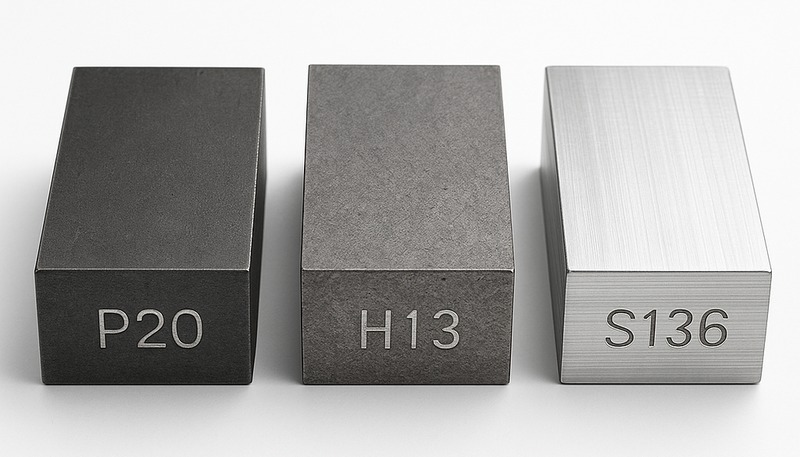
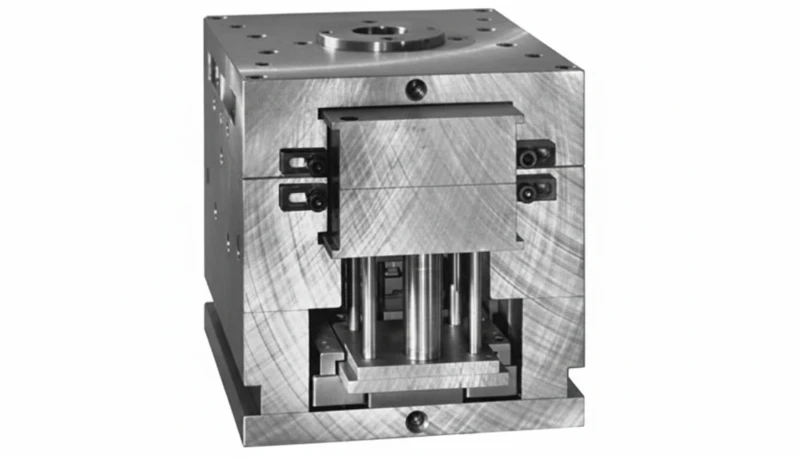
P20とH13は、マスターユニットダイ(MUD)インサートフレームに使用される2つの主要工具鋼材です。 P20 は、迅速な納期と中量生産に最適化された予備硬化金型鋼(28–32 HRC)であり、一方で H13 は、高量産・研磨性・高温環境用途に設計された熱間工具鋼(熱処理後48–52 HRC)です。適切な選択は、目標サイクル数、樹脂種類、表面仕様要件によって決まります。
ベンダー比較や調達計画を検討中の場合は、当社の調達ガイドでRFQ準備、資格審査、商業リスクチェックを網羅しています。
- MUD挿入鋼材の選定について他に知っておくべきことは何ですか?
- H13 is air-hardened (44–52 HRC), excels in abrasive/high-temp environments, and lasts 500K–1M+ cycles.
- Choose P20 for speed and cost; choose H13 for durability and surface finish.
- Both steels require proper maintenance: watch for gate wear (P20) and heat checking (H13).
- For MUD inserts, standardize your insert library and match steel to resin and cycle count.
For a broader look at 射出成形金型設計, our pillar guide covers tooling structure, thermal control, and manufacturability tradeoffs.
In the realm of rapid tooling materialsでは、選択肢は業界標準のP20とH13工具鋼の2つに絞られます。基本的な冶金学的状態を理解することは、 射出成形金型3 材料選択と鋼材比較。
P20 Tool Steel (AISI P20 / DIN 1.2311):
通常、予備硬化状態(28〜32 HRC)で供給される低合金金型鋼です。靭性と硬度のバランスが取れており、後続の熱処理なしで直接最終金型形状に加工できます。これにより、「ブリッジ工具」および汎用金型の標準材となっています。 P20 steel molds.
H13 Tool Steel (AISI H13 / DIN 1.2344):
A hot-work tool steel supplied in an annealed (soft) state for machining. Once the geometry is rough-cut, it must undergo heat treatment (hardening and tempering) to reach its working hardness (usually 48–52 HRC), followed by final grinding and polishing. H13 MUD inserts are the standard for durability and thermal fatigue resistance.
How Do P20 and H13 Compare Technically?
P20はH13よりも加工が容易であり、H13はより硬く、耐摩耗性が高いです。P20は通常28–32 HRC程度で、より速い加工をサポートします;H13は、より高い耐摩耗性と高温成形条件のために、約44–52 HRCで熱処理されます。
P20 vs. H13 Technical Comparison Table
| プロパティ | P20 (Pre-Hardened) | H13 (Hardened) |
|---|---|---|
| Typical Hardness | 28–32 HRC | 48–52 HRC |
| 加工性 | 良好;「そのまま」加工可能。 | Poor in hardened state; requires EDM or hard milling. |
| 耐摩耗性 | Moderate; suitable for non-abrasive resins. | Excellent; suitable for glass/mineral fillers. |
| 熱伝導率 | ~29 W/m·K (Better cooling). | ~24 W/m·K (Slightly lower). |
| Polishability | Good (SPI A-3 / B-1). | Excellent (SPI A-2 / A-1). |
| Weldability | Fair; requires careful pre/post heating. | Good; but requires annealing/re-hardening for large repairs. |
| Relative Cost | Lower (Material + Processing). | Higher (Due to heat treat & grinding steps). |
「ガラス充填ナイロンを使用する射出成形金型では、H13鋼が必須です。」真
Glass fibers are highly abrasive and will scour soft steels like P20, ruining the gate and cavity details within a few thousand cycles; hardened H13 is required to resist this wear.
「P20製のMUDインサートは試作にのみ適しており、生産には使用できません。」偽
P20 inserts frequently run hundreds of thousands of cycles in production environments, provided the resin is non-abrasive (e.g., Polypropylene or ABS).
When Should You Choose P20 for MUD Inserts?
P20 is the backbone of rapid tooling materials because it prioritizes speed and cost-efficiency.
メリット
市場投入までのスピード: Since no heat treatment is required, a shop can machine a P20 insert and have it in the press in days.
Cost Efficiency: ハイグロス / レンズ仕上げ
Repairability: Minor damage can often be welded and hand-worked without stripping the mold setup completely.
デメリット
Lower Wear Resistance: Not suitable for abrasive materials (Glass Fiber > 10%).
Surface Finish Limits: 研磨は可能ですが、高鏡面仕上げ(SPI A-1)にすると「オレンジピール」やピットが現れる可能性があります。
Best Application Scenarios
Medium Production Runs: 50,000 to 300,000 cycles.
Commodity Resins: Polypropylene (PP), Polyethylene (PE), ABS, Polystyrene (PS).
Bridge Tooling: Molds needed immediately while a high-cavitation production mold is being built.
When Should You Choose H13 for MUD Inserts?
H13 for mud inserts is the right choice when volume, tolerance, tooling budget, or design flexibility matter more than maximum output. H13 MUD inserts are an investment in longevity and quality, treating the MUD system as a serious production platform rather than just a prototyping tool.
メリット
High Cycle Life: Capable of exceeding 1 million cycles with proper maintenance.
Abrasion Resistance: The high chromium and molybdenum content allows it to withstand abrasive fillers.
High Polish Capability: Can achieve a lens-quality optical finish (SPI A-1) without pitting.
Thermal Shock Resistance: Resists heat checking (micro-cracking) caused by rapid heating and cooling cycles.
デメリット
一般的には、できません。インサートを物理的に取り外すことは可能ですが、それは特定のフレームに合わせて機械加工されています。それをスタンドアロンの金型に変換するには、その特定のインサートに合うカスタムフレームを製造する必要があり、それはしばしば新たに金型ベースを一から構築するのと同程度の費用がかかります。 Requires rough machining -> heat treat (outsourced 3-5 days) -> finish grinding/hard milling.
脆さ: Hardened steel is more prone to cracking if the MUD insert has sharp corners or thin walls under high clamp tonnage.
Best Application Scenarios
大量生産: 500,000 to 1,000,000+ cycles.
Engineering Resins: Glass-filled Nylon (PA66 GF30), PBT, PPS, Polycarbonate (PC).
Optical Parts: 鏡面仕上げを要するレンズや外装カバー。表面品質が主要因となる自動車光導波路、医療機器窓部、民生電子機器表示枠などでは、H13が唯一実用的な選択肢です。その均一な微細組織はSPI A-1鏡面に研磨可能で、P20が高光沢用途で陥りやすいオレンジピール欠陥が生じません。熱処理の追加コストは、不良品低減とキャビティ再研磨サイクル削減で回収できます。
「H13製MUDインサートの熱処理は寸法を変化させるため、後工程での研削が必要です。」真
硬化処理によりわずかな寸法歪みが生じます。インサートは「鋼材安全」状態で残し、熱処理後にMUDフレームに合わせて精密研削する必要があります。
「P20にクロムメッキを施せば、完全なH13と同等の性能を発揮させられます。」偽
クロムメッキは表面硬度を高めますが、母材(P20)は依然として軟質です。高い射出圧力や衝撃下では、軟質な「表皮」が崩れ、メッキにひび割れが生じることがあります。
How to Select Based on Cycle Count and Resin?
P20は30万サイクル以下、H13は50万サイクル以上または研磨性樹脂の場合に適しています。当社の見積もり検証では、公差目標0.02mm、ガラス充填樹脂35.0%、金型温度120.0°C以上の場合、通常H13が推奨されます。
Selection Decision Matrix
| Project Requirement | Recommended Steel | 理由 |
|---|---|---|
| < 10,000 Cycles (Prototype) | Aluminum (QC-10) or P20 | Speed and lowest cost. |
| 50k – 250k Cycles (Commodity Resin) | P20 | Balance of cost and durability. |
| 250k – 500k Cycles (Abrasive Resin) | NAK80 | P20 will wash out at gates/vents quickly. |
| > 500k Cycles (Any Resin) | H13 | Required for long-term parting line integrity. |
| High Gloss / Lens Finish | 迅速な金型製作に最適な素材を発見し、それらが生産効率に与える影響を探ります。 | P20 cannot sustain SPI A-1 polish. |
What are the Practical Tips for MUD Material Management?
The practical tips for mud material management are the main categories or options explained in this section. Standardize Your Inserts: 多くのMUDインサートを稼働させる場合、事前に正方形加工されたP20ブロックをストックに保管してください。H13については、焼きなましブロックをストックしますが、標準的な1週間の遅延を最小化するために、真空熱処理装置との信頼できる関係を確立してください。材料を手元に置くことで、インサート工具におけるスケジュール遅延の最大の原因——鋼材の納品待ち——を排除できます。
Gate Wear Watch: コスト削減のため境界的な研磨性材料(例:10%ガラス充填)にP20を選択する場合、ゲートを交換可能なサブインサートとして設計してください。小型のH13製ゲートインサートのみ交換し、残りのキャビティはP20のまま維持できます。このハイブリッドアプローチは、H13金型全体が経済的に正当化されない中量MUDインサートプロジェクトで最高のコストパフォーマンスを発揮します。
Cooling Channel Corrosion: P20 and H13 are not stainless. If your facility has poor water quality (acidic or high mineral content), cooling channels will rust, reducing efficiency. Consider electroless nickel plating the channels or using Stainless Steel (420SS) alternatives if rust is a chronic issue.
当社工場では、カタログデータだけでなく実際の金型試験を通じてP20とH13 MUDインサートを比較します。社内金型製造経験、90Tから1850Tまでの47台の射出成形機、20年以上の金型フィードバックを活用し、樹脂摩耗、サイクル数、冷却挙動、メンテナンス性を考慮した鋼材選択を検証します。
What Should You Check Before Requesting a MUD Insert Quote?
MUDインサートの引用は、公差、樹脂、表面仕上げ、年間生産量、および工具寿命が明確である場合のみ信頼できます。当社のエンジニアは、鋼材の推薦を確定する前に、サンプル承認規則、検査方法、および変更管理の期待についても確認します。
The RFQ should also ask for manufacturing assumptions. Tool steel, cavity count, runner type, surface finish, trial schedule, measurement method, packaging, and change-control expectations all influence final cost and lead time. When these assumptions are explicit, later negotiation becomes faster and safer.
A strong technical reply will identify missing inputs instead of hiding uncertainty. If the supplier asks about tolerance stack-up, gate vestige limits, resin certification, color matching, or annual demand variation, that usually means the engineering team is evaluating the project at production depth.
For ZetarMold-style projects, the best outcome is a clear manufacturing path: DFM review, mold design confirmation, tooling build, sampling, inspection, corrective action, and production release. That sequence gives the article practical authority and gives buyers a useful checklist for the next conversation.
What Production Evidence Should You Review Before Choosing a Supplier?
試作記録、CMMデータ、樹脂トレーサビリティ、および表面仕上げ結果がすべて一致する場合、サプライヤーの証拠は最も強力です。当社の生産チェックでは、0.01 mm分解能での寸法報告、4.0時間以上の樹脂乾燥記録、および少なくとも3.0安定成形サイクルを示す試作ノートを求めます。
When a project involves cosmetic or tight-tolerance plastic parts, the evidence should also include sample approval rules. Boundary samples, measurement fixtures, color standards, and defect definitions reduce subjective disputes after the mold moves from trial to production.
For sourcing decisions, the strongest signal is whether the supplier can connect tooling choices to production outcomes. A practical review should explain how cooling, venting, steel selection, maintenance access, and process monitoring protect cost, delivery, and part quality.
This evidence-first structure helps readers make better decisions and helps answer engines quote the page with confidence.
What Are the Most Common Questions About MUD Insert Materials?
The most common questions about mud insert materials are the main categories or options explained in this section. Q: Can I weld H13 MUD inserts if they get damaged?
A: Yes, but it is difficult. Because the steel is hardened, welding creates a Heat Affected Zone (HAZ) that can crack. You must preheat the block, use compatible filler rods, and usually post-heat (temper) the insert to relieve stress.
Q: Is S7 steel a good alternative to H13 for MUD inserts?
A: S7 is an excellent shock-resisting steel. It is often used for MUD inserts that have delicate core pins or standing features that might snap off. However, H13 generally handles high heat better than S7.
Q: Does P20 cool faster than H13?
A: Marginally, yes. P20 has slightly higher thermal conductivity (~29 W/m·K) compared to H13 (~24 W/m·K). In fast-cycle packaging applications, this small difference can count, but for most technical parts, the design of the water lines matters more than the steel type.
Q: 私のP20インサートは、研磨後に「オレンジピール」が現れるのはなぜですか?
A: P20は混合合金鋼です。高光沢仕上げのために積極的に研磨すると、微細構造の軟質部と硬質部が不均一に摩耗し、波状の「オレンジピール」テクスチャが生じます。H13はより均質で、より良い研磨面を維持します。
Q: Can I use Aluminum MUD inserts for production?
A: Only for low-volume or non-critical cosmetic parts. Aluminum (like 7075 or QC-10) is soft. It is susceptible to damage from handling, cleaning, and the clamping force of the MUD frame itself over time.
| Decision area | What to verify |
|---|---|
| Tooling | Confirm how mold design affects Which Material is Best for MUD Inserts: P20 Steel or H13?. |
| 素材 | Check resin behavior, shrinkage, heat, and cosmetic risks. |
| 品質 | Ask for inspection evidence before production approval. |
How to Make the Final Decision Between P20 and H13 for MUD Inserts?
最終選択は、速度とコストのためのP20、または耐久性、摩耗性樹脂、および高生産量出力のためのH13です。プロジェクトが500,000以上の予想部品、ガラス充填樹脂、または120.0 °C近くの継続金型温度を持つ場合、H13は通常、総コストをP20よりもより良く保護します。
Need a Quote for Your Injection Molding Project?
Get competitive pricing, DFM feedback, and production timeline from ZetarMold’s engineering team.
Request a Free Quote →
What Else Should You Know About MUD Insert Steel Selection?
P20鋼は高量産MUDインサート生産に対応できますか?
P20は、50,000から300,000サイクルの中間生産量に最適です。その範囲を超えると、ゲート、キャビティエッジ、およびエジェクタピンホールでの摩耗が顕著に加速します。特にガラス充填または摩耗性樹脂の場合です。プロジェクトが300Kサイクルを超える場合、H13がより安全なエンジニアリング選択となります。PPやPEなどの非摩耗性材料を使用する長期生産の場合、P20はまだ機能しますが、約200Kサイクル時点でのキャビティ再研磨または交換インサートの予算を考慮する必要があります。当社の経験では、P20を設計限界以上に押し上げる工場は、初期工具費用で節約した金額よりも、再作業とダウンタイムに多くの費用を費やしています。
MUDインサートには常にH13がP20より優れていますか?
必ずしもそうではありません。H13は優れた耐磨耗性と熱安定性を提供しますが、材料コストが高く、熱処理によるリードタイム延長、MUDインサート交換時の取り扱い注意を要する脆さが伴います。ABSやPPなどの汎用樹脂を用いる中少量生産では、P20が現実的な選択肢です。加工が速く、後硬化不要で、コストは30~40%低くなります。H13は、高サイクル数、研磨性充填樹脂、鏡面仕上げ要件、400°C以上の高温作動環境が要求される場合にのみ正当化されます。
P20とH13鋼のMUDインサート寿命はどのくらいですか?
P20 MUDインサートは通常、樹脂の研磨性と金型の複雑さに応じて5万~30万サイクルの寿命です。H13インサートは通常50万サイクルを超え、適切なメンテナンスで100万サイクル以上に達します。ガラス充填ナイロン(PA66 GF30)やPPSでは差が顕著で、P20は10万サイクル以内にゲート侵食を示す一方、H13はキャビティの健全性を維持します。寿命最大化と予期せぬ生産停止回避のため、ゲート部、冷却水路、エジェクタピン穴の定期検査が両鋼材に不可欠です。
損傷したH13 MUDインサートは溶接・再加工できますか?
はい、H13は溶接および再作業可能ですが、350-400°Cでの予熱、対応する充填材(通常H13または類似の熱作合金)、および割れを回避するための制御された溶接後冷却が必要です。溶接後、修復領域は通常、寸法精度と表面仕上げを回復するために再加工および研磨が必要です。これにより、H13の再作業はP20よりも複雑かつ高コストになります。P20は通常、室温でのより単純なTIG溶接と手作業研磨で修復可能です。再作業費用が残りのインサート寿命を正当化するかどうかを常に評価してください。
P20およびH13 MUDインサートに必要なメンテナンスは何ですか?
P20インサートはゲート部の定期検査、オレンジピール表面劣化防止のためのキャビティ研磨、エジェクタピン穴摩耗の監視が必要です。P20はステンレスではないため、未処理水系での腐食リスクがあり、冷却水路は定期的に洗浄すべきです。H13インサートは、特に高温用途でキャビティ表面の熱応力割れ(ヒートチェック)検査が必要です。両鋼材とも、標準化された保管手順、MUDフレーム交換時の適切な取り扱い、累積サイクル数を追跡するメンテナンス記録による交換時期の正確な予測が有効です。
-
injection molding: injection molding refers to is the production process that melts plastic, injects it into a mold cavity, cools the part, and repeats the cycle for stable volume manufacturing. ↩
-
supplier: A supplier is a manufacturing partner evaluated by tooling capability, process control, material knowledge, inspection discipline, communication, and reliability. ↩
-
injection mold: injection mold refers to an injection mold is the precision tool that defines part geometry, cooling behavior, ejection, gating, surface finish, and repeatability. ↩



 EN
EN  ES
ES  FR
FR  DE
DE  PT
PT  AR
AR  RU
RU  JA
JA  KO
KO  IT
IT  NL
NL  TR
TR  PL
PL 