 Vai al contenuto

- Injection molding is the primary mass production process for plastic parts, capable of producing millions of identical parts per year with cycle times as short as 3–120 seconds.
- Multi-cavity molds multiply output: a 16-cavity cap mold with an 8-second cycle produces over 7,000 parts per hour from a single injection molding machine.
- Per-part costs in mass production injection molding drop to $0.01–$2.00 for most consumer parts after tooling cost amortization, compared to $5–$200 for machined equivalents.
- Injection molded part quality in mass production is maintained through Statistical Process Control (SPC), in-cavity pressure1 sensors, and automated vision inspection systems.
- Injection molding mass production requires upfront mold investment of $5,000–$150,000, which is justified when annual production volume exceeds 10,000–50,000 parts per year.
Is Injection Molding Suitable for Mass Production?
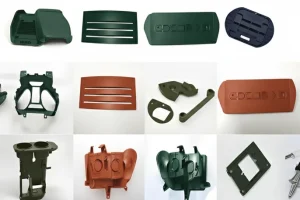
Yes — injection molding is the world’s dominant mass production process for plastic parts, accounting for over 30% of all plastic processing globally. Its fundamental economics make it uniquely suited for mass production: a one-time tooling investment enables unlimited parts at consistent quality and low per-unit cost. The process can produce parts as fast as one every 3 seconds on optimized multi-cavity molds, scaling to billions of parts per year across multiple machines. Every plastic cap, housing, connector, and component you encounter daily was almost certainly injection molded.
In our factory, we operate 47 injection molding machines running two shifts daily, producing over 40 million parts per year for automotive, consumer electronics, medical, and industrial customers. Our highest-volume programs run 32-cavity molds at 6-second cycle times, producing 19,000 parts per hour from a single press. This throughput — unmatched by any other plastic processing method at comparable cost — is why injection molding mass production dominates global manufacturing.
How Do Multi-Cavity Molds Multiply Mass Production Output?
Multi-cavity molds are the primary technology for scaling injection molding output to mass production volumes. A single-cavity mold produces one part per cycle; a 4-cavity mold produces four; a 32-cavity mold produces 32. The cycle time changes minimally between single and multi-cavity molds — cooling time is determined by wall thickness, not cavity count. The result is a near-linear multiplication of output with cavity count, at a fraction of the cost of running multiple single-cavity presses.
Standard cavity count progression for mass production tooling: 1-cavity (prototype/low volume), 2-cavity, 4-cavity (20,000–100,000/year), 8-cavity (100,000–500,000/year), 16-cavity (500,000–2M/year), 32-cavity (2M–10M/year), and 64-cavity or higher (specialty items like closures: 10M+/year). The decision on cavity count depends on annual volume requirements, part complexity, mold steel grade, and available press size. Larger cavity counts require larger presses with greater clamp force to contain the aggregate cavity pressure.
| Cavity Count | Tempo di ciclo | Parts/Hour | Parts/Year (2 shifts) | Typical Volume Range |
|---|---|---|---|---|
| 1 cavity | 30 s | 120 | 576,000 | < 100,000/yr |
| 4 cavities | 30 s | 480 | 2,304,000 | 100K–500K/yr |
| 8 cavities | 20 s | 1,440 | 6,912,000 | 500K–2M/yr |
| 16 cavities | 15 s | 3,840 | 18,432,000 | 2M–10M/yr |
| 32 cavities | 10 s | 11,520 | 55,296,000 | 10M+/yr |
Sistema a canale caldo4s eliminate runners in multi-cavity molds, preventing the significant material waste that would otherwise come from cold runners in 16- or 32-cavity tools. A 32-cavity cold runner mold for a 5-gram part might generate 15–20 grams of runner per shot — meaning 33–50% of injected material is waste. Replacing the cold runner with a hot manifold and valve gates eliminates this waste entirely, reducing material cost by 25–40% at high cavity counts.

What Volumes Justify Injection Molding for Mass Production?
The minimum volume that justifies injection molding tooling investment depends on part complexity, mold cost, and per-unit material and processing cost. As a general rule, injection molding becomes economically superior to CNC machining or 3D printing above 5,000–10,000 parts per year for standard parts, and above 50,000 parts per year for complex multi-cavity tools. The break-even analysis compares total injection molding cost (mold + material + machine time × production volume) against alternative process total cost at the same volume.
Low-volume injection molding bridges the gap for volumes of 500–10,000 parts using aluminum tooling (mold cost: $1,500–$8,000) with shorter lead times (2–3 weeks versus 6–8 weeks for steel). Aluminum molds last 10,000–50,000 cycles compared to 500,000–2,000,000 for hardened steel, but at a fraction of the tooling cost. This approach enables manufacturers to begin mass production at lower volume thresholds while validating the design before committing to full production tooling.
“Multi-cavity injection molds with 16 or more cavities can produce millions of identical parts per month from a single press.”Vero
A 16-cavity mold with a 15-second cycle time produces 3,840 parts per hour. Running two shifts (16 hours/day) and 25 production days per month yields 1,536,000 parts per month from a single machine. This output density is the fundamental economic advantage of injection molding mass production — no other plastic manufacturing process approaches this throughput at comparable per-unit cost. Automotive closures and consumer packaging routinely use 32–64 cavity molds to achieve even higher throughput.
“Injection molding mass production requires no quality monitoring once the initial process is set up.”Falso
Mass production injection molding requires continuous process monitoring to maintain quality across millions of parts. Statistical Process Control (SPC) tracks key process parameters including injection pressure, melt temperature, cycle time, and in-cavity pressure to detect drift before defective parts are produced. Automated vision inspection systems check every part for dimensional conformance, surface defects, and color consistency. Without ongoing monitoring, gradual mold wear, material lot variation, and machine drift will eventually produce out-of-specification parts that reach customers.
How Is Quality Maintained in Injection Molding Mass Production?
Quality maintenance in injection molding mass production relies on three integrated systems: process control, in-line inspection, and preventive maintenance. Process control begins with validated processing parameters documented in a process control plan — every machine set point, every material specification, and every quality check is written and enforced. In-cavity pressure sensors detect shot-to-shot variation invisible from machine parameters alone, triggering automatic part rejection when pressure profiles deviate from the validated baseline.
In-line automated inspection has become standard for high-volume injection molding programs. Camera-based vision systems inspect every part within the mold cycle — checking for short shots, flash, color deviations, gate witness marks, and dimensional conformance. Defective parts are automatically diverted before reaching the packing station. For critical applications (medical device components, automotive safety parts), 100% dimensional verification using laser measurement systems replaces statistical sampling.
Preventive maintenance schedules protect mold quality over millions of cycles. Standard mold maintenance intervals include inspection every 50,000 shots, cleaning and lubrication every 100,000 shots, parting surface refacing every 250,000–500,000 shots, and dimensional verification of critical features every 500,000 shots. Our factory maintains full maintenance records for every mold in the fleet, enabling predictive maintenance scheduling that prevents production downtime and quality escapes.
What Are the Cost Economics of Injection Molding Mass Production?
The economics of injection molding mass production follow a predictable cost structure: high fixed costs (tooling) amortized over large variable output (parts). For a typical consumer electronics housing: mold cost $15,000 (2-cavity), amortized over 200,000 parts = $0.075 per part tooling cost. Material (50g of ABS at $2.00/kg) = $0.10 per part. Machine time (25-second cycle, 2-cavity, at $0.10/second machine rate) = $1.25 per pair = $0.625 per part. Total per-part cost: approximately $0.80. At 1,000 parts, the same housing costs $8.50 each due to tooling cost concentration.
Machine utilization — measured by OEE (Overall Equipment Effectiveness2) — is the primary lever for mass production cost reduction beyond tooling. An OEE of 60% means only 60% of scheduled time produces good parts; improving to 80% OEE with the same mold, material, and labor reduces per-part cost by 25%. Our factory targets OEE above 78% on production molds, achieved through rapid mold change systems (under 30 minutes changeover), predictive maintenance to minimize unplanned downtime, and automated material handling to eliminate manual material transfer delays.
“Per-part injection molding cost in mass production can drop below $0.10 for simple parts when tooling is fully amortized at high volumes.”Vero
For high-volume commodity parts like bottle caps, cable clips, or small connector housings, tooling cost amortization at 1–10 million parts reduces the tooling contribution to $0.001–$0.005 per part. Material cost for a 3-gram PP cap at $1.20/kg is $0.0036. Machine time at $0.08/second for a 6-second cycle on a 32-cavity mold is $0.48/32 = $0.015 per part. Total: approximately $0.020 per cap — with profit margin at $0.05. This cost structure is unachievable by any other plastic manufacturing process.
“Injection molding mass production is only suitable for simple, low-precision plastic parts.”Falso
Injection molding mass production serves some of the most precision-demanding applications in manufacturing. Medical device components with ±0.05 mm tolerances, automotive connectors requiring zero-defect quality at millions of parts per year, and optical lens arrays with surface roughness below Ra 0.025 µm are all injection molded at mass production volumes. Advanced injection molding technologies including in-mold pressure sensors, servo-driven injection units, and closed-loop process control achieve part-to-part consistency measured in microns at production rates impossible for competing processes.
How Does Automation Enhance Injection Molding Mass Production?
Automation is integral to modern injection molding mass production competitiveness. Robotic part removal and assembly integration eliminate the manual labor cost of 1–3 operators per press, reducing labor cost to near zero per part at high volumes. Sprue pickers remove sprues and runners before mold closure on every cycle. Six-axis industrial robots perform in-mold insert placement, post-mold assembly, 100% inspection, and direct-to-tray packing — all within the injection cycle time.
Lights-out manufacturing — running injection molding machines unattended through night shifts — is achievable for stable, well-controlled mass production programs. Automated material loading, centralized resin drying and distribution, robotic part handling, and automated quality rejection systems allow our factory to run select programs through the 10 PM–6 AM window with only a single maintenance technician monitoring 12 machines remotely. This lights-out production reduces per-part cost by 15–25% compared to fully manned operation.
Domande frequenti
What is the minimum order quantity for injection molding mass production?
There is no universal minimum order quantity for injection molding, but the economics require sufficient volume to amortize tooling cost effectively. For simple parts with $3,000–$5,000 aluminum mold tooling, production of 5,000–10,000 parts makes injection molding cost-competitive with machining or 3D printing. For complex parts requiring $50,000–$100,000 steel multi-cavity tooling, 100,000–500,000 parts per year are needed to justify the investment. Many factories offer low-volume injection molding programs with aluminum tooling for 500–10,000 parts before committing to full production tooling investment, reducing financial risk.
How fast can injection molding produce parts for mass production?
Injection molding cycle times range from 3 seconds for thin-walled packaging parts to 120 seconds for thick-walled industrial components. A typical consumer product housing cycles in 20–45 seconds. Multi-cavity molds multiply output: a 16-cavity mold cycling every 15 seconds produces 3,840 parts per hour. Running multiple machines on the same part in parallel scales further — 10 machines × 3,840 parts per hour = 38,400 parts per hour, or 1.38 million parts per shift. This throughput capability is why injection molding dominates mass production for plastic parts globally.
What materials are most commonly used in injection molding mass production?
The five most commonly used injection molding resins in mass production are polypropylene (PP, ~21% of global usage), polyethylene (PE, ~20%), ABS (~9%), polystyrene (PS, ~8%), and polycarbonate (PC, ~6%). PP dominates packaging, automotive, and consumer goods due to its cost ($0.80–$1.20/kg), chemical resistance, and recyclability. ABS leads for consumer electronics and appliances due to its surface quality and electroplating compatibility. For engineering applications requiring higher performance, nylon (PA6/PA66), POM (Delrin), and PEEK are injection molded at significantly higher cost but with correspondingly superior properties.
How does injection molding compare to thermoforming for mass production?
Injection molding and thermoforming are both high-volume plastic manufacturing processes but occupy different design and cost spaces. Thermoforming excels for large, thin-walled, single-sided parts (packaging trays, automotive liners, refrigerator liners) at lower tooling cost ($1,000–$10,000 for thermoforming vs. $10,000–$100,000 for injection molding). Injection molding dominates for complex three-dimensional geometries, precision features, tight tolerances, and parts requiring both sides to be finished. Part complexity and precision requirements almost always favor injection molding for consumer products, while large-format packaging favors thermoforming for its lower tooling cost and high-speed output.
What quality certifications are important for injection molding mass production?
Quality certifications for injection molding mass production depend on the target industry. ISO 9001:2015 is the universal quality management baseline required by most OEM customers. Automotive customers require IATF 16949:2016 certification, which mandates PPAP documentation, SPC implementation, and MSA studies. Medical device injection molding requires ISO 13485:2016 and adherence to FDA 21 CFR Part 820 quality system regulations. For food-contact applications, FDA/EU 10/2011 material compliance and ISO 15593 process hygiene standards apply. Our factory holds ISO 9001:2015 and IATF 16949:2016 certifications, enabling us to serve automotive and industrial mass production programs with documented quality systems.
-
cavity pressure: Cavity pressure is the pressure of molten plastic inside the mold cavity during the injection and packing phases, measured in MPa using in-cavity pressure sensors, which directly determines part density, dimensions, and quality. ↩
-
overall equipment effectiveness: Overall equipment effectiveness (OEE) is a manufacturing performance metric defined as the product of availability, performance, and quality rates, measured as a percentage, that quantifies how efficiently a production machine is utilized. ↩
-
multi-cavity mold: A multi-cavity mold is an injection mold designed with two or more identical cavities that produce multiple parts simultaneously in each machine cycle, reducing per-part cost by multiplying output without additional cycle time. ↩
-
hot runner system: A hot runner system is an assembly of heated components in an injection mold that maintains the plastic in the runner channels in a molten state between shots, eliminating solidified runner waste and reducing cycle time and material cost. ↩





 EN
EN  ES
ES  FR
FR  DE
DE  PT
PT  AR
AR  RU
RU  JA
JA  KO
KO  IT
IT  NL
NL  TR
TR  PL
PL 