 Vai al contenuto

Hai un nuovo prodotto pronto per la produzione di massa, e la tua quotazione domestica per lo stampo è arrivata a $45,000 con un tempo di consegna di 14 settimane. Ti sembra familiare? È il momento in cui molti ingegneri iniziano a cercare su Google "produttore di stampaggio a iniezione China". Ma ecco il problema: metà dei risultati sono società di trading che fingono di essere fabbriche, e l'altra metà sono fabbriche vere che non possono comunicare in inglese o mantenere tolleranze più strette di ±0,1mm. Questo articolo ti aiuterà a distinguere le due — e ti darà una lista pratica per valutare un partner di stampaggio a iniezione in China che realmente consegna.
- Verifica sempre la proprietà della fabbrica — non le dichiarazioni delle società di trading
- La gamma di tonnellaggio delle macchine (90T–1850T) determina quali parti possono effettivamente stampare
- ISO 9001 da sola non basta — verifica ISO 13485 se si tratta di prodotti medicali
- Project manager che parlano inglese riducono i tassi di difetti diminuendo le incomprensioni
- Richiedi una verifica DFM prima di firmare qualsiasi contratto per lo stampo
Cosa dovresti cercare in un produttore di stampaggio a iniezione in China?
Tre criteri sono non negoziabili: costruzione dello stampo interna, ISO 90011, e oltre 10 anni di esperienza nell'esportazione. Una solida base ISO 9001 è il minimo.
Permettimi di essere specifico sul perché questi tre sono importanti. Un stampaggio a iniezione Una fabbrica che subappalta la sua strumentazione ha zero controllo sulla qualità dello stampo e sulla velocità di revisione. Abbiamo visto progetti in cui la "fabbrica" era in realtà una società di trading che ha mandato lo stampo a tre officine diverse — e ogni officina ha interpretato le tolleranze diversamente. Il risultato? Tre serie di campioni, nessuna corrispondente al disegno, e un ritardo di sei settimane.
Un sistema di gestione della qualità documentato non è solo un certificato appeso al muro. Quando eseguiamo il nostro processo di qualità in sei fasi (IQC → In-Process → FQC → OQC), ogni punto di ispezione genera una registrazione. Se qualcosa va storto nell'assemblaggio finale, possiamo risalire alla macchina esatta, all'operatore e al lotto di materiale. Questa tracciabilità è ciò che distingue una vera fabbrica da un'officina con un sito web.
L'esperienza nell'esportazione è importante perché correlata alla affidabilità della comunicazione. Una fabbrica che ha spedito negli USA e in UE dal 2013 ha già imparato le lezioni difficili sulla documentazione, gli standard di packaging e la disciplina sui tempi di consegna. Sa che "la nave cargo è partita" non è un aggiornamento di tracking accettabile.
Come Verifichi le Reali Capacità di una Fabbrica?
Una video visita in diretta è il metodo di verifica più rapido — la maggior parte delle fabbriche legittime accetta entro 24 ore dalla tua richiesta.
Ecco una lista pratica per la video chiamata:
| Se la tua parte è ancora in fase di validazione iniziale, chiedi se il fornitore può supportare lo stampaggio a iniezione a basso volume prima della produzione completa. Questa opzione riduce il rischio quando hai bisogno di parti pilota per test, feedback del mercato o approvazioni graduali prima di investire in lanci più grandi. | Come verificare | Red Flag |
|---|---|---|
| Numero di macchine e tonnellaggio | Chiedi di vedere le targhette delle macchine | Mostrano la stessa macchina due volte |
| Officina stampi interna | Richiedi una visita all'area EDM/CNC | "Quel edificio è dall'altra parte della città" |
| Attrezzature per il controllo qualità | Chiedi di vedere un report CMM della settimana scorsa | “Il nostro responsabile QC è assente oggi” |
| Produzione in corso | Osserva i pezzi sulle macchine | Il pavimento è vuoto o le macchine sono coperte |
| Magazzino materiali | Verifica rack di materiali etichettati e sigillati | Sacchi aperti, nessuna etichetta, nessun forno di essiccazione |
Se non puoi visitare di persona, assumi una società di ispezione di terze parti come QIMA o SGS per effettuare un audit della fabbrica. Costa 300–500 € e ti evita un errore da 50.000 €. Il rapporto di audit confermerà l'inventario delle macchine, l'organigramma e se la fabbrica possiede effettivamente le attrezzature o le sta noleggiando per farsi vedere.

Quali Tecnologie e Attrezzature per lo Stampaggio a Iniezione Sono Più Importanti?
La gamma di forza di chiusura di una fabbrica determina il 90% di ciò che possono produrre: uno stabilimento con sole macchine da 100T–300T non può stampare un alloggiamento automobilistico da 1,5 kg, indipendentemente da quanto dichiarato sul loro sito web. Un progettazione di stampi a iniezione che corrisponde alla macchina Forza di serraggio2 la gamma è essenziale.
Richiedi l'elenco completo delle macchine con la loro forza di chiusura. Ecco a cosa servono le diverse gamme di forza di chiusura:
| Tonnage Range | Applicazioni tipiche | Part Weight Range |
|---|---|---|
| 90T–200T | Elettronica di precisione, dispositivi medici | 0,5g–50g |
| 200T–500T | Consumer products, automotive interiors | 50g–500g |
| 500T–1000T | Appliance housings, large automotive parts | 500g–2000g |
| 1000T–1850T | Bumpers, pallets, industrial containers | 2000g–10,000g |
Beyond tonnage, ask about specific capabilities: two-shot molding (our 3 two-shot presses handle soft-touch overmolding daily), cleanroom molding (6 cleanroom machines for medical and food-contact parts), and gas-assist molding. A factory that invested in a 1850T machine and three two-shot presses in 2024 — like our Shanghai facility did — is signaling long-term commitment, not just chasing the cheapest jobs.
Il stampo a iniezione design capability is equally important. A factory with in-house mold design (CAD, mold flow analysis) can catch 80% of tooling problems before steel is cut. Without it, you’re relying on the toolmaker’s interpretation of your 3D model — and the revision loop adds weeks and thousands of dollars.
Come Funziona il Controllo Qualità in una Fabbrica Cinese di Stampi a Iniezione?
A mature QC process is a minimum four-stage system: IQC, in-process checks, FQC, and OQC — “we check everything at the end” is not real QC. A proper IQC process catches problems at the source.
Let me walk through what each stage actually involves at a well-run factory:
Incoming Quality Control (IQC): In our factory, every batch of resin gets checked for material certification, moisture content (critical for hygroscopic materials like nylon and polycarbonate), and visual inspection for contamination. If the material certificate doesn’t match the purchase order, it goes into quarantine. Period.
In-Process Quality: This is where most factories cut corners. Proper in-process QC means pulling samples at set intervals (every 50–100 shots, depending on the part), measuring critical dimensions, and logging the data. If dimensional drift exceeds 0.05mm from nominal, the machine gets stopped and the mold is inspected before production resumes.
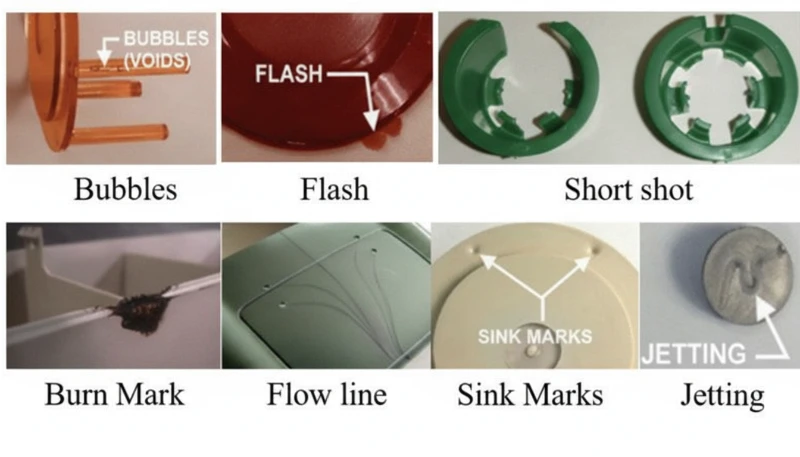
Final Quality Control (FQC): After molding is complete, parts undergo a full dimensional inspection against the drawing, cosmetic inspection under controlled lighting, and functional testing if applicable. This is where you catch the batch-level issues — sink marks that appeared halfway through the run, color variation between cavities, or flash that developed as the mold wore in.
Outgoing Quality Control (OQC): Before anything goes on the truck, packaging integrity, labeling accuracy, and a final visual sample check confirm the parts that arrive at your dock match the samples you approved.
Quali Materiali Può Gestire un Produttore Cinese di Stampi a Iniezione?
200+ engineering materials is the minimum a top-tier manufacturer handles — PP, PE, ABS, PC, PA, POM, PBT, PEEK, PPS, and PEI.
Material handling capability isn’t just about “can we buy this resin.” It’s about knowing the drying requirements (PA66 needs 80°C for 4–6 hours before molding; PBT needs 120°C for 2–4 hours), the processing window (polycarbonate melts at 280–320°C and is extremely sensitive to moisture), and the post-processing behavior (glass-filled nylon shrinks differently than unfilled). In our factory, we’ve processed over 400 materials across 45 machines — and the drying requirement mistakes we’ve caught during IQC have saved countless production runs from moisture-related defects.
In our experience running 400+ materials, we’ve learned that if your project involves regulated materials (food-contact, medical-grade, UL-rated), ask for specific experience with those certifications. Running medical-grade PC is different from running commercial-grade PC — the documentation trail, lot traceability, and validation requirements are completely different.
Quanto costa lo stampaggio a iniezione in China rispetto ad altri paesi?
Tooling in China is 40–60% cheaper than the US for injection molds.
In our Shanghai factory, we’ve tracked that a typical 4-cavity mold for an ABS enclosure runs about $8,500 with a 30-day lead time — the same mold quoted at $22,000 from a US toolmaker. But cost alone is misleading. Here’s a more honest comparison:
| Fattore | China | US / Western Europe |
|---|---|---|
| Mold cost (single cavity, simple) | $3,000–$8,000 | $8,000–$20,000 |
| Mold cost (multi-cavity, complex) | $15,000–$50,000 | $40,000–$120,000 |
| Unit price (10K volume, ABS) | $0.15–$0.40 | $0.50–$1.20 |
| Typical mold lead time | 25–45 days | 40–80 days |
| Shipping cost (per kg, air) | $3–$6 | Included |
| Shipping cost (per kg, sea) | $0.30–$0.80 | Included |
| Communication barrier risk | Medio-alto | None |
| Intellectual property risk | Medio | Basso |
The real cost question isn’t “is China cheaper?” — it almost always is. The question is whether the total landed cost, including shipping, duties, communication overhead, and quality risk, remains favorable. For high-volume parts (10K+ units), the answer is almost always yes. For low-volume, high-mix production, the communication overhead can eat into the savings.
Il nostro injection molding sourcing guide covers this cost analysis in more detail, including landed cost calculators and duty rate tables.
Quali Certificazioni Dovrebbe Avere un Fornitore di Stampi a Iniezione?
ISO 9001 is the absolute minimum — without it, disqualify immediately; for medical add ISO 13485, for automotive add IATF 16949.
Here’s the problem with certification fraud: it exists. Some factories display certificates that have expired, or that belong to a different company in their group. Always verify the certificate number directly on the issuing body’s website (BSI, TÜV, SGS, Bureau Veritas). The verification takes five minutes and eliminates a surprising number of fraudulent claims.
Beyond ISO, ask about material-specific certifications if they matter for your industry: UL94 for flame retardancy, FDA compliance for food-contact materials, USP Class VI for medical biocompatibility. A factory that proactively mentions these is probably one that has been through a real customer audit before.
““ISO 9001 certification alone does not guarantee consistent part quality — it guarantees a documented process exists.””Vero
ISO 9001 certifies that a factory has documented procedures and follows them. It does not certify that those procedures are good enough for your specific part. Always request sample inspection reports and first article inspection (FAI) data to verify actual output quality.
““A factory with ISO 13485 automatically meets all medical device manufacturing requirements.””Falso
ISO 13485 covers the quality management system for medical devices, but individual products still require specific validation (biocompatibility testing, sterilization validation, etc.). Think of ISO 13485 as the foundation — the product-specific testing is still your responsibility.
Come Gestisci la Comunicazione e la Consegna del Progetto con un Produttore Cinese?
A dedicated English-speaking project manager is the single biggest predictor of success — factories with 30+ PMs typically respond within 24 hours.
Here’s what good communication looks like in practice:
DFM3 feedback within 3–5 business days of receiving your 3D model, with specific recommendations (not just “we can make it”)
Weekly progress photos during mold building, showing steel cutting, EDM, and assembly stages
““Requesting a DFM review before mold cutting is the highest-ROI step in the entire injection molding process.””Vero
A DFM review catches design issues (undercuts, thin walls, inappropriate draft) before steel is cut. Fixing a wall thickness issue on a CAD file takes 30 minutes. Fixing it after the mold is built takes 2–4 weeks and $2,000–$10,000 in modification costs.
““All Chinese injection molding factories have similar communication capabilities and English proficiency.””Falso
Communication quality varies dramatically. Factories focused on domestic sales may have no English-speaking staff at all, while export-oriented factories invest in dedicated international business teams. The difference in project outcomes between the two is significant.
T1 sample report with dimensional data, not just photos of the parts
Clear revision tracking — every mold modification documented with before/after dimensions
And here’s what bad communication looks like: you send an email about a dimensional issue, three days later you get “Dear sir, we will check and reply soon,” and then silence for a week. That pattern usually means the trading company is relaying your message to the actual factory, the factory doesn’t understand the technical issue, and nobody wants to admit it.
FAQ: Produttore cinese di stampaggio a iniezione di plastica
What is the minimum order quantity (MOQ) for injection molding in China?
MOQ for injection molding in China typically ranges from 1,000–10,000 pieces, depending on part complexity and material. Some manufacturers offer prototype runs as low as 100 pieces, but unit costs increase significantly below 1,000 units due to setup and material minimums.
How long does it take to make an injection mold in China?
Standard injection mold lead time in China is 25–45 days for a single-cavity mold, and 40–60 days for multi-cavity or complex molds. Rush tooling at 15–20 days is possible but typically reduces the number of test cycles, which increases first-production defect risk.
Can I visit a Chinese injection molding factory before placing an order?
Yes, most legitimate factories welcome on-site visits and can arrange factory tours within 2–3 days’ notice. Bring your part drawings and material specs — a good factory will give you immediate feedback on manufacturability during the visit.
How do I protect my intellectual property when manufacturing in China?
Register your design patents in China before sharing any technical data, sign an NNN (Non-Disclosure, Non-Use, Non-Circumvention) agreement, and work with factories that have established export track records with Western OEMs. IP risk decreases significantly with ISO-certified, export-oriented manufacturers.
What payment terms do Chinese injection molding factories accept?
Standard payment terms are 30–50% deposit for tooling, with the balance due after T1 sample approval. Production orders typically require 30% deposit and 70% before shipment. Established relationships may qualify for net-30 or net-60 terms after 6–12 months of consistent orders.
Do Chinese injection molding factories provide DFM support?
Yes, most mid-to-large Chinese injection molders provide DFM feedback as part of the tooling quote process. Factories with in-house mold design teams typically provide more actionable feedback than those that outsource tooling.
What is the typical defect rate for injection molded parts from China?
First-pass quality rates at well-run Chinese injection molding factories range from 92–98%, comparable to Western manufacturers. However, defect rates can spike to 5–15% at factories with poor process control, inadequate drying equipment, or inconsistent material sourcing. A strong first-pass yield is the clearest indicator of process control.
Parola Finale
Quick rule: if a Chinese injection molding factory can show you (1) machines in the right tonnage range for your part, (2) in-house mold building with real EDM and CNC equipment, (3) ISO 9001 at minimum, and (4) English-speaking engineers who can discuss your DFM feedback — they’re worth a serious conversation. If any one of those four is missing, keep looking.
At ZetarMold, we’ve been running injection molding in Shanghai since 2005. Our 45 machines cover 90T to 1850T, we build molds in-house (100+ sets per month), and 30+ English-speaking project managers keep communication clear. Whether you need a single-cavity prototype mold or a 16-cavity production tool running medical-grade PC — we’ve done it before, and we can show you the inspection reports.
-
ISO 9001: ISO 9001 is an international standard for quality management systems, applicable to manufacturers of any size. ↩
-
Forza di serraggio: Clamping force refers to the machine force that keeps the injection mold closed during filling and packing. ↩
-
Aziende di Stampa ad Iniezione in India: Perché i Principali Acquirenti Scelgono ZetarMold - DFM is a design review process that checks part geometry, tooling risks, and manufacturability before mold cutting. ↩





 EN
EN  ES
ES  FR
FR  DE
DE  PT
PT  AR
AR  RU
RU  JA
JA  KO
KO  IT
IT  NL
NL  TR
TR  PL
PL 