Lo stampaggio a iniezione è un processo produttivo che forza la plastica fusa nella cavità di uno stampo per creare pezzi finiti. È la colonna portante della moderna produzione di articoli in plastica, dagli involucri degli smartphone ai cruscotti delle automobili. In vent’anni di attività nel settore, ho visto innumerevoli nuovi operatori sopraffatti dalla terminologia tecnica e dalle numerose variabili. Ma la verità è questa: una volta compresi i fondamenti, lo stampaggio a iniezione diventa sorprendentemente logico. Questa guida illustra tutto ciò che occorre sapere per iniziare, sulla base di una reale esperienza in fabbrica e di indicazioni pratiche che i manuali non insegnano.
- Lo stampaggio a iniezione produce oltre il 30% dei prodotti plastici mondiali iniettando materiale fuso in stampi di precisione.
- Il processo comprende 6 fasi: chiusura, iniezione, mantenimento, raffreddamento, apertura ed espulsione.
- La scelta del materiale è la decisione #1 che influisce sulla qualità del pezzo — tra le opzioni comuni figurano PP, ABS, PC e nylon.
- Il progetto dello stampo determina circa il 70% della qualità finale del pezzo, rendendo fondamentale la revisione DFM prima della costruzione dell'attrezzatura.
- I costi tipici degli stampi vanno da $3,000 per progetti semplici a oltre $100,000 per attrezzature multicavità complesse.
Che cos’è lo stampaggio a iniezione e perché è importante nella produzione moderna?
Lo stampaggio a iniezione e la sua importanza nella produzione moderna sono definiti dalla funzione, dai vincoli e dai compromessi illustrati in questa sezione. Se state confrontando fornitori o pianificando gli approvvigionamenti, la nostra guida alla ricerca di fornitori di stampaggio a iniezione tratta la preparazione delle richieste di offerta, la qualificazione e la verifica dei rischi commerciali.
Lo stampaggio a iniezione1 è un processo produttivo che realizza componenti in plastica iniettando materiale fuso nella cavità di uno stampo ad alta pressione e temperatura. Non è soltanto uno dei tanti metodi di produzione: è la tecnologia dominante nella lavorazione della plastica e rappresenta oltre il 30% di tutti i prodotti in plastica nel mondo. Basta guardarsi intorno a casa o in ufficio per trovare ovunque pezzi stampati a iniezione: tastiere, tappi di bottiglia, dispositivi medici, mattoncini giocattolo e componenti automobilistici. Il processo eccelle nella realizzazione di geometrie complesse con tolleranze ristrette, risultando indispensabile per i componenti di precisione che devono mantenere una qualità costante su milioni di unità.
Settori quali l’industria automobilistica, l’elettronica, i dispositivi medicali, i beni di consumo e gli imballaggi dipendono fortemente dallo stampaggio a iniezione, che combina flessibilità progettuale, varietà di materiali ed efficienza dei costi su larga scala. La tecnica risale al 1872, quando John Wesley Hyatt brevettò la prima pressa a iniezione, ma il processo moderno si affermò negli anni Quaranta con lo sviluppo di plastiche migliori e macchinari idraulici. Oggi il mercato globale dello stampaggio a iniezione supera $350 miliardi all’anno, trainato da applicazioni che vanno dagli smartphone ai componenti per veicoli elettrici. Il predominio del processo non dipende solo dalla versatilità, ma anche dalla convenienza economica.
Una volta effettuato l’investimento nello stampo, il costo unitario diventa estremamente basso, rendendo il processo ideale per produzioni ad alto volume che richiedono migliaia o milioni di pezzi identici.
Come funziona, passo dopo passo, il processo di stampaggio a iniezione della plastica?
Questa sezione illustra passo dopo passo il funzionamento dello stampaggio a iniezione della plastica e il suo impatto su costi, qualità, tempi o rischio di approvvigionamento. Il processo segue sei fasi sequenziali — chiusura, iniezione, mantenimento, raffreddamento, apertura dello stampo ed espulsione — per trasformare granuli plastici grezzi in pezzi finiti.
Il processo di stampaggio a iniezione segue sei fasi distinte che si ripetono in un ciclo continuo. (1) Chiusura: lo stampo si chiude sotto un’enorme pressione, generalmente 25-40 tonnellate per pollice quadrato di area proiettata del pezzo, creando una cavità sigillata pronta per l’iniezione. (2) Iniezione: una vite reciprocante spinge la plastica fusa dal cilindro riscaldato, attraverso l’ugello, nella cavità dello stampo. Le temperature del cilindro variano da 150°C per materiali come il polietilene fino a 320°C per plastiche ad alte prestazioni come il PEEK. L’iniezione avviene rapidamente, di solito entro 0.5-2 secondi a seconda delle dimensioni del pezzo. (3) Permanenza (compattazione e mantenimento): viene applicata ulteriore pressione per compensare il ritiro del materiale durante il raffreddamento della plastica, assicurando che la cavità rimanga completamente riempita.
Questa fase dura in genere 2-5 secondi. (4) Raffreddamento: il pezzo si solidifica nello stampo mentre il calore viene trasferito ai canali di raffreddamento. Di solito è la fase più lunga e occupa spesso il 60-80% del tempo di ciclo2 totale. Lo spessore delle pareti incide direttamente sul tempo di raffreddamento: ogni millimetro aggiuntivo raddoppia all’incirca il fabbisogno di raffreddamento. (5) Apertura dello stampo: l’unità di chiusura arretra, separando le due metà dello stampo ed esponendo il pezzo solidificato. (6) Espulsione: gli estrattori spingono il pezzo fuori dalla cavità, facendolo cadere in un contenitore di raccolta o su un nastro trasportatore. L’intero ciclo si ripete automaticamente; le macchine moderne raggiungono tempi di ciclo che vanno da 10 secondi per i pezzi semplici a diversi minuti per componenti grandi e con pareti spesse.
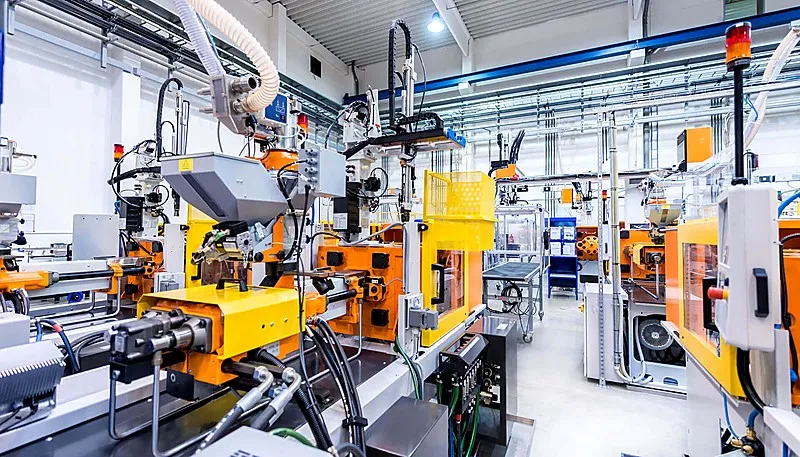
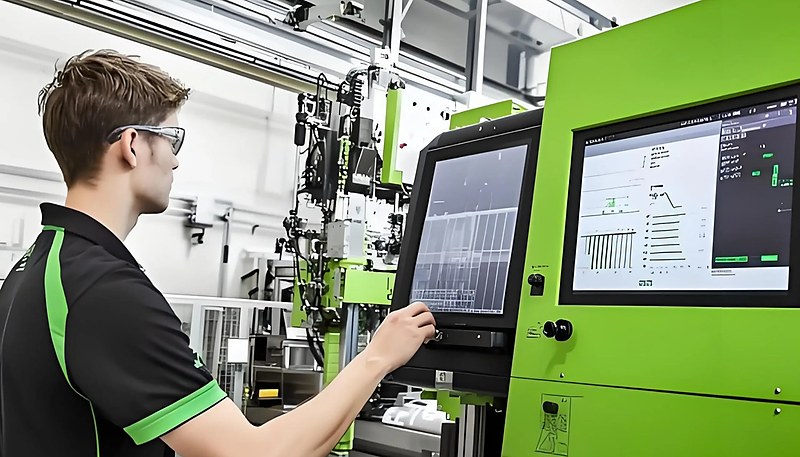
Nel nostro stabilimento di Shanghai utilizziamo 47 presse a iniezione da 90T a 1850T, il che ci offre la flessibilità necessaria per produrre sotto lo stesso tetto qualsiasi articolo, dai minuscoli fermagli di precisione ai grandi pannelli per automobili.
"La fase di raffreddamento rappresenta generalmente la quota maggiore del tempo di ciclo dello stampaggio a iniezione."True
Nella maggior parte delle operazioni di stampaggio a iniezione, il raffreddamento rappresenta il 50–70% del tempo ciclo totale. Per questo i progettisti investono molto nell'ottimizzazione della disposizione dei canali di raffreddamento: anche piccole riduzioni del tempo di raffreddamento aumentano direttamente la produttività e riducono il costo unitario.
"Lo stampaggio a iniezione può lavorare soltanto materiali termoplastici."False
Sebbene i termoplastici dominino lo stampaggio a iniezione, anche i polimeri termoindurenti possono essere lavorati con presse specializzate. La differenza principale è che i termoindurenti subiscono reticolazione chimica e non possono essere rifusi, mentre i termoplastici possono essere fusi e riformati più volte.
Quali sono i componenti principali di una pressa a iniezione?
I componenti principali di una pressa a iniezione sono le categorie o le opzioni fondamentali illustrate in questa sezione. Una pressa a iniezione è costituita da tre sistemi primari: l’unità di iniezione (tramoggia, cilindro, vite, ugello), l’unità di chiusura e lo stampo.
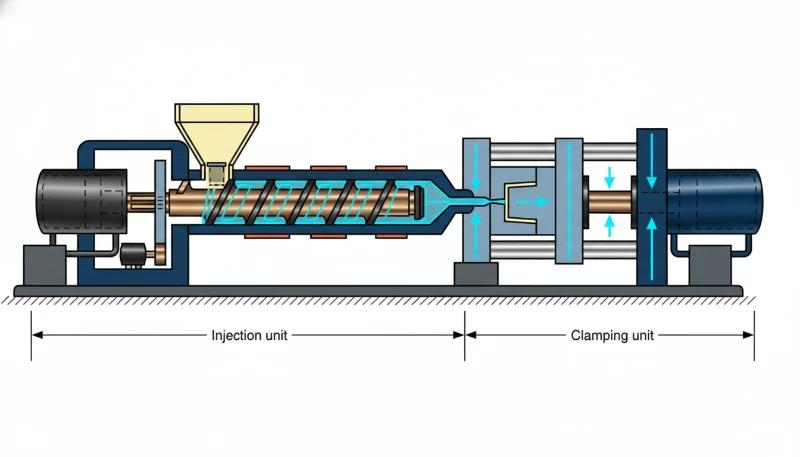
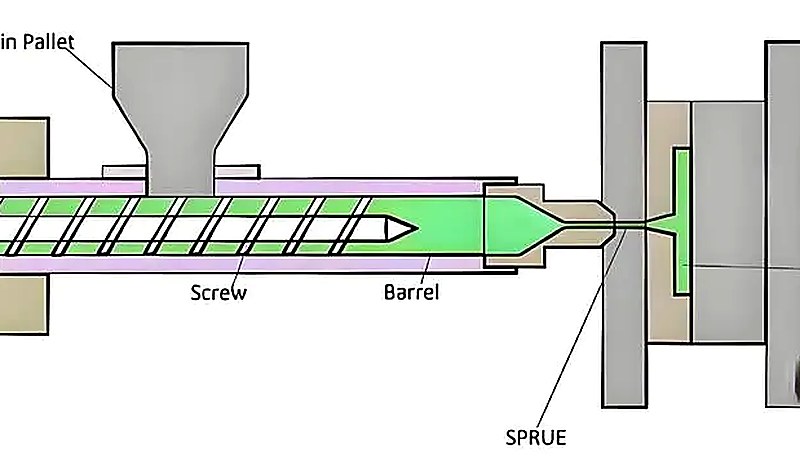
Una pressa a iniezione è composta da due unità principali: l’unità di iniezione e l’unità di chiusura. L’unità di iniezione inizia dalla tramoggia, che immagazzina e alimenta per gravità i granuli plastici nel sistema. Sotto si trova il cilindro, un elemento riscaldato contenente la vite alternativa, cuore del sistema di iniezione. La vite svolge due funzioni: ruota per fondere e miscelare la plastica, quindi avanza come uno stantuffo per iniettare il materiale fuso. Il rapporto L/D della vite (lunghezza/diametro) varia generalmente da 18:1 a 24:1; le viti più lunghe offrono una miscelazione migliore ma richiedono più energia.
Le fasce riscaldanti avvolte intorno al cilindro mantengono zone di temperatura precise, generalmente 3-5 dalla bocca di alimentazione all’ugello, consentendo una lavorazione ottimale del materiale. L’ugello collega il cilindro allo stampo e crea una tenuta che impedisce le fuoriuscite di materiale durante l’iniezione. Il gruppo di chiusura sostiene e aziona lo stampo, costituito da due metà: il lato fisso (contenente la boccola di colata) e il lato mobile (contenente il sistema di espulsione). I sistemi di chiusura utilizzano meccanismi a ginocchiera, per velocità ed efficienza energetica, oppure sistemi idraulici diretti, per la massima forza e precisione. Il sistema di espulsione comprende perni espulsori, perni di ritorno e piastre di espulsione che operano congiuntamente per estrarre i pezzi finiti dalla cavità dello stampo.
La capacità di iniezione — il volume massimo di materiale che la macchina può iniettare in un ciclo — determina le dimensioni producibili, da pochi grammi sulle macchine piccole a diversi chilogrammi sulle grandi unità industriali.
Quali materiali plastici sono comunemente utilizzati nello stampaggio a iniezione?
Questa sezione tratta i materiali plastici comunemente utilizzati nello stampaggio a iniezione e il loro impatto su costi, qualità, tempistiche o rischio di approvvigionamento. I termoplastici più comunemente stampati a iniezione comprendono polipropilene (PP), ABS, policarbonato (PC), nylon (PA) e polietilene (PE), ciascuno scelto per specifiche proprietà meccaniche e termiche.
Lo stampaggio a iniezione utilizza principalmente termoplastici, materiali che si ammorbidiscono con il calore e si induriscono raffreddandosi, consentendo cicli di lavorazione ripetuti. A differenza dei termoindurenti, che reticolano in modo permanente e non possono essere rifusi, i termoplastici offrono la flessibilità essenziale per lo stampaggio a iniezione. I materiali più comuni servono applicazioni specifiche in base alle loro proprietà. Il polipropilene (PP) prevale grazie alla resistenza chimica e al basso costo, risultando ideale per contenitori alimentari, componenti interni automobilistici e dispositivi medici. L’ABS combina resistenza e facilità di lavorazione, perciò è la scelta abituale per involucri di computer, giocattoli e finiture automobilistiche. Il policarbonato (PC) offre eccezionale resistenza agli urti e trasparenza ottica, ideale per occhiali protettivi, custodie per telefoni e lenti dei fari automobilistici.
Il Nylon resiste a usura e carichi per ingranaggi e strutture. Il PE copre usi dai sacchetti ai serbatoi. Il POM dà precisione a cerniere e ingranaggi. Il PBT offre proprietà elettriche per connettori. Il PEEK resiste a temperature e sostanze estreme in aerospazio e medicale. La scelta materiale è decisiva per qualità, prestazioni e costo.
Ogni materiale ha un proprio intervallo di temperatura di processo, caratteristiche di ritiro e proprietà meccaniche che devono corrispondere ai requisiti del pezzo e all’ambiente operativo.
In oltre 20 anni abbiamo lavorato più di 400 materiali plastici; la scelta del materiale può determinare il successo del progetto. I nostri ingegneri consigliano la resina adatta ai requisiti meccanici, termici e chimici.
Come si progetta uno stampo efficace per lo stampaggio a iniezione?
Questa sezione tratta la progettazione di uno stampo efficace per lo stampaggio a iniezione e il relativo impatto su costi, qualità, tempi e rischi di approvvigionamento. Una progettazione efficace bilancia posizione dei punti di iniezione, disposizione dei canali di raffreddamento, angoli di sformo e uniformità dello spessore delle pareti: decisioni che determinano circa il 70% della qualità finale del componente.
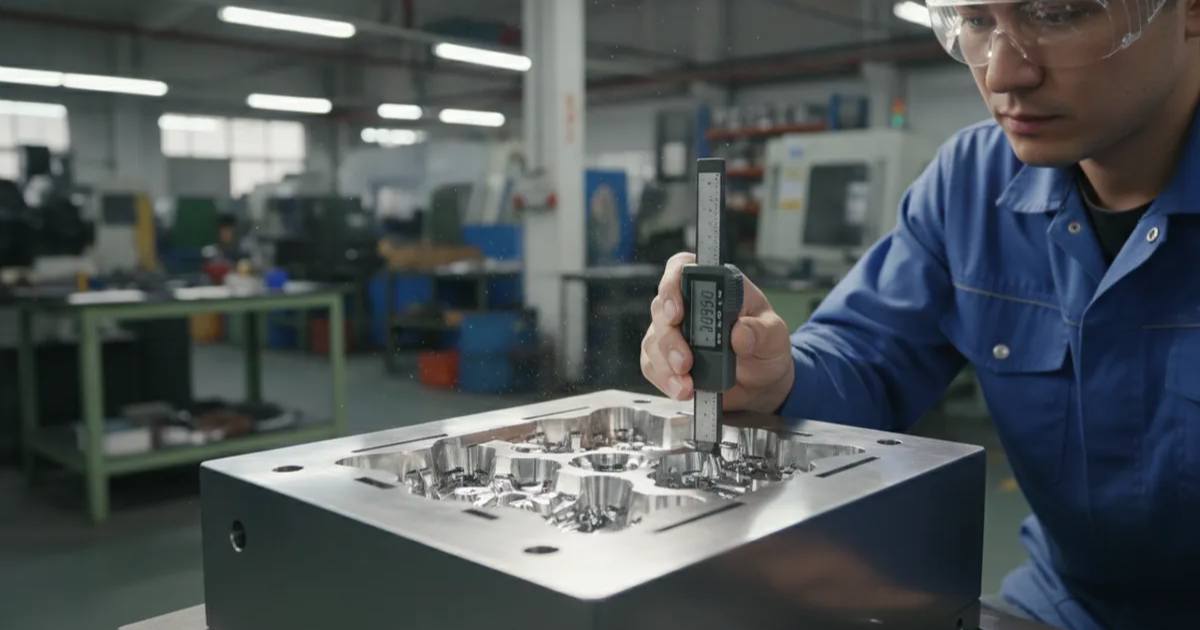
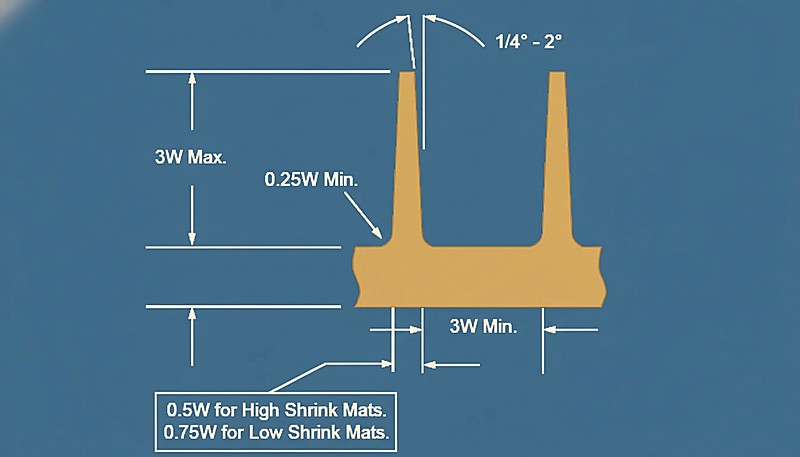
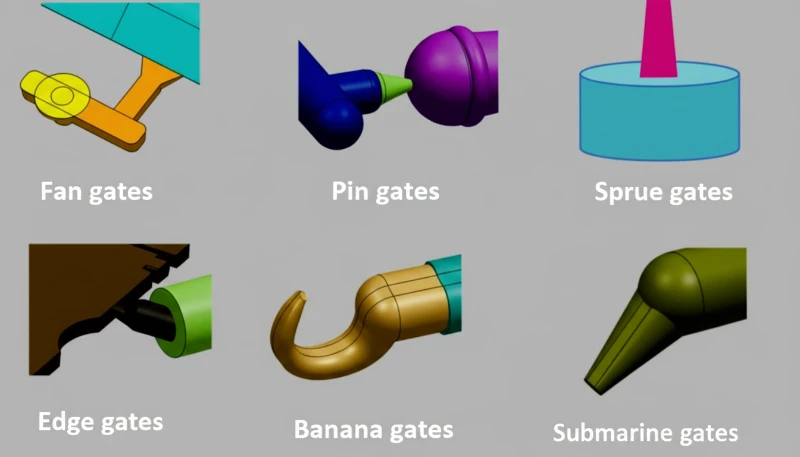
La progettazione dello stampo determina circa il 70% della qualità del pezzo ed è quindi il fondamento di uno stampaggio a iniezione riuscito. I tipi più comuni sono gli stampi a due piastre, semplici ed economici, quelli a tre piastre, che offrono maggiore flessibilità dei punti di iniezione, e i sistemi a canale caldo, che eliminano gli scarti e accelerano i cicli. La scelta e la posizione del punto di iniezione influiscono in modo decisivo sulla qualità: i punti laterali sono adatti ai pezzi piatti, quelli a tunnel riducono i segni sulle superfici visibili, quelli diretti gestiscono sezioni spesse e quelli a punta calda eliminano la rimozione manuale. Su tutte le superfici verticali sono indispensabili angoli di sformo di 1-3 gradi per facilitare l’espulsione; senza uno sformo adeguato si danneggiano i pezzi o si usurano i sistemi di espulsione.
L’uniformità dello spessore di parete previene risucchi e deformazioni: mantenete uno spessore costante pari a circa il 60-80% dello spessore nominale della parete e realizzate transizioni graduali tra spessori diversi. La progettazione dei canali di raffreddamento influisce direttamente sul tempo ciclo e sulla qualità del pezzo. I canali devono avere un diametro di 8-12mm, rimanere entro 40mm da qualsiasi superficie stampata e seguire il più fedelmente possibile il profilo del pezzo. Il tempo di raffreddamento rappresenta spesso il 60-80% del tempo ciclo totale; una progettazione efficiente del raffreddamento migliora quindi notevolmente la produttività. Gli sfiati prevengono bruciature e riempimenti incompleti consentendo la fuoriuscita dell’aria intrappolata; profondità di sfiato di 0.025-0.075mm lungo le linee di divisione e in corrispondenza dei fronti di flusso sono generalmente sufficienti.
La progettazione più efficace dello stampo a iniezione3 richiede di comprendere come la plastica fusa fluisce nella cavità, considerando fattori quali la caduta di pressione di iniezione, il riscaldamento per taglio e l’orientamento del materiale. Gli stampisti esperti sanno che dettagli progettuali apparentemente minori, come il raggio di uno spigolo vivo o la profondità di una texture, possono fare la differenza tra una produzione senza problemi e continui inconvenienti qualitativi.
Grazie al nostro reparto interno di costruzione stampi, che produce oltre 100 set di stampi al mese, abbiamo visto direttamente come le decisioni progettuali relative allo stampo si ripercuotano sull'intero ciclo produttivo, dal tempo di ciclo al tasso di difettosità.
"Uno stampo multicavità può produrre decine di componenti identici in un singolo ciclo di iniezione."True
Gli stampi multicavità sono lo standard nella produzione ad alto volume. In base alle dimensioni del pezzo e alla capacità della macchina, stampi con 8, 16, 32 o persino 64 cavità possono produrre contemporaneamente pezzi identici, riducendo drasticamente il tempo ciclo e il costo di produzione per pezzo.
"Pareti più spesse producono sempre componenti stampati a iniezione più resistenti."False
Pareti eccessivamente spesse causano ritiri, vuoti e tempi di raffreddamento più lunghi, producendo spesso pezzi più deboli. Gli ingegneri puntano normalmente a uno spessore uniforme tra 1.5mm e 4mm, usando nervature e fazzoletti per aumentare la resistenza senza ispessire le pareti.
Quali sono i difetti più comuni dello stampaggio a iniezione e come si prevengono?
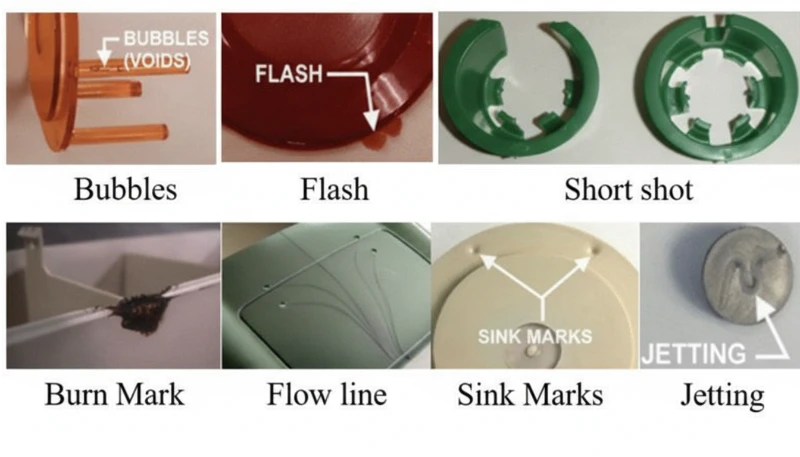
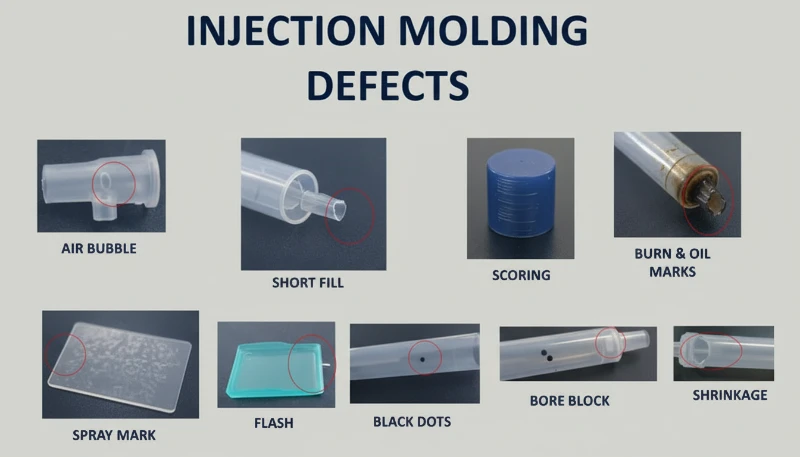
I difetti più comuni dello stampaggio a iniezione sono stampate incomplete, bave, risucchi, deformazioni, linee di saldatura, getti e bruciature. Ogni difetto ha una causa radice e riconoscere questi schemi fa risparmiare tempo e denaro durante la risoluzione dei problemi. Le stampate incomplete sono pezzi non completi nei quali la plastica non ha riempito tutta la cavità, solitamente per pressione insufficiente, bassa temperatura del fuso o sfiato inadeguato. Aumentare la pressione del 10-15% o la temperatura del cilindro di 10-20°C per migliorare il flusso. Le bave si formano quando il materiale in eccesso fuoriesce lungo le linee di divisione, in genere a causa di stampi usurati, pressione di chiusura insufficiente o pressione di iniezione eccessiva.
Verificare che la forza di chiusura superi 2-5 tonnellate per pollice quadrato di area proiettata del pezzo. I risucchi creano depressioni visibili sulle superfici quando lo spessore della parete supera 4mm senza una corretta progettazione delle nervature o quando il raffreddamento non è uniforme.
Ridurre lo spessore della parete sotto 3mm o aggiungere nervature per mantenere la resistenza strutturale. La deformazione fa torcere o piegare i pezzi dopo l’espulsione, solitamente per raffreddamento irregolare, tensioni residue o geometria asimmetrica. Bilanciare canali di raffreddamento e punti di iniezione per rimuovere uniformemente il calore. Le linee di saldatura sono segni visibili dove due fronti di plastica si incontrano, indebolendo il pezzo. Ottimizzare la posizione dei punti per controllare il flusso e aumentare la temperatura del fuso di 15-25°C per rafforzare le linee.
Il jetting crea difetti superficiali simili a serpentine quando la plastica ad alta velocità genera un flusso turbolento attraverso i punti di iniezione. Ridurre inizialmente la velocità di iniezione, quindi aumentarla gradualmente durante il riempimento della cavità.
Le bruciature si presentano come annerimenti o imbrunimenti causati dal surriscaldamento dovuto a velocità di iniezione eccessiva, aria intrappolata o sfiato insufficiente. Ridurre la velocità di iniezione e migliorare lo sfiato dello stampo con sfiati profondi 0.025mm lungo le linee di divisione. Conoscere questi schemi di difetto consente di diagnosticare rapidamente i problemi, invece di modificare parametri a caso nella speranza di ottenere un miglioramento.
Quanto costa lo stampaggio a iniezione per un nuovo progetto?
Questa sezione tratta quanto costa lo stampaggio a iniezione per un nuovo progetto e il relativo impatto su costi, qualità, tempistiche o rischio di approvvigionamento. I costi dello stampaggio a iniezione si dividono tra attrezzatura iniziale dello stampo ($3,000–$100,000+) e produzione per componente ($0.10–$5.00), mentre la convenienza complessiva dipende dal volume di produzione.
I costi dello stampaggio a iniezione si dividono in due categorie principali: investimento iniziale nello stampo e costi di produzione continuativi per pezzo. I costi degli stampi variano drasticamente in base alla complessità: gli stampi semplici a cavità singola partono da circa $3,000-$8,000, mentre gli stampi di produzione complessi a più cavità con canali caldi possono superare $100,000. Gli stampi famiglia (più pezzi diversi in un unico stampo) costano in genere il 60-70% di quanto costerebbero stampi separati. I costi per pezzo dipendono dal costo del materiale (in genere $0.50-$3.00 per libbra), dal tempo di ciclo (che incide sui costi di manodopera e macchina) e dal volume di produzione. Un pezzo semplice può costare $0.05-$0.20 ad alti volumi, mentre i pezzi complessi realizzati con materiali costosi possono arrivare a $5-$20 ciascuno.
Il punto di pareggio dei volumi, oltre il quale lo stampaggio a iniezione diventa conveniente rispetto ad altri processi, si colloca in genere intorno a 1,000-5,000 pezzi, a seconda della complessità e delle dimensioni del componente. Oltre 10,000 pezzi, lo stampaggio a iniezione è solitamente la soluzione economicamente dominante. Il costo totale di proprietà (TCO) comprende manutenzione dello stampo, movimentazione dei materiali, controllo qualità e potenziali modifiche progettuali. Gli acquirenti accorti considerano il quadro completo: uno stampo da $20,000 che produce 500,000 pezzi senza problemi spesso costa meno di uno stampo da $8,000 che richiede manutenzione continua e genera il 10% di scarti. La posizione geografica incide notevolmente sui costi: lo stampaggio nazionale offre comunicazioni più rapide e tempi di consegna più brevi, ma in genere costa 2-3x rispetto alla produzione all’estero.
Il punto essenziale è abbinare requisiti di volume, tempi e qualità all’approccio produttivo corretto, anziché limitarsi a inseguire il preventivo iniziale più basso.
Come si avvia il primo progetto di stampaggio a iniezione?
Questa sezione riguarda l’avvio del primo progetto di stampaggio a iniezione e il relativo impatto su costi, qualità, tempistiche o rischio di approvvigionamento. L’avvio di un progetto di stampaggio a iniezione richiede sette fasi: definire i requisiti, selezionare il materiale, trovare un fornitore, realizzare un prototipo, riesaminare il DFM, eseguire il campionamento T1 e infine avviare la produzione.
Per avviare con successo il primo progetto di stampaggio a iniezione occorre seguire una sequenza collaudata che previene errori costosi. (1) Definisci chiaramente i requisiti: specifica dimensioni, tolleranze, proprietà del materiale, volume produttivo e tempi di consegna. Requisiti vaghi causano in seguito costosi malintesi. (2) Segue la scelta del materiale: considera proprietà meccaniche, resistenza chimica, requisiti termici e conformità normativa. Non scegliere semplicemente l’opzione più economica; cambiare materiale dopo aver completato lo stampo è costoso. (3) Trova un fornitore qualificato tramite segnalazioni, directory di settore o fiere. Cerca esperienza nella guida completa allo stampaggio a iniezione per il tuo settore, dimensioni adeguate delle macchine e certificazioni di qualità come ISO 9001.
(4) Creare prototipi mediante stampa 3D o attrezzature in alluminio tenero per convalidare progetto e accoppiamento prima di impegnarsi negli stampi di produzione.
Questa fase individua precocemente l’80% dei problemi progettuali, quando correggerli costa poco. (5) Eseguire con gli ingegneri dello stampatore un’analisi DFM approfondita. Individueranno criticità, proporranno miglioramenti e ottimizzeranno il pezzo. (6) Il campionamento T1 produce i primi articoli dallo stampo di produzione per verificare dimensioni, aspetto e prestazioni. Prevedere 2-3 cicli di campionamento per affinare il processo. (7) Approvazione e avvio devono includere parametri documentati, procedure di controllo qualità e specifiche di imballaggio. Nel confronto tra produzione nazionale ed estera, considerare costi totali di attrezzaggio, spedizione, comunicazione e scorte. I fornitori nazionali eccellono per prototipi, piccoli volumi e progetti complessi che richiedono comunicazioni frequenti.
I fornitori esteri sono adatti a grandi volumi, pezzi semplici e progetti sensibili al costo, nei quali sono accettabili cicli di sviluppo più lunghi e investimenti in scorte.
stampaggio a iniezione: processo produttivo che realizza pezzi iniettando materiale fuso in uno stampo. ↩
tempo di ciclo: tempo totale necessario per completare un ciclo di stampaggio a iniezione, dalla chiusura dello stampo all’espulsione del pezzo. ↩
stampo a iniezione: utensile metallico progettato su misura e utilizzato nello stampaggio a iniezione per conferire alla plastica fusa la forma desiderata. ↩
Domande frequenti
Qual è il volume minimo di produzione affinché lo stampaggio a iniezione sia conveniente?
Lo stampaggio a iniezione diventa conveniente intorno a 1,000–5,000 unità per pezzi semplici, ma il punto di pareggio effettivo dipende dalla complessità del pezzo e dal costo dello stampo. Per pezzi complessi con stampi costosi potrebbero servire oltre 10,000 unità. Per volumi inferiori a 500, valutate la stampa 3D o la colata di uretano. La chiave è calcolare il costo totale per pezzo, incluso l’ammortamento dello stampo: se tale valore rientra nel budget, siete pronti per la produzione. Per piccoli lotti inferiori a 500 unità, la stampa 3D o la colata di uretano possono offrire una convenienza migliore senza investimenti in attrezzature. Molte aziende iniziano con una fase prototipale mediante produzione additiva, quindi passano allo stampaggio a iniezione quando la domanda si stabilizza e i volumi giustificano il costo iniziale dello stampo.
Quanto tempo occorre per costruire uno stampo a iniezione?
Uno stampo standard a due piastre richiede 4–6 settimane; stampi complessi con movimenti laterali, canali caldi o tolleranze strette 8–12. ZetarMold produce internamente oltre 100 set al mese e può accelerare stampi semplici a 2–3 settimane. I tempi dipendono da complessità, durezza e cavità e includono revisioni, approvvigionamento e campionatura. Le urgenze costano di più e aumentano il rischio di modifiche successive.
Qual è il tempo ciclo tipico nello stampaggio a iniezione?
I tempi ciclo variano da 5 secondi per componenti piccoli e a parete sottile a oltre 60 secondi per componenti grandi e a parete spessa. La fase di raffreddamento rappresenta in genere il 50–70% del tempo ciclo totale. Lo spessore della parete è il fattore principale: raddoppiarlo può quadruplicare il tempo di raffreddamento. Gli stampatori esperti ottimizzano la posizione dei punti di iniezione, la progettazione dei canali di raffreddamento e la temperatura del fuso per ridurre il tempo ciclo senza compromettere la qualità. Per articoli standard ad alto volume, come i tappi di bottiglia, i sistemi ottimizzati raggiungono tempi ciclo inferiori a 3 secondi. Gli stampi multicavità e i sistemi a canale caldo massimizzano la produzione per ciclo; l’ottimizzazione del tempo ciclo è quindi una delle leve più incisive per ridurre il costo di produzione unitario.
Lo stampaggio a iniezione può produrre pezzi trasparenti?
Sì: i pezzi trasparenti vengono comunemente stampati in PMMA (acrilico), PC (policarbonato) e ABS trasparente. Le principali difficoltà consistono nell’eliminare segni di flusso, linee di saldatura e tensioni interne che causano opacità. La superficie dello stampo deve essere lucidata secondo lo standard SPI A-1 o A-2 e i parametri di processo, in particolare temperatura del fuso e velocità di iniezione, devono essere controllati rigorosamente. Le applicazioni medicali e ottiche richiedono i massimi standard di trasparenza. Processi successivi allo stampaggio, come lucidatura a vapore o trattamento alla fiamma, possono migliorare ulteriormente la trasparenza ottica di determinati materiali. I progettisti devono inoltre considerare che i pezzi trasparenti rendono visibile ogni difetto: segni del punto di iniezione, linee di saldatura e risucchi sono molto più evidenti che nei materiali opachi.
Qual è la differenza tra stampi a canale caldo e a canale freddo?
Gli stampi a camera calda mantengono fusa la plastica tra ugello e cavità, eliminando lo sfrido dei canali e riducendo il ciclo: ideali per alti volumi. Nei canali freddi, i canali solidificano e vanno separati e spesso rimacinati. La camera calda costa inizialmente il 30–50% in più, ma su larga scala risparmia materiale e tempo. Sotto 100,000 pezzi è in genere più economico il canale freddo. Esistono sistemi ibridi. La scelta incide fortemente su scarti, costanza del ciclo e qualità ed è cruciale quanto punto d’iniezione e raffreddamento.
Quanto possono essere precisi i pezzi stampati a iniezione?
Lo stampaggio a iniezione standard raggiunge tolleranze di ±0.1mm (±0.005″) per quote inferiori a 25mm. Con stampaggio di precisione e ottimizzazione del processo si può arrivare a ±0.025mm sulle caratteristiche critiche. Incidono ritiro del materiale (tipicamente 0.5–2.5%), precisione dello stampo e costanza del processo. Le parti a tolleranza stretta richiedono attrezzature più costose, monitoraggio in processo e spesso controllo statistico di processo (SPC). La costanza tra lotti conta quanto la precisione assoluta. Sensori di pressione in cavità e SPC mantengono tolleranze strette su produzioni di migliaia di unità, rilevando le derive prima che generino parti fuori specifica.
Quali certificazioni cercare in un fornitore di stampaggio?
Come minimo, cercare ISO 9001 per la gestione qualità. Per pezzi medicali ISO 13485 è obbligatoria; i fornitori automotive devono avere IATF 16949. Certificazioni ambientali come ISO 14001 e ISO 45001 indicano pratiche produttive responsabili. Richiedere sempre certificati e rapporti di audit aggiornati. Un fornitore qualificato deve inoltre fornire certificati materiali (COA), rapporti dimensionali e dati di capacità di processo (valori Cpk) per le quote critiche. Oltre alle certificazioni, valutarne esperienza con pezzi simili, capacità tecnica di supporto al design e disponibilità alla trasparenza. Audit di fabbrica, controlli campioni e referenze di clienti esistenti offrono più informazioni dei soli certificati.
Siete pronti ad avviare il vostro progetto di stampaggio a iniezione? Il team di ingegneri ZetarMold vanta oltre 20 anni di esperienza, 47 macchine da 90T a 1850T e competenze su più di 400 materiali. Richiedete gratuitamente un’analisi DFM e un preventivo competitivo: vi aiuteremo a evitare errori costosi prima che si verifichino.