If you are sourcing injection molded parts from an overseas supplier, PPAP is the gatekeeper between a prototype that looks fine and a production run that meets specs consistently. In our experience running injection molding projects for automotive and industrial customers, a disciplined PPAP process catches most quality problems before they reach your assembly line.
- PPAP is a formal quality gateway, not optional paperwork for injection molding suppliers
- The 18 PPAP elements apply differently to tooling qualification, sample approval, and mass production
- Automotive requires Level 3–4 submissions; most industries need at least Level 2
- Cpk targets of ≥1.67 for new processes and ≥1.33 for ongoing production are standard
- Skipping PPAP is the fastest way to get inconsistent parts in mass production
This guide walks through every PPAP element relevant to injection molding — from design records and process flow diagrams to SPC data and part submission warrants — so you know exactly what to ask your supplier for, and what a complete submission looks like.
What Is PPAP and Why Does It Matter for Injection Molding?
PPAP (Production Part Approval Process) is a formal quality gateway requiring suppliers to prove process consistency through 18 documented elements. Originally developed by the Big Three automakers (Chrysler, Ford, GM) and standardized through the AIAG PPAP Manual1, it is now used across automotive, aerospace, medical, and industrial supply chains worldwide.
For injection molding, PPAP is critical because the process involves many interdependent variables — melt temperature, injection pressure, hold time, cooling rate — that all affect final part dimensions. A supplier can produce perfect samples by hand-tuning, but without PPAP you have no evidence they can replicate that quality at scale. ISO 90012 already requires controlled production — PPAP makes it explicit.
The standard defines four submission levels. Level 1 is a warrant only (minimal). Level 2 includes warrant, product samples, and limited supporting data. Level 3 adds process flow diagrams, FMEA, control plans, MSA, and dimensional results. Level 4 includes everything in Level 3 plus additional customer-specific requirements. Most automotive OEMs require Level 3 for new parts; aerospace references similar rigor through AS91003 First Article Inspection.
Which PPAP Submission Level Do You Need for Molded Parts?
PPAP Level 3 is the standard requirement for new injection molded parts. It includes all 18 elements: process flow, FMEA, control plan, MSA, dimensional results, and SPC data. Level 2 is acceptable only for non-critical consumer products.
| Submission Level | What Is Included | When to Use for Injection Molding |
|---|---|---|
| Level 1 | Part Submission Warrant (PSW) only | Minor design changes to existing approved parts |
| Level 2 | PSW + product samples + limited data | Non-critical consumer products; low-risk parts |
| Level 3 | PSW + all 18 elements including FMEA, control plan, SPC, MSA | New tooling; automotive, medical, industrial parts |
| Level 4 | Level 3 + customer-specific requirements | Safety-critical automotive or aerospace components |
For most buyers working with an injection mold supplier on new tooling, Level 3 is the baseline. It forces the supplier to document their process flow, identify failure modes, define measurement methods, and prove statistical capability — all before you commit to a production order.
If your supplier pushes back on Level 3, that is a red flag. A competent molding supplier with documented quality systems should already have most of these elements in their standard operating procedures. The PPAP submission is just packaging existing data into a format you can review.
"A Cpk value of 1.67 means the process spread uses less than 60% of the tolerance band."True
Cpk 1.67 corresponds to a 5-sigma process capability, meaning the natural process variation consumes roughly 60% of the specification width. This leaves a comfortable margin for process drift over time, which is why it is the standard target for new process qualification in PPAP submissions.
"PPAP Level 1 submission is sufficient for new injection molding tooling."False
Level 1 only includes the Part Submission Warrant with no supporting data. For new tooling, you need at minimum Level 3, which includes process flow diagrams, FMEA, control plans, MSA, dimensional results, and SPC capability data to prove the process can consistently produce parts within specification.
What Are the 18 PPAP Elements for Injection Molding?
The 18 PPAP elements are a comprehensive set of quality documentation requirements covering design, process, material, and measurement systems. Not all apply equally to injection molding, but each one is mapped below to its specific application.
| Element # | PPAP Element | Injection Molding Application |
|---|---|---|
| 1 | Design Records | Part drawings, 3D CAD models, and GD&T callouts for the molded part |
| 2 | Engineering Change Documents | ECN/ECO records if the part has been revised from an earlier design |
| 3 | Customer Engineering Approval | Written approval of the part design if customer-specific |
| 4 | Design FMEA | Risk analysis of the part design; relevant if supplier co-designs the part |
| 5 | Process Flow Diagram | Step-by-step flow from raw material receipt through molding, inspection, and shipping |
| 6 | Process FMEA | Failure mode analysis for each molding process step — short shot, flash, sink marks, warpage, contamination |
| 7 | Control Plan | Detailed inspection plan: what to check, how often, with what tools, and reaction plans for out-of-spec results |
| 8 | MSA (Measurement System Analysis) | GR&R studies on calipers, CMM, optical comparators used for dimensional checks |
| 9 | Dimensional Results | Full dimensional report comparing measured values to drawing tolerances on sample parts |
| 10 | Material / Performance Test Results | Material certs, tensile tests, flame ratings, color matching reports |
| 11 | Initial Process Study (SPC) | Cpk/Ppk studies on critical dimensions using 25+ subgroups |
| 12 | Qualified Lab Documentation | Evidence that testing labs meet ISO 17025 or equivalent |
| 13 | Appearance Approval Report (AAR) | Color, gloss, texture approval — critical for visible cosmetic parts |
| 14 | Sample Production Parts | Physical sample parts from the actual production process (not hand-finished) |
| 15 | Master Sample | Retained reference sample for future comparison |
| 16 | Checking Aids | Go/no-go gauges, fixtures, or checking fixtures specific to the part |
| 17 | Customer-Specific Requirements | OEM-specific forms, additional testing, or documentation |
| 18 | Part Submission Warrant (PSW) | Summary form signed by supplier quality manager declaring compliance |
Elements 5, 6, 7, 8, 9, and 11 are the heavy lifters for injection molding. These are where you verify the supplier actually understands their process — not just that they can make one good part, but that they can make thousands consistently.
Pay special attention to Element 11 (Initial Process Study). This is where the supplier proves process capability with Cpk data. For new injection molding processes, the target is Cpk ≥ 1.67. For ongoing production, ≥ 1.33 is the minimum. If the supplier cannot achieve Cpk ≥ 1.33 on critical dimensions, the process is not capable — period.
How Does PPAP Apply Differently to Tooling Qualification vs. Sample Approval vs. Mass Production?
PPAP is not a one-time event. It has distinct phases, and each phase focuses on different elements. Understanding these phases helps you set the right expectations with your supplier.
Tooling Qualification Phase
Before the first sample is molded, the tool must be qualified: verify the mold design matches the part drawing, the steel is correct, cooling channels are per design, and the mold can physically produce the part. Key PPAP elements at this stage are design records (Element 1) and the process flow diagram (Element 5).
At ZetarMold, we approach this phase with our in-house mold manufacturing facility and 8 senior engineers who review every mold design before steel is cut. Tooling qualification is where most quality problems either get prevented or baked in.
Do not let your supplier skip straight to sampling without completing tooling qualification. A mold that is not built to spec will never produce parts to spec, no matter how much you tune the process parameters.
Sample Approval Phase (First Article)
Once the tool is qualified, the supplier runs T0 (first trial) samples. These samples go through full dimensional inspection (Element 9), material testing (Element 10), and appearance approval if applicable (Element 13). This is your first opportunity to see if the mold and process together can produce parts within specification.
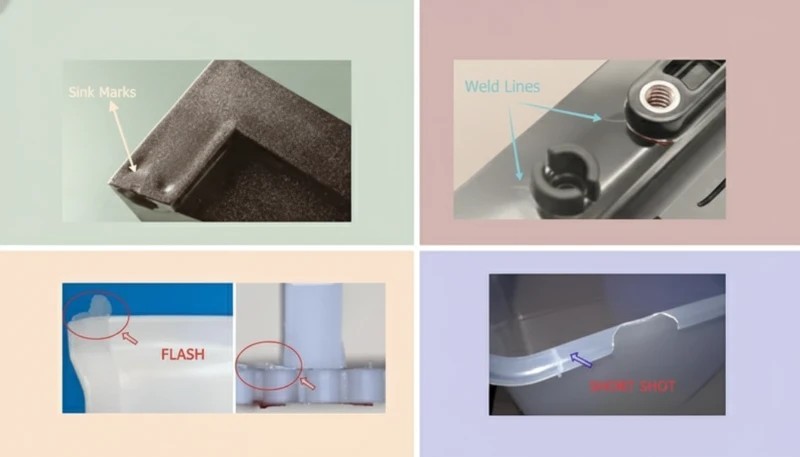
Common issues at this stage include sink marks on thick sections, flash at parting lines, warpage on flat parts, and short shots in thin-wall areas. A good supplier will identify these in their process FMEA (Element 6) and have corrective actions ready.
Mass Production Readiness Phase
This is where SPC (Element 11) and the control plan (Element 7) become critical. The supplier must demonstrate that running the process at production speed, with production tooling and production operators, consistently produces parts within spec. The initial process study requires a minimum of 25 subgroups of sample data to calculate Cpk.
If you are working with a sourcing guide approach to supplier selection, mass production PPAP readiness should be one of your final gate criteria before placing a volume order.
At our Shanghai facility, we run 47 injection molding machines ranging from 90T to 1850T, backed by 20+ years of experience delivering PPAP-compliant parts for automotive and industrial customers worldwide.

What Cpk Targets Should You Set for Injection Molding PPAP?
Process capability is the heart of PPAP. Without it, you are just checking if parts look right — not if the process is actually capable. Here are the standard targets you should write into your supplier quality requirements.
| Dimension Type | New Process Cpk Target | Ongoing Production Cpk Target | Notes |
|---|---|---|---|
| Critical dimensions (safety/function) | ≥ 1.67 | ≥ 1.33 | Must use SPC control charts; any Cpk < 1.33 requires corrective action |
| Important dimensions (fit/assembly) | ≥ 1.33 | ≥ 1.00 | Monitor with Xbar-R charts; target tighter if possible |
| Cosmetic dimensions (appearance) | ≥ 1.00 | ≥ 1.00 | Visual inspection standards should be documented in control plan |
| Material properties (tensile, impact) | Per material datasheet + margin | Per material datasheet | Material cert + lot testing required |
A Cpk of 1.67 means the process spread uses less than 60% of the tolerance band — leaving a healthy margin for process drift over time. Injection molding processes are inherently repeatable once the parameters are locked, so achieving Cpk ≥ 1.67 on tight-tolerance dimensions is realistic with scientific molding practices.
If your supplier reports Cpk values below 1.33 on critical dimensions, do not accept the PPAP. Require a corrective action plan that addresses the root cause — whether it is mold design, process parameters, material variation, or measurement error.
What Does a Process Flow Diagram Look Like for Injection Molding PPAP?
The Process Flow Diagram (PFD) is PPAP Element 5. It maps every step from raw material receipt to finished part shipment. For injection molding, a complete PFD typically includes 15-25 steps. Here is a representative flow:
| Step | Process Step | Key Parameters to Document |
|---|---|---|
| 1 | Raw material receipt and inspection | Material cert review, lot number, visual inspection |
| 2 | Material drying (if hygroscopic) | Dry time, dry temperature, dew point |
| 3 | Material loading | Loading method, color concentrate ratio (if applicable) |
| 4 | Injection molding | Melt temp, injection speed, hold pressure, hold time, cooling time, clamp force |
| 5 | Part ejection | Ejection method, cycle time |
| 6 | In-process visual inspection | Surface defects: flash, sink, short shot, silver streaks |
| 7 | Gate removal / degating | Method, residual gate height specification |
| 8 | Secondary operations (if any) | Drilling, tapping, ultrasonic welding, etc. |
| 9 | Post-molding cooling / annealing | Cooling method, duration (for dimensionally critical parts) |
| 10 | 100% or sampling dimensional inspection | CMM, calipers, go/no-go gauges per control plan |
| 11 | Functional testing (if required) | Assembly test, leak test, pull test |
| 12 | Final visual and cosmetic inspection | Color, gloss, texture per AAR |
| 13 | Packaging and labeling | Pack spec, quantity per box, label format |
| 14 | Final audit / OQC | Outgoing quality check per AQL level |
| 15 | Shipping | Carrier, transit protection, documentation |
The PFD feeds directly into the Process FMEA (Element 6) and Control Plan (Element 7). Every step in the PFD should have corresponding failure modes in the PFMEA and inspection criteria in the control plan.
What Are the Most Common PPAP Failures in Injection Molding?
The most common ppap failures in injection molding are the main categories or options explained in this section. The most common PPAP failures in injection molding are dimensional non-conformance on first articles, Cpk values below 1.33 on critical dimensions, missing or superficial process FMEAs, and material certificates that do not match the specified grade. These failures typically stem from suppliers not running samples under actual production conditions. Knowing these patterns in advance helps you focus your PPAP review where it matters most.
| Failure Mode | Root Cause | What to Check in the PPAP |
|---|---|---|
| Dimensional non-conformance on first article | Mold design not optimized; shrinkage compensation incorrect | Compare CMM data to tolerance; verify mold flow analysis was done |
| Cpk below 1.33 on critical dims | Process parameters not locked; high part-to-part variation | Review SPC data: is the process stable? Are there special causes? |
| Material cert does not match spec | Wrong material grade used or cert from wrong lot | Cross-reference lot numbers between material cert and production records |
| Missing or incomplete process FMEA | Supplier treats PFMEA as a formality, not a real analysis | Check RPN values: if all are low, the analysis is probably superficial |
| MSA/GR&R not done or out of tolerance | Measurement variation exceeds 10% of tolerance | Require GR&R study on all measurement equipment used for PPAP dims |
| Control plan does not match actual practice | Documented plan looks good but floor practice differs | Request photos or video of actual inspection stations |
| Appearance items fail color/gloss | No AAR or color standard established upfront | Get signed AAR before production; use physical color standards |
"Each injection molding machine qualified for the same part needs its own PPAP process study."True
If the same part will be produced on multiple machines, each machine must be qualified separately with its own initial process study and dimensional results. Process parameters may differ between machines, so each machine needs its own parameter sheet in the control plan. The Part Submission Warrant should list all qualified machines.
"PPAP re-submission is only required when the part design changes."False
PPAP re-submission is required for many types of changes beyond part design. Material grade changes, mold modifications, manufacturing location changes, and process parameter shifts beyond control plan limits all require re-submission. Even cosmetic changes like color or texture may trigger an Appearance Approval Report update. Treating PPAP as a one-time gate rather than a living system is a common and costly mistake.
The single most common root cause across all these failures is the same: the supplier did not run the PPAP samples under actual production conditions. They hand-tuned the machine for the sample run but have no intention (or ability) to maintain those parameters in volume production. This is why Element 11 (Initial Process Study) is non-negotiable.
How Do You Review a Supplier’s PPAP Submission Effectively?
Receiving a stack of PPAP documents does not mean the job is done. You need to review them critically. Here is a structured approach that works for injection molding suppliers.
Start with the Part Submission Warrant (PSW, Element 18). It is the summary page. Check that the part number, revision level, and mold number all match your records. If the PSW has discrepancies, the rest of the package is suspect.
Next, review the dimensional results (Element 9). Pull out the 5 most critical dimensions from your drawing and verify they are reported with actual measured values, not just pass/fail. If dimensions are reported as pass/fail only, ask for actual data — you need to see where within the tolerance band the parts are landing.
Then check the SPC data (Element 11). Look for: a minimum of 25 subgroups, control charts showing statistical stability (no out-of-control points), and Cpk values calculated from the actual data. If the Cpk is calculated from a histogram without control charts, it is not valid — you need both stability and capability.
Review the Process FMEA (Element 6) for injection-molding-specific failure modes: short shots, flash, sink marks, warpage, contamination, and color variation. If these are not listed, the PFMEA was likely copied from a generic template.
Finally, cross-reference the control plan (Element 7) with the PFMEA. Every high-RPN failure mode in the PFMEA should have a corresponding control method and reaction plan in the control plan. If they do not match, the system is broken.
Our 8 senior engineers review every PPAP package internally before submission, supported by ISO 9001, ISO 13485, ISO 14001, and ISO 45001 certified systems and experience across 400+ plastic materials.
What Documentation Should You Retain After PPAP Approval?
PPAP is not file-and-forget. You need to retain and actively manage the documentation throughout the production lifecycle. Here is what to keep and why.
| Document | Retention Period | Why It Matters |
|---|---|---|
| Approved PSW with signatures | Life of part + 1 year minimum | Legal record of approval; reference for any future disputes |
| Dimensional results (full data) | Life of part + 1 year | Baseline for ongoing SPC; reference if dimensions drift |
| Material certificates | Per lot, life of part + 1 year | Traceability for recalls or field failures |
| SPC studies (Cpk data + control charts) | Life of part + 1 year | Evidence of process capability at approval |
| Master sample (physical) | Life of part | Reference standard for future visual/dimensional comparison |
| Control plan (current revision) | Active — update with any process change | Living document; must reflect current production practice |
| FMEA (current revision) | Active — update with any process or design change | Must be re-evaluated for any engineering change |
Any change to the part design, mold, material, process, or manufacturing location triggers a PPAP re-submission. This is called a “notification of change” and it is your safety net against unauthorized supplier changes. Build this requirement into your purchasing terms.
When Should You Require a PPAP Re-Submission?
PPAP is a living system, not a one-time gate. Any of the following changes should trigger a re-submission, at minimum at the level originally approved:
A change in material grade or supplier triggers PPAP re-submission. Even if the new material has the same datasheet properties, lot-to-lot variation, moisture sensitivity, and processing differences can affect dimensions and performance. Require a new material certificate, sample parts, and updated dimensional results.
Mold design or repair changes require re-submission. Any modification to cavity, core, runner, gate location, or cooling layout changes process dynamics. Even mold polishing can affect dimensions on tight-tolerance parts. Document the change, run new samples, and submit updated dimensional data.
A change in manufacturing location requires full PPAP re-submission. Even within the same company, different factories have different machines, operators, and ambient conditions. What worked on a 500T Engel at Factory A may not produce identical results on a 500T Haitian at Factory B.
A change in process parameters beyond the control plan limits signals that the process has drifted or needs adjustment. If the supplier needs to adjust melt temperature by more than the tolerance defined in the control plan, or change hold pressure or cooling time beyond documented ranges, that constitutes a significant process change requiring re-validation through a partial or full PPAP re-submission depending on the scope of the change.
Quality issues found through ongoing SPC monitoring also trigger re-submission. If control charts show a sustained process shift, increasing variation, or out-of-control conditions that cannot be resolved within the existing control plan, a PPAP re-submission may be needed to re-establish process capability.
How to Build a Practical PPAP Checklist for Your Injection Molding Supplier
A practical PPAP checklist is a three-phase document covering tooling qualification, sample approval, and production readiness. Each phase targets specific PPAP elements and verification steps detailed below.
Phase 1 — Tooling Qualification Checklist: Verify design records match your part drawing, review the mold flow analysis report, confirm mold steel and surface finish specifications, and check that the process flow diagram covers all steps from material receipt to final inspection.
Phase 2 — Sample Approval Checklist: Receive and measure first article samples with full dimensional report, review material test results against the material specification, complete the Appearance Approval Report for visible surfaces, and verify the Process FMEA addresses molding-specific failure modes.
Phase 3 — Production Readiness Checklist: Review SPC data showing Cpk ≥ 1.67 on critical dimensions, verify the control plan matches actual floor practice, confirm MSA/GR&R results on all measurement equipment, and sign off on the Part Submission Warrant.
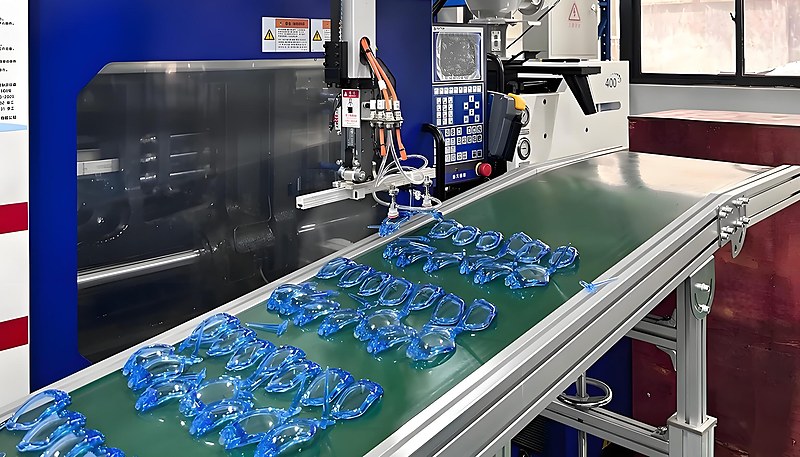
With 30+ English-speaking project managers and an in-house mold manufacturing facility producing 100+ mold sets per month, we manage PPAP documentation as an integrated part of every project — not a separate administrative burden.
FAQ
Frequently Asked Questions
What is the difference between PPAP and First Article Inspection (FAI)?
PPAP is a comprehensive production part approval process that includes 18 elements covering design records, process flow, failure modes, material testing, measurement systems, and statistical capability data. FAI is a subset — it focuses solely on verifying that the first production parts meet dimensional requirements on the drawing. PPAP includes FAI but goes much further by also requiring process capability studies with Cpk data, Process FMEA, control plans, MSA and GR&R studies, and full material traceability. If your industry uses PPAP as the standard, FAI alone is not sufficient for complete supplier qualification and production part approval.
How long does a PPAP submission take for injection molding?
For a new injection molded part at PPAP Level 3, expect 4 to 8 weeks from T0 sampling to completed PPAP package. Tooling qualification takes 1 to 2 weeks, first article inspection and material testing take another 1 to 2 weeks, and the SPC study requires running a minimum of 25 subgroups which adds 1 to 2 more weeks. If the initial samples fail dimensional requirements, add another 2 to 4 weeks for mold modifications and re-sampling. Budget 10 to 12 weeks total for a first-time PPAP submission with a new supplier to be safe.
Can PPAP be done for non-automotive injection molding parts?
Yes, and it should be. While PPAP originated in the automotive industry, the framework is industry-agnostic and applies to any manufactured part where consistency and traceability matter. Any injection molded part where dimensional consistency, material traceability, and process reliability are important can benefit from PPAP. Medical device, aerospace, consumer electronics, and industrial equipment buyers increasingly require PPAP or PPAP-equivalent submissions from their molding suppliers. The rigor level can be scaled appropriately — use Level 2 for lower-risk parts and Level 3 for critical components.
What happens if a supplier fails PPAP?
A PPAP failure means the supplier cannot demonstrate that their process consistently produces parts within specification. The corrective action process starts with root cause analysis — is the issue with the mold design, process parameters, material, measurement system, or operator procedure? The supplier must document the root cause and corrective actions, then re-submit samples and data for approval. Serious failures (wrong material, dimensional rejection on multiple features) may require mold modifications, which can add weeks. In extreme cases, persistent PPAP failure is grounds for supplier disqualification.
Is Cpk the same as Ppk in PPAP submissions?
No, Cpk and Ppk measure different aspects of process performance. Cpk measures short-term process capability using within-subgroup variation, while Ppk measures long-term overall performance using total observed variation across all subgroups. For initial PPAP submissions, Ppk is often more relevant because it captures the full variation of the sample run. The typical requirement is Ppk greater than or equal to 1.67 for new processes. Once in ongoing production, Cpk greater than or equal to 1.33 is the standard target. Both indices require a statistically stable process — if the control chart shows out-of-control points, neither Cpk nor Ppk is meaningful.
Do I need PPAP for prototype injection molding?
No, PPAP applies to production-intent tooling and processes only. Prototype tooling such as aluminum molds or soft tooling is explicitly excluded because the tool and process conditions are not representative of actual production. However, if you are using a production-equivalent steel mold for prototype quantities, you should still follow PPAP principles for dimensional verification and material certification even if a formal PPAP submission is not formally required. This ensures your prototype data remains valid and useful for later production qualification efforts.
What measurement tools are required for injection molding PPAP?
The measurement tools required depend on the part tolerances and geometry complexity. Typical PPAP measurement equipment includes calibrated calipers with 0.02mm resolution, micrometers with 0.001mm resolution, optical comparators for profile dimensions, Coordinate Measuring Machines (CMM) for complex geometries and GD&T callouts, and surface roughness testers for cosmetic surface finishes. All measurement equipment must have valid calibration certificates traceable to national standards, and GR&R studies must demonstrate that total measurement variation remains below 10 percent of the tolerance band for all critical dimensions being inspected during the PPAP process.
How do I handle PPAP for a supplier using multiple injection molding machines?
If the same part will be produced on multiple injection molding machines, each machine must be qualified separately with its own initial process study (Element 11) and dimensional results (Element 9). Process parameters may differ between machines due to screw design, barrel wear, and platen condition, so each machine needs its own parameter sheet in the control plan. The Part Submission Warrant should list all qualified machines. If a machine is replaced or added later, a new PPAP element submission (at minimum Elements 9, 11, and 18) is required for that specific machine before production begins.
Conclusion
PPAP is the most effective framework for ensuring your injection molding supplier can deliver consistent, specification-compliant parts in production. It is not bureaucracy — it is engineering discipline applied to supply chain management. By requiring a structured PPAP submission at the right level for your application, reviewing it critically, and maintaining it as a living system throughout production, you dramatically reduce the risk of quality escapes, production delays, and costly disputes.
Whether you are qualifying a new mold, approving first articles, or scaling to mass production, the PPAP checklist in this guide gives you a practical, injection-molding-specific framework to work from. If you need a supplier who understands PPAP from the inside — from mold design through SPC studies — see our supplier sourcing guide or request a quote to discuss your next project.
AIAG PPAP Manual: AIAG PPAP Manual refers to the Automotive Industry Action Group publishes the PPAP reference manual (4th Edition) defining 18 submission elements and four submission levels for production part approval. ↩
ISO 9001: ISO 9001:2015 Clause 8.5.1 refers to clause 8.5.1 requires organizations to control production and service provision under documented procedures, which forms the foundation for supplier PPAP processes. ↩
AS9100: AS9100 Rev D refers to the aerospace quality management system standard that references PPAP-style First Article Inspection requirements for aviation and defense supply chains. ↩