The switchover position1 in injection molding2 is the exact point during the filling phase when the machine shifts from velocity-controlled injection to pressure-controlled packing — and getting it right is the single most impactful adjustment you can make for part quality3 and production efficiency.
For broader context, compare this topic with injection mold design, and supplier sourcing guide.
The switchover position refers to the specific point in the injection cycle where the machine transitions from filling the mold to packing the material. This adjustment helps maintain consistent pressure and ensures proper filling of complex mold cavities. A well-set switchover position improves part accuracy and reduces defects, leading to better overall production results.
Understanding the switchover position is essential for molders aiming to enhance production quality. For process-sequence context, compare the steps of injection molding with the moment where filling transfers into packing pressure. That comparison makes it easier to see why this setting changes part weight, flash risk, sink marks, and dimensional repeatability.
"A correctly set switchover position reduces part defects."True
Setting the switchover position accurately helps maintain consistent pressure, which minimizes defects and ensures high-quality parts.
"A poorly set switchover position can increase cycle time."False
While an incorrect switchover position may lead to defects, it does not inherently increase cycle time; instead, it can lead to inefficiencies elsewhere.
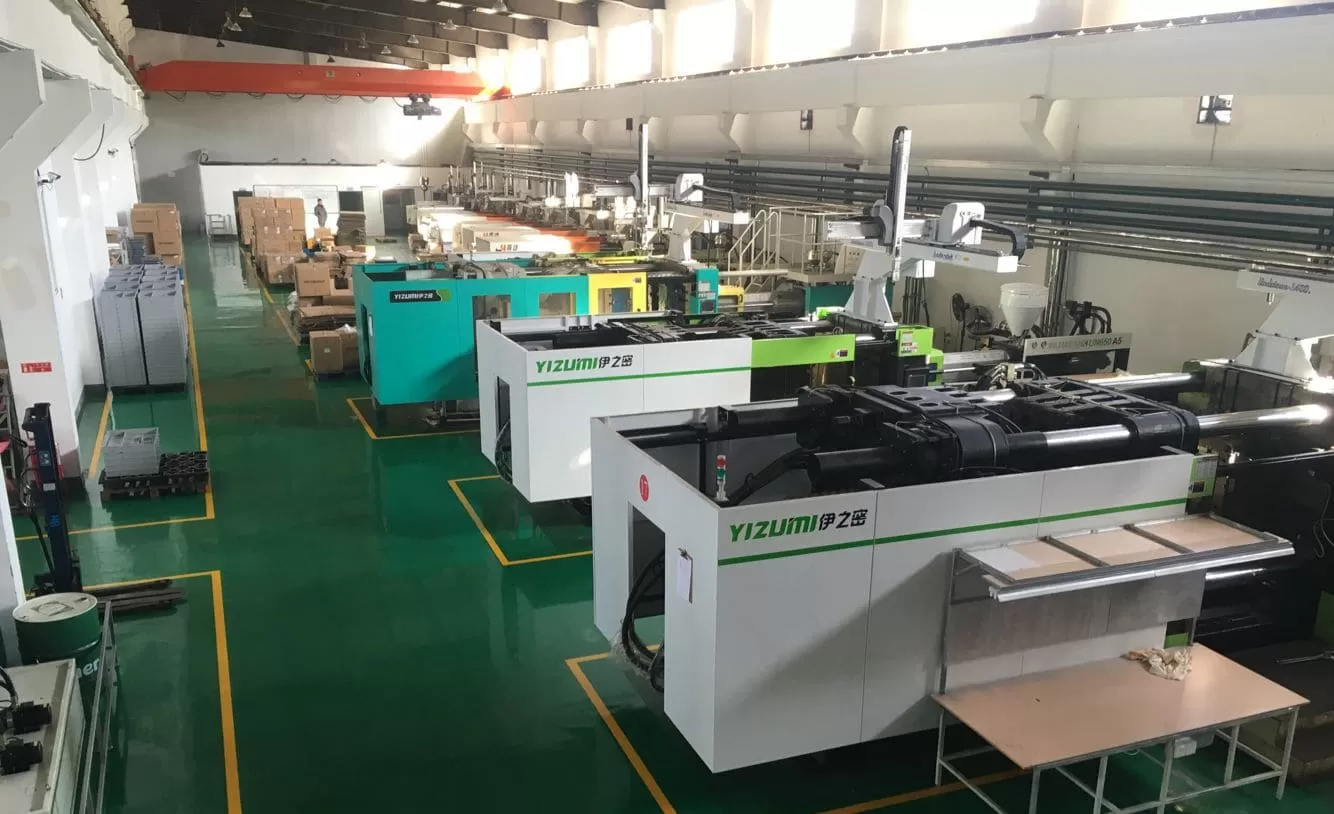
In our factory in Shanghai, ZetarMold runs 47 injection molding machines from 90T to 1850T with an in-house mold manufacturing facility and over 20 years of injection molding experience. Our engineers use T0/T1 trial data, short-shot samples, cushion trend records, and dimensional inspection to tune switchover position before production approval. For buyer RFQs, the switchover setting is documented as a process-control decision tied to resin viscosity, gate freeze, and repeatable part weight rather than treated as a generic machine parameter.
What is Injection Molding?
"A correctly tuned switchover position reduces flash, sink marks, and dimensional variation simultaneously."True
When filling transfers at the right point, packing pressure only needs to compensate for shrinkage — not finish filling, which prevents the overlapping defects that come from trying to use hold pressure to mask an early or late switchover.
"Switchover position only affects part weight, not cosmetic quality."False
An incorrect switchover position affects flash, sink marks, voids, weld lines, warpage, and dimensional accuracy — not just part weight.
- Switchover position should be tuned from fill evidence, not guessed from a default percentage of screw stroke; confirm short-shot samples, part weight stability, and pressure-transfer timing before locking the process window.
- A good setting balances material filling and packing pressure: switching too early can create short shots or sink, while switching too late can overpack the cavity, raise stress, and increase flash risk.
- Buyers should ask suppliers for repeatable inspection evidence, including part weight trend, dimensional report, cushion stability, and documented T0/T1 process parameters before accepting production readiness.
- For high-cavity or tight-tolerance molds, switchover optimization should be connected to mold-flow assumptions, gate freeze behavior, resin viscosity, and machine capability instead of being adjusted only after defects appear.
"Short-shot studies provide the most reliable evidence for setting switchover position."True
Progressive filling at 80%, 90%, 95%, 98% with part weight and defect recording at each step gives engineers a clear picture of where the optimal transfer point lies, rather than relying on default machine settings or guesswork.
"If a molded part looks acceptable once, the process is automatically production-ready."False
Production readiness requires repeatable cycles, documented inspection, stable material conditions, and clear acceptance criteria.
Injection molding is a manufacturing process that melts plastic resin and injects it into a mold cavity to form complex, precise parts at high volume. It is efficient for mass production, offering high precision, repeatability, and low cost per part. Common applications include automotive parts, medical devices, and consumer products. Key benefits include fast production cycles, material versatility, and minimal post-processing, making it the preferred method for producing plastic components across industries.
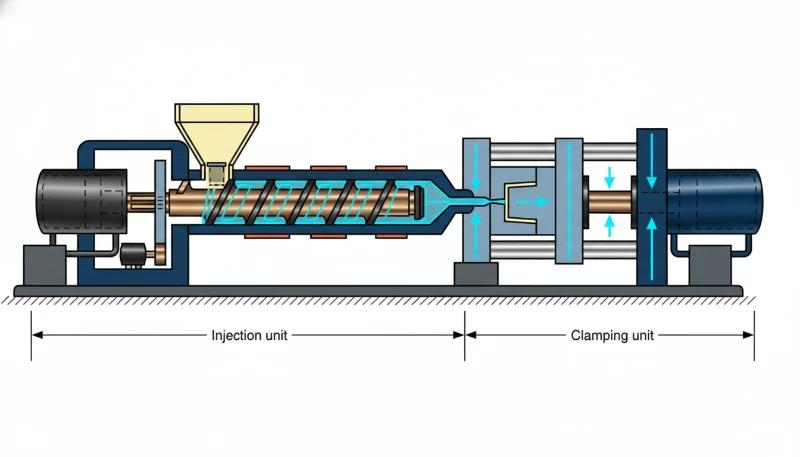
A complex manufacturing process called injection molding is used to make a variety of plastic products. To begin, molten plastic is injected into a mold cavity; it then cools and solidifies into the final shape. There are several key steps in this procedure:
Clamping: The two halves of the mold are closed and clamped together to withstand the injection pressure.
Injection: Molten plastic is injected into the mold cavity at high pressure.
Cooling: The plastic inside the mold cools and solidifies, forming the shape of the mold cavity.
Ejection: The mold opens, and the solidified part is ejected.
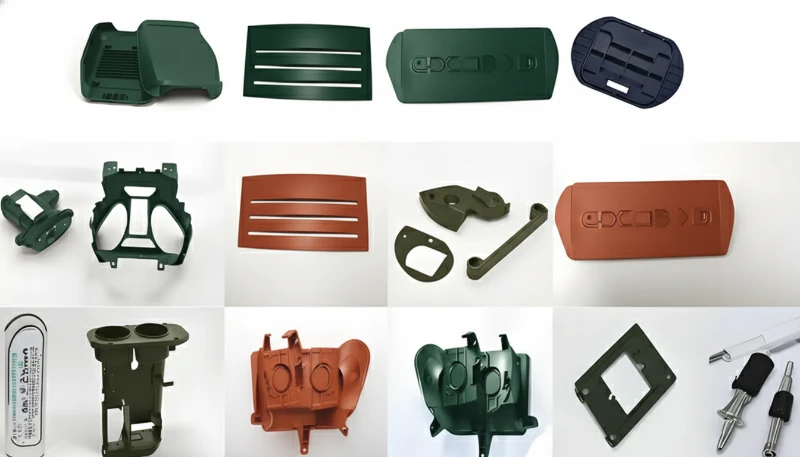
Precise control of each stage is crucial for producing high-quality parts. During the injection stage, one of the most critical parameters is the switchover position.
What is Switchover Position in Injection Molding?
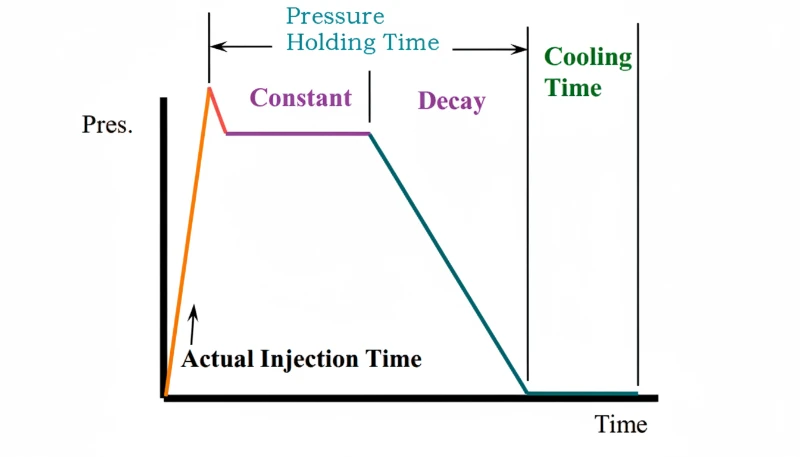
The switchover position is the point where injection pressure switches to holding pressure to stabilize the part and minimize defects. Proper adjustment of this parameter ensures the mold cavity is completely filled without overpacking, which directly affects part weight, dimensional accuracy, and surface finish.
In plastic injection molding, the switchover position is when the control system transitions from velocity control to pressure control( holding pressure). This shift is crucial because it decides how the molten plastic behaves as it fills mold cavities and packs them which directly affects both quality factors (like appearance) as well as whether each part will be same as all others made before or after it. There a few ways the molding machine can know when to make this switch. This can be done by screw position (most common), pressure limit, time, or cavity pressure.
The switchover position refers to a precise moment in the injection molding cycle when the process shifts gears from its initial phase (injection process) and moves into another phase called holding pressure. During the injection phase, molten plastic is injected into the mold cavity under high pressure. Once the cavity is filled, the process switches to the packing phase, where additional pressure is applied to ensure the material fully fills the mold, compensating for any shrinkage that may occur as the plastic cools.
What is the Importance of Switching Positions?
The switchover position is the primary control point that determines part quality, cycle efficiency, and cost. Setting it correctly prevents flash, short shots, and sink marks while keeping material usage and cycle time low.
Product Quality
For successful switchover between phases, make sure the mold cavity fills correctly (completely filled). Transition only when it’s ready for packing; otherwise you risk defects like voids, uneven wall thicknessor incomplete parts because material flow hasn’t finished. But don’t wait too long either—as pressure builds up there is a risk of cosmetic problems such as warping due to excessive flashing while still in mold.
Dimensional Stability
Effective management of the transfer position is key to preserving the molded parts\’ dimensional precision; a crucial factor to bear in mind when producing components that call for close tolerances.
Material Efficiency
Getting the switchover position right can cut down on waste material. If the plastic is injected and packed correctly there will be less surplus – so each cycle makes better use of resources and there is an overall efficiency saving.
Cycle Time
Shorter cycle times and increased productivity are two more pay-offs from getting the switchover right all the time. Fewer defects also mean quality control and sorting out mistakes take up less production effort-hours.
What are the Factors That Affect the Switching Position?
The switching position is primarily affected by factors such as material properties, temperature, pressure, and mechanical design. These elements determine how components transition from one state to another, influencing both speed and accuracy. Correctly managing these factors ensures optimal system performance and minimizes downtime.
Determining the optimal switchover position in injection molding involves considering several factors:
The flow characteristics of different plastic materials vary, which affects how the injection and packing phases go as well as how quickly the mold fills. If a material has high viscosity it might need a different switchover point than one with lower viscosity.
Part Geometry: An intricate design may require changing when you switch from filling to packing so that no areas wind up with sink marks or empty spaces (also known as voids).
Mold Design: The complexity and geometry of the mold also influence the switchover position. Intricate molds with complex features may need more precise control of the transition point to ensure complete filling and packing.
Machine specifications — pressure, speed, and temperature settings — all play a role in determining the best transition point between filling and packing. Tweaking these factors just right is essential if you want top-notch parts at the end of the run.
Process Conditions: Other factors needing consideration when deciding at what stage switching ought to happen include how hot both the melted material and mold itself are along with how fast injections are taking place.
How to Determine the Switching Position?
Short-shot studies are the most reliable method for determining the switching position in injection molding. By progressively filling the mold at increasing percentages and measuring part weight at each step, engineers identify the fill point where packing pressure should take over. Additional methods include mold flow simulation, cavity pressure sensors, and empirical process trials.
A set of trials is performed at various switch-over points and the ensuing part defects and quality metrics are analyzed. Though it takes time, this technique imparts practical knowledge from an actual production setting.
Data and principles from polymer science are used in this method to forecast the best switch-over point. Process control can be so fine-tuned with techniques like cavity pressure sensors and software simulations that they come close to exact prediction.
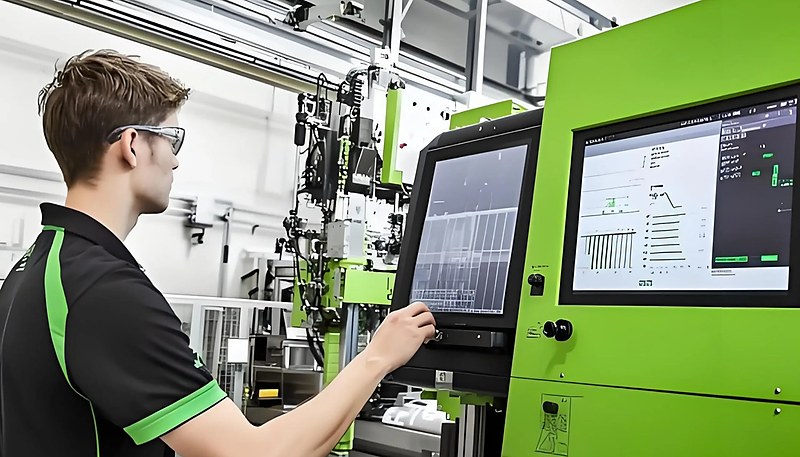
Today’s injection molders have advanced sensors and control systems fitted as standard. These continuously monitor variables such as flow rate, pressure and temperature in real time. The information can be used to alter (dynamically change) the switch-over point so as to achieve best results.
How to Optimize the Switching Position?
Optimizing the switchover position is best achieved through short-shot studies and cavity pressure data analysis. This systematic approach ensures consistent results, especially in high-precision applications where even small variations lead to rejected parts. Further steps include material characterization, mold flow analysis, and real-time process monitoring.
Optimizing the switchover position requires a systematic approach to balance various process parameters and achieve consistent, high-quality parts. Here are some steps to optimize the switchover position:
Understand the rheological properties of the plastic material, such as viscosity and flow behavior, to determine the initial switchover position.
Use computer programs to predict the best time to switch based on mold design and part shape.
Carry out a range of tests using various switch positions and examine defects in parts – for example, those that are too short, have flashes of material attached or sunken areas. During these trial runs, watch closely how different switch settings perform and be prepared to make changes on-the-spot. Also keep an eye on the overall quality of moulded items coming out checking specifically for problems such as inaccuracies in dimensions or other visible defects.
"Short-shot studies remain the gold standard for identifying the optimal switchover point."True
Progressive fill tests at 80%, 90%, 95%, and 98% provide clear evidence of where packing should begin, removing guesswork from process setup.
"Increasing hold pressure can compensate for an incorrect switchover position."False
Raising hold pressure to mask an early or late switchover creates a fragile process that breaks when viscosity or temperature drifts, leading to scrap spikes during normal production variation.
Use statistical techniques alongside tools like control charts so you can make sense out of all this information gathered during experiments then work what is best switchover setting from there.
Implement real-time monitoring systems to track process variables and dynamically adjust the switchover position during production.
Start by examining how your current injection molding works. You can do this systematically using sensors and monitoring equipment that track fill speed, pressure, and temperature over the entire cycle. Data on these variables will help you understand both material properties and how the mold functions – key factors for identifying an optimal switchover position.
Try Software SimulationInjection molding simulation software is a useful tool worth trying out when looking to optimize switchover points. Such programs enable users to see what might happen with different settings or materials; they also make it possible to predict behavior from molds under various conditions. This can save time and resources compared to a physical trial-and-error approach.
Consider using closed-loop control systems that automatically adjust the switchover position based on real-time data. These systems can enhance consistency and precision, ensuring optimal performance throughout the production process.
Work closely with your material suppliers to understand the specific properties of the plastics you are using. They may be able to provide recommendations for optimizing the switchover position based on their knowledge and experience.
What are the Case Studies?
Case studies are in-depth analyses of real-world examples that demonstrate how a particular solution or strategy was implemented. They typically highlight the problem, approach, results, and lessons learned. Commonly used in business, healthcare, and education, case studies serve as powerful tools for decision-making and knowledge sharing.
An automotive parts maker had trouble with accurately shaping and smoothing out complex plastic parts. But after examining how things worked during production changes – using computer-generated models of molten plastic flows plus some real-life tests – things got better. In fact, by working this way the company made big strides in improving overall product quality: less shrinkage and no warping meant fewer rejects when it came to meeting tough criteria for each part.
An organization producing medical instruments was having problems with defective plastic parts because the material was not filling them consistently. By using sensors to keep track of things as they happened and making sure the equipment changed position at just the right moment, the company found it could control how these parts were made. As a result, there were fewer faults per batch—and less waste overall. In fact, once production stabilized after this change, unit costs went down too.
Flow lines and warping were observed in housings from a consumer electronics company. By analyzing mold flow in detail and making adjustments to switchover position, these flaws were reduced significantly. An optimized switchover position enabled even filling and packing — so parts look good upon close inspection, resist damage better as well.
What are the Challenges of Optimizing Switching locations?
The main challenges are material batch variation, inconsistent mold temperatures, and sensor calibration drift. These variables interact in complex ways, making it difficult to find a single optimal setting that remains stable across production runs. Multi-cavity molds add further complexity because each cavity may fill at a slightly different rate, requiring separate switchover tuning or balanced runner systems.
While optimizing the switchover position offers many benefits, there are also challenges:
Because material properties, part geometry, and process conditions all interact with one another, working out exactly where the switchover point is can be difficult.
Testing things out and using trial and error takes a long time and it can also cost a lot of money.
If the material being processed alters because a new batch has been used or as environmental conditions change there are continuous adjustments which need to be made — this doesn’t happen by itself.
Although some injection moulding machines do have clever monitoring systems that allow for greater control, not all machinery does.
What are the Future Trends and Innovations?
Advancements in injection molding are ongoing. New technologies and methods are constantly being developed to improve both part quality and process control. When it comes to optimizing the switch-over point, there are several trends we can expect to see more of in coming years:
To have better control of the switch point, we need advanced sensors to watch cavity pressure, temperature, and flow rate in real time – and develop more sophisticated ones than are now available.
If injection molding machine could learn from experience, they might use it to predict switchover points more accurately. One way this could happen would be by employing artificial intelligence (AI) techniques along with historical data on how past jobs went—plus information on what’s happening right now.
Leveraging Industry 4.0 technologies to create interconnected and intelligent injection molding systems can automatically optimize the switchover position, improving overall manufacturing efficiency.
Tomorrow’s computers will let us know today what tomorrow brings. By making computer modeling programs better (and better still), engineers can simulate different conditions before starting manufacturing processes … therefore reducing the number tests needed later on down line just checking quality controls etcetera.
Using smart materials capable of feedback on their processing conditions can better control the injection molding process, including the switchover position.
What Practical Advice do Manufacturers Have?
The recommended approach is a short-shot study followed by gradual switchover-point adjustments while monitoring cavity pressure and part weight. Keep material drying consistent, calibrate sensors regularly, and document every parameter change so the process stays repeatable across shifts and machines.
For manufacturers looking to optimize the switchover position, here are some practical recommendations:
Make sure your team understands both the practical and theoretical aspects of injection molding – it can be really helpful when you’re trying to optimize things like switchover positions if they know why the process works as it does.
Consider investing in high-tech machinery for injection molding which comes with its own control systems and monitors that provide up-to-the-minute information; having access to data at all times will make adjusting switchover points much easier.
Maintain your molds and machines regularly to ensure optimal operation, which is crucial for consistent switchover positions.
It’s worth getting to know more about plastics from suppliers – such knowledge could enable better decisions around what switchover point is needed.
Record every single detail that goes along with how processes have gone; afterwards, study information for trends showing areas where improvements may still be made – including fine-tuning when machines switch over.
What Should Buyers Do Before Locking Switchover Position?
The essential step is requesting short-shot evidence, part-weight trends, and dimensional data before approving any locked switchover position. The goal is a verifiable, repeatable process window that holds tolerance across the full production run. Ask for a Cpk study on critical dimensions and a documented switchover recipe that can be reproduced on identical machines.
While optimizing the switchover position can be a challenge, it has the potential to greatly improve the efficiency and quality of your injection molding operations. By continuously innovating and taking a systematic approach to process control, you can achieve higher precision, reduce defects, and increase overall productivity. Whether you’re new to injection molding or looking to improve your current processes, taking the time to optimize your switchover position can provide significant benefits to your production operations. Start by conducting a thorough analysis, using simulation tools, and considering closed-loop control systems to ensure you achieve the best results.
See our injection molding for a comprehensive overview.
Need a competitive quote for your injection molding project? ZetarMold provides DFM feedback, process validation (including documented switchover parameters), and fast turnaround from our Shanghai factory with 47 presses from 90T to 1850T. Request a Free Quote →
What Questions Do Buyers Ask About Switchover Position?
Frequently Asked Questions
What is switchover position in injection molding?
Switchover position is the precise point in the injection molding cycle where the machine transitions from velocity-controlled filling to pressure-controlled packing. At this transfer point, the screw stops pushing material at a set speed and begins applying hold pressure to compensate for volumetric shrinkage as the plastic cools. Setting the correct switchover position — typically when the cavity is 95–99% full — prevents overpacking, flash, short shots, and dimensional variation, making it one of the most impactful process parameters for part quality and production consistency across high-volume runs.
How do engineers determine the correct switchover position?
Engineers determine the correct switchover position through short-shot studies combined with cavity pressure monitoring. The standard approach involves progressively filling the mold at 80%, 90%, 95%, and 98% of shot volume, recording part weight and visual quality at each step. The optimal switchover point is typically 95–99% fill, where enough unfilled volume remains for packing pressure to compensate for shrinkage without overpacking. Scientific molding methodology also uses Decoupled Molding techniques, where filling speed and packing pressure are separated into independent control variables. Mold flow simulation software can predict the initial switchover setting, but final validation always requires physical trials on the production machine with the actual resin and mold temperatures.
What happens if switchover happens too early?
If switchover happens too early, the cavity is underfilled when packing pressure begins, which can cause short shots, sink marks, weak weld lines, and dimensional inconsistency. The packing phase is forced to compensate for incomplete filling rather than just compensating for shrinkage, creating a process window that is fragile and difficult to repeat when material viscosity or mold temperature varies between production runs. Early switchover is especially risky for thin-wall parts, long flow paths, and multi-cavity tools where balanced filling is critical to part uniformity across all cavities.
What happens if switchover happens too late?
If switchover happens too late, the screw may continue filling after the cavity is already full, which can overpack the part. Typical symptoms include flash, high internal stress, difficult ejection, oversized dimensions, gate blush, or unnecessary clamp and injection pressure load. Late switchover can also make the process less forgiving when material viscosity changes between lots or drying conditions shift. The best setting avoids both underfilling and overpacking by separating the filling phase from controlled packing at a repeatable transfer point.
What should buyers ask suppliers about switchover validation?
Buyers should ask suppliers how the switchover position was selected and what evidence proves it is stable. Useful records include short-shot samples, final part weights, dimensional inspection reports, pressure curves, cushion readings, and T0/T1 process sheets. For critical parts, ask whether the setting was validated on the intended production press rather than only during a trial on a different machine. A capable supplier should explain the tradeoff between filling speed, transfer point, packing pressure, gate freeze, and final part quality.
How does cavity pressure sensing improve switchover accuracy?
Cavity pressure sensors measure actual pressure inside the mold cavity in real time rather than inferring fill state from screw position alone. When the pressure curve shows the melt front has reached the end of the cavity, the machine switches to packing. This direct measurement accounts for viscosity changes, mold temperature variation, and runner balance that screw-position switchover cannot detect. For multi-cavity tools, pressure sensing in representative cavities identifies fill imbalances that screw-position methods would miss entirely. The tradeoff is higher tooling cost and sensor maintenance, but for tight-tolerance or medical parts the consistency gain is well worth the investment.
Can incorrect switchover position damage the mold?
Yes. Late switchover that overpacks the cavity puts excessive mechanical stress on mold parting lines, ejector pins, and thin steel sections, accelerating wear over thousands of production cycles. Repeated flash from overpacking can damage parting line surfaces, requiring costly rework or polishing to restore the critical seal quality. Consistent correct switchover reduces flash-related damage and extends tool life considerably, which lowers total cost of ownership for high-volume production molds and significantly reduces unplanned maintenance downtime that disrupts customer delivery schedules.
switchover position: Switchover position refers to the transfer point from injection filling to packing or holding pressure during the injection molding cycle. ↩
injection molding: injection molding refers to is the production process that melts plastic, injects it into a mold cavity, cools the part, and repeats the cycle for stable volume manufacturing. ↩
part quality: Part quality refers to the repeatable dimensional, cosmetic, functional, and material performance that a validated injection molding process must deliver across production runs. ↩