For a comprehensive overview, see our Injection Mold Complete Guide.
- PA6 injection molding runs at 230–280°C melt temperature with a mold temperature of 60–100°C to control crystallinity.
- Pre-drying at 80°C for 4–6 hours is mandatory — residual moisture above 0.2% causes hydrolytic degradation and surface defects.
- PA6 shrinks 0.9–2.0%, requiring mold dimensions to account for anisotropic shrinkage, especially in glass-filled grades.
- Wall thickness of 1.5–3.0 mm balances structural strength with cycle time and sink-mark risk.
- PA6 is selected over PA66 for better impact toughness at low temperatures; PA66 is preferred when continuous-use temperature exceeds 110°C.
What Is PA6 Injection Molding?
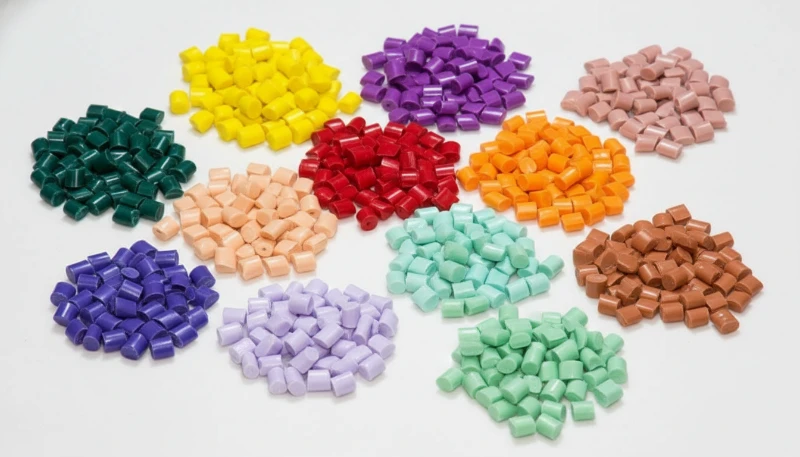
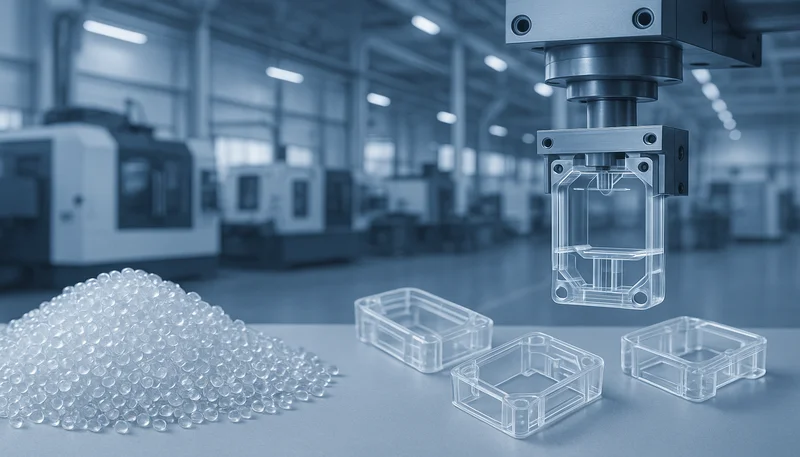
PA6 injection molding is the process of melting polyamide 6 pellets at 230–280°C, injecting the melt into a steel mold under 70–140 MPa cavity pressure, and cooling the part to a semi-crystalline solid with tensile strength of 70–85 MPa unfilled or 120–180 MPa in 30% glass-filled grades. It is one of the most widely specified engineering-resin processes in automotive, electrical, and industrial component manufacturing.
Walk into almost any automotive parts plant and you will find PA6 brackets, intake manifold runners, or gearshift housings coming off presses every 30–60 seconds. The material is chosen because it combines fatigue resistance, oil resistance, and moderate cost in a single resin — properties that are difficult to match with commodity plastics like polypropylene or ABS.

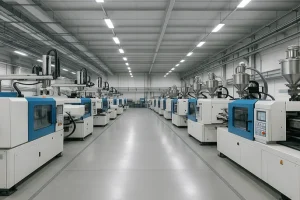
PA6 belongs to the polyamide family — the same nylon chemistry used in fibers and films — but when glass or mineral fillers are added it becomes a structural resin capable of replacing die-cast zinc or aluminum in load-bearing applications. ZetarMold’s 47-press facility has processed PA6 for clients in the automotive, power tool, and consumer goods sectors, typically achieving a first-pass qualification rate above 92%.
The polyamide 6 designation refers to the six carbon atoms in the caprolactam monomer ring. This relatively simple molecular structure gives PA6 its characteristic combination of toughness, moderate stiffness, and ease of processing. Compared with amorphous engineering resins such as ABS or polycarbonate, PA6 has a sharp melting point at 220–225°C that requires precise temperature control but also enables rapid solidification and short cycle times.
Global PA6 consumption exceeds 4 million tonnes per year — roughly 60% goes into fiber applications (carpet, rope, apparel) and 40% into injection-molded and extruded engineering components. In the injection molding segment, automotive parts account for approximately 35% of volume, followed by electrical and electronic housings, industrial machinery components, and consumer goods enclosures.
“PA6 injection molding requires a barrel temperature profile of 230–280°C, with the highest temperature at the front zone.”True
The barrel temperature profile for PA6 typically runs rear 230–240°C, middle 240–260°C, front 260–275°C, and nozzle 270–280°C. This rising profile ensures progressive melting and homogeneous melt temperature at the gate. Deviation — particularly a flat or reverse profile — causes unmelt streaks or excessive degradation at the nozzle tip, both of which produce surface defects and reduced mechanical properties.
“PA6 can be processed without pre-drying if the storage conditions are clean and dry.”False
Even PA6 stored in sealed bags at 23°C/50% RH can reach 0.15–0.25% moisture in 24 hours after opening. The safe processing limit is 0.2% maximum — surface contamination is not the issue, it is bulk moisture absorbed into the polyamide backbone. Without pre-drying at 80°C for 4–6 hours, absorbed water undergoes hydrolytic chain scission during plastication, irreversibly reducing molecular weight and causing splay marks, blistering, and reduced impact strength.
How Does PA6 Injection Molding Work? Step by Step
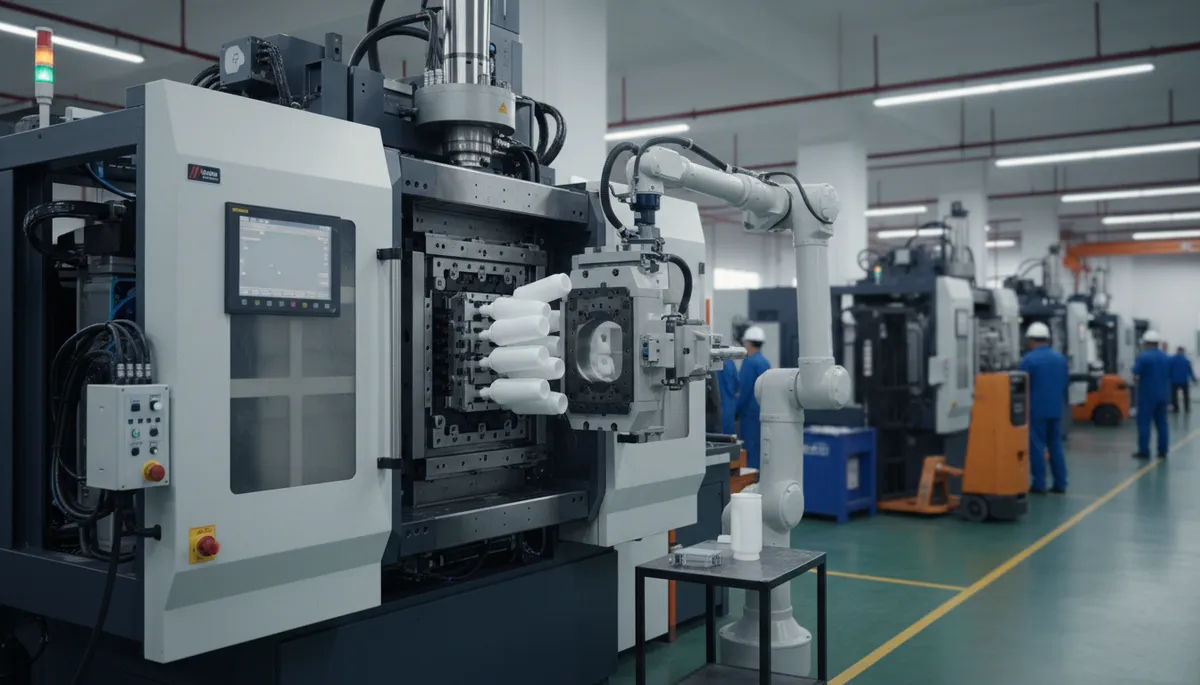
PA6 injection molding follows the standard injection molding process1 — plasticating, injection, packing, cooling, and ejection — but with three PA6-specific requirements that must be executed correctly or the part will fail inspection.
Step 1 — Pre-drying: PA6 is hygroscopic and absorbs moisture up to 3% by weight in ambient air. The pellets must be dried at 80°C for 4–6 hours (or 4–8 hours in a desiccant hopper dryer) to bring moisture below 0.2%. Skipping this step causes hydrolysis at the barrel, producing black specks, silver streaks, and molecular-weight reduction that weakens the final part by 20–30%.
Step 2 — Barrel temperature: The recommended profile is 230–280°C from feed zone to nozzle, with the rear zone 10–20°C cooler than the front. Back pressure of 5–15 MPa ensures a uniform melt without excessive shear heat.
Step 3 — Injection and packing: Injection speed should be moderate-to-fast (50–100 mm/s screw speed equivalent) because PA6 has low melt viscosity — it fills thin walls easily but also flashes easily if clamping force is insufficient. Pack pressure at 50–80% of injection pressure for 2–5 seconds compensates for the 0.9–2.0% volumetric shrinkage as the material crystallizes.
Step 4 — Mold temperature: PA6 mold temperature of 60–100°C controls the degree of crystallinity. Higher mold temperatures (80–100°C) produce more crystalline parts with better stiffness and chemical resistance, shorter warpage tendency after ejection, and lower residual stress — but longer cycle times. Lower temperatures (40–60°C) reduce cycle time but risk higher post-mold shrinkage and moisture absorption.
Step 5 — Cooling and ejection: Cooling time is typically 15–30 seconds for wall thicknesses of 2–3 mm. PA6 can be ejected at relatively high part temperatures (80–100°C surface) without distortion if draft angles of 0.5–1.5° are applied on sidewalls. Water channels at 10–12 mm diameter, spaced 2× diameter from the cavity wall, provide sufficient cooling uniformity.
Gate Freeze-Off and Screw Selection
“PA6’s mold temperature of 60–100°C directly controls degree of crystallinity and shrinkage.”True
Higher mold temperatures give PA6 chains more time to align into crystalline structures before solidification, increasing crystallinity from roughly 35% (at 60°C) to 45–50% (at 100°C). Higher crystallinity increases stiffness and fatigue resistance but also raises shrinkage from 0.9% to 1.8–2.0%. This trade-off must be evaluated during DFM3 — tight-tolerance parts may require lower mold temperatures and post-mold annealing.
“Faster injection speed always reduces sink marks and short shots in PA6 parts.”False
Fast injection reduces freeze-off risk in thin sections but introduces other problems for PA6: jetting in cold runners, gate blush at high-gloss surfaces, and shear-induced degradation of glass fibers in GF grades. Optimal injection speed is moderate-to-fast for most PA6 geometries — the precise setting depends on wall thickness, gate diameter, and mold temperature, and requires machine trial rather than a single universal rule.
One detail that separates experienced PA6 processors from newcomers: cycle time optimization is not just about reducing cooling time. The gate freeze-off time — the point at which packing pressure can be released without backflow — is equally critical. For PA6, this is typically determined by weighing sequential shots with progressive pack times; when the shot weight plateaus, the gate is sealed. Cutting pack time short results in sink marks and dimensional variation even if cooling looks fine.
Screw design also matters. PA6’s low melt viscosity means a general-purpose screw with a compression ratio of 2.5–3.5:1 works well for unfilled grades. For GF30 and above, a lower-shear screw (2.0–3.0:1) with a shorter metering section reduces fiber breakage during plastication. Broken fibers are shorter fibers — and shorter fibers mean lower reinforcement efficiency, weaker parts, and failed structural qualification tests.
“PA6 must be pre-dried at 80°C for at least 4 hours before injection molding.”True
PA6 absorbs moisture up to 3% in humid conditions. Moisture above 0.2% causes hydrolytic degradation in the barrel at 230–280°C, producing silver streaks, black specks, and a measurable drop in impact strength. All major resin suppliers (BASF, DSM, Lanxess) specify this drying protocol in their processing datasheets.
“Higher mold temperature always increases cycle time without other benefits.”False
Higher mold temperature (80–100°C) in PA6 molding promotes crystallinity, reducing post-mold warpage and improving dimensional stability. The marginal increase in cycle time (5–10 seconds for a 3 mm wall) is offset by fewer rejected parts and less post-process conditioning. The net effect on total throughput cost can be neutral or positive.
PA6 Material Properties: Why Engineers Specify It
PA6 unfilled offers tensile strength of 70–85 MPa, flexural modulus of 2.5–3.0 GPa, and notched Izod impact of 50–80 J/m at room temperature. These values position it above commodity resins but below engineering resins like PEEK or PPS, at a cost approximately 3–5× lower.
| Property | PA6 (unfilled) | PA6-GF30 | PA66 (unfilled) | ABS |
|---|---|---|---|---|
| Tensile Strength (MPa) | 70–85 | 120–180 | 75–90 | 35–50 |
| Flexural Modulus (GPa) | 2.5–3.0 | 7.0–9.5 | 2.8–3.5 | 2.1–2.8 |
| Melting Point (°C) | 220–225 | 220–225 | 255–265 | N/A (amorphous) |
| Water Absorption (%, 24h) | 1.3–1.8 | 0.8–1.1 | 1.1–1.5 | 0.2–0.4 |
| Continuous Use Temp (°C) | 90–110 | 120–140 | 120–130 | 60–80 |
| Relative Material Cost | Medium | Medium-High | Medium-High | Low |
The hygroscopic nature of PA6 means mechanical properties vary with moisture content. Dry-as-molded (DAM) values from the table above represent the lower bound for stiffness; conditioned specimens (50% relative humidity equilibrium) show 30–40% lower modulus but 50–80% higher impact energy. Engineers designing snap-fits or clips in PA6 should use conditioned values — the part will absorb moisture in service and become tougher, not brittle.
Chemical resistance is another key driver. PA6 resists oils, greases, fuels, and most dilute acids, making it suitable for underhood automotive components and fluid-handling parts. It degrades in concentrated mineral acids and oxidizing environments, and it swells in certain alcohols — verify compatibility with the operating fluid before specifying.
“PA6’s HDT under 1.8 MPa load is 55–65°C for unfilled grades, rising to 200°C+ with GF30 reinforcement.”True
Heat deflection temperature (HDT) measures the temperature at which a standard specimen deflects 0.25 mm under a 1.8 MPa three-point bending load. Glass-fiber reinforcement (GF30) dramatically raises the crystalline network rigidity — the fiber-matrix interface resists creep deformation up to 200°C, expanding PA6’s viable application range to under-hood automotive and industrial motor housing applications.
“PA6 can replace PEEK in continuous high-temperature applications above 180°C.”False
Unfilled PA6 loses structural integrity above 100°C service temperature, and even GF30 PA6 reaches its practical limit at 150–160°C. PEEK maintains continuous service to 240°C with far superior chemical resistance to concentrated acids. For applications requiring sustained temperatures above 180°C, engineers must specify PEEK, PPS, or PEI — PA6 substitution here creates a reliability risk, not a cost saving.
Thermal and Electrical Properties
Thermal performance should be evaluated using heat deflection temperature (HDT) rather than melting point for part design. PA6 unfilled has an HDT of 55–65°C at 1.82 MPa load — well below the 220°C melting point. PA6-GF30 raises HDT to 200–210°C at 1.82 MPa, enabling underhood and appliance applications that unfilled PA6 cannot serve. If the application involves intermittent contact with surfaces above 100°C, validate with a glass-filled grade and a proper thermal soak test.
Electrical properties make PA6 useful in connector and housing applications. Unfilled PA6 has a dielectric strength of 20–25 kV/mm and volume resistivity of 10¹²–10¹³ Ω·cm. For EMI shielding applications, conductive-carbon or stainless-steel-fiber filled PA6 grades provide surface resistivity down to 10²–10⁴ Ω/sq, enabling injection-molded enclosures to replace metal shielding cans at significant weight and cost savings.

Glass-fiber reinforcement (GF15, GF30, GF50) dramatically increases stiffness and reduces shrinkage anisotropy. A 30% glass-filled grade (PA6-GF30) achieves tensile strength of 140–180 MPa and flexural modulus of 7–9 GPa, approaching the performance of die-cast aluminum at 40–60% lower part weight. The trade-off: glass fibers orient along flow direction during filling, creating anisotropic shrinkage (0.2–0.5% in-flow vs. 0.8–1.2% cross-flow) that must be accounted for in mold design.
“PA6-GF30 can replace die-cast aluminum in many structural brackets at lower part weight.”True
PA6 reinforced with 30% glass fiber achieves tensile strength of 140–180 MPa and flexural modulus of 7–9 GPa. Aluminum die castings typically offer 250–310 MPa tensile and 70 GPa modulus, but at 2.7 g/cm³ density versus 1.35 g/cm³ for PA6-GF30. In bending-dominated load cases such as mounting brackets, the specific stiffness of PA6-GF30 is competitive, and complex shapes that require multiple machined features in metal can be molded in one shot.
“PA6 and PA66 are interchangeable in injection molding — either grade can be used in the same mold.”False
PA6 and PA66 have different melting points (220–225°C vs. 255–265°C) and different processing temperatures (230–280°C vs. 270–300°C). Using PA6 in a mold designed for PA66 will cause dimensional differences due to the 0.3–0.5% shrinkage discrepancy. Mold steel must also be appropriate for the higher PA66 processing temperatures if both grades are intended for the same tool.
PA6 Injection Molding Parameters: The Numbers That Matter
Getting PA6 parameters right on the first trial reduces sampling iterations by 2–3 rounds. The table below summarizes recommended starting-point settings for unfilled and GF30 grades; adjust based on part geometry and resin supplier datasheet. Every PA6 resin supplier provides a grade-specific processing window — always consult the technical datasheet for the exact grade you are using, as additive packages and molecular weight variations between suppliers can shift the ideal barrel temperature by 10–20°C.
| Parameter | PA6 Unfilled | PA6-GF30 | Notes |
|---|---|---|---|
| Melt Temperature (°C) | 230–260 | 250–280 | Front zone hottest; verify with melt probe |
| Mold Temperature (°C) | 60–80 | 80–100 | Higher = more crystallinity, less warp |
| Injection Speed (mm/s) | 50–100 | 40–80 | Reduce for thin walls to avoid flash |
| Pack Pressure (% of inj.) | 50–70% | 60–80% | PA6 shrinks 0.9–2.0%; packing is critical |
| Pack Time (s) | 2–5 | 3–6 | Gate freeze-off time determines cutoff |
| Cooling Time (s, 3mm wall) | 15–25 | 20–30 | Higher mold temp = longer cooling |
| Back Pressure (MPa) | 5–10 | 5–15 | Avoid excessive shear in glass grades |
| Drying Temp / Time | 80°C / 4–6h | 80°C / 4–6h | Desiccant dryer preferred |
| Screw Compression Ratio | 2.5–3.5:1 | 2.0–3.0:1 | Lower ratio protects glass fibers |
Gate design is critical for PA6. Submarine gates and pin gates work well for unfilled grades but can cause excessive glass-fiber breakage in GF30 grades, reducing reinforcement effectiveness by 10–20%. Tab gates or edge gates with a minimum 1.0 mm land length are preferred for filled PA6. Avoid hot-tip hot runners for high-glass-content grades unless the runner nozzle diameter exceeds 2.5 mm.
Ejection: PA6 sticks less than many resins because of its crystalline surface structure, but hot mold temperatures (80–100°C) require longer cooling before ejection. Ejector pin diameter of 4–6 mm and balanced pin layout prevent deformation. Core-through ejection is preferred over blade ejection for thin-ribbed components to avoid stress whitening.
Venting is often under-appreciated in PA6 tooling. The low melt viscosity of PA6 means it fills fast — trapped air must escape quickly or it burns (a visible scorch mark at the last fill point). Vent depth of 0.02–0.03 mm and vent width of 3–5 mm placed at weld lines and the end-of-fill zone prevent gas trapping. For complex geometry, parting-line vents alone are often insufficient; consider vent pins at trapped gas locations.
Common Defects in PA6 Injection Molding and How to Fix Them
PA6’s low viscosity, high crystallinity, and hygroscopicity each contribute to a distinct defect signature. Understanding cause-and-remedy relationships prevents misdiagnosis on the floor and avoids the common mistake of changing multiple parameters simultaneously — which makes it impossible to identify the actual root cause. The table below organizes the most common PA6 molding defects by primary cause so you can systematically eliminate variables.
| Defect | Primary Cause | Remedy |
|---|---|---|
| Silver streaks / splay | Moisture in pellets (>0.2%) | Re-dry at 80°C for 6h; check dryer dew point |
| Black specks / degradation | Overheating or excessive residence time | Reduce barrel temp or increase shot size |
| Short shot | Low injection speed or cold mold | Increase speed; raise mold temp to 80°C |
| Flash | Excessive pack pressure or worn parting line | Reduce pack pressure; re-clamp mold |
| Warpage | Asymmetric cooling or thick/thin walls | Balance cooling channels; re-design wall section |
| Sink marks | Insufficient packing or thick ribs | Increase pack pressure; reduce rib thickness to 60% of nominal wall |
| Weld lines (weak) | Cold flow fronts meeting | Raise melt and mold temp; move gate |
| Delamination | Contamination or incompatible regrind | Purge barrel; use only approved regrind ratio (≤20%) |
| Post-mold warpage | Insufficient crystallization | Raise mold temp to 80–100°C; condition parts at 80°C/2h |
The most common field failure in PA6 parts is not the defects above — it is post-mold moisture conditioning that was never done. PA6 parts as-molded are at their stiffest and most brittle state. If the end application sees moisture (automotive engine bay condensation, outdoor humidity), the parts will absorb 2–3% moisture over weeks to months, dimensions will shift by 0.15–0.3%, and impact toughness will double. Designing for this transition prevents warranty returns.
At ZetarMold, we run a standard 24-hour moisture conditioning protocol on PA6 parts for automotive clients before shipping CMM reports. This prevents the frustrating situation where a part passes inspection on the day of molding but fails assembly three weeks later after moisture uptake shifts a critical boss diameter.
PA6 vs PA66: When to Choose Which
PA6 and PA66 share the same base chemistry but differ in melting point, cost, and processing behavior in ways that matter significantly for tooling design, machine selection, and long-term part performance.
“PA6 outperforms PA66 in low-temperature toughness for impact-sensitive applications.”True
PA6’s lower crystallinity and longer amide-group spacing reduce glass-transition embrittlement. Notched Charpy impact values at −30°C show PA6 retaining 15–25 kJ/m² versus PA66’s 8–14 kJ/m². This difference makes PA6 the preferred choice for cable management clips, snap-fit connectors, and fluid-handling components operating in cold climates.
“PA66 is always the better choice for structural automotive parts.”False
PA66’s higher melting point and lower moisture absorption suit applications above 130°C and in humidity-sensitive environments — but this advantage disappears below 100°C service temperatures. For interior trim clips, door handles, and under-hood brackets operating at moderate temperatures, PA6’s superior impact toughness and lower material cost (typically 15–25% cheaper per kg) make it the preferred specification.
Choose PA6 when: (1) the part sees impact loads at low temperatures — PA6’s toughness advantage over PA66 widens below 0°C; (2) processability is critical in a low-tonnage press — PA6’s lower melt temperature allows smaller machines; (3) cost pressure is significant — PA6 pellets are 10–15% cheaper than PA66 globally. Choose PA66 when: (1) continuous-use temperature exceeds 110°C (PA66 HDT under load is 200–210°C versus 170–185°C for PA6); (2) the part contacts hot engine fluids above 130°C; (3) dimensional stability in high-humidity environments is paramount — PA66 absorbs slightly less moisture.
For applications that genuinely need both low-temperature toughness and high-temperature resistance — such as underhood electrical connectors — consider PA612 or PPA (polyphthalamide), which offer intermediate performance at higher cost. ZetarMold has processed all three materials on the same press platform, allowing cost-performance trade-off trials during prototype sampling.
Design Guidelines for PA6 Injection Molded Parts
Correct part geometry eliminates the majority of PA6 molding defects before any material or parameter adjustment is needed. The following guidelines apply to unfilled and glass-filled PA6.
| Feature | Recommendation | Rationale |
|---|---|---|
| Nominal wall thickness | 1.5–3.0 mm | Thinner walls increase shrinkage variation; thicker walls increase cycle time and sink risk |
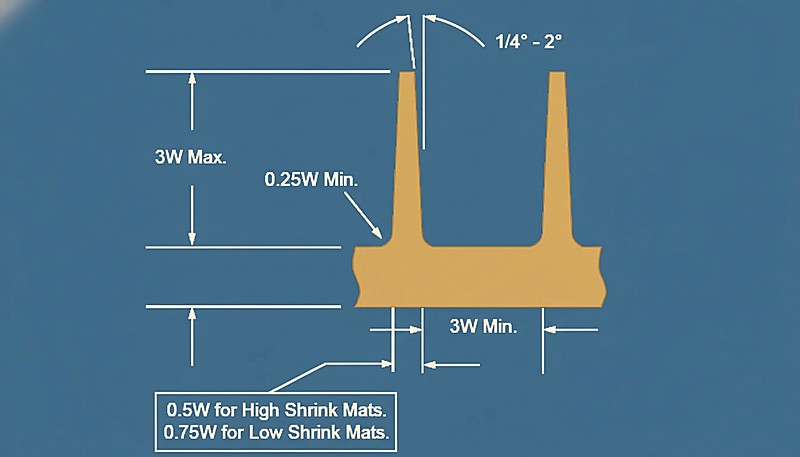
| Rib thickness | ≤60% of adjacent wall | Prevents sink marks on opposite face |
| Rib height | ≤3× nominal wall | Taller ribs fill poorly and stick during ejection |
| Draft angle (unfilled) | 0.5–1.0° | PA6 crystalline surface reduces sticking vs. amorphous resins |
| Draft angle (GF30) | 1.0–2.0° | Glass fibers abrade tool steel; more draft reduces wear |
| Boss outer diameter | 2× inner diameter | Supports wall integrity under screw-boss stress |
| Gate size (minimum) | 0.8 mm for unfilled; 1.2 mm for GF30 | Prevents premature gate freeze-off; protects fibers |
| Radii (internal corners) | ≥0.5 mm | Eliminates stress concentrations at fatigue-critical locations |
| Weld line location | Away from high-stress areas | PA6 weld lines are 60–80% of base tensile strength |
For tight-tolerance features (±0.1 mm or tighter), always run a mold flow analysis2 before cutting steel. PA6’s anisotropic shrinkage in glass-filled grades means that a nominally circular boss can emerge as an oval if the flow direction is not controlled during filling. Simulation predicts this in hours; steel rework costs days and thousands of dollars.
ZetarMold includes a standard DFM review with every new PA6 project quotation. Our engineers check wall uniformity, rib proportions, gate location, and weld line position before the customer commits to tooling. In 2025, DFM interventions at the quotation stage prevented an average of 1.8 rounds of steel rework per new mold — translating to 2–4 weeks off the typical 6–8-week T1 timeline.
Why Choose ZetarMold for PA6 Injection Molding?
ZetarMold has processed PA6 and glass-filled PA6 grades across 47 injection presses ranging from 50 to 1,600 tonnes. Our team of 20+ DFM engineers supports every project from concept geometry review through T1 sampling and production ramp. Key capabilities for PA6 projects include:
Precision tooling in P20, H13, and 718H steels — all appropriate for PA6’s moderate processing temperatures and abrasive glass-filled grades. Hot runner systems with valve gates for GF30 and GF50 grades, minimizing gate vestige and fiber breakage. In-house CMM inspection to ±0.01 mm tolerance verification on critical features. ISO 9001 and IATF 16949 certification for automotive supply chain requirements.
“ZetarMold’s 92% first-pass rate reduces tooling iterations and cuts project lead times.”True
First-pass rate measures how often a new mold produces acceptable parts without rework. ZetarMold’s 92% rate means the vast majority of tools pass dimensional and visual inspection at first trial, reducing the average tooling-to-production cycle by 2–4 weeks compared to suppliers requiring multiple iteration rounds.
“Overseas PA6 sourcing always costs more than domestic manufacturing.”False
Total landed cost includes tooling amortization, material, labor, logistics, and quality overhead. For medium-to-high volume PA6 parts (10,000+ units), Chinese precision molders with ISO-certified quality systems — including DFM review, in-process SPC, and OQC inspection — typically deliver lower total cost despite higher freight, because lower labor and tooling costs outweigh shipping expenses.
For clients outside China — whether in the US, Europe, or Asia — our 92% first-pass qualification rate and 15-day average T1 sample lead time reduce the risk of long-distance tooling projects. Every PA6 mold ships with a full process parameter sheet, validated at production conditions, so your local molder can replicate results on arrival.
Request a free DFM analysis and quote — upload your CAD file and receive a detailed feedback report within 24 hours. ZetarMold’s PA6 experience spans automotive brackets, power tool housings, electrical connector bodies, and industrial fluid components. We know where PA6 projects go wrong and how to design them right from the start.
Frequently Asked Questions About PA6 Injection Molding?
What is the difference between PA6 and Nylon 6?
PA6 and Nylon 6 refer to the same material — polyamide 6, synthesized from ring-opening polymerization of caprolactam. PA6 is the IUPAC-based designation used in engineering datasheets and international standards, while Nylon 6 is the trade name popularized by DuPont and widely used in commercial contexts. Both terms appear in injection molding specifications and are fully interchangeable. The melting point is 220–225°C, and the material is available in unfilled, glass-filled (GF15, GF30, GF50), mineral-filled, impact-modified, and flame-retardant grades from major suppliers such as BASF Ultramid, DSM Akulon, and Lanxess Durethan.
How long does PA6 need to be dried before injection molding?
PA6 requires drying at 80°C for 4–6 hours in a desiccant hopper dryer to reduce moisture content below 0.2% by weight before injection molding. In a standard hot-air circulation oven without desiccant, extend drying time to 8–12 hours because ambient humidity will partially re-absorb into the pellets. Moisture above 0.2% causes hydrolytic degradation in the barrel at processing temperatures of 230–280°C, producing silver streaks, black specks, splay marks, and a measurable 20–30% reduction in impact strength. For high-cosmetic or structural parts, always verify moisture content with a Karl Fischer titrator or loss-on-drying moisture analyzer before beginning production.
What is the typical shrinkage rate for PA6?
Unfilled PA6 shrinks 0.9–2.0% isotropically, with variation depending on wall thickness, mold temperature, and packing pressure. Thicker walls and higher mold temperatures increase crystallinity and shrinkage; higher packing pressures reduce it. PA6-GF30 shrinks 0.2–0.5% in the flow direction and 0.8–1.2% transverse to flow, creating anisotropic dimensional variation that must be accounted for in mold cavity dimensions. Higher mold temperatures (80–100°C) promote more complete crystallization during molding, which stabilizes the final shrinkage value and reduces post-mold dimensional drift during the first weeks of service when moisture absorption occurs.
Can PA6 be used in food-contact applications?
Yes, PA6 is used in food-contact applications when the correct grade is specified. PA6 grades with FDA compliance (21 CFR 177.1500 for repeated-use articles) or EU 10/2011 food contact material regulation compliance are available from major suppliers including BASF Ultramid, DSM Akulon, and Lanxess Durethan. Not all commercial PA6 grades are food-grade — the base resin, colorant, and additive package (lubricants, stabilizers) must all meet food safety regulations independently. Certification documents (migration test results, compliance declarations) must be obtained from the resin supplier and retained as part of the product technical file. ZetarMold can supply parts in validated food-grade PA6 with full material certification.
How does moisture affect PA6 parts after molding?
PA6 absorbs 2–3% moisture by weight at 50% relative humidity equilibrium over weeks to months in service. This moisture uptake shifts dimensions by 0.15–0.3% through expansion, reduces tensile modulus by 30–40%, and increases impact toughness by 50–80% as the material plasticizes. For press-fit assemblies, precision connectors, or any application with tight dimensional tolerances, always design to conditioned dimensions rather than dry-as-molded (DAM) values. Equilibrium is reached in 2–6 weeks for typical wall thicknesses; accelerated conditioning at 80°C in a humid environment reduces this to 2–4 hours for validation testing. Failure to account for moisture conditioning is the leading cause of PA6 field assembly failures.
What mold steel is recommended for PA6 injection molding?
For unfilled PA6 and low-glass grades (GF10 and below), P20 pre-hardened steel (HRC 28–34) is the standard choice — it machines efficiently, polishes well, and provides adequate service life for medium production volumes up to 500,000 shots. For glass-filled grades (GF15 and above), use H13 tool steel hardened to HRC 48–52, or 420 stainless steel for corrosion-sensitive applications with glass and mineral fillers. PA6-GF50 can reduce cavity surface life by 50–70% compared to unfilled grades in P20 steel due to the abrasive action of glass fibers at the gate and fill zone. Nitriding or PVD coating of cavity surfaces further extends tool life in high-fiber-content applications.
What is the minimum wall thickness for PA6 injection molded parts?
The practical minimum wall thickness for PA6 injection molded parts is 0.8–1.0 mm for short flow lengths up to 50 mm from the gate. For longer flow paths of 100–150 mm, 1.2–1.5 mm is more reliable to avoid short shots and ensure consistent packing. Walls below 0.8 mm require very high injection speeds and precisely balanced cooling, significantly increasing the risk of short shots, warpage, and cosmetic defects. The recommended nominal wall thickness for structural parts is 1.5–3.0 mm, which provides the best balance of fill reliability, mechanical performance, cycle time, and dimensional stability. For glass-filled grades, use the upper end of this range to protect fiber length.

-
injection molding process: The injection molding process is a manufacturing method in which molten thermoplastic is injected under pressure into a closed mold cavity, where it cools and solidifies into the desired part geometry. ↩
-
mold flow analysis: Mold flow analysis refers to computer simulation of the injection molding filling, packing, and cooling stages used to predict defects such as sink marks, warpage, and weld lines before tooling is cut. ↩
-
DFM: DFM (Design for Manufacturability) is an engineering discipline that reviews part geometry early in development to minimize tooling cost, cycle time, and defect risk in injection molding. ↩