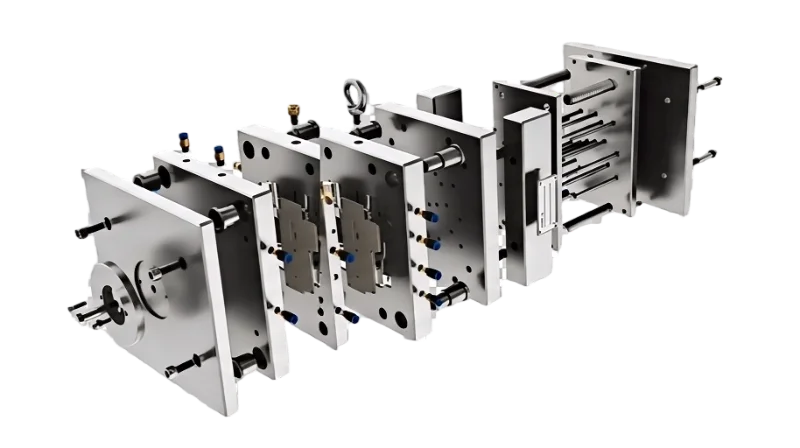
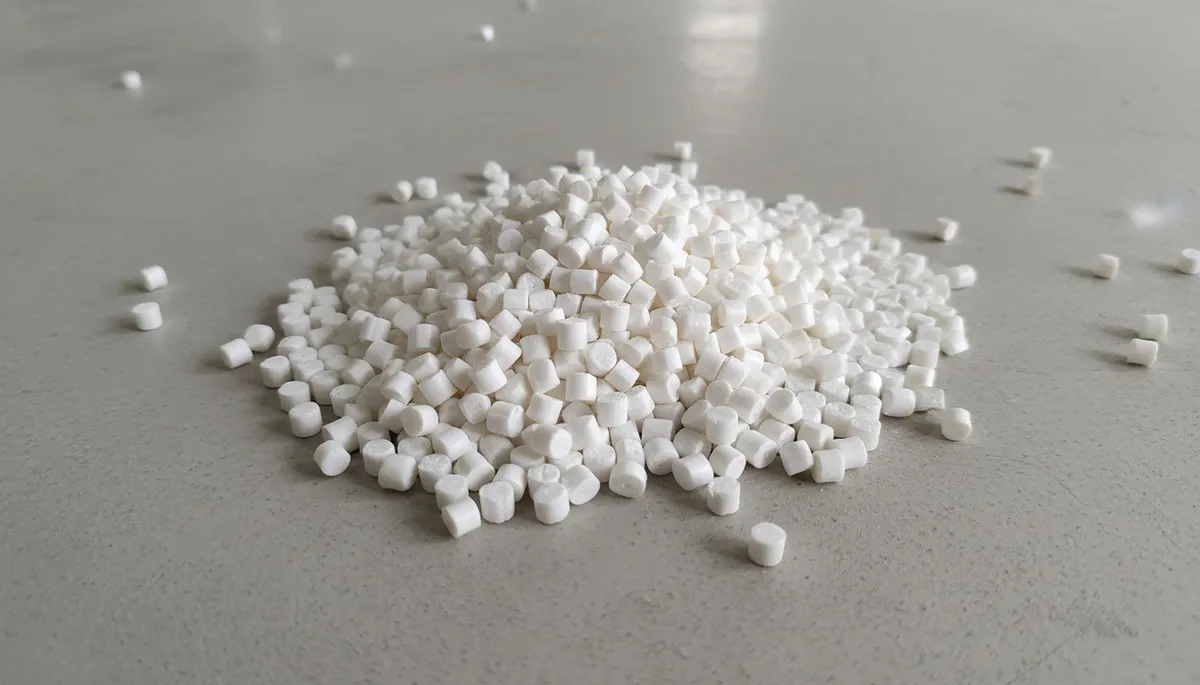
Multi-cavity and single-cavity injection molds are two fundamental mold strategies in plastic manufacturing, each offering distinct advantages depending on the production scale, part complexity, and project budget. Choosing the right cavity configuration directly impacts tooling cost, unit economics, lead time, and part quality. In this guide, we break down the structural differences, cost tradeoffs, quality implications, and real-world application scenarios so you can make an informed decision for your next molding project.
- Multi-cavity molds lower unit cost when annual volume is high enough to justify higher tooling complexity.
- Single-cavity molds reduce upfront tooling risk for prototypes, complex parts, and uncertain demand.
- The right cavity strategy depends on annual volume, tolerance risk, resin behavior, cycle time, and inspection workload.
- Ask suppliers to show cavity balance, runner layout, sampling data, and maintenance assumptions before approving the mold.
Understanding when to use each mold type is essential for optimizing production and costs. Dive deeper into the benefits of multi-cavity and single-cavity molds for various manufacturing needs.
“Multi-cavity molds reduce cycle times and costs.”True
By producing multiple parts per cycle, multi-cavity molds increase production efficiency, reducing unit costs.
“Single-cavity molds are always more cost-effective than multi-cavity molds.”False
While single-cavity molds are cheaper for small runs, multi-cavity molds become more cost-effective as production volume increases.
What is the Difference Between a Multi-Cavity Injection Mold And a Single-Cavity Injection Mold?
The main difference is output per cycle: a single-cavity mold makes one part per shot, a multi-cavity mold makes two or more. Single-cavity tooling lowers upfront risk; multi-cavity tooling cuts unit cost when volume justifies the extra balance and maintenance work.
From a buyer perspective, the cavity decision should be tied to demand forecast, part tolerance, resin stability, quality risk, and launch budget. A single-cavity mold can reduce early validation risk, while a balanced multi-cavity mold can reduce unit cost once the process window is proven and production volume is stable.
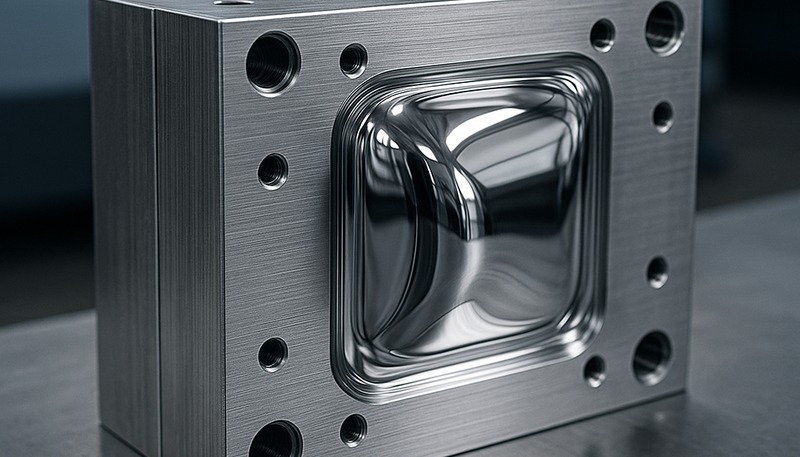
Single-Cavity Injection Molds
Single-cavity injection molds have a single injection molding1 cavity. During injection molding process, single cavity molds produce only one plastic part.
Characteristics:
Simplicity : Since the mold can have only a single cavity, the mold design, as well as its construction, is easy, which makes this technology suitable for creating complicated structures. Designers only need to focus on the filling, cooling, and demolding of a single cavity, reducing design complexity.
Cost : It is cheaper in terms of manufacturing and its maintenance making it ideal for companies that produce in small quantities. Single-cavity molding require comparatively less in the way of material inputs and processing time and therefore the initial outlay is lower.
Flexibility : Mold modification and adaptation is simple, this makes it suitable for the multi-variety low volume production. Via this technology, it becomes easy for injection molding suppliers to change molds in order to satisfy the numerous production requirements of the products that are being produced to avoid extended time on the production line.
Multi-Cavity Injection Molds
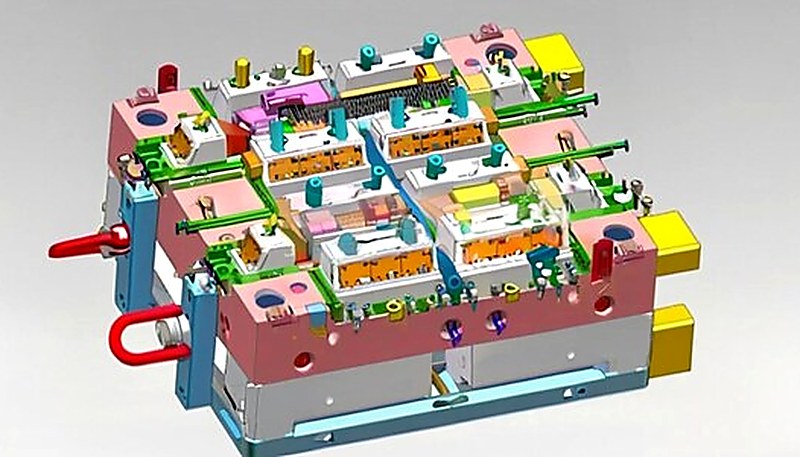
Multi-cavity injection molds are molds having more than one cavity through which more than one similar or dissimilar plastic products could be produced within a single injection cycle. This according to the number of cavity can be two-cavity, four-cavity, eight-cavity, or even many cavity more.
Characteristics:
High Efficiency : Several parts can be manufactured in one shot, thus increasing the rate of production, therefore suitable for use in large quantity production. The use of multi-cavity molding can significantly reduce the time taken to get the products to the market to satisfy the market needs.
Complexity : The entire mold comes out more complicated in design as well as in manufacturing because the flow channel needs to designed carefully and there should be a better control on the filling part. Designers have to pay specific attention to the distribution of the plastic within each of the cavities to avoid yielding unequal filling which may lead to generation of some defects.
Cost : The initial manufacturing cost is high, but as production volume increases, the unit cost of the product decreases significantly. For large-scale production, the economic benefits of multi-cavity molds are more apparent.
“Fill balance is the most critical engineering challenge in multi-cavity mold design.”True
Without proper runner balancing, some cavities fill faster than others, causing flash, short shots, or dimensional variation across the same batch.
“Multi-cavity molds always produce parts with identical dimensions across all cavities.”False
Even well-balanced multi-cavity molds show slight cavity-to-cavity variation due to differences in cooling, venting, and wear over time.
What are the Advantages And Disadvantages of Multi-Cavity Injection Molds?
The advantages are faster output and lower unit cost; the disadvantages are higher tooling cost, longer sampling, and more complex maintenance.
Advantages
Increased Production Efficiency :In this type, several cavities are carved on the mold face whereby in every injection process, a large number of parts are produced. In relation to the mass production it helps to reduce the duration of production to cater for the market needs. For instance if one has an eight cavity mold, the output you get per hour will be eight times as many as the single cavity mold greatly improving the productivity of the production line.
Reduced Unit Costs :The multi-cavity molds are relatively expensive in the first instance of manufacturing but the relative production cost of the each part is significantly lower as the number of items produced increases. This cost efficiency is especially notable in large-scale production. When producing large quantities, the distributed costs of materials, labor, and energy decrease, reducing the production cost of each part.
Consistency and Quality Control :The design of many cavities in a single mold usually calls for close tolerances in the mold and each part made in the cavities must be accurate in every detail. This is very important especially for products that may need to be precise and have standard measurements. For instance, medical devices, and high tech electronic products need to have very high accuracy, and with multi cavity molds, you can achieve consistency in the batch runs.
Disadvantages
Complex Mold Design :The multi-cavity mold production is comparatively difficult because of the accuracy and uniform filling of flow channels. More often the mold designers requires expertise and experience to guarantee that the mold functions appropriately. This complexity makes design and manufacturing take a longer time and is also expensive.
High Initial Cost :Multi cavity molds are initially expensive to manufacture since their design is complex, including design, materials, and high precision requirements in the manufacturing process. For small and medium-sized enterprises, this can be a lot of money. One should define the period for the return of the initial investment; in many cases, due to low production rates, the costs cannot be compensated.
Maintenance and Repair Complexity :As for repairs and maintenance of multi-cavity molds, they are relatively complicated and technicians are needed to perform the task. Once the mold issue develops it is capable of hindering the smooth flow of operations of the whole line of production. If the cavity within the mold has some problem, then the production must be stopped for repairment which became a problem, impacting production efficiency.
“Annual maintenance cost for a multi-cavity mold typically runs 5 to 10 percent of the original tooling price.”True
More cavities mean more ejector pins, cooling channels, and sliding elements that wear over time, so budget for periodic maintenance to avoid unplanned production stops.
“If one cavity in a multi-cavity mold fails, you can keep running the remaining cavities.”False
In most cases, the entire mold must be taken offline for repair because damage to one cavity can cause imbalanced forces, flash, or part contamination that affects all cavities.
What are the Advantages And Disadvantages of Single-Cavity Injection Molds?
Single-cavity injection molds are a popular choice for producing small quantities of parts efficiently. However, they come with both benefits and limitations, making them suitable for specific production needs.
Advantages
Simple Mold Design :Compared with multi-cavity molds, the design and manufacturing of single-cavity molds is relatively easy, and there is no need to consider the problem of uniform filling of multiple cavities. Therefore, it is easier to complete the mold design and manufacturing stage. For beginners or small businesses, single-cavity molds are a relatively easy choice.
Low Initial Cost :The cost of manufacturing single-cavity models is low because the design and manufacturing of single-cavity molds are not so complicated. Single-cavity molds are reasonable and advantageous for small-batch production or new product trial production. This means that companies can conduct trial production with very little capital to ensure that the product is designed correctly and whether there is demand.
High Flexibility :Single cavity molds are simple to replace and can be easily adjust hence are ideal for use in multi variety low quantity production. The production planning of a firm and its supply strategy can easily change depending on the market trends and customer requirements. Single cavity molds are very flexible particularly in areas where manufacturing of standard and non-standard products is involved.
Disadvantages
Low Production Efficiency :Single cavity molds are able to manufacture only one part per cycle of injection, therefore the productivity of this method seems to be not very high. In relation to mass production of goods, it does not even meet market requirements; the cycle of manufacturing is also lengthy. In return, more molds and machines might be required to produce the same output, which raises the cost of production considerably.
High Unit Costs :Due to low production efficiency, the cost on unit product is relatively high. For mass production, the economy of single cavity molds is very low and not recommended for mass production for a long time. When the production quantity rises, the defects of single cavity molds are exposed gradually.
Consistency and Quality Control :Single cavity mold design is comparatively easy, however, several quality and conformity concerns are needed to be reviewed in practice to produce high quality standard parts. This is most especially a challenge especially in cases of multiple production runs and from one batch to another.
“Single-cavity molds are ideal for low-volume production.”True
Single-cavity molds are designed for producing fewer parts, making them cost-effective for small runs.
“Single-cavity molds are always cheaper than multi-cavity molds.”False
While single-cavity molds have lower initial costs, multi-cavity molds may be more cost-effective for larger production runs due to their higher efficiency.
What are the Application Areas of Multi-Cavity And Single-Cavity Injection Molds?
Multi-cavity molds serve high-volume standardized parts; single-cavity molds are better for low-volume, complex, or custom production runs.
Application Fields of Multi-Cavity Injection Molds
Mass Production :Multi-cavity molds are suitable for the mass production of plastic parts, such as the car parts, home appliance shells, and auxiliary articles. To sum up, multi-cavity molds that offer high efficiency can solve a set of production issues and can meet the demands of the market in terms of speeding up the production cycle while lowering the unit costs. For example, automobiles incorporate many plastic details, and for the manufacturing process to be fast and the products to be identical in form and design, it is possible to use multi-cavity molds.
High-Precision Products :Multi cavity molds have to be precise in their design and must be uniform in design hence they are ideal for products that need precision and uniformity. For instance, cases of medical devices and coverages of electronic products need accuracy and high quality dimensions, which multi-cavity mold is capable of delivering. In these fields, product consistency directly affects the performance and safety of the equipment.
Standardized Parts :Multi-cavity molds are ideal for preparing standard parts such as screws and other fasteners. Generally, multi-cavity molds can improve the efficiency of production lines and ensure that each part produced meets the requirements of mass production. Standardized parts usually need to be produced in large quantities, and the size and quality of each part must be strictly consistent to ensure interchangeability during assembly.
Application Fields of Single-Cavity Injection Molds
Small-Batch Production :Single cavity molds can be used to start production on a small scale and test new products. New products in the first stage of market entry usually have low market demand, and simple cavity molds can easily adapt to this demand and reduce inventory pressure. For example, startups and small and medium-sized enterprises can use single cavity molds for small batch production, reduce initial investment costs and respond quickly to market demand.
Complex Structure Products :Single-cavity molds are suitable for manufacturing parts with more complex final product geometry and internal structures. For single-cavity molds, mold design and manufacture are easier, making the production of complex products easier to complete. Parts with complex structures require a lot of trials and modifications during the design and manufacturing stages, and single-cavity molds are easier to handle at these stages.
Multi-Variety Production :Single-cavity moldsare more suitable for multi-variety and small-batch production, such as customized and personalized product production. Enterprises can flexibly adjust production plans according to customer needs, and quickly replace and adjust molds through single-cavity molds to meet customers\’ personalized needs. For example, in the consumer goods market, the trend of highly customized products is becoming increasingly obvious, and single-cavity molds can flexibly respond to these changes.
“Runner design directly determines whether a multi-cavity mold can achieve balanced fill.”True
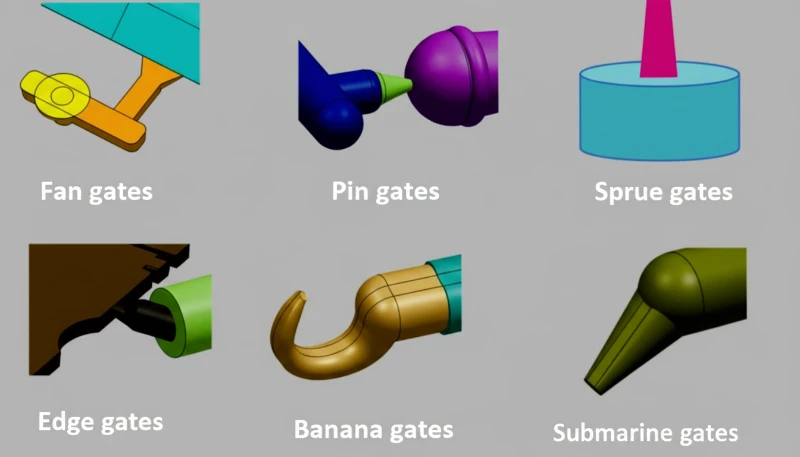
Hot runner systems offer better control but add cost; cold runners are simpler but may cause material waste and uneven filling in high-cavity molds.
“Single-cavity molds cannot achieve the same part quality as multi-cavity molds.”False
Single-cavity molds often achieve better dimensional consistency since there is only one flow path to optimize, making them preferred for tight-tolerance medical and optical parts.
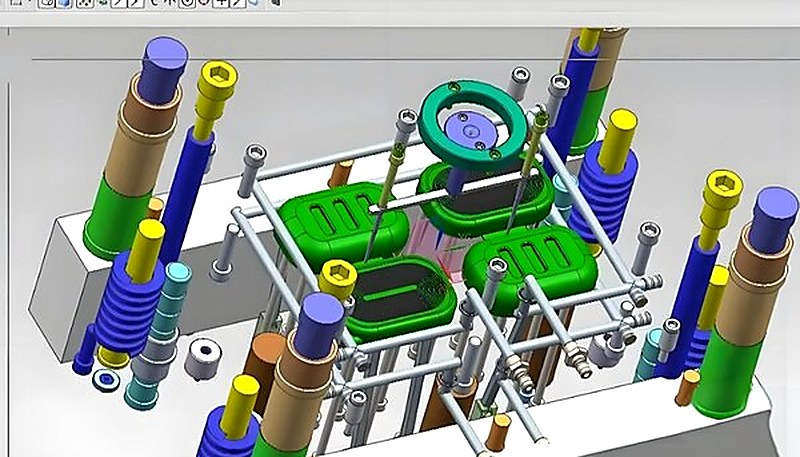
In our factory, we choose between single-cavity and multi-cavity molds by validating annual demand, cavity balance risk, resin behavior, and inspection workload against real production trials. Our engineers use 20+ years of mold-building experience, in-house tooling capability, and 47 injection molding machines from 90T to 1850T to confirm whether lower tooling cost or lower unit cost is the better commercial decision.
What Factors Should be Considered When Choosing Multi-Cavity And Single-Cavity Injection Molds?
The key selection factors are annual volume, part tolerance, resin behavior, cycle time, inspection workload, and launch risk. In our factory reviews, the decision is usually not only tooling price; it is whether the mold can hold ±0.02 mm critical dimensions, run 90 tons to 1,850 tons machine capacity when needed, and keep scrap below 3% during stable production.
Production Requirements
When deciding whether to use a multi-cavity injection molding or a single-cavity injection molding, the initial factor that must be considered is production requirements.
If large-volume production is required, multi-cavity molds can be selected to increase the productivity of each part and simultaneously reduce the cost of each part.
If the demand for batches of a specific product or new product variant is relatively low, single-cavity molds can be selected, which requires little initial investment and allows molding changes based on market conditions.
Product Structure
Another factor that determines the choice of mold type is product structure. Single-cavity molds are more suitable for the production of complex products, and their design and manufacturing processes are relatively simple, making it possible to achieve the internal geometric shapes and structural complexity of the product.
For products with high standardization and consistency, multi-cavity molds can provide higher production efficiency and consistency.
Cost-Effectiveness
Cost-effectiveness is a key factor in choosing a mold type. Although the initial cost of a multi-cavity mold is higher than that of a single-cavity mold, the cost per unit product is relatively low, making it suitable for mass production.
Single-cavity molds have a lower initial manufacturing cost, so they can be used for small-batch production and new product trials. When you need to make a decision on the mold type, you need to evaluate not only the initial cost but also the cost over the entire production cycle.
Quality Control
Another aspect that defines the choice of the type of the mold is quality control. Multi-cavity molds demand accurate and standard mold manufacturing, and therefore match items that need great accuracy and standardization.
About the single cavity mold, the advantage is that it is highly flexible which is ideal for multi variety, small production.
Regarding the kind of mold, there needs to be a comprehensive evaluation based on the quality and, therefore, the uniformity of the product that is produced. For instance, the application of high end electronics manufacturing that requires each part to be made to identical specifications will prefer multi cavity molds.
Market Demand
Another factor that influences the selection of the type of mold is the market demand. If the market demand is high, it is possible to go for multi-cavity molds to improve the productivity and to meet the market demand.
If market demand fluctuates frequently, single cavity molds can be selected so that the response to the changes in the market can be easily made hence allowing firms to change their production strategies frequently.
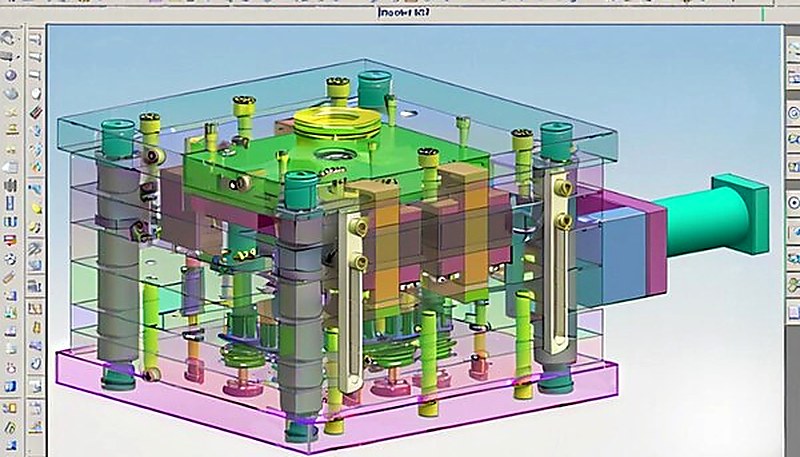
“A single-cavity mold is the recommended starting point when part geometry is not yet finalized.”True
Sampling one cavity first is faster and cheaper, and any design changes only affect one set of tooling rather than multiple cavities that would all need modification simultaneously.
“All injection molding projects should start with multi-cavity molds to maximize production from day one.”False
Starting with multi-cavity before the design is frozen wastes tooling investment on geometry changes that affect every cavity, and the extra sampling time delays market entry.
Which Cavity Strategy Should You Choose for Your Injection Molding Project?
The choice is a tradeoff: lower tooling cost and risk versus lower unit cost at volume. Single-cavity molds give you design flexibility, faster sampling, and simpler maintenance — the right call when demand is uncertain or tolerances are tight. Multi-cavity molds pay for themselves when annual volume justifies the extra balance work and upfront investment.
Multi-cavity molds excel in high-volume production of standardized parts where consistency across cavities can be engineered and maintained. Single-cavity molds remain the better option for complex geometries, prototype runs, and multi-variety low-volume programs where quick mold changes matter more than throughput.
Before committing to either approach, validate your annual volume, tolerance envelope, resin behavior, and budget for tooling cost recovery. Ask your supplier2 to show cavity balance data, runner layout options, and maintenance assumptions so the decision is grounded in production reality rather than theory.
For a broader overview of the production process, see our injection molding guide, or explore injection mold3 design principles that apply to both cavity strategies.
Need a Quote for Your Injection Molding Project?
Tell our engineers your target annual volume, resin, tolerances, and launch timing so we can recommend the right single-cavity or multi-cavity mold strategy.
Get competitive pricing, DFM feedback, and production timeline from ZetarMold’s engineering team.
Request a Free Quote →
Frequently Asked Questions About Single and Multi-Cavity Injection Molds?
Frequently Asked Questions
What is the main difference between single-cavity and multi-cavity molds?
A single-cavity mold produces one part per injection cycle, while a multi-cavity mold produces two or more identical parts per cycle. The single-cavity option keeps tooling cost and risk low, making it ideal for prototypes, low-volume runs, or complex geometries. The multi-cavity option reduces unit cost at higher volumes but requires more precise fill balancing, longer sampling time, and higher upfront investment. Buyers should base the decision on annual volume forecast, tolerance requirements, and tooling cost recovery timeline to optimize their total production investment.
When is a multi-cavity mold more cost-effective?
Multi-cavity molds become cost-effective when annual volume exceeds the break-even point where lower per-part cost offsets the higher tooling investment. For example, an 8-cavity mold might cost 3 to 4 times more than a single-cavity mold, but it produces 8 parts per cycle instead of 1. If your annual demand exceeds 100,000 units and the part geometry is stable, the unit cost savings typically recover the extra tooling cost within 6 to 12 months of stable production. Always ask your tooling supplier for a volume-based cost comparison before committing.
Can you combine single-cavity and multi-cavity molds in one project?
Yes, many production programs use both mold types strategically. A common approach is to start with a single-cavity mold for prototyping and design validation during the development phase, then transition to a multi-cavity mold once the part design is frozen and market demand is confirmed. This staged strategy reduces the risk of expensive tooling changes on a multi-cavity mold and ensures the final production tool is built from a proven, validated geometry that has already passed first article inspection requirements.
How does cavity count affect part quality and tolerances?
Multi-cavity molds require careful fill balancing to maintain consistent part quality across all cavities. Without proper runner balance, some cavities may produce parts with short shots, flash, or dimensional variation. Single-cavity molds avoid this challenge entirely since there is only one flow path to optimize. For parts with tolerances tighter than plus or minus 0.05 mm, a single-cavity mold often delivers more consistent dimensional results, especially during early production when the process window is still being refined and validated by quality engineers.
What maintenance differences exist between single and multi-cavity molds?
Multi-cavity molds have more moving parts, cooling channels, and ejector pins, which increases both maintenance complexity and repair cost over the life of the tool. When one cavity is damaged, the entire mold usually must be taken offline, halting production of all cavities simultaneously. Single-cavity molds are simpler to maintain and repair, with shorter downtime and lower spare parts inventory. Budget for annual maintenance at 5 to 10 percent of tooling cost for multi-cavity molds versus 2 to 5 percent for single-cavity molds.
Does cavity count affect injection molding cycle time?
The cooling portion of the cycle is determined by the thickest wall section of the part, not by cavity count, so the shot-to-shot cycle time is similar regardless of how many cavities the mold contains. However, multi-cavity molds produce more parts per cycle, so the effective time per part drops significantly. An 8-cavity mold producing parts in a 20-second cycle delivers 8 parts per shot, giving a per-part cycle of 2.5 seconds compared to 20 seconds for a single-cavity mold.
What is a family mold and how does it differ from a multi-cavity mold?
A multi-cavity mold produces multiple identical parts per cycle, while a family mold produces different parts in the same mold, often components that belong to the same product assembly. Family molds share runner systems and cooling channels between different cavity geometries, which adds design complexity. They can reduce total tooling cost when you need several different parts in similar production volumes, but achieving consistent fill balance across dissimilar cavities is significantly harder than in a standard multi-cavity mold with uniform geometry.
How do I decide the right number of cavities for my project?
Start by calculating annual volume and dividing by expected cycle time to estimate the minimum cavity count needed for machine utilization. Then evaluate tolerance requirements, resin shrinkage behavior, mold maintenance budget, and tooling cost recovery timeline. A practical guideline: below 50,000 units per year with tight tolerances, start with single-cavity. Between 50,000 and 500,000 units, consider 2 to 4 cavities. Above 500,000 units, 4 to 16 or more cavities may be justified if the part geometry allows balanced filling and consistent quality output.
-
injection molding: Injection molding is a repeatable production process that melts plastic resin, injects it into a mold cavity under pressure, cools the solidified part, and ejects it for the next cycle. ↩
-
supplier: A supplier is a manufacturing partner evaluated by tooling capability, process control, material knowledge, inspection discipline, communication reliability, and on-time delivery performance. ↩
-
injection mold: An injection mold is a precision tool that defines part geometry, cavity layout, cooling behavior, ejection method, and surface finish for injection molding production. ↩