 コンテンツへスキップ

Defects in ティーピーイー1 injection molding cost manufacturers time, material, and money. Warping, sink marks, flash, and short shots are among the most common issues — and nearly all of them trace back to a handful of root causes: wrong temperature, wet material, poor mold design, or incorrect processing parameters. In this guide, we break down each cause, explain the mechanism behind it, and share practical fixes based on two decades of 射出成形 experience.
- TPE defects stem from material, process, and mold issues
- Moisture and temperature are the top two culprits
- Proper drying at 80-100°C for 2-4 hours prevents most bubble defects
- Mold design shortcuts cause flash, sink marks, and warping
- Systematic troubleshooting beats trial-and-error every time
What Is TPE Material and Why Does It Matter in Injection Molding?
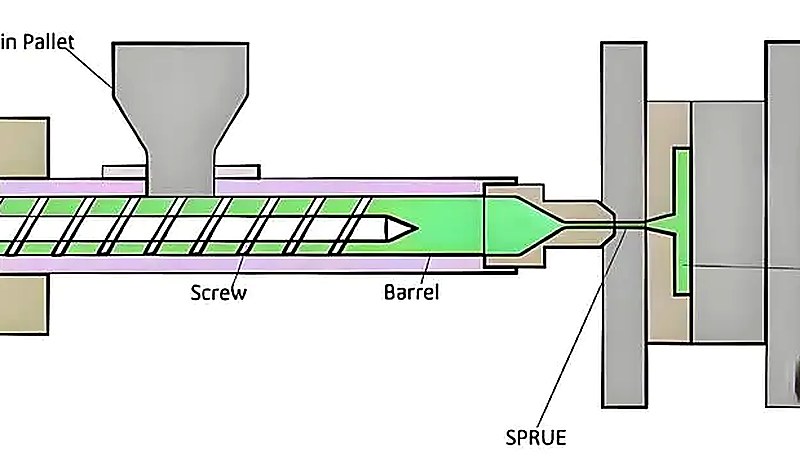
TPE is a thermoplastic elastomer that combines rubber-like elasticity with plastic-like processability. Unlike thermoset rubber, TPE can be melted, reshaped, and recycled through standard injection molding equipment. This dual nature makes it versatile but sensitive to processing conditions — get the temperature, speed, or drying wrong, and the material will not perform as designed.
In our factory, we have processed dozens of TPE grades — from Shore 30A soft grips to Shore 70D rigid components — and each grade has its own processing window. Understanding your specific TPE grade is the first step to defect-free parts. TPE is widely used in automotive seals, medical device grips, consumer electronics overmolding, and soft-touch tool handles because of its excellent elasticity, chemical resistance, and ease of processing.
What Are the Most Common Defects in TPE Injection Molding?
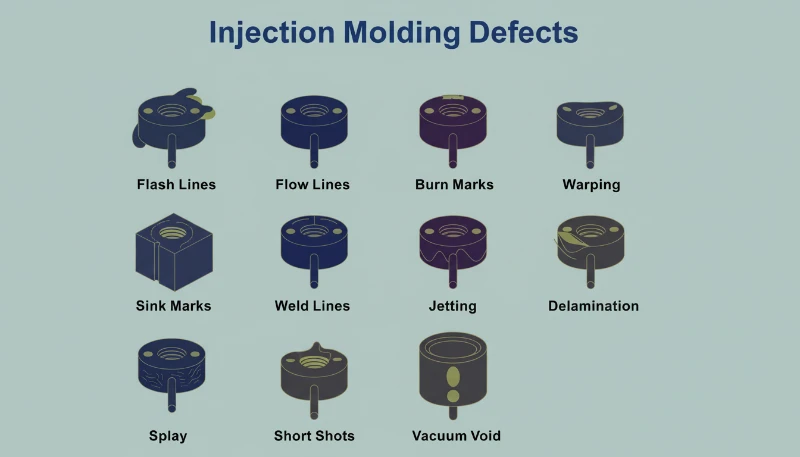
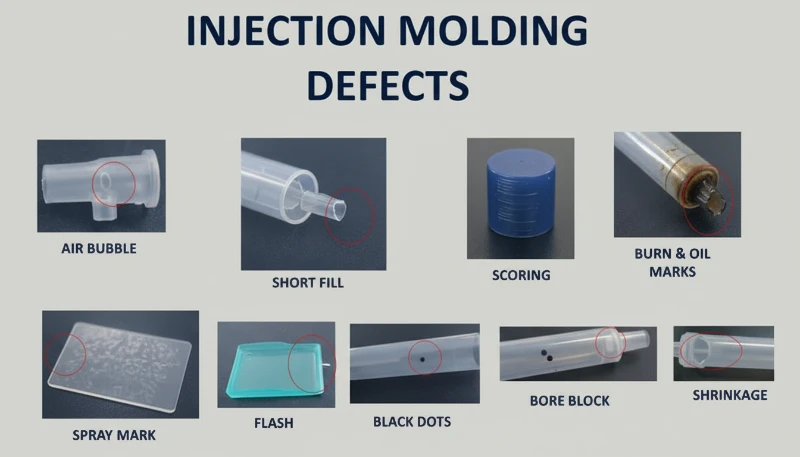
The most common TPE molding defects are silver streaks, short shots, flash, sink marks, warping, and weld lines. These fall into three root-cause categories: material issues such as moisture and contamination, processing errors like wrong temperature or pressure, and mold design shortcomings including poor venting and inadequate cooling.
Material-driven defects: Silver streaks, bubbles, and discoloration from moisture or contamination. These appear as silvery surface lines (splay), internal voids, or color inconsistency in the finished part.
Process-driven defects: Short shots, flash, burn marks, and warping from incorrect parameters. Flash shows up as thin excess material along the parting line. Short shots leave the cavity partially unfilled.
Mold-driven defects: Sink marks, weld lines, and dimensional issues from poor tool design. Sink marks create depressions on thick sections. Weld lines form visible seams where flow fronts meet.
How Does Processing Temperature Affect TPE Defects?
Temperature is the single biggest lever in TPE molding quality. Too hot, and you get flash, gas marks, and material degradation. Too cold, and you face short shots, poor surface finish, and weak weld lines. Most TPE grades process between 180-240°C barrel temperature, but this varies significantly by grade.
The key is matching barrel temperature, nozzle temperature, and mold temperature to the material datasheet. In practice, we start at the manufacturer’s recommended settings and adjust in 5°C increments based on part appearance. Mold temperature matters too — TPE typically needs 20-60°C mold surface temperature. Running the mold too cold causes premature freeze-off and incomplete filling, while running too hot extends cycle time and increases the risk of flash.
Barrel temperature zones also play a role. Most TPE molds use three to four barrel zones, with the rear zone set 10-20 degrees lower than the front zone to prevent premature melting. The nozzle temperature should match the front zone. If the nozzle is too cold, you get cold slugs that cause visible marks on the part surface. If too hot, stringing occurs, which wastes material and creates gate blemishes on the next cycle.

A common mistake we see is using the same temperature profile for all TPE grades. A Shore 40A soft TPE processes very differently from a Shore 70D rigid grade. Always reference the material data sheet and validate with a short production run before committing to full production volume.
Why Does Moisture Cause Defects in TPE Molding?
TPE is 吸湿性2 — it absorbs moisture from the air. When undried TPE enters a 200°C+ barrel, the trapped water vaporizes instantly, creating steam bubbles that show up as silver streaks, surface blemishes, and internal voids. Even 0.1% moisture content can cause visible defects in transparent or light-colored TPE parts.
The fix is straightforward: dry TPE pellets at 80-100°C for 2-4 hours in a dehumidifying hopper dryer before molding. In our Shanghai facility, we dry every hygroscopic material batch — including TPE, TPU, and nylon — before it hits the machine. Skipping drying to save time is the most expensive shortcut in injection molding, because every defective part costs more than the drying energy.
In our Shanghai factory, we run 47 injection molding machines and dry every hygroscopic material — including TPE — before processing to prevent moisture-related defects.
Beyond silver streaks, moisture in TPE also causes dimensional instability and reduced mechanical properties in the finished part. The absorbed water acts as a plasticizer during molding, lowering the effective melt viscosity and causing flash or overpacking. In transparent or light-colored TPE grades, even trace moisture creates visible cloudiness that rejects the part immediately. For this reason, we use inline moisture sensors on our production lines to verify dryness in real time.
Moisture-related defects account for approximately 30-40 percent of all quality issues we see in TPE production. The good news is that they are also the easiest to prevent with proper material handling protocols. Every batch of TPE that enters our production floor goes through a documented drying cycle before processing begins.
What Role Does Injection Speed and Pressure Play in TPE Quality?
Injection speed and holding pressure are the two parameters that most directly control TPE part quality after barrel temperature. Speed controls how fast the melt fills the cavity — too fast traps air causing burns, too slow causes incomplete filling and weak weld lines.
Injection speed and holding pressure are the two most impactful process parameters for TPE part quality after temperature. Speed controls fill completeness and air entrapment, while holding pressure determines dimensional accuracy and シンクマーク3 prevention. For TPE, a moderate-to-fast fill speed paired with 60-80% holding pressure delivers the most consistent results.
Backpressure is another parameter that affects TPE melt quality. Typical backpressure for TPE ranges from 5-15 bar. Low backpressure can leave unmelted pellets in the melt, causing inconsistent part quality. High backpressure improves melt homogeneity but generates extra shear heat, which can degrade heat-sensitive TPE grades. In our production environment, we set backpressure at 8-12 bar for most TPE grades and adjust based on screw recovery time and part appearance.
How Can Mold Design Prevent TPE Injection Molding Defects?
Mold design is the foundation of defect-free TPE production. Proper gate sizing, uniform cooling, and correct vent depth prevent more defects than any process adjustment can fix. Key considerations include gate location and size, runner system design, cooling layout, and vent depth.
Mold design is the single most effective lever for preventing TPE defects before production starts. Proper gate sizing, uniform cooling channels, and correct vent depth eliminate more defects than any process adjustment can fix. For TPE, the three critical factors are gate location and size, cooling layout, and vent depth.
Gate design: TPE flows best through larger gates (minimum 0.5mm thickness). Side gates or submarine gates work well for most TPE parts. The gate should be positioned to ensure balanced flow and minimize weld lines. For a deeper understanding of how gate location affects part quality, see our injection mold design guide.
排気: TPE needs vents at 0.01-0.02mm depth. Too shallow traps gas, causing burns and short shots. Too deep causes flash. Vents should be placed at the end of fill and at weld line locations.
With 20+ years building injection molds in-house, we have learned that investing in proper tooling upfront saves thousands in production defects later.
What Are the Best Troubleshooting Steps for TPE Molding Defects?
The most effective troubleshooting steps are to verify material drying, check temperature settings, review speed and pressure, and inspect the mold. This hierarchy prioritizes fast, low-cost fixes before complex adjustments.
The best troubleshooting steps are, in order: verify drying first, check temperature, review speed and pressure, inspect the mold, then evaluate holding pressure. Over 70 percent of TPE defects are resolved at the drying and temperature stage. Always start with the cheapest, fastest fixes before moving to more complex adjustments.
Start with the cheapest fix (drying and temperature) before moving to more complex adjustments. Document every change and its result — this builds a knowledge base for future production runs of the same part.
If you are evaluating 射出成形サプライヤー for a TPE project, ask about their drying protocols and process documentation. A supplier who cannot explain their drying procedure is a supplier who will deliver defective parts.
“TPE materials absorb moisture from the air and must be dried at 80-100°C for 2-4 hours before molding to prevent silver streaks and bubbles.”真
Most TPE grades are hygroscopic and will develop surface defects if molded without proper drying.
“Higher barrel temperature always produces better TPE part quality.”偽
Excessive barrel temperature degrades TPE, causing gas marks, discoloration, and loss of mechanical properties. Temperature must match the material datasheet.
Understanding the root causes behind these true and false statements helps you build a systematic approach to TPE defect prevention. The key insight is that TPE molding quality depends on the interaction between material preparation, machine settings, and tooling design — not any single factor in isolation. Many manufacturers make the mistake of chasing one parameter while ignoring others, only to find that the same defects keep appearing. A holistic approach that addresses drying, temperature, speed, pressure, and mold condition together delivers far more consistent results than tweaking individual settings in isolation.
“Proper gate design in the mold can prevent both flash and short shots in TPE injection molded parts.”真
Gate size and location directly affect fill balance, pressure distribution, and material flow — all key factors in flash and short shot prevention.
“TPE injection molding defects are always caused by bad material.”偽
Defects in TPE molding come from three sources: material issues, processing parameters, and mold design. Blaming the material without investigating process and tooling leads to recurring problems.
結論
TPE injection molding defects are frustrating but manageable when you understand the root causes. Temperature, moisture, injection parameters, and mold design are the four pillars of defect-free production. Start with proper material drying, match your temperature profile to the material datasheet, and invest in quality tooling. When defects appear, troubleshoot systematically rather than making random adjustments.
Need a Quote for Your TPE Injection Molding Project?
With 20+ years of experience, 47 injection molding machines (90T to 1850T), and expertise in 400+ materials including all major TPE grades, our Shanghai factory can handle TPE projects of any complexity. Our in-house mold manufacturing and ISO 9001 / ISO 13485 quality systems ensure consistent, defect-free parts. Request a Free Quote to discuss your project requirements.
よくある質問
What causes silver streaks on TPE injection molded parts?
Silver streaks (splay) are caused by moisture in the TPE material vaporizing during injection. The steam creates tiny bubbles that appear as silvery lines on the surface. Fix this by drying the material at 80-100 degrees Celsius for 2-4 hours before molding and maintaining a sealed hopper dryer during production. This is the most common visual defect in TPE molding and the easiest to prevent. In our experience, proper drying eliminates silver streaks in over 95 percent of cases, making it the first troubleshooting step for any surface defect.
How do you prevent flash in TPE injection molding?
Flash is prevented by maintaining proper clamping force, keeping the mold parting line clean and undamaged, reducing injection pressure to the minimum needed for complete filling, and ensuring proper mold venting. Regular mold maintenance and inspection of the parting line seal are essential for flash-free production. If flash persists after process adjustments, the mold may need rework to restore parting line tolerance. For high-volume TPE production, we recommend inspecting the parting line every 50000 cycles to catch wear before it affects part quality.
What is the recommended drying temperature for TPE materials?
Most TPE grades should be dried at 80-100 degrees Celsius for 2-4 hours using a dehumidifying hopper dryer with a dew point of negative 30 degrees Celsius or lower. The target moisture content is typically below 0.1 percent. Always check the material manufacturer datasheet for grade-specific recommendations, as some high-performance TPEs may require different conditions. Proper drying is the single most effective defect prevention step you can take before starting production. Skipping this step leads to silver streaks, bubbles, and inconsistent part quality.
Why do TPE injection molded parts warp?
TPE parts warp due to uneven cooling and differential shrinkage across the part geometry. Common causes include non-uniform wall thickness in the part design, poor cooling channel layout in the mold, and inadequate holding pressure during the packing phase. Improving mold cooling uniformity and maintaining consistent holding pressure until the gate freezes completely are the most effective solutions. For thin-wall TPE parts, conformal cooling channels can dramatically reduce warpage. Designing parts with uniform wall thickness from the start is the best preventive measure.
What injection speed is best for TPE molding?
A moderate-to-fast injection speed works best for most TPE grades, balancing complete cavity filling against air entrapment and gas marks on the part surface. The optimal speed depends on part geometry, gate location, and the specific TPE material grade being used. Start with the material datasheet recommendation and adjust based on part appearance after initial trial shots. Increase speed if you see short shots forming at the end of fill, decrease speed if you observe burns or gas marks appearing near vent locations in the mold.
Can TPE injection molding defects be fixed without changing the mold?
Yes, many TPE defects can be resolved through process adjustments alone without requiring any mold modifications or expensive tooling changes to the existing mold. Properly drying the material before processing, optimizing barrel and mold temperatures to match the specific grade being used, adjusting injection speed and pressure profiles, and tuning holding pressure and time parameters can fix most common issues. These process adjustments effectively address silver streaks, short shots, and minor flash along the parting line without requiring mold rework.
How does holding pressure affect TPE part quality?
Holding pressure compensates for volumetric shrinkage as the TPE material cools inside the closed mold cavity, preventing sink marks, internal voids, and dimensional variation between production shots. For TPE materials, holding pressure is typically set at 60-80 percent of peak injection pressure and maintained continuously until the gate freezes solid. Insufficient holding pressure causes visible sink marks on thick sections and dimensional inconsistency across the production run. Excessive holding pressure can cause flash along the parting line and part sticking issues.
What causes short shots in TPE injection molding?
Short shots occur when the mold cavity does not fill completely during the injection phase of the molding cycle. In TPE molding, common root causes include insufficient injection pressure or speed settings on the machine, low barrel temperature preventing proper melt flow into thin sections, inadequate venting trapping compressed air in the cavity, or material that has not been properly dried before processing. Systematic troubleshooting should always start with temperature and drying verification before adjusting machine pressure or speed parameters.
-
ティーピーイー: A thermoplastic elastomer (TPE) is a class of copolymers that exhibit rubber-like elasticity at room temperature but can be melted and processed like conventional thermoplastics. ↩
-
吸湿性: Hygroscopic refers to the property of a substance that readily absorbs moisture from the surrounding atmosphere, which can significantly affect processing behavior in injection molding applications. ↩
-
シンクマーク: A sink mark refers to a shallow surface depression on an injection molded part caused by uneven cooling or insufficient packing pressure in thick wall sections. ↩




 EN
EN  ES
ES  FR
FR  DE
DE  PT
PT  AR
AR  RU
RU  JA
JA  KO
KO  IT
IT  NL
NL  TR
TR  PL
PL 