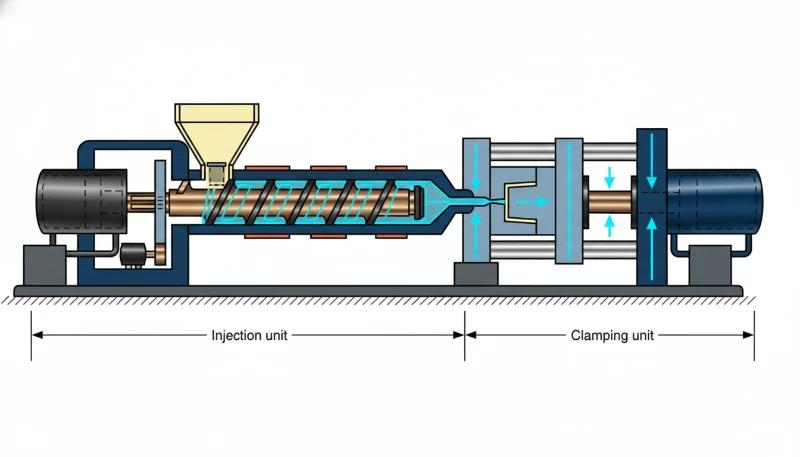
- The U.A.E. injection molding market is valued at approximately 890 million USD growing at 6.8 percent annually driven by construction packaging and automotive sectors
- Free zone advantages include 100 percent foreign ownership and zero corporate tax for 15 years and streamlined import export processes
- U.A.E. mold costs run 15 to 25 percent higher than China but lead times are 2 to 3 weeks faster for regional delivery
- Dubai and Sharjah host 70 percent of the countrys injection molding capacity with Abu Dhabi focusing on high tech applications
- Medical device injection molding is the fastest growing segment at 12 percent annually
The United Arab Emirates has transformed from a desert trading post into the Middle East manufacturing powerhouse, with Dubai and Abu Dhabi leading a 50 billion USD industrial sector. For buyers evaluating injection molding1 sourcing options, the U.A.E. presents a compelling alternative to traditional Asian suppliers, offering strategic location advantages, advanced free zone infrastructure, and growing technical capabilities that can significantly impact supply chain efficiency and total cost of ownership.
What Does the U.A.E. Injection Molding Market Look Like?
The UAE injection molding market is a rapidly growing 890 million USD sector expanding at 6.8 percent annually, nearly double the global average. Based on our experience working with UAE buyers, this growth is fueled by the country’s position as a regional hub serving 2.5 billion consumers across the Middle East, Africa, and South Asia.
For a broader look at injection mold design, our pillar guide covers tooling structure, thermal control, and manufacturability tradeoffs.
For a broader view, our injection molding complete guide covers process fundamentals, material behavior, and production decisions.
Construction dominates the market with 35 percent share, driven by Dubai’s 120 billion USD infrastructure pipeline leading to Expo 2030 and Abu Dhabi’s urban development projects. Packaging follows at 28 percent, serving the region’s growing consumer goods sector and food processing industry. Automotive represents 18 percent of the market, with local assembly operations from Nissan, BMW, and emerging electric vehicle manufacturers establishing regional production bases.
"The medical device segment though smaller at 12 percent market share shows the highest growth rate at 12 percent annually."True
This surge reflects the U.A.E. healthcare expansion with Dubai Healthcare City and Abu Dhabi medical device manufacturing initiatives driving demand for precision molded components.
"U.A.E. manufacturing is limited to basic consumer packaging and cannot handle technical applications."False
Free zone advantages significantly impact the industry with 45 plus free zones offering 100 percent foreign ownership zero corporate tax for 15 years and streamlined customs procedures.
The U.A.E. injection molding sector benefits from strong government support through initiatives like Operation 300bn, which aims to expand the industrial sector contribution to GDP from 133 billion AED to 300 billion AED by 2031. Manufacturing incentives include subsidized industrial land, reduced utility rates, and access to the National ICV program that rewards local content. These policy frameworks create a stable environment for both domestic and foreign investment in injection molding capacity.
"Dubai Healthcare City now hosts 15 ISO 13485 certified injection molding companies up from just 6 in 2020."True
This tripling of certified medical molding capacity in three years demonstrates the U.A.E. commitment to building a regulated manufacturing ecosystem that can serve regional healthcare demand without dependence on imports.
"All U.A.E. injection molding companies can handle multi-cavity precision molds for automotive applications."False
Only about 35 percent of U.A.E. molders hold IATF 16949 automotive certification, and even fewer have in-house tooling capable of complex multi-cavity molds exceeding 16 cavities.
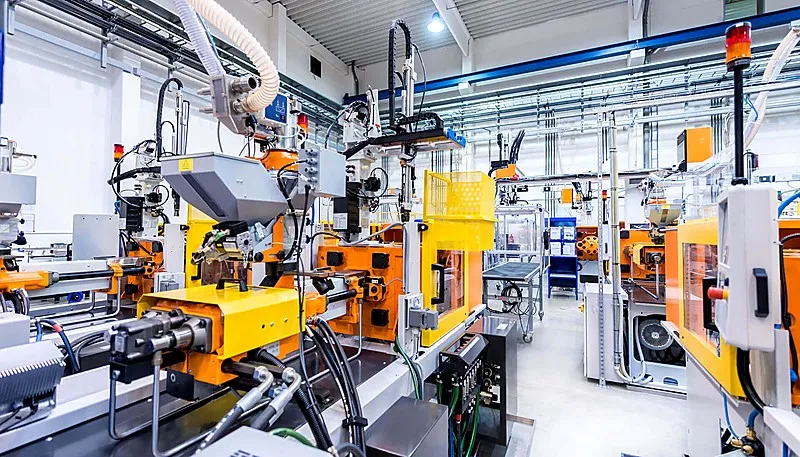
Manufacturing capacity concentrates in three main hubs. Dubai and Sharjah account for 70 percent of injection molding operations, leveraging proximity to Jebel Ali Port, the world’s ninth-largest container port. Abu Dhabi handles 20 percent of capacity, focusing on high-tech applications for aerospace and automotive sectors. The remaining 10 percent spreads across Fujairah and Ras Al Khaimah, typically serving local construction and packaging needs.
The UAE benefits from a young, technically trained workforce with over 65 percent of the population under 35 years old. Technical training programs through the Emirates Skills Authority and partnerships with German and Japanese manufacturing associations produce skilled machine operators and quality engineers. Average labor costs for injection molding operators range from 8 to 12 USD per hour, significantly lower than European equivalents while maintaining strong technical proficiency and English language capabilities essential for international buyer communication.
Jebel Ali Port, the primary logistics hub for UAE manufacturing, handles 22 million TEU containers annually and offers direct shipping routes to over 180 ports worldwide. This infrastructure advantage enables injection molding companies in Dubai and Sharjah to receive raw materials from Asian suppliers in 7-10 days and ship finished products to regional markets in 3-5 days. The port’s dedicated industrial zones provide warehousing, customs processing, and distribution services specifically designed for manufacturing supply chains.
The combination of world-class port infrastructure, aggressive government manufacturing incentives, and a young skilled workforce creates a truly compelling value proposition for injection molding buyers evaluating UAE sourcing options against traditional Asian supply chains for their next production project.
What Trends Are Shaping the U.A.E. Injection Molding Industry?
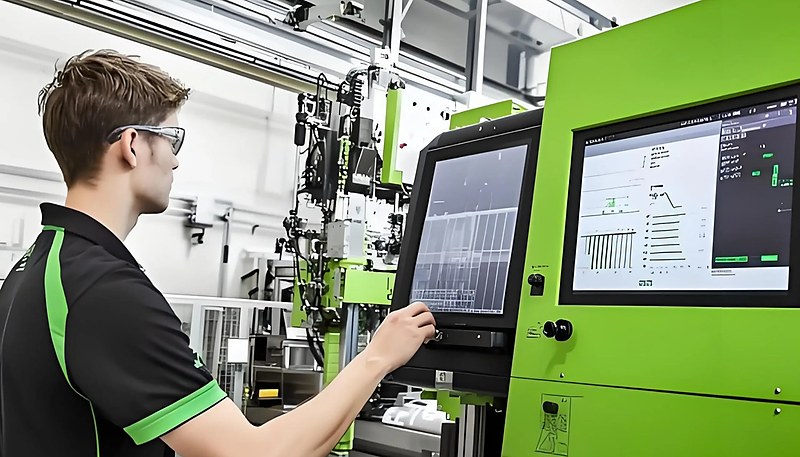
The key trends shaping the UAE injection molding industry are Industry 4.0 adoption, sustainability mandates, medical device expansion, and regional nearshoring. Industry 4.0 accelerates with 40 percent of manufacturers implementing smart factory technologies by 2023, resulting in 25 percent productivity gains.
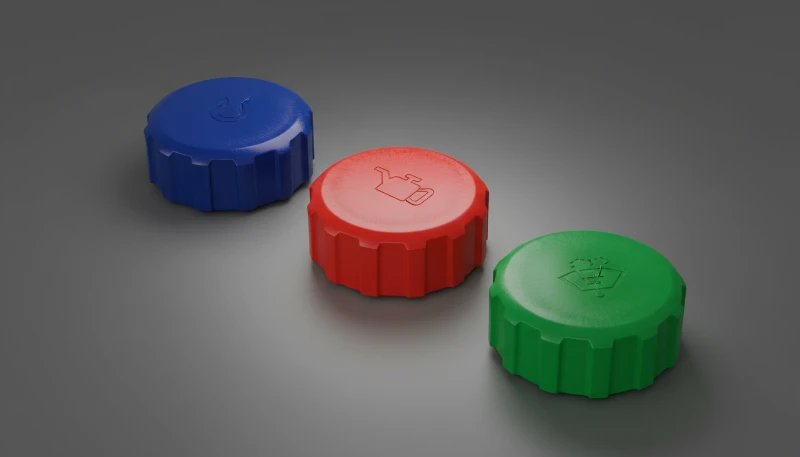
Medical device manufacturing emerges as the fastest-growing segment, expanding 12 percent annually as Dubai positions itself as the regional medtech hub. Dubai Healthcare City now hosts 15 injection molding companies with ISO 13485 certification, up from 6 in 2020. Nearshoring trends reshape supply chains as regional companies reduce dependence on Asian suppliers, with lead times to Saudi Arabia averaging 5-7 days versus 25-35 days from China.
The UAE ranked 31st globally in the 2023 Global Manufacturing Competitiveness Index, reflecting steady improvement in technology adoption, talent development, and infrastructure quality. Government initiatives like the National Strategy for Industry and Advanced Technology target a 30 percent increase in manufacturing output by 2031.
The UAE government has invested over 500 million USD in recycling infrastructure since 2020, building state-of-the-art facilities capable of processing 150,000 tonnes of plastic waste annually. This investment creates a circular economy where injection molders access locally recycled resins at competitive prices, reducing both material costs and environmental impact. Major polymer suppliers including SABIC and Borouge now offer certified recycled grades specifically formulated for injection molding applications in construction, packaging, and consumer products.
Regional supply chain restructuring also drives growth as Middle Eastern manufacturers reduce dependence on distant Asian suppliers. Saudi Arabia’s Vision 2030 infrastructure projects and Qatar’s construction sector create steady demand for locally accessible injection molding capacity. Companies previously importing 80 percent of molded components from China are now splitting orders between UAE suppliers for speed-critical parts and Chinese manufacturers for high-volume commodity items.
The convergence of these trends positions the UAE as an increasingly competitive injection molding hub for the broader Middle East and Africa region. With government backing through industrial policy, growing technical expertise in medical and automotive applications, and supply chain advantages for regional distribution, the UAE injection molding sector is projected to exceed 1.2 billion USD by 2028, creating new opportunities for both local manufacturers and international buyers seeking diversified sourcing.
How Do You Choose an Injection Molding Supplier in the U.A.E.?
To choose an injection molding supplier2 in the UAE, evaluate five dimensions: certifications, tooling, materials, quality, and communication. Each directly impacts project success and skipping any risks costly rework or missed deadlines.
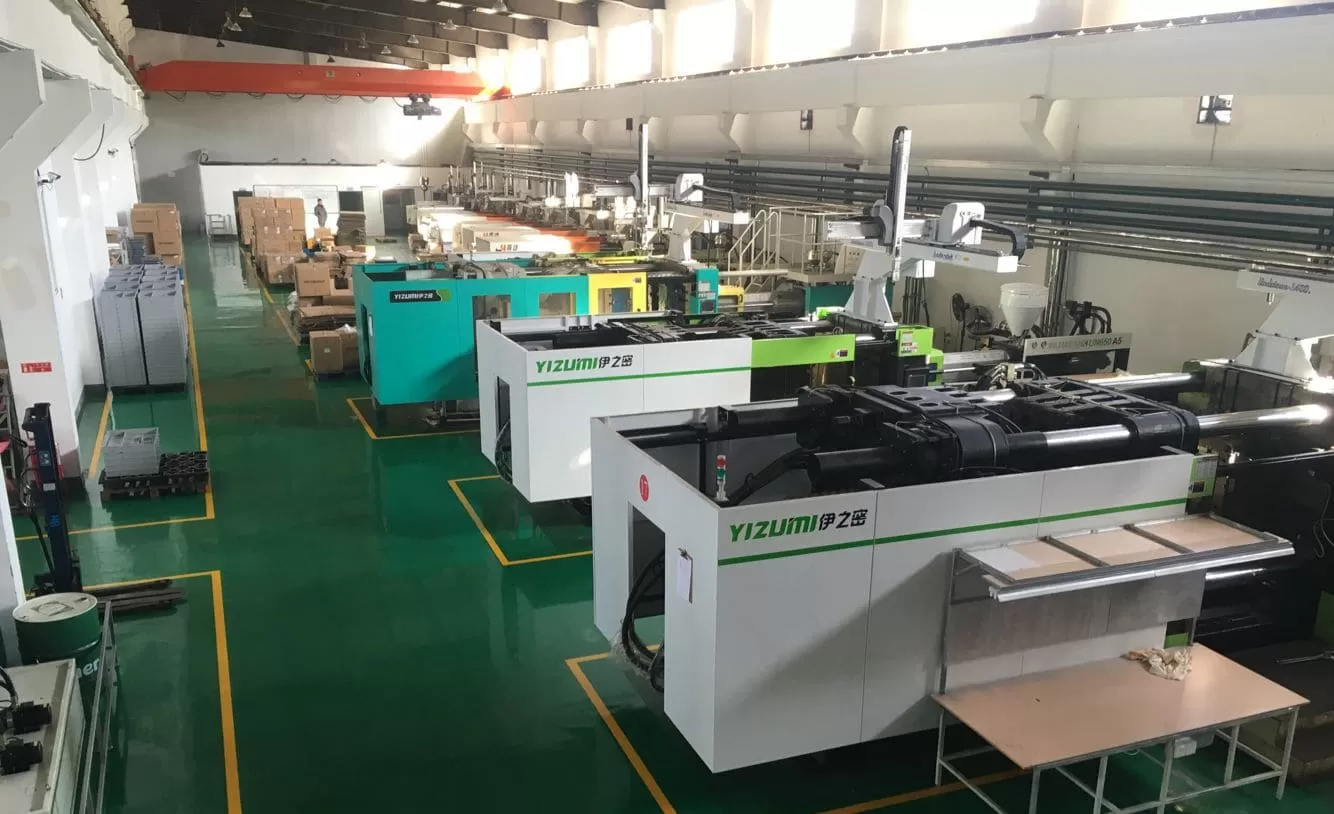
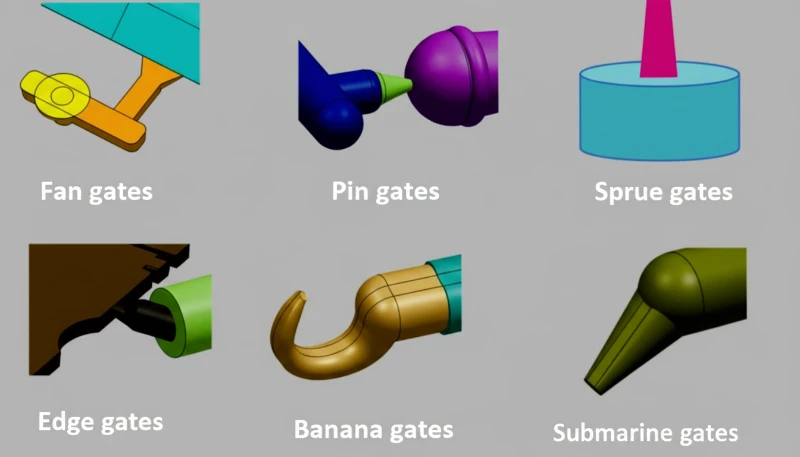
In our factory in Shanghai, we run 47 injection molding machines from 90T to 1850T. Assessing whether a supplier has genuine in-house tooling requires understanding the injection mold3 design process, including hot runner systems, cooling channel optimization, and mold flow analysis capabilities that separate qualified molders from basic assemblers.
Material range reflects supplier sophistication. Leading U.A.E. molders stock 100+ material grades from global suppliers like SABIC, DuPont, and BASF. Verify material traceability systems and certification handling for regulated industries. Quality systems must extend beyond certificates to daily practices: tour facilities to observe statistical process control, measurement equipment calibration, and documentation systems.
Beyond these core dimensions, consider the supplier’s financial stability and investment trajectory. Companies investing in new equipment, automation, and facility expansion demonstrate long-term commitment to the industry. Visit production floors to assess machine age, maintenance standards, and operating conditions. The best UAE injection molding suppliers maintain equipment replacement cycles under 10 years and invest 5-8 percent of revenue in annual capital improvements.
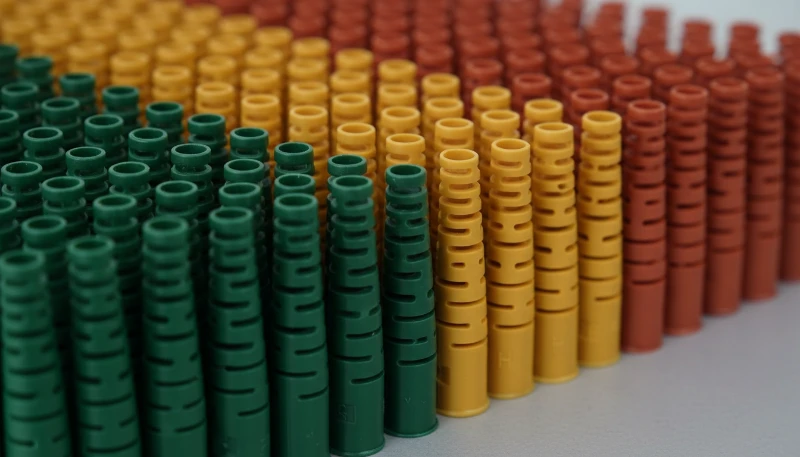
Communication capabilities prove critical for complex projects. Evaluate English proficiency, technical documentation quality, and project management systems. We recommend requesting production samples and conducting facility audits before committing to long-term contracts with any UAE injection molding supplier.
Which Are the Top 10 Injection Molding Companies in U.A.E.?
We evaluated these 10 companies across certifications, tooling capability, material range, production capacity, and industry focus. Each entry includes verified data on location, founding year, and core capabilities.
1. Aalmir Plastic Industries (API)
Location: Sharjah, U.A.E | Founded: 1988 | Employees: 100-199. Services: Injection Molding, Extrusion Technology, Assembly/Automation, Product Development
Aalmir Plastic Industries was founded in Sharjah in 1988 as a specialty plastic packaging manufacturer for the chemical industry. API expanded its manufacturing capabilities to include extrusion technology, assembly and automation, and full product development. In just 5 years from inception, the company achieved ISO 9001 certification, demonstrating early commitment to quality management systems that remains central to their operations.
2. Firstpress Plastic Moulders
Location: Dubai, U.A.E | Founded: 1985 | Employees: 100-199. Services: Concept, Design, Sampling and Prototypes, Molding and Assembly, Packaging and Delivery
Firstpress Plastic Moulders operates on the principle that quality starts with the right attitude. Their process begins with DFM discussions to optimize product design before mold commitment. Their integrated service from concept through delivery makes them a practical choice for buyers needing end-to-end project management.
3. IML PLAST
Location: Dubai, U.A.E | Founded: 1997 | Employees: 50-99. Products: Vacuum Cups, Juice and Milk Containers, Daily Products
IML PLAST specializes in in-mold labeling technology, constantly refining manufacturing methodologies to offer innovative injection molds that save energy, time, and raw materials. They have expertise in designing and engineering both single and multi-cavity injection molds, besides making prototypes. All molds combine traditional craftsmanship with modern technology.
4. MPI (Modern Plastic Industry)
Location: Dubai, U.A.E | Founded: 1971 | Employees: 50-99. Products: Fabrication, Packaging Crates, Caps and Closures
Modern Plastic Industry is part of Oasis Investment Company, a holding company of the Al Shirawi Group, one of the largest and most diversified business conglomerates in the Arabian Gulf. Since 1971, the group has grown into a major manufacturing force. MPI benefits from stable supply chains, established vendor relationships, and deep regional market knowledge spanning five decades.
5. Ghantoot Plastic Industries (GPI)
Location: Dubai, UAE | Employees: 50-99. Products: PET Preforms, Closures, Jars and Bottles
Ghantoot Plastic Industries is part of the Ghantoot Group of Companies. They produce PET preforms, closures, jars, and bottles for mineral water, carbonated soft drinks, edible oil, detergents, and juices. Their resin versatility covers multiple application requirements, and the company holds various certifications backing its quality management systems.
6. Al Barsha Precision Moulding Dies
Location: Sharjah, UAE | Founded: 2001 | Employees: 50-99. Services: Injection Molds, Blow Molds, Extrusion Dies, Thermoforming Dies
Al Barsha Precision Moulding Dies (bptuae) is one of the leading tooling and molding dies manufacturing industries in Sharjah. They cater to industries requiring injection molds, blow molds, extrusion dies, and thermoforming dies with high-precision tooling. With over 20 years of experience, they have developed expertise in engineering component products that demand tight tolerances.
7. Teknika Industrial
Location: Dubai, UAE | Founded: 1993 | Employees: 50-99. Products: Automotive, Dishwasher, Refrigerator Components
Teknika Industrial has been a family-owned business with over 25 years of experience in the plastics industry. They operate more than 100 plastic injection machines, serving automotive, appliance, and consumer goods sectors. Their scale makes them one of the largest injection molding operations in the U.A.E., with capacity for both high-volume production and technical applications.
8. Precision Group
Location: Dubai, UAE | Founded: 1984 | Employees: 50-99. Services: Injection Molding, Injection Molded Products
Precision Group refines manufacturing methodologies to offer innovative injection moulds that save energy, time, and raw materials. They have expertise in designing and engineering both single and multi-cavity molds. From single cavity molds for lower volumes to multi-cavity production tools, they offer value for each project phase.
9. Total Packaging Solutions
Location: Dubai, UAE | Founded: 2004 | Employees: 50-99. Services: Blow Molding, Injection Molding, Project Development
Total Packaging Solutions offers products and solutions with the latest in packaging technology, catering to the Middle East, Africa, and the Indian Sub-Continent. Their integrated approach combines machinery supply, packaging materials, and project specification development, making them a one-stop resource for buyers needing complete packaging solutions.
10. Mechatech Industries
Location: Dubai, UAE | Founded: 2000 | Employees: 50-99. Services: Custom Plastic Injection Molds, Engineering Plastic Resin, Metal Products
Mechatech Industries is a leading manufacturer of plastic injection molding products with custom mold-making capability. They pride themselves on taking customer requirements from concept to production, working in partnership with clients through design, prototyping, and manufacturing stages. Their combination of plastic and metal product capabilities offers buyers a broader sourcing option.
How Does U.A.E. Injection Molding Cost Compare to China?
UAE injection molding costs are 15-35 percent above Chinese levels after accounting for mold pricing, unit costs, and hidden logistics expenses. Understanding the total cost equation requires analyzing multiple components beyond initial unit prices, where hidden expenses often offset apparent savings from lower Chinese quotations.
Mold costs in the U.A.E. run 15-25 percent higher than China for equivalent complexity tooling. A typical automotive interior component mold costing 35,000 USD in China averages 42,000 USD from U.A.E. suppliers. However, U.A.E. mold lead times average 6-8 weeks versus 10-14 weeks from China, enabling faster market entry for time-sensitive projects.
Unit production costs show larger gaps, with U.A.E. pricing typically 20-35 percent above Chinese levels for comparable parts. A consumer electronics housing costing 0.85 USD per piece in China might cost 1.10 USD from a U.A.E. molder. This stems from higher labor costs (8-12 USD per hour vs 3-5 USD per hour), energy expenses, and smaller production scales reducing economies of scale.
Hidden costs often neutralize Chinese price advantages. Import duties to GCC countries average 5 percent on plastic products, while U.A.E.-manufactured goods enter duty-free under regional trade agreements. Quality issues requiring rework cost 3-5x more when sourcing from China due to distance and communication barriers. Total landed cost calculations frequently show that apparent 25 percent Chinese savings shrink to 8-12 percent after logistics, duties, and inventory carrying costs.
The break-even point typically occurs around 500,000+ annual volumes for commodity parts, while technical applications with tight tolerances often favor U.A.E. sourcing regardless of volume. The decision framework centers on total value rather than unit cost: U.A.E. delivers superior value when supply chain agility matters, while China excels in high-volume, cost-optimized scenarios.
When Is the U.A.E. the Right Sourcing Choice for Injection Molding?
The UAE is the right sourcing choice when regional supply chain agility and quality assurance outweigh pure cost savings. Choose UAE injection molding for projects requiring rapid iteration, prototyping, or close collaboration.
The decision framework centers on total value rather than unit cost. U.A.E. injection molding delivers superior value when supply chain agility, quality assurance, and market responsiveness matter more than absolute cost minimization, while China excels in high-volume, cost-optimized scenarios with stable requirements.
Frequently Asked Questions About Injection Molding in the U.A.E.
Frequently Asked Questions
How much does injection molding cost in Dubai?
Injection molding costs in Dubai vary based on part complexity, volume, and material. Simple consumer parts cost 0.80 to 2.50 USD per piece for quantities over 10,000 units, while complex automotive components range from 3 to 15 USD per piece. Mold costs typically run 15,000 to 80,000 USD depending on cavity count and complexity. Dubai free zone manufacturers often offer competitive pricing due to tax advantages. Additional costs include 5 percent VAT and potential import duties on raw materials from outside GCC.
Are there free zone benefits for injection molding in the UAE?
U.A.E. free zones provide substantial advantages including 100 percent foreign ownership, zero corporate tax for 15-50 years, and no personal income tax. Import duties on raw materials are typically waived or reduced to 4 percent versus standard 5-20 percent rates. Key zones include Dubai Investment Park, Sharjah Airport International Free Zone, and KEZAD in Abu Dhabi. These advantages can reduce operational costs by 15-25 percent compared to mainland operations, making free zones the preferred location for most injection molding companies.
What industries use injection molding most in the UAE?
Construction dominates U.A.E. injection molding demand with 35 percent market share, producing pipes, fittings, electrical components, and architectural elements for massive infrastructure projects. Packaging follows at 28 percent, serving food processing and consumer goods sectors across the region. Automotive represents 18 percent through local assembly operations. Medical devices show fastest growth at 12 percent annually, driven by Dubai Healthcare City expansion and regional medtech manufacturing. Consumer electronics and industrial components make up the remaining seven percent of total market demand.
Can UAE companies handle medical-grade injection molding?
Yes, the UAE has 15 ISO 13485-certified facilities operating in Dubai Healthcare City and Abu Dhabi medical manufacturing zones. These companies produce Class I and Class II medical devices including syringes, diagnostic equipment housings, and surgical instruments. Cleanroom facilities meet ISO 14644 Class 7-8 standards, with validated processes for biocompatible materials like medical-grade polypropylene, PEEK, and liquid silicone rubber. Full material traceability and batch documentation are standard capabilities across all certified facilities, ensuring complete regulatory compliance for regional healthcare distribution networks.
How long does it take to ship injection molded parts from China to Dubai?
Standard sea freight from Shanghai, Shenzhen, or Ningbo to Jebel Ali Port takes 18 to 25 days depending on routing and carrier selection. Express sea services reduce transit to 12-16 days at 20-30 percent higher rates. Air freight delivers in 5-7 days but costs 2 to 8 USD per kilogram versus 0.15 to 0.40 USD for ocean shipping. Door-to-door including customs clearance adds 2 to 3 days to total transit time. Peak seasons like Chinese New Year can extend sea freight to 30 or more days, so plan orders at least 6 to 8 weeks ahead for reliable delivery schedules.
What certifications should I look for in a UAE injection molder?
Essential certifications include ISO 9001:2015 for quality management, held to international standards by only 60 percent of local molders. Industry-specific requirements include ISO 13485 for medical devices (25 percent of molders), IATF 16949 for automotive (15 percent), and ISO 14001 for environmental management. Food contact applications require HACCP certification as a minimum standard. Verify all certifications through independent accreditation databases rather than supplier-provided certificates, as independent third-party verification protects against certification irregularities commonly encountered in emerging manufacturing markets across the broader Middle East region.
Is it cheaper to injection mold in the UAE or import from China?
Total cost analysis typically favors China for volumes over 500,000 annual pieces, while UAE sourcing proves more economical for smaller volumes or quality-critical applications where communication matters. Chinese unit costs run 20 to 35 percent below UAE levels, but hidden costs include 5 to 20 percent import duties, logistics costs of 2,000 to 5,000 USD per shipment, and 3 to 5 times higher costs for managing quality issues remotely. UAE sourcing eliminates duties for GCC sales and reduces logistics costs by 40 percent, making it more cost-effective for regional distribution strategies.
Why Is ZetarMold the Right Partner for U.A.E. Buyers?
ZetarMold is the right partner for U.A.E. buyers because we combine 20+ years of Chinese manufacturing excellence with English-speaking project management and comprehensive understanding of Middle Eastern market requirements. We deliver world-class injection molding capabilities specifically designed for U.A.E. buyers seeking quality, reliability, and cost-effectiveness.
Our ISO 9001:2015 and ISO 13485 certifications ensure consistent quality systems across every production run, while our statistical process control and real-time quality monitoring provide transparency throughout production. For U.A.E. buyers, we offer dedicated English-speaking project management, detailed technical documentation, proactive communication, and comprehensive understanding of regional shipping requirements to Jebel Ali Port and beyond.
Manufacturing capability sets ZetarMold apart with 47 injection molding machines ranging from 90 to 1850 tons, enabling production from precision micro-components to large automotive panels. Our in-house tooling division produces 100+ molds monthly with lead times 2-3 weeks faster than industry averages. Material expertise spans 400+ engineering-grade resins including medical-grade polymers and high-performance thermoplastics required for demanding U.A.E. applications.
In our Shanghai factory, we operate 47 injection machines (90T-1850T) with in-house mold manufacturing producing 100+ molds monthly. Our 20+ years experience, 400+ materials expertise, and ISO 9001/13485/14001/45001 certifications deliver the integrated capability that UAE buyers need.
Ready to experience the ZetarMold difference? Get your free injection molding quote today and discover how our expertise can optimize your next project. Contact our team for detailed capability discussions and comprehensive project evaluation.
injection molding: injection molding refers to is the production process that melts plastic, injects it into a mold cavity, cools the part, and repeats the cycle for stable volume manufacturing. ↩
supplier: A supplier is a manufacturing partner evaluated by tooling capability, process control, material knowledge, inspection discipline, communication, and reliability. ↩
injection mold: injection mold refers to an injection mold is the precision tool that defines part geometry, cooling behavior, ejection, gating, surface finish, and repeatability. ↩