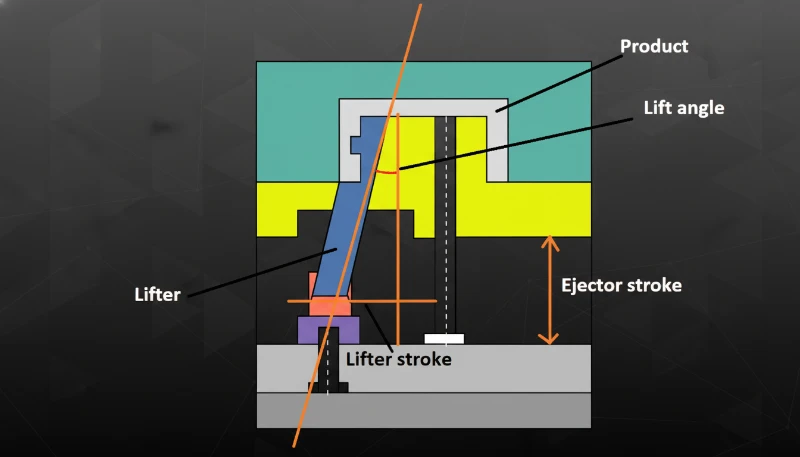
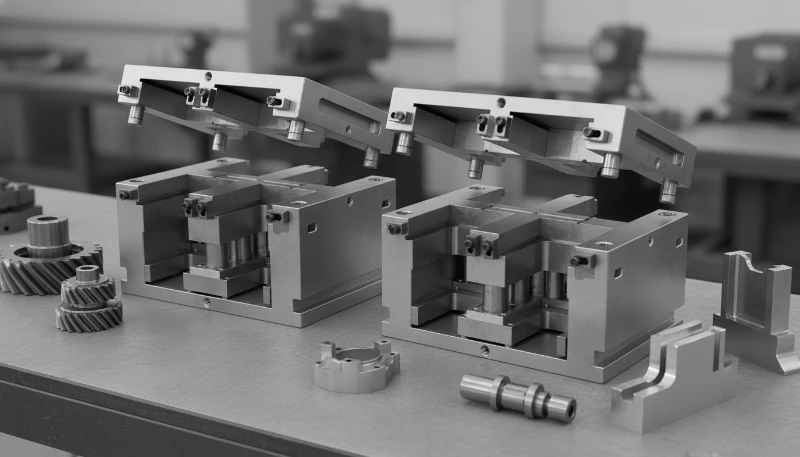
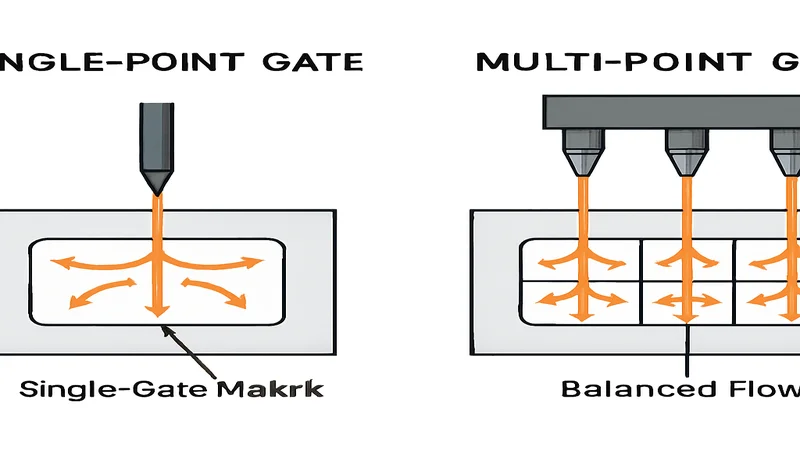
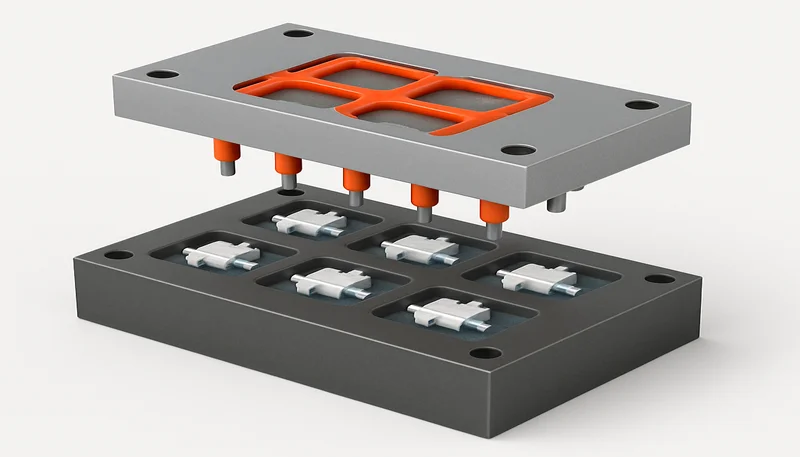
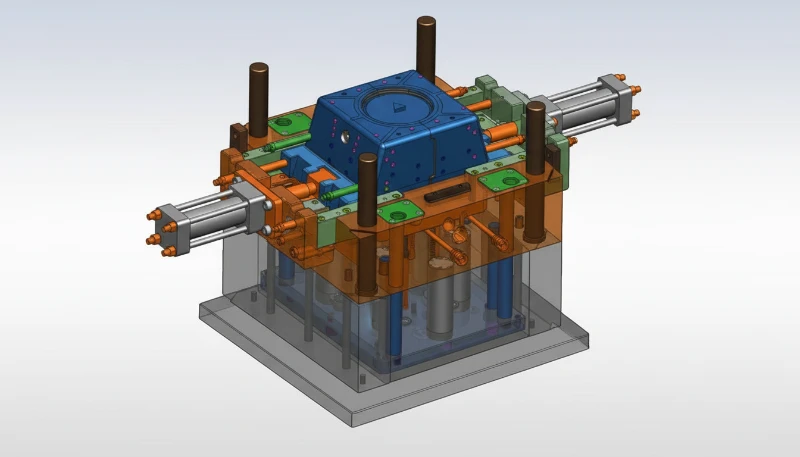
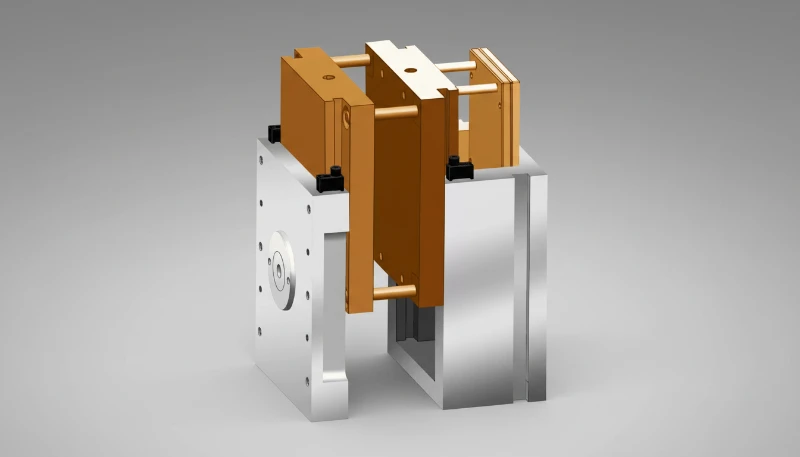
An injection mold gate system is the sprue, runner, and gate network that moves molten resin from the machine nozzle into the mold cavity. It controls fill pattern, shear heat, packing pressure, weld lines, visible gate marks, trimming work, and repeatability. For the full process context, compare this with our injection molding process guide and our injection mold complete guide. If you are comparing factories, use our injection molding supplier sourcing guide before approving quote, cost, and lead-time assumptions.
- Gate location controls melt flow, weld lines, cosmetic marks, and filling pressure.
- Gate type should match part size, resin viscosity, appearance surface, and trimming limits.
- DFM should review gate and runner design before steel cutting, not after first trial.
- Buyers should ask suppliers to explain gate choice, runner balance, and expected gate vestige.
What Is an Injection Mold Gate System?
An injection mold gate system is the sprue, runner, and gate network that delivers molten resin into each cavity.
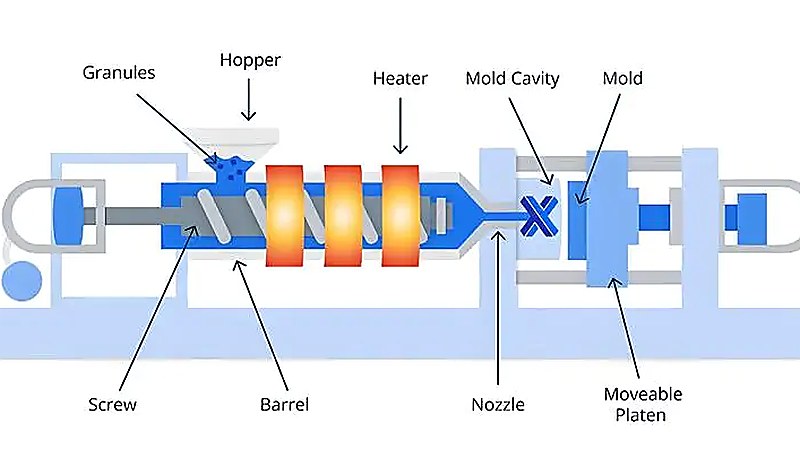
The injection mold gating system can be described as the one through which the molten plastics are transported from the injection machinery nozzle to the mold cavity during the injection molding process. The gating system is a very crucial component of the mold and it consists of features such as the sprue, runner, gate, and cold slug well.
1. Sprue: Sprue is a channel of metal that links the injection machine nozzle to the mold runner. Commonly, it is used to transport the molten plastic from the injection machine to the runner. The sprue design must ensure that the plastic material flows with ease in direct path with minimal loss of heat or pressure.
2. Runner: The runner channels directs the melt plastic from the sprue to the gate present in each of theTrees. It should also ensure that a proper quantity of the plastic reaches each gate, and there is a proper flow of the plastic.
3. Gate: These gates join the runner to the mold cavity, this cavity being the region of the mold that contains the casting material. It is the final channel through which the plastic is transferred into the cavity, and the shape and size of this passage has a direct impact in terms of the flow of the plastic and the overall quality of the final product.
4. Cold Slug Well: The Cold slug well is an injection mold component that is designed to capture and cool the first portion of the plastic that enters the press rather than allowing it to flow into the cavity. This is important in that it reduces chances of having defective products due to cold plastic.
“Gate location can change weld-line position and cosmetic acceptance.”True
Moving the gate changes the melt-front meeting point, so visible surfaces and loaded features need review before tooling.
“The smallest possible gate is always the best choice.”False
A gate that is too small can raise shear, pressure loss, freeze-off risk, short-shot risk, and material degradation.
What Does the Gating System Do?
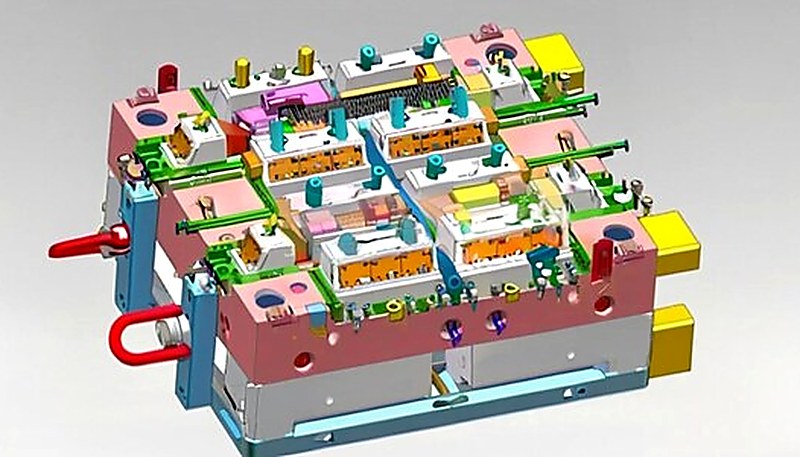
The gating system is the control path that directs molten plastic into the cavity while controlling pressure, shear, packing, and gate marks.
In production, the gate system has five practical jobs: guide melt, control pressure, manage heat, protect appearance, and support stable cycle time.
1. Guiding Molten Plastic: The gate system directs the flow of the molten form of the plastic to the mold cavity from the injection mold machine. It guarantees that the plastic is free to flow without becoming stuck or imperatively without flowing in an inconsistent manner.
2. Controlling Flow and Pressure: Through the application of size and shape, the direction of flow of the material and pressure of the overall plastic can be regulated. This impacts the overall density and mechanical properties of the particular product that is being made. According to one’s understanding and findings, flow and pressure control of molten metal in the die can minimize the formation of internal stress and enhance the quality of the final product.
3. Temperature Management: The design of the gate system influences the distribution of heat within the molten plastic which is a factor that has an impact on the molding process. This inhibits formation of defects that could have resulted from different rates of cooling. Temperature management is more crucial due to hotter and inconsistent conditions surrounding high-precision and high-quality injection molding.
4. Product Appearance Quality: The position and shape of the gate scan have vast influence on the look of the final product. For instance, they can assist you to prevent detrimental issues such as flow marks and weld lines. Appropriate gates significantly contribute to enhancing the aesthetics of the product, of particular importance is the careful creation of appropriate gates.
5. Production Efficiency: Per the case studies, a well designed gate system therefore helps to maintain and even reduce the cycle time of injection. This increases production efficiency. Short cycle times and quick production rate are aul objects in modern manufacturing and proper design of gating system play vital role in achieve these objectives.
Which Gate Types Are Common in Injection Molding?
Common gate types are direct, edge, submarine, fan, ring, overlap, diaphragm, and valve gates.
| Gate type | Best use | Main risk | Buyer check |
|---|---|---|---|
| Direct sprue | Large or thick parts | Large vestige | Can the mark be hidden? |
| Edge/side | General housings | Side mark or weld line | Is the gate on a non-cosmetic edge? |
| Submarine | Automatic degating | Tooling complexity | Can the resin shear safely? |
| Fan | Thin or wide parts | More trimming | Does it reduce weld lines? |
| Valve hot runner | High-volume production | Higher mold cost | Does volume justify the system? |
Based on the shape and function of the gate, injection mold gating systems are mainly classified into the following types:
1. Direct Gate: Direct gates directly introduce molten cyclic to the cavity as they are best suited for large parts and those with thick walls. Their advantage is ability to provide low flow resistance, whereas there is risk of forming flow marks and bubbles, and to control them, mold temperature and injection speed should be regulated.
2. Side Gate: Side gates feed molten plastic from the side of the mold cavity usually used for the formation of products of average and small size. Their advantage is the simplicity of the structure, as well as ease of processing and utilisation However, the application of these varieties in thick-walled products is limited due to the presence of side gates, which in turn affects the distribution of plastic flow and weld lines.
3. Submarine Gate: This kind of gates are hidden, normally placed inside or at the back side of the product, mostly preferred for the products that have extreme cosmetic appeal. Their gain is that they have aesthetically pleasing products, but they are difficult to work with and need intricate production molds.
4. Fan Gate: Fan gates spread molten plastic into the cavity, suitable for thin-walled or large-area products. They have the advantage of even flow, which effectively reduces weld lines, but they are difficult to process and require precise runner design.
5. Ring Gate: Ring gates are suitable for ring-shaped or cylindrical products, ensuring even distribution of molten plastic. They have the advantage of stable flow, suitable for high-precision products, but processing costs are high and require high mold manufacturing precision.
6. Overlap Gate: Overlap gates are similar to side gates, but a portion of the overlap gate overlaps with the thickness of the molded product, so no witness mark will be left on the side of the molded product. Overlap gates are usually used to prevent jetting. Typical overlap gate sizes are 0.4-6.4mm thick and 1.5-12.7mm wide. The disadvantage is that gate processing on the parting surface is more difficult.
“Runner balance1 matters more in multi-cavity molds.”True
Unbalanced runners can fill cavities at different speeds, creating weight, dimension, and appearance variation.
“Gate design can wait until mold sampling.”False
Changing gate location after steel cutting is slower and more expensive than confirming it during DFM and mold-flow review.
How Should Engineers Design a Gate System?
A gate system should be designed around resin viscosity, wall thickness, cosmetic surfaces, flow length, and trimming limits. Gate land2 length should be checked together with resin viscosity because it affects shear, freeze-off, and the visible gate vestige.
The design of the gating system directly impacts the injection molding effect. Here are some key design principles:
1. Determine a Reasonable Gate Position: The gate should be located where the thickness of the part is the largest or in the central area of the block in order to ensure an even filling of the cavity and weld lines and sink marks are eliminated. The gate position should also take into consideration the flow direction of the product as well as the subsequent processes that the product will be subjected to.
2. Choose the Appropriate Gate Type: Determine which type of gate is suitable for a particular shape and size, this will also depend on the use of the product. Different types of gates are appropriate for different flows, and have different effects on resistance, filling abilities, and post-processing, so the appropriate gate type is complicated.
Gate Size and Runner Balance Checks
3. Optimize Runner Design: As for the runner’s length, it should be as short and direct as it can be to minimize pressure drop and heat loss at the same time offering the necessary flexibility and molding capability for the plastic. The channel cross section geometry and dimensions also need to be optimized depending on the flow characteristics of the plastic and cooling demands for the mold.
4. Control Gate Size: The size of the gate should be determined based on the volume of the product and the injection capacity of the injection machine to avoid being too large or too small, affecting the filling effect. An oversized gate requires more time to cool and increases the cycle time, while an undersized gate may cause insufficient filling. In practice, gate thickness is typically 50–75 % of the part wall thickness at the gate location, and gate land length should not exceed 1 mm for most engineering resins.
For example, on a 2.5 mm wall-thickness housing, we typically target a gate depth of 1.3–1.9 mm with a land length of 0.5–0.8 mm to balance fill pressure and gate vestige.
5. Consider Ejection Ease: The design of the gate should facilitate product ejection, avoiding ejection difficulties caused by the gate being too large or too small. Factors such as ejection force, direction, and gate shape and position should all be fully considered in the design.
6. Balance Mold Manufacturing Cost: While ensuring product quality and production efficiency, the design of the gating system should be as simple as possible to reduce mold manufacturing costs. Reasonable design can reduce the difficulty and time of mold processing, reducing production costs.
What Practical Risks Should Buyers Check?
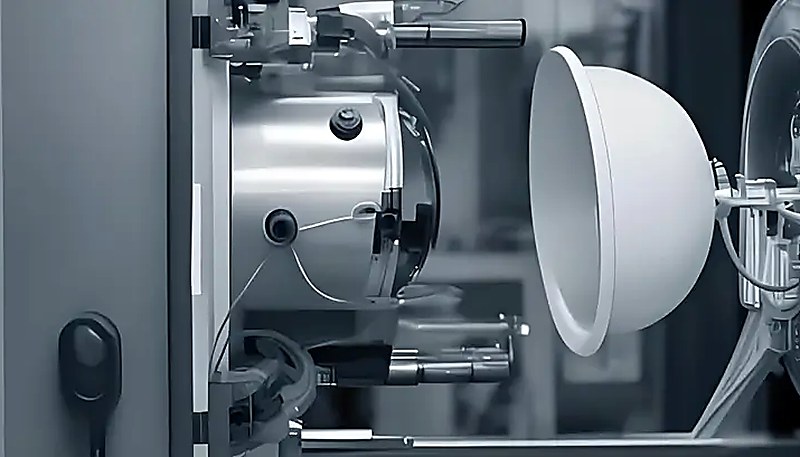
The practical risks are visible gate marks, weld lines, burn marks, pressure loss, runner waste, and missing DFM evidence.
In our factory, our engineers review gate location, runner balance, resin flow, and expected gate vestige before mold cutting. With more than 20 years of tooling experience, injection machines from 90 ton to 1850 ton, and large-part projects up to 10 kg, we treat gate design as a production-risk decision rather than a drawing detail. Our in-house mold manufacturing capacity supports 100+ mold sets per month, and our 8 senior engineers help review mold risks before production release. A formal DFM review3 should document the gate choice, runner balance, expected weld-line position, and any cost tradeoff before mold steel is released.
1. Avoid Bubbles and Burn Marks: Prevent setting up in gate design to allow molten plastic to create bubbles or local overheating that causes burns marks resulting from flow. The issues of bubbles and burn marks on runners could be mitigated if proper runner design and gate position are chosen.
2. Control Shear Stress: Fictiously, in the gate and runner design, shear stress should be kept to the minimum that cannot degrade the molten plastic or make the runner prone to breaking. High shear stress will result onto platic performace decline reducing the product mechanical strength and life.
How to Reduce Gate System Risk
3. Reduce Waste and Secondary Processing: Incorporating a reasonable gating system can also eliminate or maintain a minimal level of gate wastage, minimize cost, and minimize the amount of secondary processing time required for a product. Operater should ensure that gate position and size are properly situated in a way that enhances optimal use of the material and ensure minimal wastage.
4. Ensure Uniform Mold Temperature: It is a crucial factor that relates to the injection moulding process, and balancing the mean temperature of the mold so that heat difference does not cause issues with the final product. There are two dependent processes of heating and cooling, so the mold temperature control system should provide a good balance of the temperature.
5. Regular Maintenance and Inspection: The frequency of use is another issue and since many plants and industries employ the gating system for long hours of use, they may experience wear and tear on the system and this may call for frequent inspection and maintenance in order bring the system back to normal status. Issues detected and reported early enough within the gating system can make the difference between a successful production and a range of quality issues that may arise from a faulty gating system.
Where Do Gate Choices Change by Application?
Gate choices change by application because appearance, strength, cycle time, resin, and trimming requirements are different for each part.
By analyzing specific cases, we can better understand the design and optimization methods of the gating system in practical applications.
1. Automotive Parts: Submarine gates are usually utilized in the injection molding of automotive parts to provide aesthetic finishes to the end products while taking into account the ability to withstand high-temperature and high-pressure operating conditions. For instance, manufacturing automotive dashboards involves stringent precision and excellent customer-facing surfaces; submarine gates can well solve this motion-induced surface defects problem and enhance the products’ mechanical attributes.
2. Household Appliance Casings: Fan gates or side gates are often applied to household appliance casings; this can make large-area products have precise and balanced filling and environmentally-preferred surface quality. For instance, in injection molding of television casings, thin-walled parts must have their gate positioned in such a way that it enables uniform filling, omitting the weld lines and deformations that affect the quality of the final product.
How Gate Choice Changes by Product Category
3. Medical Devices: Many parts that deal with medical devices need high accuracy and the cleanliness of the parts; some of the parts use multigate or ring gate to get optimal and accurate dimension and structure inside. For instance, the production of syringes should employ a precise and clean method in which the use of ring gates will minimize the irregularity of plastic in the syringes, thus increasing reliability.
4. Electronic Product Casings: Electronic LCA casings have high appearance quality and have to maintain accurate dimensions; normally employing submarine gates or side gates. For instance, the automobiles’ door frames need high production precision since they are injection molded phone casings and the structural designing of submarines’ gates can enhance aesthetics by preventing surface defects which are minimized by submarine gates.
5. Packaging Products: Using direct gates or multi-point gates, packaging products usually demand the high-speed cycle time, efficiency production need. For example, the manufacturing of plastic bottle caps involves short cycle time and hence using direct gates can contribute directly to fast speed of production and thereby minimize the cost of production.
What Trends Are Changing Gate System Design?
Simulation, hot runners, valve gates, and automated process monitoring are changing how engineers choose and validate gates.
In manufacturing processes with new technology, as well as various changes in market requirements, gating systems require constant innovation. Future gating system design will focus more on the following aspects:
1. Intelligent Design: CAD/CAE technologies can be useful for improvement of the gating system to make it better designed and more effective. Optimizations of the gate positions, runner design, and gate sizes is possible through simulation analysis, which increases the standard capacity of design.
2. Environmental Protection and Energy Saving: Although gating system design is a significant aspect in the entire flow of the system, future gating system design will focus on using minimal material and energy as possible. This way, waste is minimized, material utilization is maximized, and energy consumption during the production of a particular product is lowered; ambient environmental goals of protection are also attained as per energy saving.
3. Customization and Flexible Production: Additionally, with the changes in market demands and consumers’ requirements, the construction of gating system would be much more diversified and personalized as it also caters with the specific requirement of the product type. Flexible production lines and modular mold design will also be future trends that are certain to keep on enhancing production flexibility and productivity.
4. Application of New Materials: Since new materials are being developed almost daily, it is clear that gating system design has to accommodate changes regarding the material type. Further, it is noteworthy that the use of new materials will promote the development of gadget system design in terms of product use, performance and quality.
5. Automation and Smart Manufacturing: In further development of gating system, computer control and automatic manufacture control system will be introduced to reduce human intervention to the lowest level possible, therefore, allowing intelligent management of the production process. Employing IIoT and big data doesn’t only allow to supervise the production process in real time, but enhance it, making it faster and creating higher-quality products.
Frequently Asked Questions
What is the gate system in injection molding?
The gate system is the sprue, runner, and gate network that carries molten plastic from the injection machine into the mold cavity. It controls filling pressure, shear heat, packing behavior, weld-line position, gate vestige, and trimming work. In buyer terms, the gate system is an early mold-design choice that can decide whether a part is easy to produce, difficult to qualify, or expensive to correct after sampling during production validation. The practical check is whether the supplier can explain the gate choice with drawing evidence before quoting.
What is the difference between a gate and a runner in an injection mold?
A runner carries molten plastic through the mold, while a gate is the final opening into the cavity. The runner distributes melt from the sprue toward one or more cavities, and the gate controls where that melt enters the part. Runner balance affects cavity-to-cavity consistency, while gate size and location affect cosmetic marks, shear, freeze-off, weld lines, and whether the part can be degated cleanly in production. This distinction helps buyers ask clearer DFM questions instead of accepting a generic mold layout. It should be confirmed in the tooling plan.
Which injection mold gate type is best?
There is no single best gate type for every injection molded part. The best option depends on part size, wall thickness, resin viscosity, cosmetic surface, tolerance risk, annual volume, and whether automatic degating is required. A side gate may suit a housing edge, a submarine gate may help automatic trimming, and a valve hot runner may be justified when material waste or cycle time matters more than mold cost. The supplier should connect the recommendation to resin behavior, appearance requirements, and expected production volume.
How does gate design affect injection mold cost?
Gate design affects mold cost through machining complexity, runner system choice, insert design, hot-runner requirements, and rework risk. Simple cold-runner edge gates are usually cheaper to build, while submarine gates, valve gates, and hot-runner systems can increase tooling cost. Buyers should compare gate vestige, cycle time, scrap, material waste, maintenance, and whether a late gate change would require welding or re-machining. That comparison prevents a low initial mold price from becoming higher total production cost. It should be confirmed in the tooling plan.
When should gate location be reviewed?
Gate location should be reviewed during DFM and before mold steel is cut. At that stage, the supplier can still adjust parting line, runner layout, ejector position, cosmetic surface protection, weld-line location, and cooling access without expensive rework. If the problem is found after sampling, the correction may require new inserts, welding, re-machining, or accepting a visible mark that could have been avoided. Early review also gives the buyer written evidence to compare suppliers on engineering quality. It should be confirmed in the tooling plan.
Can ZetarMold review gate design before quoting?
Yes. ZetarMold can review part drawings, 3D files, resin choice, cosmetic surfaces, tolerance needs, annual volume, and assembly requirements before the final tooling quote. The review can flag risky gate locations, runner-balance concerns, weld-line risks, trimming issues, and cost tradeoffs. This makes the quote more useful because it connects price with manufacturability instead of treating the mold as a simple steel block. For critical parts, this review should be completed before purchase order approval and mold kickoff. It should be confirmed in the tooling plan.
What Should Buyers Do Before Tooling?
Buyers should ask for a gate-location review, runner-balance check, and DFM comments before approving mold manufacturing.
Good gate design improves filling stability, surface quality, cycle time, and tooling cost control. Buyers should confirm gate type, gate location, runner balance, and DFM evidence before approving mold manufacturing.
Need a Quote for Your Injection Molding Project?
Get competitive pricing, DFM feedback, and production timeline from ZetarMold’s engineering team.
Request a Free Quote → Send your 3D file, resin target, annual volume, cosmetic requirements, and tolerance notes. ZetarMold will review gate location, runner concept, DFM risks, and production assumptions. Use our injection molding process guide and supplier sourcing guide when comparing quote, cost, and lead time.
-
Runner balance: Runner balance refers to a runner-sizing approach that keeps pressure drop and fill timing similar across cavities. ↩
-
Gate land: Gate land refers to the short constant-section area at the gate that affects shear, freeze-off, and gate vestige. ↩
-
DFM review: DFM review refers to an engineering review that checks gate, runner, wall thickness, draft, cooling, ejection, and tooling risk before steel cutting. ↩