 Skip to content

- Side actions, unscrews, lifters, and collapsible cores handle undercuts
- Undercut depth-to-diameter ratio determines which method works best
- Collapsible cores handle deeper undercuts than side actions
- Side pullers increase tooling cost by 15–20% per undercut feature
- DFM review before tooling prevents expensive design revisions
“Side actions handle undercuts up to 6 mm deep effectively and cost less than unscrewing mechanisms.”Vrai
undercuts1 use angle pins or side cores that pull perpendicular to mold opening direction. They are suitable for shallow external undercuts on part surfaces where mold design provides perpendicular access. Deeper than 6 mm causes pin deflection or insufficient ejection force.
“Unscrewing mechanisms are always required for threaded features.”Faux
In reality, external threads on small parts with shallow thread depth can sometimes be stripped during ejection without unscrewing. However, most threaded features including internal threads, long threads, and bottle caps require unscrewing mechanisms because threaded cores trap parts during normal ejection.
Understanding undercut mechanisms is essential for anyone involved in moulage par injection—these design choices directly affect tooling cost, cycle time, and part quality. Each undercut type—side action, unscrewing, collapsible core, and lifter—addresses specific undercut geometries in moule d'injection design and depth requirements. Selecting the right mechanism during the design phase prevents expensive tooling revisions and ensures reliable production throughout the product lifecycle. The following sections detail each mechanism type with specific design guidelines and cost implications.
“collapsible cores2 handle deeper internal undercuts than side actions or lifters.”Vrai
Collapsible cores use segmented core sections that collapse inward during ejection. They handle internal undercuts up to 20 mm deep and are preferred for complex internal geometries like internal snap-fits where side access is blocked by part geometry.
“Adding more undercuts to a part always increases cost linearly.”Faux
In reality, multiple undercuts increase tooling complexity multiplicatively. Two simple undercuts cost approximately 50% more than one undercut. Three or more undercuts require multiple mold actions, increasing tooling cost by 100-200% compared to undercut-free designs.
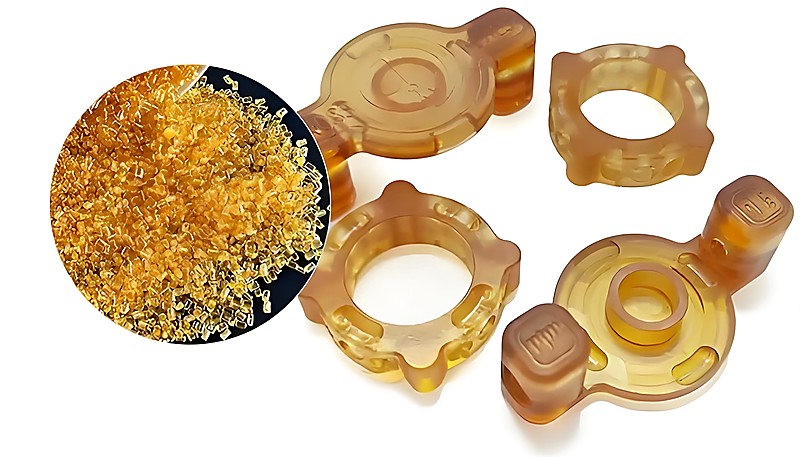
What Are Undercuts in Injection Molding?
Undercuts are features that prevent part ejection from mold. They include side holes, threads, bosses, snap-fits, and external ribs oriented perpendicular to mold opening direction. Every undercut requires a specialized ejection mechanism in mold design.
Injection mold designers classify undercut severity into three tiers based on depth-to-diameter ratio. Tier 1 undercuts (ratio below 0.25) use simple side pullers or angle pins and add minimal cost. Tier 2 undercuts (ratio 0.25 to 0.5) require lifters or collapsible cores with moderate cost impact. Tier 3 undercuts (ratio above 0.5) demand unscrewing mechanisms or multi-stage ejection systems that significantly increase tooling complexity and mold base size. Proper classification during the design phase prevents costly tooling modifications later.
Each undercut type interacts with the overall mold architecture differently. Side actions require additional space in the mold base for angle pin guides and return springs. Unscrewing mechanisms need room for rack-and-pinion assemblies or hydraulic drive units. Collapsible cores demand precise tolerance control in the core segments to prevent flash during injection. These architectural constraints mean that undercut selection affects not just the ejection system but the entire mold layout and machine tonnage requirements.
Undercut Severity Classification
Design engineers must evaluate undercut requirements alongside part function, assembly method, and target production volume to make informed trade-off decisions before finalizing the mold design approach for any project.
Tooling cost varies significantly based on undercut complexity and production requirements. Simple external undercuts using side pullers cost $500–$1,200 per feature and work reliably for shallow depths under 6 mm. Unscrewing mechanisms for threaded features cost $2,000–$5,000 per cavity but enable geometries otherwise impossible to mold. Collapsible cores for complex internal undercuts cost $3,000–$7,000 per cavity and handle geometries up to 20 mm deep that side actions cannot reach. Always compare tooling cost against production volume and part requirements to select the most cost-effective undercut solution.
In our 20+ years running injection molds at ZetarMold’s Shanghai facility, we see undercuts in approximately 35% of the 100+ mold sets we build each month. Threaded features (screw bosses, bottle threads) are the most common, followed by snap-fit details and side windows. Our 8 senior engineers—with 10+ years of experience each—review undercut feasibility as a mandatory step in every DFM review before cutting steel.
Undercut complexity affects tooling cost. A part with two simple undercuts costs approximately 25-35% more to tool than an equivalent undercut-free design. Multiple undercuts or internal undercuts increase tooling cost by 50-80% and require complex mold actions like collapsible cores or unscrewing mechanisms.
When Should You Use Side Actions?
Side actions use angle pins or side cores that pull perpendicular to mold opening direction. They work best for shallow undercuts under 6 mm deep. Side pullers cost less than unscrewing mechanisms but have depth limitations.
Use side actions when undercut depth is 3-6 mm and undercut feature is on exterior surface. Deeper than 6 mm causes pin deflection or insufficient ejection force. Side pullers work well for side holes, slots, and external undercuts with simple geometry.
Side actions add approximately $500–$1,200 per undercut to tooling cost depending on complexity. Multiple side actions on one cavity increase tooling cost multiplicatively. For high-volume production, this upfront cost pays back through reduced per-part ejection complexity.
How Does Unscrewing Design Work?
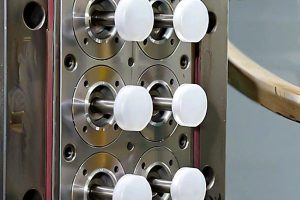
Unscrewing mechanisms rotate threaded features out of mold during ejection. They handle threaded holes, threaded bosses, and external threads up to 150 mm in diameter. Unscrewing cores drive via rack-and-pinion, hydraulic motor, or electric servo.
Threaded features require unscrewing in most cases because threaded cores trap part during normal ejection. Common parts needing unscrewing include bottle caps, threaded closures, screw bosses, and cylindrical components with external threads. The thread pitch and length determine rotation requirements.
Unscrewing adds significant tooling cost—approximately $2,000–$5,000 per cavity depending on thread complexity and drive mechanism. Unscrewing also increases cycle time by 2-4 seconds due to required rotation and retraction. Design parts with minimum thread length and avoid unscrewing if thread can be added during secondary operations.
What Are Collapsible Cores and When Are They Used?
Collapsible cores use segmented core sections that collapse inward during ejection. They handle internal undercuts up to 20 mm deep and are preferred for complex internal geometries like internal snap-fits, internal ribs, and complex internal undercut features.
Collapsible cores cost more than side actions but handle deeper internal undercuts that side pullers cannot reach. The core segments retract into a guide pillar during ejection, creating clearance for undercut features to pass through. Collapsible cores reset when mold closes, driven by springs or hydraulic actuators.
Use collapsible cores for internal undercuts 6-20 mm deep where part geometry prevents side access. They increase tooling cost by $3,000–$7,000 per cavity but enable geometries that otherwise would require assembly of multiple parts.
How Do Lifters Handle External Undercuts?
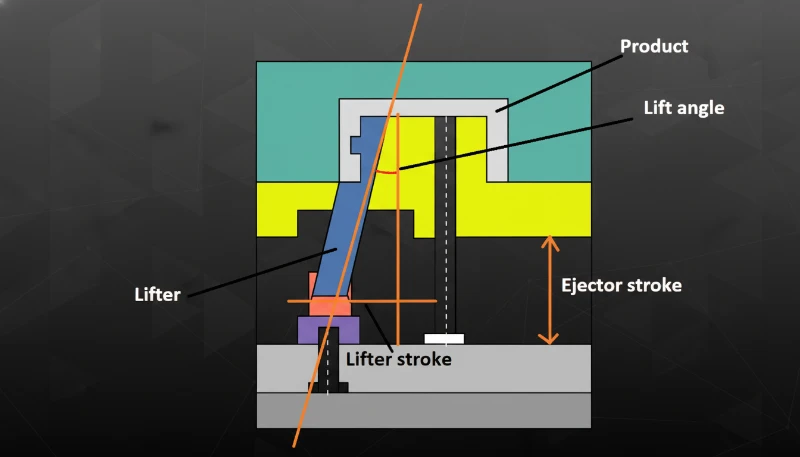
Lifters are angled pins that push parts out from undercut features during ejection. They work best for external undercuts like side holes, slots, and external ribs that are shallow and accessible from parting line. Lifters typically use 5-15 degree draft angle to push parts clear of undercut features.
Lifters cost less than collapsible cores for simple external undercuts. However, lifter travel must accommodate undercut depth. If undercut exceeds lifter travel, part remains trapped in mold. Design undercut features with lifter-friendly geometry—straight sidewalls, no reverse drafts, and adequate clearance for lifter movement.
Use lifters for external undercuts under 8 mm deep on part exterior surfaces where mold design provides access. Lifters add $800–$1,500 per feature to tooling cost but offer reliable ejection for simple undercut geometries.
How Do You Choose the Right Undercut Solution?
Select undercut mechanism based on undercut depth, location (internal/external), and production volume. Simple external undercuts under 6 mm deep work well with lifters. Deeper external undercuts or threaded features require unscrewing. Internal undercuts over 6 mm deep need collapsible cores.
Depth-to-diameter ratio is the primary design guide. Undercuts shallower than 25% of feature diameter resolve with side actions. Undercuts deeper than 50% of feature diameter require unscrewing or collapsible cores. Multiple undercuts multiply tooling complexity.
Tooling cost escalation follows undercut complexity closely. Each additional undercut mechanism multiplies tooling complexity rather than adding linearly. A single internal undercut with collapsible core costs $3,000-$7,000 per cavity, while adding a second internal undercut on the same part increases total mechanism cost by 60-80%. Plan undercut features during product design phase to minimize total mechanism count and reduce overall tooling investment.
Production volume affects cost justification. Low-volume projects (under 50,000 parts) should avoid complex undercut mechanisms. High-volume production (500,000+ parts) justifies upfront tooling cost for unscrewing or collapsible cores that reduce cycle time or eliminate assembly operations.
Cost-benefit analysis guides mechanism selection by comparing upfront tooling investment against production volume. A $3,000 collapsible core on a part running 500,000 annual shots saves approximately 2 seconds per cycle compared to secondary machining, recovering tooling investment within the first year. Our engineering team provides detailed undercut solution analysis during DFM review3 to help clients optimize tooling cost and production efficiency.
Questions fréquemment posées
What is maximum undercut depth for side actions?
Side actions handle undercuts up to 6 mm deep effectively in most injection molding applications. Beyond 6 mm, side pins deflect or lack sufficient ejection force due to increased surface area and friction between the part and mold steel. Deeper undercuts require collapsible cores or unscrewing mechanisms for reliable ejection. Side pullers work best for external undercuts on part surfaces where mold design provides perpendicular access through the parting line. Always verify undercut depth matches selected mechanism capabilities through DFM review before building tooling to avoid ejection failures, mold damage, and production downtime.
Does undercut depth affect tooling cost?
Undercut depth directly impacts tooling cost in injection molding. Shallow undercuts under 3 mm add $300–$800 to tooling cost and use simple angle pins or side cores. Medium undercuts 3–8 mm add $800–$1,500 and require more robust ejection systems. Deep undercuts over 8 mm or internal undercuts requiring collapsible cores add $2,000–$7,000 per cavity depending on complexity. Complex undercut mechanisms like unscrewing add $2,000–$5,000 per cavity due to precision mechanical components and drive systems. Always calculate total tooling cost including all undercut mechanisms before committing to undercut features in part design.
Can internal undercuts be avoided during design?
Internal undercuts often eliminate through design changes during the DFM phase. Adding proper draft angles to internal ribs, removing unnecessary internal snap-fits, or redesigning part as assembly of two components eliminates need for collapsible cores and reduces tooling cost. DFM review before tooling saves $3,000–$15,000 in redesign and re-tooling costs by identifying alternative design approaches. Consider design alternatives like living hinges, external snap-fits, or split-part assembly that avoid internal undercut geometry entirely while maintaining product functionality. Early collaboration with mold engineers helps identify cost-saving design modifications before cutting steel.
What happens if undercut is too deep for selected mechanism?
Over-deep undercuts cause serious production problems including part trapping, damage to mold components, incomplete ejection, and production downtime. Side actions on deep undercuts result in pin breakage, mold damage, or incomplete part removal. Collapsible cores on undercuts exceeding design limits cause core collapse, failure to retract, or part damage during ejection. Unscrewing mechanisms on too-long threads cause excessive cycle time, drive system damage, or thread damage. Always verify undercut depth matches selected ejection mechanism capabilities through DFM analysis, physical testing, or simulation before tooling production to avoid these issues and ensure reliable production.
How many undercuts can one part have?
Multiple undercuts increase tooling complexity multiplicatively in injection molding. Two simple undercuts cost approximately 50% more than one undercut due to additional mold actions. Three or more undercuts require multiple mold actions, increasing tooling cost by 100-200% compared to undercut-free designs. Complex undercut arrangements may exceed machine size limits, increase cycle time, or require multiple production steps. Design parts to consolidate undercut features, avoid unnecessary undercut geometry, or use alternative assembly methods to minimize tooling cost and production complexity. High-volume production justifies complex multi-undercut molds, while low-volume projects benefit from simplified designs.
Does thread pitch affect unscrewing requirements?
Thread pitch significantly affects unscrewing requirements in injection molding. Thread pitch determines rotation count during unscrewing operations. Coarse threads with larger pitch require fewer rotations than fine threads with smaller pitch, reducing unscrewing cycle time. Thread length multiplied by pitch equals total rotation required to remove part from mold. Design threads with minimum pitch that meets functional requirements to reduce cycle time and improve production efficiency. Consider unscrewing cycle time impact on production throughput when selecting thread specifications and discuss trade-offs with engineering team.
What is undercut depth-to-diameter ratio?
Depth-to-diameter ratio is undercut depth divided by undercut feature diameter in injection molding design. Ratios under 0.25 typically work with side actions. Ratios 0.25–0.5 use lifters or collapsible cores depending on geometry and accessibility. Ratios over 0.5 require unscrewing mechanisms or alternative ejection approaches. Keep undercut features as shallow as possible relative to their diameter to simplify ejection and reduce tooling cost. This ratio serves as the primary design guide for selecting appropriate undercut ejection mechanism during product development and mold design phases. Engineers use this ratio to quickly determine suitable undercut solutions before detailed DFM analysis.
Quick Rule: Always calculate undercut depth-to-diameter ratio before selecting ejection mechanism. Ratios under 0.25 use side actions. Ratios 0.25–0.5 use lifters or collapsible cores. Ratios over 0.5 require unscrewing. Request DFM review before tooling to verify undercut design assumptions and avoid expensive tooling revisions.
Factory Insight
At ZetarMold, we operate 45 injection molding machines (90T–1850T) at our Shanghai facility. Over 20+ years since 2005, our 8 senior engineers have designed molds with undercut solutions across all complexity levels—from simple lifters on 6 mm external snap-fits to multi-axis unscrewing mechanisms for 150 mm threaded closures. With 400+ materials in our processing database and 120+ production staff (70% with 10+ years of experience), we evaluate part geometry and production volume to recommend the most cost-effective undercut solution. Our mold shop produces 100+ mold sets monthly, giving us deep practical experience with undercut reliability at production scale.
Ready to discuss your undercut design? Send your 3D CAD file to our engineering team for a free DFM review. We will identify undercut risks, recommend the right ejection mechanism, and provide a detailed tooling quote within 24 hours. Contact ZetarMold today.
-
undercuts: Undercuts in injection molding are part features that prevent straight ejection from the mold, including side holes, threads, snap-fits, and external ribs oriented perpendicular to the mold opening direction. ↩
-
collapsible cores: Collapsible cores are segmented mold cores that collapse inward during ejection to clear internal undercut features up to 20 mm deep, driven by springs or hydraulic actuators. ↩
-
DFM review: DFM review (Design for Manufacturing review) evaluates part geometry for producibility before tooling investment, identifying undercut features and recommending design alternatives to optimize tooling cost. ↩



 EN
EN  ES
ES  FR
FR  DE
DE  PT
PT  AR
AR  RU
RU  JA
JA  KO
KO  IT
IT  NL
NL  TR
TR  PL
PL 