High-Precision DLP 3D Printing Services: From Prototyping to Low-Volume Production
Looking for industrial-grade DLP 3D printing services? We provide high-precision resin printing for jewelry, dental, and engineering parts with ±0.03mm accuracy. Get an instant quote for custom DLP manufacturing today.
Resources for The Complete Guide to DLP 3D Printing Services
What is Digital Light Processing (DLP) 3D Printing?
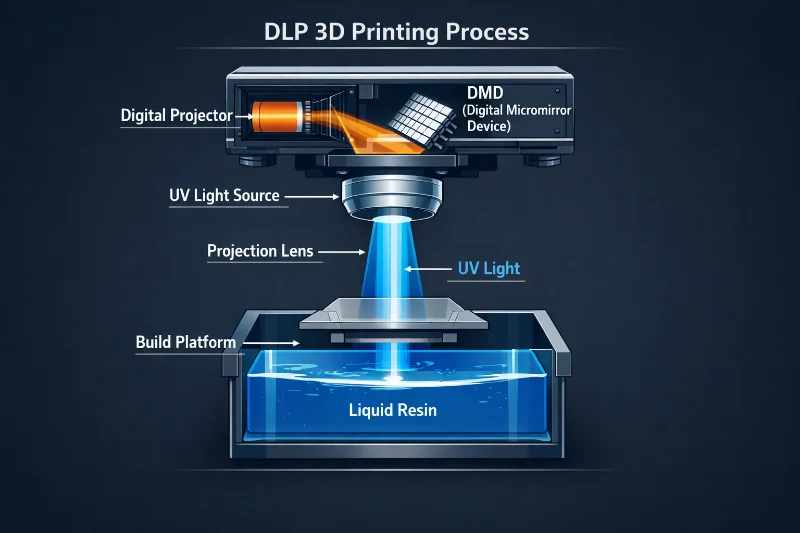
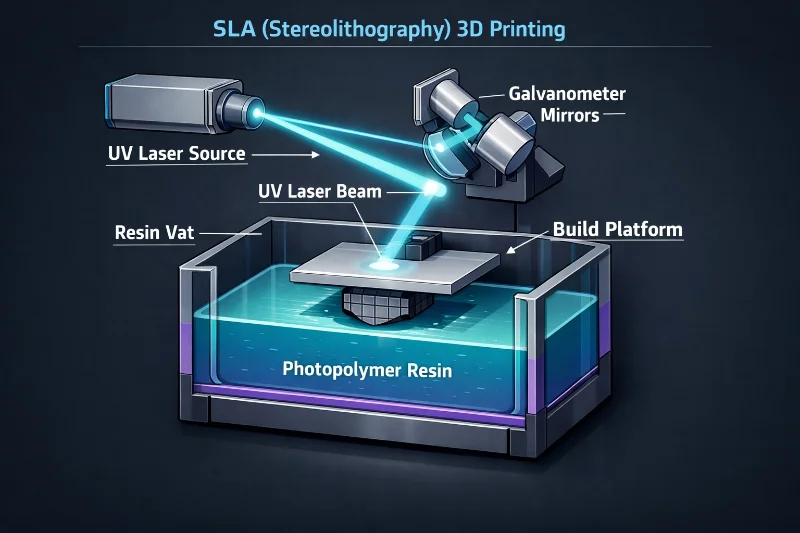
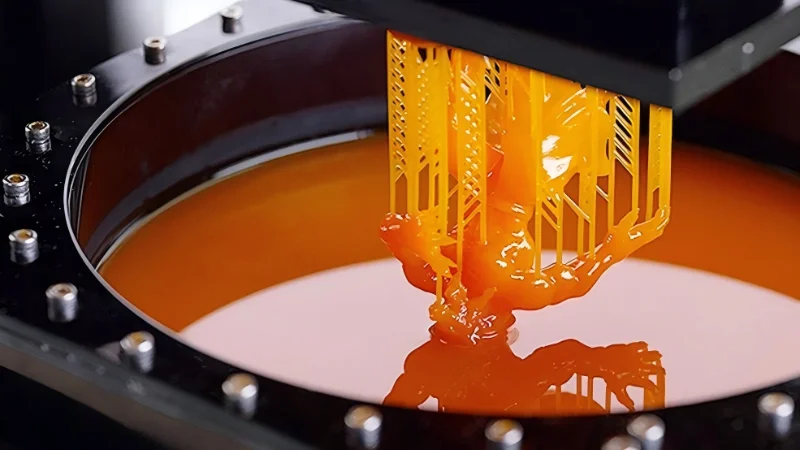
Digital Light Processing (DLP) is a vat polymerization 3D printing technology that utilizes a digital light projector screen to flash a single image of each layer across the entire platform at once. Unlike SLA (Stereolithography), which traces the path with a laser, or FDM (Fused Deposition Modeling), which extrudes filament, DLP cures liquid photopolymer resin layer by layer using a UV light source projected through a Digital Micromirror Device (DMD).
The Core Technology: How It Works?
At the heart of every industrial DLP printer is a DMD chip—often manufactured by Texas Instruments—composed of millions of microscopic mirrors. These mirrors direct UV light to cure the resin or deflect it to create dark space (voxels).
- Layer Projection: The 3D model is sliced into layers. The projector flashes the image of the entire layer onto the bottom of the resin tank.
- Curing: The UV light hardens the photosensitive resin instantly where the light hits.
- Peeling and Lifting: The build plate lifts allowing liquid resin to flow back underneath, ready for the next layer.
This process allows for incredibly fine details, sharp edges, and faster print speeds compared to laser-based systems, specifically for dense build plates.
DLP vs. SLA vs. MSLA (LCD): Which is Right for Your Project?
Choosing the right resin technology is critical for cost and quality control. While all three technologies belong to the Vat Polymerization family, their mechanisms and use-cases differ significantly.
DLP
Digital Light Processing uses a digital projector to cure entire layers at once, offering the fastest speed and highest precision for intricate details.
SLA
Stereolithography employs a UV laser to trace patterns, delivering exceptional surface quality and clarity, ideal for large prototypes.
MSLA (LCD)
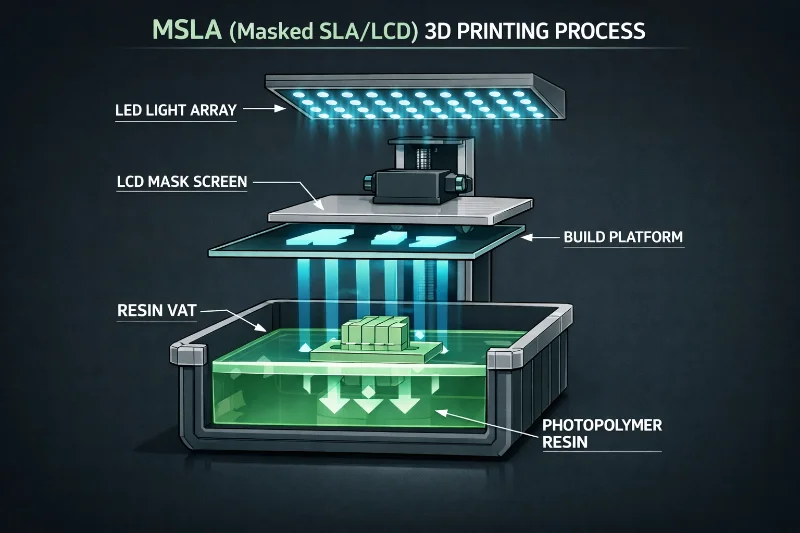
Masked SLA uses an LED array with LCD masking for cost-effective printing, perfect for hobbyists and low-cost prototyping.
| Feature | DLP | SLA | MSLA (LCD) |
|---|---|---|---|
| Light Source | Digital Projector Screen (UV) | UV Laser | LED array with LCD masking screen |
| Accuracy | Highest (Voxels). Excellent edge sharpness. | High. Laser spot size defines detailing. | Medium-High. Limited by LCD pixel density. |
| Speed | Fast. Cures the whole layer at once. Unaffected by quantity. | Slow. Laser must trace every part outline and fill. | Fast. Similar mechanism to DLP. |
| Surface Finish | Very Smooth. Potential for voxel lines (rectified by anti-aliasing). | Very Smooth. No pixel lines. | Smooth, but pixelation can occur on lower-end machines. |
| Durability | Industrial grade. Long projector lifespan. | Laser degradation over time. | LCD screens are consumables (wear out fast). |
| Best For | Intricate Jewelry, Dental, Small Engineering Parts. | Large Prototypes, Clear Parts. | Hobbyist, Low-cost prototyping. |
Verdict for Buyers
If your project requires tight tolerances, intricate details (like jewelry settings), or small-batch production speed, DLP is the superior industrial choice. For large-scale prototyping with exceptional clarity, SLA excels. For budget-conscious hobbyists and rapid iteration, MSLA offers the best value proposition.
DLP and MSLA cure entire layers simultaneously, making them significantly faster than SLA's point-by-point laser approach.
SLA delivers the smoothest surface finish with zero pixelation, ideal for applications requiring optical clarity and premium aesthetics.
MSLA offers the lowest entry cost with competitive performance, making it perfect for learning and experimentation.
Advantages and Limitations of DLP 3D Printing Services
Understanding the strengths and constraints of DLP technology ensures you select the correct manufacturing process for your needs.
1. Advantages (Pros):
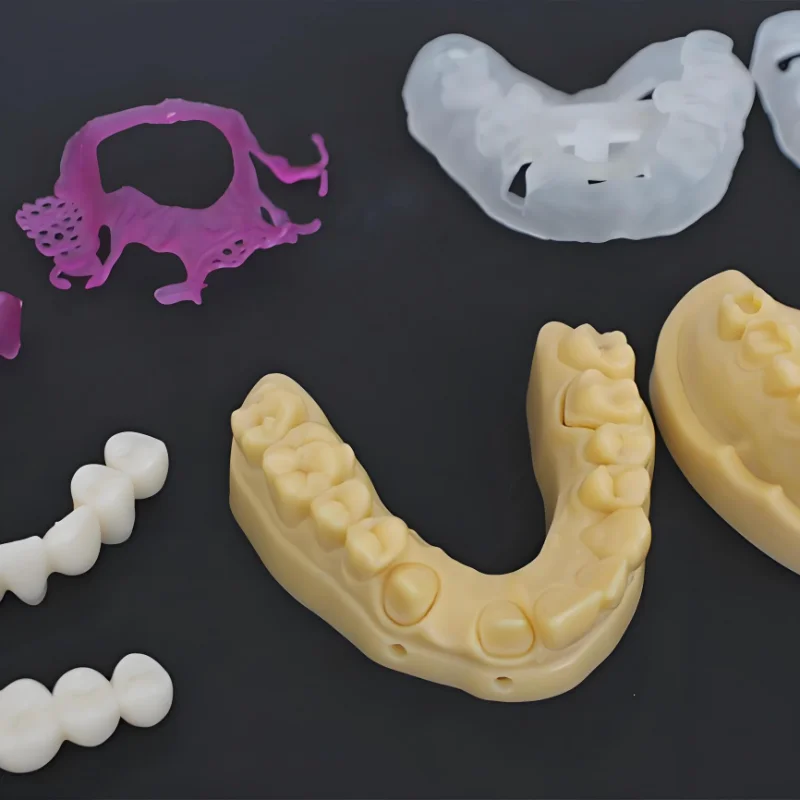
- Unmatched Precision: Capable of achieving layer heights as low as 10-25 microns and X/Y resolution of 35-50 microns.
- Speed Efficiency: Since the projector cures the entire layer simultaneously, printing 50 rings takes the same amount of time as printing one. This makes DLP ideal for short-run manufacturing.
- Isotropic Properties: DLP parts are solid and watertight, with strength that is uniform in all directions (X, Y, and Z), unlike FDM parts which are weak along layer lines.
- Surface Quality: The parts emerge with a smooth injection-mold-like finish, requiring minimal sanding compared to other technologies.
2. Limitations (Cons):
- Build Volume: Generally smaller than SLA or FDM. Best suited for parts smaller than a shoebox.
- Brittleness (Material Dependent): Standard resins can be brittle, though engineering-grade tough resins are available to mitigate this.
- Support Marks: Like all resin printing, support structures are required for overhangs, necessitating professional post-processing removal.
What Are the Most Common Materials Used in DLP 3D Printing?
We provide an industry-grade resin portfolio engineered to bridge the gap between digital design and high-performance physical production.
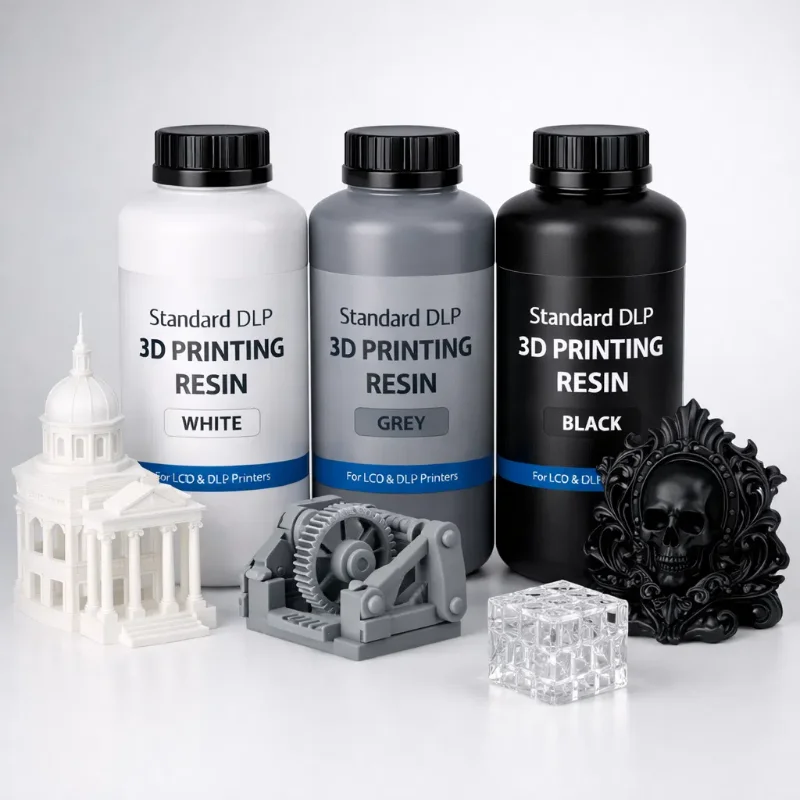
Standard Resins
(Rapid Prototyping)
Characteristics: Optimized for speed and ultra-high resolution. These resins deliver crisp details and a smooth, "injection-molded" finish with minimal post-processing.
Best For:
Aesthetic mock-ups, architectural models, and high-fidelity visual prototypes.
Available Pallet:
Opaque (White, Grey, Black) and Optically Clear.
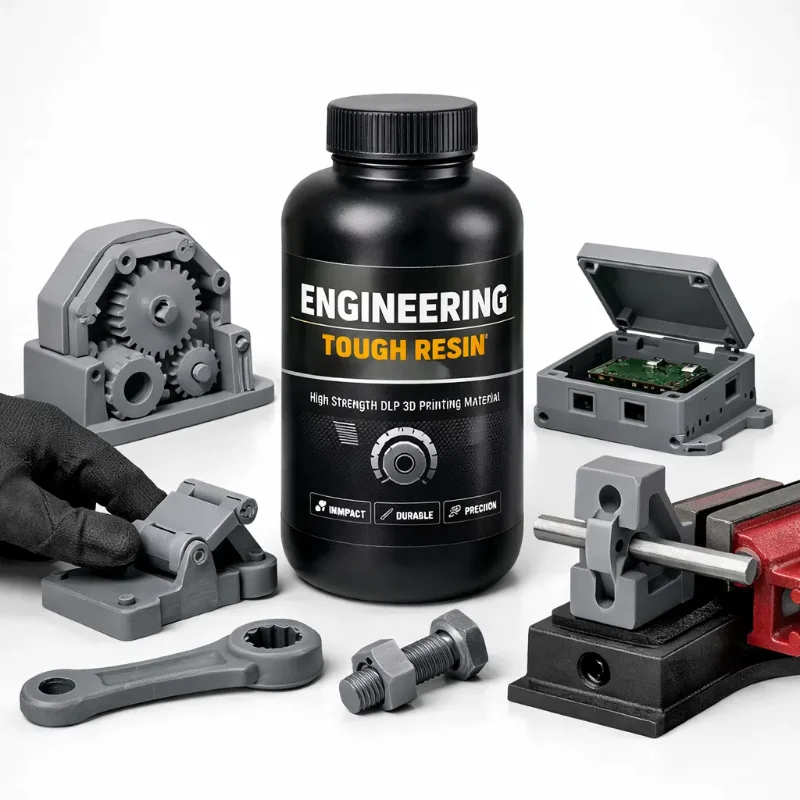
Engineering & Tough Resins
(Functional Simulants)
Characteristics: Formulated to mimic the mechanical properties of ABS or Polypropylene (PP). These materials offer a balance of high impact strength, elongation, and durability.
Best For:
Functional housings, snap-fit assemblies, and rugged jigs or fixtures that require repeated use.
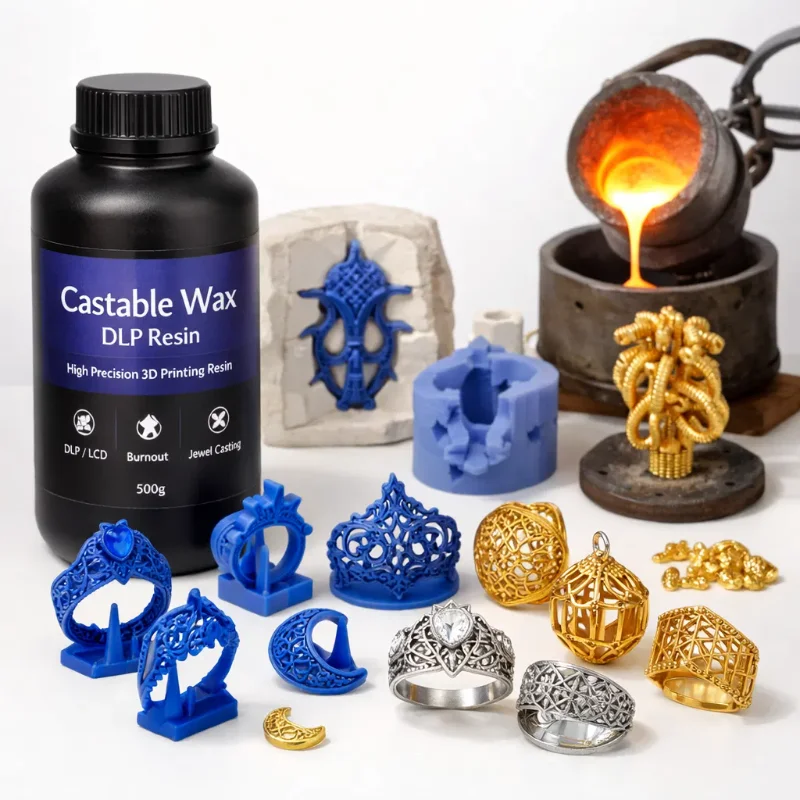
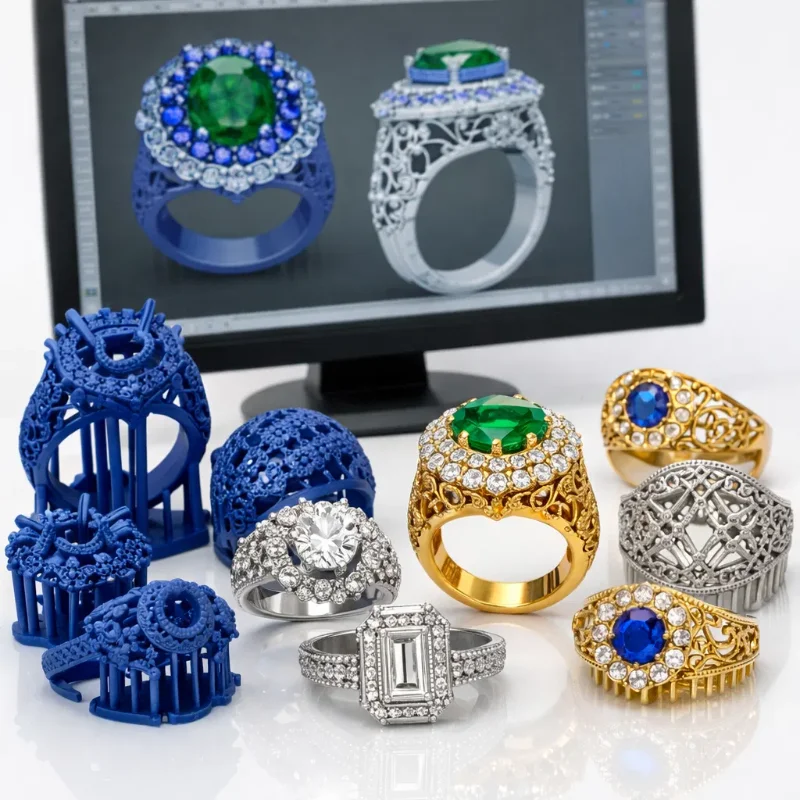
Castable Wax Resins
(Precision Casting)
Characteristics: Infused with liquid wax to ensure a clean, ash-free burnout. This material captures intricate filigree and complex geometries that traditional carving cannot reach.
Best For:
Direct investment casting for high-end jewelry (Gold, Silver, Platinum) and precision industrial components.
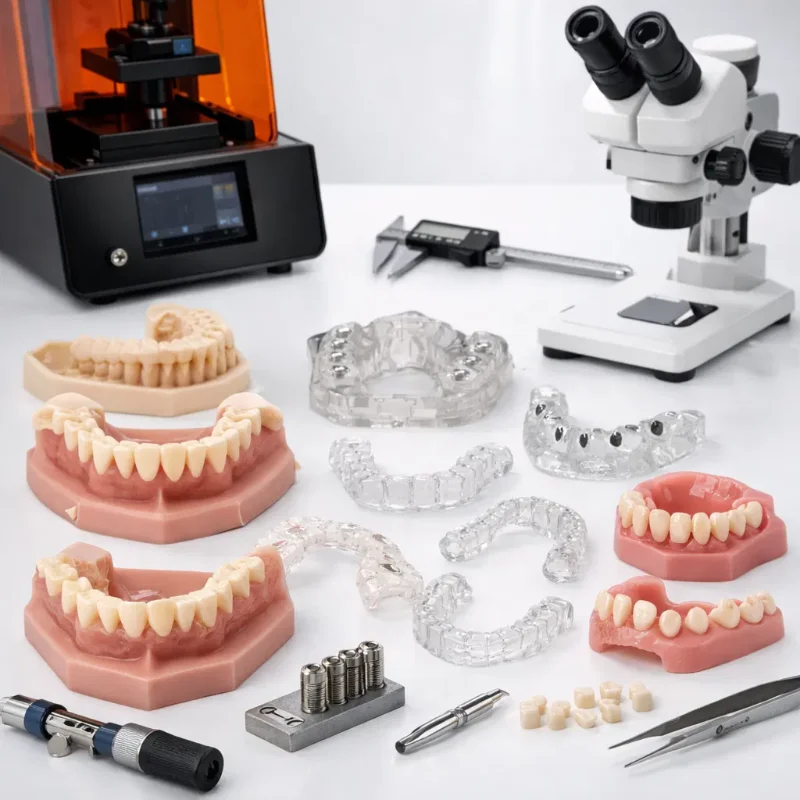
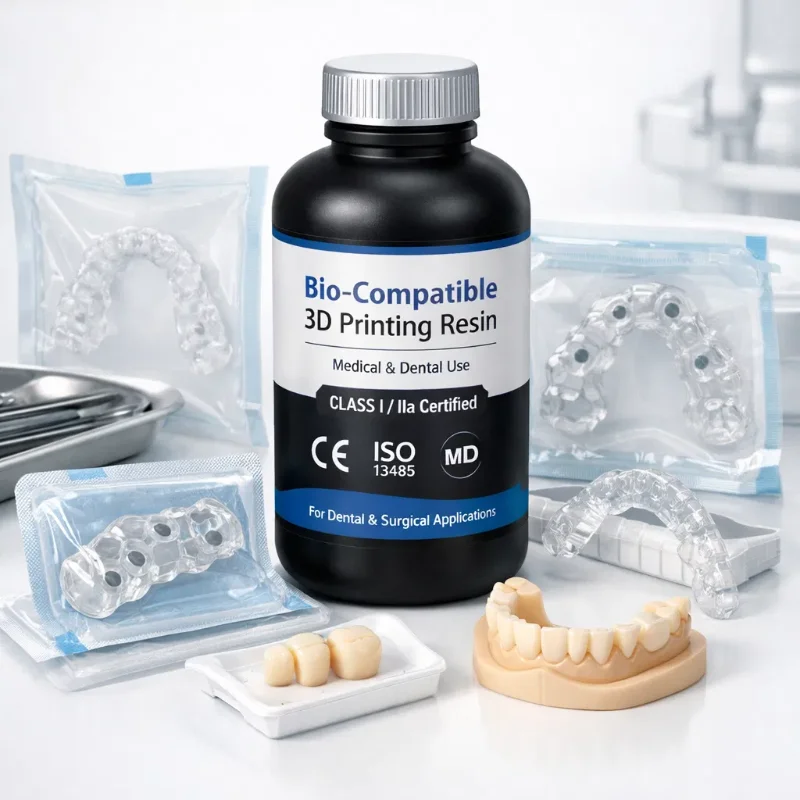
Dental & Bio-Compatible
(Medical Grade)
Characteristics: Rigorously tested and certified (Class I & IIa). These resins are designed for safety, sterilization, and long-term intraoral stability.
Best For:
Surgical drill guides, clear aligners, orthodontic splints, and temporary crowns.
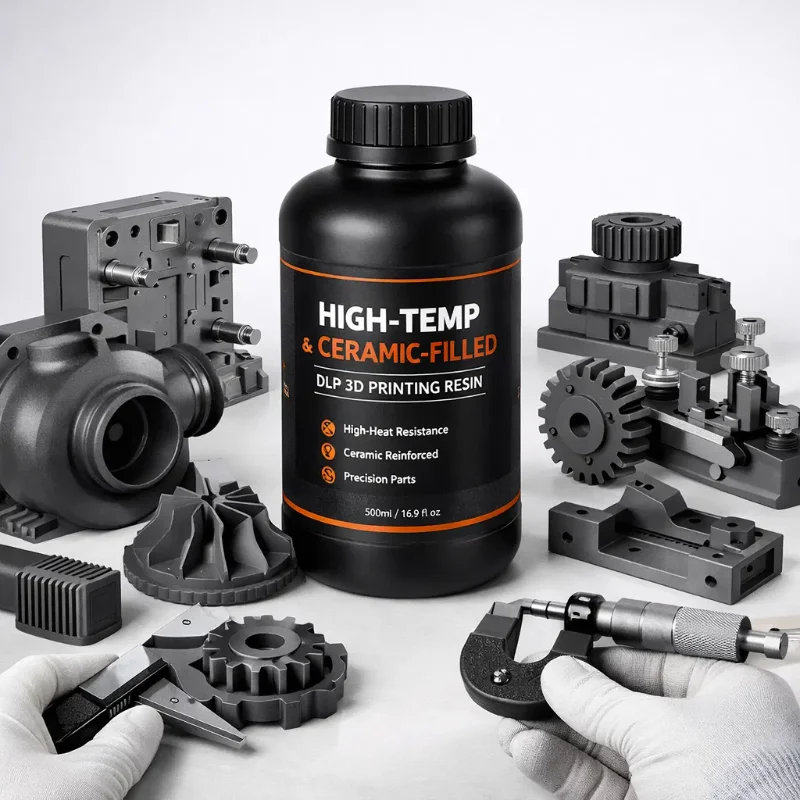
High-Temp & Ceramic
(Extreme Performance)
Characteristics: Designed for extreme environments, boasting Heat Deflection Temperatures (HDT) up to 280°C. Ceramic reinforcement provides exceptional stiffness and minimal thermal expansion.
Best For:
Under-the-hood automotive testing, mold tooling for low-temp injection, and fluid dynamics testing.
What are the Main Applications of DLP 3D Printing?
DLP is no longer just for prototyping; it is a bridge-manufacturing solution.
Jewelry Industry
Application: Printing "Master Patterns" or direct wax casting patterns.
Advantage: Handles negative spaces, filigree, and pave settings impossible to mold traditionally.
Digital Dentistry
Application: Surgical guides, aligner models, and dentures.
Advantage: Patient-specific customization with less than 50 microns deviation.
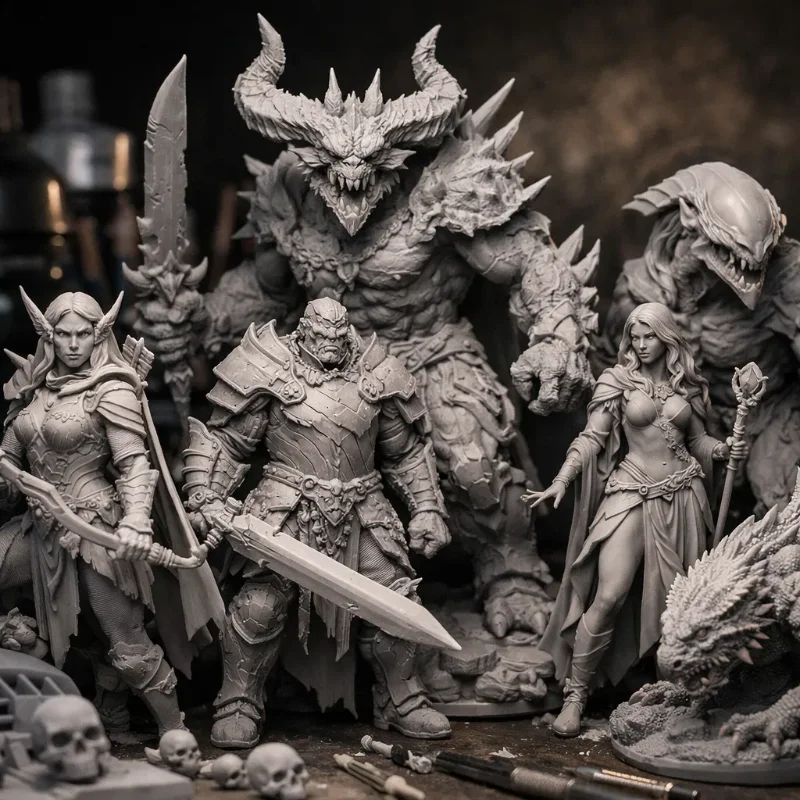
Miniatures & Collectibles
Application: High-fidelity tabletop gaming miniatures and "Garage Kit" prototypes.
Advantage: Captures organic textures and details that MSLA or FDM miss.
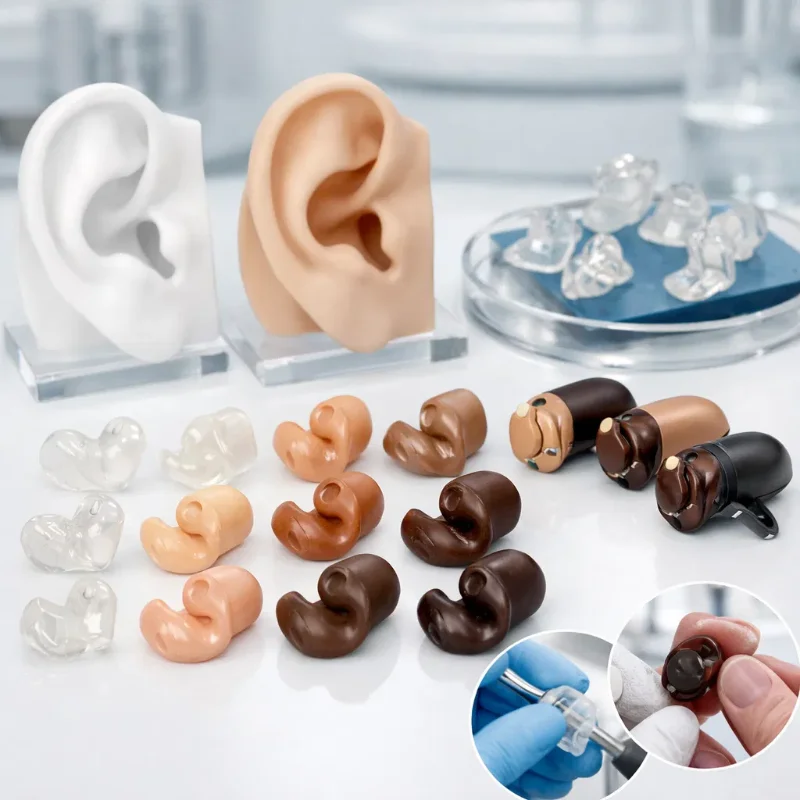
Hearing Aids
Application: Custom-fit shells (Otoplastics).
Advantage: Biocompatible material printed to exact ear anatomy.
Rapid Manufacturing
Application: Low-volume production (10-1,000 units).
Advantage: More cost-effective than injection molding tooling ($5,000+).
Design Guidelines for High-Precision DLP Printing
To ensure quality and reduce costs, engineers should adhere to specific design for additive manufacturing (DfAM) principles tailored for DLP.
1. Minimum Wall Thickness & Details:
- Supported Walls: Minimum 0.4mm.
- Unsupported Walls: Minimum 0.6mm to prevent warping.
- Embossed/Engraved Details: Minimum 0.2mm depth/height to remain visible after post-processing.
2. How to Reduce Costs via "Hollowing":
Solid blocks of resin are expensive and heavy.
- Technique: Use “Hollowing” tools to create a shell.
- Recommendation: Maintain a 2mm shell thickness.
- Crucial Step: You must add drainage holes (minimum 1.5mm diameter) to allow uncured resin to escape. Trapped resin can crack the part over time due to gas build-up.
3. Assembly & Tolerances (Designing Snap-Fits):
- Clearance: For mating parts, design a clearance gap of 0.05mm – 0.1mm. Resin expands slightly during curing and coating.
- Threads: While possible to print threads, we recommend modeling a pilot hole and using Heat-Set Inserts or tapping the hole post-print for better durability.
Custom DLP 3D Printing Services | High Precision Prototypes
Get ultra-detailed resin parts with our industrial DLP 3D printing service. Get an instant quote now!
Resources for The Complete Guide to DLP 3D Printing Services
10 Common Reasons for DLP Print Failure (And How We Solve Them)
While our industrial environment mitigates these issues, understanding them helps in designing better files.
- Suction Cup Effect: Large flat surfaces creates a vacuum against the film. Solution: We orient parts at an angle (usually 45°) to minimize surface area per layer.
- Insufficient Supports: Gravity peels heavy parts off the build plate. Solution: We use variable-density support structures.
- Island Issues: Isolated geometries start printing in “mid-air.” Solution: Our pre-flight check software identifies and supports all islands.
- Resin Temperature: Cold resin is viscous and fails. Solution: Our print farm maintains a constant 25°C ambient temperature.
- Undercured Layers: Causes delamination. Solution: We calibrate exposure times daily for every resin batch.
- Debris in Tank: Cured bits from previous prints block light. Solution: Filtered vat cleaning between every transition.
- FEP Film Wear: Cloudy film reduces detail. Solution: Strict maintenance schedules for film replacement.
- Hollowing Without Vents: Causes print explosions or cracks. Solution: Mandatory design review for drain holes.
- Over-exposure: Loss of dimensional accuracy (parts grow). Solution: Compensation offsets applied in slicing.
- Post-Curing Warp: Thin parts warp under UV lamp. Solution: Supports are kept on during curing for structural integrity.
What to Needs to Be Done When a Print Sticks to the FEP Film?
Note: This is a common DIY issue. In our industrial service, we prevent this by monitoring “Peel Force.”
If a print sticks to the FEP (bottom film) instead of the build plate, it usually indicates that the bottom exposure time was too low or the lift speed was too fast. We utilize Advanced FEP/nFEP films and specialized release agents to ensure 100% success rates, so you never have to worry about failed prints.
Our Quality Control & Technical Standards
Digital precision is only the beginning. To guarantee that every physical part aligns with your original design, we implement a closed-loop quality system. From initial file analysis to final dimensional inspection, we bridge the gap between virtual models and physical reality through standardized calibration and rigorous verification.
1. How Do We Control Dimensional Accuracy?
We strictly adhere to ISO 2768 (fine to medium) standards for plastic manufacturing.
- Calibration: Printers are calibrated using laser interferometers.
- Compensation: We utilize software shrinkage compensation specific to the resin used (e.g., Castable resin shrinks differently than ABS-like resin).
- Verification: Key interaction points are measured using digital calipers and CMM (Coordinate Measuring Machines) for critical orders.
2. Surface Quality Standards:
Standard delivery includes:
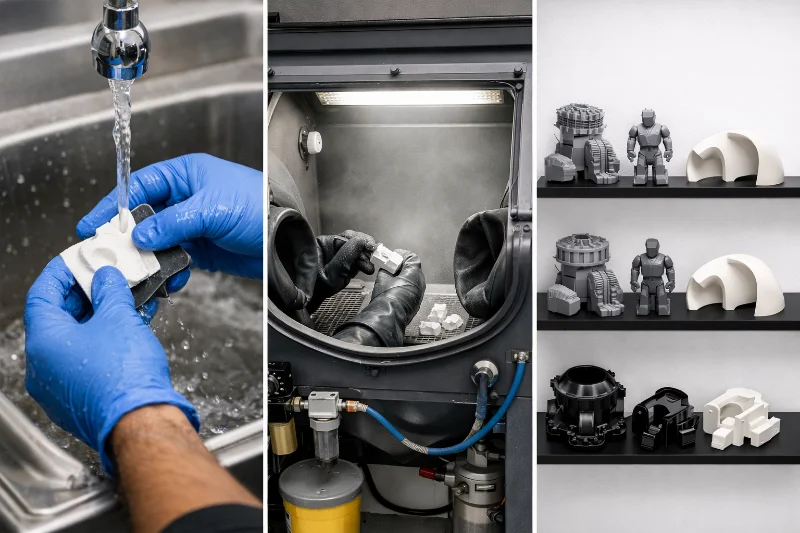
- Removal of all support structures.
- Sanding of support touch-points (nub removal).
- Solvent cleaning (IPA/TPM) to remove sticky residue.
- Result: A matte, clean surface ready for use or painting.
3. The Technology Behind Our 100% Delivery Rate:
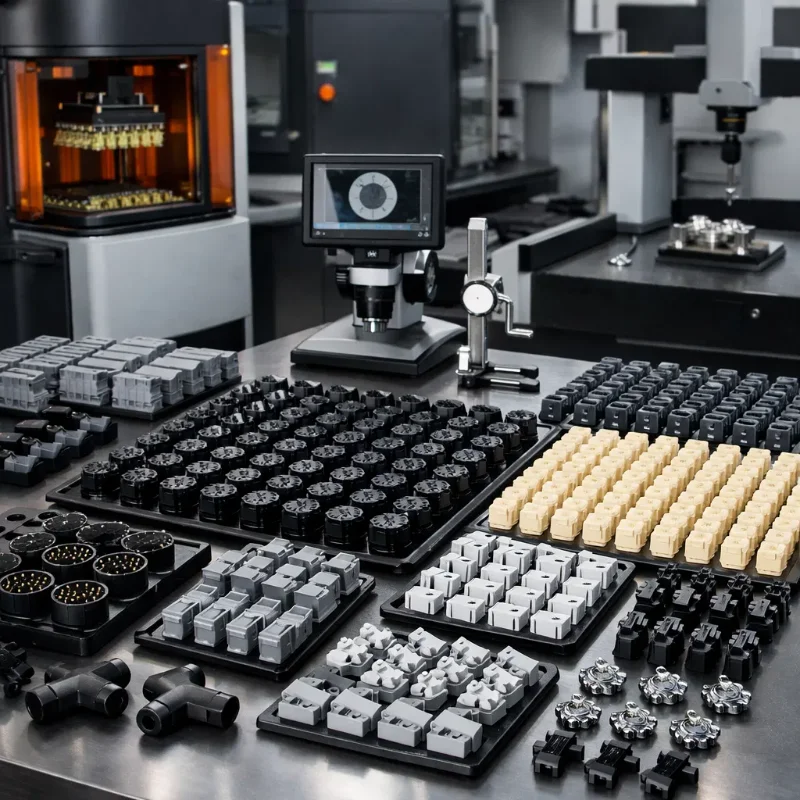
We don’t just rely on one machine. Our redundant server system and farm of DLP printers ensure that if one machine requires maintenance, your job is automatically routed to the next available unit, guaranteeing lead times are met.
Value-Added Post-Processing Services
Your part isn’t finished when it leaves the printer. Our post-processing turns a “print” into a “product.”
Professional Surface Smoothing
Beyond standard support removal, we offer:
Transparent Resin Processing
Raw clear resin prints look frosted/icy. To achieve glass-like transparency:
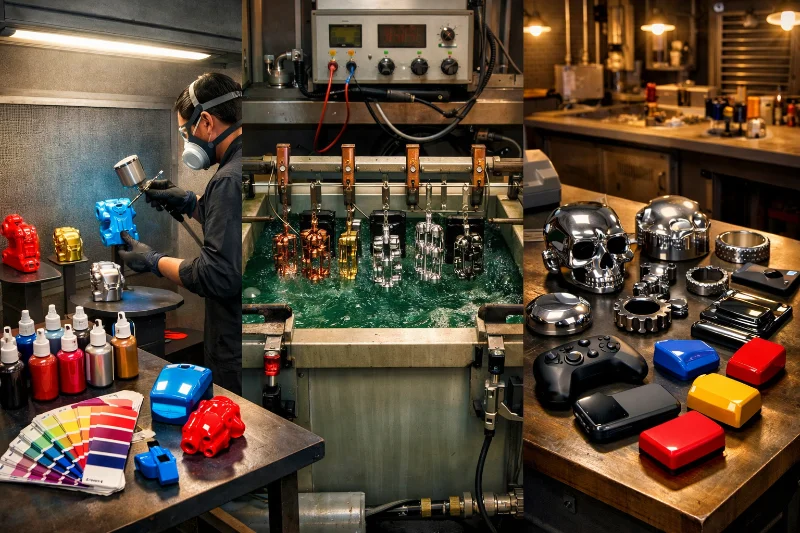
Painting and Plating Services
Professional color and metallic finishes for your parts.
Frequently Asked Questions
Get comprehensive answers about our injection molding services, capabilities, and manufacturing processes from our expert team.
What specific 3D file formats do you currently accept for quoting?
We accept .STL, .OBJ, and .STEP (.STP) files. For the fastest automated quote and highest accuracy, we recommend using .STL files exported in binary format. Pro Tip: Ensure your models are manifold (watertight) before uploading.
Do you have a Minimum Order Quantity (MOQ) for custom parts?
No, we have no MOQ. Whether you need a single prototype to verify a design or a low-volume production run of 500 units, we are happy to serve you.
Can the printed DLP parts be professionally painted or polished?
Yes. DLP resin parts have excellent surface quality and accept post-processing well. We offer services including sanding, polishing, spray painting, and soft-touch coating to match your aesthetic requirements.
Is it possible to print my custom parts in transparent material?
Yes, we offer High-Transparency Resin. After printing, we perform detailed sanding and UV coating to achieve a glass-like clarity, perfect for lenses or light pipes.
What is the maximum build volume for your industrial DLP services?
Our industrial DLP machines can handle single parts up to 192 x 120 x 200 mm. For larger parts, we recommend splitting the model and bonding it, or utilizing our SLA services which can accommodate parts up to 800mm.
Does the DLP printing process leave any visible layer lines?
At our standard 50-micron layer height, lines are barely visible to the naked eye. At 25-micron resolution, surface lines are virtually non-existent, providing a near-injection-molded finish.
Can you print functional threads for screw assembly directly?
Yes, we can print threads down to M3 size with high accuracy. However, for parts that require repeated assembly and disassembly, we strictly recommend designing pockets for metal Heat-Set Inserts to ensure longevity.
Is my design intellectual property (IP) fully safe with your team?
Absolutely. We are an ISO-certified manufacturer and happy to sign strict NDAs (Non-Disclosure Agreements) with all clients. Your files are encrypted upon upload and permanently deleted from our servers 30 days after project completion.
How to Efficiently Get a Quote and Order?
Ready to start your project? Transition from digital file to physical part in 3 simple steps.
Upload Your 3D File
We accept .STL, .IGS, .X-T, and .STEP files. Simply drag and drop your design files into our secure upload portal.
Instant DFM Analysis
Our AI-driven quoting engine checks for thin walls and printability issues instantly, providing immediate feedback and optimization suggestions.
Select Material & Finish
Choose from our library of Engineering, Castable, or Dental resins and select your desired surface finish for optimal results.
Fast-Track Production
Your orders are sent straight into production the moment they are placed, guaranteeing rapid processing for your time-sensitive projects.
Ready to Start Your Project?
Bring your vision to life with our expert manufacturing solutions and decades of industry experience.

How Can Manufacturers Effectively Reduce Costs in Injection Molded Part Production?
Key Takeaways – Material selection and wall thickness optimization are the primary drivers for reducing piece-part costs. – Investing in higher-quality tooling (Class 101/102) can lower long-term unit costs through

Family Molds vs. MUD Systems: Which Strategy Best Manages Multi-Part Injection Molding Projects?
Key Takeaways – Family molds produce multiple different parts in one shot, but a single compromised process window affects all cavities simultaneously. – MUD (Master Unit Die) systems use interchangeable

What is a High-Speed Injection Molding Machine?
Key Takeaways – A high-speed injection molding machine is defined by injection speed4s of 300–600 mm/s and clamp speeds exceeding 500 mm/s, compared to 100–200 mm/s for standard machines—enabling cycle
Optimization Solutions Provided For Free
- Provide Design Feedback and Optimization Solutions
- Optimize Structure and Reduce Mold Costs
- Talk Directly With Engineers One-On-One