 Skip to content

– Injection molding is used in virtually every major industry, from automotive and medical to consumer electronics and food packaging.
– The automotive industry is the single largest consumer of injection molded plastics, accounting for over 35% of all plastic part production globally.
– Medical injection molding requires the highest standards: ISO 13485 facilities, biocompatible resins, and cleanroom environments for implantable or sterile components.
– One injection mold can serve multiple industries simultaneously—the same PP resin and mold can produce automotive clips, consumer containers, and industrial fittings.
Why Is Injection Molding the Most Widely Used Plastic Manufacturing Process?
Injection molding is the most widely used plastic manufacturing process because it can produce high-precision, complex plastic parts at extremely high volumes with low per-unit cost, consistent quality, and minimal waste. In our factory, we’ve used the same core technology for parts as small as 0.5 grams and as large as 8 kilograms, across tolerances from ±0.5 mm for bulk consumer goods to ±0.01 mm for precision optical lenses.
The economics are compelling: once a mold is built, each additional part costs only the material, energy, and labor to run the machine—typically $0.01 to $5.00 per part depending on size and complexity. For any product requiring more than 1,000–5,000 identical parts, injection molding typically outcompetes every other manufacturing method on cost per piece.
The process also handles an enormous range of materials—over 25,000 thermoplastic compounds are commercially available—allowing manufacturers to precisely tune strength, flexibility, transparency, chemical resistance, and flame retardancy for each application.
What Are the Major Automotive Applications for Injection Molding?
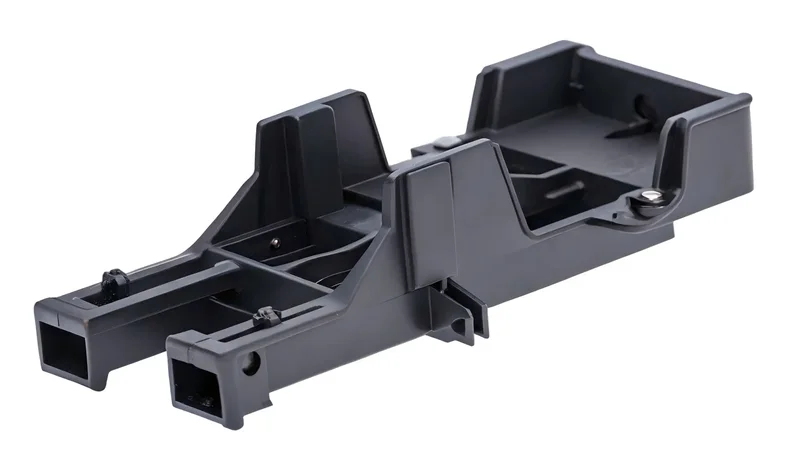
The automotive industry is the largest single application for injection molding, using plastic parts for interior trim, exterior body panels, under-hood components, lighting systems, and structural reinforcements. In our factory, automotive parts account for approximately 40% of our production volume—and the technical demands are the most challenging we face.
Modern vehicles contain 300–500 distinct injection molded plastic components, representing 50–60 kg of plastic per car. That figure has grown dramatically as automakers replace steel and aluminum with engineered thermoplastics to reduce weight and improve fuel efficiency. A 10% reduction in vehicle weight improves fuel economy by 6–8%.
Interior Applications include dashboard instrument panels (typically PC/ABS), door panels (PP + talc), center console housings, HVAC ducts (PP), seat components (PA 6/6), and pillar trims (ABS). These parts must meet stringent requirements for UV stability, heat resistance (up to 90°C for parts near the dashboard), scratch resistance, and VOC emissions for cabin air quality.
Exterior Applications include bumper fascias (PP-EPDM), mirror housings (ABS), grille assemblies, wheel arch liners (PP), and running boards. These require UV stabilizers, impact modifiers for cold-weather performance, and—increasingly—Class A surface finishes directly from the mold without painting.
Under-Hood Applications push material performance to the limit: intake manifolds (PA 6/6 + GF30), cooling system components (PA 6/6), battery housings for EVs (PP + flame retardant), and electrical connectors (PBT, PPS). We regularly run PA 6/6 at melt temperatures of 270–290°C with mold temperatures of 80–100°C to achieve the crystallinity needed for thermal and chemical resistance.
“Metal parts are always stronger than injection molded plastic parts in automotive applications.”False
Modern engineering plastics like glass-filled PA 6/6 and PPS can exceed the strength-to-weight ratio of many metals. Under-hood components made from PA 6/6-GF30 withstand temperatures above 120°C and significant mechanical loads—outperforming aluminum in specific strength per kilogram in many applications.
“Engineered plastics in EVs help reduce battery weight while meeting stringent fire safety standards.”True
EV battery housings use flame-retardant PP compounds that are 40–50% lighter than equivalent aluminum enclosures, while meeting UL 94 V-0 fire resistance ratings. This weight reduction directly extends driving range per charge.
How Is Injection Molding Used in the Medical Industry?
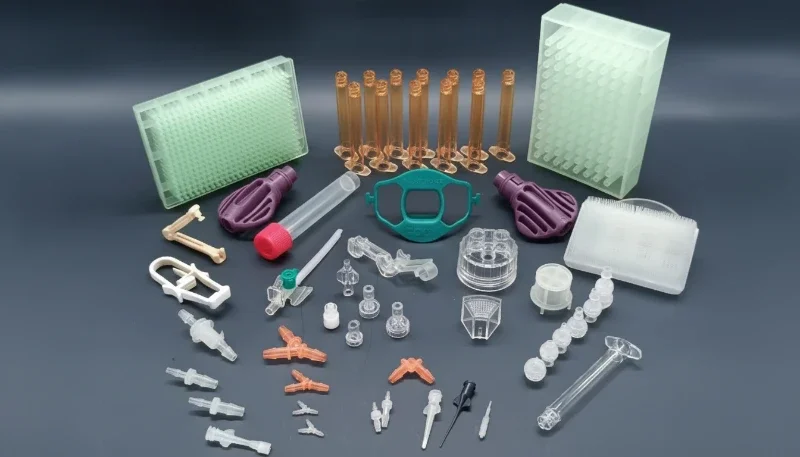
Injection molding is the dominant manufacturing method for single-use medical devices and sterile instruments, producing syringes, IV components, surgical instruments, diagnostic equipment housings, and implantable components. We’ve dedicated one production cell in our factory to ISO 13485-certified medical molding—and the process discipline required is unlike anything else we produce.
Medical injection molding requires biocompatible materials3 meeting ISO 10993 standards. The most commonly used resins are polypropylene (PP) for syringes and disposable containers, polycarbonate (PC) for transparent housings and blood oxygenator components, PEEK for implantable structural components, and ABS for diagnostic equipment enclosures.
Cleanliness standards are paramount. Cleanroom injection molding—performed in ISO Class 7 or Class 8 environments with HEPA-filtered air and gowning requirements—is standard for anything that will contact a patient. Particulate counts must meet FDA 21 CFR Part 11 and EU MDR 2017/745 requirements. We monitor and log process parameters in real time: injection pressure (±1 bar), melt temperature (±2°C), and cycle time (±0.1 second) to demonstrate process consistency for regulatory submissions.
| Medical Application | Typical Material | Key Requirement | Regulatory Standard |
|---|---|---|---|
| Syringes & IV components | PP, COC | Biocompatibility, gamma sterilization | ISO 10993, FDA 21 CFR |
| Diagnostic housings | ABS, PC | ESD protection, cleanroom | ISO 13485, IEC 60601 |
| Surgical instruments | PEEK, Ultem | Autoclave sterilization, strength | ISO 13485, EU MDR |
| Implantable components | PEEK, medical-grade PP | Long-term biocompatibility | ISO 10993-1, FDA PMA |
| Drug delivery systems | PP, HDPE, TPE | Chemical inertness, tight tolerances | USP Class VI, ISO 15747 |

What Consumer Electronics Applications Use Injection Molding?
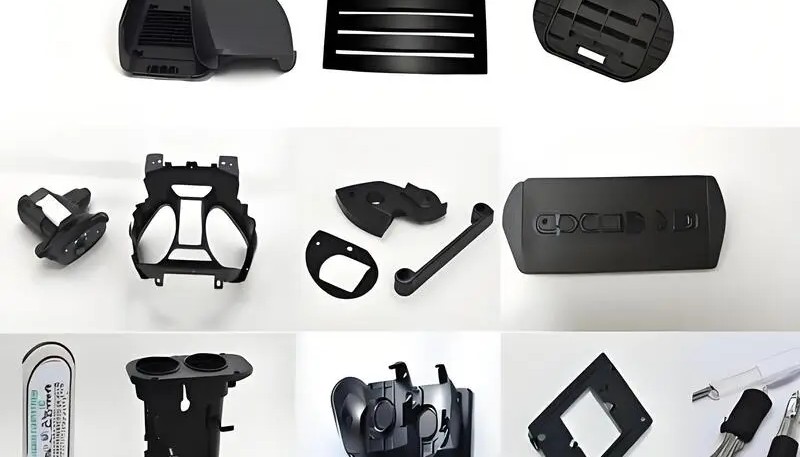
Consumer electronics relies on injection molding for virtually every plastic component—smartphone housings, laptop frames, remote controls, gaming controllers, speaker grilles, and wearable device enclosures. The electronics industry demands cosmetic precision that pushes our capabilities to their limits.
The smartphone alone contains 20–40 injection molded components: back covers (PC/ABS or PC/GF), button inserts (PC), antenna windows (transparent PC), microphone and speaker grilles (fine mesh PP), and internal structural frames (PA 6/6-GF30). Each part must meet Class A surface finish requirements—SPI A-1 to A-2 polish—visible from arm’s length without blemishes, sink marks, or gate vestige.
PC/ABS is the dominant material for consumer electronics enclosures because it combines PC’s impact strength and heat resistance with ABS’s excellent processability and surface quality. We typically run PC/ABS at 230–260°C with a mold temperature of 60–80°C to achieve the surface gloss required for consumer electronics.
Insert molding—where metal components like threaded inserts, EMI shielding, and contact pads are placed in the mold before injection—is standard practice in electronics manufacturing. We’ve run insert molding jobs with 12–16 inserts per shot, maintaining ±0.05 mm positional accuracy for each insert through precise locating pins and camera-based pre-shot verification.
How Does Injection Molding Serve the Packaging Industry?
The packaging industry is one of the highest-volume users of injection molding, producing bottle caps, closures, thin-wall containers, cosmetic packaging, food storage lids, and pharmaceutical vials. High-speed, high-cavity injection molding for packaging operates on a completely different scale than most other applications.
Packaging molds are often 32, 64, or even 128-cavity tools running cycle times under 3 seconds for thin-walled lids. A 64-cavity bottle cap mold produces over 1.2 million caps per 8-hour shift. The economics require extreme process consistency: even a 0.5-second cycle time variation across shifts translates to tens of thousands of dollars in lost production per year.
Thin-wall injection molding1 for packaging pushes material flow to its limits—wall thicknesses of 0.3–0.8 mm require high injection speeds (300–500 mm/s), injection pressures above 1,400 bar, and carefully balanced hot runner systems to fill all cavities simultaneously. We’ve seen customers struggle with short shots across outer cavities when their runner system wasn’t properly balanced for 64-cavity tools.
PP (polypropylene) dominates food packaging due to its FDA food-contact compliance, chemical resistance, and outstanding thin-wall flowability. HDPE is standard for personal care and household chemical containers. PS (polystyrene) is used for clarity-sensitive cosmetic packaging. PET preforms for stretch blow molding are also injection molded—among the most technically demanding packaging applications, requiring exceptional melt clarity and tight weight control across all cavities.
“Thin-wall packaging parts need lower injection pressure than thick-wall structural parts.”False
The opposite is true. Thin-wall parts (0.3–0.8 mm) require injection pressures of 1,200–1,500 bar and speeds of 300–500 mm/s to fill before the melt freezes in the narrow channel. Thick-wall parts fill at much lower pressures due to the wider flow path.
“Hot runner balance is critical in high-cavity packaging molds to prevent short shots in outer cavities.”True
In 32, 64, or 128-cavity hot runner molds, flow path length differences between inner and outer cavities create filling imbalances. Properly designed and thermally balanced hot manifolds ensure all cavities fill simultaneously, preventing short shots in the outermost positions.
What Industrial and Construction Applications Use Injection Molded Parts?
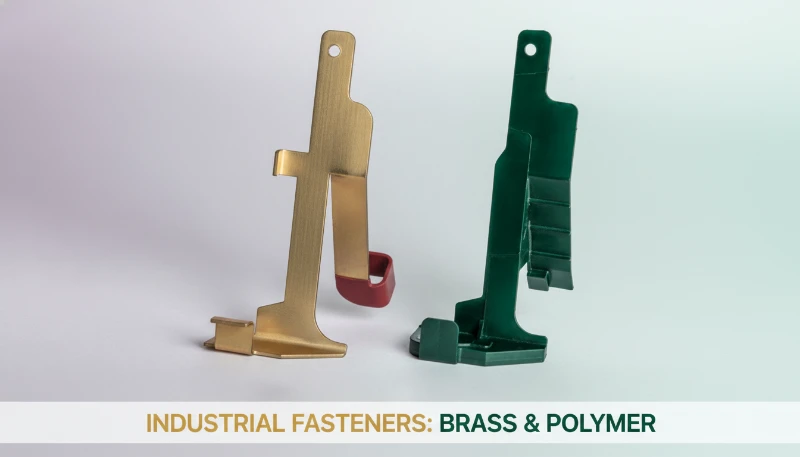
Industrial and construction applications for injection molding include pipe fittings, electrical conduit components, cable management systems, fasteners, pump housings, valve bodies, and structural brackets. These applications prioritize function, durability, and dimensional stability over aesthetics.
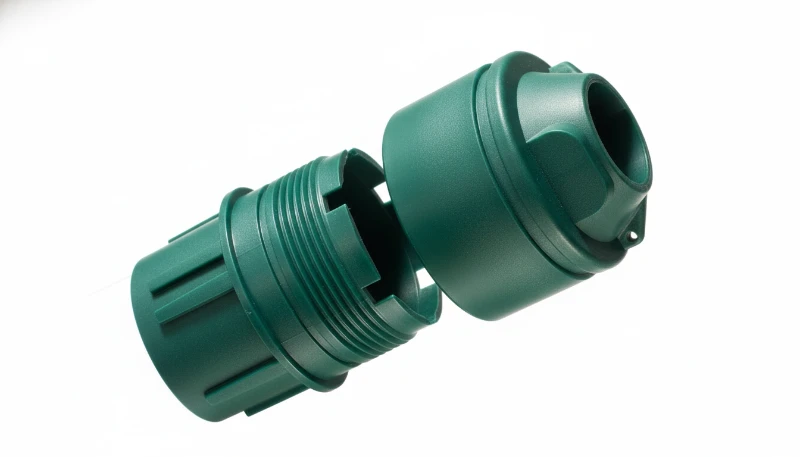
PP and HDPE pipe fittings are among the highest-volume industrial molded parts worldwide—billions of threaded couplings, elbows, and tees are produced annually. These parts must meet ASTM D2466 or ISO 15874 dimensional standards and pressure ratings. We hold cavity dimensions to ±0.05 mm on threading features to ensure reliable assembly with standard pipe standards.
Glass-filled nylon2 (PA 6/6-GF30) is the workhorse material for industrial applications requiring both strength and temperature resistance. Pump housings, gear housings, conveyor components, and structural brackets benefit from its tensile strength of 180–210 MPa, continuous service temperature of 130°C, and excellent creep resistance. We process PA 6/6-GF30 at 270–290°C with dried material (moisture below 0.2% by weight) to prevent hydrolytic degradation.
How Is Injection Molding Applied in Aerospace and Defense?
Aerospace and defense applications for injection molding are smaller in volume than automotive or consumer goods, but technically demanding—requiring materials that perform reliably at extreme temperatures, under chemical exposure, and in weight-critical structural roles. In our factory, aerospace parts undergo the most rigorous inspection of any product category we produce.
PEEK (polyetheretherketone) is the dominant high-performance plastic for aerospace injection molding. It withstands continuous operating temperatures of 250°C, maintains structural integrity in aviation fuel, hydraulic fluid, and de-icing chemicals, and achieves tensile strengths of 100–170 MPa. Interior aircraft components, cable management brackets, sensor housings, and fluid handling components are common PEEK applications.
Carbon-fiber-filled PEEK (PEEK-CF30) achieves a flexural modulus exceeding 20 GPa—approaching aluminum’s stiffness—while being 50% lighter. We process PEEK at 370–400°C melt temperature with a mold temperature of 150–180°C, requiring specialized barrel materials and screw designs to prevent degradation. PPS (polyphenylene sulfide) is another common aerospace resin for electrical connectors and structural brackets, offering excellent chemical resistance and UL 94 V-0 flame performance at lower cost than PEEK.
Frequently Asked Questions About Injection Molding Applications
Q: What is the most common material used across all injection molding applications?
A: Polypropylene (PP) is the most widely used injection molding material globally, accounting for approximately 30% of all thermoplastics processed. It’s used in automotive, packaging, medical, consumer goods, and industrial applications due to its low cost, chemical resistance, and excellent processability.
Q: Can injection molding produce optically clear parts?
A: Yes. Polycarbonate, PMMA (acrylic), COC, and COP can all be molded to optical clarity. Applications include camera lenses, light diffusers, medical vials, and automotive headlamp lenses. Mirror-polish molds (SPI A-1) and strict contamination control in the material and processing environment are required.
Q: What is the smallest part that can be injection molded?
A: Micro-injection molding can produce parts as small as 0.01 grams—smaller than a grain of rice. Medical, electronics, and watchmaking applications routinely use micro-molded parts under 1 gram. Specialized micro-injection machines with precision barrels and dosing systems are required.
Q: Is injection molding suitable for rubber or flexible parts?
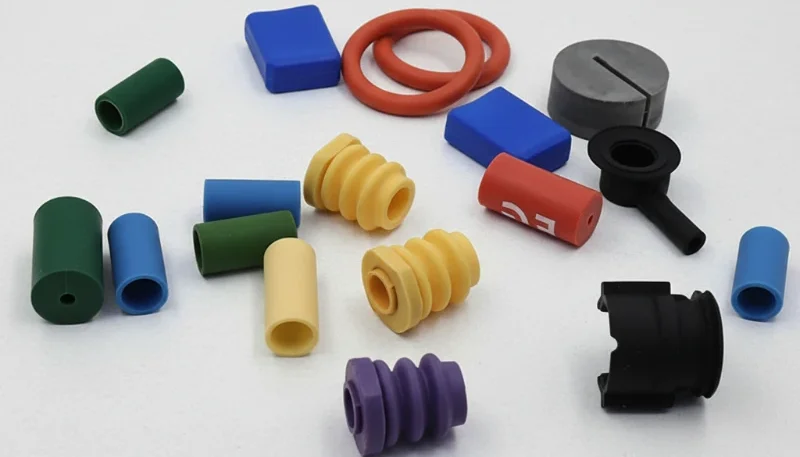
A: Yes. Thermoplastic elastomers (TPE, TPU, TPV) are processed by standard injection molding machines to produce flexible, rubber-like parts. Applications include tool grips, medical tube connectors, seals, and soft-touch consumer product components. Traditional rubber requires a different process (compression or transfer molding).
Q: What industries are growing fastest in injection molding adoption?
A: Electric vehicles (EV battery housings and structural components), medical devices (diagnostic and wearable devices), and renewable energy (solar panel mounting brackets, wind turbine components) are the fastest-growing sectors. EV production growth is particularly driving demand for flame-retardant engineering plastics at scale.
Q: Can injection molding produce multi-color or multi-material parts?
A: Yes, through two-shot (2K) molding or overmolding. Two-shot molding injects two different materials sequentially in the same mold cycle—common for soft-touch grips on power tools, dual-color automotive buttons, and medical device ergonomic components. Overmolding bonds a second material over a previously molded substrate.
Summary
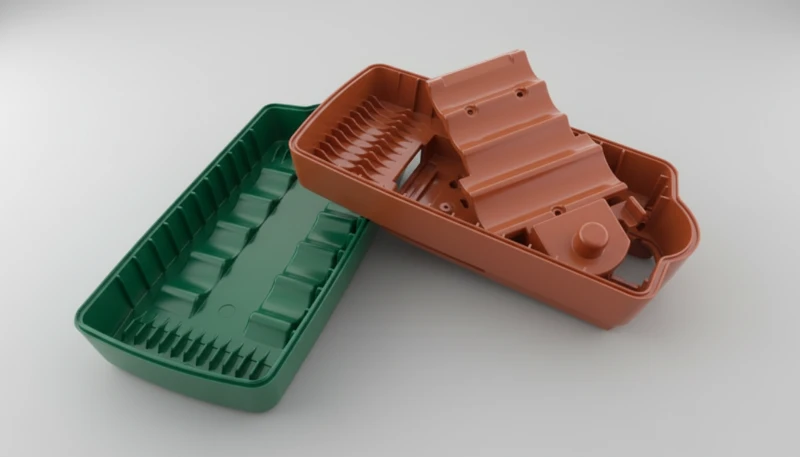
Injection molding’s dominance across industries from automotive to aerospace reflects a fundamental truth: no other manufacturing process matches its combination of geometric freedom, material versatility, and volume economics. Every major industry—automotive, medical, electronics, packaging, industrial, and aerospace—has found essential applications for injection molded plastics.
In our factory, we see the breadth of these applications every day. An automotive bumper and a medical syringe body might both be PP parts, molded on similar machines, yet subject to entirely different quality standards, material certifications, and process documentation requirements. Understanding these distinctions—by application, industry, and end-use environment—is what separates a good injection molding supplier from a great one.
If you’re evaluating injection molding for a new application, the critical questions to ask are: What performance requirements does the end-use environment impose? What regulatory certifications apply? What volume justifies tooling investment? Answering these questions will guide material selection, mold type, and production strategy.
-
Thin-wall injection molding refers to the production of plastic parts with wall thicknesses below 1.0 mm (typically 0.3–0.8 mm), requiring high injection speeds (300–500 mm/s) and pressures (1,200–1,500 bar) to fill the cavity before the melt solidifies in the narrow channel. ↩
-
Glass-filled nylon (PA 6/6-GF30) is polyamide 6/6 reinforced with 30% short glass fibers by weight, producing a composite with tensile strength of 180–210 MPa, flexural modulus of 8–10 GPa, and continuous service temperature of 130°C—significantly exceeding unfilled nylon performance. ↩
-
Biocompatibility testing per ISO 10993 is the internationally recognized standard for evaluating the biological safety of medical devices and materials, covering cytotoxicity, sensitization, irritation, and systemic toxicity to ensure patient safety. ↩




 EN
EN  ES
ES  FR
FR  DE
DE  PT
PT  AR
AR  RU
RU  JA
JA  KO
KO  IT
IT  NL
NL  TR
TR  PL
PL 