 Skip to content

Ask any tooling engineer what drives injection molding1 cost, and you will hear the same thing: most of the bill is decided before anyone cuts steel. The geometry of your part, the surface finish you specify, the tolerances you demand, and the volume you plan to run — these choices lock in 60–80% of the final tooling price. Material and labor matter, but they are downstream variables, not root causes.
We have built thousands of injection molds over the past two decades, from simple two-plate tools under $3,000 to multi-cavity hot-runner systems exceeding $80,000. The cost variables are predictable once you understand the hierarchy — and that understanding is the difference between a budget that works and one that blindsides you halfway through production.
- Part design complexity (undercuts, wall thickness variation, tight tolerances) is the single largest cost driver in injection mold tooling.
- Mold type (two-plate vs. hot runner) and cavity count directly determine steel volume, machining hours, and per-part cost.
- Surface finish requirements (SPI A-1 vs. B-2) can double or triple polishing time and push mold steel into premium grades.
- Early DFM review catches costly features before steel is cut — the cheapest savings available.
- A low mold quote from an unqualified supplier often costs more in rework, delays, and scrapped parts than a higher quote from an experienced toolmaker.
What Are the Core Components That Drive Mold Cost?
The core components that drive mold cost are steel, cooling, ejection, feed, guiding, and side-action systems. These six functional systems each carry their own cost implications, and understanding which ones your project actually needs is the first step to controlling your tooling budget.

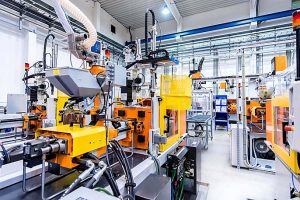
In our Shanghai factory, we run 47 injection molding machines from 90T to 1850T, supported by an in-house mold manufacturing facility that produces 100+ mold sets per month. This vertical integration means we control tooling cost from DFM review through T1 sampling — no middlemen, no communication lag.
“Most of an injection mold2‘s cost is determined by part geometry decisions made before steel is cut.”True
Undercuts, thin walls, tight tolerances, and cosmetic surface requirements drive machining hours, steel grade selection, and secondary operations. Changing these after tooling starts is 5–10× more expensive than catching them in DFM.
“A cheaper steel grade always reduces the total cost of an injection molding project.”False
Softer steel costs less upfront but wears faster, increasing maintenance cost and scrap rate. For production runs above 100,000 shots, premium steel like H13 or S136 often delivers a lower total cost per part despite the higher initial investment.
The six core mold systems — gating, cooling, ejection, guidance, exhaust, and cavity3/core — each add machining hours and material cost. A simple two-plate mold with straight-pull ejection might need only 80–120 machining hours. Add side-action sliders for undercuts, and you can easily double that. Add a hot-runner system with valve gates, and you are looking at 250+ hours of precision work.
In practice, the cost breakdown for a typical production mold looks roughly like this:
| Cost Component | Typical Share of Total | Key Variables |
|---|---|---|
| Steel & raw materials | 15–25% | Mold size, steel grade (P20 vs. H13 vs. S136) |
| Machining & EDM | 30–45% | Cavity count, feature complexity, tolerance class |
| Design & engineering | 10–15% | DFM depth, mold flow analysis, revision rounds |
| Polishing & surface finish | 5–15% | SPI class (A-1 to D-3), visible area percentage |
| Hot runner & components | 10–20% | Nozzle count, manifold complexity, brand selection |
| Assembly, testing, T1 | 5–10% | Trial shots, dimensional validation, adjustments |
How Does Part Design Complexity Affect Tooling Cost?
Part design is the single most powerful cost lever in injection mold tooling. Not steel price, not labor rate — geometry. Every undercut requires a side-action slider or lifter. Every variation in wall thickness demands balanced cooling to prevent warpage. Every tight tolerance adds inspection time and often requires higher-grade steel to maintain dimensional stability over production runs.
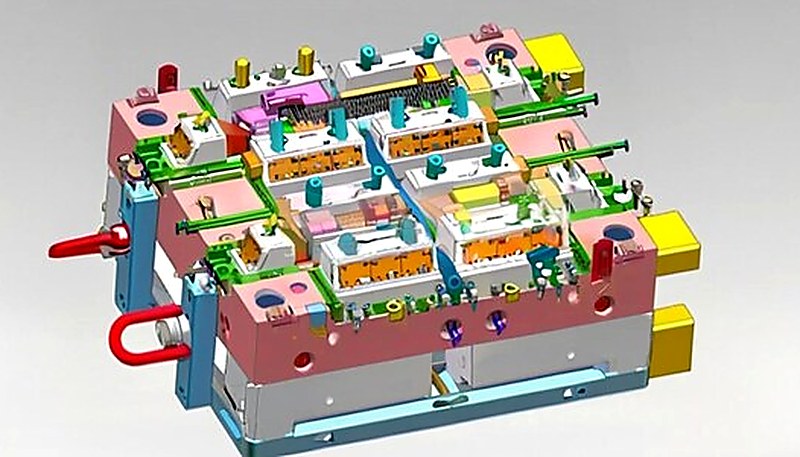
Here are the design features that most consistently drive up mold cost, ranked by impact:
| Design Feature | Cost Impact | Why It Costs More |
|---|---|---|
| External undercuts | High (+30–60%) | Requires side-action sliders, additional guide pins, and extra machining |
| Internal undercuts | High (+25–50%) | Requires lifters or collapsible cores, complex ejection sequencing |
| Wall thickness variation >30% | Medium (+15–30%) | Demands optimized cooling layout, warpage risk increases cycle time |
| Tight tolerances (±0.05 mm) | Medium (+15–25%) | Needs premium steel, precision machining, and extended validation |
| Thread features (molded-in) | Medium (+20–40%) | Requires unscrewing mechanisms or threaded inserts |
| Deep ribs (depth/thickness >3×) | Medium (+10–25%) | EDM required, higher risk of steel damage, difficult ejection |
| Multi-material (overmold) | High (+40–80%) | Dual-shot tooling or secondary operation, complex gating |
A simple cylindrical bushing with uniform wall thickness, generous draft, and standard tolerances might tool for $2,500–$5,000. That same bushing with a molded-in thread, an internal undercut for a snap-fit, and a ±0.03 mm tolerance on the bore? You are now in the $8,000–$15,000 range — and the lead time has doubled.
“Early DFM review can reduce mold cost by 15–30% without changing the product’s functional requirements.”True
A skilled DFM engineer can often suggest minor geometry adjustments — moving a parting line, adding draft where it does not show, increasing a radius — that simplify the mold significantly while preserving every functional dimension.
“If a part looks simple on screen, the mold will be cheap.”False
Appearance on a CAD screen tells you nothing about draft angles, undercut count, ejection difficulty, cooling challenges, or weld-line visibility. A ‘simple-looking’ bracket with hidden undercuts and cosmetic A-surface requirements can cost more than a visibly complex internal component with no cosmetic demands.
What Role Does Material Selection Play in Mold Pricing?
Material selection is a significant cost driver because it determines the steel grade, cooling layout, and hot-runner system your mold requires. Abrasive resins like glass-filled nylon require hardened steel (H13 or S136) instead of standard P20, adding 20–40% to material cost and increasing machining time because harder steel wears cutting tools faster. High-temperature resins like PEEK or PPS demand specialized hot-runner nozzles and more robust cooling layouts, both of which add engineering and component cost.
Here is how common material families impact mold requirements:
| Material Family | Mold Steel Recommendation | Cost Impact on Tooling |
|---|---|---|
| PP, PE, ABS (unfilled) | P20 / 718H (standard) | Baseline — lowest tooling cost |
| PA6/PA66 (glass-filled) | H13 / S136 (hardened) | +20–40% for steel and machining |
| PC, PC/ABS | P20 or H13 (depends on volume) | +5–15% for tighter cooling control |
| POM (acetal) | H13 recommended | +15–25% for corrosion resistance |
| PEEK, PPS, PPA | S136 or Stavax (premium) | +30–60% for high-temp hot runner and cooling |
| TPE/TPU (overmold) | P20 base + specialized gating | +15–30% for multi-material tooling |
The key insight: do not select your resin in isolation. Talk to your toolmaker about the interaction between material and mold design. Sometimes a small formulation change — switching from 30% glass-filled nylon to 15%, for example — can allow a less expensive steel grade without compromising part performance.
With experience across 400+ plastic materials and 8 senior engineers on staff, we routinely help buyers identify material substitutions that reduce tooling cost without sacrificing part function. In many cases, the material that works best for the application is not the one the designer initially specified.
How Do Mold Type and Cavity Count Influence Cost?
Mold type and cavity count are the two biggest structural cost drivers. A multi-cavity hot-runner mold can cost 5–10 times more than a single-cavity two-plate tool. The type of mold you choose sets the structural baseline, and each additional cavity multiplies machining, material, and complexity. Here is how the math works in practice.
A two-plate mold is the simplest and cheapest structure. It has one parting line, straightforward ejection, and minimal moving parts. Typical cost range: $2,000–$15,000 depending on size and complexity.
A three-plate mold adds a second parting line to separate the runner from the part automatically. This adds a stripper plate, additional guide pillars, and more complex sequencing. Expect a 30–60% cost premium over an equivalent two-plate mold.
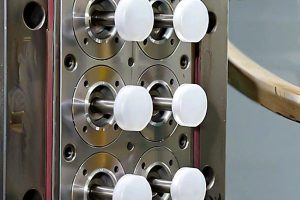
A hot-runner mold eliminates the cold runner entirely, injecting plastic directly into each cavity through heated nozzles. The manifold and nozzle hardware alone can cost $3,000–$15,000 depending on the number of drops and the brand. But for high-volume production (typically above 50,000 parts), the material savings from eliminating runner waste often pay back the hot-runner premium within the first production run.
Cavity count multiplies cost sub-linearly: doubling from 1 to 2 cavities typically increases mold cost by 60–80%, not 100%, because the mold base, guide system, and ejection plate are shared. But beyond 4–8 cavities, the size and complexity of the mold base, cooling system, and hot-runner manifold start to compound, and cost begins to scale more aggressively.
| Configuration | Typical Mold Cost Range | Per-Part Tooling Amortization (100K parts) |
|---|---|---|
| Single cavity, two-plate | $2,000–$8,000 | $0.02–$0.08 |
| 2-cavity, two-plate | $4,000–$14,000 | $0.02–$0.07 |
| 4-cavity, two-plate | $8,000–$25,000 | $0.02–$0.06 |
| 4-cavity, hot runner | $15,000–$40,000 | $0.04–$0.10 |
| 8-cavity, hot runner | $25,000–$80,000 | $0.03–$0.08 |

What Is the Impact of Surface Finish and Tolerances?
Tighter tolerances and higher surface finishes can add 30–50% to mold cost and are the most common source of budget overruns. These two variables are often underestimated by buyers — and the most likely to cause cost spikes when specified late or changed after tooling has started.
The SPI surface finish scale ranges from A-1 (mirror polish, typically for optical lenses or high-gloss cosmetic parts) to D-3 (rough, as-machined finish for hidden structural components). The cost difference between an A-2 finish and a B-2 finish on the same mold can be 2–3× in polishing time alone — and A-1 mirror polish may require electro-polishing or diamond compound finishing that adds days of handwork.
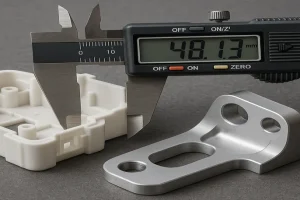
Tolerances follow a similar pattern. Standard commercial tolerances (±0.1 mm or ±0.005 per inch) are included in most mold quotes with no premium. But when you specify tight tolerances of ±0.05 mm or tighter, several things happen: the toolmaker must use higher-grade steel that holds dimensions over time, machining shifts from standard milling to precision grinding and wire EDM, and dimensional validation requires CMM inspection on every T1 sample.
“Specifying SPI A-1 mirror finish on a non-cosmetic surface is one of the most common and most expensive specification errors in mold quoting.”True
Mirror finish requires 20–40 hours of hand polishing per cavity. If the surface is hidden inside an assembly, a B-2 or even C-1 finish is functionally identical and costs a fraction of the price.
“Tighter tolerances always produce better parts.”False
Tolerances should match functional requirements, not an arbitrary standard. Over-specifying tolerances increases mold cost, extends lead time, and can actually reduce yield because the process window becomes narrower. Apply tight tolerances only where they matter — typically mating surfaces and functional datum features.
How Can You Reduce Injection Mold Costs Without Sacrificing Quality?
Cost reduction in injection mold tooling is not about cutting corners — it is about cutting waste. The most effective strategies target decisions that add cost without adding functional value.
First, invest in a thorough DFM review before committing to tooling. A good DFM engineer will identify undercuts that can be eliminated with minor geometry changes, suggest where draft angles can be increased without cosmetic impact, and flag tolerance specifications that are tighter than the function requires. We regularly see DFM reviews reduce mold cost by 15–30% on the first pass.
Second, match your mold steel to your actual production volume. If you are running 5,000–10,000 parts, P20 steel is more than adequate and costs significantly less than H13. Reserve hardened steel for production volumes above 100,000 shots where tool wear becomes a real factor.
Third, be honest about surface finish requirements. Specify mirror polish only on surfaces that customers will see. Internal surfaces, mounting features, and hidden walls function perfectly well with a standard machined finish.
Fourth, consolidate design changes before tooling starts. Every change order after steel is cut costs 3–10× what it would have cost during the design phase. Freeze your part design, validate it with your assembly team, and then — and only then — release it to the toolmaker.
Fifth, consider a sourcing partner who offers integrated DFM, tooling, and production. When the same team designs the mold, builds it, and runs production parts, there is no finger-pointing when issues arise — and the communication overhead that drives up cost in fragmented supply chains disappears.
With 20+ years of experience, 120+ production staff, and ISO 9001 / ISO 13485 / ISO 14001 / ISO 45001 certified processes, our team catches cost-driving design issues during DFM review that most standalone tool shops miss — because we think about production from day one, not just mold delivery.
What Does a Real Mold Quote Look Like?
Theory is useful, but real numbers are better. Here are three anonymized mold quotes from our own production floor, showing how the variables discussed above translate into actual pricing.
| Project | Part Type | Mold Config | Material | Surface Finish | Mold Cost |
|---|---|---|---|---|---|
| Project A | Simple bracket | 1-cavity, two-plate | PA66-GF30 | B-2 (functional) | $3,200 |
| Project B | Cosmetic enclosure | 2-cavity, hot runner | PC/ABS | A-2 (semi-gloss) | $18,500 |
| Project C | Precision connector | 4-cavity, hot runner | POM | A-1 (mirror, visible face only) | $42,000 |
Project A is about as simple as a production mold gets — one cavity, straight-pull ejection, functional (non-cosmetic) surface finish, and a glass-filled nylon that requires hardened steel but no special gating or cooling. At $3,200, it is a straightforward tool that will run reliably for 200,000+ shots.
Project B adds cosmetic requirements (SPI A-2 semi-gloss on all visible surfaces), a second cavity, and a hot-runner system — pushing the price to $18,500. The hot runner alone accounts for about $5,000 of that, but the customer saves $0.04/part in eliminated runner waste, which pays back the hot-runner premium at roughly 125,000 parts.
Project C combines tight tolerances (±0.03 mm on pin positions), four cavities, a hot-runner manifold, and a mirror finish on one critical face. The result is a $42,000 mold that produces a connector used in automotive applications — and it amortizes to $0.42/part over a 100,000-unit production run, which is highly competitive for that level of precision.
How Should You Approach Your Next Mold Project?
Start by optimizing part design for manufacturability — it is the single largest cost lever in any mold project. Injection mold cost is predictable once you understand the hierarchy: geometry first, then mold type, cavity count, material, and surface requirements. The biggest savings come from eliminating unnecessary undercuts, loosening non-critical tolerances, and choosing the simplest mold structure that meets your production volume.
The cheapest way to reduce mold cost is to invest in DFM review before steel is cut. The second cheapest is to work with a toolmaker who understands the full production picture — not just mold manufacturing, but also material behavior, process optimization, and long-term tool maintenance.
If you are planning an injection molding project and want a detailed cost breakdown based on your actual part geometry, our engineering team can provide a comprehensive DFM review and firm quote within 3–5 business days.
Need a detailed quote for your injection molding project? Get competitive pricing, DFM feedback, and production timeline from ZetarMold’s engineering team. See our Supplier Sourcing Guide for a comprehensive overview of our capabilities.

Frequently Asked Questions
Frequently Asked Questions
How much does a typical injection mold cost?
A typical production injection mold costs between $3,000 and $30,000, depending on part complexity, cavity count, surface finish requirements, and material selection. Simple single-cavity molds for non-cosmetic parts start around $2,000–$5,000, while multi-cavity molds with cosmetic finishes and tight tolerances typically range from $15,000–$80,000. The most important cost driver is not the mold size but the design complexity — undercuts, tight tolerances, and cosmetic surfaces add more cost than raw steel volume. Buyers should always request an itemized quote to understand what they are paying for.
What is the most expensive part of an injection mold?
Machining and EDM (electrical discharge machining) typically represent 30–45% of total mold cost, making them the single largest cost component. This is followed by raw steel materials at 15–25% and hot-runner components at 10–20% when applicable. Complex part geometries that require side-action sliders, lifters, or unscrewing mechanisms drive machining hours up significantly. For buyers, this means that reducing part complexity through a thorough DFM review is the most effective single action to lower machining costs and bring down the total mold investment.
Does using a hot runner system increase mold cost?
Yes, a hot runner system adds $3,000–$15,000+ to the mold cost depending on nozzle count and manifold complexity. However, hot runners eliminate runner waste, reduce cycle time, and improve part quality — making them highly economical for production runs above 50,000 parts. The material savings from eliminating cold runners alone can pay back the hot-runner premium within one production batch for high-volume projects, while low-volume bridge tooling runs usually benefit much more from a simpler cold runner design that avoids the added hardware cost entirely.
How does part volume affect mold cost?
Higher production volumes justify higher initial mold investments because tooling cost amortizes over more parts produced over time. For runs of 5,000 parts, a single-cavity P20 mold is typically optimal. For 500,000+ parts, a multi-cavity hardened-steel mold with a hot runner delivers a lower per-part cost despite the higher upfront price. The key metric is tooling cost divided by expected lifetime production — a $20,000 mold running 500,000 parts costs just $0.04 per part in amortization, which is highly competitive for most applications.
Can I reduce mold cost by changing the part design?
Yes — part design is the single most effective cost lever available to buyers. Eliminating undercuts removes the need for side-action sliders, typically saving 20–40% on mold cost. Relaxing tight tolerances to standard commercial grades reduces machining and inspection time. Reducing the number of cosmetic surfaces that require mirror polish cuts polishing time by 50–70%. A thorough DFM review with an experienced toolmaker typically identifies 15–30% in mold cost savings without compromising the product’s functional performance, dimensional integrity, or end-use reliability.
Why do injection mold quotes vary so much between suppliers?
Quote variation stems from differences in steel grade selection, machining capability, hot-runner brand, and quality control depth between suppliers. A supplier quoting P20 where another specifies H13 will show a lower price, but the mold may not last as long under actual production conditions. A supplier who skips mold flow analysis or provides minimal T1 sampling will quote less but may deliver a mold requiring expensive rework later. Always compare quotes on equivalent specifications and request a fully itemized breakdown from each toolmaker.
-
injection molding: Injection molding is a manufacturing process that injects molten plastic into a mold cavity, cools it, and ejects a finished part in a repeating cycle. ↩
-
injection mold: injection mold refers to an injection mold is the precision metal tool that defines part geometry, surface finish, gating, cooling, and ejection in the molding cycle. ↩
-
cavity: cavity refers to a cavity is the hollow space inside the mold that defines the final shape of the molded part; multi-cavity molds produce multiple parts per cycle. ↩



 EN
EN  ES
ES  FR
FR  DE
DE  PT
PT  AR
AR  RU
RU  JA
JA  KO
KO  IT
IT  NL
NL  TR
TR  PL
PL 