 Skip to content

Choosing the right tonnage for your injection molding1 machine is one of the most important decisions you will make before starting any production run. Tonnage — the clamping force the machine applies to keep the mold closed during injection — directly affects part quality, cycle time, mold life, and your overall manufacturing cost. Select a machine with too little tonnage and you will see flash, short shots, and dimensional instability; choose too much tonnage and you risk crushing the mold, wasting energy, and shortening the machine’s service life.
As a general rule, select injection molding machine tonnage based on three key factors: the projected area of your part, the cavity pressure of the material, and the complexity of the mold design. Engineers often apply a 10–20% safety margin above the calculated minimum to account for process variability. Understanding this balance between sufficient clamping force and practical machine selection is the foundation of every successful molding project.
- Machine tonnage determines clamping force — choose based on projected area, material, and cavity count
- Undertonnage causes flash and short shots; overtonnage wastes energy and damages molds
- Calculate: Tonnage = Projected Area × Cavity Pressure × Safety Factor (1.1–1.2)
- Multi-cavity molds require special tonnage calculations to ensure uniform filling
- Factory insight: matching tonnage to part size improves cycle time and tool life
Understanding how tonnage affects your injection molding process is key. Explore how choosing the right machine size based on project specifics can enhance performance and minimize issues.
“Choosing the right tonnage reduces material waste.”True
Appropriately matched tonnage optimizes injection pressure, reducing material wastage and ensuring better part consistency.
“Higher tonnage always ensures better part quality.”False
Too much tonnage can lead to overcompensation, increasing wear and defects. The correct tonnage balances pressure and part precision.
What is the Basic Concept of Injection Molding Machine Tonnage?
Injection molding machine tonnage refers to the clamping force required to hold the mold closed during injection. It’s a critical factor for ensuring the quality and precision of molded parts.
Injection molding machine tonnage is measured in tons and determines the force needed to close the mold. Sufficient tonnage prevents mold damage and ensures accurate, high-quality parts during the injection process.
Clamping Force Calculation
F=A P
where F is the clamping force, A is the projected area of the mold cavity, and P is the pressure of the plastic melt in the cavity.
The clamping force of an injection molding machine, also known as the tonnage, is essentially the maximum pressure that the injection molding machine can apply to keep the mold closed while the part is being molded. The clamping force is usually measured in tons (T).
In our Shanghai factory, we run 47 injection molding machines ranging from 90T to 1850T. After 20+ years of production, we have found that choosing the correct tonnage—rather than simply using the largest available machine—directly impacts cycle time, tool longevity, and part consistency. For example, running a 200T part on an 1850T press wastes energy and can flash the mold, while under-clamping leads to short shots and dimensional instability.
In short, this force ensures that the mold remains closed throughout the injection cycle, which can prevent the plastic melt from leaking from the parting line of the mold.
Main Components of an Injection Molding Machine
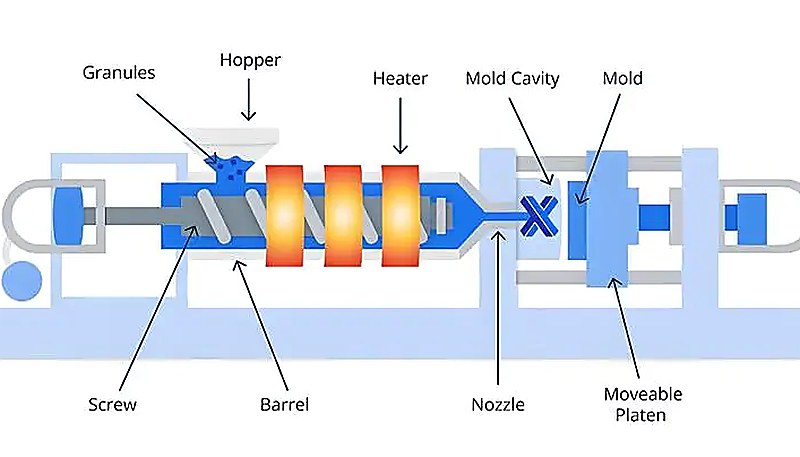
To understand why injection molding machine tonnage is important, you need to know the main components of an injection molding machine:
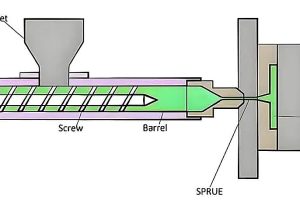
Injection Unit: This includes the screw, barrel, nozzle, etc. that melt and inject plastic pellets into the mold cavity.
Clamping Unit: This includes the moving platen, stationary platen, clamping mechanism, etc. that provide the clamping force and keep the mold closed.
Control System: This includes the computers, sensors, control panels, etc. that control various parameters of the injection and clamping process.
Drive System: This includes the hydraulic or electric drive systems that provide the power needed for injection and clamping.
Working Principle of Clamping Force
The clamping force is applied by the clamping device of the injection molding machine. When the mold is closed, the clamping mechanism of the machine presses the moving and fixed platens of the mold tightly together so that they can resist the pressure of the plastic melt in the cavity during injection molding.
The clamping force needs to be strong enough to prevent the molten plastic from leaking out from the parting line of the mold, but it should not be too large to avoid unnecessary damage to the mold and equipment.
“Machine tonnage affects molding accuracy and cycle time.”True
Proper tonnage ensures accurate part formation and reduces defects, while improper tonnage can lead to longer cycle times and lower quality.
“Higher machine tonnage always produces better parts.”False
The ideal tonnage depends on part design and material. Too much tonnage can lead to excessive pressure, causing defects.
What is the Importance of Choosing the Right Injection Molding Machine Tonnage?
Choosing the right injection molding machine tonnage is important because it keeps the mold closed without wasting press capacity. It keeps clamping force matched to projected area, resin behavior, mold layout, and the actual steps of injection molding. In our factory quoting reviews, the right tonnage decision protects both the mold and the production budget.
Choosing the right tonnage ensures the proper clamp force to prevent defects like short shots or flash. It balances the mold cavity’s pressure requirements, reducing energy consumption and improving cycle times.
Impact on Product Quality
The clamping force directly affects product quality. If the clamping force is insufficient during the injection molding process, the mold cannot stay fully closed and molten plastic can leak out between the mold halves.
This will cause defects such as burrs and flash on the surface of the product, affecting the surface finish and function of the product. For high-precision products, insufficient clamping force is even more serious, because insufficient clamping force will cause dimensional deviations and affect the performance of the product.
Appropriate tonnage (clamping force) ensures the stability and continuity of the production process. If the clamping force is insufficient or incorrect, the mold cannot be closed normally, resulting in production interruptions and affecting production efficiency.
On the contrary, excessive clamping force will increase the wear of the mold and the injection molding machine, shorten their service life and increase maintenance and replacement costs.
Impact on Cost Control
Correctly selecting the tonnage of the injection molding machine is important for controlling production costs. Selecting a machine with too high a tonnage increases equipment, energy, and floor-space cost; when outside production support is involved, use a sourcing-guide/”>supplier sourcing2 guide to verify whether the supplier has the right press range and process-control evidence.
On the contrary, if the tonnage of the selected machine is too low, it may not meet production requirements, which will further increase equipment expenditures as well as investment costs. Therefore, a reasonable selection of the tonnage of the injection molding machine can maximize the use of resources and reduce production costs.
Impact on Production Safety
Excessive clamping force will cause unnecessary wear of the mold and injection molding machine, increase the chance of equipment failure and damage, and affect production safety.
In addition, excessive clamping force may pose a threat to the safety of operators and machines. Therefore, choosing the right injection molding machine tonnage can not only improve production efficiency and product quality, but also ensure the safety of the production process.
“Correct machine tonnage improves product quality in injection molding.”True
Appropriate tonnage ensures the mold is properly clamped, preventing defects and enhancing part quality.
“A larger machine tonnage always improves production.”False
Too large of a machine tonnage can lead to unnecessary energy consumption and excessive clamp force, potentially damaging the mold or causing over-compaction of the plastic material.
What are the Steps to Determine the Tonnage of an Injection Molding Machine?
Determining the right tonnage for an injection molding machine is crucial for ensuring efficient production and preventing machine damage. This process involves calculating the clamping force based on part size and material.
To determine the tonnage of an injection molding machine, calculate the clamping force needed by multiplying the surface area of the molded part by the material’s injection pressure. The formula helps ensure accurate machine selection and efficient molding.
Understanding Specific Requirements of the Product and Mold
First, you need to know the size, shape, material of the product to be produced, and its behavior during the molding process in detail. Then, based on the product design and production requirements, determine the size of the mold, the number of cavities, and the arrangement of the cavities.
Product Size and Shape:The size and shape of the product directly affects the way the mold is designed and the way the clamping force is calculated. For example, large-sized products usually require larger molds and higher clamping forces. In addition, products with complex shapes may require higher precision and clamping forces.
Material Characteristics:Different materials have different flow and pressure characteristics during the injection molding process. For example, ABS requires higher injection pressure during injection molding than PP. Some engineering plastics require higher injection pressure and appropriate screw compression ratio design to achieve better molding effects. Therefore, understanding these behaviors of each material is important if you want to figure out how much clamping force is needed.
| Decision area | What to verify |
|---|---|
| Tooling | Confirm how mold design affects How to Choose the Right Tonnage for Your Injection Molding Machine Based on Your Project?. |
| Material | Check resin behavior, shrinkage, heat, and cosmetic risks. |
| Quality | Ask for inspection evidence before production approval. |
injection mold3 design: The size of the mold, the number of cavities, and the arrangement of these cavities all directly affect the calculation of the clamping force. If the mold has multiple cavities, their arrangement also needs to be considered when calculating the clamping force, but for a single-cavity mold, this is relatively easy. In addition, the mold design needs to consider the cooling system, gate design, and other factors that may affect the calculation of the clamping force.
Calculating the Projected Area of the Mold Cavity
To calculate injection molding tonnage, you need to know the cavity projection area. Specifically, the projection area refers to the vertical projection area of the cavity on the parting line. When calculating, you need to add the projection areas of all cavities together, and the layout of multi-cavity molds needs to be considered.
Calculating the Projected Area for Single-Cavity Molds:For single-cavity molds, calculating the projected area is pretty simple. You just need to calculate the vertical projected area of the product on the parting line. For example, if a product is 100mm 50mm, the projected area is 100mm 50mm = 5000mm².
Calculating the Projected Area for Multi-Cavity Molds:For multi-cavity molds, you need to calculate the total projected area of all the cavities. For example, if a product is 100mm 50mm and the mold design has four cavities arranged in 22, the projected area of a single cavity is 100mm 50mm = 5000mm². The total projected area of the four cavities is 5000mm² 4 = 20000mm².
Determining the Pressure of Plastic Melt in the Cavity
Different materials have different flow and pressure characteristics during injection molding. Generally, you can refer to the data provided by the material supplier or determine it based on past experience. Generally speaking, for thermoplastics, the cavity pressure is usually 20-40 MPa.
Pressure Characteristics of Common Materials:Here are the cavity pressure ranges for several common plastic materials:
ABS: 30-40MPa
PP: 20-30MPa
PE: 20-25MPa
PVC: 25-35MPa
PC: 30-40MPa
Factors Affecting Pressure Characteristics:The pressure of the plastic melt in the cavity is influenced by several factors, including:
Material flowability
Injection speed
Mold temperature
Product thickness
Therefore, when determining the cavity pressure, these factors need to be comprehensively considered to ensure the accuracy of the calculation.
Calculating the Required Clamping Force
To determine the required clamping force, apply the formula above F=A * P. Remember that in order to ensure the stability and safety of the production process, a safety margin of 10-20% is usually added to the calculated clamping force.
Example Calculation of Clamping Force: Let’s take an example of a product with dimensions of 100mm × 50mm. The material used is ABS and the cavity pressure is 30MPa. The mold design is a single-cavity mold. First, calculate the projected area: 100mm × 50mm = 5000mm² = 0.005m². Then, calculate the clamping force: F = A × P = 0.005m² × 30MPa = 0.005 × 30 × 10 = 150,000N = 15 tons. Adding a 20% safety margin: 15 × 1.2 = 18 tons. Therefore, choosing a 20-ton clamping force injection molding machine is more appropriate.
Choosing the Safety Margin:In actual production, to ensure the stability and safety of production, a certain safety margin is usually added to the calculated clamping force. Generally, the safety margin is 10-20%. The specific choice of safety margin can be determined based on the product requirements and actual production situation.
Considering Special Production Requirements
For some special products and production requirements, we also need to consider other factors. For example:
Multi-cavity molds: If we use multi-cavity molds, we need to consider the impact of cavity arrangement on clamping force.
Precision products: For products that require high precision and high quality, we may need to use a higher clamping force injection molding machine.
Large thin-walled products: Because the plastic melt flows and cools quickly, such products may require a larger clamping force during the molding process.
Special Requirements of Multi-Cavity Molds: The cavity arrangement in a multi-cavity mold has a significant effect on the force that needs to be applied when clamping. For example, if there are two rows and two columns (2×2), the required clamping force is different from one row and four columns (1×4). In practice, balanced layouts like 2×2 or circular arrangements tend to distribute clamping force more evenly, reducing the risk of flash on one side. Therefore, when designing a multi-cavity mold, the appropriate cavity arrangement should be selected to ensure that the clamping force is evenly distributed.
Special Requirements of Precision Products:For precision products that require both precision and high quality, an injection molding machine with a larger clamping force should be selected to ensure that the mold is completely closed during the injection molding process. Take a company that produces electronic components as an example, its tolerances are very fine: up to ±.01mm. If it wants to reliably produce good products, it must choose an injection molding machine with a larger clamping force to ensure production stability and product quality.
Special Requirements of Large Thin-Walled Products:When producing large thin-walled objects by injection molding, a larger clamping force is required because the plastic melt flows and cools very quickly. For example, when producing car bumpers, the product size is large and the wall thickness is thin, so an injection molding machine with a higher clamping force is required to ensure product quality.
“Tonnage affects the machine’s ability to prevent part deformation.”True
Correct tonnage ensures proper clamping pressure, preventing part warpage or deformation during the molding process.
“Higher tonnage machines are always better.”False
Choosing the correct tonnage is more important than selecting a larger machine. Overestimating tonnage can lead to increased costs and energy consumption without improving production.
What are the Case Studies?
Selecting the correct tonnage for an injection molding machine is crucial for optimizing efficiency and preventing defects. We will examine real-world cases to highlight key considerations.
Choosing the right tonnage ensures sufficient clamping force to prevent mold opening during injection. It affects product quality and cycle time. Key factors include material type, mold design, and part size.

Case 1: Small Precision Electronic Products
A company wants to make a small precision electronic product that’s 30mm 20mm 10mm, made of ABS plastic. The mold is designed with four cavities arranged in 2*2.
Find the projected area of the mold cavity: The projected area of each cavity is 30mm 20mm = 600mm², and the total projected area of the four cavities is 600mm² 4 = 2400mm².
Find the cavity pressure: According to the ABS material molding guide, the cavity pressure is about 30MPa.
Calculate the required clamping force: Clamping force = 2400mm² * 30MPa = 72000N, which is about 7.2 tons. Add a 20% safety margin, and the required clamping force is about 8.6 tons. So, it’s better to choose a 10-ton clamping force injection molding machine.
Case 2: Car Bumper
A company wants to make a car bumper that’s 1500mm 400mm 200mm, made of PP plastic. The mold is a single cavity.
Find the projected area of the mold cavity: The projected area is 1500mm * 400mm = 600000mm².
Find the cavity pressure: According to the PP material molding guide, the cavity pressure is about 25MPa.
Find the clamping force needed: Clamping force = 600000mm² * 25MPa = 15000000N, or about 1500 tons. Add a 20% safety factor, and the clamping force needed is about 1800 tons. So, a 2000-ton clamping force injection molding machine is more suitable.
Case 3: Large Thin-Walled Container
A company wants to make a big, thin-walled container that’s 200mm 200mm 200mm, out of PE plastic. The mold is a single cavity.
Figure out the projected area of the mold cavity: The projected area is 200mm * 200mm = 40000mm².
Figure out the cavity pressure: According to the PE material molding guide, the cavity pressure is about 20MPa.
Figure out the clamping force you need: Clamping force = 40000mm² * 20MPa = 800000N, which is about 80 tons. Add a 20% safety factor, and you need about 96 tons of clamping force. So, you should use a 100-ton clamping force injection molding machine.
“Choosing the right tonnage reduces production defects in injection molding.”True
Correct tonnage prevents mold opening and improves mold accuracy, resulting in fewer defects in final parts.
“Larger tonnage machines always result in better product quality.”False
While larger tonnage may be necessary for certain parts, it can lead to higher costs and longer cycle times for smaller parts.
What are the Common Problems And Solutions for Choosing the Tonnage of an Injection Molding Machine?
Choosing the right tonnage for your injection molding machine is essential for optimizing performance and preventing defects. In our process engineering reviews, we compare clamp force, injection pressure, and melt preparation from the screw injection molding machine before changing the mold or moving the job to a larger press — we have seen firsthand how a 10% tonnage mismatch can double the scrap rate on a multi-cavity automotive mold.
Choosing the right injection molding machine tonnage is crucial to avoid under or overloading. Key factors include part size, material type, and injection speed. The correct tonnage ensures high-quality parts and efficiency while preventing machine strain.
Insufficient Clamping Force
Problem: If the clamping force is not enough, the mold will not be completely closed during the injection process, which will cause flash and burrs, affecting the quality of the product.
Solution:Recalculate the clamping force, and consider all relevant factors in the calculation.
Solution: Optimize the cavity layout when designing the mold to reduce the required clamping force.
Solution: When selecting equipment, consider a certain safety factor to avoid insufficient clamping force.
Excessive Clamping Force
Problem: Too much clamping force can increase equipment costs and cause unnecessary wear and tear on the mold and equipment. As shown in the schematic stages of the molding cycle, excess pressure during the clamping stage can deform the mold platens over time.
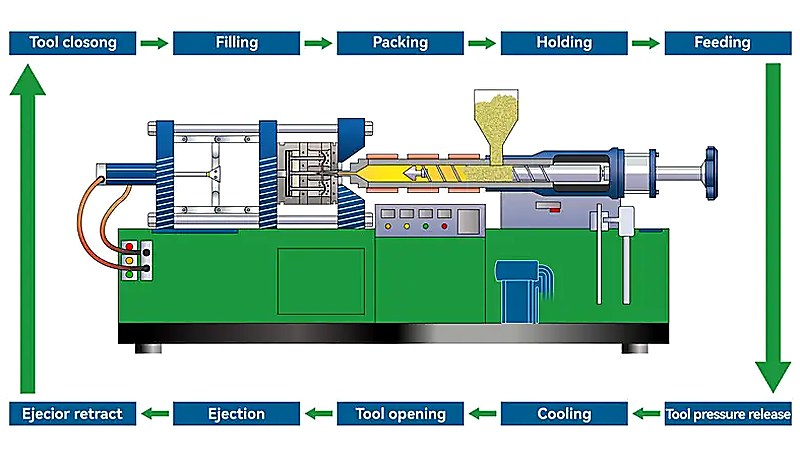
Solution: Calculate the required tonnage (clamping force) accurately to avoid excessive safety margins.
Solution: Choose the right injection molding machines and don\’t blindly pursue high-tonnage equipment.
Solution:Optimize mold design to reduce the need for high clamping force.
Clamping Force Calculation for Multi-Cavity Molds
Problem: The cavity arrangement of multi-cavity molds has a significant impact on clamping force, and it is easy to make errors in the calculation.
Solution: Choose the right cavity arrangement based on the actual situation to make sure the clamping force is evenly distributed.
Solution: Use professional software to simulate and calculate to make sure the clamping force is calculated correctly.
Solution: When designing multi-cavity molds, consider the impact of cavity arrangement on clamping force and optimize the design plan.
“Using the correct tonnage prevents overloading the injection molding machine.”True
Correct tonnage ensures that the machine operates within its capacity, preventing strain and maintaining efficiency.
“Higher tonnage always results in better injection molding quality.”False
Higher tonnage may be necessary for larger molds, but it doesn’t always guarantee better quality. Too much tonnage can cause issues like overpacking or warping of the parts.
How to Make the Right Tonnage Decision for Your Project?
Choosing the right tonnage is critical to the success of any injection molding project. The decision should be based on projected area, cavity pressure, material behavior, mold structure, safety margin, and the production quality target instead of a simple bigger-is-safer assumption.
By understanding the basic concepts of injection molding machine tonnage, the importance of choosing the right tonnage, the steps to determine tonnage, real-life case analysis, and common problems and their solutions, you will be able to better guide yourself in choosing the tonnage and size injection molding machine.
By choosing the right tonnage injection molding machine in the manufacturing process, you can improve efficiency and quality control, while strictly controlling costs and ensuring the safety of the production process.
In this article, we have compiled some detailed case studies, hoping that these case studies can provide valuable references for selecting injection molding machine tonnage and help your injection molding project succeed. See our injection molding complete guide for a comprehensive overview.
Selecting the correct tonnage is vital for product quality, machine efficiency, and avoiding unnecessary damage to molds. ↩
Understanding clamping force is crucial for ensuring product quality and preventing defects in injection molding processes. ↩
Understanding how to calculate the total projected area is crucial for accurate mold design and ensuring the quality of the final product. ↩
Knowing the cavity pressure ranges for different materials helps in selecting the right material and settings for injection molding processes. ↩
Calculating the required clamping force accurately is essential for choosing the right injection molding machine and ensuring production stability. ↩
Learn about Injection Molding Machines a Comprehensive Guide: An injection molding machine is a piece of equipment that is widely used in industrial production. ↩
Need a Quote for Your Injection Molding Project?
Get competitive pricing, DFM feedback, and production timeline from ZetarMold’s engineering team.
Request a Free Quote →
What are the Most Common Questions About Injection Molding Machine Tonnage?
Frequently Asked Questions
What is the most important factor when choosing injection molding machine tonnage?
The most important factor is matching the projected cavity area and material injection pressure to the machine clamping force, plus a 10-20% safety margin. An undersized machine causes flash, short shots, and dimensional instability; an oversized one wastes energy and can damage the mold over time. Always calculate tonnage from your actual part geometry and the resin data sheet rather than relying on estimates. The calculation involves multiplying the projected area by the cavity pressure and then applying a safety factor to account for process variations.
How should buyers evaluate a supplier’s tonnage recommendation?
Ask the supplier to show the tonnage calculation worksheet including projected area, cavity pressure by material, and the safety factor applied. A reliable supplier will explain the tradeoffs between different machine sizes, share relevant case studies from similar parts they have produced successfully, and document quality controls before tooling begins. Buyers should also verify that the supplier has the actual machine range available on site, not just claim capability on paper. Requesting a mold flow analysis report is another good way to confirm the supplier has done the engineering homework.
When does tonnage selection require supplier review?
Supplier review is essential when the part has complex geometry, multi-cavity layouts, thin-wall sections, or when using high-pressure engineering materials like polycarbonate or PEEK. If the calculated tonnage is close to the upper limit of the available machine, the supplier should verify with mold flow simulation before committing to production. This prevents costly tooling revisions and ensures the selected machine can maintain consistent clamp force throughout the entire injection cycle. Always get a second opinion on tonnage when the safety margin falls below ten percent.
Why does mold design matter for tonnage selection?
Mold design directly determines the projected area that the clamping force must hold shut during injection. The number of cavities, their geometric arrangement, runner type such as hot runner versus cold runner, and wall thickness all affect the total tonnage required. A well-designed mold with balanced cavity layouts and optimized flow paths can reduce tonnage needs by fifteen to thirty percent, which translates into lower machine costs and better energy efficiency over the entire production run. Proper mold design also reduces wear on both the mold and the machine.
How can ZetarMold help with tonnage selection?
ZetarMold operates 47 injection molding machines ranging from 90T to 1850T at its Shanghai factory, giving it the flexibility to match tonnage precisely to each project regardless of part size. With over 20 years of experience and a team of 8 senior engineers, the company provides comprehensive DFM feedback, mold flow simulation, and tonnage recommendations tailored to your specific part geometry, material selection, and production volume requirements before any tooling investment is made. This upfront engineering review helps avoid costly surprises during production ramp-up.
-
injection molding: injection molding refers to is the production process that melts plastic, injects it into a mold cavity, cools the part, and repeats the cycle for stable volume manufacturing. ↩
-
supplier sourcing: supplier sourcing refers to the structured evaluation of molding suppliers, including equipment range, tooling capability, process control, quality evidence, communication, and commercial risk before placing production work. ↩
-
injection mold: injection mold refers to an injection mold is the precision tool that defines part geometry, cooling behavior, ejection, gating, surface finish, and repeatability. ↩



 EN
EN  ES
ES  FR
FR  DE
DE  PT
PT  AR
AR  RU
RU  JA
JA  KO
KO  IT
IT  NL
NL  TR
TR  PL
PL 