

Communicating with an 射出成形 supplier shouldn’t feel like guessing. Yet most buyers we talk to say the same thing: “I sent the RFQ, but the quote came back wrong” または “T1 samples looked nothing like what I expected.” The problem isn’t technical capability — it’s communication gaps that pile up from the first email to production sign-off. This checklist comes directly from our experience as an 射出成形サプライヤー handling hundreds of international projects each year. We’ll walk through exactly what information to share, what questions to ask, and what red flags to watch for at every stage — from initial RFQ through first article inspection and into production.
- Include complete 3D CAD, 2D drawings, and material specs in your RFQ — incomplete data is the #1 cause of wrong quotes
- Clarify cosmetic and dimensional tolerances before tooling starts; rework costs 3-5x more than getting it right upfront
- Request a detailed mold design review (DFM) and approve it before steel is cut
- Establish inspection criteria and AQL levels before T1 sampling to avoid subjective accept/reject debates
- Lock packaging, labeling, and logistics details before production start — not after first shipment
What Should You Include in Your Initial RFQ?
A strong RFQ is the single most important document in your supplier relationship. It sets expectations before a single dollar is spent. In our experience, RFQs that include complete technical data receive quotes 40% faster and produce fewer change orders down the line. At minimum, your RFQ package should contain:
3D CAD files (STEP or IGES format) — not screenshots, not PDF renders. Your supplier needs actual solid geometry to evaluate tooling complexity, part volume, and machine selection. If the part has undercuts or side actions, the 3D file must reflect them.
2D drawings with GD&T callouts — these define what “good enough” actually means. Critical dimensions, tolerances (general ±0.1mm vs. tight ±0.02mm), and datum references must be clearly marked. Vague tolerance notes like “standard tolerance” create confusion that surfaces during T1 inspection.
Material specification — don’t just say “ABS” or “nylon.” Specify the exact grade (e.g., 射出成形金型 grade PA66-GF30), color (Pantone or RAL reference), and any regulatory requirements (UL94 V-0, RoHS, REACH, FDA). If you need medical-grade or food-contact material, state it explicitly.
Annual volume estimate — this drives every major decision: mold base size, number of cavities, gate type, and automation level. Saying “I need 500 now but maybe 50,000 later” is fine — but your supplier needs both numbers to quote the right mold class.
How Do You Evaluate a Supplier’s Response?
Once quotes come back, most buyers compare price and lead time. That’s necessary but insufficient. A low quote with vague tooling specifications is a red flag, not a bargain. Here’s what to look for in a credible supplier response:
Detailed mold specification — the supplier should specify mold base type, steel grade (P20, H13, S136), number of cavities, expected mold life, and cooling channel layout. If the response just says “multi-cavity mold, 1,000,000 shots” without material specifics, ask for clarification.
Clear cost breakdown — you should see separate line items for: mold fabrication, sampling, material per unit, secondary operations, and packaging. Bundled single-number pricing makes it impossible to negotiate intelligently or understand where cost overruns originate.
Lead time with milestones — not just “6 weeks for mold, 2 weeks for samples.” You need: dfm1 review (Week 1), mold design approval (Week 2), machining (Weeks 3-5), T1 sampling (Week 6). Milestone-based timelines let you intervene early when things go off track.
Process validation plan — does the supplier propose a first article inspection (fai2) protocol? Do they mention process capability studies (Cpk)? A supplier who proactively discusses quality planning is one who’s actually done this before at scale.
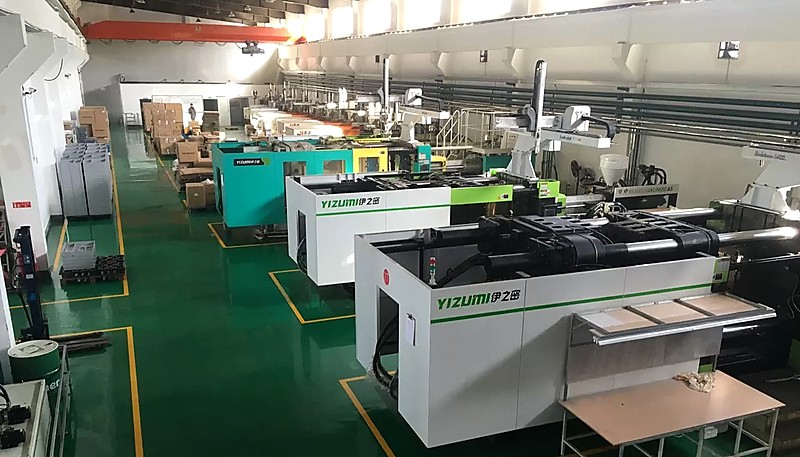
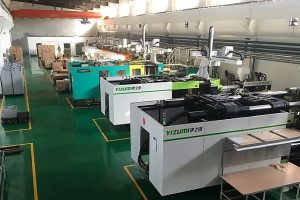
The image above shows a typical well-equipped injection molding production floor. Facilities with in-house tooling capability, like this one, can typically provide DFM feedback within 3-5 business days and deliver more accurate quotes because the engineering team has direct access to mold fabrication resources for validation. Period.
What Should You Ask Before Tooling Starts?
The most critical questions are those asked between quote approval and mold kickoff — this is where communication breakdowns typically originate. Between quote approval and mold kickoff, there’s a critical window. This is where most communication breakdowns happen — the buyer assumes the supplier understood everything, and the supplier assumes the buyer will accept reasonable compromises. Ask these questions explicitly:
1. “What does your DFM report identify as risk areas?” — every part has them: thick sections prone to sink, tight radii that stress steel, undercuts requiring lifters. The DFM review should flag these. If the supplier’s DFM says “no issues found,” that itself is a red flag — no part is perfect.
2. “What gate type and location do you recommend, and why?” — gate design affects weld line position, packing pressure, and cosmetic appearance. Edge gates, submarine gates, hot runners, and valve gates each have tradeoffs. You should understand and approve the choice before steel is cut.
3. “What’s the expected cycle time, and what drives it?” — cycle time determines unit cost. If the supplier quotes a 25-second cycle but your part geometry really needs 40 seconds for adequate cooling, that cost estimate is wrong. Ask them to explain the cycle breakdown: injection, hold, cooling, ejection.
4. “What steel grade are you using, and what’s the expected maintenance schedule?” — a P20 mold for 100,000 parts is reasonable. A P20 mold for 2,000,000 parts is not. Understand the trade-off between tooling cost and longevity.
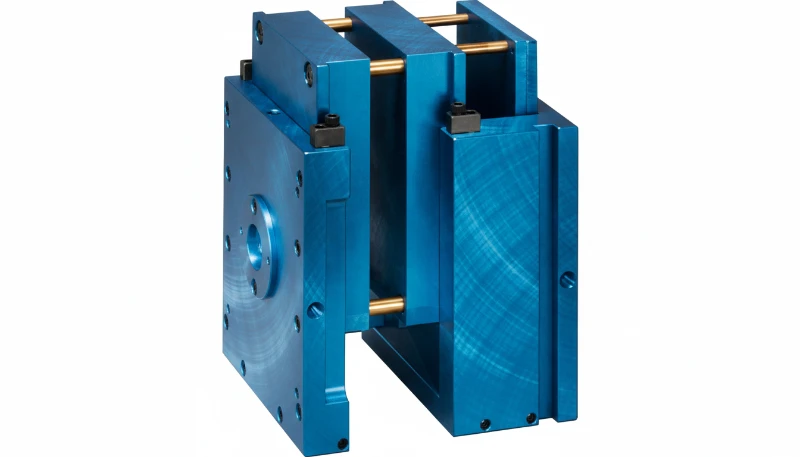
5. “Who owns the mold, and what are storage terms?” — this sounds contractual, not technical, but it affects communication. If you own the mold but it’s stored at the supplier’s facility, clarify access rights, maintenance responsibilities, and transfer procedures upfront. When evaluating a supplier’s DFM feedback quality, look for specific recommendations about wall thickness optimization, rib design, and draft angle adequacy rather than generic approval.
These five questions form the minimum baseline for pre-tooling communication. Any supplier worth partnering with will welcome this level of scrutiny because it demonstrates that you understand the injection molding process and are committed to getting it right the first time.
How Do You Manage T1 Sample Approval?
T1 (first trial) samples are the moment of truth. Everything communicated — or miscommunicated — up to this point becomes physical reality. Here’s how to handle T1 approval professionally: Detailed cycle time analysis should also account for seasonal variations in ambient temperature that affect cooling efficiency. This is particularly important for parts with tight tolerances where even minor thermal variations can push dimensions outside specification limits during extended production runs. Always.
Request dimensional data before visual approval — most buyers look at samples, say “looks good,” and only discover dimensional issues at assembly. Always require a full dimensional inspection report (FAI) measuring every critical dimension against your 2D drawing before you evaluate cosmetics.
Define cosmetic standards in writing — “no visible defects” means nothing without context. Document: acceptable surface finish (SPI A-2, B-1, etc.), visible area vs. non-visible area classifications, and specific defect limits (e.g., flash less than 0.1mm, no sink marks on Class A surfaces). Use the SPI surface finish standard as your reference.
Ask for process parameters used during T1 — injection pressure, hold pressure, cooling time, melt temperature, and mold temperature. These establish your baseline. If production parts later drift, you can compare against T1 parameters to diagnose the issue.
Don’t approve a single sample — request a minimum of 10-20 samples from the T1 run. One good part doesn’t prove process stability. Statistical sampling reveals whether the process is centered, capable, and repeatable.
With 30+ English-speaking project managers in our Shanghai factory, we’ve learned that the most common T1 issue isn’t technical — it’s misaligned expectations about surface finish standards. We now include SPI finish comparison plaques with every T1 shipment so buyers can make side-by-side assessments.
What Should You Confirm Before Production Starts?
The four items to confirm are packaging, inspection, material certification, and shipping logistics. Confirm four items before production begins: packaging specifications, inspection protocol, material certification, and shipping logistics. Missing any of these creates problems within the first three shipments.
Packaging specifications — how many parts per bag, per box, per pallet? Are individual parts separated to prevent scratching? Do you need VCI (volatile corrosion inhibitor) packaging for metal-insert parts? Is barcoding or part labeling required? Spell it out.
Inspection protocol - aql3 (aql) level (we recommend AQL 1.0 for critical dimensions, AQL 2.5 for cosmetics), sampling plan (C=0 or MIL-STD-105E), in-process inspection frequency, and who signs the inspection report. If you require incoming inspection data with each shipment, state that now.
Material certification — request material test reports (MTR) or certificates of analysis (CoA) for every raw material batch. This is non-negotiable for regulated industries (medical, automotive, aerospace). Even for consumer products, batch traceability protects you if a material issue surfaces later.
Shipping and logistics — EXW, FOB, CIF, DDP? Which port? Container consolidation or LCL? Lead time from production completion to shipment-ready? These aren’t afterthoughts — they’re part of the communication framework that keeps deliveries predictable.
How Do You Handle Communication During Ongoing Production?
Many buyers invest heavily in communication during tooling and qualification, then go silent during production. This is exactly backwards. Ongoing production is where small issues compound into big problems if communication channels aren’t maintained.
Establish a regular reporting cadence — weekly production status updates (units completed, yield rate, any anomalies) keep both sides aligned. This doesn’t need to be elaborate. A simple template with planned vs. actual quantities, open issues, and next shipment date is sufficient.
Create an engineering change request (ECR) process — if you need a dimension change, material substitution, or cosmetic adjustment, document it formally. Verbal requests during a phone call lead to misunderstandings and uncontrolled changes. Every ECR should include: description, reason, affected dimensions, expected cost/timeline impact, and approval signature from both sides.
Agree on escalation paths — who do you call when there’s a quality hold? Who approves rework vs. scrap decisions? What’s the response time expectation? Having these paths defined before a crisis means faster resolution when something actually goes wrong.
What Red Flags Should You Watch For?
After working with hundreds of international buyers, we’ve noticed consistent warning signs that a supplier relationship is heading toward trouble. Catch these early and address them directly:
Red Flag #1: The supplier never pushes back. If every request is met with “no problem” without discussion, they’re either not analyzing your requirements or they’re planning to figure it out during production. A good supplier questions your tolerances, suggests design improvements, and flags risks proactively.
Red Flag #2: No formal quality system. Ask whether they operate under ISO 9001 or IATF 16949. If the answer is “we have good quality” without certification, you have no audit trail and no structured problem-solving methodology when issues arise.
Red Flag #3: Photographs instead of data. A supplier who sends photos of parts but no dimensional data is avoiding objective comparison. Photos supplement inspection reports — they don’t replace them.
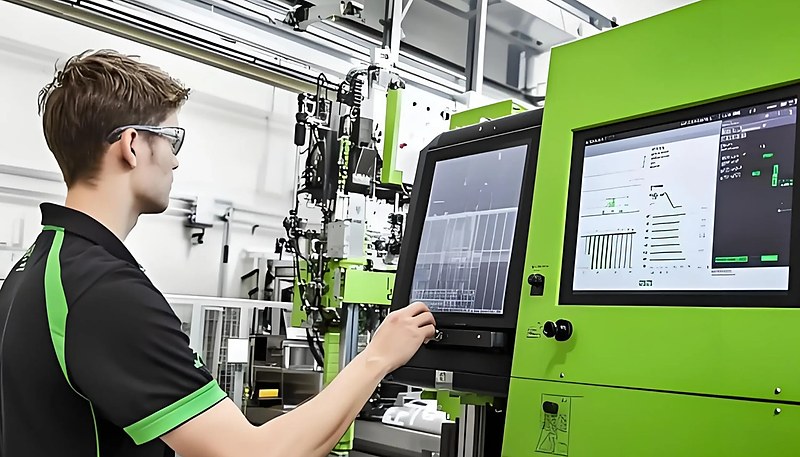
Structured communication systems, including documented inspection protocols and defined escalation paths, are hallmarks of suppliers who invest in long-term partnerships rather than one-off transactions.
Red Flag #4: Continuously shifting timelines. One delay is understandable. Three consecutive delays without root cause explanation means the supplier is overcommitted or under-resourced.
Red Flag #5: Reluctance to allow facility visits or video calls. Transparency is a proxy for trustworthiness. If a supplier resists showing you their production floor, ask why.
Over 20+ years of operating under ISO 9001, ISO 13485, ISO 14001, and ISO 45001, we’ve found that the strongest supplier relationships are built on structured communication — not just good intentions. Every checklist item above exists because we’ve seen the cost of skipping it.
How Do You Build a Long-Term Supplier Communication Framework?
Individual checklists solve project-level communication. But for companies sourcing injection molded parts year after year, you need a repeatable framework:
Standardize your RFQ template — create a master template that includes all the data fields discussed in this article. Force yourself to fill in every field before sending it to any supplier. Incomplete RFQs produce incomplete quotes.
Build a shared project tracker — whether it’s a shared Google Sheet, a project management tool, or a simple status document, both parties need visibility into milestones, open issues, and decisions. Email threads are not a project management system.
Conduct annual business reviews — sit down (virtually or in person) once a year to review: on-time delivery rate, quality performance (PPM, return rate), cost trend, and upcoming projects. This transforms a transactional relationship into a strategic partnership.
Document lessons learned — after every project, spend 15 minutes writing down what went well and what didn’t. Six months from now, you won’t remember the specific tolerance issue that caused a three-week delay — but your notes will.
Annual business reviews deserve special attention. They provide a structured opportunity to discuss not just past performance but also upcoming capacity needs, new material options, and potential design improvements for next-generation parts. Suppliers who participate actively in these reviews tend to invest more in the relationship because they can see long-term volume commitment rather than transactional uncertainty.
These initial misconceptions about quoting and sampling often lead buyers astray before the project begins. Getting the RFQ and T1 stages right sets the foundation for production consistency and cost control.
“A supplier who never pushes back on your requirements is likely doing thorough analysis.”真
Experienced suppliers will flag risks, suggest alternatives, and question tight tolerances. A supplier who agrees to everything may be cutting corners or planning to figure it out during production.
“A supplier who questions your tolerances and suggests design improvements is demonstrating thorough analysis.”偽
Experienced moldmakers proactively flag risks, recommend design refinements, and push back on unrealistic tolerances — this is a sign of competence, not resistance.
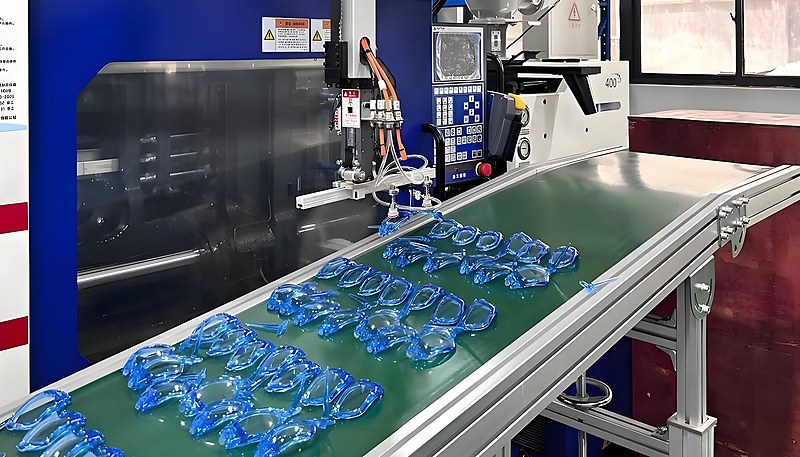
These initial misconceptions about quoting and sampling often lead buyers astray before the project even begins. Getting the RFQ and T1 stages right sets the foundation for everything that follows — from production consistency to long-term cost control. The next set of statements addresses the subtler communication challenges that surface during ongoing supplier engagement. In our factory, we routinely see RFQs that include only a screenshot or a PDF rendering of the 3D model, which forces our engineering team to request additional files and delays the quotation by several days. Similarly, buyers who approve T1 samples based solely on appearance often discover dimensional issues weeks later during their own incoming inspection, when rework is far more expensive.
“Material certification is only necessary for medical and aerospace parts.”真
Even for consumer products, material certifications provide batch traceability and protect against liability if material issues arise after shipment.
“Sending only a 3D CAD file is enough for an accurate injection molding quote.”偽
A 3D file shows geometry but not tolerances, material specs, surface finish requirements, or volume expectations — all of which significantly impact the quote.
Establishing formal escalation paths, pre-defining AQL levels, and maintaining regular status reporting cadences are communication infrastructure that pays dividends over a production program’s lifetime. A structured communication playbook covering escalation contacts, quality reporting formats, and change request procedures is the foundation of reliable production partnerships. Every sourcing professional should document these communication protocols as part of their standard supplier onboarding checklist to ensure consistency across projects and procurement team members.
“T1 samples should be approved based on visual inspection before dimensional data is reviewed.”真
Always review the full dimensional inspection report (FAI) first. Visual approval without dimensional verification is the most common cause of downstream assembly issues.
“Establishing escalation paths before a crisis leads to faster resolution when quality issues occur.”偽
Pre-defined escalation contacts and response time expectations eliminate the confusion and delay that occur when both sides are figuring out who to call during an actual problem.
よくある質問
What information must be included in an injection molding RFQ?
A complete RFQ should include 3D CAD files (STEP/IGES), 2D drawings with GD&T callouts, exact material grade and color specification, annual volume estimate, surface finish requirements, and any regulatory compliance needs. Incomplete RFQs are the single biggest cause of inaccurate quotes and costly change orders during tooling. Taking time to prepare a thorough RFQ package saves weeks of back-and-forth and significantly reduces the risk of receiving a mold that doesn’t meet your requirements. Always include surface finish requirements, color specifications in a standard system like Pantone or RAL, and any specific packaging or labeling needs that might affect the molding process or tooling design.
How do I evaluate an injection molding supplier’s quote?
Look beyond price: evaluate the mold specification including steel grade, cavity count, and expected mold life. Check for a clear cost breakdown with separate line items for tooling fabrication, raw materials per unit, and secondary operations. Confirm milestone-based lead times rather than a single number, and verify whether the supplier proposes a formal quality validation plan with FAI and Cpk studies. A quote without detailed tooling specifications is a red flag that frequently leads to unexpected costs and delays mid-project.
What should I ask before the supplier starts cutting steel?
Request the full DFM (Design for Manufacturability) report and carefully discuss every identified risk area with the supplier. Ask about their recommended gate type and location along with the engineering rationale behind that recommendation, the expected cycle time and which specific factors drive that number, the mold steel grade versus your target production volume, and mold ownership plus storage terms. These questions prevent expensive mid-stream design changes. If a supplier cannot clearly articulate their gate location logic or cycle time estimate, they likely have not performed a thorough analysis of your part.
How many T1 samples should I request for approval?
Request a minimum of 10 to 20 samples from the T1 trial run, accompanied by a complete dimensional inspection report that measures every critical dimension against your 2D engineering drawing. Approving only a single sample does not demonstrate process stability or repeatability — it merely confirms the mold can produce one acceptable part under controlled conditions. Statistical analysis across the full sample set reveals whether the manufacturing process is centered within tolerance bands and capable of producing consistent, repeatable output throughout production runs.
What must be confirmed before production starts?
Before green-lighting production, you must confirm four critical items: packaging specifications including parts per box, separation method, and labeling requirements; inspection protocol specifying AQL levels, sampling plan methodology, and sign-off authority; material certification requirements for batch traceability; and shipping terms covering Incoterms, port of departure, and consolidation method. Skipping any of these items routinely causes problems within the first three production shipments. Packaging is the most frequently overlooked element — parts arriving scratched or damaged due to inadequate separation cost significant time and money to replace or rework.
How often should I communicate with my supplier during production?
Establish weekly status updates covering planned versus actual production quantities, current yield rate, any open quality issues, and the next scheduled shipment date. Simultaneously define a formal engineering change request process and clear escalation paths for quality holds. Going silent during production is where small quality drifts become major delivery problems and costly disputes. Many of the worst supplier disagreements we have encountered started with a minor dimensional shift that went unreported for weeks simply because neither party had established a regular communication cadence or defined who to contact when issues arose.
What red flags indicate a problematic injection molding supplier?
Key red flags include: a supplier who never pushes back on your requirements or questions your tolerances, lacking formal quality management system certifications, sending photographs of parts without accompanying dimensional measurement data, repeatedly shifting delivery timelines without providing root cause explanations, and resisting facility visits or live video calls of the production floor. Any single one of these indicators warrants a direct and candid conversation about mutual expectations. Suppliers who proactively communicate their limitations and recommend process improvements consistently outperform those who promise everything and deliver unexpected problems.
Effective supplier communication isn’t a soft skill — it’s a competitive advantage. Every piece of data you share upfront, every question you ask before tooling, and every standard you define before production reduces cost, shortens lead time, and improves quality. If you’re looking for an injection molding partner who values structured communication as much as technical capability, we’re ready to demonstrate the difference. With 20+ years of experience, 47 injection molding machines, and 30+ English-speaking project managers, we’ve built our processes around the checklist above — because we’ve seen what happens when it’s skipped.
-
dfm: Design for Manufacturability (DFM) refers to the practice of analyzing part geometry and production requirements before tooling begins, identifying features that may cause quality issues, excessive cost, or production delays during injection molding. ↩
-
fai: First Article Inspection (FAI) is a detailed measurement of the first production parts against design specifications, verifying that every critical dimension meets the tolerance requirements defined in the 2D engineering drawings. ↩
-
aql: The Acceptable Quality Level (AQL) is a statistical quality measurement that defines the maximum percentage of defective units considered acceptable in a production batch, commonly used in incoming inspection protocols for injection molded parts. ↩





 EN
EN  ES
ES  FR
FR  DE
DE  PT
PT  AR
AR  RU
RU  JA
JA  KO
KO  IT
IT  NL
NL  TR
TR  PL
PL 