

- Mexico is North America’s top manufacturing export platform, with over USD 500 billion in annual exports driven by automotive, medical devices, and electronics clusters in Monterrey, Juárez, Tijuana, Guadalajara, and Puebla.
- ZetarMold holds ISO 9001 and ISO 13485 certifications and supplies USMCA-compatible injection molded components to Mexican maquiladoras that manufacture finished goods for the US market.
- 47 injection molding machines from 60 to 1,850 tons, 92% first-pass yield, and 200+ engineering materials support automotive structural parts, medical device housings, and electronics enclosures alike.
- Sea freight from Dongguan to Manzanillo runs 18-22 days; air freight to Mexico City arrives in 3-5 days. Mexico import duties on plastic parts range from 5-15%, with USMCA benefits for qualifying goods.
- All project management is conducted in English, and ZetarMold’s engineers are experienced working with Mexican maquiladoras operating under IMMEX program requirements.
Mexico Injection Molding Market Overview
Mexico is one of the world’s most strategically located manufacturing hubs, sharing a nearly 3,200 km border with the United States and operating as the primary nearshore production base for North American supply chains. The country’s manufacturing sector is anchored by the maquiladora system — export-oriented factories operating under the IMMEX program that allow duty-free importation of components destined for re-export. Major industrial clusters have developed around automotive production in Monterrey, Juárez, and Puebla, electronics manufacturing in Guadalajara and Chihuahua, and medical device assembly in Tijuana and Baja California.
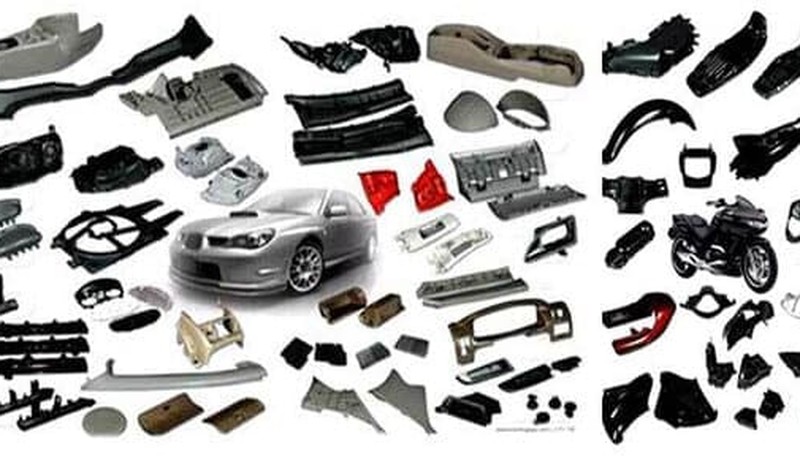
The automotive sector alone represents Mexico’s largest manufacturing export segment, with OEM and tier-1 plants from GM, Ford, Toyota, Nissan, and BMW requiring millions of precision injection molded plastic components annually — dashboard assemblies, connector housings, sensor brackets, under-hood shields, and interior trim pieces. Mexico’s medical device sector, concentrated in the Tijuana-Ensenada corridor and the Juárez cluster, is the world’s seventh-largest exporter of medical devices, supplying BD, Stryker, and Medtronic with assembled products that depend on precision plastic housings and sterile-path components.
Despite Mexico’s manufacturing scale, domestic injection molding capacity is heavily weighted toward large-volume commodity production. Precision mold tooling for engineering resins — particularly for medical and automotive-grade parts — is predominantly sourced from China, Taiwan, or the United States. This creates consistent demand among Mexican maquiladoras for offshore injection molded components that meet international quality standards while fitting within USMCA regional value content calculations.
Why Mexico Companies Choose Chinese Injection Molding
“Mexican maquiladoras can import Chinese injection molded components duty-free under the IMMEX program.”真
The IMMEX program (formerly Maquiladora program) allows Mexican manufacturers to temporarily import raw materials, components, and parts from any country — including China — duty-free, provided those materials are incorporated into products that are subsequently exported. This means a Mexican automotive or medical device maquiladora can import injection molded housings, brackets, and assemblies from ZetarMold in China without paying Mexico’s standard 5-15% import duty on plastic parts, as long as the finished product is re-exported to the US or another market.
について 射出成形プロセス1 expertise at ZetarMold is well-matched to the engineering demands of Mexican automotive and medical clients. ZetarMold’s 47 machines — ranging from 60 to 1,850 tons of clamping force — handle everything from miniature sensor connector bodies to large structural automotive panels. The company’s 92% first-pass yield across all programs and ±0.005 mm dimensional tolerance capability ensure that parts arriving at Mexican assembly facilities meet the dimensional and cosmetic standards required for automated assembly lines operated by tier-1 automotive suppliers.
“Chinese injection molded parts cannot qualify as USMCA-compliant content in finished goods exported from Mexico to the US.”偽
USMCA (United States-Mexico-Canada Agreement) uses a regional value content (RVC) calculation to determine whether goods qualify for preferential tariff treatment. Chinese-origin injection molded components can be incorporated into a Mexican maquiladora’s finished product, and if sufficient value-added manufacturing occurs in Mexico to meet the applicable RVC threshold — typically 75% for automotive parts, varying by HS code for other categories — the finished good qualifies as USMCA-compliant. Many Mexican maquiladoras successfully use Chinese-sourced plastic components as inputs while maintaining USMCA qualification on the assembled output.
For Mexican procurement teams sourcing components for medical device assembly, ZetarMold’s ISO 13485 certification and full GMP documentation package — including material traceability, First Article Inspection (FAI) reports, and process capability data — satisfy the supplier qualification requirements of FDA-regulated medical device manufacturers operating under 21 CFR Part 820. A free DFM review2 is delivered within 48 hours and is structured to integrate into FDA design history files.
ZetarMold Core Capabilities
| Capability | Detail |
|---|---|
| 射出成形機 | 47 machines, 60-1,850 tons clamping force |
| First-Pass Yield | 92% across all programs |
| Materials Supported | 200+ engineering and commodity resins |
| Certifications | ISO 9001, ISO 13485 |
| 寸法公差 | ±0.005 mm on critical features |
| Sample Lead Time | 15 days from design approval |
| Production Lead Time | 30-45 days for standard orders |
What Mexico Buyers Care About Most
Mexican automotive procurement teams prioritize three things when sourcing injection molded components offshore: dimensional consistency across large production batches, material traceability for IATF 16949-aligned quality systems, and shipping reliability into Manzanillo or Lázaro Cárdenas ports. ZetarMold’s ±0.005 mm tolerance capability and structured SPC (statistical process control) documentation satisfy the dimensional repeatability requirements of automotive tier-1 assembly lines, where component variation directly impacts line efficiency and warranty claims.
For medical device maquiladoras in Tijuana and Juárez, the priority is clean documentation for FDA supplier audits and NOM-compliant product labeling support. ZetarMold provides a complete supplier qualification documentation package — ISO 13485 certificate, material certificates with resin lot traceability, dimensional FAI reports, and process capability studies — that covers the documentation requirements of FDA 21 CFR Part 820 and the Mexican NOM standards that apply to imported medical components. The company’s project managers are experienced with 少量射出成形3 for clinical evaluation and validation batches before full production launch.
On logistics, sea freight from ZetarMold’s Dongguan factory to Manzanillo Port takes 18 to 22 days, fitting within the standard 4-6 week replenishment cycles used by most maquiladora supply chain managers. Air freight to Mexico City’s Benito Juárez International Airport or Monterrey’s General Mariano Escobedo Airport arrives in 3 to 5 days — preferred for T1 sample review and urgent production top-ups. ZetarMold’s documentation team prepares complete commercial invoice and packing list documentation in English to support Mexican customs clearance and IMMEX program compliance.
Industries ZetarMold Serves for Mexico Clients
| 産業 | Typical Parts | Key Requirement |
|---|---|---|
| 自動車 | Sensor housings, connector brackets, interior trim | IATF-aligned controls, dimensional SPC |
| 医療機器 | Device housings, fluid-path assemblies, handles | ISO 13485, FDA 21 CFR Part 820 documentation |
| エレクトロニクス | Enclosures, bezels, structural inserts | RoHS compliance, tight tolerances |
| 航空宇宙 | Lightweight panels, brackets, cable guides | High-temperature resins, traceability |
| 消費財 | Appliance parts, packaging components | High-volume consistency, NOM labeling support |
Get a Free Quote
Mexican buyers can request a no-obligation quote and free DFM review by submitting a 3D file (STEP or IGES preferred) along with annual volume requirements, target material, and applicable standards (IATF, FDA, etc.). ZetarMold responds within 24 business hours with a preliminary cost estimate and tooling timeline. All communication is conducted in English, and ZetarMold’s project managers are available during overlapping Mexico-China business hours for calls and video conferences.
| ステップ | What Happens | タイムライン |
|---|---|---|
| 1. Submit 3D File | Upload STEP/IGES + requirements | Same day |
| 2. Free DFM Report | Engineering review of moldability | Within 48 hours |
| 3. Quotation | Tooling cost + unit price breakdown | Within 24-48 hours |
| 4. Tooling Approval | T1 sample delivery for approval | 15 days from approval |
| 5. Production | Full run + sea/air shipping to Mexico | 30-45 days + 18-22 days sea freight |
よくある質問
How long does shipping from ZetarMold to Mexico take?
ZetarMold ships from its Dongguan, China facility to Mexico via two primary routes. Sea freight to Manzanillo Port — Mexico’s largest Pacific container port — takes 18 to 22 days, depending on the carrier and routing. Lázaro Cárdenas Port is an alternative for deliveries to central Mexico and Guadalajara-area clients. Air freight to Mexico City’s Benito Juárez International Airport or Monterrey’s General Mariano Escobedo Airport arrives in 3 to 5 business days. Most Mexican maquiladora clients use air freight for T1 sample review and validation batches, then transition to sea freight for production replenishment. ZetarMold provides full customs documentation in English — commercial invoice, packing list, and HS code classification — to support IMMEX program compliance and smooth Mexican customs clearance.
Can ZetarMold supply parts that qualify under Mexico’s IMMEX maquiladora program?
Yes. ZetarMold regularly supplies injection molded components to Mexican maquiladoras operating under the IMMEX program. Under IMMEX, components imported from China can enter Mexico duty-free if they are incorporated into products subsequently exported to the US or other markets. ZetarMold provides the detailed commercial documentation — including precise HS code classification, unit values, and material descriptions — that Mexican Customs (SAT) and IMMEX program auditors require. The company’s project managers understand the documentation requirements of the IMMEX program and can structure shipments and invoices to support clients’ customs compliance obligations. For clients who also need USMCA qualification analysis, ZetarMold can provide material content and origin documentation to support the buyer’s RVC calculation.
Does ZetarMold hold the quality certifications required by Mexico’s automotive and medical device sectors?
ZetarMold holds ISO 9001 certification for general quality management and ISO 13485 certification for medical device quality management systems. For automotive clients operating under IATF 16949 supply chain requirements, ZetarMold applies IATF-aligned manufacturing controls including PPAP-compatible documentation (PFMEA, control plans, MSA, and SPC data), enabling Mexican tier-1 suppliers to qualify ZetarMold as an approved sub-supplier. For medical device maquiladoras in Tijuana and Juárez, ZetarMold’s ISO 13485 facility and GMP documentation package — material traceability, dimensional FAI reports, and process capability studies — support FDA 21 CFR Part 820 supplier qualification requirements and align with NOM standards applicable to imported medical components in Mexico.
How does ZetarMold’s pricing compare to domestic Mexican injection molding alternatives?
Mexico has a significant injection molding industry for standard commodity production, but precision tooling for engineering resins — particularly for automotive and medical applications — is predominantly sourced from China, the US, or Taiwan. Compared to US-based injection molders, ZetarMold’s tooling costs typically run 40 to 60 percent lower for equivalent mold complexity and steel specification, with unit part costs 20 to 40 percent below US market rates. When sea freight costs (18-22 days, Dongguan to Manzanillo) and Mexico import duties are factored in, total landed costs from ZetarMold remain substantially lower than US alternatives — and the IMMEX program can eliminate import duties entirely for maquiladora customers re-exporting finished goods.
What is the minimum order quantity for Mexican clients, and can ZetarMold support pilot production batches?
ZetarMold does not impose a fixed minimum order quantity and supports production runs from 100 units upward using full production tooling. This is particularly relevant for Mexican medical device maquiladoras that require small validation and clinical evaluation batches — typically 500 to 2,000 parts — before FDA approval and commercial launch. For automotive clients running new model introductions, ZetarMold’s ability to produce T1 and T2 sample sets, pre-production validation batches, and limited-run pilot builds using the same production tooling that will serve full-volume manufacturing eliminates the cost and timeline of transitioning between prototype and production tooling suppliers mid-program.
-
injection molding process: The injection molding process is a manufacturing method in which molten plastic is injected under high pressure into a precision steel mold cavity, cooled, and ejected as a finished part ready for assembly or use. ↩
-
DFM review: A DFM (Design for Manufacturability) review refers to an engineering evaluation of a 3D part design against injection molding process constraints, identifying features that may cause defects, dimensional variation, or excess tooling cost. ↩
-
low-volume injection molding: Low-volume injection molding refers to production runs typically ranging from 100 to 10,000 parts, used for pilot builds, validation batches, or limited market releases before transitioning to full mass production. ↩






 JA
JA  EN
EN  ES
ES  FR
FR  DE
DE  PT
PT  AR
AR  RU
RU  KO
KO  IT
IT  NL
NL  TR
TR  PL
PL 