 コンテンツへスキップ

について 電気自動車1 もはやニッチな好奇心の対象ではありません — それは世界の自動車製造で最も急速に成長しているセグメントです。しかし、ほとんどの人が見落としているのは、組み立てラインから滑り出るすべての洗練されたEVの背後には、何百もの 射出成形-生産されたプラスチック部品。4,000個以上のリチウムセルを保護するバッテリー筐体から、高電圧電流を伝える小さなコネクタピンまで、射出成形はEV生産の縁の下の力持ちです。
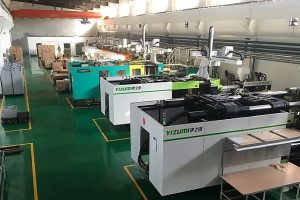
上海で20年にわたり射出成形機(90トンの卓上機から1,850トンの大型プレスまで)を稼働させてきた私たちは、EV革命が生産現場全体を一変させるのを見てきました。本記事では、私たちが学んだこと、つまり、電気自動車向け部品を大規模に成形する際に実際に役立つ材料、設計上の課題、コストの現実、生産戦略について共有します。
- 射出成形では、バッテリーハウジングからセンサーカバーまで、EV1台あたり200種類以上のプラスチック部品が製造されます。
- 難燃性PC/ABSとガラス充填ナイロンが、EVの構造部品および電気部品を支配しています。
- マルチキャビティ金型は、大量生産されるEVコネクタやクリップの部品単価を最大60%削減します。
- オーバーモールドにより、防水EV充電ポートシールの二次組立が不要になります。
- EVバッテリーエンクロージャーの金型投資は、通常1基あたり50,000〜150,000ドルです。
射出成形は電気自動車製造においてどのような役割を果たすのか?
射出成形はEV部品製造の基盤です。1台の電気自動車には200以上の射出成形部品が含まれており、自動車メーカーが重量削減のために金属をエンジニアリングポリマーに置き換えることで、その数はモデルイヤーごとに増加しています。このプロセスが優れているのは、EV部品が同時に3つの要件を求めるためです:寸法精度(バッテリーモジュールハウジングではしばしば±0.05 mm)、電気絶縁特性、そして500個の試作から年間50万ユニットを超える生産量まで拡張できる能力です。

典型的なEVバッテリーパック内部で起こることを考えてみてください。各モジュールには、個々のセルを所定位置に保持しながら熱管理チャンネルを通すことができる、精密に成形されたフレームが必要です。これらのフレームは、UL94 V-0を満たす難燃性ポリプロピレンまたはPC/ABSブレンドから射出成形されます。公差は厳密です — セルポケットが0.1mm小さすぎるとセルが正しく収まらず、0.1mm大きすぎると走行中の振動が長期的な損傷を引き起こします。これはまさに、 溶融材料2 射出成形機は24時間稼働し、安定した供給を実現します。
バッテリー以外にも、射出成形はEV充電ポートハウジング、高電圧コネクタ絶縁体、ADASシステム用センサーハウジング、内装トリムパネル、ケーブル管理クリップ、熱管理ダクトを生産します。これらそれぞれには、独自の材料要件、肉厚制約、および満たすべき規格基準があります。
自社工場では、EV関連の受注が2020年の生産スケジュールの約5%から、2025年までに30%以上に成長するのを目の当たりにしました。この変化は劇的であり、その勢いは衰える気配を見せていません。当社の工場では、エンジニアが生産を承認する前に、樹脂証明書、試射データ、検査記録を参照してEVプロジェクトの要件を確認します。
どのEV部品が射出成形で作られるか?
射出成形によって作られるEV部品には、バッテリーフレーム、高電圧コネクタ、充電ポート、センサー、熱ダクトがあります。射出成形されたEV部品の範囲は、業界外のほとんどの人を驚かせます。以下に、我々が生産する主要カテゴリーとそれぞれが難しい理由について実用的な分類を示します:
| Component Category | Example Parts | 代表的な素材 | Key Requirement |
|---|---|---|---|
| バッテリーシステム | モジュールフレーム、セルセパレーター、BMSハウジング | 難燃性PP、PC/ABS | UL94 V-0、60°Cでの寸法安定性 |
| Electrical Connectors | HVコネクタ、バスバー絶縁体、端子台 | PA6-GF15、PBT | CTI > 600V、耐クリープ性 |
| 充電システム | ポートハウジング、ケーブルグランド、インレットシール | PC、TPEオーバーモールド | IP67防水、UV耐性 |
| 熱管理 | 冷却液マニホールド、ダクトワーク、ファンシュラウド | PPS、PA66-GF30 | グリコール冷却液に対する耐化学性 |
| 内装・構造部材 | ドアパネルブラケット、シートアジャスター、コンソールフレーム | PPタルク入り、ABS | 低反り、外観部品の場合はクラスA表面 |
| センサー・電子機器 | レーダーカバー、カメラブラケット、LiDARハウジング | PEI (Ultem)、LCP | レーダー透過性、耐高温性 |
EV部品を従来の自動車用プラスチックと異ならせるのは、電気的側面です。内燃機関車には、熱と振動に耐えるだけでよいプラスチック製の吸気マニホールドがあるかもしれません。しかし、EVでは、その同じマニホールド領域に600V以上の定格を持つコネクタを必要とする高電圧配線が含まれており、ポリマー表面でのアーク放電を防止するトラッキング抵抗(CTI値)が求められます。材料選択ははるかに重要になります。
より 射出成形金型 設計の観点から、EVバッテリー部品は我々が製造する最も要求の厳しい金型の一つです。単一のバッテリーモジュールフレーム金型には、80以上のリフター、12のコアプル、そして400mmの長さを持つ部品全体で壁面温度を2°C以内に均一に保つ冷却チャンネルレイアウトが必要かもしれません。金型コストはこの複雑さを反映していますが、よく設計されたマルチキャビティ金型で500,000個以上のユニットを生産する際の部品単価の節約も同様に反映されます。
EV射出成形において材料選択が重要な理由
材料選定は極めて重要です。なぜならEV用プラスチックは、炎に耐え、絶縁性があり、極度の高温に耐えなければならないからです。EVバッテリー部品に誤った材料を選択した場合、単なる部品故障にとどまらず、 難燃性3. これは誇張ではありません。リチウムイオンバッテリーの熱暴走現象は700°C以上の温度に達し、バッテリーセルを囲む高分子材料は、安全システムが作動するまでの間、火炎の伝播を防がなければなりません。
以下は、EV生産で最も頻繁に見られる主力材料を使用量順にランク付けしたものです:
難燃性PC/ABSブレンド — バッテリー筐体、BMSハウジング、電気システム近傍の構造部材におけるデフォルトの選択肢です。PCは剛性と耐熱性を提供し、ABSは加工性と衝撃強度を向上させます。ハロゲンフリーの難燃剤と組み合わせることで、1.5 mmの肉厚でUL94 V-0を達成します。トレードオフは?標準グレードより30~50%コストが高く、成形時の溶融温度管理(240~270°C)が精密に要求されます。
ガラス繊維強化ナイロン(PA6-GF15 ~ PA66-GF30) — 構造ブラケット、コネクタハウジング、高温環境で機械的荷重を負担するあらゆるコンポーネントに使用されます。ガラス繊維含有量は剛性とクリープ抵抗を劇的に向上させます — これは、バッテリーセルを一定の圧縮荷重下で保持する部品に不可欠です。注意点は、ガラス繊維充填ナイロンは金型に対して摩耗性が高いことであり、無充填材と比較して工具寿命が15〜20%短くなることを想定してください。
「EVバッテリーハウジングに使用される全ての熱可塑性プラスチックは、UL94 V-0難燃性規格を満たさなければなりません。」真
EVの電池ハウジング材料は、指定された肉厚でUL94 V-0を達成する必要があり、これは炎を除去してから10秒以内に自己消火し、燃える滴下物がないことを意味します。これは必須の安全基準であり、任意ではありません。
「標準的な無充填ポリプロピレンは、高圧EVコネクタの絶縁体に適しています。」偽
未充填PPは、高電圧用途に必要なトラッキング抵抗性(比較トラッキング指数)およびクリープ抵抗性を欠いています。400V以上に定格されたコネクタは通常、CTI値が600Vを超えるガラス充填ナイロン(PA6-GF15)またはPBTを必要とします。
ポリフェニレンスルフィド(PPS) — 冷却液接触部品の定番材料。PPSは200°Cまでの温度でエチレングリコールに耐性があり、熱管理マニホールドやポンプハウジングに理想的です。また、添加剤なしで本質的に難燃性であり、規制承認を簡素化します。
TPEおよびTPUエラストマー — シール、ガスケット、充電ハンドルやポートカバーのオーバーモールドグリップに使用されます。これらの柔軟材料は、屋外EV充電に求められるIP67防水性能を提供します。2ショットプロセスで剛性PC基材にTPEをオーバーモールドすることで、別個のガスケット組立が不要になります。
EV用途における材料選択は、データシート上のポリマー特性だけの問題ではありません。以下の点も考慮する必要があります:そのグレードはお客様の仕様に基づき自動車用途で承認されていますか?必要なトレーサビリティ文書はありますか?成型業者は既存設備で一貫して加工できますか?これらの実用的な質問は、理論上の性能数値と同じくらい重要です。
マルチキャビティ成形はどのようにEV部品のコストを削減するのか?
多キャビティ成形は、1サイクルごとに複数のEV部品を生産し、金型投資を分散させるコスト削減手法です。EV射出成形の経済性は、根本的な一つの問いに帰着します:1時間あたりに金型からどれだけの良品を得られるか? 多キャビティ成形がその答えであり、EV生産ボリュームにおいてコスト削減効果が本当に積み上がる部分です。
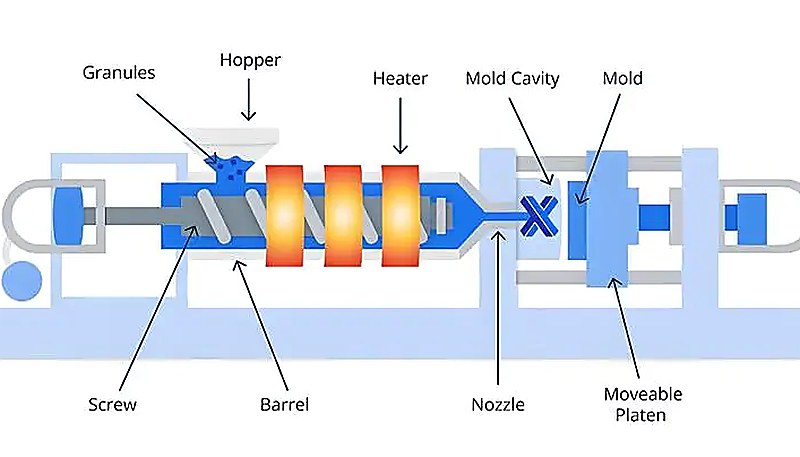
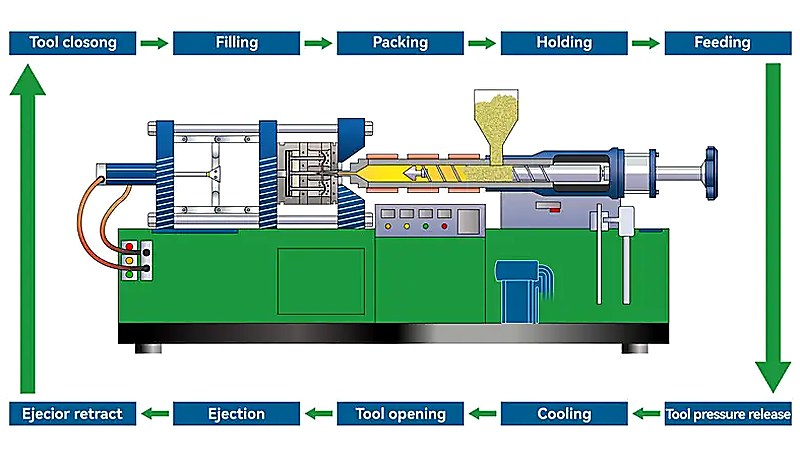
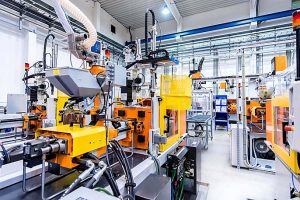
EVコネクタハウジング用の単一キャビティ金型は、20秒ごとに1個の部品を生産します — これは1時間あたり180個です。同じプレスで8キャビティ金型に切り替えると、突然1時間あたり1,440個になります。金型コストは高くなります(おそらく$40,000 対 $12,000)が、50万個の生産ロットで償却すると、部品あたりの金型コストは$0.024から$0.008に下がります。これは部品あたりの金型コストが67%削減されたことになります。下図は、典型的な射出成形機の詳細な操作段階を示しています。
しかし、多キャビティ成形は無償ではありません。以下は、私たちが日々直面する現実的なトレードオフです:
バランス充填 — 全てのキャビティは同じ速度と圧力で充填されなければなりません。キャビティ#3がキャビティ#7より0.3秒早く充填されると、#3にフラッシュが発生し、#7はショートショットになります。バランスの取れた充填を達成するには、金型切削前に高度なランナー設計と流動シミュレーション(モールドフロー解析)が必要です。
サイクルタイムペナルティ — 大型金型は冷却に時間がかかります。8キャビティ金型のサイクルタイムは25秒、単一キャビティの場合は20秒かもしれません。生産性では有利です(8個の部品を25秒で生産 vs 1個を20秒)が、効率は8倍にはなりません。
維持費 — キャビティ数が増えると、エジェクターピン、冷却回路、摩耗面も増加します。メンテナンス間隔は短くなり、キャビティが損傷した場合、生産を停止して修理するか、損傷したキャビティを修理している間、残りのキャビティを出力低下で稼働させるかの選択を迫られます。
実際には、ほとんどのEVコネクタおよびブラケット部品では、4〜8キャビティ金型が最適点です。電池エンクロージャ金型は通常、1+1(左右2キャビティ)に留まります。これは、部品サイズ自体が、当社の大型1,200〜1,850トンプレスにおけるマシンプレートンを満たすためです。
EV射出成形部品の主要な設計ルール
EV向け射出成形部品の設計は、小さな決定が大きな結果をもたらす分野です。肉厚0.5 mmの変更で、バッテリーモジュールフレームが熱サイクル試験の合格から不合格に変わることもあります。以下は、EVプログラムでの経験から得られた最も重要な設計ルールです:
均一な肉厚 — これがルール#1である理由です。肉厚のばらつきは不均一な冷却を引き起こし、それが反りを生み、組み立て不良につながります。EVバッテリーフレームでは、2.5~3.0 mmの均一な肉厚を目標とします。リブやボスで局所的な肉厚変更が必要な場合は、最大2:1の比率で段階的に変化させ、必ずフィレットを使用してください。
70–90% — 研磨された金型表面では側面あたり最低1°、テクスチャ加工面では2°。EVインテリア部品はしばしばクラスA表面仕上げを要求し、これは最小限の抜き勾配で深い引き深さを意味します。ここで経験豊富な金型設計が真価を発揮します — テクスチャ加工金型で150mmの深い引きに0.5°の抜き勾配を指定したために部品が失敗した例を目撃しています。
ゲーティング戦略 — 高電圧絶縁体の場合、ゲート位置は外観と電気的性能の両方に影響します。電池ハウジングのシール面にゲート痕が残ると、漏洩経路が生じます。非重要面に配置されたサブマリンゲートやバルブゲートは、EV電気部品にとって必須です。
材料依存収縮 — ガラス繊維充填ナイロンは、流れ方向とそれに垂直な方向で異なる収縮を示します(異方性収縮)。PA66-GF30は流れ方向で0.3%、垂直方向で0.8%収縮するかもしれません。等方性収縮値を使用して金型を設計すると、全ての部品が公差から外れてしまいます。常に樹脂サプライヤーの成形ガイドに記載された材料固有の収縮データを使用してください。
「射出成形されたEVバッテリーハウジングは、通常、2.5–3.0 mmの均一な肉厚を使用します。」真
2.5–3.0 mmの範囲での均一な肉厚は、バッテリーフレームに必要な構造的剛性を確保しながら、適切なサイクルタイムを維持します。薄すぎる肉厚は強度不足のリスクがあり、厚すぎる肉厚は過剰な冷却時間、シンクマーク、内部ボイドを引き起こします。
「0.5°の抜き勾配は、あらゆる射出成形EV部品に十分である。」偽
0.5°は浅く研磨された表面では機能するかもしれませんが、深い引きの付いたテクスチャ加工されたEVインテリア部品では、側面あたり1.5–3°の抜き勾配が必要です。抜き勾配が不十分だと、部品の固着、表面損傷、一貫性のない取り出しが発生し、これらはすべて自動車生産では許容されません。
オーバーモールドはEVコンポーネントの信頼性をどのように向上させるか
オーバーモールドは、硬質プラスチックと軟質シーリング材を1サイクルで接着する二色成形プロセスであり、二次組立工程を不要にします。オーバーモールドはEVコンポーネントに必須となりました。なぜなら、根本的な問題、すなわち「二つの別々の部品を組み立てることなく、硬質の構造部品に柔らかく防水性のあるシールをどうやって作るか?」を解決するからです。答えは、1ショットで両方を成形することで、その結果生まれる接着力はあらゆる接着接合部よりも強固です。二重射出システムの概略図を下に示します。
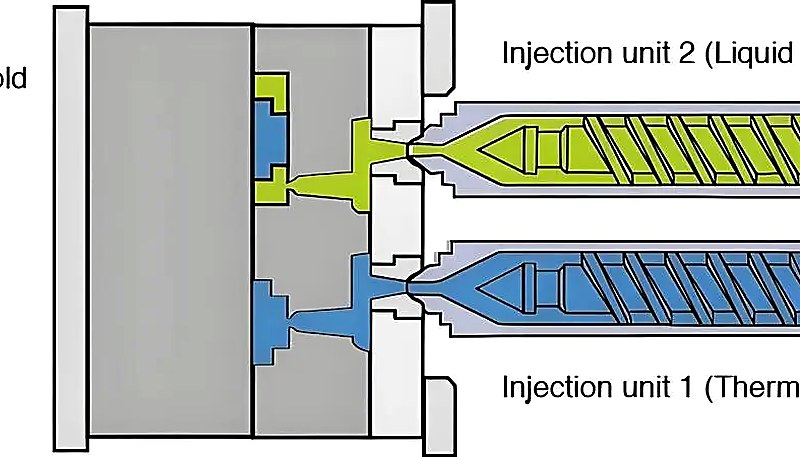
最も一般的なEVオーバーモールド適用例は充電ポートアセンブリです。実際の動作は以下の通りです:第1射目で構造支持体と取付機能を提供する硬質PCハウジングを成形します。金型は回転プラテン上で180°回転し、第2射目で軟質TPEコンパウンドを注入し、ポート開口部周囲の溝を充填して圧縮シールを形成します。充電ケーブルが差し込まれると、TPEがケーブルコネクタに対して圧縮され、別個のOリングやガスケットなしにIP67防水性を達成します。
その他のEVオーバーモールド用途には以下が含まれます:
高電圧ケーブル挿入口 — PA6-GFコネクタ本体にTPEをオーバーモールドし、ケーブル貫通部をシール
バッテリーセルホルダー — セル接触点にオーバーモールドされた柔軟なTPUパッドで、振動と熱膨張を吸収
インテリア操作ボタン — 高級感のある触感のため、硬質PCコアにソフトタッチTPUをオーバーモールド
センサーハウジング — 環境シールのため、LCP構造シェルにシリコーンオーバーモールド
EVオーバーモールドにおける主要な技術的課題は、材料の密着性です。すべてのポリマー組み合わせが良好に接着するわけではありません。PCとTPEは化学的親和性が高く、TPEはPC表面の微細なテクスチャーに流れ込み、機械的インターロックとファンデルワールス結合を形成します。しかし、Tie層や表面処理なしにTPEをPPSにオーバーモールドしようとすると、ほとんど密着性は得られません。材料ペアの選択は、生産用金型に着手する前に、剥離試験(自動車用途では通常>2.5 N/mmの剥離強度を目標)で検証する必要があります。
射出成形EV部品に適用される品質基準
EV射出成形部品は、厳格な自動車、電気、難燃性、トレーサビリティの各基準を同時に満たさなければなりません。EV射出成形部品は、ほとんどの民生品よりも高い規制基準をクリアする必要があります。高電圧電気システム、熱管理、衝突安全要件の組み合わせにより、複数の基準が同時に適用されます。以下は、当社のEV生産業務で最も頻繁に登場する基準です:
UL94 V-0難燃性 — バッテリーセルから200 mm以内にある全てのポリマーに要求されます。試験では、材料試験片に10秒間の炎を2回適用し、材料は各適用後10秒以内に自然消火し、燃える滴りを生じないことが必要です。
IEC 62660 / UN 38.3 — Battery safety standards that indirectly dictate material selection and part design. Components must withstand thermal cycling from -40°C to +85°C without cracking, warping, or losing dimensional stability.
IATF 16949 — The automotive quality management system standard. Any molder supplying EV components to a major automaker must operate under IATF 16949 certification. This means full traceability from raw material lot to finished part, documented process control plans, and statistical process control (SPC) on critical dimensions. Every key detail — from clamping unit pressure to labeled inspection records — must be verifiable.
ISO 16750 — Road vehicle electrical and electronic equipment environmental conditions. This standard defines the temperature, humidity, vibration, and chemical exposure tests that EV electrical components must survive.
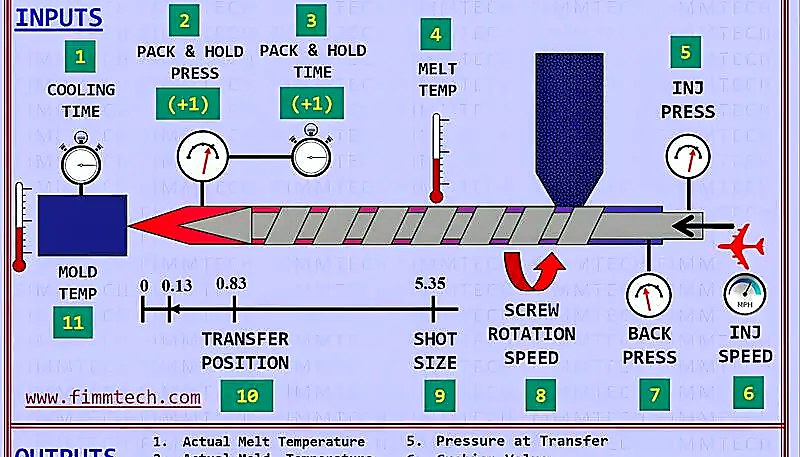
Meeting these standards is not just about passing a one-time lab test. In production, it requires consistent process control: monitoring melt temperature, injection pressure, holding pressure, and cooling time on every single cycle. Our approach is to use cavity pressure sensors that detect any deviation from the validated process window in real time, flagging suspect parts before they leave the machine.
EV生産量に対応する射出成形生産をどのように拡大するか?
Scaling from prototype EV parts to full production volume is where many projects stumble. The injection molding process itself does not change — but everything around it does. Here is how we approach the scaling challenge:
Phase 1: Prototype (100–1,000 parts) — Aluminum prototype molds for design validation. These run on production machines but cost 40–60% less than steel tooling, with shorter mold life of 5,000–10,000 shots.
Phase 2: Pre-production (5,000–50,000 parts) — Bridge tooling in P20 steel. This is where we discover production-level issues: does the part eject consistently? Are there weld lines in critical areas? We typically run 3–5 design iterations at this stage.
Phase 3: Full production (100,000+ parts/year) — Hardened H13 steel molds with optimized cooling, multi-cavity layouts, and full automation integration. At this scale, every second of cycle time matters. Reducing a 22-second cycle to 18 seconds on an 8-cavity mold producing 1.3 million parts per year saves 230 machine hours — roughly $23,000 in machine time at automotive production rates.
The scaling challenge is not purely technical. It is also logistical. When an EV OEM launches a new model, they need parts delivered in sequence, just-in-time, with full traceability documentation for every batch. Our ISO 9001 and IATF 16949 certified quality system handles this through a six-step process: incoming material inspection (IQC), in-process sample checks, process inspection, packaging and assembly inspection, final quality control (FQC), and outgoing quality control (OQC).
With 47 injection molding machines ranging from 90T to 1,850T, and a monthly mold manufacturing capacity of 100+ sets, we have the infrastructure to support EV programs from first article through full production. Our 120+ production team members — 70% of whom have 10+ years of experience — are the reason we can maintain 99.5% on-time delivery rates on automotive programs.
EV射出成形における新興トレンドは何か?
The EV injection molding landscape is evolving rapidly. Three trends are reshaping how we think about production:
Structural foam molding for battery enclosures — By introducing nitrogen gas or chemical blowing agents into the melt, we can produce battery enclosures with 15–20% weight reduction while maintaining stiffness. The foam core reduces material usage and improves thermal insulation — a double benefit for EV range. The challenge is surface finish: foam-molded parts have visible swirl marks, which limits their use to concealed structural applications.
In-mold electronics (IME) — Integrating printed circuits directly into injection-molded EV interior panels. This eliminates wiring harnesses for functions like capacitive touch switches, LED lighting, and antenna arrays. The molding challenge is temperature: the electronic traces must survive the injection process (typically 220–280°C melt temperature) without degradation.
Sustainable material adoption — EV manufacturers are increasingly specifying recycled-content polymers and bio-based resins for non-critical components. Post-consumer recycled (PCR) PC/ABS at 30% recycled content is now available in UL94 V-0 grades, making it viable for battery brackets and interior trim. The processing window is narrower than virgin material, but the sustainability credential is becoming a 射出成形サプライヤー requirement rather than a nice-to-have.
Looking ahead, the convergence of electric autonomous vehicles will drive demand for even more complex injection-molded components. Sensor housings that are transparent to specific radar frequencies, integrated thermal management manifolds with internal channel geometries impossible to machine, and modular battery system components that snap together without fasteners — these are the challenges keeping mold designers busy today.
よくある質問
What materials are commonly used for injection-molded EV battery components?
Flame-retardant PC/ABS blends and glass-filled nylon (PA6-GF15 to PA66-GF30) are the most common materials for EV battery components. PC/ABS provides the required UL94 V-0 flame rating with good impact strength, while glass-filled nylon offers superior creep resistance for structural load-bearing applications. PPS is used for components in direct contact with coolant due to its chemical resistance at elevated temperatures. Material selection must also consider automotive-grade approval, full traceability documentation, and whether your molder can process these specialized grades consistently on production-scale runs.
How does injection molding compare to 3D printing for EV prototyping?
3D printing wins for rapid iteration during early design stages, delivering parts in one to three days versus two to four weeks for prototype molds. However, injection molding pulls ahead dramatically at production volumes, with per-part costs dropping to 0.10 to 2.00 versus 5 to 50 for 3D printing, plus superior material properties, surface finish, and dimensional consistency. Most EV programs use both methods strategically: 3D printing for initial design validation and fit checks, then a transition to injection molding for pre-production bridge tooling and full-scale manufacturing.
What tolerances can injection molding achieve for EV parts?
Standard injection molding achieves plus or minus 0.1 mm for dimensions up to 50 mm, which is sufficient for most EV structural and interior components. Precision molding with process-optimized tooling can reach plus or minus 0.05 mm, adequate for battery module cell pockets and high-voltage connector interfaces where dimensional accuracy directly affects assembly quality. Tighter tolerances below 0.05 mm are possible but significantly increase tooling cost and require stricter statistical process control on the production floor. Always specify tolerances based on functional requirements rather than defaulting to the tightest possible.
How long does it take to tool up for an EV injection molding project?
A standard single-cavity prototype mold takes four to six weeks, while a production-class multi-cavity mold with hot runners and cooling optimization typically requires eight to fourteen weeks. Complex tools with side actions, lifters, or two-shot capability can extend to sixteen weeks or more. At our Shanghai factory, we maintain an in-house mold manufacturing facility that supports 100-plus mold sets per month, which helps compress lead times when schedules are tight. Planning tooling timelines early in the design cycle is critical for keeping EV launch schedules on track.
What quality certifications should an EV injection molder have?
At minimum, your molder should hold ISO 9001 for quality management and ISO 14001 for environmental management. For EV-specific requirements, IATF 16949 automotive quality certification is increasingly expected by OEMs and Tier 1 suppliers. ISO 45001 for occupational health and safety demonstrates operational maturity and is often required by European automotive customers. Material-specific certifications such as UL94 flammability ratings for battery components and IPC standards for electronic housings are also essential depending on the application. Always verify that certifications are current and audited by an accredited third-party body before placing production orders.
EV射出成形プロジェクトを始める準備はできていますか?
Finding the right EV injection molding partner is critical for delivering precision, certified quality, and scalable production. At ZetarMold, we bring 20+ years of injection molding experience, 47 machines from 90T to 1,850T, and an 8-engineer team that has delivered hundreds of EV-component molds to global automotive customers.
Whether you need a prototype battery module frame for design validation, multi-cavity production tooling for 500,000+ HV connectors, or two-shot overmolding for IP67-rated charging assemblies, we have the equipment, the expertise, and the certified quality systems to deliver. Our team of 30+ English-speaking project managers ensures clear communication from first RFQ to full production ramp.
Get a free quote for your EV injection molding project → Send your 3D CAD files and material requirements to our engineering team. We typically respond within 24 hours with a preliminary DFM review and cost estimate. See our injection molding supplier sourcing guide if you need to evaluate an EV molding partner before launch.
-
電気自動車: An electric vehicle is a vehicle that uses one or more electric motors for propulsion, powered by rechargeable battery packs. ↩
-
溶融材料: Molten material is defined as a substance heated to a liquid state for injection into a mold cavity in the injection molding process. ↩
-
難燃性: Flammability is defined as how easily a material will ignite and burn, measured by standards such as UL 94 vertical burn testing. ↩



 EN
EN  ES
ES  FR
FR  DE
DE  PT
PT  AR
AR  RU
RU  JA
JA  KO
KO  IT
IT  NL
NL  TR
TR  PL
PL 