コンテンツへスキップ
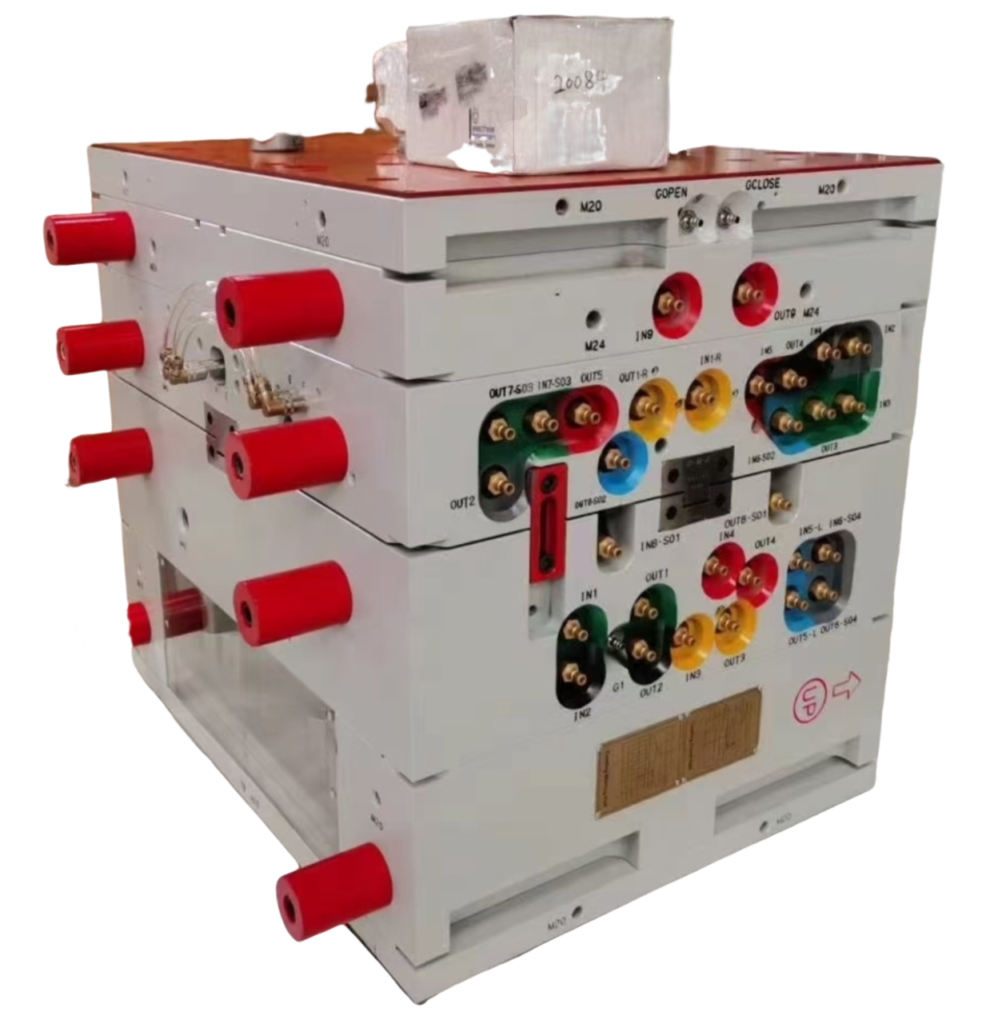
You just finished your first 3D-printed prototype. It looks right on the bench, but you already know plastic prints won’t survive real use. Now you need injection-molded parts — hundreds of thousands of them — and someone just suggested China. The question isn’t whether China can do it. It’s whether you can navigate the gap between a working prototype and stable, repeatable mass production without wasting six months and $50,000 on avoidable mistakes.
This article walks through the full prototype-to-production path as it actually works inside a Chinese injection molding factory — not the idealized version, the real one with DFM revisions, steel choices that matter, and timelines you can plan around.
- Prototype molds (soft tooling) handle 1,000–10,000 shots; production molds handle 1M+.
- DFM review before tooling cuts modification costs by up to 60%.
- Typical prototype-to-production timeline: 8–16 weeks.
- China offers 30–50% cost savings without sacrificing ISO-grade quality.
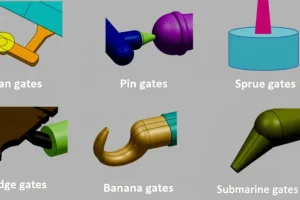
- Gate location and wall thickness decisions during prototyping lock in your production quality.
What Is the Prototype-to-Production Process in Injection Molding?
The prototype-to-production process in injection molding is defined by the function, constraints, and tradeoffs explained in this section. The prototype-to-production process is a three-phase manufacturing workflow: design validation through rapid prototyping, bridge tooling for short-run testing, then full production tooling for volume manufacturing. Each phase narrows your risk and locks in decisions that are expensive to reverse later.
Phase one is about answering one question: does this part work? You’re testing fit, function, and basic material performance. 3D printing or CNC machining works here because you need speed, not precision or scale. But the moment you need 500+ parts in the actual production material, you’ve outgrown prototyping methods.
Phase two — bridge tooling — is where most engineers underestimate the complexity. A soft mold (usually aluminum or low-grade steel) gives you real injection-molded parts in the correct material, but it won’t last. You get 1,000 to maybe 10,000 shots before wear affects dimensions. That’s enough for market testing, regulatory submissions, and initial assembly trials.
Phase three is production tooling. This is where steel grade, cavity count, gate design, and cooling layout become permanent decisions. A well-designed production mold in P20 or H13 steel runs a million cycles or more with consistent part quality. Getting here without surprises is what separates a smooth launch from a costly one.
How Does Prototyping Differ from Production Molding?
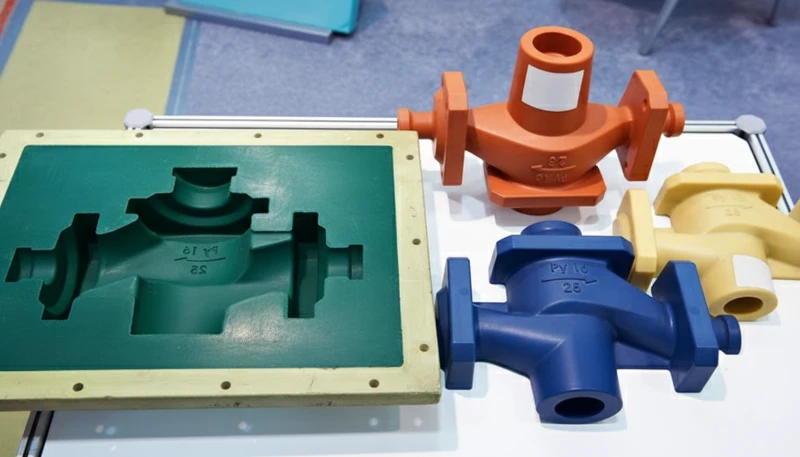
The difference between prototype molding and production molding is mold steel, cycle consistency, and per-part cost at volume. A prototype mold uses aluminum or mild steel, costs $1,500–$8,000, and delivers parts with ±0.1 mm tolerance. A production mold uses hardened tool steel (P20, H13, S136), costs $15,000–$100,000+, and holds ±0.02 mm tolerance across hundreds of thousands of cycles.
| パラメータ | Prototype Mold | Production Mold |
|---|---|---|
| 金型鋼 | Aluminum / 5052 | P20 / H13 / S136 |
| 金型費用 | $1,500–$8,000 | $15,000–$100,000+ |
| Shot Life | 1,000–10,000 | 500,000–1,000,000+ |
| Tolerance | ±0.1 mm | ±0.02 mm |
| リードタイム | 7–15 days | 30–60 days |
| Cavity Count | Single | Multi-cavity possible |
| 表面仕上げ | Limited options | Full range (SPI A-1 to D-3) |
The mistake engineers make is treating the prototype mold as a “draft” of the production mold. In reality, the two serve different purposes. Your prototype mold validates geometry and material flow. Your production mold optimizes for cycle time, longevity, and part-to-part consistency. The design intent is different, even when the part geometry looks identical.
One practical note: if your part has tight tolerances on critical features (snap-fits, bearing bores, sealing surfaces), build those features into the prototype mold from the start. Testing fit and function with oversimplified geometry and then redesigning for production is how projects lose three weeks.
Another difference that catches people off guard: cycle time. A prototype mold often runs at sub-optimal cooling because aluminum dissipates heat differently than hardened steel. What takes 30 seconds on a production mold might take 45 seconds on a prototype tool. This doesn’t matter for 500 parts, but it matters if you try to run 10,000 parts on soft tooling — your unit economics shift significantly.
“A prototype mold (soft tooling) typically lasts 1,000–10,000 shots before dimensional wear becomes measurable.”真
Aluminum and mild steel molds deform under repeated injection pressure and heat cycling. After approximately 10,000 cycles, cavity surfaces begin showing erosion and dimensional drift exceeding ±0.05 mm, making them unsuitable for tight-tolerance production parts.
“Production molds and prototype molds use the same steel grade and only differ in cavity count.”偽
Production molds use hardened tool steels like P20 (pre-hardened to 28–32 HRC) or H13 (heat-treated to 48–52 HRC), while prototype molds typically use aluminum 6061-T6 or mild steel 1045. The steel grade directly determines mold life, surface finish capability, and dimensional stability over time.
Why Do Engineers Choose China for Injection Molding Production?
China is a preferred production base because it combines 30–50% lower tooling costs with mature ISO-certified supply chains. The cost advantage comes from integrated supply chains (steel, machining, polishing all under one roof) and higher machine utilization rates, not from cutting corners on quality.
A production mold that costs $45,000 in the US typically runs $25,000–$30,000 at a qualified Chinese facility. For multi-cavity production tools or family molds, the savings compound. When you’re running 500,000 parts per year at $0.08 less per part, the math speaks for itself.
Cost comparison is straightforward. But there’s a nuance most cost analyses miss: the total cost of ownership includes communication overhead, revision cycles, and shipping logistics. A supplier with in-house English-speaking engineers reduces communication friction to near zero. A supplier without that capability generates hidden costs in misunderstood specifications, delayed feedback loops, and rework.
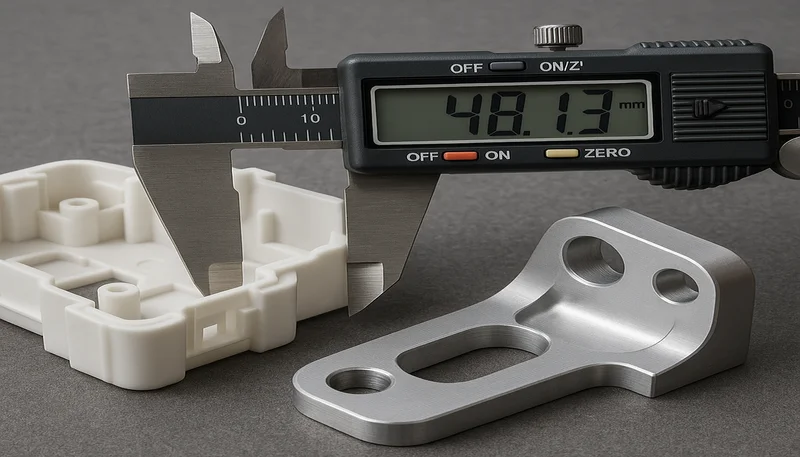
The real advantage isn’t just cost — it’s vertical integration. Factories with in-house 射出成形金型 manufacturing capability handle DFM review, mold design, tool building, sampling, and volume production under one roof. That eliminates the back-and-forth between a US design shop and an overseas toolmaker that adds weeks to every project.
Communication is the variable most engineers worry about. It’s a valid concern. The difference between a smooth project and a frustrating one often comes down to whether your supplier has English-speaking project managers who understand engineering intent, not just order details. A team that can push back on a bad gate location during DFM review is worth more than any unit price discount.
私たちの injection molding supplier sourcing guide makes lead-time planning easier. Chinese molders with 40+ injection molding machines can run tool building and production sampling in parallel, compressing the overall timeline. When your supplier has dedicated CNC, EDM, and wire-cut equipment for mold building, you’re not waiting in a queue behind other customers’ production jobs. The mold shop runs on its own schedule.
Material selection flexibility matters too. Chinese molders working with 400+ materials can source engineering-grade resins — glass-filled nylon, medical-grade polycarbonate, PEEK — domestically, often at prices 15–25% below Western distributors. For projects requiring material certification (UL94 flame ratings, FDA-compliant grades), verify that your supplier sources from authorized distributors and provides material certification with lot traceability for every production batch.
How Do You Transition from Prototype to Mass Production?
The transition from prototype to mass production is a five-step workflow. Those steps are DFM review, tooling design approval, T1 sampling, process optimization, and ピーピーエーピー1 sign-off. Skipping any step saves time upfront but costs it back in production defects.
Step 1: DFM review. Before any steel is cut, your supplier should run a complete design-for-manufacturability analysis. This is where you catch undercuts that need side-actions, wall thickness variations that will cause sink marks, and gate locations that affect weld-line positioning. A thorough DFM review takes 2–3 days and prevents 80% of tool modifications.
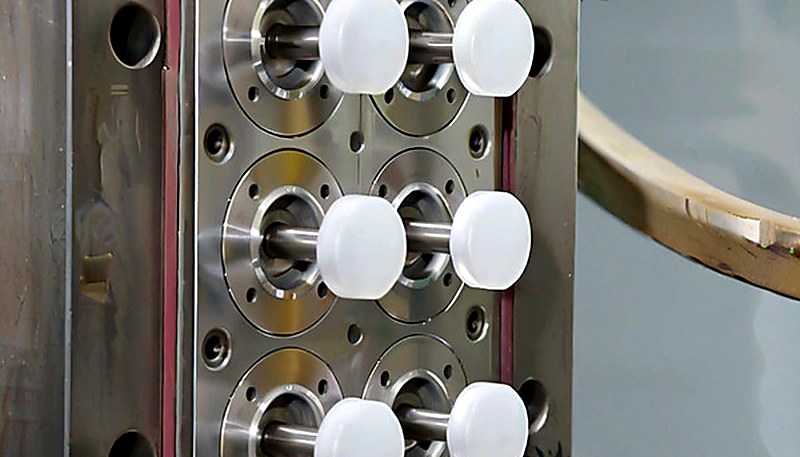
Step 2: Tooling design approval. The mold design (2D layout + 3D model) should be reviewed and approved in writing before machining starts. Check cavity layout, cooling channel routing, ejection method, and gate type. Changes after this point mean re-machining, which means cost and delay.
Step 3: T1 sampling. First-off samples from the completed mold reveal what simulation predicted and what it didn’t — actual fill patterns, real shrinkage values, weld line visibility. Expect 1–3 rounds of sampling with minor adjustments before sign-off.
Step 4: Process optimization. Lock in injection parameters (temperature profile, pressure curve, hold time, cooling time) using mold flow analysis data and actual trial results. Document everything. These parameters become your production standard.
Step 5: PPAP or equivalent sign-off. For regulated industries (medical, automotive), you need documented first article inspection2 reports, dimensional data, and material certifications. Even without regulatory requirements, a formal sign-off with golden samples prevents scope disputes later.
What Timeline Should You Expect from Prototype to Production?
In our production programs, the typical prototype-to-production timeline is 8–16 weeks. DFM runs in week 1–2, tooling in week 3–8, sampling in week 7–10, and process validation in week 10–14. Rush timelines of 4–6 weeks are possible but trade testing cycles for speed.
| Phase | Duration | 主要成果物 |
|---|---|---|
| DFM Review | 3–5 days | Approved design report |
| 金型設計 | 5–7 days | 2D/3D mold drawings |
| Tool Building | 25–35 days | Completed mold |
| T1サンプリング | 5–10 days | First article samples |
| Revisions (1–2 rounds) | 5–10 days | Approved samples |
| プロセス・バリデーション | 3–5 days | Locked process parameters |
| Total | 8–12 weeks | Production-ready |
Where do delays happen? Mold steel procurement (add 5–7 days if using imported steel), design changes after tooling starts (each change = 3–10 days), and shipping sample parts for approval (use express courier, budget 3–5 days international). The biggest single delay source is late design changes — every week you wait to finalize geometry adds a week to delivery.
For engineers working with Chinese suppliers, time zone differences can actually help. Your DFM feedback sent at 5 PM EST gets processed during their morning shift and is ready when you start your next day. The key is structuring your review cycles to minimize round-trips. Give consolidated feedback in one batch, not drips.
“A thorough DFM review before tooling starts can reduce mold modification costs by up to 60%.”真
Industry data shows that 70–80% of post-tooling modifications trace back to issues identifiable during DFM: inadequate draft angles, non-uniform wall thickness, gate placement causing weld lines on cosmetic surfaces, and missing shut-off angles. Catching these on screen takes hours; fixing them in steel takes days and thousands of dollars.
“You must complete 100% of prototyping and testing before starting production tooling.”偽
In practice, most projects overlap the final prototype validation phase with production tooling design. As long as critical dimensions and material selection are locked, the mold design can begin while final functional testing completes. This parallel approach compresses the overall timeline by 2–4 weeks without increasing risk.
What Quality Standards Should Your Chinese Molder Meet?
The baseline certifications are ISO 9001:2015 for general manufacturing, ISO 13485 for medical devices, and IATF 16949 for automotive parts. Certification alone isn’t enough — request recent audit reports and verify that the certificate covers the specific facility producing your parts.
Beyond certification, look for a six-step quality process: incoming material inspection (IQC), in-process sample checks, process inspection, packaging and assembly inspection, final quality control (FQC), and outgoing quality control (OQC). A supplier who can walk you through their inspection frequency, AQL3 levels, and corrective action process is one who actually uses their quality system — not just frames the certificate.
Dimensional verification equipment matters too. Coordinate Measuring Machines (CMM), profile projectors, and hardness testers should be calibrated and available for first article inspection. Ask to see a sample FAI report before you commit. The level of detail in that report tells you more about a supplier’s quality culture than any sales pitch.
One thing we’ve learned running production molds for overseas clients: the first three production runs are where stability is proven. If dimensional data is consistent across runs 1, 2, and 3, you have a stable process. If dimensions drift, the process needs locking down before volume ramps. This is why ZetarMold’s 8 senior engineers (each with 10+ years of experience) monitor the first runs personally — it’s cheaper to catch drift early than to sort 50,000 non-conforming parts.
For overseas clients who cannot visit the factory, request a video call during the first production run. Watching the machine run, seeing the parts eject, and reviewing CMM data in real time gives you more confidence than any inspection report sent after the fact.
What Are Common Mistakes When Scaling from Prototype to Production?
The most costly mistake is treating prototype geometry as final production geometry without running a DFM review. Features that 3D print easily — undercuts, uniform wall thickness regardless of function, zero draft angles — become expensive problems in production tooling.
Mistake 1: Ignoring draft angles. Every vertical surface needs 0.5°–2° draft for clean ejection. Zero-draft walls work in 3D printing. In injection molding, they cause sticking, scoring, and damaged parts. Adding draft late means re-machining cavity surfaces — expensive and avoidable.
Mistake 2: Specifying tight tolerances everywhere. Not every dimension needs ±0.02 mm. Over-tolerancing drives up mold cost (more precision machining) and inspection time (more CMM measurements). Apply tight tolerances only to functional interfaces — bearing fits, seal surfaces, alignment features — and leave cosmetic dimensions at ±0.1 mm.
Mistake 3: Choosing the wrong mold steel. P20 works for most applications up to 500,000 cycles. But if you’re running glass-filled nylon (abrasive) or need 1M+ cycles, H13 or S136 is the right choice from the start. Retooling because you under-specified steel costs more than upgrading upfront.
Mistake 4: Skipping process documentation. When your production parameters live only in a technician’s head, every shift change is a quality gamble. Document temperature profiles, pressure curves, and timing sequences. Lock them into the machine controller. The 射出成形プロセス is repeatable — but only when the process is actually repeated identically.
Mistake 5: Not planning for part removal and packaging. This sounds trivial until you’re molding 50,000 parts per month and realize your parts scratch during ejection or deform in transit. Ejection method (pin, sleeve, stripper plate) should be decided during mold design, not after first articles. Packaging specifications (bagging, tray type, stacking limits) should be defined before the first production shipment.
Mistake 6: Assuming all Chinese molders are the same. The gap between a $5,000 mold from a back-alley workshop and a $25,000 mold from an ISO-certified facility is not just price — it’s dimensional consistency, surface finish, mold life, and the ability to actually hit your spec on the first T1. Choosing solely on price is how projects end up with molds that need $10,000 in modifications before they produce acceptable parts.
How Much Does the Full Process Cost in China?
The full prototype-to-production cost in China is usually $20,000 to $120,000+. The final number depends on part complexity, mold steel, cavity count, and annual volume. Tooling represents 60–80% of the initial investment; per-part pricing drops significantly as volume increases.
| Item | Low Complexity | High Complexity |
|---|---|---|
| Prototype Mold (Soft Tooling) | $1,500–$3,000 | $5,000–$8,000 |
| Production Mold (Hardened Steel) | $15,000–$25,000 | $50,000–$100,000+ |
| T1 Sampling (per round) | $200–$500 | $500–$1,500 |
| 単価(1K〜10K個数量) | $0.50–$2.00 | $1.50–$5.00 |
| 部品単価(10万個以上数量) | $0.10–$0.50 | $0.30~$1.50 |
| 配送(サンプル速達) | $50–$150 | $100–$300 |
| 初年度総額(1万個) | $18,000~$32,000 | $55,000–$115,000+ |
多くの技術者が見落とす2つのコスト要因:修正予算と輸送ロジスティクスです。予想される修正(設計が優れた金型でもT1試作後に微調整が必要)のために、金型費用の10~15%を予算に組み込んでください。また、工場渡し価格だけでなく、海上運賃、関税、倉庫保管費を含む着地価格を計算してください。これらは目的地によって8~15%追加されます。
少量射出成形(年間10,000個未満)を検討している企業にとっては、量産金型に直接移行するよりも、ブリッジ金型の方が経済的に合理的な場合がよくあります。本物の成形部品を量産材料で、金型投資額のほんの一部で得られます。トレードオフは部品単価の上昇と寿命の制限ですが、設計変更の可能性がある場合、その柔軟性には真の価値があります。
予算策定の簡易ルール:トランプサイズの部品用シングルキャビティP20金型の中国での費用は、おおよそ$12,000~$18,000です。追加キャビティごとに金型費用は40~60%増加しますが、部品単価はほぼ半減します。マルチキャビティ金型が採算に合う分岐点は、通常、形状と材料に応じて総生産数20,000~30,000個付近です。
What Do Buyers Ask About Prototype-to-Production Injection Molding in China?
よくある質問
中国での試作から量産射出成形までにどれくらいの時間がかかりますか?
承認済み3D CADデータから最初の生産ロットまでの典型的なタイムラインは8〜16週間です。DFMレビューに3〜5日、金型設計に5〜7日、金型製作に25〜35日、サンプリングと修正に10〜20日かかります。4〜6週間の緊急スケジュールも可能ですが、テストサイクルが減少し、発売後の修正リスクが高まります。自社内金型製作と40台以上の機械を有する適格サプライヤーでは、ボトルネックは通常、生産能力ではなく設計の反復ラウンドです。フィードバックサイクルを効率的に計画し(段階的な変更ではなく、一括してコメントをまとめる)、品質を損なうことなく全体のスケジュールを1〜2週間短縮できます。
中国での射出成形における最低発注数量(MOQ)はどれくらいですか?
最低発注数量(MOQ)はサプライヤーと部品の複雑さによって異なり、通常、量産ロットでは500個から5,000個の範囲です。試作またはブリッジ金型の注文は100個から開始できます。MOQが存在する理由は、機械セットアップ、材料準備、初品検査にはロットサイズに関わらず固定費用がかかるためです。ZetarMoldでは月間100セット以上の金型製造能力があり、少量プロジェクトと大量プロジェクトの両方をスケジュールの衝突なくサポートできます。最初の注文では、量産金型と大量生産にコミットする前に、500~1,000個のブリッジ金型から始めて設計を検証することを検討してください。
試作品金型を初期生産ロットに使用できますか?
はい、試作品金型(ソフトツーリング)は、適切な生産材料で1,000〜10,000個の部品を生産できます。市場テスト、規制当局への申請、生産金型の並行製作中の初期在庫構築に適しています。ただし、硬化鋼の生産用金型と比較して、公差変動が大きくなり(±0.1 mm対±0.02 mm)、金型寿命が短くなります。また、アルミニウム金型では表面仕上げの選択肢が限られること(最高でもSPI BまたはCグレード)に注意してください。製品に外観要件がある場合は、本格的な生産発注を決定する前に、試作品金型での表面仕上げを検証してください。
中国の射出成形サプライヤーはどのような認証を取得しているべきですか?
最低限、一般的な製造品質管理のためのISO 9001:2015が必要です。医療機器部品にはISO 13485、自動車部品にはIATF 16949認証が必要です。ZetarMoldはISO 9001、ISO 13485、ISO 14001、ISO 45001を取得しており、それぞれ品質管理、医療機器、環境管理、労働安全衛生をカバーしています。認証書自体だけでなく、その認証範囲が自社の部品が製造される特定の施設をカバーしていることを確認してください。最近の監査報告書のコピーを要求し、認証機関が国際的に認知されている(TUV、SGS、BSIなど)ことを確認してください。
中国で射出成形部品を製造する際、品質をどのように確保すればよいですか?
最低限4つの段階(入荷材料検査(IQC)、成形中の工程内検査、最終品質管理(FQC)、出荷品質管理(OQC))をカバーする文書化された品質プロセスを要求してください。すべての重要寸法についてCMM寸法データを含む初品検査報告書を要求してください。認証が特定の生産施設をカバーしていることを確認してください。生産現場、QCラボ、校正記録をカバーする初期工場監査(現地またはバーチャル)を実施してください。最初の生産ロット開始前に、明確なAQL合格基準(通常、致命的不良0.65、重不良1.0、軽不良2.5)を確立してください。
ブリッジ金型と量産金型の違いは何ですか?
ブリッジツーリングは、アルミニウムまたは軟鋼の金型を使用し、低コスト($1,500–$8,000)で1,000〜10,000個の短期生産に適しています。生産ツーリングは、P20(プレハード、28–32 HRC)やH13(熱処理、48–52 HRC)などの硬化鋼を使用し、高コスト($15,000–$100,000+)で500,000個以上の大量生産に適しています。ブリッジツーリングは、実際の生産材料で本物の射出成形部品を提供するため、設計検証、市場テスト、規制当局への申請に最適です。生産ツーリングは、優れた寸法安定性、表面仕上げの選択肢、長期コスト効率のための多キャビティ対応を提供します。
量産金型を発注する前に工場を訪問すべきですか?
金型投資額が$30,000を超える初回注文については、現地工場訪問を強くお勧めします。生産現場の組織体制、QC機器の校正状況、金型工場の能力、作業環境を直接確認できます。小規模な初回注文の場合は、生産現場、QC検査室、サンプル室をライブビデオ通話でカバーする仮想監査が現実的な代替案です。ZetarMoldの上海施設は現地訪問を歓迎し、遠隔地のクライアントには詳細なビデオツアーを提供しています。監査時の重要な観察点は、工場が組織的かつ体系的であるかどうかです。工具ボード、ラベル付き材料箱、文書化された工程表は、プロフェッショナルな運営を示しています。


 EN
EN  ES
ES  FR
FR  DE
DE  PT
PT  AR
AR  RU
RU  JA
JA  KO
KO  IT
IT  NL
NL  TR
TR  PL
PL