

Choosing an fornitore di stampaggio a iniezione overseas is one of the highest-stakes decisions a product company can make. A single bad mold can waste tens of thousands of dollars in tooling, delay your launch by months, and flood your supply chain with defective parts. Yet most buyers still evaluate suppliers on price alone—then wonder why quality crashes after the first production run. This checklist is built from two decades of factory-floor experience. It gives you a structured, repeatable way to audit any stampaggio a iniezione supplier before you sign a purchase order. You will walk away knowing exactly which certifications matter, what process controls to demand, how to vet tooling capability, and which red flags mean you should walk away.
- ISO 9001 is the baseline — any supplier without it should be disqualified immediately
- Request full dimensional reports (Cpk data), not just visual inspection photos
- In-house tooling capability dramatically reduces lead time and communication cost
- Material traceability (lot/batch tracking) separates real factories from trading companies
- On-site audit or video factory tour beats every certificate on paper
What Certifications Should You Verify First?
The first thing to check is whether your supplier holds ISO 9001:20151 certification. This is not optional — it is the minimum quality management standard for any manufacturer claiming to serve export markets. Ask for the certificate number and verify it through the issuing body, not just a scanned PDF. Many trading companies display certificates that belong to a different factory entirely. Beyond ISO 9001, look for ISO 134852 if your parts have medical applications, IATF 169493 for automotive, or ISO 14001 for environmental management. A supplier with multiple ISO certifications demonstrates systemic investment in quality infrastructure, not just a one-time audit pass. Also check whether the certificate covers the specific manufacturing site you will be using.
Some large groups hold a single certificate for their headquarters while satellite workshops operate uncertified. The key question is not whether the certificate exists, but whether the specific production line that will run your parts is governed by it.
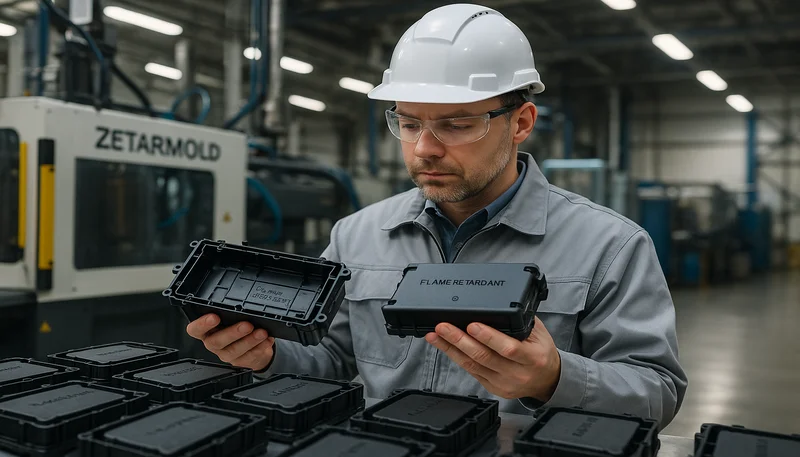
How Do You Evaluate Process Control and Inspection Systems?
Process control is where real factories separate themselves from aspirational ones. Ask your supplier to walk you through their inspection workflow from incoming material verification (IQC) through in-process checks to final outgoing inspection (OQC). A supplier who cannot describe their IQC procedure in detail probably does not have one. Specifically, request their Cpk (Process Capability Index) data for recent production runs. A Cpk of 1.33 or higher indicates that the process is statistically capable of meeting your tolerances consistently. If they respond with general assurances instead of data, treat that as a warning sign. In our experience running over 400 materials, we always look for documented First Article Inspection (FAI) procedures, statistical process control (SPC) charts, and corrective action records.
The quality manual should specify inspection frequency, sampling plans, and escalation triggers. Also ask whether they perform dimensional inspection on every cavity of a multi-cavity mold or only on a sample — this detail reveals how deeply they actually control quality versus how deeply they claim to.
Why Does In-House Tooling Capability Matter?
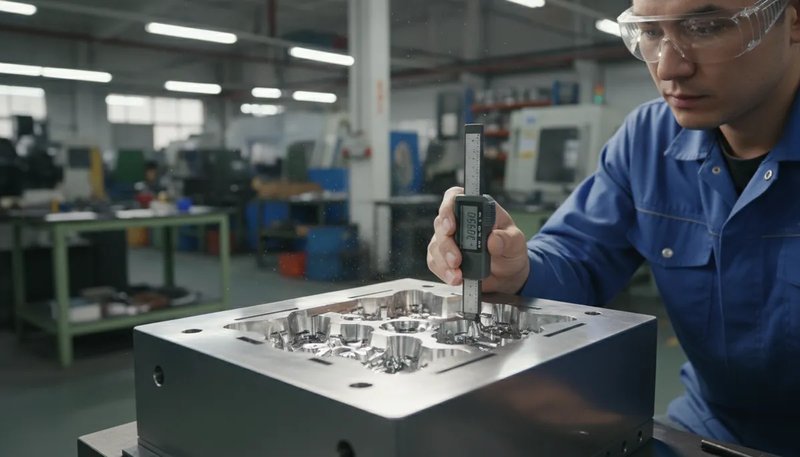
In-house tooling capability is the single most important differentiator between a responsive supplier and one that will frustrate you with delays. Suppliers who own their mold manufacturing process control the entire feedback loop between tooling and production. When a mold needs adjustment — and virtually every mold needs adjustment during sampling — the supplier can modify steel, test, and iterate within days instead of weeks. Without in-house tooling, every change requires coordinating with an external mold shop, adding cost, delay, and miscommunication risk. Ask whether the supplier can design, machine, and maintain molds on-site. Request photos or a video tour of their tooling department, specifically the CNC machines, EDM equipment, and CMM used for mold verification.
A supplier who owns their tooling process can also provide better lifecycle support: they can repair worn cavities, adjust for material shrinkage changes, and maintain tight tolerances over production runs of hundreds of thousands of shots. For overseas buyers, this translates directly into fewer surprise defects and faster time-to-market.
What Material Traceability Should You Demand?
Material traceability is the difference between a controlled supply chain and a gamble. Your supplier should be able to trace every production lot back to a specific resin pellet batch, including the manufacturer certificate, lot number, date of receipt, and any regrind ratio used. Ask for their material storage and handling procedures: are virgin pellets and regrind materials separated? Is there a FIFO (First In, First Out) system for resin inventory? Do they perform incoming material testing on the raw pellets — melt flow index, moisture content, tensile specimens — before running production? A trading company will struggle to answer these questions because they never touch the material. A real factory will show you the documentation system.
Also verify whether the supplier can source and certify specific material grades you require. If you specify UL94 V-0 flame retardant polycarbonate, can they provide the UL yellow card for that specific grade from that specific resin manufacturer? If not, you risk receiving parts made from a cheaper substitute that looks identical but fails safety testing.
How Can You Assess Communication and Project Management Quality?
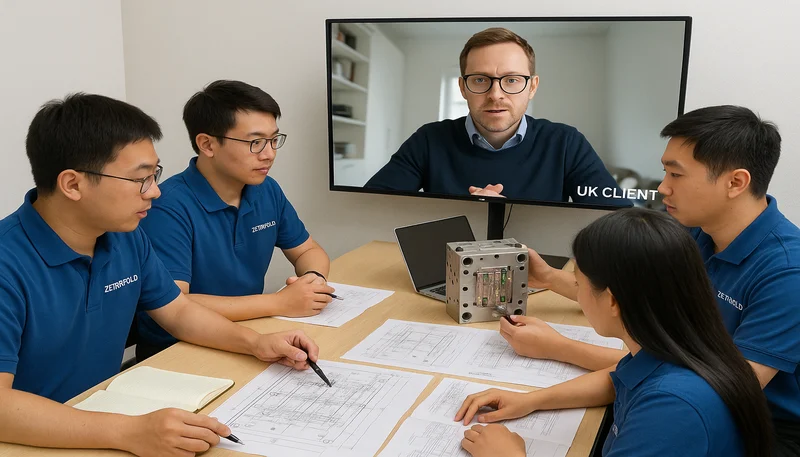
Poor communication kills more overseas manufacturing projects than poor quality. Before committing, evaluate how the supplier handles your initial inquiry. Do they respond within 24 hours with substantive technical answers, or do they send generic sales templates? Do they assign a dedicated English-speaking project manager who understands your technical requirements, or do you get passed between salespeople? Test this deliberately: send a technical question about gate design or shrinkage compensation and measure the quality of the response. During the sampling phase, observe their reporting format. Professional suppliers provide structured reports including dimensional data, material certifications, process parameters, and photographic evidence of each sample stage. They flag issues proactively instead of waiting for you to discover them.
Also check their project tracking: do they use a formal system with milestones, or is everything handled via scattered email threads? The communication quality you experience during quotation and sampling is the best you will ever get — it only gets worse under production pressure, not better.
Quali segnali di allarme dovrebbero farvi rinunciare?
Some warning signs are instant disqualifiers. If a supplier refuses to provide factory photos or a video tour, they are almost certainly a trading company pretending to be a manufacturer. If they quote a mold price within hours of receiving your 3D file without asking a single technical question, the price is either fantasy or a loss leader they will inflate later. If their quoted lead time seems too good to be true, it probably is — molds take time to design, machine, test, and refine. Watch for suppliers who pressure you to skip the sampling stage or who insist on 100% upfront payment with no milestone structure.
Another major red flag is inconsistent quality across sample submissions: if T1, T2, and T3 samples show random dimensional variation with no clear improvement trend, the supplier lacks process control. Finally, if the factory cannot produce a single reference customer willing to speak with you — or if every reference is from a completely different industry — their track record may not be what they claim. Trust your instincts: if something feels off during the evaluation, the production reality will be worse.
How Do You Build a Practical Supplier Scorecard?
A supplier scorecard turns subjective impressions into objective comparisons. Build one before you start evaluating vendors, not after. Weight your criteria based on what matters most for your project: typically 30% quality systems, 25% tooling capability, 20% communication and responsiveness, 15% pricing transparency, and 10% logistics and lead time. Score each supplier on a 1-5 scale against specific, measurable criteria within each category. For quality systems, this means ISO certification status, Cpk reporting capability, inspection equipment list, and corrective action process maturity. For tooling, score in-house capability, progettazione di stampi expertise, and maintenance programs. Under communication, evaluate response time, technical depth, English proficiency, and reporting format quality.
Avoid scoring price as a standalone metric — instead score pricing transparency: do they break down costs clearly, explain surcharges, and provide detailed quotations you can audit? The scorecard prevents you from being seduced by the cheapest quote or the smoothest sales pitch. It also creates a documented decision trail that protects you if a supplier relationship goes wrong later.
“A supplier with ISO 9001 certification is guaranteed to produce high-quality parts.”Vero
False. ISO 9001 certifies that a quality management system exists, not that every part meets your specifications. You must still verify process controls, inspection data, and dimensional capability specific to your project.
“Requesting Cpk data from your supplier is an unnecessary step if they have passed a factory audit.”Falso
False. Cpk data provides statistical proof that the production process consistently meets your tolerances. A factory audit evaluates systems, but only Cpk confirms actual dimensional capability on your specific part geometry and material.
When Should You Request a Production Trial Run?
Request a production trial run after sampling approval but before committing to volume production. This trial — sometimes called a pilot run — is your last chance to verify quality at scale. It should use the actual production material, the actual production mold, and the actual production machine settings. The trial should produce enough parts (typically 100 to 500 units) to reveal process stability issues that do not show up in a 10-piece sample. During the trial, the supplier should document cycle time, injection pressure curves, melt temperature, and any process adjustments made in real time.
You should receive a full dimensional report on a statistically significant sample of the trial parts, including all critical dimensions with measured values and tolerance analysis. Compare these results against the approved sample dimensions to identify any systematic shift that occurred when transitioning from prototype sampling to production conditions. Pay particular attention to dimensional consistency across multiple cavities in a multi-cavity mold, as cavity-to-cavity variation is one of the most common problems that only appears at production scale.
Pay attention to variation between the first shots and the last shots of the trial — increasing variation indicates thermal instability or tool wear that will only get worse over longer runs. If the supplier resists a trial run or charges an unreasonable premium for it, consider whether they are confident enough in their own process to let you see it under realistic conditions.
“A trading company can provide the same quality assurance as a direct factory if they have good relationships.”Vero
False. Trading companies add a communication layer between you and the factory, which delays problem resolution and obscures root causes. They cannot show you real-time production data, adjust process parameters, or guarantee that the factory will prioritize your order over their own direct customers.
“Material certificates from the resin manufacturer are sufficient proof of incoming material quality.”Falso
True. While resin manufacturer certificates confirm the material grade and lot, a rigorous supplier should also perform their own incoming inspection — melt flow index testing, moisture content verification, and visual inspection for contamination — before the material enters production.
In our Shanghai factory, we operate 47 injection molding machines with 10+ dedicated QC specialists running a 6-step quality workflow (IQC, sample checking, process inspection, packaging and assembly inspection, FQC, and OQC) under ISO 9001, ISO 13485, ISO 14001, and ISO 45001 systems. Over 20+ years of production, we have found that the single most effective quality practice is requiring Cpk reports on every critical dimension before approving any new mold for production.
Domande frequenti
What is the most important quality certification for injection molding suppliers?
ISO 9001:2015 is the essential baseline certification for any injection molding supplier serving export markets. It demonstrates that the factory has a documented and independently audited quality management system covering process control, material traceability, corrective actions, and continuous improvement processes. For medical device components, ISO 13485 is also required, while automotive applications demand IATF 16949 certification. Always verify that the certificate covers the specific production site where your parts will be manufactured, not just a corporate headquarters office, because satellite facilities sometimes operate under separate or expired certifications.
How do I verify a supplier claims about their factory?
Request a live video factory tour or conduct an on-site audit to verify supplier claims firsthand. Ask to see their actual production floor with running machines, quality inspection equipment including CMM and measurement tools, and organized material storage areas with proper FIFO labeling. Verify their ISO certificate number through the issuing certification bodys online database. Request references from existing customers in your industry and actually contact them to discuss their experience. A genuine manufacturer will welcome this level of verification, while a trading company will deflect, delay, or redirect you to stock photos.
What inspection reports should I request before approving production?
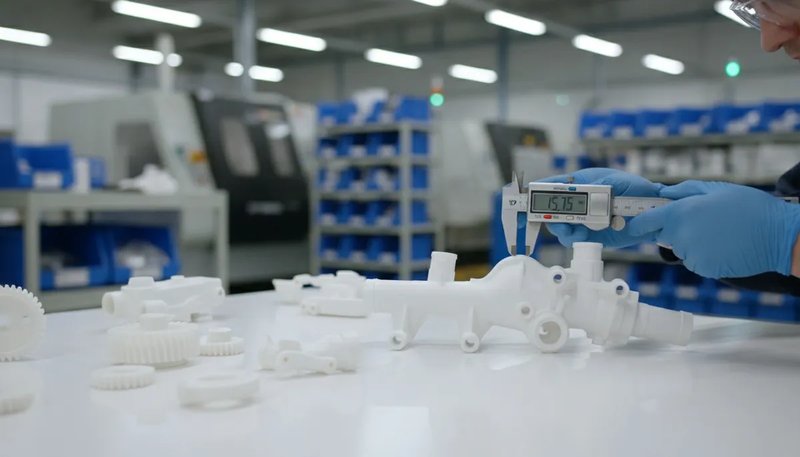
You should request First Article Inspection (FAI) reports with full dimensional data comparing every critical dimension against specifications, material certificates from the resin manufacturer confirming grade and lot, Cpk analysis for critical dimensions showing statistical process capability, in-process inspection records documenting checks during production, and final outgoing inspection (OQC) results certifying the shipment meets your requirements. The FAI report should include actual measured values versus specifications for every critical dimension with tolerance analysis, not just pass or fail indicators, so you can assess process consistency.
How can I tell if a supplier is a trading company instead of a factory?
Key indicators of a trading company include inability to provide current factory photos or live video tours, extremely fast quotations without asking any technical questions about your part geometry or material requirements, refusal to discuss specific machine parameters or process details, pricing that seems unrealistically low compared to legitimate manufacturers, and inconsistent company names across quotations, certificates, and communications. A real factory can describe their machines by brand, model, and tonnage range, explain their mold maintenance schedule in detail, and introduce you to their engineering team on a video call without hesitation.
What questions should I ask during a supplier video tour?
Ask to see the injection molding machines and note the brand names and tonnage range, which indicates their production capability envelope. Request a look at the quality lab with CMM equipment, calibrated measurement tools, and material testing instruments. Check material storage conditions — they should be dry, organized, with clear FIFO labeling and sealed containers for hygroscopic resins. Ask to see their mold maintenance area and request a sample inspection report to evaluate their documentation quality. Observe the overall cleanliness, lighting, and organization of the production floor, as these physical conditions reflect the underlying quality culture more reliably than any certificate on the wall.
How often should I re-audit an existing supplier?
Conduct a full re-audit annually if you are running continuous production with the supplier. For occasional or seasonal orders, audit before each new project launch or at minimum every two years. Monitor ongoing quality continuously through incoming inspection data on every shipment you receive. If defect rates trend upward, communication quality declines, or delivery consistency deteriorates, trigger an immediate focused audit on the specific problem area rather than waiting for the scheduled review cycle. Many professional buyers also require annual updated ISO certificate verification and periodic Cpk data submissions as part of their ongoing supplier qualification program.
Evaluating an injection molding supplier is not a one-time event — it is an ongoing discipline. The checklist in this article gives you a framework that works whether you are sourcing your first mold or auditing your fifth supplier. Start with certifications, dig into process controls, demand material traceability, test communication quality, and never ignore red flags. The best supplier relationships are built on transparency, data, and mutual accountability. If you are looking for a supplier that checks every box on this list — in-house tooling, ISO-certified quality systems, English-speaking project managers, and two decades of production experience — Contact ZetarMold to discuss your next project.
-
ISO 9001:2015: ISO 9001:2015 refers to quality management systems — Requirements, International Organization for Standardization. ↩
-
ISO 13485: ISO 13485 refers to 2016 Medical devices — Quality management systems, International Organization for Standardization. ↩
-
IATF 16949: IATF 16949 refers to 2016 Automotive Quality Management System Standard, International Automotive Task Force. ↩






 EN
EN  ES
ES  FR
FR  DE
DE  PT
PT  AR
AR  RU
RU  JA
JA  KO
KO  IT
IT  NL
NL  TR
TR  PL
PL 